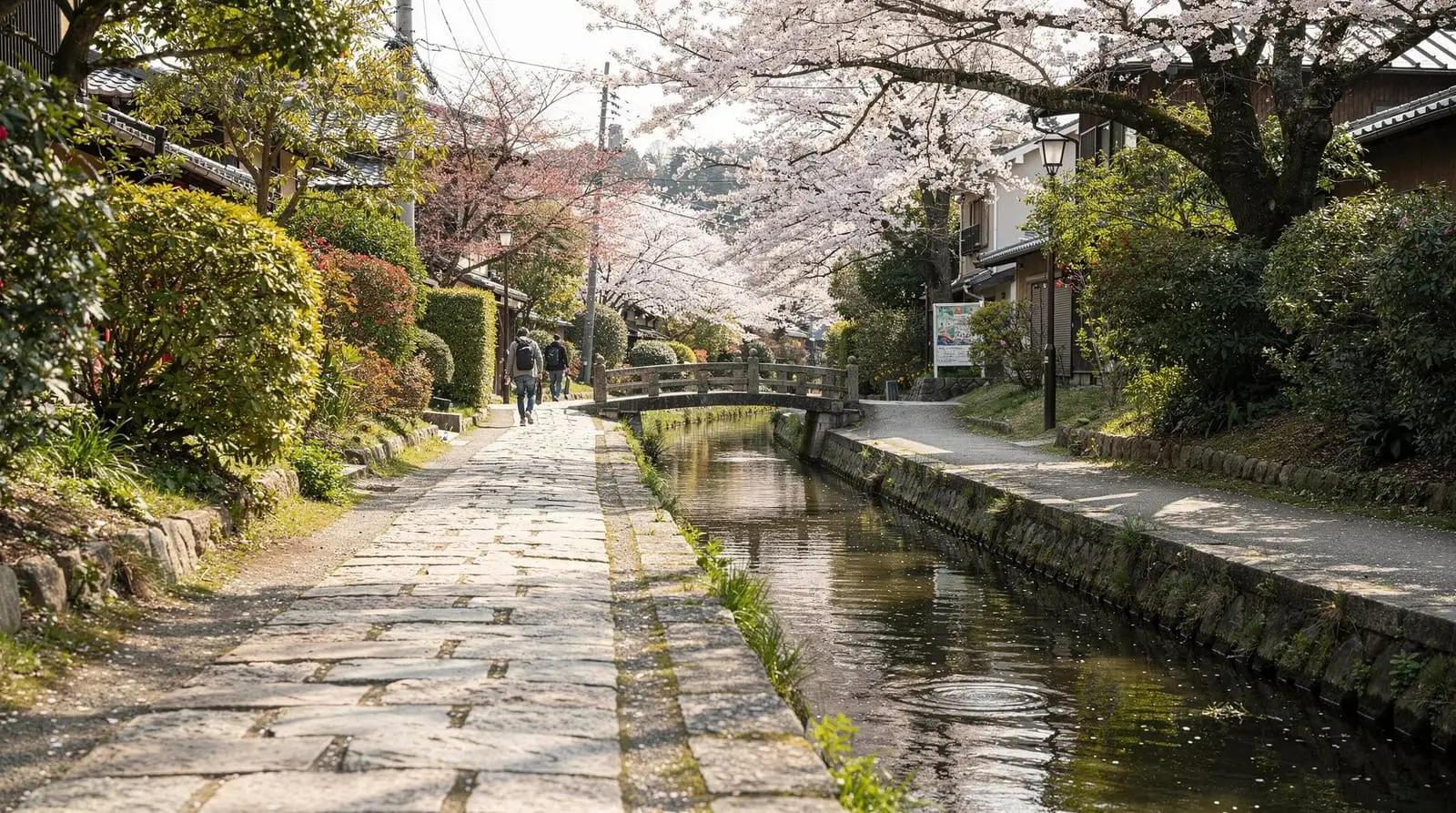
Philosopher's Path
A canal-side walk linking Ginkaku-ji, Honen-in, Eikan-do, and Nanzen-ji — Kyoto's Philosopher's Path, with real distances, fees, and quiet-hour tips.
Kyoto: Guided Walking Tour around Philosopher’s Path
Quick facts
- Path length
- About 2km, Ginkaku-ji to Nanzen-ji
- Walking time
- 30-45 min unhurried, end to end
- Ginkaku-ji admission
- ¥1,000 (~US$6.70), raised from ¥500 on April 1, 2026
- Nanzen-ji grounds
- Free; Sanmon gate and Hojo garden ¥600 each
The Philosopher’s Path (Tetsugaku-no-michi) is a roughly 2km stone footpath running alongside the Lake Biwa Canal in eastern Kyoto, connecting Ginkaku-ji in the north to Nanzen-ji in the south. It’s named after the philosopher Nishida Kitaro, who reportedly walked this exact stretch daily while meditating on his way to Kyoto University in the early 20th century. The path itself has no admission fee — the cost, if any, comes from the temples along it.
Nishida is generally credited as the founder of what’s now called the Kyoto School of philosophy, a group of 20th-century Japanese academics who worked to combine Western philosophical methods with Zen Buddhist thought. He taught at Kyoto University from 1910 until his retirement in 1928, and the canal-side commute between his home and the university is the specific walk the path is named for and traces today. None of that history is posted on signage along the route — there’s little in the way of interpretive plaques at all — so it’s worth knowing before you go if the name is part of what draws you here rather than just the cherry trees.
Ginkaku-ji: the Silver Pavilion that was never silver
Ginkaku-ji sits at the path’s northern end and is, despite the name, not silver and never was. Built in 1482 as a retirement villa for the shogun Ashikaga Yoshimasa and converted to a Zen temple after his death, the building was reportedly intended to be covered in silver leaf to mirror Kinkaku-ji’s gold, but the plan was never carried out — whether for lack of funds, the political instability of the period, or simply a change of mind is debated by historians, and the pavilion has stood in plain dark wood for over 500 years.
It’s a UNESCO World Heritage Site regardless, and the more interesting parts of the visit are arguably the gardens rather than the building itself: a meticulously raked dry sand garden known as the Ginshadan (“Sea of Silver Sand”) sits in front of the main hall, and a moss garden climbs the hillside behind it, offering a partial view back down over the temple roof and, on clear days, the city beyond.
Admission is ¥1,000 (~US$6.70) — raised from ¥500 on April 1, 2026, part of a broader round of fee increases at Kyoto’s most-visited temples — and the grounds are compact enough to see in 45 minutes to an hour without rushing. Ginkaku-ji shares the general Kyoto pattern of morning being quieter than afternoon, though because it doesn’t carry the same instant name recognition as Kiyomizu-dera or Fushimi Inari, the crowding here is generally more manageable even at midday — it’s a reasonable stop even if your schedule doesn’t allow an early start.
Walking the canal path from Ginkaku-ji to Nanzen-ji
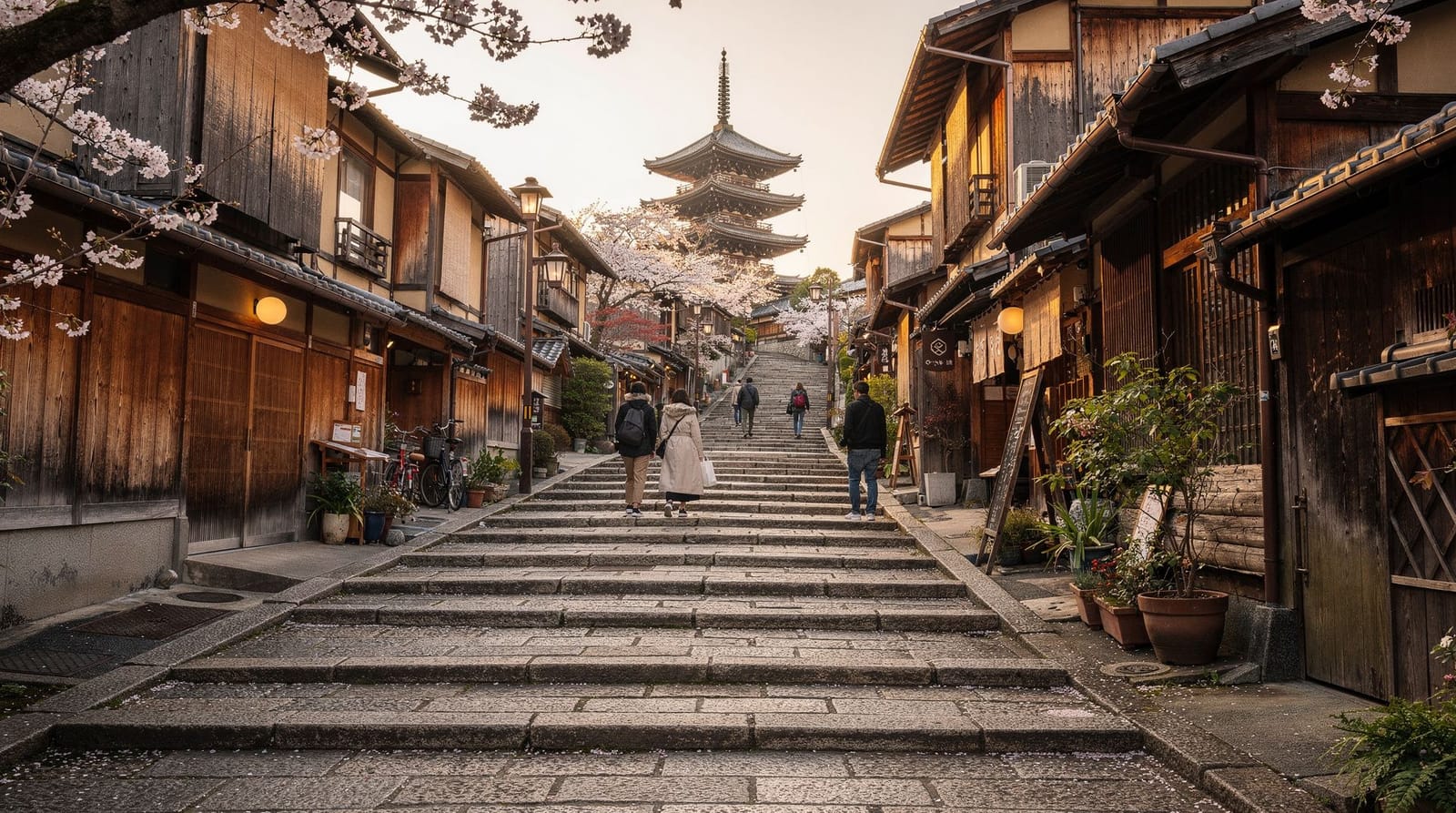
From Ginkaku-ji’s entrance, the path runs south along the canal, lined for much of its length with cherry trees. In late March through early April, when the trees bloom, this is one of Kyoto’s better-known hanami (blossom-viewing) spots and draws real crowds — still less dense than the Kamo River or Maruyama Park, but not the quiet contemplative walk the name suggests during that specific two-to-three-week window. Outside cherry blossom season, the path is genuinely calm: mostly local dog-walkers and cyclists, a scattering of small cafes and craft shops set back from the water, and enough shade from the canal-side trees to make it a comfortable walk even in Kyoto’s humid summers.
Budget 30-45 minutes for the walk itself at an unhurried pace, longer if you stop at the small shops and temples along the way — and there are several worth the detour. A handful of independent boutiques selling pottery, textiles, and prints operate out of converted houses just off the main path; none of them are essential stops, but they’re the kind of quiet browsing that’s hard to do in the denser tourist districts like Gion or Higashiyama.
Honen-in: a quiet temple most visitors walk past
A short detour off the path near its northern end, Honen-in is easy to miss and worth not missing. It’s a small, unassuming Buddhist temple behind a thatched-roof gate, with two raked white sand mounds (byakusadan) just inside the entrance that are re-patterned by hand, often with seasonal motifs — leaves, or geometric designs — depending on the time of year. There’s no admission fee for the outer grounds (a small donation is customary), and because it doesn’t appear on most tour itineraries, it’s reliably one of the quietest stops on this entire walk. The inner buildings are only open to the public a few weeks a year in spring and autumn, but the grounds alone justify the five-minute detour from the main path.
Nanzen-ji’s brick aqueduct and Zen gardens
Nanzen-ji, at the path’s southern end, is one of the most important Zen temple complexes in Japan and the head temple of one of the major branches of Rinzai Zen Buddhism. The temple grounds are free to enter, which is unusual for a site this significant in Kyoto, and the complex is large enough to spend an hour or more without repeating ground.
The single most photographed feature at Nanzen-ji is the Suirokaku, a red-brick Meiji-era aqueduct that runs directly through the temple grounds — a functioning piece of 19th-century Western engineering, built in 1888 to carry water from Lake Biwa, standing incongruously among centuries-old wooden temple architecture. It’s a genuinely unusual juxtaposition and one of the more distinctive photo spots in eastern Kyoto precisely because it doesn’t look like it belongs.
The Sanmon, a massive wooden gate at the temple’s entrance, can be climbed for a view over the surrounding neighborhood and back toward the city; admission to climb it is ¥600 (~US$4). The temple’s Hojo (abbot’s quarters) and its associated dry landscape garden cost a separate ¥600 to enter. Neither is required to appreciate the temple, but both add real depth if you have the time and the entry fees aren’t a concern.
A guided walk through Nanzen-ji’s gardens and the Sanmon gate is a reasonable way to get context on the temple’s history and Zen Buddhist significance that isn’t posted on-site in English, particularly around the aqueduct’s construction and why a Meiji-era infrastructure project was allowed to run through a centuries-old temple in the first place.
Eikan-do: Kyoto’s best autumn foliage, minus Kiyomizu-dera’s crowds
A short walk south of Nanzen-ji, formally named Zenrin-ji but universally known by its popular name Eikan-do, is widely regarded as one of the best single spots in Kyoto for autumn foliage — a claim that gets made about a lot of temples, but Eikan-do’s combination of a pond, a hillside of maples, and covered walkways that let you view the color from multiple elevations backs it up.
Regular admission is around ¥600 (~US$4), rising to roughly ¥1,000 (~US$6.70) during the November illumination period, when the temple stays open into the evening and lights the maples from below. Because Eikan-do sits slightly off the direct Ginkaku-ji-to-Nanzen-ji line, it’s genuinely easier to reach on foot from this walk than as a separate trip, and it’s worth the short detour even outside peak foliage season for the garden and pond alone.
Heian Shrine and its oversized torii gate
A little further south and west of Nanzen-ji, Heian Shrine is a Shinto shrine built in 1895 to commemorate the 1,100th anniversary of Kyoto’s founding as the imperial capital. It’s a reconstruction rather than an ancient structure — built at roughly two-thirds scale of the original Heian-era Imperial Palace hall — but its most recognizable feature is out front rather than inside: a massive vermillion torii gate spanning the approach road, one of the largest in Japan, visible from a considerable distance down the avenue leading to the shrine.
The shrine grounds themselves are free to enter; the strolling garden behind the main hall, which wraps around a pond used in several classic Japanese films, costs ¥600 (~US$4) separately. It’s a reasonable add-on to a Philosopher’s Path day if you have energy left, though it involves a bit more walking than the core route and isn’t essential if you’re focused on temples rather than shrines.
Getting to the Philosopher’s Path from central Kyoto
There’s no train station directly on the path; access is by bus. For the northern end at Ginkaku-ji, get off at the Ginkakuji-michi stop, served by several city bus routes from Kyoto Station and from downtown Kyoto, with a total ride of roughly 30-35 minutes from the station. For the southern end at Nanzen-ji, the Nanzenji-Eikando-michi stop is the equivalent drop-off, with a similar journey time. Because the walk runs north to south, most visitors start at Ginkaku-ji and finish at Nanzen-ji, which conveniently puts you closer to Gion and downtown Kyoto at the end of the walk for lunch or onward sightseeing, rather than the other way around.
If you’d rather not manage bus timing and transfers, a guided walking tour of the Philosopher’s Path typically handles the route and the temple stops as one planned loop, which removes the guesswork of figuring out bus stops on your own, particularly useful if this is your first day using Kyoto’s city bus network.
When to walk it: cherry blossoms vs. the rest of the year
Cherry blossom season is the obvious draw and the obvious crowd. If seeing the path in bloom matters more to you than a quiet walk, plan for late March through early April, check a bloom forecast close to your travel dates since the exact timing shifts year to year, and expect company — this is a well-known blossom spot, not a hidden one, even if it’s calmer than the Kamo riverbank downtown.
Outside that window, the path is close to empty on weekday mornings, and autumn (especially around Eikan-do’s peak foliage in mid-to-late November) offers a comparable payoff in color with a different, redder palette instead of pink. Summer is green, humid, and quiet; winter is bare and the quietest of all, which some visitors specifically prefer for photography without crowds in frame.
If your itinerary already includes Higashiyama, a crowd-timed tour covering both Kiyomizu-dera and Ginkaku-ji in one deliberately sequenced route is worth looking at rather than guessing on your own when to show up at each.
Four stops compared, if you’re short on time
| Ginkaku-ji | Honen-in | Eikan-do | Nanzen-ji | |
|---|---|---|---|---|
| Admission | About ¥1,000 | Free (donation) | About ¥600 (¥1,000 in Nov) | Free grounds, ¥600 for Sanmon/Hojo |
| Crowd level | Moderate | Low, often empty | Moderate-high in Nov | Moderate |
| Signature feature | Silver Sand garden | Hand-raked sand mounds | Hillside maple foliage | Brick aqueduct |
| Time needed | 45-60 min | 10-15 min | 30-45 min | 45-60 min |
| Skip if | Short on time overall | Never — it’s the quiet stop | Not autumn and rushed | Never — it’s the anchor stop |
Where to eat along the way
Omen Honten, a short walk from Ginkaku-ji’s entrance, has served thick handmade udon noodles with a sesame-based dipping sauce and a plate of seasonal vegetables since 1967, and it remains one of the better-regarded udon restaurants in this part of the city rather than a tourist-oriented reproduction of one. Expect to pay roughly ¥1,500-2,000 (~US$10-13.30) for a full bowl with vegetables, and expect a wait at lunch — it’s popular with both visitors finishing a walk from Ginkaku-ji and locals. Smaller cafes are scattered along the canal itself, mostly unnamed on English-language maps; none are essential, but a coffee stop partway down the path is a reasonable way to break up the walk rather than pushing straight through to Nanzen-ji.
For a different pace entirely, a Philosopher’s Path and hidden temple walking tour typically routes in a stop like Honen-in or a comparable small temple that isn’t obvious from a map, alongside the main sights — useful if you specifically want to avoid retracing the same three or four temples every other visitor sees on this walk.
Covering more ground: the e-bike option
Walking the path end to end plus the temples along it is realistic in half a day, but if you want to add Kinkaku-ji or a second neighborhood on the same day, covering the canal-side stretch faster leaves more time elsewhere. An e-bike tour combining Ginkaku-ji and the Philosopher’s Path is built around this trade-off — it moves faster than walking between stops while still allowing time to get off and walk the canal path itself on foot, which isn’t really rideable in the busiest sections given the width of the path and pedestrian traffic during cherry blossom season.
The canal behind the path
The waterway the path follows is part of the Lake Biwa Canal (Biwako Sosui), a 19th-century engineering project completed in 1890 to bring water from Lake Biwa, Japan’s largest freshwater lake, into Kyoto for drinking water, irrigation, and hydroelectric power — the same canal system whose brick aqueduct resurfaces more dramatically at Nanzen-ji.
It was one of the more ambitious infrastructure projects of the early Meiji era, built partly to help Kyoto’s economy recover after the capital moved to Tokyo in 1868, and the canal is still functioning today, more than 130 years later. The stretch running past Ginkaku-ji and along the Philosopher’s Path is a secondary channel of that same system, which is part of why the water moves as steadily and cleanly as it does even now.
Otoyo Shrine: a small detour with mouse guardians instead of foxes
Tucked into a residential side street just off the path near its southern stretch, Otoyo Shrine is easy to walk past entirely — small, unstaffed most of the time, and rarely mentioned alongside the path’s bigger-name stops. What makes it worth the two-minute detour is its guardian statues: rather than the fox statues typical of Inari shrines or the lion-dogs (komainu) at most Shinto sites, Otoyo Shrine’s approach is flanked by stone mice, tied to a local legend in which a mouse guided the enshrined deity, Okuninushi, to safety from a wildfire.
A monkey and other animal statues appear elsewhere on the grounds as well, each tied to different local legends. It’s free, unhurried, and genuinely obscure enough that most Philosopher’s Path guides don’t mention it at all — worth seeking out specifically if you enjoy small, offbeat shrines more than major temple circuits.
Practical notes: bathrooms, wifi, and pacing yourself
Public facilities directly along the canal path itself are limited — a handful of small public restrooms exist near the main temple entrances (Ginkaku-ji, Nanzen-ji), but the stretch of path in between has essentially none, so plan bathroom stops around the temples rather than assuming one will appear mid-walk. Free public wifi is similarly patchy outside the temple grounds themselves, which is one more reason a local SIM or pocket wifi is worth sorting out before a day built around several stops without a fixed home base.
Pacing is the other practical consideration people underestimate. It’s easy to treat “30-45 minutes” as the entire time commitment and then find the day running long once Ginkaku-ji, Honen-in, Eikan-do, and Nanzen-ji are all added on top of the walk itself — a genuinely full half day, closer to four hours including temple visits, rather than the roughly 45-minute canal walk in isolation. Build in slack rather than scheduling something immediately after, particularly if you’re also planning a sit-down lunch at Omen Honten, which can involve a real wait at peak times.
Where this fits in a Kyoto itinerary
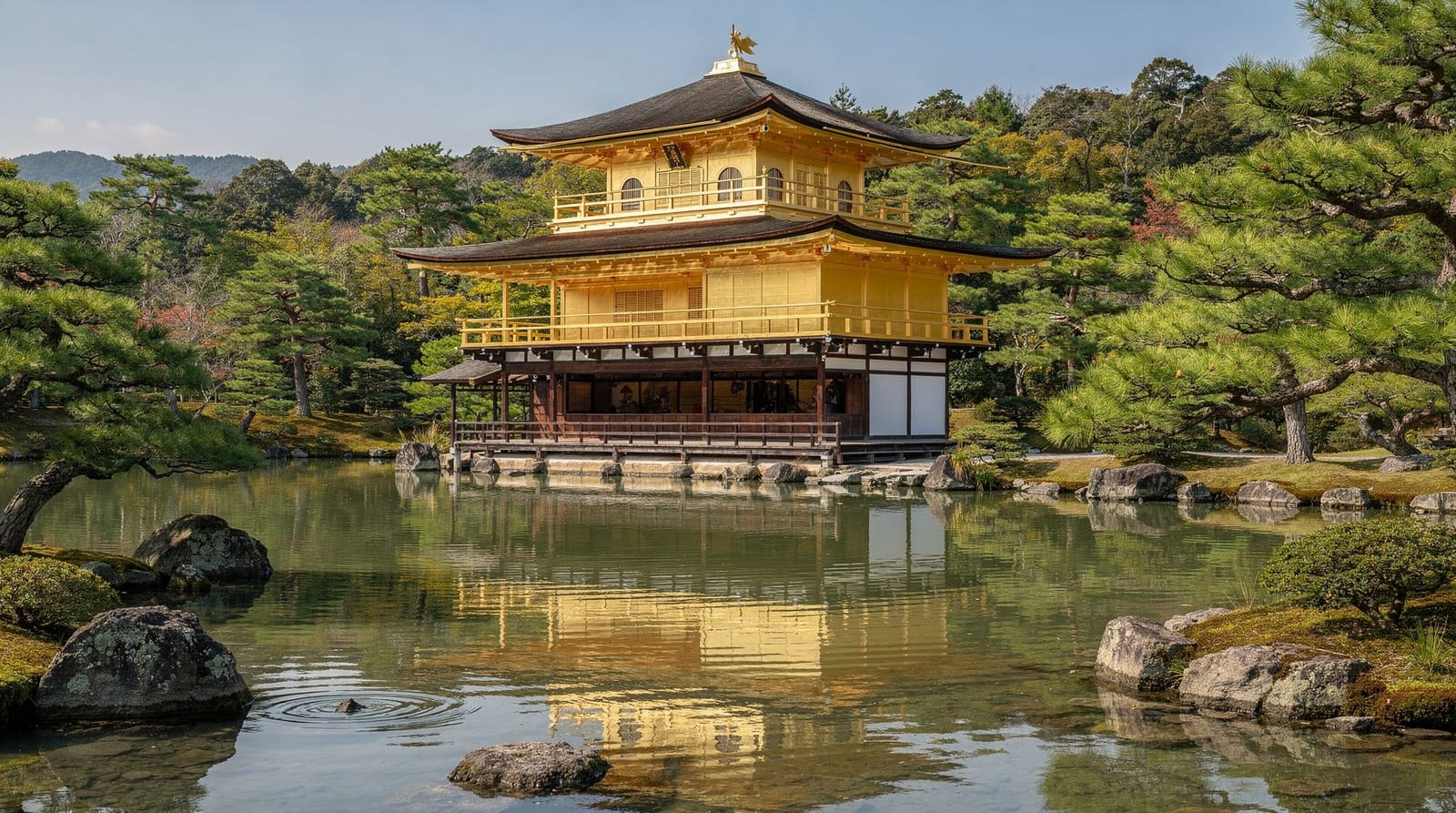
The Philosopher’s Path pairs naturally with Higashiyama as two eastern-Kyoto walking days with very different atmospheres — Higashiyama dense and commercial, this path quiet and residential — and it works equally well as a half-day add-on if you’re already covering Kinkaku-ji elsewhere in the city and want a contrasting Zen-garden experience on the same trip.
For route planning across multiple days, see our Kyoto itineraries; for more on the individual temples mentioned here, the destination guides section has additional depth. The travel essentials tool covers IC cards and bus fare basics if this is your first time navigating Kyoto’s bus network rather than its trains. Browse the full slate of guided options, including e-bike and small-group formats, on our Kyoto tours page, or start from the destinations overview if you’re still sequencing your trip.
Frequently asked questions about the Philosopher’s Path
How long does the Philosopher’s Path take to walk?
The path itself is about 2km and takes 30-45 minutes at an unhurried pace with no stops. Add Ginkaku-ji, Honen-in, Eikan-do, and Nanzen-ji and a realistic half-day visit runs 3-4 hours, longer if you also add Heian Shrine or a sit-down lunch.
Is the Philosopher’s Path only worth visiting during cherry blossom season?
No. Cherry blossom season (late March-early April) is the best-known time and draws the largest crowds, but the canal-side walk and the temples along it — particularly Eikan-do’s autumn foliage in November — are worthwhile in other seasons too, generally with far fewer people.
Where does the Philosopher’s Path start and end?
It runs between Ginkaku-ji (Silver Pavilion) in the north and Nanzen-ji in the south, though there’s no strict rule on direction — most visitors start at Ginkaku-ji since it’s slightly further from central Kyoto and finish at Nanzen-ji, which is closer to downtown and Gion for onward plans.
Is Ginkaku-ji actually covered in silver?
No. Despite the name “Silver Pavilion,” the building was never covered in silver leaf; historians generally attribute this to the shogun’s death and the political instability of the period cutting the original plan short. The pavilion has always stood in plain dark wood.
Is Nanzen-ji free to visit?
The main temple grounds are free. Climbing the Sanmon gate and entering the Hojo garden each cost ¥600 (~US$4) separately, and neither is required to see the temple’s main draw, the Meiji-era brick aqueduct running through the grounds.
Can I combine the Philosopher’s Path with Higashiyama in one day?
Yes, though it’s a full day rather than a relaxed half day if you do both properly — the two districts are a 20-30 minute walk or short bus ride apart via Gion. Many visitors split them across two separate days instead, since both reward unhurried walking rather than rushing between temples.
Is the Philosopher’s Path stroller and wheelchair accessible?
Mostly yes. The canal-side path itself is paved and flat, which makes it considerably more accessible than the steep stone lanes of Higashiyama. Individual temple grounds vary — Nanzen-ji’s main grounds are relatively flat, while Ginkaku-ji’s moss garden includes uneven, sloped sections.
What’s the best time of day to walk it?
Early morning, particularly on weekdays, before tour groups arrive at Ginkaku-ji. Late afternoon on a non-illumination day is the second-best option, once day-trip crowds have thinned but before the temples close for the evening.
Which single stop should I prioritize if I only have an hour?
Nanzen-ji, for the brick aqueduct and the option to climb the Sanmon gate, or Ginkaku-ji if the Silver Pavilion’s gardens matter more to you. Honen-in is the best add-on if you have even ten extra minutes, since it’s consistently the quietest stop on the walk.
Is Nishida Kitaro’s connection to the path explained on-site?
No, there’s little interpretive signage along the route explaining Nishida Kitaro or the Kyoto School of philosophy he’s associated with. If the name and history are part of the draw, it’s worth reading up before you go rather than expecting plaques along the canal.
Are there public restrooms along the Philosopher’s Path?
Only near the main temple entrances at either end (Ginkaku-ji and Nanzen-ji); the canal stretch in between has essentially none. Plan bathroom stops around the temples rather than mid-walk.
What is Otoyo Shrine?
A small, easy-to-miss Shinto shrine just off the path’s southern stretch, notable for stone mouse statues rather than the usual foxes or lion-dogs, tied to a local legend about a mouse guiding the enshrined deity to safety from a fire. It’s free and worth a two-minute detour for offbeat-shrine enthusiasts.
Top experiences
Bookable activities with verified prices and instant confirmation on GetYourGuide.