Kurama and Kibune
Kurama and Kibune are twin mountain villages north of Kyoto with a hiking trail, hot spring, and summer riverside dining over the Kibune-gawa.
Kyoto: Private Full-Day Tour by Car (Customizable)
Quick facts
- Distance from Kyoto
- About 30 min by Eizan Railway from Demachiyanagi
- One-way fare
- About ¥470
- Time needed
- Full day if hiking between villages
- Best known for
- Kurama-dera temple and summer kawadoko dining
- Best time to visit
- May-September for kawadoko; autumn for foliage
Are Kurama and Kibune worth visiting from Kyoto? Yes, if you want mountains, a real hiking trail, and (in summer) dinner served on a platform over a rushing river — none of which exist in central Kyoto. Both villages sit on the Eizan Railway about 30 minutes from Demachiyanagi Station (roughly ¥470/$3.10 one way), and a connecting mountain trail links them in about 60-90 minutes on foot, making a loop day trip realistic without a car.
Why this trip is different from every other Kyoto day out
Almost every other destination near Kyoto revolves around a temple, a shrine, or a shopping street. Kurama and Kibune revolve around a mountain. The pair sit in a narrow valley in the Kitayama range, connected by a genuine hiking trail rather than a paved sightseeing path, and the entire area feels — correctly — like a retreat that Kyoto residents have been using for centuries to get away from the city, not a stop built for tour buses.
There’s a mountain temple with a real legend attached to it, an outdoor hot spring with valley views, and a summer dining tradition (eating directly over a river on a wooden platform) that doesn’t really have an equivalent anywhere else in the region. It’s also, notably, one of the few areas in this guide where no GYG tour is built specifically around the destination — this is a place best done independently or as part of a customizable private day, which tells you something about its character: it rewards travelers who want to wander rather than be guided.
Getting to Kurama and Kibune from central Kyoto
The only practical way in is the Eizan Railway (Eiden), a small private line that starts at Demachiyanagi Station, at the northern end of the Kamo River where the Kamo and Takano rivers meet. From downtown Kyoto or Kyoto Station, you’ll first need to get to Demachiyanagi — by Keihan Main Line from Gion-Shijo or Kawaramachi (about 10-15 minutes), or by city bus.
From Demachiyanagi, the Eizan Railway’s Kurama Line runs directly to Kurama Station in about 30 minutes, with the fare around ¥470 (~$3.10) one way; it is not covered by the Japan Rail Pass since it’s a private line. Some trains along this route are the “Kirara” sightseeing cars with extra-large windows angled toward the forest canopy — worth waiting for if timing allows, especially during autumn foliage. Kibune is reached via the same line to Kibuneguchi Station, one stop before Kurama, followed by either a 30-minute uphill walk or a short shuttle bus (running seasonally, more frequent in kawadoko season) to Kibune village itself.
Trains run roughly every 20-30 minutes and the last services back to Demachiyanagi typically leave Kurama and Kibuneguchi around 9-10pm, earlier in winter — check the current schedule before you go, since missing the last train means a taxi back into the city, which is expensive and not always easy to arrange from a mountain village at night.
Kurama-dera: a mountain temple with a real legend
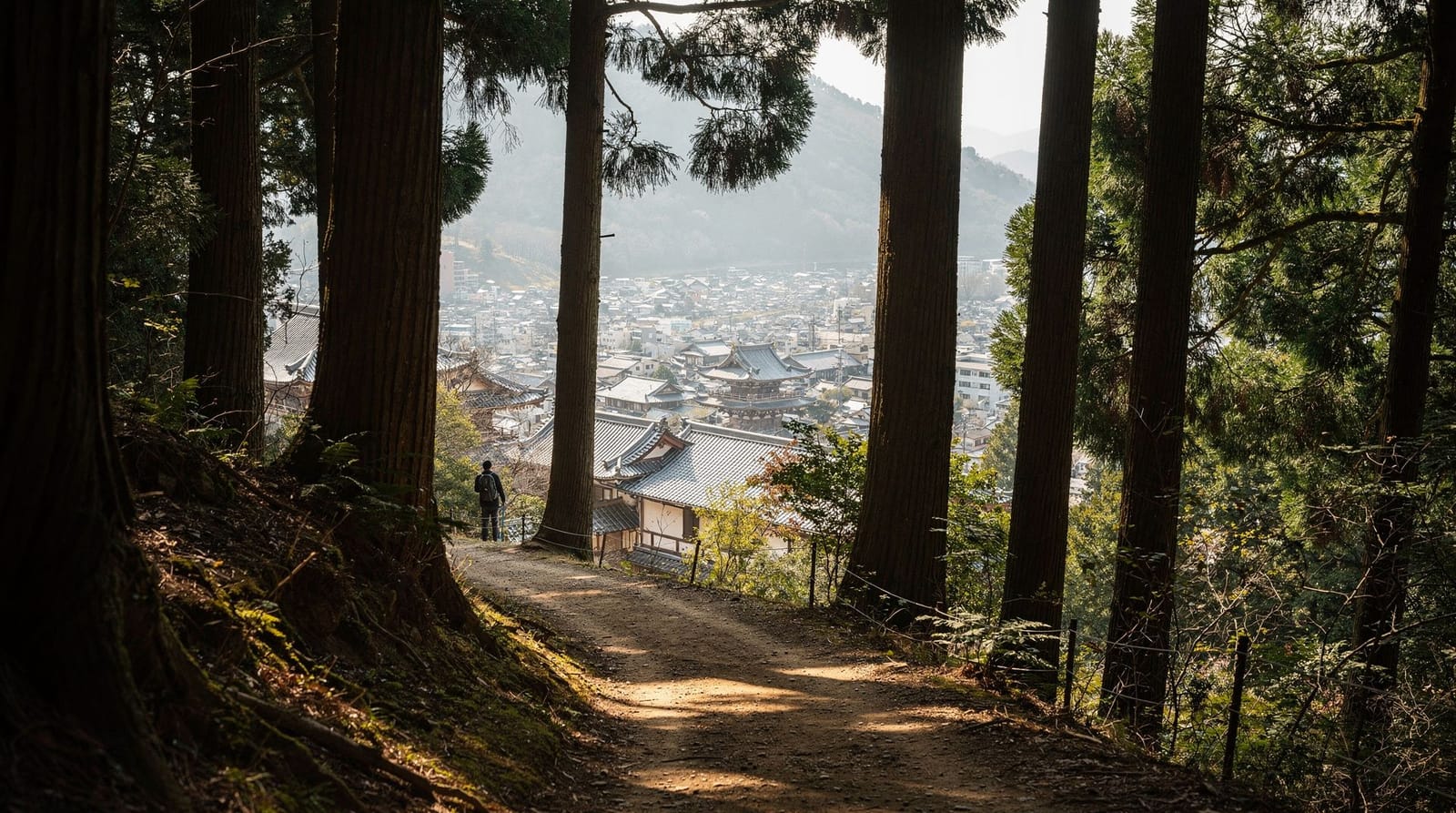
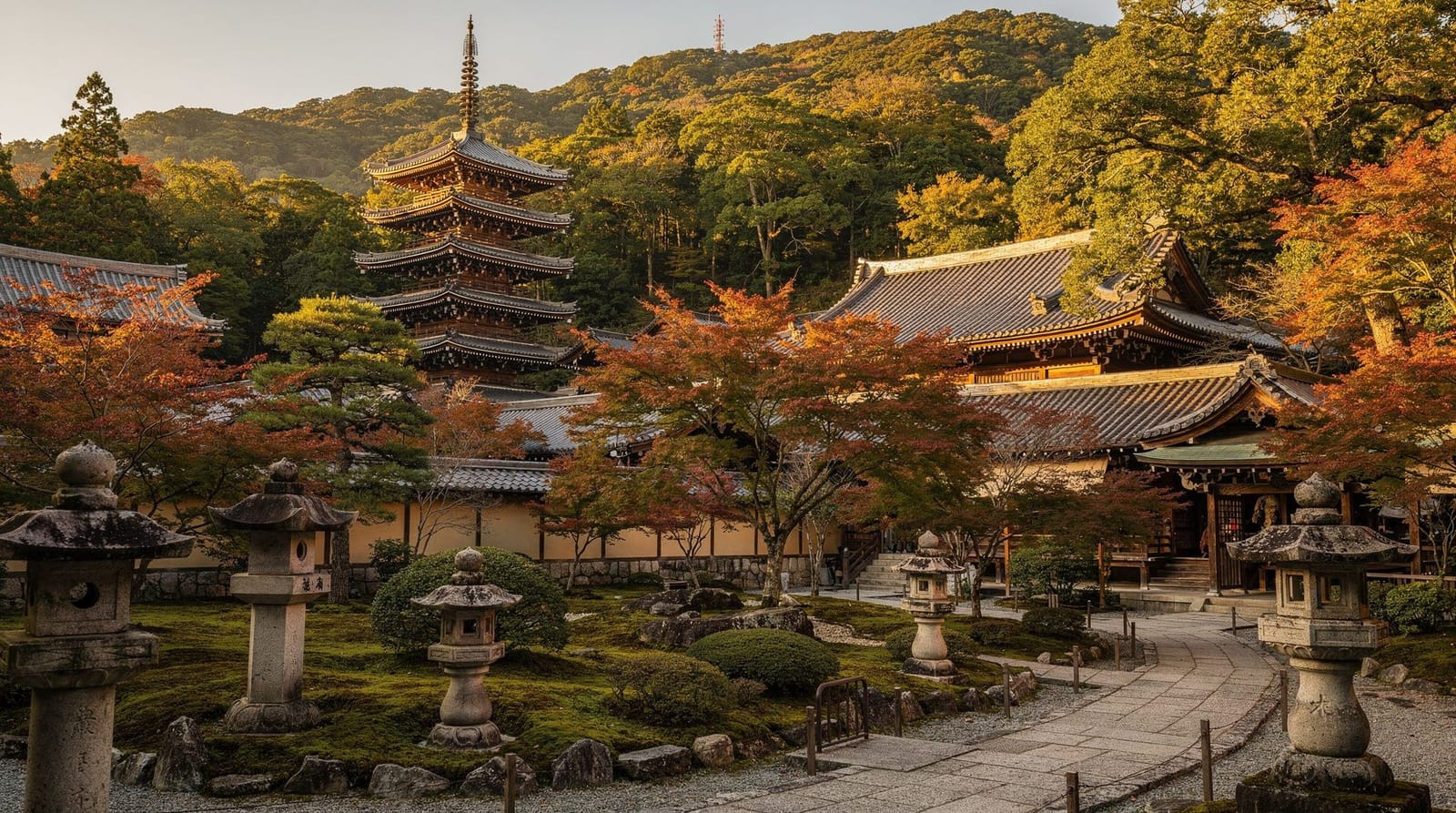
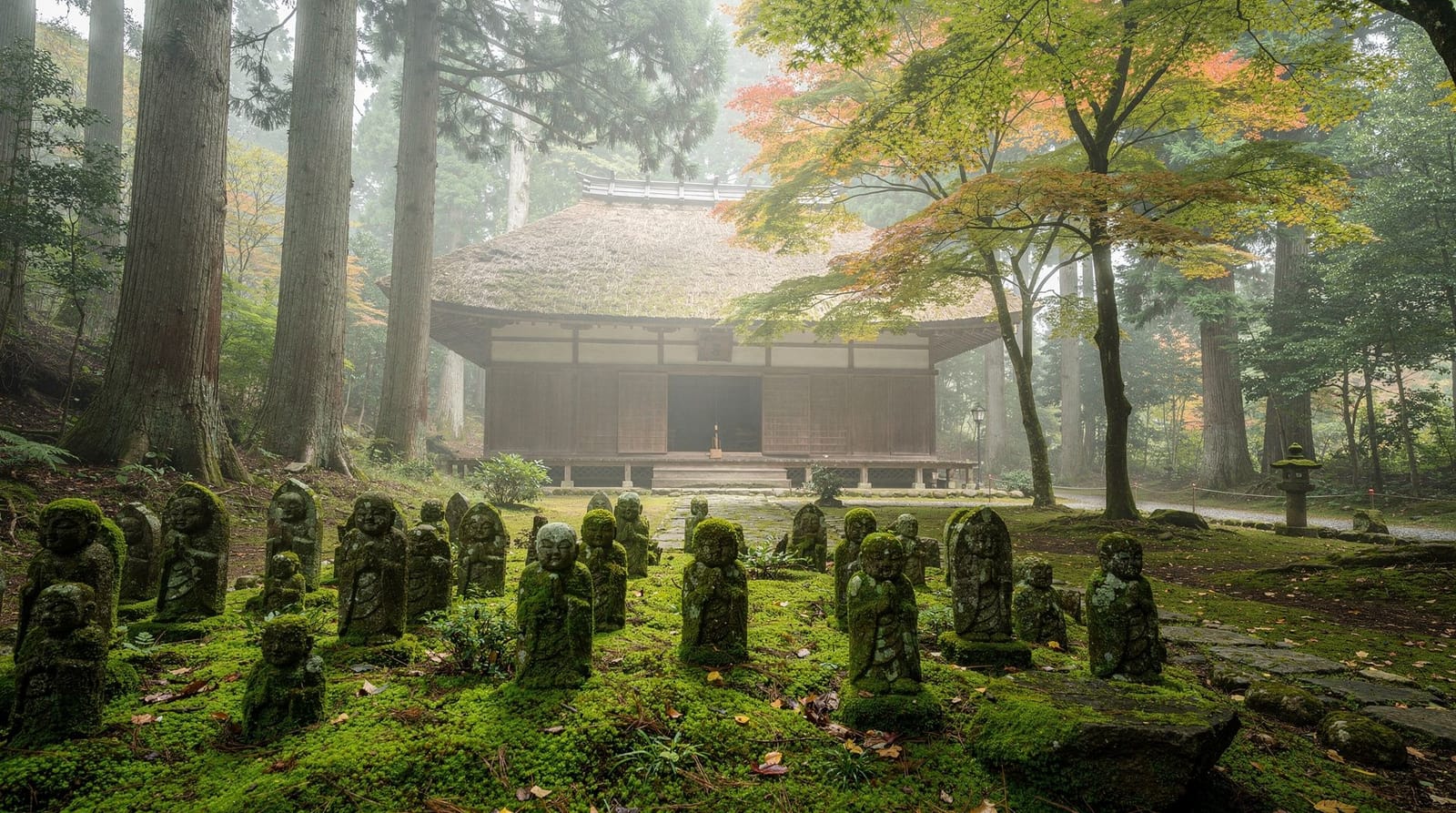
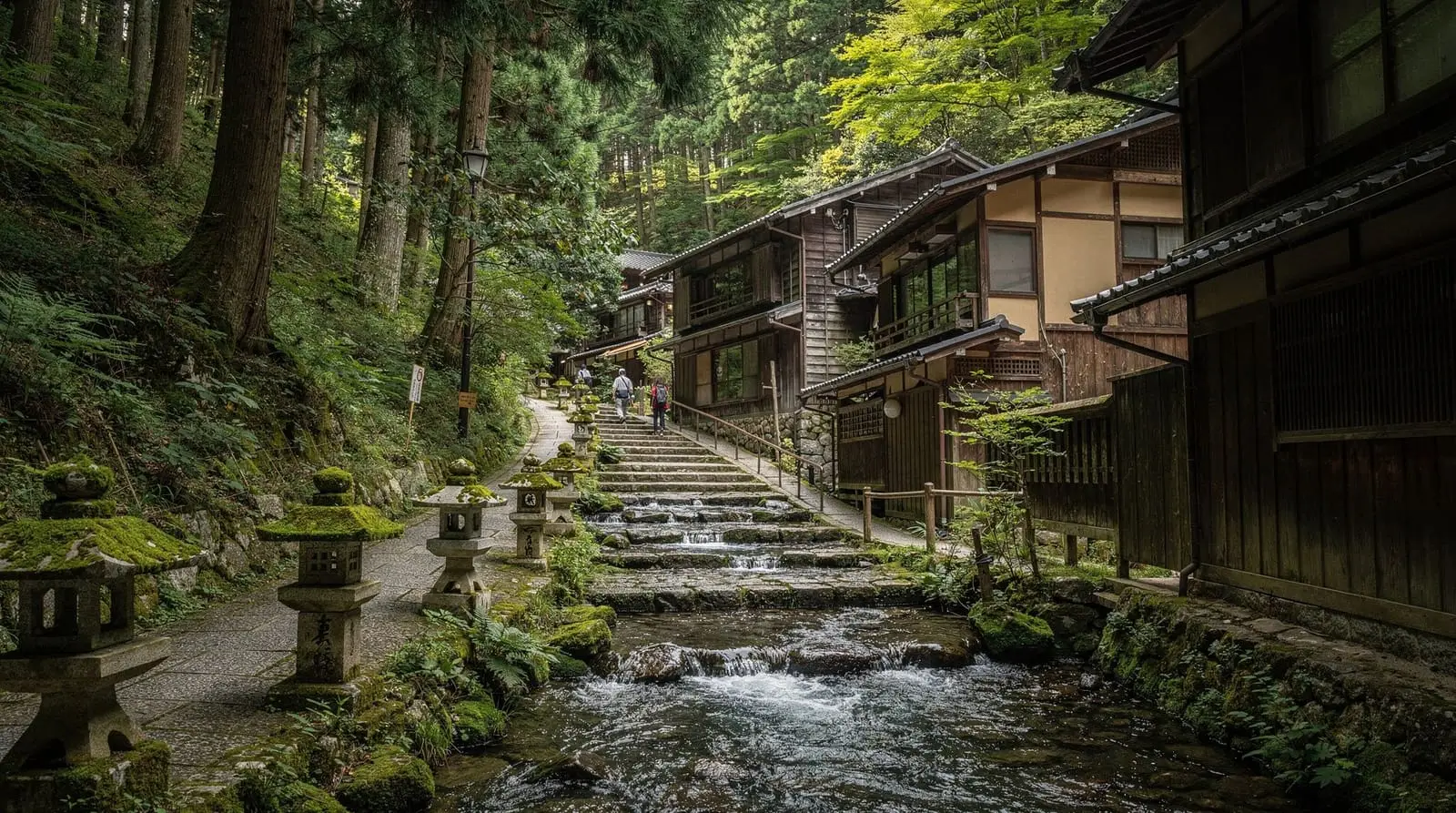
Kurama-dera, founded in 770 CE, is built into the mountainside above Kurama village and is as much about the walk up as the temple itself. A cable car (¥200/~$1.30 one way, a donation technically, run by the temple) covers the steepest initial stretch, or you can hike the whole way up a wooded trail lined with stone lanterns — about 30-40 minutes on foot. Either way, the main hall (Honden) sits partway up the mountain with a genuinely good view back over the valley, and the trail continues beyond it toward Kibune on the other side.
The temple’s defining legend involves Ushiwakamaru, the childhood name of Minamoto no Yoshitsune, one of the most famous figures in Japanese military history. As a boy, Yoshitsune was reportedly sent to Kurama-dera and, according to local legend, trained in swordsmanship in the surrounding forest by tengu — supernatural mountain goblins associated with martial skill and mischief, usually depicted with long noses or beaked faces.
You’ll see tengu imagery throughout Kurama village, from shop signs to a large tengu mask display near the station, and the legend is taken seriously enough locally that it shapes the character of the whole town rather than being a footnote on a temple placard. Kurama-dera is open daily, roughly 9am-4:30pm, with a temple admission fee of ¥300 (~$2) in addition to the cable car fare if you use it.
Kurama Onsen: an outdoor bath with a valley view
Partway up the hillside near Kurama Station, Kurama Onsen offers day-use hot spring bathing with an outdoor rotenburo looking out over the forested valley — a legitimately good reason to build extra time into a Kurama visit even if you’re not otherwise an onsen person. Day-use bathing (outdoor bath only) runs around ¥1,000-1,300 ($6.70-8.70); a combined indoor-and-outdoor pass costs more, typically ¥2,500 ($16.70) or so including a towel and yukata rental.
Hours are generally 10am-9pm (last entry around 8pm), and the standard onsen etiquette applies — wash thoroughly before entering the communal bath, and note that most Japanese onsen, including this one, restrict entry for visitors with visible tattoos; check current policy before you go if this applies to you. See our general Kyoto etiquette guide for broader cultural-norms context if this is your first onsen visit in Japan.
The Kurama-to-Kibune hiking trail
The trail connecting the two villages runs directly past Kurama-dera’s main hall and continues over the ridge to Kibune, taking about 60-90 minutes total depending on your pace and how long you linger at the temple partway through. It’s a genuine hike — stone steps, some steep and uneven sections, tree roots underfoot — rated moderate rather than easy; wear real shoes, not sandals, and bring water, since there’s nowhere to buy any once you’re past the temple grounds. The forest here is old-growth cedar in parts, quiet except for birdsong, and it’s one of the better short hikes accessible from central Kyoto without a car. For a broader look at hiking options in and around the city, see our hiking in Kyoto guide.
The trail is not lit and can be muddy or icy after rain or snow, so this is not a good after-dark plan, and it effectively closes in heavy winter snow — Kurama sits high enough in the hills to get meaningful snowfall most winters, unlike central Kyoto. If you’re visiting December through February, call ahead or check recent trip reports before assuming the trail is passable.
Kibune Shrine and the village itself
Kibune village is smaller and quieter than Kurama, strung along the Kibune-gawa river in a narrow valley. Kibune Shrine, at the village’s upper end, is dedicated to a water deity (Takaokami-no-kami) and has long been associated with rainfall and water blessings — the shrine’s name is written with characters meaning roughly “source of water.” It’s a genuinely atmospheric small shrine, especially the approach lined with red lanterns that’s become a popular photo spot, and it draws visitors hoping for luck in relationships as well as its original water-deity associations (a water-based fortune-telling paper, mizuura-mikuji, is sold on site — you place a blank slip of paper on the sacred spring and the text appears).
Kibune Shrine’s main grounds are open roughly 9am-5pm (later, until around 8pm, during the summer kawadoko season and again for a limited autumn illumination event).
Kawadoko: dining on platforms over the river
The single most distinctive thing about Kibune is kawadoko — restaurants that build wooden dining platforms directly over the Kibune-gawa, seating you close enough to the water that the sound and spray of the current become part of the meal. This is a summer-only tradition, generally running from mid-May through late September (exact dates vary by restaurant and by year, weather-dependent), and it exists specifically because Kibune’s valley stays several degrees cooler than the city below during Kyoto’s brutal, humid summers — a genuine practical reason this became a local escape rather than just a novelty.
Meals are kaiseki-style multi-course affairs and are not cheap: expect ¥8,000-15,000+ (~$53-100+) per person at most kawadoko restaurants, sometimes more at the higher end, and reservations are essentially mandatory — walk-ins are routinely turned away in peak summer weekends. Book at least several days ahead, longer for August weekends, and confirm whether the restaurant requires a Japanese-language reservation or accepts English inquiries; some higher-end spots work through hotel concierges or booking platforms rather than direct calls.
If the price feels steep, treat it as what it is — a genuinely unique experience with your feet nearly over rushing water, priced accordingly, not something to do on a tight budget just to check a box. A lower-cost alternative is to walk through Kibune during kawadoko season, take photos of the platforms from the road, and eat a regular meal back in Kurama or the city instead.
Outside the kawadoko season, most Kibune restaurants either close, switch to standard indoor seating, or reduce hours substantially — don’t plan a Kibune visit around riverside dining in October through April.
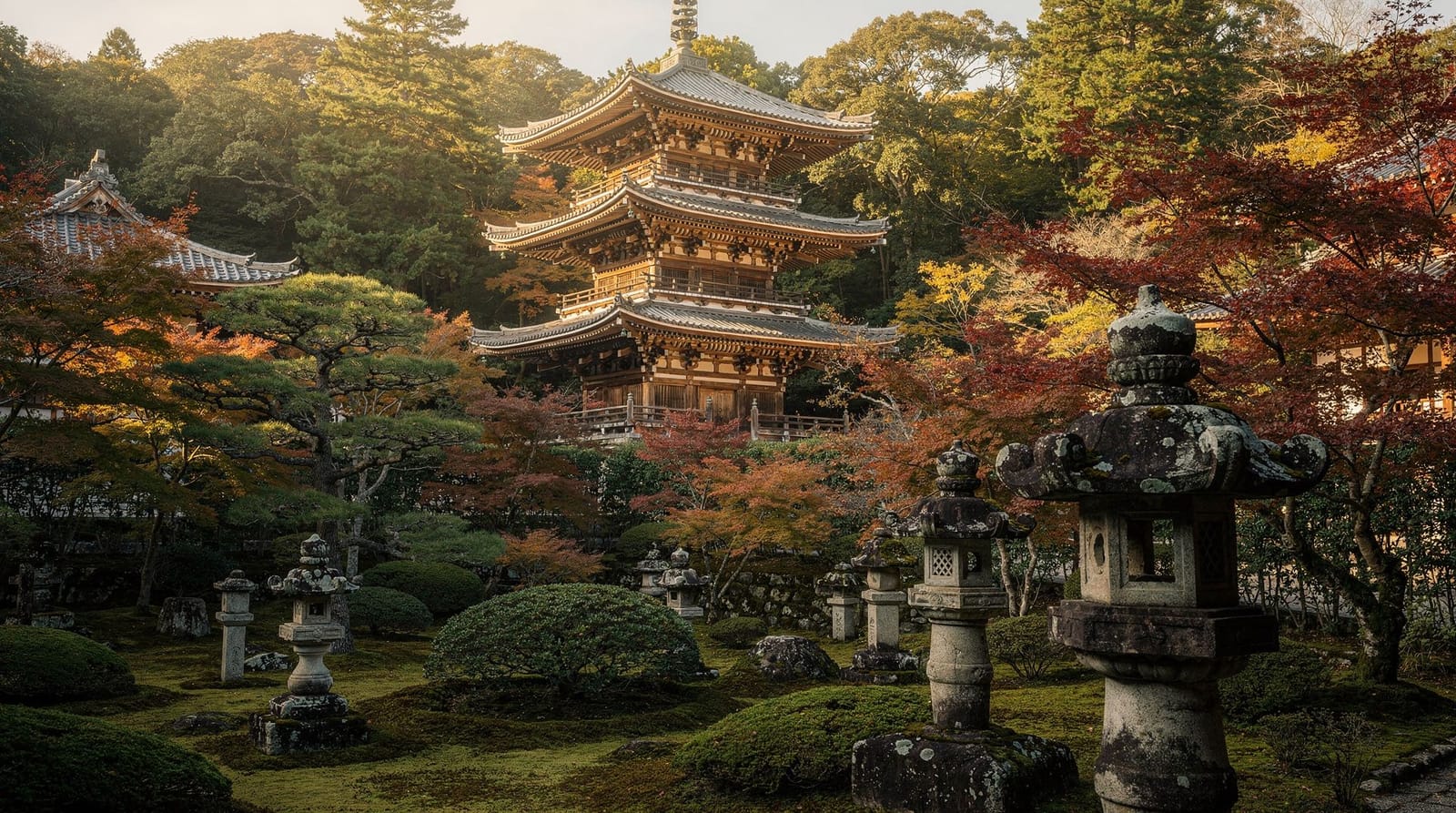
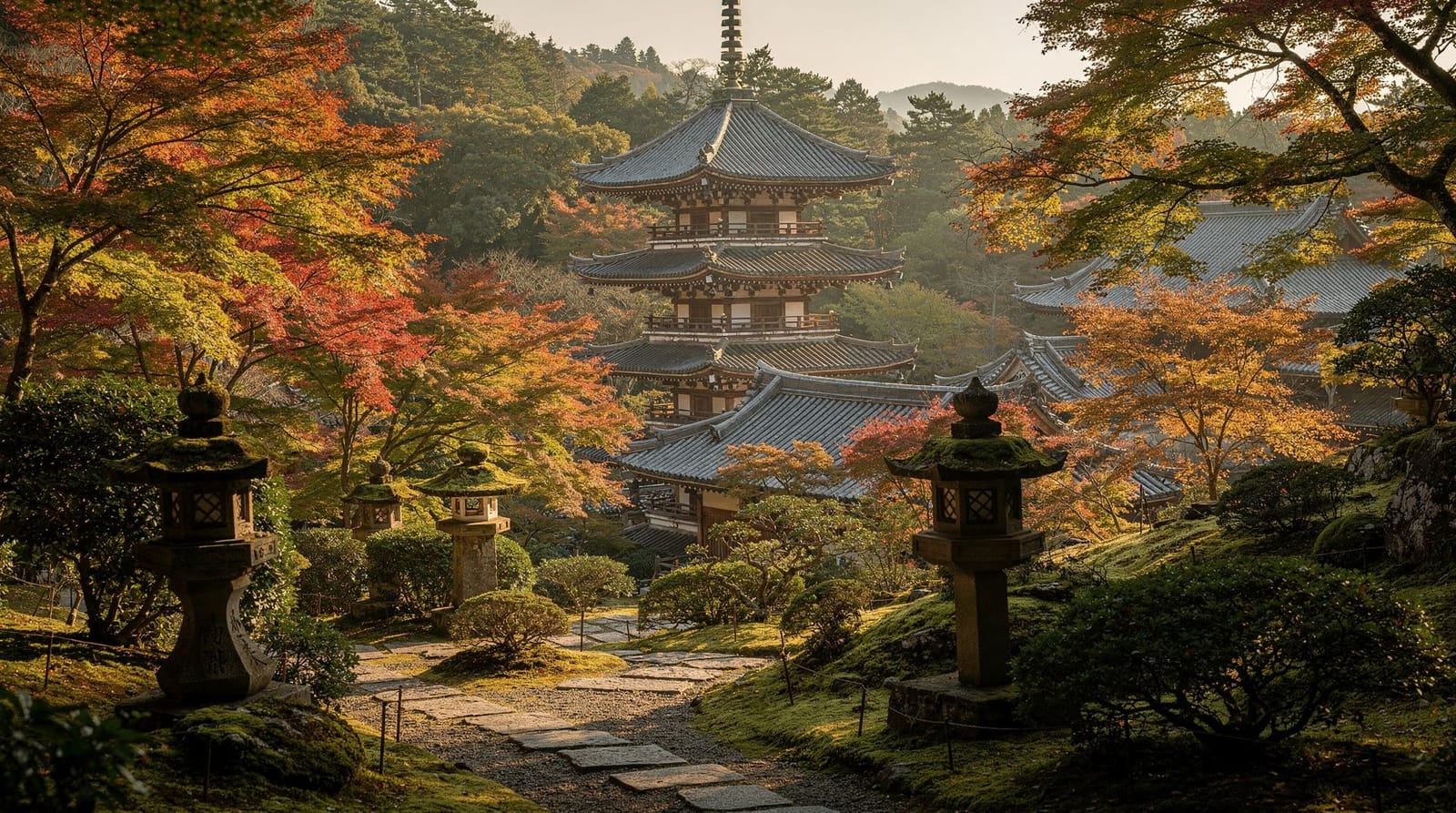
Autumn brings its own draw here that’s separate from kawadoko season: Kurama’s maple foliage, typically peaking in mid-to-late November, is genuinely excellent and considerably less crowded than the famous foliage spots in Higashiyama or Arashiyama, precisely because the area requires more effort to reach.
Kibune Shrine also runs a seasonal illumination event in November, lighting the approach path and surrounding maples after dark — worth checking current dates for if you’re visiting that month, and worth pairing with a look at our broader autumn foliage in Kyoto guide for how it compares to other viewing spots around the city. Summer, by contrast, is when the area is at its most functional as an escape from the city — see our Kyoto in summer guide for just how much hotter and more humid central Kyoto gets by comparison, which is really the whole reason kawadoko dining exists in the first place.
Eating outside kawadoko season
If you’re visiting October through April, don’t write off eating in the area — you just need different expectations. Both Kurama and Kibune have a handful of small soba, udon, and set-meal restaurants that operate year-round with normal indoor seating, generally more affordable than kawadoko pricing, typically ¥1,200-2,500 (~$8-16.70) for a full meal. Kurama village, right by the station, has more of these options than Kibune does, since Kibune’s economy leans heavily on the summer riverside trade.
Some Kibune kawadoko restaurants keep their indoor dining room open in the off-season at a fraction of summer’s price, which is worth asking about directly if you want the same kitchen’s food without the platform. Either way, eat lunch in Kurama before or after the temple visit rather than assuming you’ll find food easily once you’re deep into the hiking trail — there is none between the two villages.
Kurama-Kibune versus other northern Kyoto mountain trips
It’s worth placing this destination against the other options in Kyoto’s northern hills. Ohara, covered elsewhere in this guide, is a rural farming village with temple gardens and no real hiking trail — a gentler, more contemplative day. Kurama-Kibune is more physically active and has more of a wilderness feel, closer in spirit to a genuine mountain retreat than a temple-hopping day. If you’re staying near Kinkaku-ji or the northern Kitayama area, Kurama-Kibune is a reasonable add-on since you’re already on that side of the city, though the Eizan Railway connection still starts from Demachiyanagi rather than directly from Kinkaku-ji.
Compared to central attractions like the Philosopher’s Path, this is a genuinely different register of experience — less about temple architecture and more about landscape, water, and a slower pace. If your Kyoto trip runs five days or longer, it’s a strong candidate for a full free day; see our five-day Kyoto itinerary for how a mountain day like this can be slotted in without cannibalizing time from the must-see central temples.
Seasonal timing: what changes across the year
Timing matters more here than at almost any other destination in this guide, since the two headline draws — kawadoko dining and the hiking trail — are each restricted to specific windows.
| Season | Kawadoko dining | Hiking trail | Overall experience |
|---|---|---|---|
| Spring (Mar-May) | Not yet running | Open, comfortable | Quiet, good hiking weather |
| Summer (Jun-Sep) | Running mid-May to late Sep | Open, humid | The main reason to visit — river-cooled dining |
| Autumn (Oct-Nov) | Ends late September | Open, best foliage mid-to-late Nov | Excellent, less crowded than Higashiyama or Arashiyama for foliage |
| Winter (Dec-Feb) | Closed | Often closed or treacherous with snow | Least reliable; check conditions before going |
If kawadoko dining is the reason you’re making the trip, May through September is not a suggestion — it’s a hard requirement. If it’s the hiking trail and foliage you’re after, spring and autumn are the more reliable windows, with autumn (mid-to-late November) offering the added draw of Kibune Shrine’s evening illumination.
What to pack for the hike
Because there’s nowhere to buy supplies once you’re past Kurama-dera’s grounds, and cell signal is inconsistent along stretches of the trail and in parts of Kibune village, it’s worth packing deliberately rather than assuming you can improvise. Real walking shoes are non-negotiable — the trail includes stone steps, tree roots, and uneven sections that sandals or fashion sneakers handle poorly.
Bring more water than you think you need, since there’s no shop between the two villages, and a light layer even in summer, since the forested trail and Kibune’s valley run noticeably cooler than central Kyoto. Screenshot or download any restaurant reservation details and offline maps before leaving central Kyoto, and check the current last-train time back to Demachiyanagi before you set out, since missing it means an expensive taxi from a mountain village at night.
Honest planning notes and seasonal warnings
This is a place where poor timing ruins the trip more than at almost any other destination in this guide. Winter (December-February) brings real snow risk, closed or treacherous hiking trail conditions, reduced restaurant hours in both villages, and a noticeably colder, starker landscape that some travelers love and others find simply inconvenient. If you’re set on the hike, confirm trail conditions rather than assuming; if you’re set on kawadoko dining, you need May through September specifically, not “sometime warm.”
The last trains back to the city run earlier than many first-time visitors expect, especially outside peak season — don’t linger over a kawadoko dinner assuming you can catch anything past 9-10pm without a taxi plan.
And because there’s no GYG tour built specifically for this destination, most visitors do it independently; if you’d rather not manage transit and reservations yourself, a flexible private option like a customizable private full-day tour by car can build in Kurama and Kibune alongside other stops, which is particularly useful if you also want to combine the trip with nearby Ohara — both are northern-Kyoto mountain villages reachable in a single long day with a driver, though not easily by train in one trip.
For broader context on where a mountain day like this fits into a Kyoto itinerary, see our best day trips from Kyoto guide and our off-the-beaten-path Kyoto itinerary, both of which treat Kurama-Kibune as a legitimate full-day alternative to the more heavily trafficked temple circuits. If you’d rather have local knowledge on hand for reservations and trail conditions rather than DIY-ing the whole day, our best guided tours in Kyoto guide covers how to find a reputable private guide who can build Kurama-Kibune into a custom day.
One more practical note: cell signal is inconsistent in stretches of the hiking trail and in parts of Kibune village itself, tucked into a narrow valley. Download offline maps or screenshot your restaurant reservation details before you leave central Kyoto, and don’t rely on booking a kawadoko table or checking train times once you’re already on the mountain.
Frequently asked questions about visiting Kurama and Kibune from Kyoto
How do I get to Kurama and Kibune from Kyoto Station?
Take the Keihan Main Line or a city bus to Demachiyanagi Station first, then the Eizan Railway Kurama Line to either Kurama Station or Kibuneguchi Station, about 30 minutes and roughly ¥470 (~$3.10) one way. This is not covered by the Japan Rail Pass since Eizan is a private line.
Can I hike between Kurama and Kibune in one day?
Yes — the connecting trail past Kurama-dera’s main hall takes about 60-90 minutes on foot and is rated moderate, with some steep, uneven sections. Wear proper walking shoes and bring water; there’s nowhere to buy either mid-trail.
What is kawadoko dining and when can I do it?
Kawadoko is riverside dining on wooden platforms built directly over the Kibune-gawa river, running roughly mid-May through late September. Meals are kaiseki-style and typically cost ¥8,000-15,000+ (~$53-100+) per person; reservations are essentially required, especially on summer weekends.
Is Kurama Onsen worth visiting if I’m not staying overnight?
Yes, day-use bathing is available and doesn’t require a hotel stay. The outdoor rotenburo with its valley view is the main draw, running roughly ¥1,000-1,300 ($6.70-8.70) for outdoor-only access, with a higher combined indoor-outdoor option around ¥2,500 ($16.70).
Is there a GYG or guided tour specifically for Kurama and Kibune?
No dedicated tour product covers this area specifically — it’s best done independently by train, or added to a customizable private full-day car tour if you’d prefer not to manage the connections and reservations yourself.
What’s the tengu legend at Kurama-dera about?
Local legend holds that Minamoto no Yoshitsune, as a boy known as Ushiwakamaru, trained in swordsmanship in the forest around Kurama-dera under tengu, supernatural mountain beings associated with martial skill. Tengu imagery appears throughout Kurama village as a result.
Is winter a bad time to visit Kurama and Kibune?
Winter brings real snow risk in the hills, potentially closed or difficult hiking trail conditions, and reduced restaurant hours, particularly in Kibune where kawadoko dining isn’t running. It’s still visitable, but check current conditions rather than assuming access matches summer.
How much time should I budget for a Kurama-Kibune day trip?
A full day, realistically. Between transit time from central Kyoto, the temple and cable car or hike up to Kurama-dera, the connecting trail, and time in Kibune village, most travelers need six to eight hours door to door, more if dining at a kawadoko restaurant.
What should I pack for the Kurama-to-Kibune hike?
Real walking shoes, more water than you think you’ll need, a light layer even in summer, and offline maps or screenshots of any reservations, since cell signal is inconsistent and there’s nowhere to buy supplies once you’re past Kurama-dera’s grounds.
Is Kurama-Kibune a good fit for a first-time Kyoto visit?
Not usually as a priority. It rewards travelers with four or more days who have already covered the essential central temples and want a genuinely different, quieter mountain day. First-time visitors on a short trip are generally better served prioritizing Higashiyama, Gion, and Arashiyama first.
Top experiences
Bookable activities with verified prices and instant confirmation on GetYourGuide.