Best food tours in Kyoto — Nishiki, Gion evening and Pontocho compared
Kyoto: Nishiki Market Food Tour-7 Tastings
What is the best food tour in Kyoto?
It depends on timing and appetite: a daytime Nishiki Market tour (roughly 3 hours, 7-13 tastings, US$70-110) is the best introduction to Kyoto's market culture and works well with jet lag since it starts mid-morning. An evening Gion or Pontocho food tour (3-4 hours, US$100-140) covers more substantial dishes across multiple small restaurants and is better if you want a proper dinner replacement rather than a grazing session.
Three different formats, not one generic “food tour”
Kyoto has enough food tour operators that the category has split into genuinely different formats rather than one interchangeable product with different guides. Daytime tours center on Nishiki Market and move through a covered arcade in quick tasting stops. Evening tours move through Gion and Pontocho, Kyoto’s historic entertainment districts, between several small sit-down restaurants and bars, and cover more substantial dishes. A smaller category — izakaya crawls and bar-hopping formats — focuses more on drinking culture with food as a secondary element.
None of these is objectively “the best” — they suit different trips. What follows is a practical comparison, including honest notes on which format tends to disappoint people who booked the wrong one for their expectations.
| Format | Nishiki (day) / Gion, Pontocho (evening) / izakaya crawl |
| Time needed | 2.5-4 hours |
| Cost | US$70-150 per person |
| Best time | Nishiki mid-morning; evening tours as a dinner replacement |
| Booking | 1-2 weeks ahead; earlier during sakura/momiji season |
Nishiki, Gion and izakaya tours, compared
| Nishiki Market | Gion / Pontocho | Izakaya crawl | |
|---|---|---|---|
| Time of day | Mid-morning | Evening | Evening |
| Duration | 2.5-3.5 hrs | 3-4 hrs | 3-4 hrs |
| Price | US$70-115 | US$100-150 | Similar to Gion |
| Food volume | Grazing, small tastings | Substantial, dinner-replacement | Drinking-forward, food secondary |
| Best if | First visit, jet-lagged, low commitment | Want a proper dinner + atmosphere | Already ate, want a night out |
Daytime: Nishiki Market tours
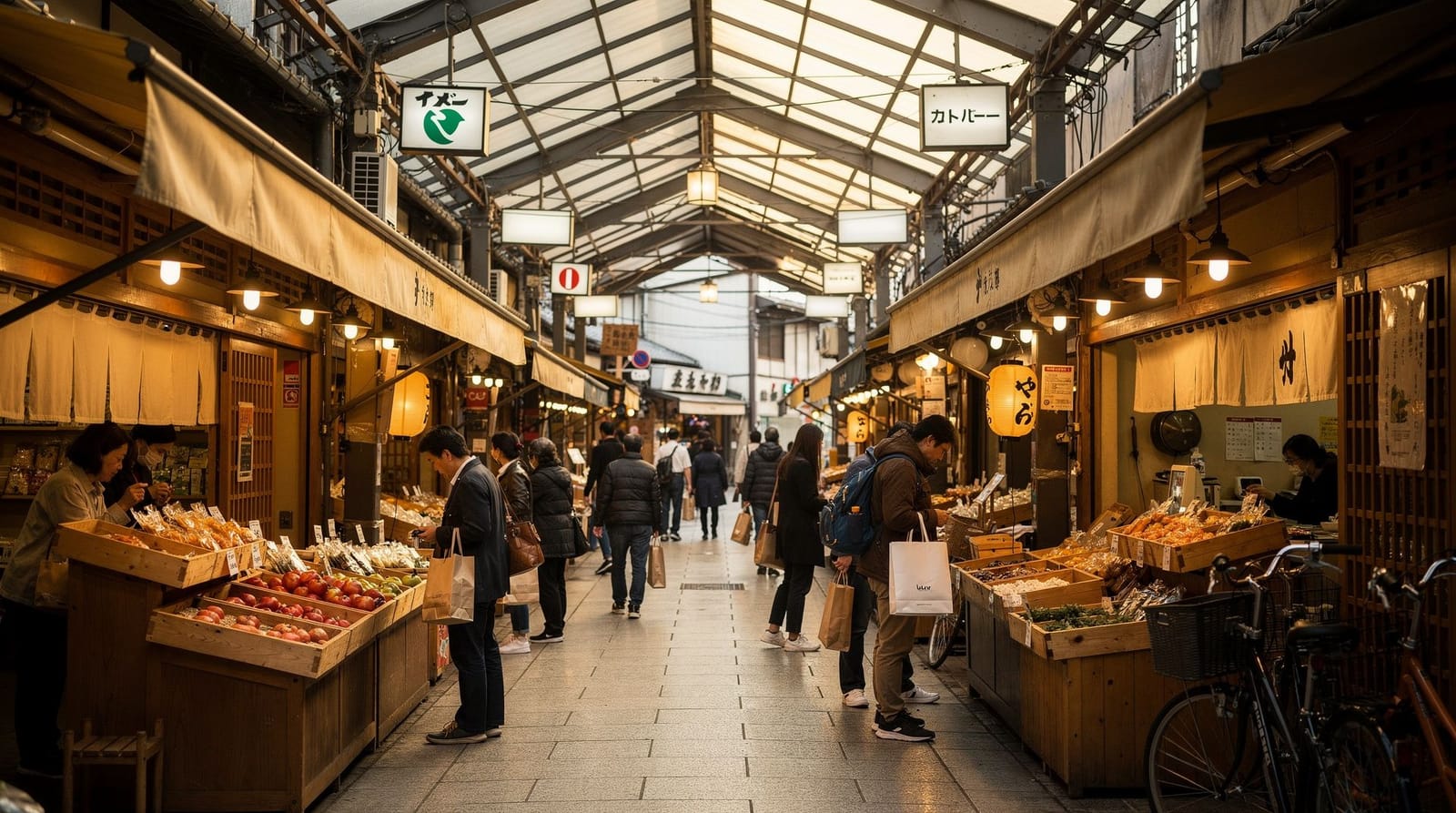
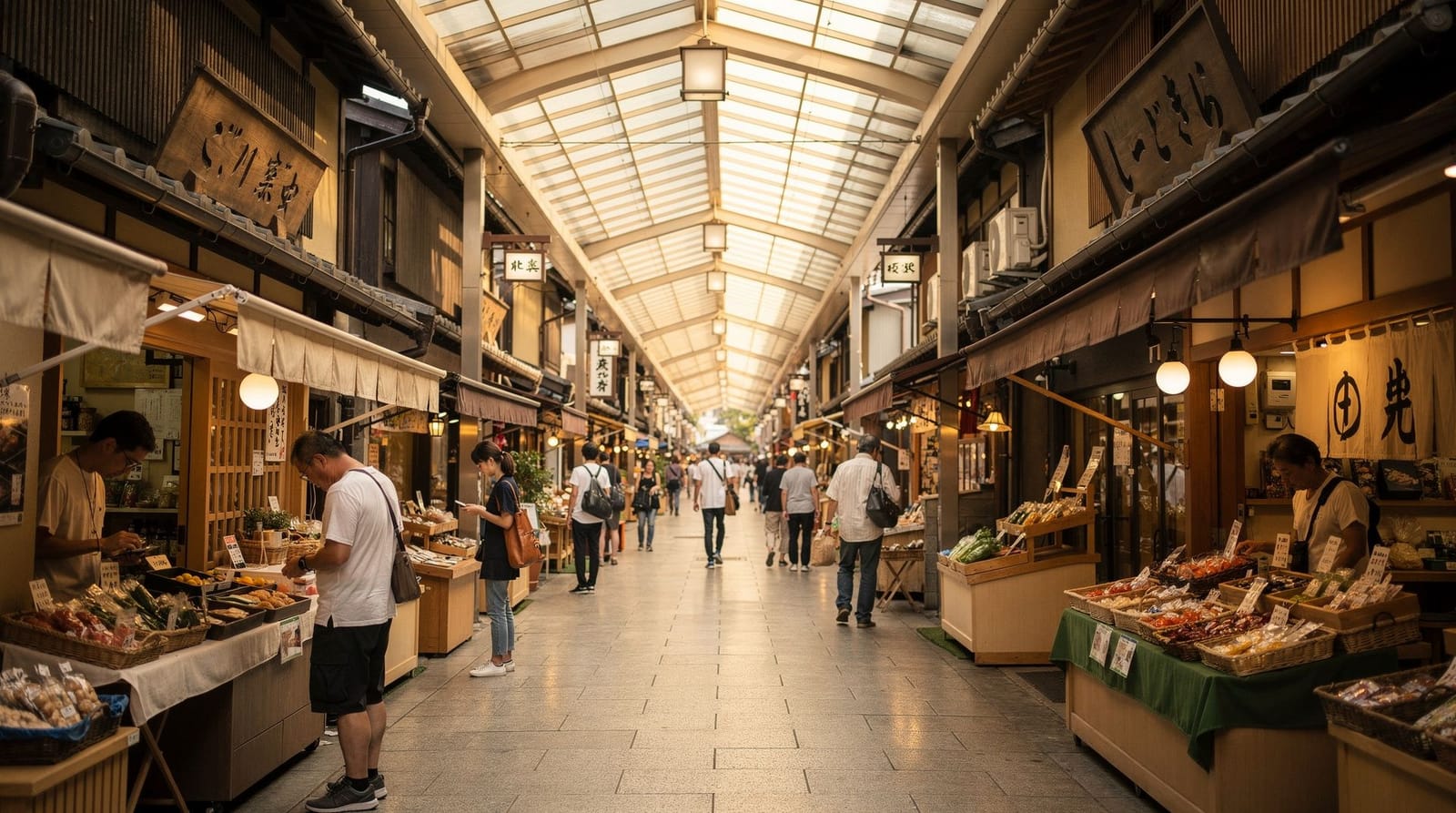
Nishiki Market tours run through Kyoto’s Kitchen, the roughly 400-meter covered market arcade downtown — see the Nishiki Market guide for the market itself. Most run 2.5-3.5 hours, include 7-13 tastings, and cost roughly US$70-115 per person in a small group. They typically start mid-morning (10-11am), which makes them a reasonable option even with jet lag, since you’re not committing to a late evening.
The value here is mostly about access and pacing: a good guide takes you to specific stalls worth stopping at rather than the ones simply closest to the entrance, explains what you’re eating, and manages the ordering so you’re not guessing at a menu with no English. The tradeoff is that individual tastings are small — this is a grazing tour, not a full meal, and most people are hungry again within a couple of hours.
Nishiki Market food tour with 7 tastingsEvening: Gion food tours
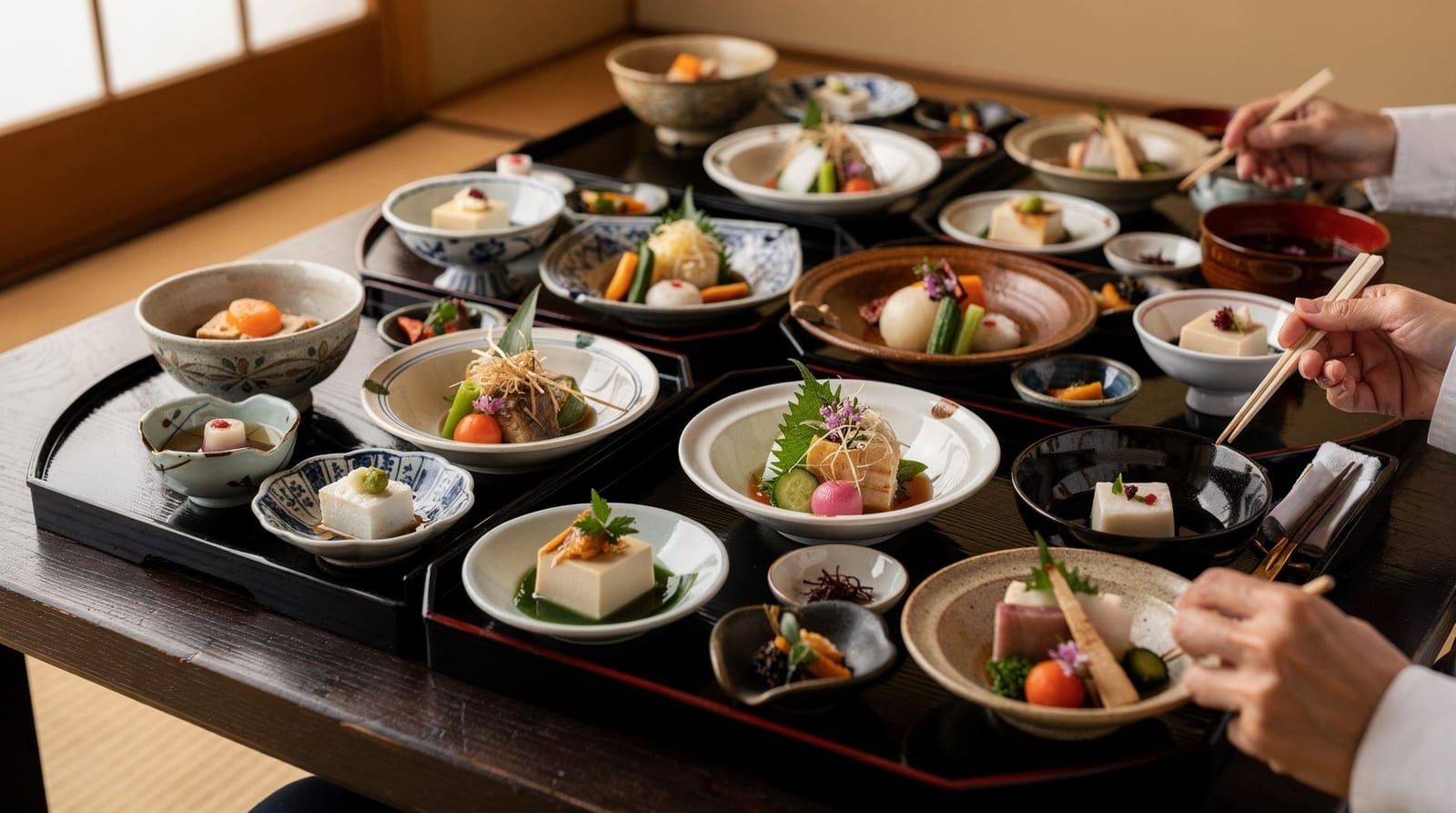
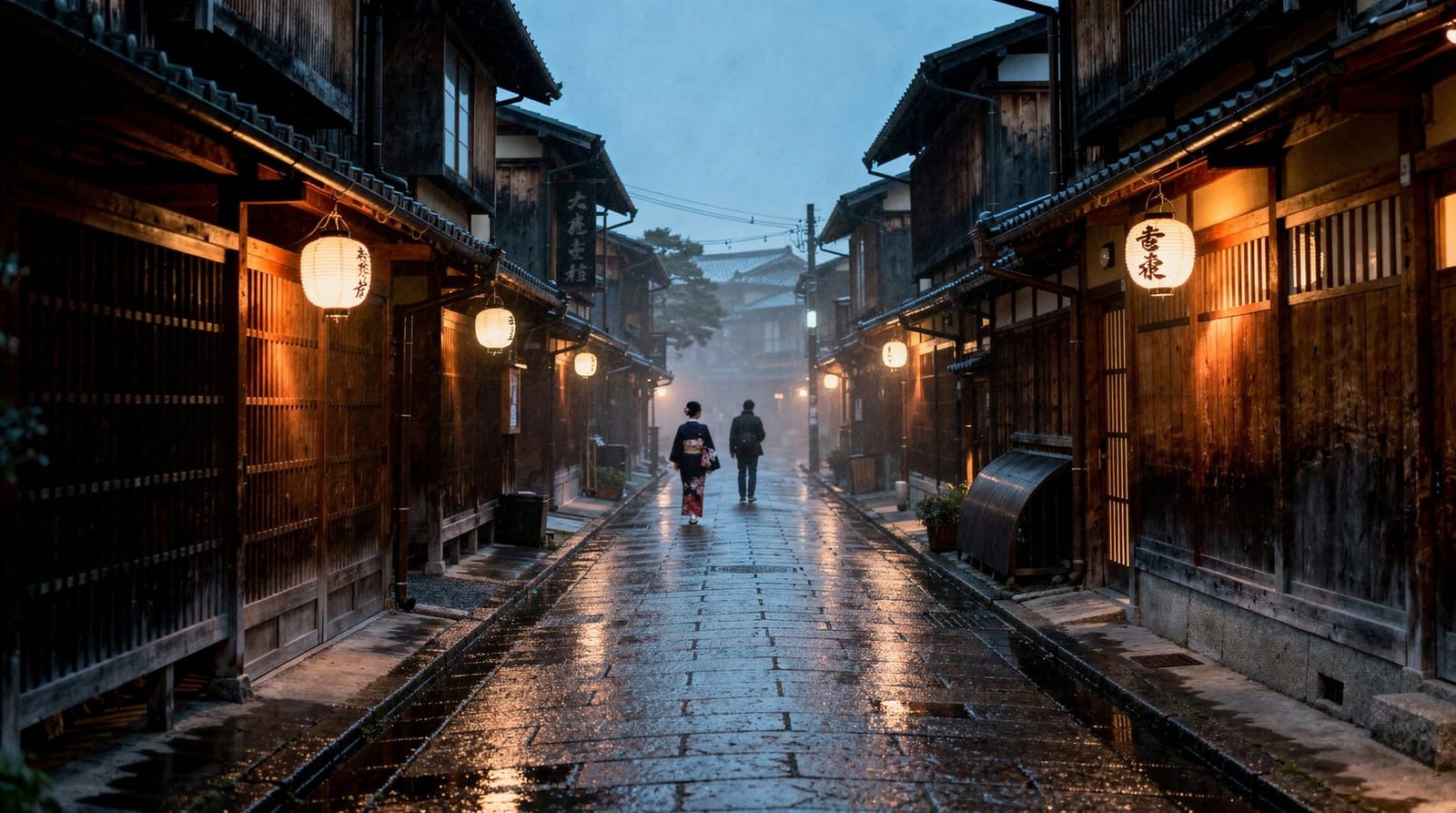
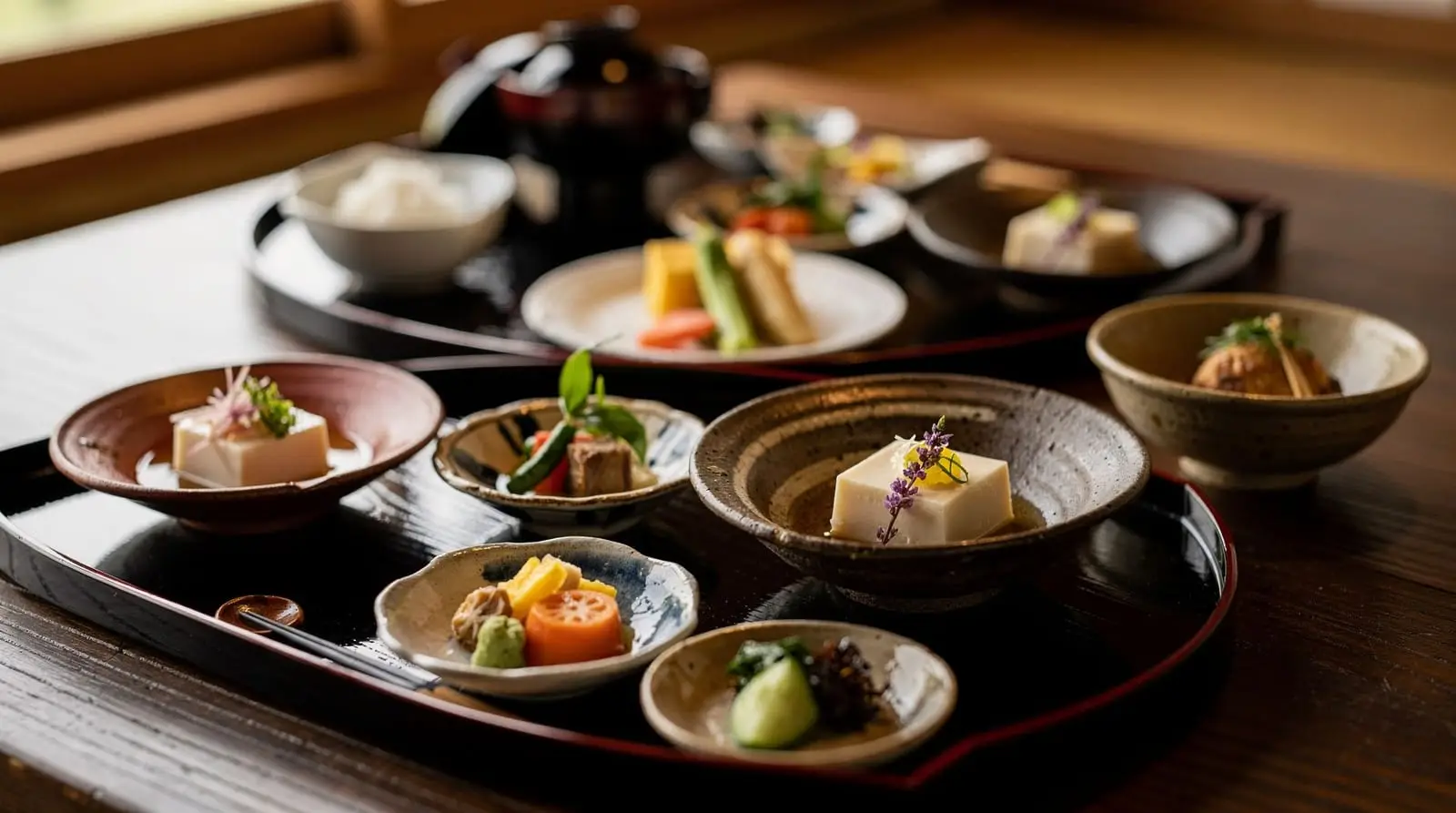
Gion food tours move through Kyoto’s most famous geisha district in the evening, typically 3-4 hours, stopping at multiple small restaurants and bars for more substantial dishes than a market tour offers — think a few real courses rather than street-food-sized tastings. Prices run roughly US$100-140 per person. Some versions layer in geisha-district history and etiquette as you walk, which is a genuine value-add in Gion specifically, since the district’s alleys and teahouses have context that’s easy to miss walking through alone.
Kyoto evening Gion food tourThese tours work best as a dinner replacement, not an add-on after you’ve already eaten — pace yourself accordingly, since arriving already full undercuts the whole format. For more on the neighborhood itself, see the Gion destination guide.
Gion-Pontocho combined tours: more ground, more dishes
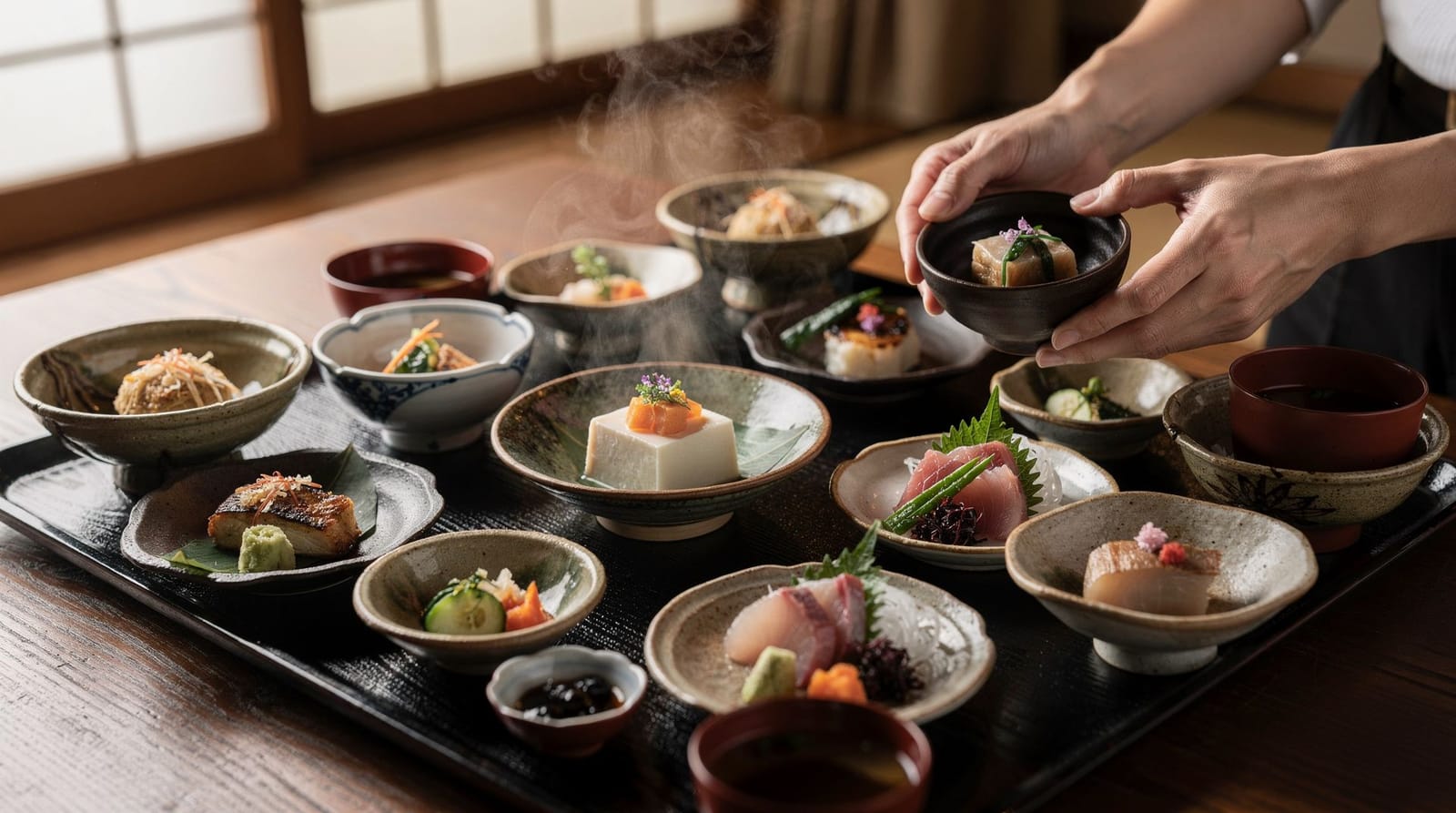
A step up from a single-district evening tour, combined Gion-Pontocho tours move between both of Kyoto’s adjoining nightlife and dining alleys in one evening, typically covering more dishes — some are marketed specifically around a set number of tastings (13 dishes is a common format). These run longer, often 3.5-4 hours, and cost a similar US$110-150 range to single-district evening tours, so the extra ground covered is close to free if your feet can handle a longer walking evening.
Gion and Pontocho food tour, 13 dishesPontocho itself — a single narrow lantern-lit alley running along the Kamo River, packed with restaurants from yakitori counters to high-end kaiseki — is worth understanding on its own even outside a tour; it sits inside the broader downtown Kyoto area.
Izakaya crawls and night food tours: drinking-forward, food-secondary
A separate category worth distinguishing: night food tours built around izakaya (casual Japanese pubs) and bar crawls, where the emphasis shifts toward drinking culture and hidden, non-touristy bars, with food functioning more as pairing than as the main event. These are a better fit for travelers who’ve already eaten dinner and want an evening out, rather than people looking for a meal.
Kyoto night food tour: izakaya crawlIf you’re choosing between this and a Gion food tour and you haven’t had dinner yet, the Gion or Gion-Pontocho tour is the better call — you’ll leave genuinely fed rather than lightly snacked and several drinks in.
Group size and price: what you’re actually paying for
Small-group tours (typically 6-12 people) are the standard, mid-priced format across all three categories above. Private tours cost roughly 1.5-2x the per-person group rate but are worth it for travelers with dietary restrictions that need real accommodation, families wanting a slower pace, or groups of four or more where the private per-person cost starts to approach the group rate anyway. For a couple or solo traveler on a standard budget, a small-group tour covers the same core stops without the premium.
Tipping, and what’s actually included in the price
Tipping isn’t part of Japanese service culture, food tours included — the price you pay upfront covers the guide, all listed tastings, and in most cases any admission fees along the route (Nishiki Market itself is free to enter, so this mainly applies to combined itineraries that include a paid stop). Attempting to tip a guide directly can occasionally cause visible discomfort rather than being received as a compliment, so it’s genuinely not expected and not necessary.
What’s worth double-checking before booking is exactly how many tastings are “full” versus “sample-sized.” Marketing copy for these tours sometimes lists a number of tastings that includes small bites alongside more substantial dishes, which can leave the actual total food volume lighter than the headline number suggests. Reading the specific stop list in a tour’s description, rather than just the tasting count, gives a more accurate sense of whether you’ll leave satisfied or still hungry.
Cooking classes versus tasting tours
A related but distinct category worth knowing about: hands-on cooking classes, where you make sushi, udon or wagashi yourself rather than tasting food prepared by others along a walking route. These run longer per dish produced, are less about neighborhood exploration and more about a single focused skill, and tend to appeal to a different kind of traveler — someone who wants an activity and a souvenir skill rather than a broad sample of the city’s food scene in one sitting.
If your main goal is seeing and understanding Kyoto’s food culture across several dishes and neighborhoods, a tasting tour covers more ground; if you want to actually learn to make one thing well, a cooking class is the better fit. See the Kyoto food guide for more on which specific classes are commonly available.
What to wear and bring
Food tours in Kyoto involve a meaningful amount of walking — typically 2-4km over the course of the tour, more for combined Gion-Pontocho itineraries — so comfortable closed-toe shoes matter more than any dress code concern. Evening tours through Gion and Pontocho occasionally involve stops with tatami seating, where shoes come off at the entrance, so slip-on footwear or socks without holes is a small but genuine practical consideration. Bring cash in small denominations even if the tour itself is prepaid — optional extra drinks, additional purchases at a stall, or a tip-adjacent gratitude gesture at a very traditional stop (uncommon, but it happens) are easier with cash on hand than a card.
Meeting points and cancellation policies
Most tours meet at a fixed, well-marked point — often a train station exit or a recognizable landmark near the starting neighborhood — communicated in the booking confirmation, and it’s worth screenshotting or noting the exact meeting spot rather than relying on a data connection working perfectly in the moment. Group sizes mean tours generally don’t wait long for latecomers; arriving 10-15 minutes early is the safer habit, particularly for evening tours where the group moves promptly to the first reservation-dependent stop.
Cancellation policies vary by operator, but many small-group food tours allow a full or partial refund with 24-48 hours’ notice, tightening closer to no refund inside that window since restaurants and stall vendors are often informed of expected numbers in advance. Weather is rarely a valid cancellation reason on its own for an outdoor walking tour like a Nishiki Market visit, so check the specific policy if rain is a concern for your dates.
When a tour isn’t worth it
If you’re comfortable pointing at a menu, asking simple questions, or already know Kyoto’s food culture from a previous visit, the same money goes further split across two or three independent meals — a market grazing session plus a proper sit-down dinner, for instance, likely costs less than one tour and gives you more food overall. Tours earn their price mainly through access, explanation and not having to guess — if you don’t need those things, skip it and read the Kyoto food guide and Nishiki Market guide instead, then go eat on your own schedule.
Booking timing: peak seasons sell out
Popular small-group tours, particularly evening Gion and Pontocho formats, can sell out a week or more ahead during cherry blossom season (late March-early April) and peak autumn foliage (mid-November), when Kyoto’s visitor numbers spike hardest. Outside those windows, 1-2 weeks’ notice is a reasonable safety margin; during them, book as soon as your dates are confirmed rather than waiting until you land.
Dietary restrictions and allergies, in practice
Kyoto’s traditional cuisine leans heavily on dashi made from bonito flakes and kombu, which means a dish that looks vegetarian — pickled vegetables, tofu, certain noodle broths — often isn’t by default, and gluten (soy sauce, wheat-based noodles) shows up in more places than a Western traveler might expect.
A genuinely reliable strategy is emailing the tour operator directly before booking with your specific restriction rather than relying on a general “vegetarian-friendly” tag in the listing, since substitutions vary considerably by guide and by which stalls or restaurants are on that day’s route. Shojin ryori (Buddhist temple vegetarian cuisine) tours and classes are the most dependable option for strict vegetarians or vegans, since the entire cuisine is built without meat, fish or dashi from the ground up, rather than adapted dish by dish.
Combining a food tour with the rest of your Kyoto day
A daytime Nishiki Market tour pairs naturally with sightseeing on either side, since it’s a grazing-style meal rather than a full dinner — many visitors follow it with an afternoon temple visit or the nearby downtown Kyoto shopping streets. Evening Gion or Pontocho tours work best as the day’s closing activity, since they function as dinner and leave you within walking distance of Gion’s lantern-lit evening atmosphere afterward, rather than needing to travel elsewhere once the tour ends. Scheduling a food tour on a day that’s otherwise lighter on walking is worth considering too, given the 2-4km typically covered on top of whatever sightseeing preceded it.
Frequently asked questions about Kyoto food tours
Are Kyoto food tours worth the money compared to eating independently?
For a first visit, yes, mainly for the access and explanation. Good guides get you into small restaurants and stalls without English menus and explain the food’s significance. If you already know the city, the same budget goes further eating independently.
How much do Kyoto food tours typically cost?
Daytime Nishiki Market tours run roughly US$70-115 for 2.5-3.5 hours with 7-13 tastings. Evening Gion, Pontocho or combined-neighborhood tours run higher, roughly US$100-150. Private tours cost 1.5-2x the group rate.
Do Kyoto food tours include alcohol?
Some do, some don’t — check the tour’s specific inclusions. Evening izakaya-crawl and bar-hopping formats generally include drinks; daytime market tours usually don’t by default, though a sake tasting is sometimes an optional add-on.
Is a private food tour worth the extra cost over a small-group tour?
Worth it for dietary restrictions, a slower pace, or a group of four or more where the private per-person cost approaches the group rate. For a solo traveler or couple on a budget, a small-group tour covers the same stops for less.
What’s the difference between a Nishiki Market tour and a Gion food tour?
A Nishiki Market tour happens during the day in the covered market arcade with quick tastings. A Gion or Pontocho food tour happens in the evening across several small restaurants, with more substantial dishes and some geisha-district history.
Can vegetarians or vegans do a Kyoto food tour?
Some can accommodate this with advance notice — check before booking. Kyoto’s obanzai and street food culture leans vegetable-forward, but bonito-based dashi appears in many dishes that look vegetarian by default.
How far in advance should I book a Kyoto food tour?
Popular tours can sell out a week or more ahead during cherry blossom (late March-early April) and autumn foliage (mid-November) season. Outside those peaks, 1-2 weeks’ notice is a reasonable margin.
Choosing between them: a quick decision guide
If it’s your first Kyoto visit and you want a low-commitment introduction, start with a daytime Nishiki Market tour — shorter, cheaper, and forgiving of jet lag. If you want a proper dinner with atmosphere and history built in, book an evening Gion or Gion-Pontocho tour. If you’ve already eaten and want a drinking-focused evening out, an izakaya crawl fits better than either. And if none of that appeals, both the Nishiki Market guide and the broader Kyoto food guide give you enough to plan the same meals independently.
Frequently asked questions about Best food tours in Kyoto — Nishiki, Gion evening and Pontocho compared
Are Kyoto food tours worth the money compared to eating independently?
How much do Kyoto food tours typically cost?
Do Kyoto food tours include alcohol?
Is a private food tour worth the extra cost over a small-group tour?
What's the difference between a Nishiki Market tour and a Gion food tour?
Can vegetarians or vegans do a Kyoto food tour?
How far in advance should I book a Kyoto food tour?
Top experiences
Bookable activities with verified prices and instant confirmation on GetYourGuide.