Kyoto food guide — kyo-ryori, yudofu, obanzai and what locals actually eat
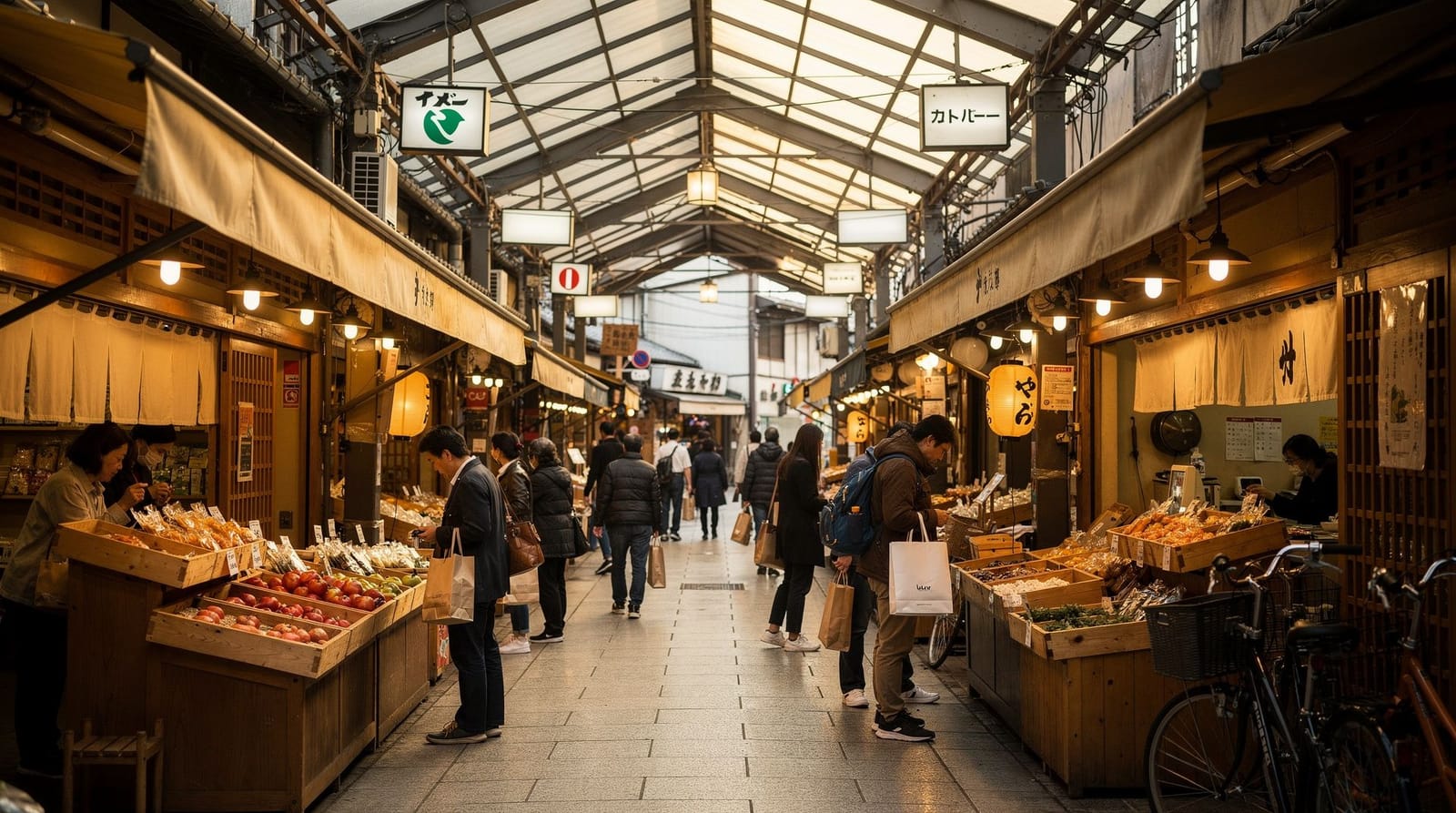
Kyoto: Nishiki Market Food Tour-7 Tastings
What makes Kyoto's food different from the rest of Japan?
Kyoto's cuisine was shaped by centuries as an inland capital with no seaport, a Buddhist temple culture that produced shojin ryori (vegetarian temple food), and exceptionally soft local water that makes its tofu, yudofu and dashi distinctive. The result is a lighter, more vegetable- and tofu-forward style than the seafood-heavy cooking of coastal Japan, built around obanzai home cooking, kyo-yasai heirloom vegetables and refined kaiseki dining.
| Formal kaiseki | ¥15,000-50,000+ per person |
| Casual obanzai | ¥400-900 per small dish |
| Everyday set lunch | ¥900-1,500 |
| Best free browse | Nishiki Market |
| Book ahead | Kaiseki and any restaurant under 15-20 seats |
Why Kyoto’s food tastes different from the rest of Japan
Kyoto spent over a thousand years as Japan’s inland imperial capital, with no direct access to the sea. That single geographic fact shaped the entire cuisine: instead of building around fresh fish the way Tokyo or the coastal cities did, Kyoto cooks leaned on what the surrounding basin actually produced well — vegetables, tofu, freshwater fish preserved for the journey inland, and rice. Layer on centuries of Zen Buddhist temple culture, an imperial court obsessed with seasonal presentation, and a groundwater supply that happens to be unusually soft and mineral-light, and you get a food identity that’s genuinely distinct rather than just a regional variation.
That identity has three main threads, and most of what you’ll eat in Kyoto falls into one of them: kaiseki (formal, multi-course, expensive), obanzai (home-style, everyday, cheap) and shojin ryori (Buddhist vegetarian, tied to temples). Tofu and wagashi (traditional sweets) run through all three. None of this is folklore dressed up for tourists — you can taste the difference between Kyoto tofu and tofu from a Tokyo supermarket in a single bite.
Kaiseki: the formal end of the spectrum
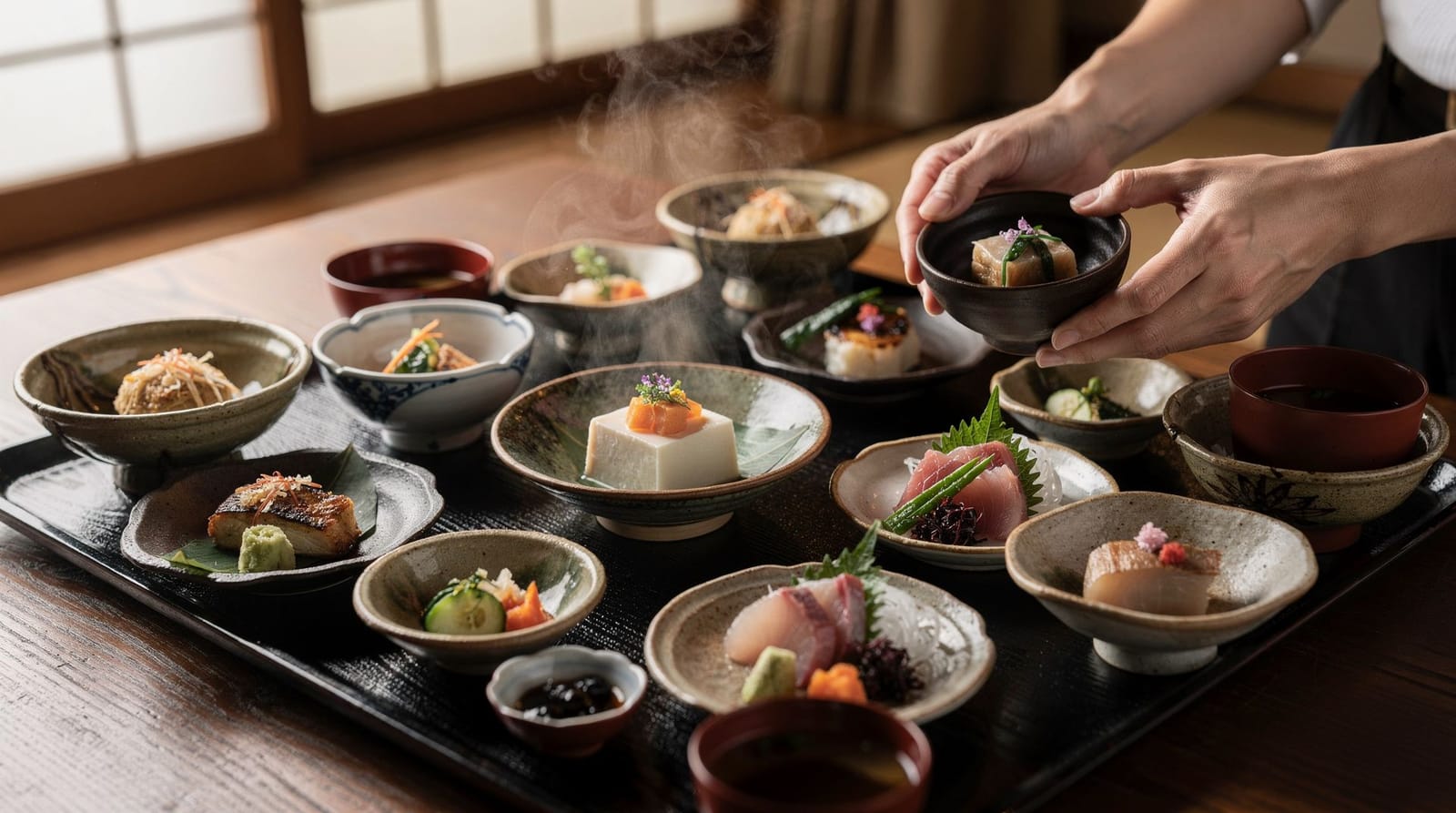
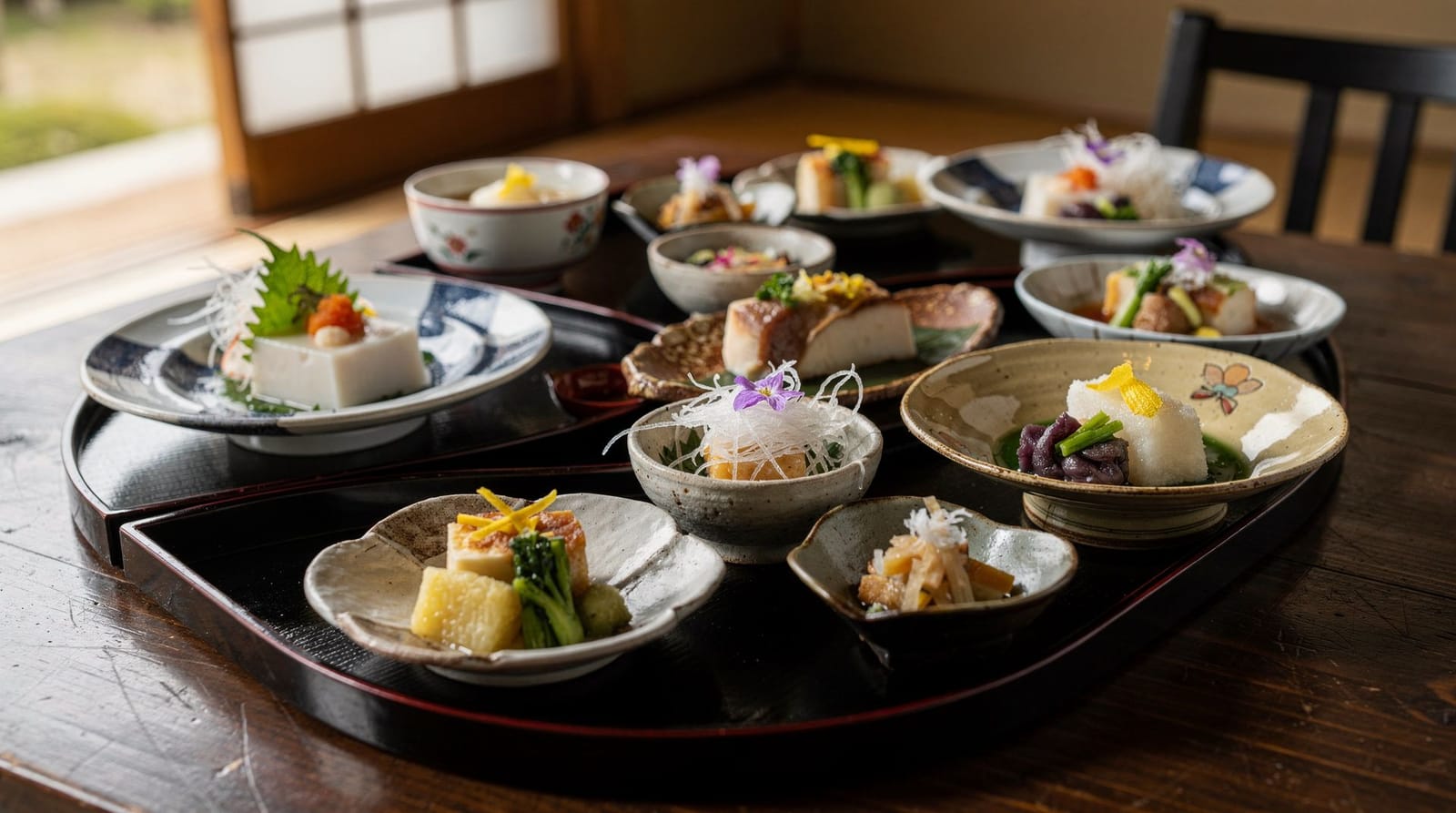
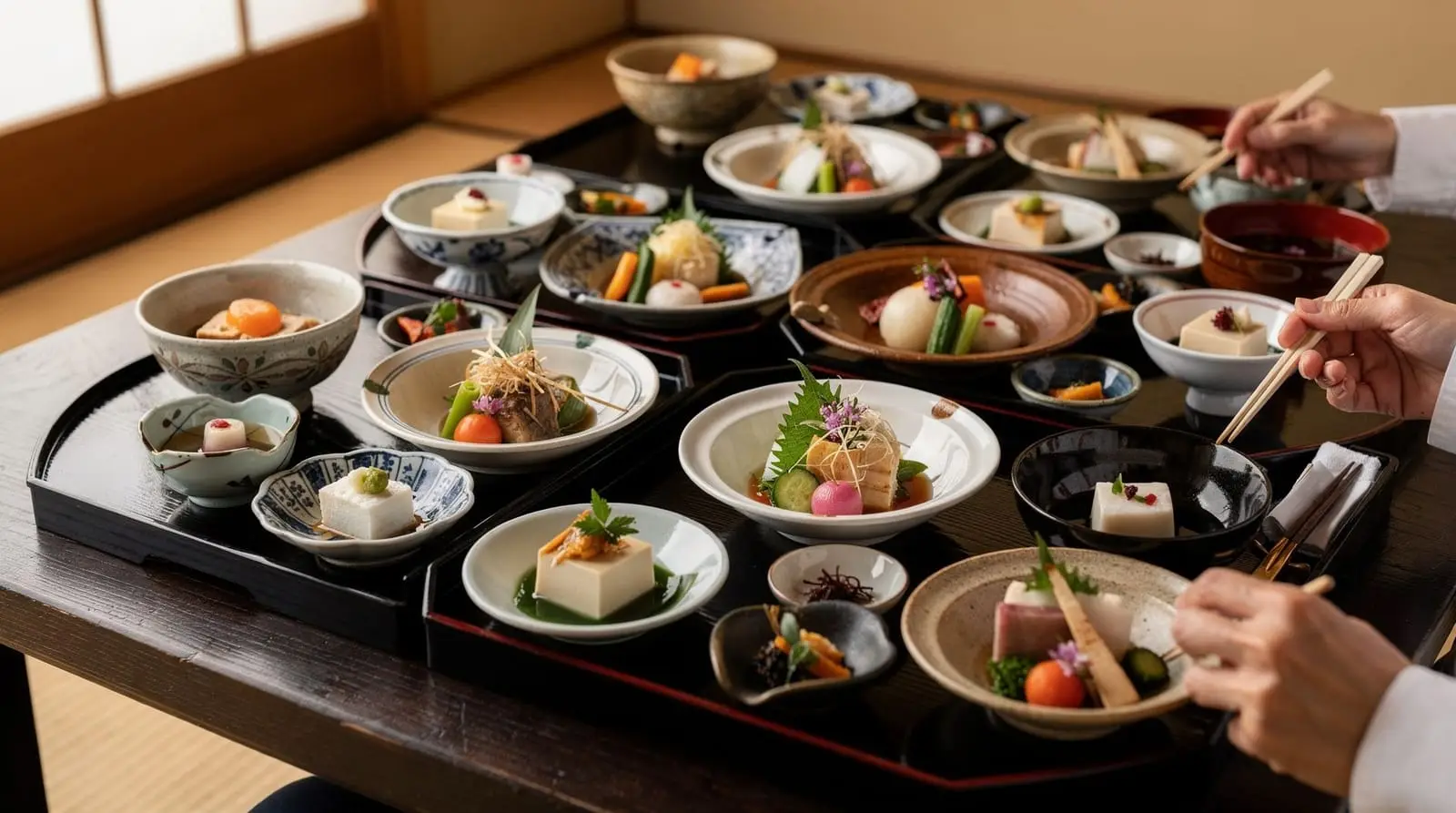
Kaiseki is the multi-course haute cuisine most people picture when they hear “Kyoto food” — a fixed sequence of small, precisely composed courses (usually 8-12) built entirely around what’s in season that week, served over one to two hours. It evolved out of the meal that accompanied the tea ceremony (originally just rice, soup and a few simple dishes to prepare the palate for tea) and later absorbed elements of honzen ryori, the elaborate banquet cuisine of the samurai court.
A full kaiseki dinner at a well-regarded Kyoto restaurant runs roughly ¥15,000-50,000+ (US$100-330+) per person, and the most famous names — multi-generation restaurants in Higashiyama and Gion — sit at the top of that range or above it. It’s genuinely expensive, and worth going in with realistic expectations: this is slow, quiet, formal dining, not a place to fill up fast. For a full breakdown of what to expect, how to book, and cheaper lunch-kaiseki and kappo alternatives, see the kaiseki dining guide.
Kaiseki dinner at a historical Kyoto townhouseObanzai: the everyday cooking nobody markets
Obanzai is the opposite of kaiseki in almost every way — it’s Kyoto’s home cooking, built around small dishes of seasonal vegetables, simmered, lightly pickled or dressed, historically designed around using every part of an ingredient rather than wasting anything. It developed as practical household cooking in a landlocked city where fresh fish was scarce and expensive, so vegetables, tofu, and dried or preserved goods had to carry the meal.
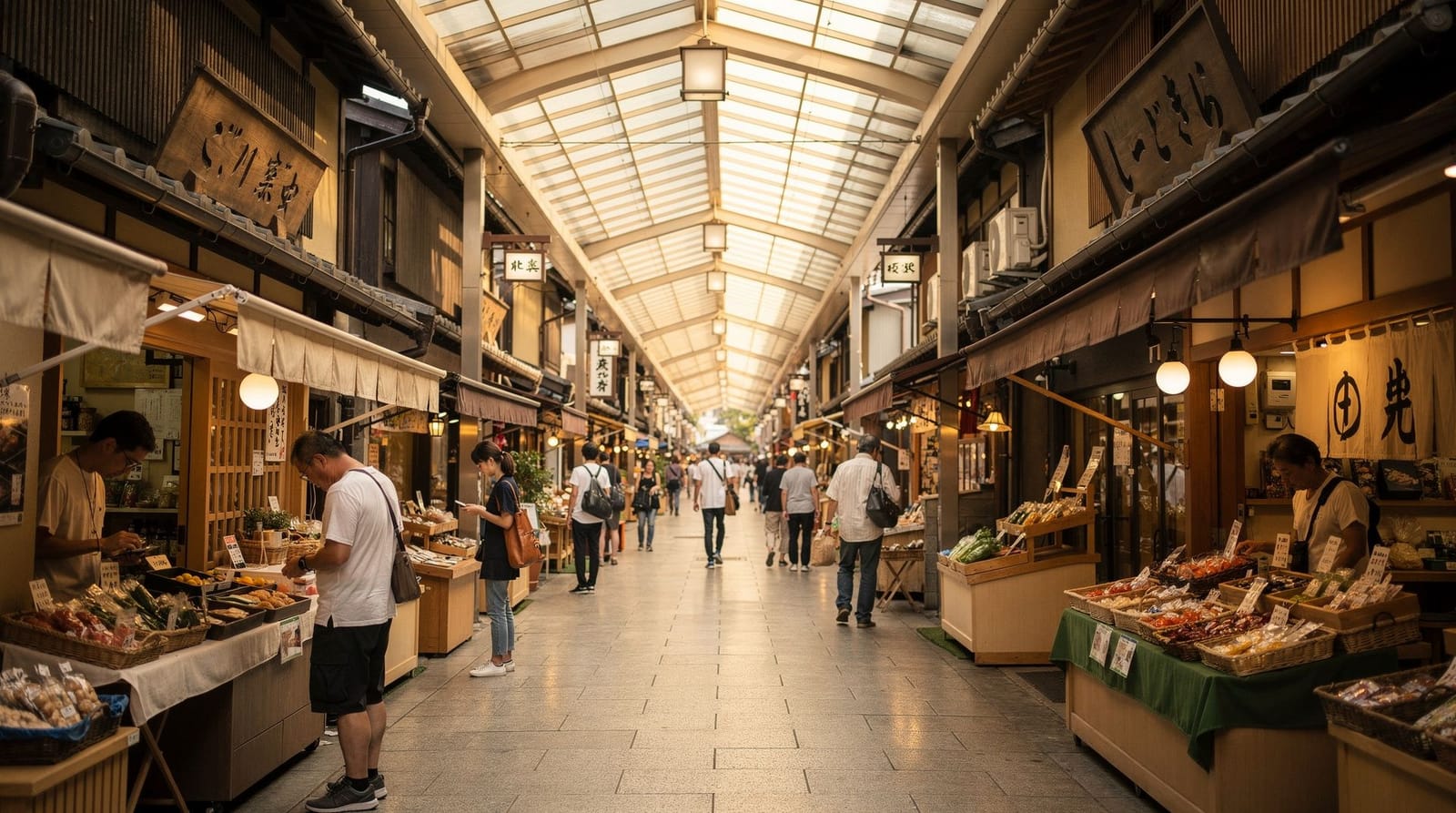
Casual obanzai restaurants and counters cluster around Pontocho, Kiyamachi-dori and the narrow streets behind Nishiki Market. The format is usually a counter or small dining room where you pick a handful of small dishes — priced roughly ¥400-900 (US$2.70-6) each — plus rice and miso soup. It’s the most honest, least touristy way to eat in the city, and it’s genuinely affordable: a full meal of five or six obanzai dishes runs ¥2,500-4,500 (US$17-30), well below what a kaiseki course costs for a single course.
Yudofu and Kyoto’s soft-water tofu tradition
Yudofu — blocks of tofu simmered gently in a kelp broth and eaten with dipping sauces, condiments like grated ginger and scallion — sounds almost too plain to be a specialty, and that’s exactly the point. It works because Kyoto’s tofu is unusually good, a direct result of the groundwater under the city being naturally soft and low in the minerals that can make tofu taste chalky or bitter elsewhere. Several tofu makers near Nanzen-ji and in Arashiyama still press it fresh daily using traditional methods, some of them centuries old.
Nanzen-ji, on the eastern edge of the city, is the traditional home of yudofu — restaurants clustered around the temple’s approach have served it to visiting monks and pilgrims for generations, and a yudofu set meal there typically runs ¥3,000-6,000 (US$20-40). It’s a good example of a Kyoto dish where the “tourist” version and the “authentic” version are the same thing, because the tradition genuinely centers on that neighborhood.
Wagashi: seasonal sweets built around matcha
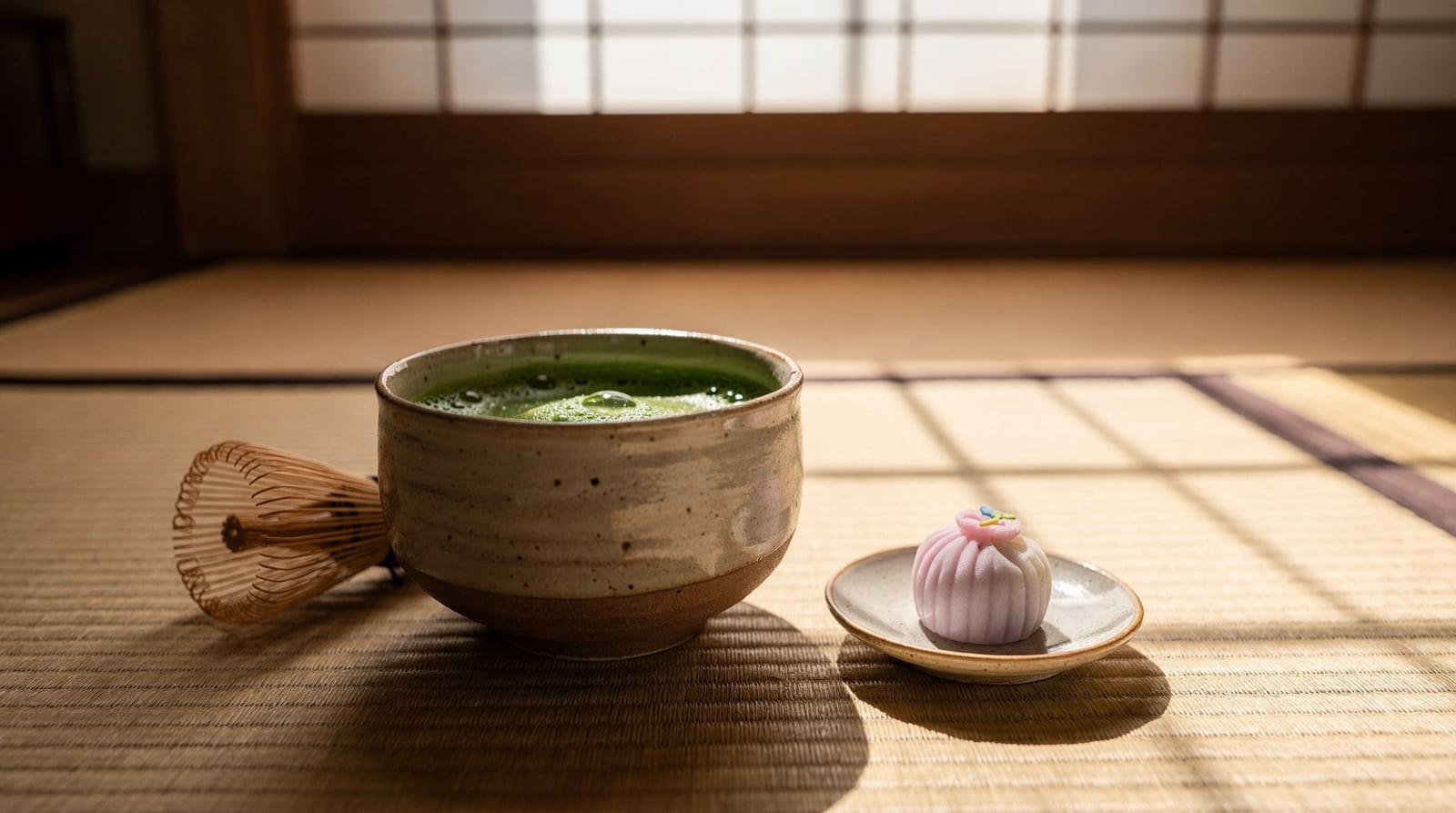
Wagashi — traditional Japanese confectionery, often paired with matcha at tea ceremonies — is one of the clearest places where Kyoto’s obsession with seasonality shows up on a plate. A good wagashi shop changes its shapes and colors through the year: cherry blossom motifs in spring, cool jelly-like kuzukiri in summer, maple leaves in autumn, plum blossoms in winter. Kagizen Yoshifusa, a shop in Gion operating since the early 1600s, is one of the best-known names for this, particularly its kuzukiri (chilled arrowroot noodles served with a brown sugar dipping syrup) in the warmer months.
Beyond the historic specialty shops, wagashi shows up constantly and cheaply as street food — small stalls selling dango, mochi and matcha-flavored sweets around Nishiki Market, Arashiyama and Gion, usually ¥150-400 (US$1-2.70) per piece. For a full rundown of grab-and-go wagashi and other street snacks, see the Kyoto street food guide.
Wagashi sweets-making class in KyotoShojin ryori: Buddhist vegetarian cooking at the temples
Shojin ryori is the vegetarian cuisine developed at Zen Buddhist temples, built around the precept of avoiding harm — no meat, no fish, and traditionally no garlic, onion or other pungent vegetables believed to overstimulate the senses. Dashi is made from kombu (kelp) alone rather than the bonito flakes used almost everywhere else in Japanese cooking, which changes the flavor base of the entire meal.
Tenryu-ji, the major Zen temple in Arashiyama, still serves shojin ryori to visitors in its temple restaurant, and it’s one of the more accessible ways to try a formal version of the cuisine without the price tag of full kaiseki — set meals typically run ¥3,300-8,000 (US$22-53). It’s worth noting that shojin ryori is a genuine outlier in Japanese food culture generally, since most restaurants — including casual obanzai counters — use bonito-based dashi by default even in vegetable dishes.
Kyo-yasai: the heirloom vegetables behind the menus
Kyo-yasai are specific heirloom vegetable varieties historically cultivated in the Kyoto basin, and you’ll see the term on menus fairly often — it’s a genuine sourcing claim, not just marketing language, since these varieties are certified and cost noticeably more than standard produce. The best-known are kamo eggplant (a round, dense variety, good for grilling and simmering), Shogoin turnip (large, sweet, used in simmered dishes and pickles), Kujo green onion (a thick, sweet scallion), and Manganji pepper (a large, mild pepper, usually grilled with a little salt).
These vegetables show up across all three of Kyoto’s food traditions — as a course in kaiseki, as a simple grilled side in obanzai, or pickled as tsukemono, the pickled vegetables sold throughout Nishiki Market and served alongside almost every meal in the city.
Where to actually eat: neighborhoods, not just dishes
Downtown Kyoto — the Kawaramachi, Nishiki and Pontocho area — is the single best base for eating well without a reservation, since it holds the highest concentration of obanzai counters, casual kaiseki-adjacent kappo restaurants, and Nishiki Market itself. See the downtown Kyoto destination guide for a fuller neighborhood breakdown. Gion, further east, leans more toward evening dining and the higher end of kaiseki and geisha-hosted dinners — see the Gion destination guide. For sake specifically, Fushimi, south of the city center, is its own dedicated district — covered in the Fushimi sake guide.
Fushimi sake brewery tour with 18 tastingsA realistic day of eating in Kyoto
A practical, non-idealized day might run: a light breakfast of onigiri or a bakery pastry from a convenience store or downtown bakery (¥300-600 / US$2-4), a mid-morning grazing session at Nishiki Market picking up a few skewers and pickles (¥1,500-2,500 / US$10-17 total), a proper sit-down lunch of udon or a set meal (¥1,000-1,800 / US$6.70-12), an afternoon matcha and wagashi break (¥800-1,500 / US$5.30-10), and either an obanzai dinner (¥3,000-5,000 / US$20-33) or, once during the trip, a splurge on kaiseki. That mix — cheap grazing plus one or two genuine sit-down meals — tends to work better than trying to eat one big meal at every stop, since portion sizes at individual Kyoto restaurants are often smaller than visitors expect.
For a structured, guided introduction to the market side of that day, see the Nishiki Market guide, and for comparing organized food tours against eating independently, see best food tours in Kyoto.
Depachika: the department store food halls nobody mentions
Kyoto’s depachika — the basement food halls of major department stores — are one of the city’s more overlooked food destinations, mostly because they don’t photograph as well as a covered market but are, in practice, extraordinary. Daimaru and Takashimaya, both on Shijo-dori a short walk from Nishiki Market, run basement floors packed with prepared food counters: bento boxes assembled to order, wagashi from historic shops sold in gift-box form, grilled skewers, pickles, and a rotating selection of regional specialties from across Japan, not just Kyoto.
The practical value is twofold. First, depachika is a legitimate way to assemble a high-quality, varied meal to eat elsewhere — a hotel room, a park bench along the Kamo River — for less than a sit-down restaurant would charge for a comparable range of dishes; a well-assembled depachika bento runs roughly ¥1,000-2,500 (US$6.70-17).
Second, many counters offer small free samples, which makes a slow walk through a depachika basement a reasonable (if slightly cheeky) way to taste a wide range of Kyoto specialties before committing to buy any of them. Closing time is worth noting — most depachika counters start discounting unsold prepared food in the final hour or two before closing (typically 7-8pm), which is a genuine bargain-hunting window if your schedule allows for it.
Tsukemono: the pickle culture behind every meal
Pickled vegetables — tsukemono — appear at nearly every Kyoto meal in some form, from a small side dish at an obanzai counter to a course within kaiseki, and Kyoto specifically has its own recognized style, kyo-tsukemono, built around the region’s kyo-yasai heirloom vegetables. Three varieties define the category: shibazuke (eggplant and cucumber pickled with red shiso leaves, giving it a deep purple color and tangy flavor, traditionally associated with the Ohara area northeast of the city), senmaizuke (wafer-thin slices of Shogoin turnip pickled with a mild sweetness, named for the idea of “a thousand layers”), and sugukizuke (a fermented turnip variety with a distinctive sour, slightly funky flavor, associated with the Kamigamo area).
Dedicated pickle shops sell these by weight, typically ¥600-1,500 (US$4-10) for a reasonably sized pack, and several of the best-known ones operate inside or near Nishiki Market — worth a stop even if pickles aren’t normally something you’d seek out, since the range and quality here is a genuine step above what’s sold as a generic side dish elsewhere in Japan.
Learning to cook it yourself
For visitors who want to take something home beyond photos, Kyoto has a reasonably active cooking-class scene covering several of the dishes in this guide — sushi-making, udon-making, and wagashi workshops are the most commonly available formats, usually run as small-group sessions of 2-3 hours, priced roughly ¥5,000-9,000 (US$33-60) per person including ingredients and, in most cases, eating what you make as the meal itself. It’s a useful alternative to a food tour for travelers who’d rather actively participate than just taste and walk, and a genuinely good rainy-day activity given how weather-dependent much of the rest of Kyoto sightseeing is.
Sake and drink pairings beyond the meal
Kyoto’s food identity extends past what’s on the plate. Fushimi, the sake-brewing district south of central Kyoto, owes its reputation to the same soft groundwater that makes the city’s tofu distinctive — several breweries there run tastings alongside their historic streets, covered in full in the Fushimi sake guide. Matcha, beyond its wagashi pairing, shows up as a savory ingredient too — matcha soba noodles and matcha salt on tempura are two less-touristy uses worth trying alongside the more famous matcha desserts, particularly on a day trip to Uji, Japan’s historic matcha-growing center.
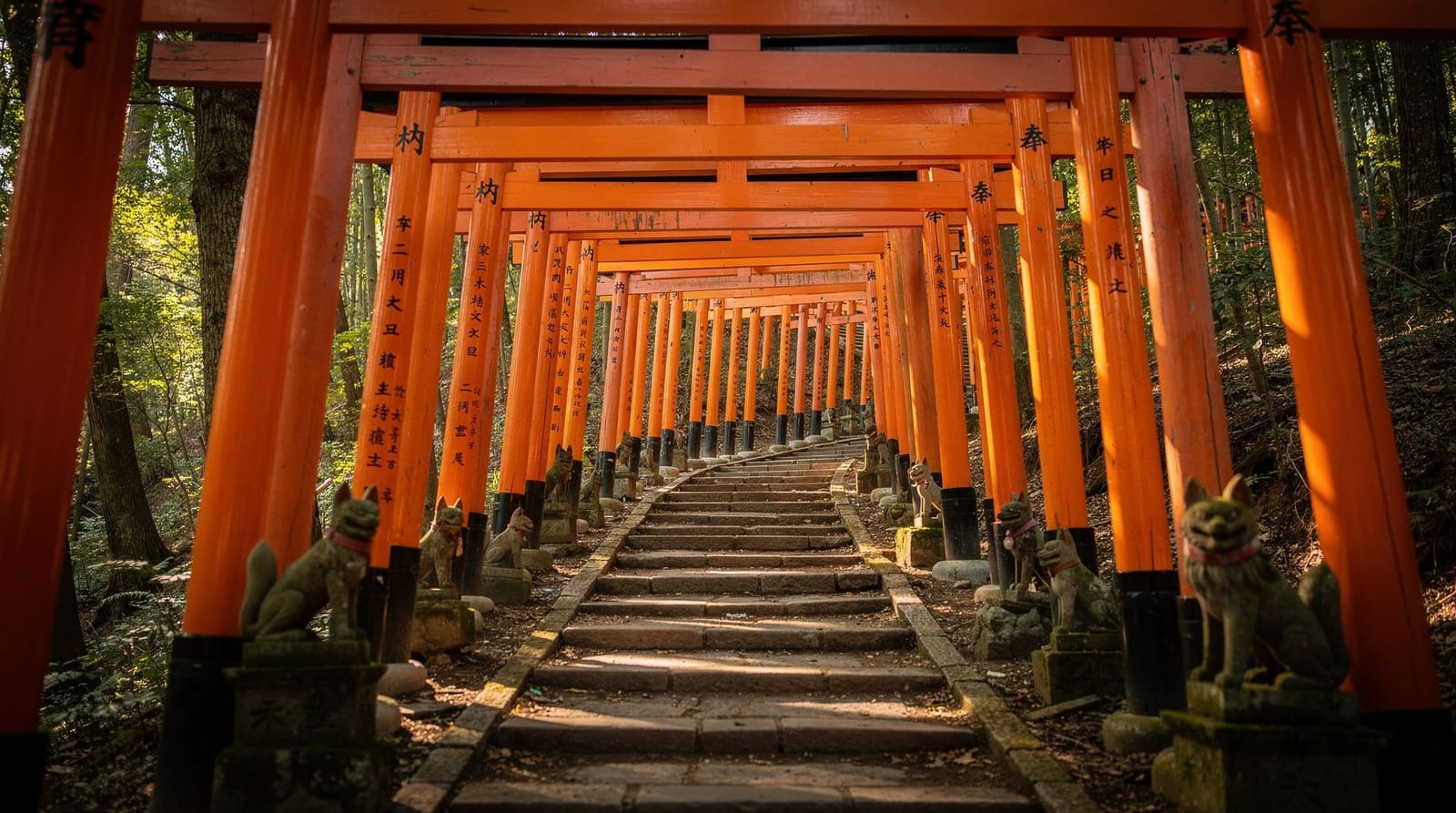
Fushimi Inari Taisha guided walking tour — combine a Fushimi sake stop with the nearby torii gates for one focused half-dayEating around Gion and Higashiyama specifically
Gion and the Higashiyama temple district carry their own food character, distinct from downtown’s obanzai-heavy scene. Restaurants here lean toward evening dining and the higher end of kaiseki, often paired with geiko or maiko-hosted settings, while the approach streets to Kiyomizu-dera are dense with grab-and-go matcha soft-serve, dango, and other walkable snacks — worth pacing rather than filling up on before a proper sit-down meal later in the day. See the Gion destination guide and Higashiyama destination guide for how the food scene fits into each neighborhood’s wider layout.
Frequently asked questions about Kyoto’s food scene
What is the difference between kaiseki and kyo-ryori?
Kyo-ryori (Kyoto cuisine) is the umbrella term for the city’s overall food culture — obanzai home cooking, shojin ryori temple food, tofu dishes and kaiseki all fall under it. Kaiseki specifically refers to the formal multi-course haute cuisine style, served in a fixed sequence of small courses built around what’s in season that week. Every kaiseki meal is kyo-ryori, but most kyo-ryori is not kaiseki.
Why is Kyoto tofu considered better than tofu elsewhere in Japan?
Kyoto sits on a groundwater basin with unusually soft water, low in the minerals that can make tofu taste chalky or bitter. Tofu makers here have used that water for centuries, and several old-school shops near Nanzen-ji and in Arashiyama still make it fresh daily using traditional methods.
What is obanzai and where can visitors try it?
Obanzai is Kyoto’s everyday home cooking — small dishes of seasonal vegetables, simmered, pickled or lightly seasoned. Casual obanzai counters around Pontocho, Kiyamachi and the streets behind Nishiki Market serve small plates for roughly ¥400-900 (US$2.70-6) each.
Is Kyoto food expensive compared to Tokyo or Osaka?
Formal kaiseki runs ¥15,000-50,000+ (US$100-330+) per person at well-known names, comparable to Tokyo’s top restaurants. Everyday eating is not more expensive than elsewhere in Japan — a set lunch runs ¥900-1,500 (US$6-10). Osaka is generally cheaper and better for volume street food; Kyoto’s strength is refined, seasonal cooking.
What are kyo-yasai and why do Kyoto restaurants mention them?
Kyo-yasai are heirloom vegetable varieties historically grown in the Kyoto basin — kamo eggplant, Shogoin turnip, Kujo green onion and Manganji pepper are the best-known. Naming a specific variety on a menu is usually a genuine sourcing claim rather than a vague buzzword.
Do I need to book Kyoto restaurants in advance?
For kaiseki and any restaurant with fewer than 15-20 seats, yes, often days or weeks ahead. Casual obanzai counters, udon shops and most restaurants around Nishiki Market or Kawaramachi are walk-in friendly, though peak lunch and dinner hours draw a queue.
Is Kyoto food culture more vegetarian-friendly than the rest of Japan?
Relatively, yes, thanks to shojin ryori, the Buddhist vegetarian tradition served at temples like Tenryu-ji in Arashiyama. That said, most everyday Kyoto restaurants use bonito-based dashi by default even in vegetable dishes, so it’s not automatically vegetarian food.
Planning the rest of your food itinerary
Kyoto’s food culture rewards spreading meals across a few days rather than trying to hit every specialty in one sitting. A workable pattern for a three- or four-day trip: one morning at Nishiki Market, one evening obanzai dinner downtown, one splurge kaiseki or yudofu meal near Nanzen-ji, and one matcha-focused half-day out in Uji — covered in the matcha and Uji guide. Combine that with the Arashiyama destination guide if you’re also planning a day trip west of the city, since Arashiyama holds both Tenryu-ji’s shojin ryori and a dense cluster of street food stalls near the bamboo grove.
Frequently asked questions about Kyoto food guide — kyo-ryori, yudofu, obanzai and what locals actually eat
What is the difference between kaiseki and kyo-ryori?
Why is Kyoto tofu considered better than tofu elsewhere in Japan?
What is obanzai and where can visitors try it?
Is Kyoto food expensive compared to Tokyo or Osaka?
What are kyo-yasai and why do Kyoto restaurants mention them?
Do I need to book Kyoto restaurants in advance?
Is Kyoto food culture more vegetarian-friendly than the rest of Japan?
Top experiences
Bookable activities with verified prices and instant confirmation on GetYourGuide.