Gion geisha guide — how to see geiko and maiko respectfully
Kyoto Gion: Geisha Culture & History Walking Tour
Can you just walk around Gion and see geisha?
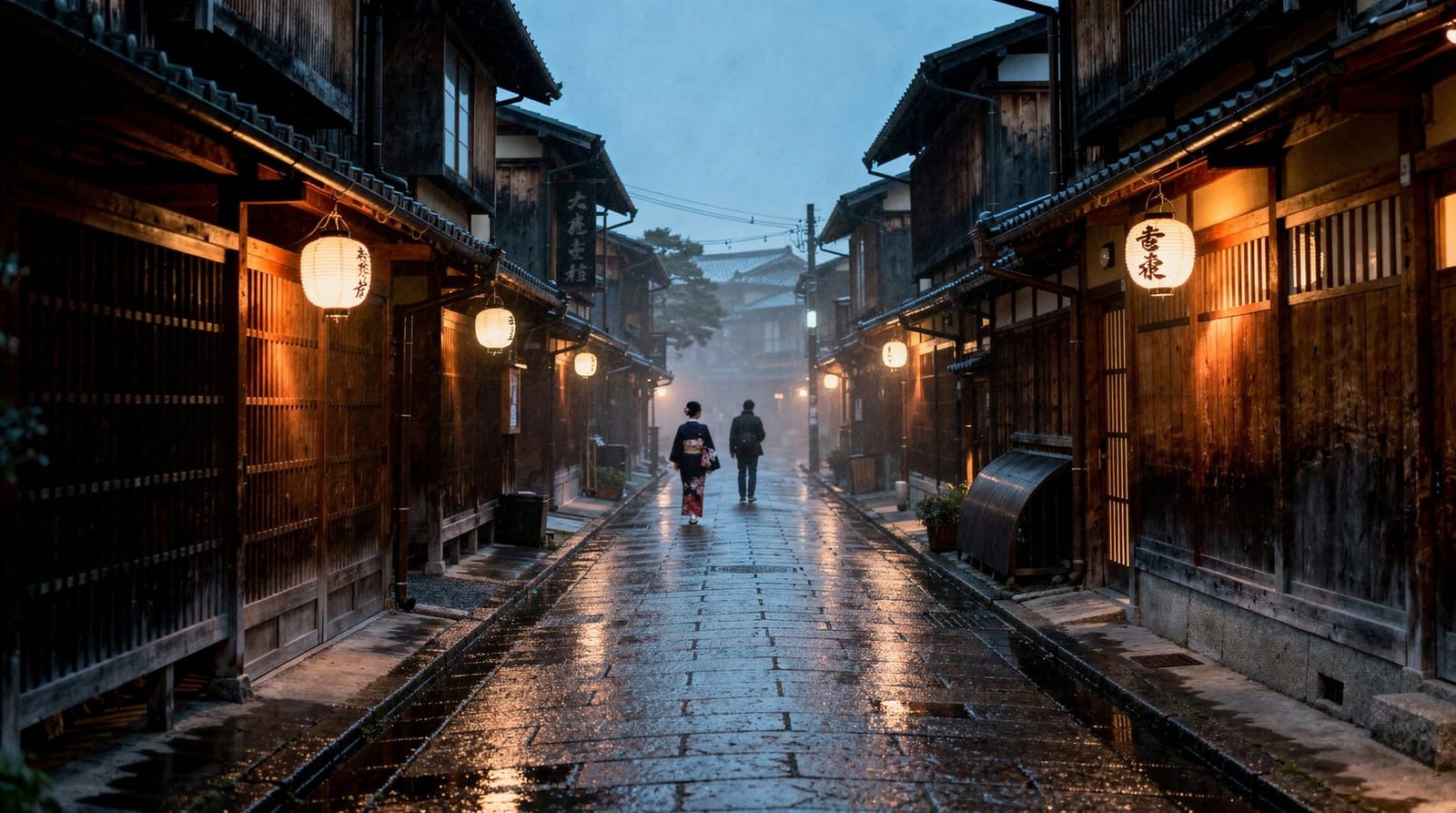
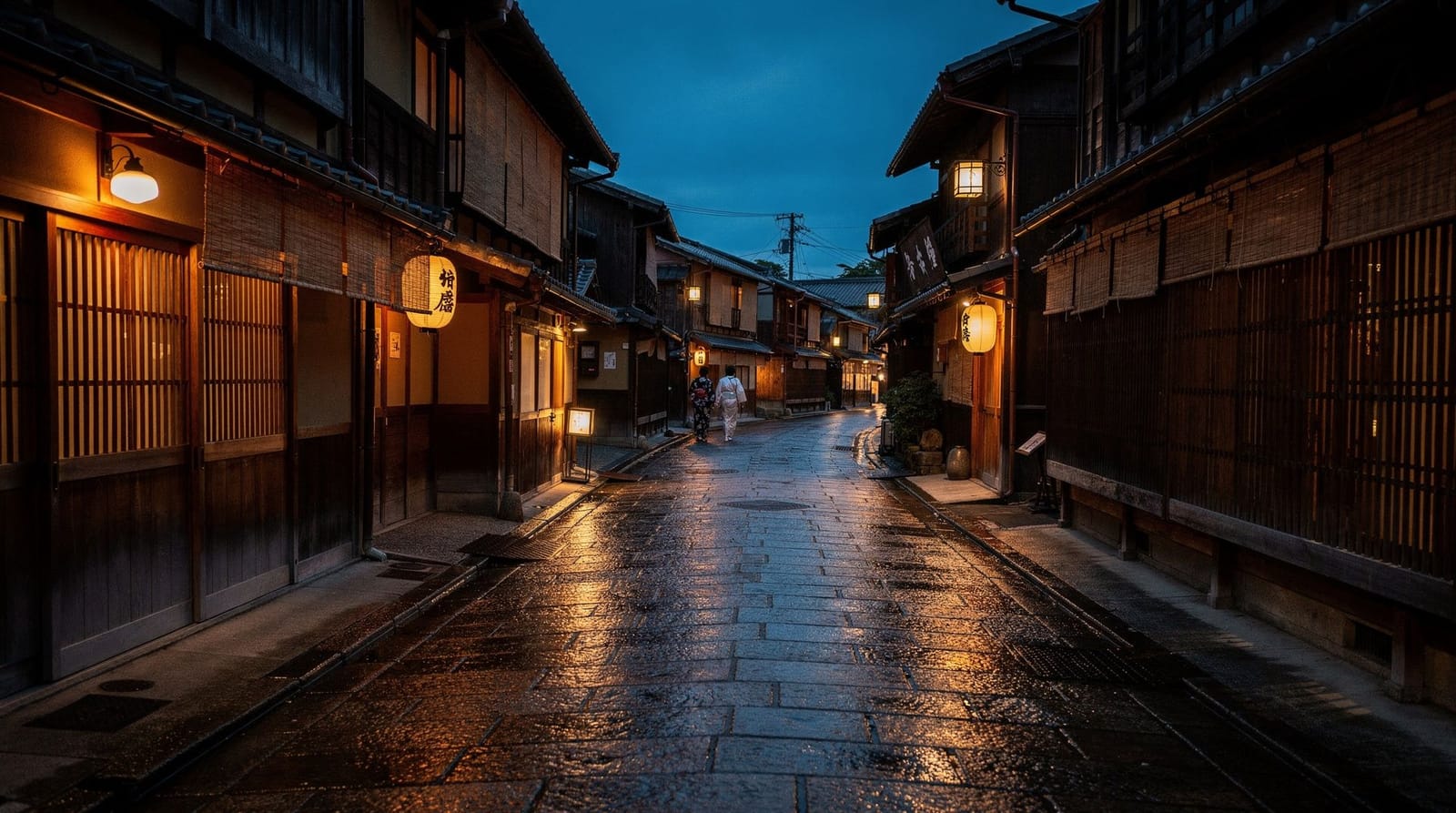
Occasionally, yes — mostly around dusk when maiko and geiko walk between appointments on Hanamikoji-dori and around Shinbashi. It's not guaranteed and shouldn't be the plan: chasing, blocking, or photographing them up close without consent is illegal in parts of private Gion (fines up to ¥10,000/about $65) and simply rude everywhere else. A booked geisha show or dinner is the reliable way to see one properly.
A working district, not a theme park
Gion is a real neighborhood where a genuine, if shrinking, community of professional entertainers still lives and works. That distinction matters because most visitors arrive with an image assembled from films and photographs — white face paint, red lips, a flash of embroidered silk disappearing down a lantern-lit alley — without much sense of who these women actually are, how their world works day to day, or how to behave around it. This guide covers the difference between geiko and maiko, where sightings realistically happen, the photography rules that carry an actual fine, and the shows and dinners that let you see the real thing without staking out an alley at dusk.
| Where | Gion Kobu — Hanamikoji-dori & Shirakawa canal, Kyoto |
| Best sighting window | Around 5:30–6:30pm, early evening only |
| Show tickets | Around ¥5,000–8,000 (about $33–53) |
| Dinner with a geiko | Around ¥15,000–30,000 (about $100–200) |
| Photography rule | No photos on private lanes south of Hanamikoji-dori — fine around ¥10,000 |
Geiko is the term used in Kyoto’s hanamachi (flower towns, the traditional name for geisha districts) for what’s called geisha elsewhere in Japan. A geiko has completed years of training in dance, shamisen or other instruments, and the conversational and hosting skills needed to entertain guests at a private banquet. Maiko are apprentices, usually starting around age 15 and training for several years before debuting as full geiko — recognizable by their longer, more ornate hairstyle worked from their own hair (geiko wear wigs), brighter kimono with longer sleeves, and okobo, the tall lacquered wooden sandals that make their distinctive shuffling walk necessary rather than stylistic.
A district that grew up around a shrine
Gion’s origins trace to teahouses that sprang up along the approach to Yasaka Shrine (formerly Gion Shrine) starting in the 17th century, serving pilgrims and travelers with tea, then food, then entertainment. By the Edo period it had developed into one of Kyoto’s licensed pleasure and entertainment districts, and the geiko tradition — entertainers valued for artistic skill rather than for the different, and separately licensed, role of oiran courtesans — grew out of that same economy.
The two are frequently confused in Western popular culture, partly because both wore elaborate kimono and white makeup, but they were distinct professions with different training, different clientele, and different social standing even in their own era; geiko were never courtesans, and conflating the two is a genuine and common misunderstanding worth clearing up before you visit.
The district’s current footprint — the wooden machiya townhouses, the narrow lanes, the ochaya still operating as working businesses rather than museum pieces — survived Kyoto’s relative escape from World War II bombing, which is part of why Gion remains one of the most architecturally intact traditional entertainment districts in Japan rather than a reconstruction.
Where geiko and maiko actually live and work
Kyoto has five hanamachi, each with its own okiya (lodging and training houses) and ochaya (teahouses where banquets are hosted): Gion Kobu, Gion Higashi, Pontocho, Miyagawa-cho, and Kamishichiken. Gion Kobu — what most visitors mean when they say “Gion” — is the largest and best known, centered on Hanamikoji-dori between Shijo-dori and Kenninji-dori, with the willow-lined canal of Shirakawa a few minutes’ walk to the north. The Gion destination guide covers the neighborhood’s layout, machiya architecture, and how it connects to Higashiyama for a combined walk.
Pontocho, a single narrow lane running parallel to the Kamo River near downtown Kyoto, is Gion Kobu’s smaller, less touristed counterpart — worth knowing about if you want the same atmosphere with noticeably fewer people.
Roughly 200-250 geiko and maiko work across all five districts today, down from several thousand before the Second World War. That scarcity is the practical reason sightings feel like luck rather than a scheduled event: on any given evening, a small number of working women move through a compact area for a narrow window of time, and everything else is a tourist wearing a rental kimono.
When and where you might actually see one
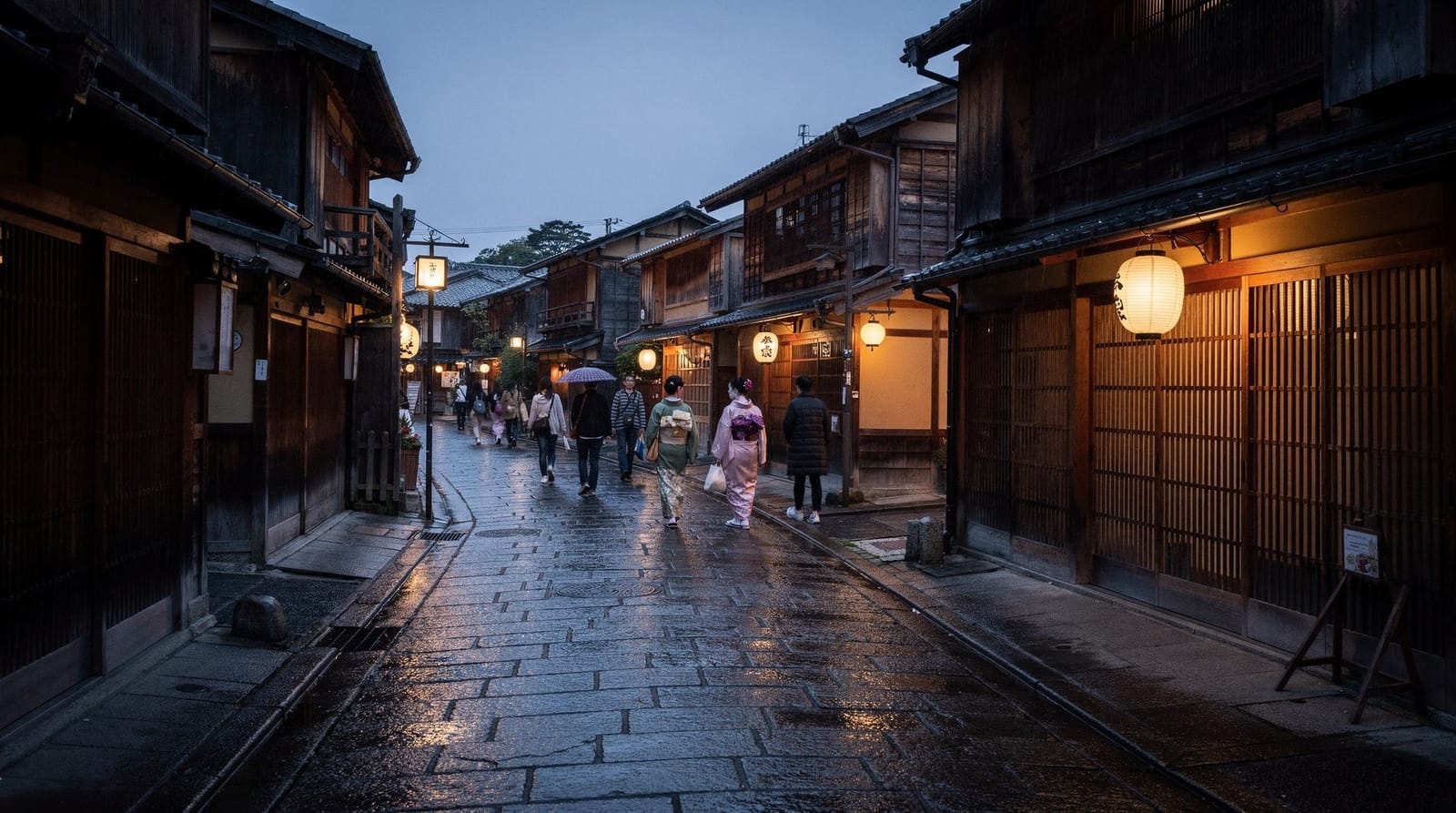
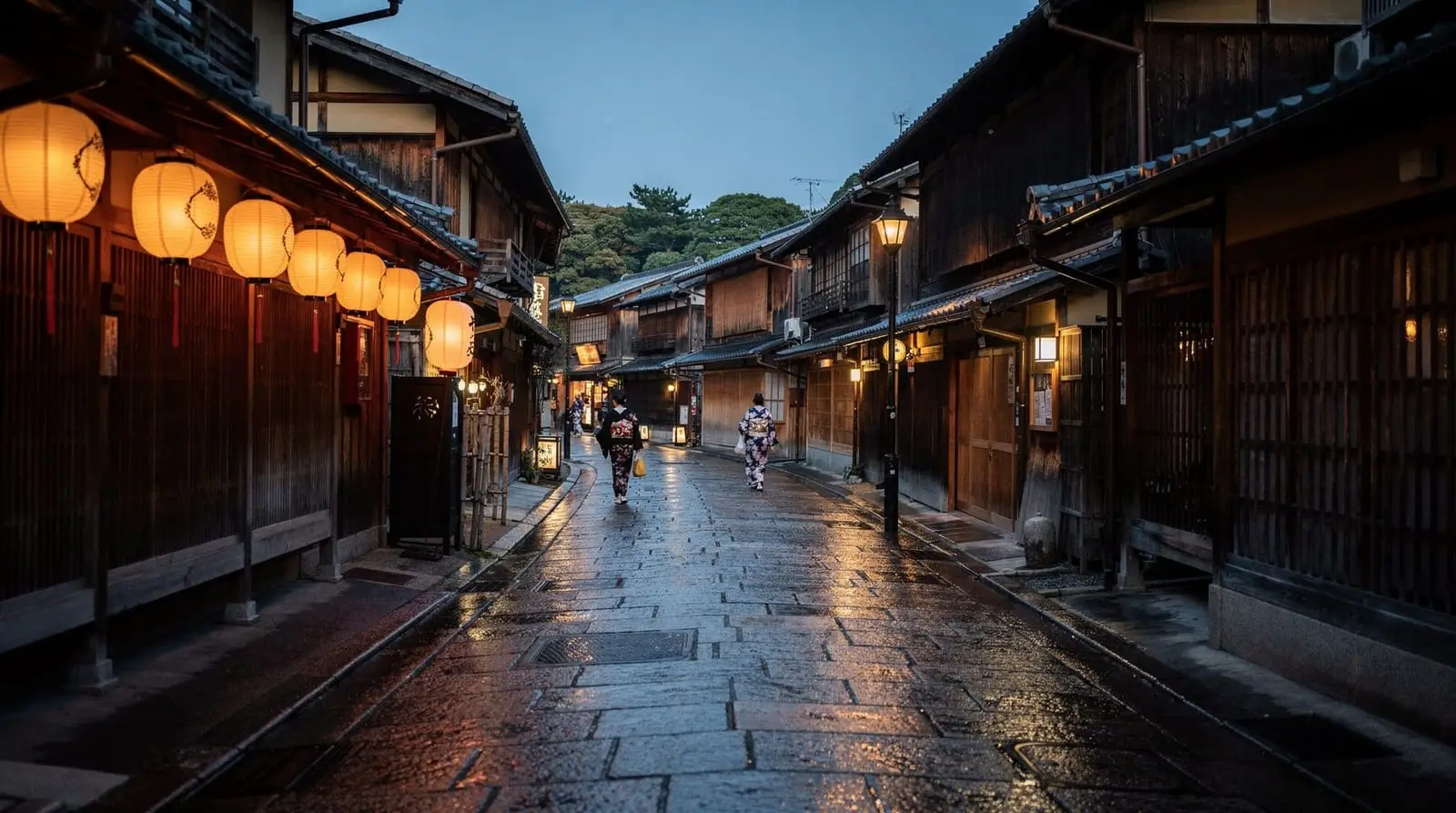
The realistic window is early evening, roughly 5:30 to 6:30pm, when maiko and geiko leave their okiya for evening appointments at ochaya or private dining rooms. Hanamikoji-dori between Shijo-dori and the Kenninji temple gate, and the Shinbashi/Shirakawa canal area a block north, are the two spots with the best odds — not because geiko pose there, but because those are the streets connecting okiya to their evening engagements.
It is not a performance and not guaranteed. Most of a geiko’s working day happens indoors: lessons, preparation, and the banquets themselves are all out of public view. A five-minute walk to an appointment is often the only public moment in an entire evening, which is also exactly why crowding around that moment causes so much friction.
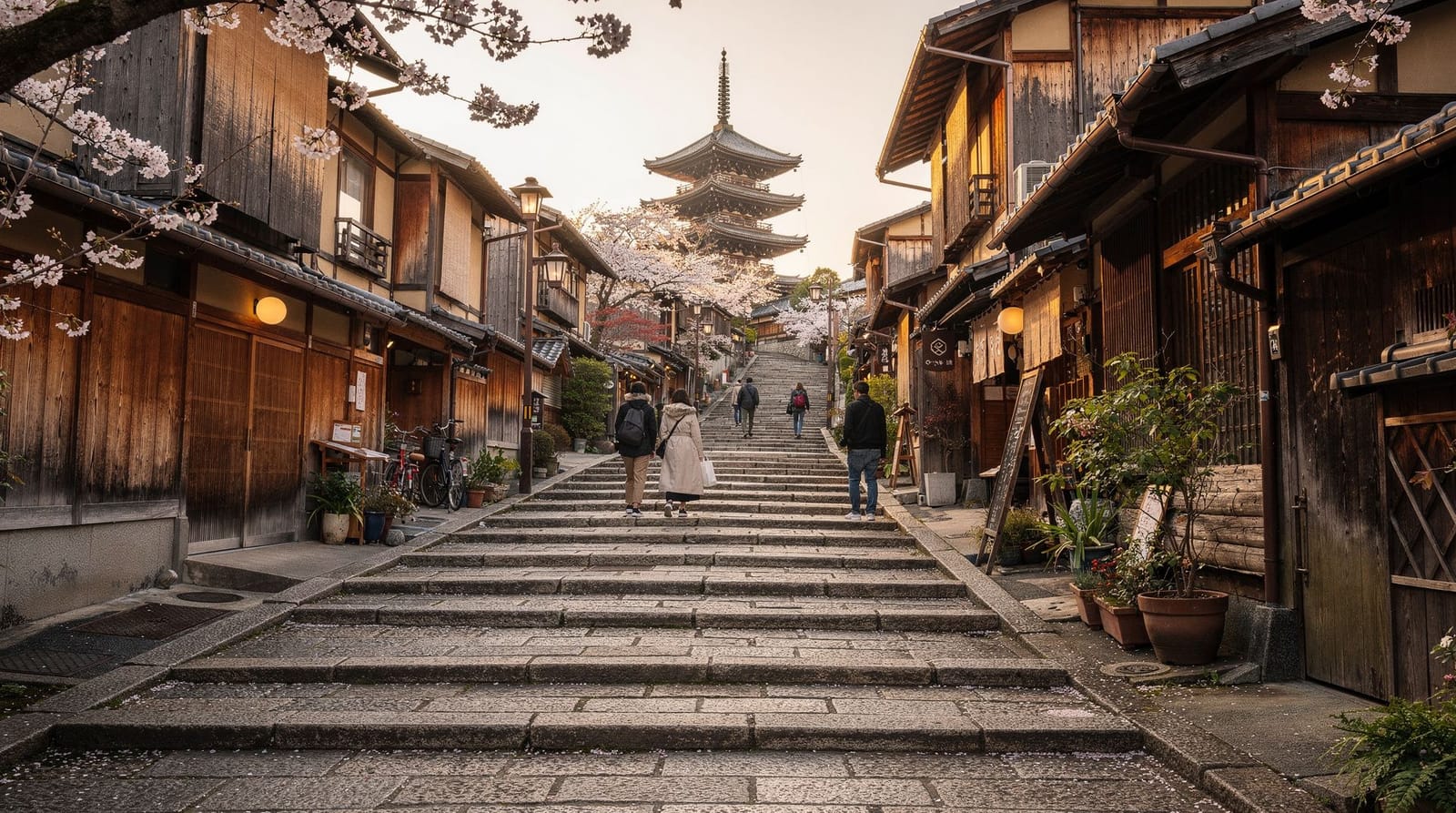
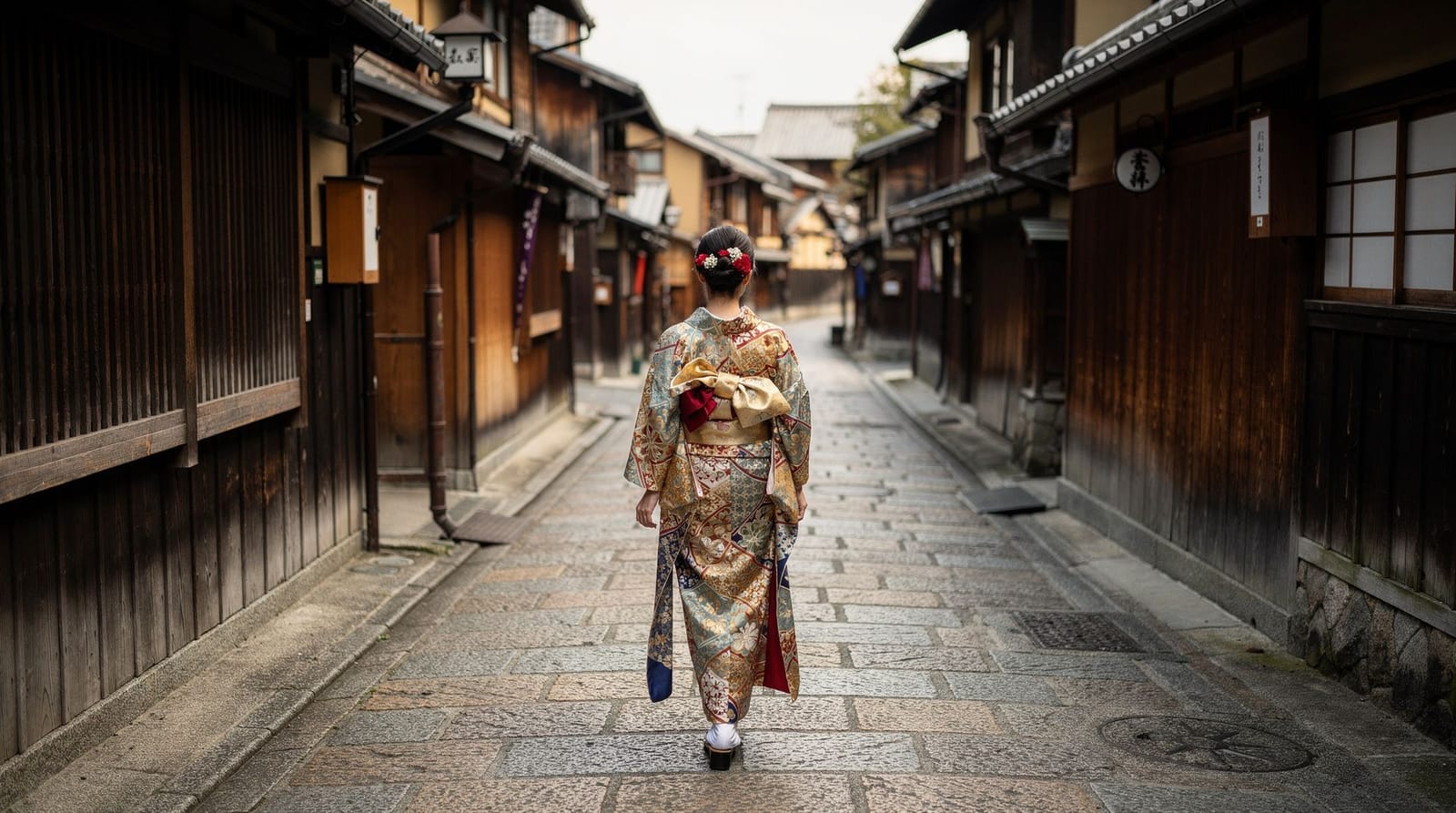
The vast majority of “geisha” photographed mid-afternoon posing near Kiyomizu-dera, Yasaka Shrine, or the Ninenzaka and Sannenzaka slopes are tourists in rented kimono and maiko-style makeup, not working professionals — a legitimate and popular activity covered in the kimono rental guide, but worth knowing apart from an actual sighting.
The photography rule that carries a real fine
Since 2019, the private streets in Gion Kobu’s core — south of Hanamikoji-dori, including Ishibei-koji and the narrower lanes around it — have carried signage banning photography of geiko and maiko, backed by an ¥10,000 (about $65) fine for people caught blocking their path, grabbing their sleeves or hair ornaments, or photographing them without consent. The rule followed years of documented harassment: tourists surrounding maiko mid-walk, forcing them into doorways, and in some cases physically pulling at kimono to get a better shot.
The ban is limited to those specific private lanes, but the underlying courtesy applies across all of Gion and every other hanamachi: don’t block a walking path, don’t use flash in someone’s face, don’t ask a working geiko or maiko to stop and pose, and keep a respectful distance if you do get a photo opportunity. None of this applies to tourists in rental kimono, who are generally happy to be asked.
Seeing geiko and maiko properly: shows and dinners
For a guaranteed, respectful look at the traditional arts geiko and maiko train in, several structured options exist that don’t rely on a chance evening sighting.
A one-hour geisha show in Gion presents dance and instrumental performances in a seated theater setting — the most accessible option for a first look at the art form, with performers who are often trained maiko or geiko rather than stage dancers, though this varies by show and season.
An evening Gion food tour pairs a walk through the district’s lantern-lit lanes with food stops, timed for the early-evening window when a passing sighting is at its most plausible, guided by someone who can explain what you’re looking at rather than leaving you to guess.
For something closer to a genuine banquet, a geisha dinner paired with a Gion cultural walk gets closer to an actual ozashiki experience — dining in the company of a geiko or maiko with conversation and a short performance, at a fraction of the cost and none of the introduction requirements a traditional booking demands. The maiko experience guide covers what these dinners cost and what to expect in more detail.
If your time in Kyoto is limited to a single condensed sampler covering geisha dance alongside tea ceremony, koto music, and other traditional arts in one sitting, the Gion Corner guide explains what that show does and doesn’t deliver compared to the options above.
Guided walks through Gion’s history
For visitors who want the historical and social context — how the hanamachi system works, what an okiya actually does, how a girl trains to become a maiko — a guided walking tour through Gion adds substantially more than a self-guided stroll.
A Gion history and geisha culture walking tour covers the district’s architecture, the training system, and the social role ochaya play, walking the same streets where sightings happen while explaining what you’re seeing rather than leaving you to interpret it alone.
An evening night walk through Gion’s geisha district is timed specifically for that 5:30-7pm window, moving through Hanamikoji-dori and the Shirakawa canal area as maiko and geiko head to their appointments — the single best-timed guided option if a sighting matters to you, though the guide will be honest that nothing is guaranteed.
The five hanamachi, compared
Gion Kobu draws the overwhelming majority of visitor attention, but it isn’t the only hanamachi, and knowing the other four helps explain why “Gion” and “geisha district” aren’t quite synonymous.
Gion Higashi, Gion Kobu’s smaller neighbor a few streets east around Shinbashi-dori, has its own okiya and its own annual dance performance, and sees far fewer tourists per geiko than its larger neighbor — a genuine option for anyone who wants a quieter version of the same streets. Pontocho, the single lantern-lit alley running along the Kamo River near downtown Kyoto, packs restaurants and teahouses into one narrow lane and functions almost as Gion Kobu’s overflow district, with a comparable but less crowded evening atmosphere.
Miyagawa-cho, south of Shijo-dori along the river, is quieter still and largely residential in feel outside its own small cluster of ochaya. Kamishichiken, in northwest Kyoto near Kitano Tenmangu shrine, is the oldest of the five hanamachi and the least visited by tourists, which makes it, ironically, one of the more reliable places for a low-key evening sighting if you’re willing to go out of your way.
None of the four smaller districts has tourist infrastructure comparable to Gion Kobu’s — no English-language shows, limited dinner bookings — but a walk through any of them on a weekday evening gives a sense of the hanamachi system without Gion Kobu’s crowds.
How someone actually becomes a maiko
The path into this world is longer and more structured than it looks from the outside. A prospective maiko typically applies to an okiya around age 15, often having seen a performance or read about the tradition, and moves in as a live-in trainee (shikomi) doing housework and observing senior geiko and maiko for six months to a year before formal dance and music lessons begin in earnest. Training in nihon buyo (traditional dance), shamisen, tea ceremony, and the conversational skills needed to host a banquet typically runs another year or more before a debut as minarai (a junior trainee who shadows senior maiko at real engagements without full responsibility) and finally as a fully fledged maiko.
A maiko generally spends about five years in that role before erikae — literally “turning the collar,” the ceremony marking her transition to full geiko status, when the vivid red-collared kimono and elaborate hairstyle give way to the more restrained wig and dress of a geiko. Not everyone who starts the training finishes it; it’s a demanding, insular apprenticeship, and the attrition rate is real, part of why total numbers have shrunk so much since before the war.
Annual public performances worth knowing about
Outside the private world of ochaya banquets, each hanamachi stages an annual public dance recital that’s open to anyone who buys a ticket — the most reliable, fully sanctioned way to see trained geiko and maiko perform outside a private booking. Gion Kobu’s Miyako Odori (Cherry Dance) runs through April at the Gion Kobu Kaburenjo theater, timed to cherry blossom season, and remains one of the few events where dozens of maiko and geiko perform together on a single stage.
Kamishichiken stages the Kitano Odori each spring, and several districts add smaller autumn recitals. Tickets for these run considerably higher than a standard theater show and sell out early in peak season, but they’re worth checking against your travel dates if you’re visiting in spring — an actual sanctioned public performance beats a chance sighting for anyone specifically chasing the art form rather than the moment.
What a real evening in Gion actually costs
It’s worth separating three tiers of experience by price, since visitors often conflate them. A guided evening walk through Gion, with no guarantee of a sighting but solid historical context, runs roughly ¥4,000-6,000 (about $27-40) per person for a 1.5-2 hour tour. A structured geisha show in a theater setting, with a guaranteed performance by trained dancers or geiko depending on the operator, runs ¥5,000-8,000 (about $33-53).
A dinner with an actual geiko or maiko present — conversation, drinking games, a short performance — is the most expensive tier, typically ¥15,000-30,000 (about $100-200) per person depending on the operator and group size, still a fraction of what a traditional first-timers-refused ozashiki booking would cost through personal introduction, which can run into the hundreds of thousands of yen for a private banquet. None of these figures include the option most visitors actually pursue first, a kimono rental for photos, which sits separately and far cheaper — covered in the kimono rental guide.
Pairing a Gion evening with the rest of eastern Kyoto
Gion sits at the western edge of the Higashiyama district, which makes it easy to combine a late-afternoon walk through Higashiyama’s temple lanes — Kiyomizu-dera, Yasaka Shrine, the Ninenzaka and Sannenzaka slopes — with an early-evening pass through Gion timed for the 5:30-6:30pm window when a sighting is most plausible.
Most self-guided visitors do exactly this: temples and shopping streets by day, a slow walk down Hanamikoji-dori and along the Shirakawa canal as the lanterns come on, then dinner in Pontocho or one of Gion’s own restaurants. The Gion destination guide and Higashiyama destination guide both cover this pairing in more detail, including which entrances and streets connect the two areas most directly.
Overtourism and why some of this etiquette exists
The photography restrictions and general tension between visitors and Gion’s residents didn’t appear out of nowhere. Kyoto’s geiko and maiko population had already shrunk for decades before international tourism to Gion spiked sharply in the 2010s, and the mismatch between a small, semi-private professional community and enormous daily visitor numbers produced real friction: documented cases of tourists physically stopping maiko mid-walk, damaging kimono, and in a few widely reported incidents, following them into private courtyards. Local business associations pushed for the 2019 private-lane photography ban partly in response to those incidents, and some ochaya have become more cautious about outside bookings as a result.
None of this means Gion is unwelcoming to visitors — the district’s economy depends significantly on tourism, and the guided tours, shows, and dinners covered above exist precisely because there’s demand for a legitimate, sanctioned way to engage with the tradition. The point is narrower: the difference between visiting Gion and gawking at Gion is mostly a matter of a few specific behaviors, and getting them right costs nothing.
What not to do
A short, practical list, since most of Gion’s friction with tourists comes down to a handful of repeated mistakes: don’t follow a maiko or geiko to get a closer photo; don’t ask them to pose; don’t touch their kimono, hair ornaments, or okobo; don’t block the street to get your shot; don’t assume every kimono-clad woman you see is a professional rather than a rental customer, and don’t be disappointed if you don’t see one at all — a quiet walk through Gion’s machiya streets and along the Shirakawa canal is a genuinely worthwhile evening regardless of who you happen to pass.
Four ways to experience Gion, compared
Visitors often arrive unsure which option actually delivers what they’re picturing. Here’s how the main choices stack up against each other.
| Experience | What you get | Real geiko/maiko? | Typical cost |
|---|---|---|---|
| Evening walk (self-guided) | A chance sighting, no guarantee | Possible, not certain | Free |
| Guided history walk | Context and the same odds as above | Possible, not certain | Around ¥4,000–6,000 |
| Theater show (Gion Corner or similar) | A staged performance, guaranteed | Sometimes, varies by operator | Around ¥5,000–8,000 |
| Dinner with a geiko | Conversation, drinking games, a short performance | Yes | Around ¥15,000–30,000 |
| Kimono rental & photoshoot | Dressing up as one, not seeing one | No — it’s you | Around ¥4,000–10,000 |
None of these is objectively “better” — a guided walk suits someone who wants context and doesn’t mind uncertainty, while a dinner suits someone who wants a guaranteed, personal encounter and is willing to pay for it. Knowing the difference before booking avoids the most common disappointment: expecting a theater ticket to deliver what only a dinner or a lucky evening walk can.
What locals wish visitors understood
Ask around in Gion long enough and the same frustration surfaces: most friction isn’t about tourism itself, which the district’s economy genuinely depends on, but about a small number of visitors treating a residential, working neighborhood as a photo set. An okiya’s front door is someone’s home. An ochaya mid-appointment is a private business transaction, not a performance for passersby.
The maiko hurrying down Hanamikoji-dori at 6pm is on her way to work, in the same sense that someone walking briskly to catch a train is — not posing, not performing, not available for a chat or a photo op. Treating a sighting the way you’d treat spotting a deer in Nara — a pleasant, unplanned bonus rather than an entitlement — tends to produce a better evening for everyone involved, visitor included.
Frequently asked questions about Gion geisha guide — how to see geiko and maiko respectfully
What's the difference between a geisha, geiko, and maiko?
Is it true you can be fined for photographing geiko in Gion?
What time of day are you most likely to see a maiko or geiko in Gion?
Are the 'geisha' seen posing for photos near Kiyomizu-dera actually geisha?
How many geiko and maiko are left in Kyoto?
Can tourists book a real ozashiki (banquet with geiko)?
Is Gion Corner worth it instead of trying to see a real geiko?
Is it rude to just watch quietly from across the street if I see a maiko?
Do I need to book a show or dinner in advance, or can I just turn up?
Top experiences
Bookable activities with verified prices and instant confirmation on GetYourGuide.