Maiko experience in Kyoto — dinners, tea ceremonies, and what's real
Dance and Game with Maiko
Duration: 30-40 minutes
What does a real maiko experience in Kyoto cost?
A dinner or tea ceremony where an actual working maiko is present typically runs ¥15,000-30,000 (about $100-200) per person, including food and a short performance or drinking game. A kimono and makeup 'maiko transformation' where you become the maiko for photos costs far less, roughly ¥5,000-15,000 (about $33-100), and involves no working maiko at all — the two products are frequently marketed under the same phrase, so check which one you're booking.
Two different products share the same three words
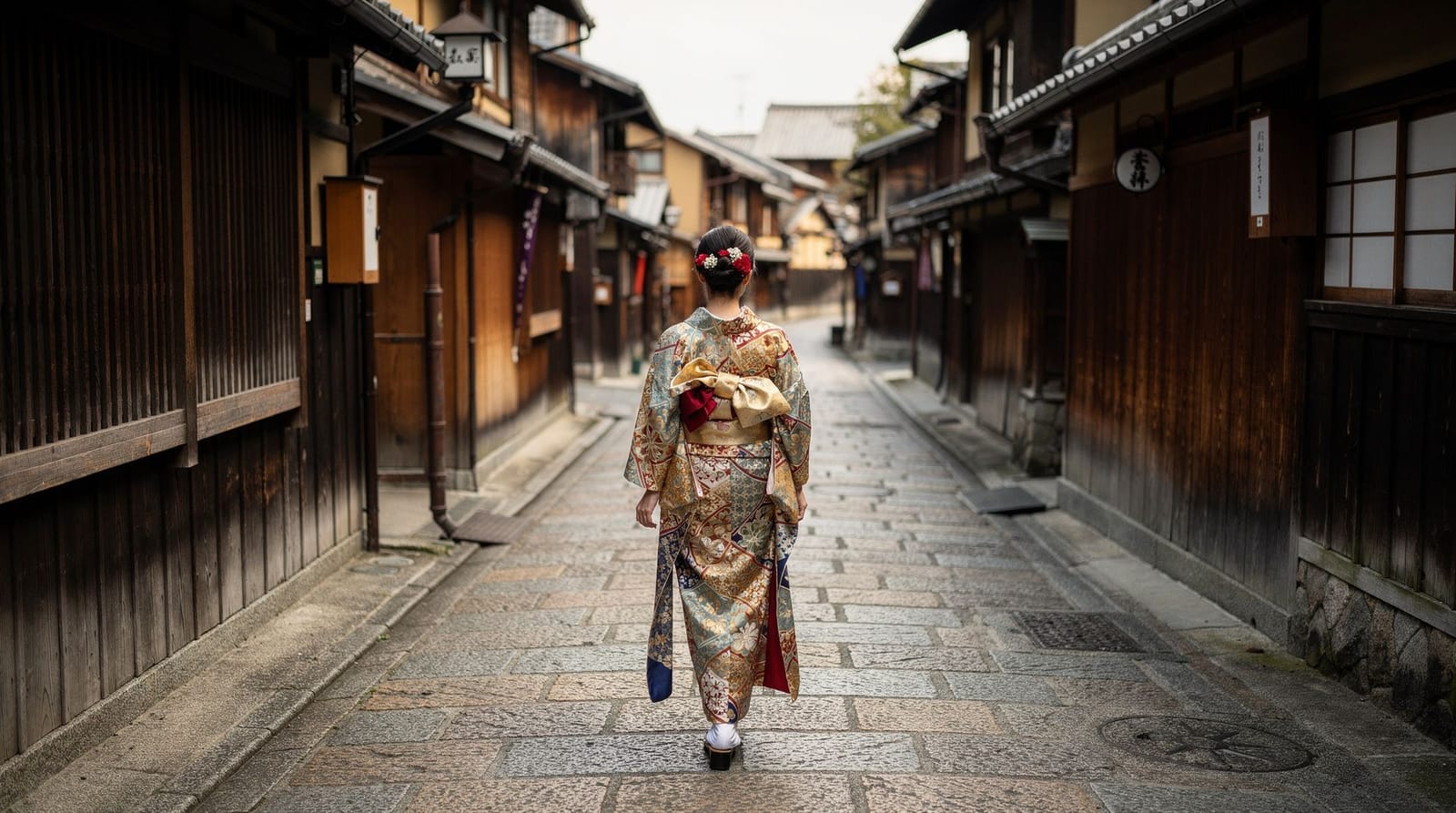
“Maiko experience” is used loosely enough in Kyoto’s tourism market that it covers two genuinely different things, and mixing them up is the single most common source of disappointment among visitors booking one. One product puts you in maiko-style kimono, wig, and white makeup for a photoshoot — you become the maiko, and no actual working maiko is anywhere near the building.
The other puts an actual, currently training maiko in the room with you, hosting a meal or tea ceremony the way she would for any paying guest at a traditional ochaya. Both are legitimate, both cost money, and both are worth doing for different reasons — but they are not interchangeable, and listings don’t always make the distinction obvious. This guide is about the second kind: bookings where a real maiko is present.
| Meet-and-greet | Around ¥8,000-15,000/person, 30-40 min, no meal |
| Tea ceremony | Similar range, quieter and more contemplative |
| Full dinner | Around ¥15,000-30,000/person, maiko present 30-45 min |
| Kimono makeover (not this) | Around ¥5,000-15,000, no real maiko present |
| Book ahead | Several weeks; a month+ in cherry blossom/autumn |
Why a real booking is possible at all now
Traditionally, ochaya (the teahouses where geiko and maiko host banquets) operated on an ichigen-san okotowari system — “first-timers refused” — accepting only guests introduced by an existing regular patron. That system effectively locked outsiders, and especially foreign tourists, out of any real geiko or maiko encounter regardless of budget, since no amount of money substituted for the social introduction.
Over roughly the last decade, that’s loosened at the margins. A handful of ochaya and a growing number of tour operators now run English-friendly sessions where a working maiko participates specifically for visitors who book through a commercial channel rather than a personal introduction. The maiko involved are the same trainees who work the traditional circuit — this isn’t a separate, lesser tier of performer — but the format is compressed and simplified: shorter, less formal, priced per person rather than negotiated through a patron relationship, and run with an English-speaking host or interpreter managing the evening.
What a maiko dinner actually looks like
The structure is fairly consistent across operators. Guests are seated in a private or semi-private tatami room, usually in a converted machiya townhouse in or near Gion, and served a multi-course meal — often kaiseki-style with seasonal, carefully plated dishes, sometimes a simpler set menu depending on the price tier. The maiko herself typically doesn’t appear for the entire meal; she joins partway through, generally for a 30-45 minute segment within a 1.5-2 hour booking, during which she pours drinks, makes conversation through the host or interpreter, and leads one or two traditional games.
A dance and game session with a maiko is the most compact version of this, built specifically around the games and a short dance performance rather than a full dinner — a good option if a multi-course meal isn’t the priority and you want more of the interactive segment for the time and money.
The two games that come up most often are tora-tora (tiger-tiger), a rock-paper-scissors variant acted out from behind a folding screen where players mime a samurai, a tiger, or an old woman — each beating one of the other two — with the loser generally taking a drink, and konpira fune fune, a rhythmic tapping game played against a folk song that tests reflexes rather than luck. Both are authentic parts of how maiko entertain guests at real ozashiki, simplified and explained for visitors who’ve never seen them before rather than invented for tourism.
Tea ceremony with a maiko, as a gentler alternative
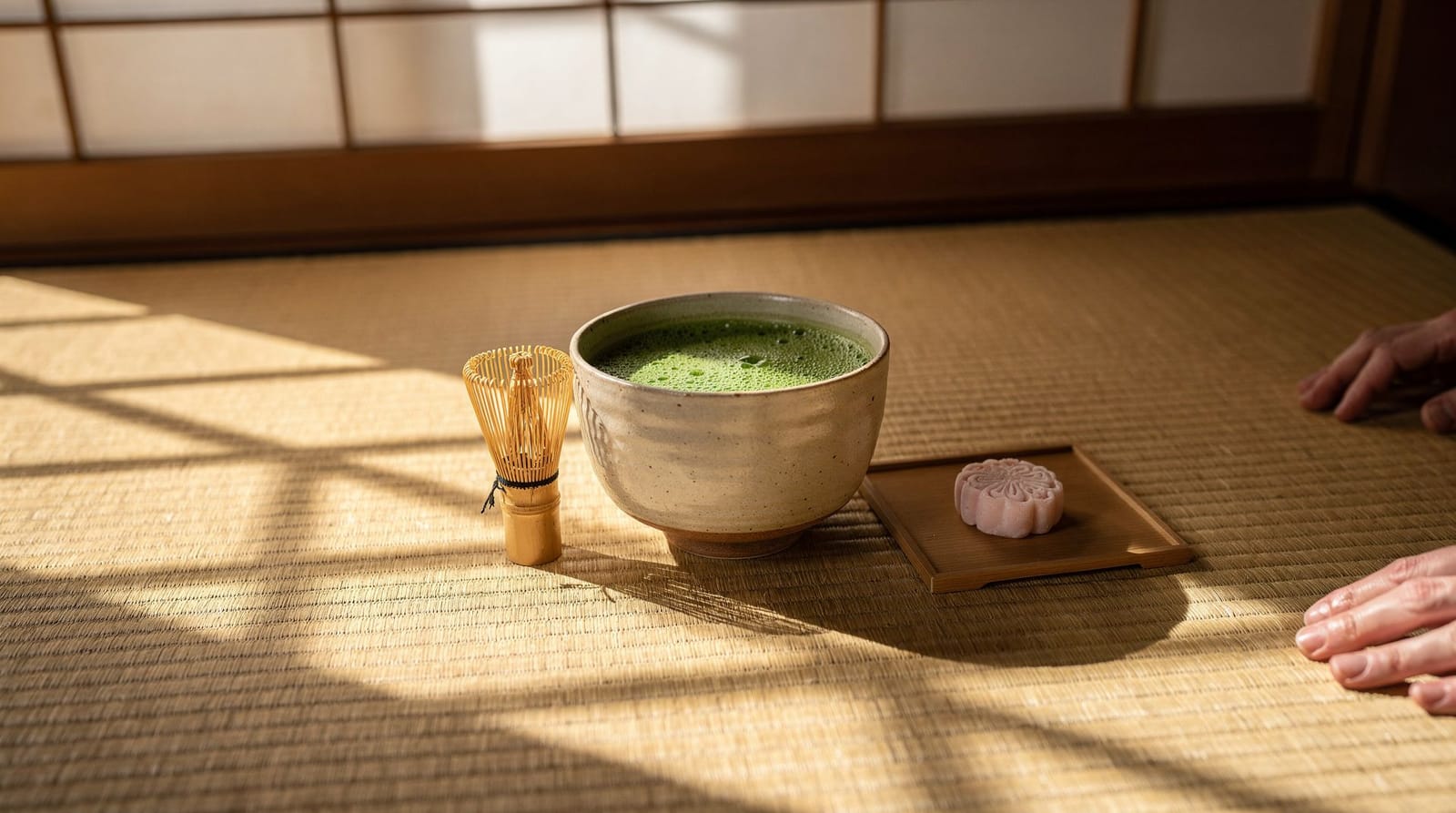
For visitors who want a maiko’s company without the drinking-game format or a full dinner’s cost, several operators offer a tea ceremony hosted or attended by a maiko instead. A premium tea ceremony experience with a maiko combines the formal, quiet structure of chado (the way of tea, covered in full in the tea ceremony guide) with the chance to watch a maiko participate in or observe the ritual, typically followed by a shorter conversational segment. It runs quieter and more contemplative than a dinner booking, and tends to appeal to visitors who find the drinking-game format too performative for their taste.
The meet-and-greet format, for a shorter commitment
Not every visitor wants a full evening. A maiko meet-and-greet with a short show compresses the encounter into roughly 30-40 minutes — a brief dance performance, a chance to ask questions through an interpreter, and a group photo at the end, without the meal. It’s priced accordingly, well below the full dinner tier, and works well as an add-on to a day that already includes a temple visit or a walk through Gion rather than as the day’s centerpiece.
For a version that folds the maiko encounter into a broader evening in the neighborhood, a geisha dinner paired with a Gion cultural walk combines a guided walk through the district — timed for the early-evening hours when a passing sighting of a working geiko or maiko is most plausible — with a dinner booking where a geiko or maiko is present, giving both the neighborhood context and the direct encounter in one evening.
Group size, dress, and practical logistics
Most tourist-facing maiko bookings run in small groups, anywhere from two to around ten guests sharing the room with the maiko for her segment, though some operators offer a fully private option at a higher price for couples or small parties who don’t want to share the encounter with strangers.
There’s no dress code beyond ordinary smart-casual clothing — no need to rent your own kimono to attend, since that would in fact work against the point of the evening, where the maiko’s dress is the visual centerpiece rather than the guests’. Seating is typically on tatami mats at low tables, occasionally with legroom wells cut beneath the table for guests unused to sitting on the floor for an extended period; it’s worth asking about this when booking if kneeling or cross-legged seating for over an hour is a genuine concern.
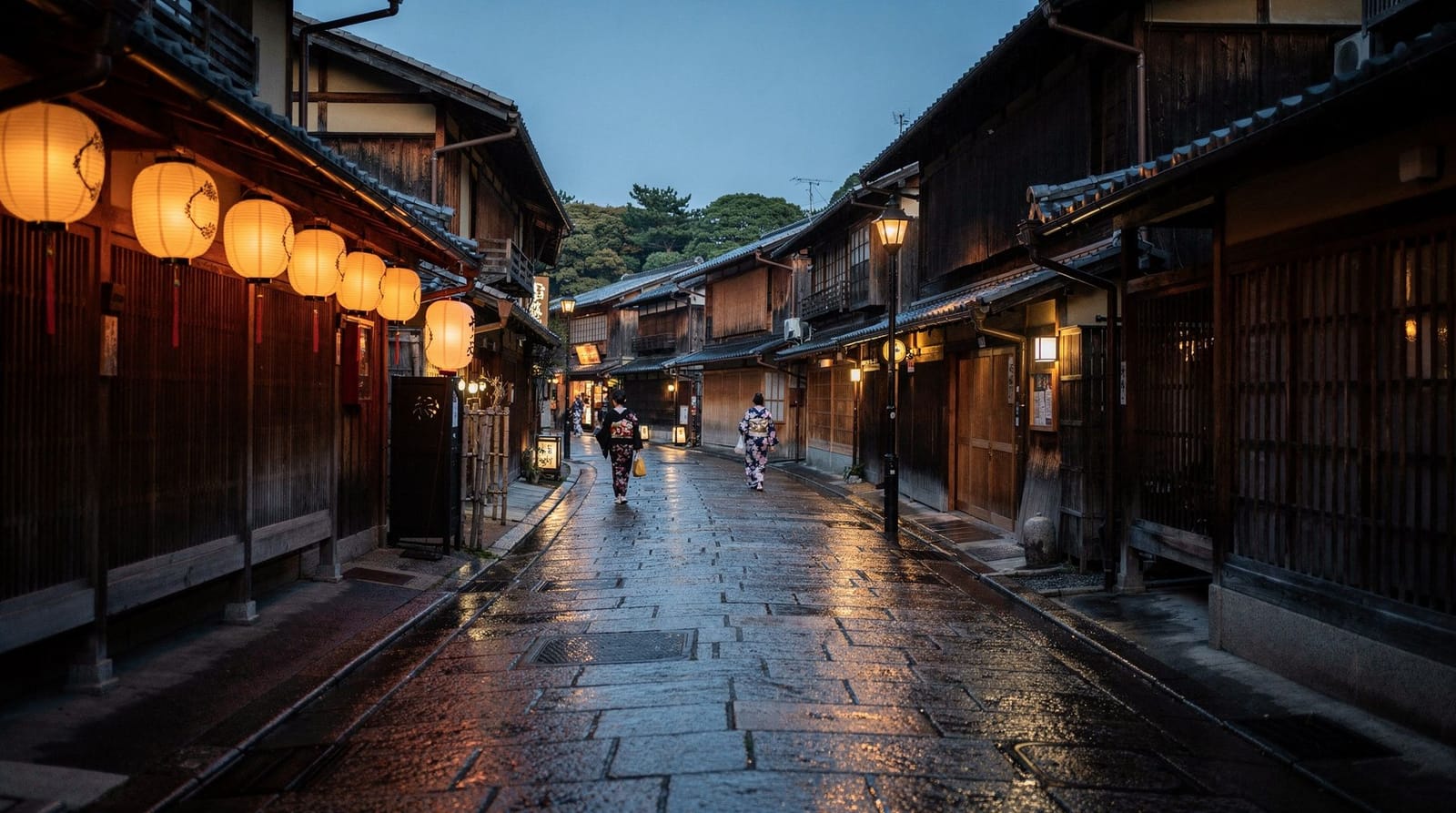
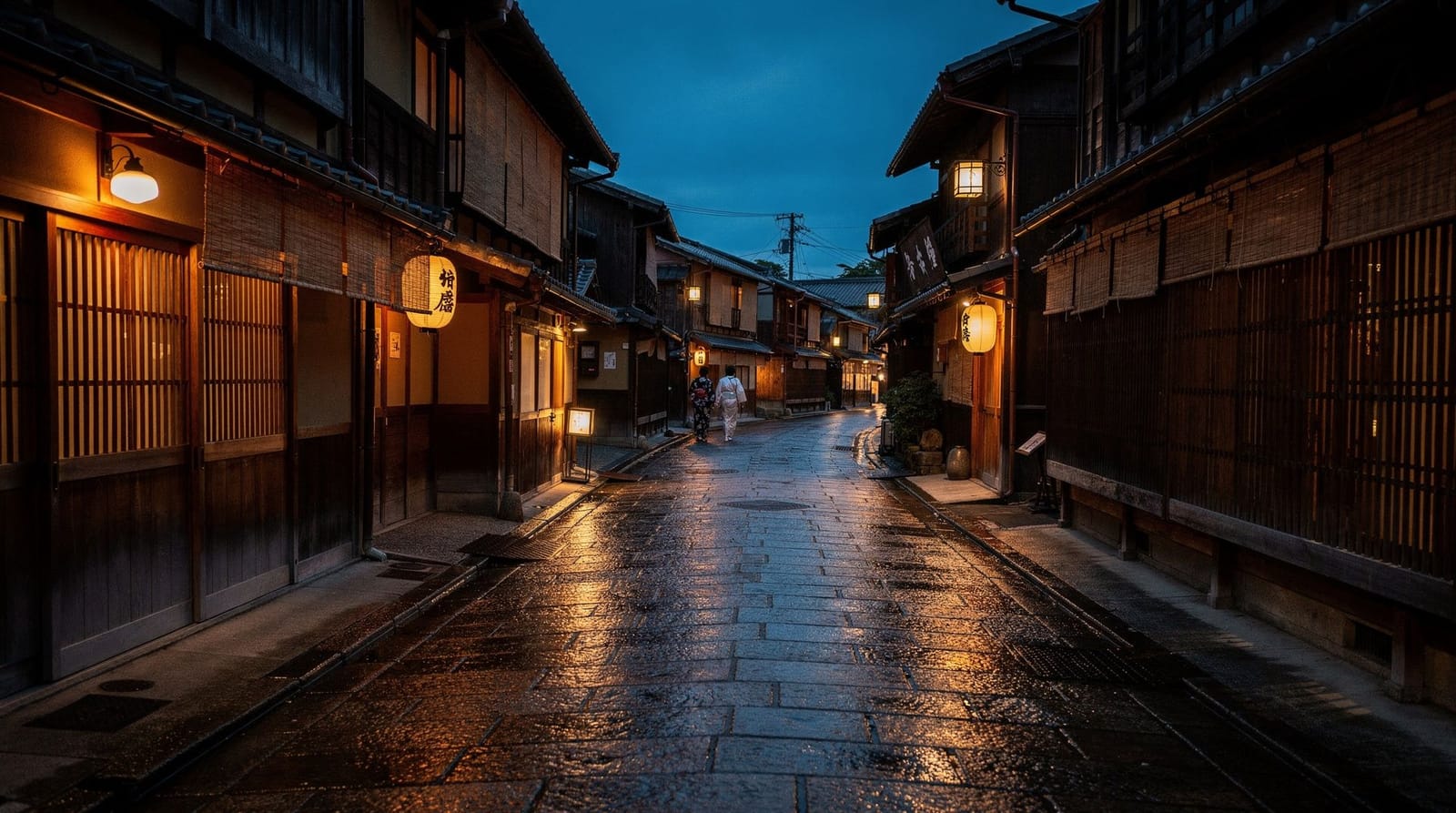
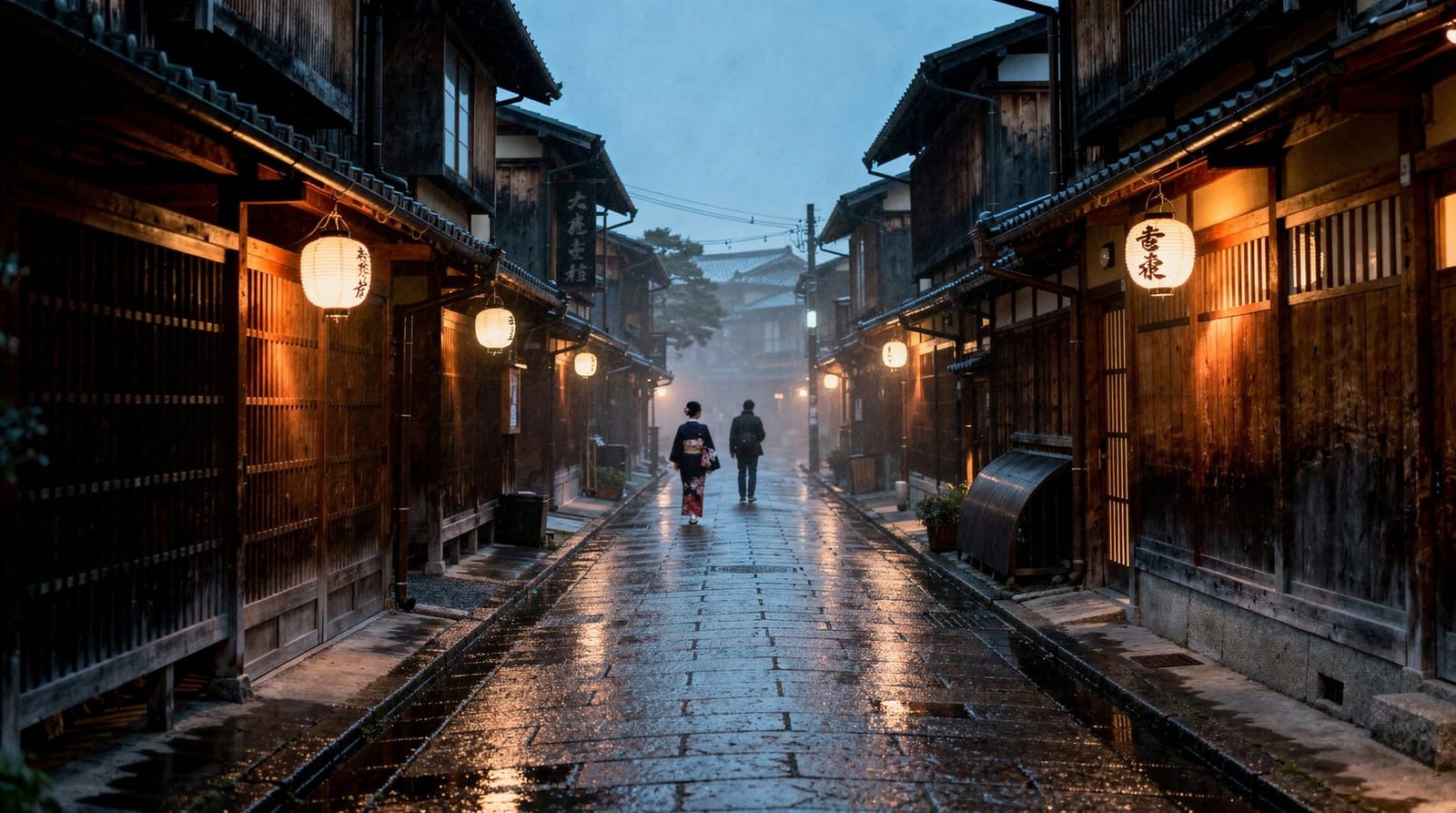
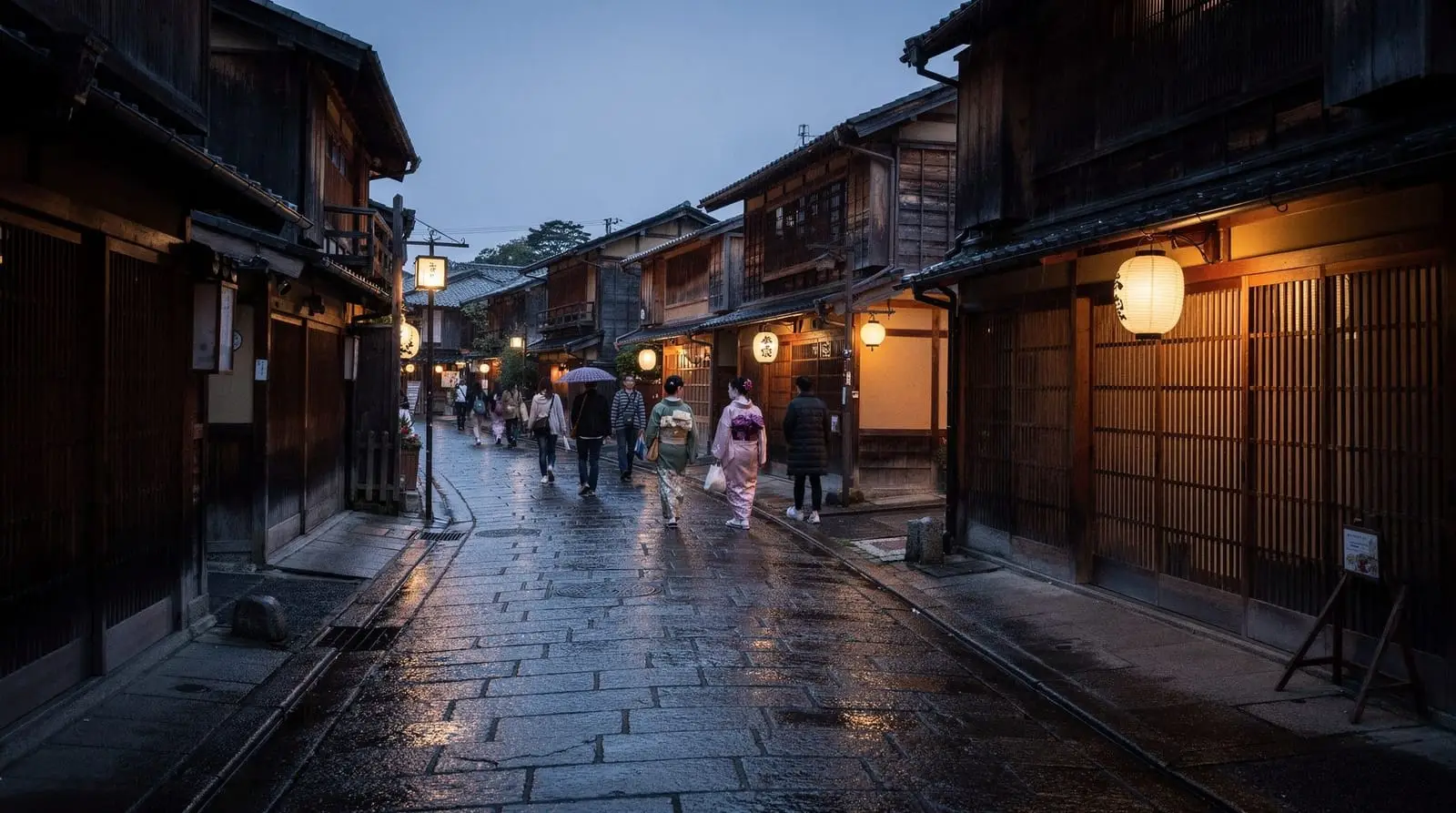
Most venues sit within or near Gion itself, inside converted machiya townhouses that keep the traditional wooden-lattice facades and narrow proportions of the district’s older buildings, which means arrival is usually a short walk from Gion-Shijo or Kawaramachi stations rather than a taxi ride to an unfamiliar part of the city. Confirmation emails typically include the exact address and any specific arrival instructions, since some of these machiya entrances are easy to miss from the street — narrow, unmarked doors are the norm in this district, not a sign you have the wrong address.
What it costs, realistically
Prices vary by operator, group size, and whether the booking is private or shared, but the tiers are fairly consistent across the market. A short meet-and-greet or games-only session without a full meal runs roughly ¥8,000-15,000 (about $53-100) per person. A tea ceremony with a maiko present sits in a similar range, sometimes slightly higher for smaller group sizes.
A full dinner with a maiko hosting part of the meal is the most expensive tier, typically ¥15,000-30,000 (about $100-200) per person, occasionally higher for private rooms or premium kaiseki menus. All of these sit well below what a traditional ochaya booking through personal introduction would cost, which can run into several hundred thousand yen for a private banquet with multiple geiko and maiko — the tour-operator versions exist specifically to close that price and access gap for visitors.
None of these figures apply to the kimono makeover product, which is a different and considerably cheaper category covered separately in the kimono rental guide — worth reading before you book if you’re not sure which experience a listing is actually describing.
How to tell a genuine listing from a staged one
Because “maiko experience” gets used loosely, a few checks help before booking. A genuine listing will usually describe the maiko as attending “for part of the evening” or specify a duration for her segment — full transparency about the fact that she’s not there the entire time is a good sign, not a red flag.
Listings that promise unlimited access, photos throughout, or make no mention of an interpreter or host managing the interaction are worth reading more carefully; the more structured and bounded the description, the more likely it reflects how these bookings actually run in practice. Reviews that specifically mention watching tora-tora or konpira fune fune played, rather than generic photos, are a reasonably reliable signal that a real maiko was present and performing rather than a costumed stand-in.
It’s also worth knowing that a small number of listings use “geisha” performers who are trained dancers rather than maiko or geiko actively working within the hanamachi system — not fraudulent, since some operators are upfront about this, but a different product from an ozashiki with an actual apprentice. Gion Corner, covered separately, is the clearest example of this format: a structured, honestly marketed show rather than an attempt to simulate a private booking.
Who actually benefits from these bookings
The fees from a tour-operator maiko dinner or tea ceremony flow back through the same system that supports the traditional ochaya economy — a share to the okiya that houses and trains the maiko, a share to the operator or ochaya running the booking, and, depending on the arrangement, a portion to the maiko herself or toward her training costs, which the okiya typically covers as an investment recouped over her working years.
Given the shrinking number of geiko and maiko across Kyoto’s five hanamachi, this newer revenue stream has become a genuinely meaningful part of how the tradition sustains itself financially, alongside the traditional ochaya bookings that still make up the bulk of the business. Framing a booking as “for tourists” undersells its actual role in keeping a centuries-old apprenticeship system funded.
If a maiko booking doesn’t fit your trip
Not every schedule or budget allows for one of these bookings, and there’s no need to feel you’ve missed Kyoto’s geisha culture entirely if that’s the case. A guided evening walk through Gion, covered in the Gion geisha guide, costs a fraction of a dinner booking and still gives real context, plus a plausible (if unguaranteed) chance of a passing sighting during the early-evening window when maiko and geiko move between appointments.
The Gion Corner guide covers a condensed stage show touching on the dance tradition alongside several other traditional arts in a single sitting, useful if your time is limited to an hour. And a kimono makeover session, detailed in the kimono rental guide, gives a physical sense of the dress and presentation, even without an actual maiko involved — a different experience, honestly marketed as such, rather than a lesser substitute.
Etiquette during the booking
A maiko dinner or tea ceremony is a professional performance, not an interactive photo booth, and the etiquette follows from that. Wait for an invitation before photographing her directly rather than shooting throughout the meal; participate in the games when invited rather than sitting them out awkwardly; don’t ask personal questions about her real identity, family, or life outside the okiya, which maiko are trained not to discuss and find genuinely uncomfortable; and treat the interpreter or host’s cues about timing and structure as the actual plan for the evening rather than a suggestion. Tipping isn’t expected or customary in Japan generally, including here — the listed price is the full cost.
Language, interpretation, and what gets lost in translation
Even with an interpreter present, some of what a maiko says or performs doesn’t translate cleanly — traditional songs carry wordplay and seasonal references that take a native speaker years to fully appreciate, and the conversational banter during a dinner often leans on local references or gentle humor calibrated for a Kyoto audience rather than an international one.
A good host or interpreter will flag when something is genuinely worth explaining versus when a polite laugh and moving on is the right response, and it’s fine to ask questions if something goes over your head — maiko who work these tourist-facing bookings are generally used to guests who don’t share cultural context and adjust accordingly, within the bounds of what’s appropriate to discuss.
What changes by season
Maiko and geiko schedules follow Kyoto’s calendar as closely as any local business, which affects both availability and what you’ll see. Spring (late March through April, cherry blossom season) and autumn (November, peak foliage) are the busiest months for every geisha-culture booking in the city, including tourist-facing maiko dinners, which means less last-minute availability and, at some venues, slightly higher pricing.
Summer’s Gion Matsuri, Kyoto’s largest festival held throughout July with major processions in mid-month, is a period when many maiko and geiko are visibly more active in public — appearing at festival events and processions — but also when private booking availability can tighten around the festival’s peak dates. Winter (December through February) is comparatively quiet, both for street sightings and for booking demand, and is often the easiest season to secure a dinner or tea ceremony booking on relatively short notice, sometimes at a modest discount compared to peak months.
None of this changes the fundamental structure of the experience — the games, the dinner format, the tea ceremony option — only the ease of booking and, in Gion Matsuri’s case, the odds of an incidental sighting on top of whatever you’ve booked.
Comparing the options at a glance
For a visitor weighing which format fits their trip: a meet-and-greet suits anyone with 30-40 minutes to spare and a modest budget who mainly wants a genuine, brief encounter and a photo. A tea ceremony with a maiko suits visitors who prefer a quieter, more contemplative setting over a drinking-game format, and who are also interested in chado as a practice in its own right.
A full dinner suits anyone treating the evening as a centerpiece of their trip, willing to spend the most for the longest and most complete version of the experience, including the traditional games and a multi-course meal. And a kimono makeover, again, is a separate product entirely — worth doing for its own reasons, but not a cheaper substitute for any of the three options above if what you actually want is time with a real, working maiko.
The five hanamachi, and why most tourist-facing bookings are in Gion
Kyoto has five recognized hanamachi (geisha districts): Gion Kobu, Gion Higashi, Pontocho, Miyagawa-cho, and Kamishichiken, each with its own okiya, ochaya, and distinct dance school tradition. The large majority of English-friendly, tourist-facing maiko bookings run through venues in or near Gion Kobu specifically, since it’s both the largest and best-known hanamachi and the one with the most commercial infrastructure built up around visitor-facing bookings over the past decade.
Pontocho maintains a smaller maiko and geiko community with occasional dinner bookings of its own, covered in the Pontocho alley guide, while Kamishichiken, Kyoto’s oldest hanamachi, runs almost entirely on traditional introduction-based bookings with very little English-language tourist access. None of the five districts is more “authentic” than another — they’re simply different communities within the same broader system, with Gion’s scale making it the practical starting point for most visitors.
What to actually wear and how to dress
No special dress is required or expected — ordinary smart-casual clothing is the norm, and renting your own kimono for the evening isn’t necessary and can actually feel odd, since the point of the booking is the maiko’s dress, not the guests’. That said, some venues are converted machiya with low doorframes, tatami seating, and traditional low tables, so avoiding tight skirts or trousers that make floor-sitting uncomfortable is a practical, not a formal, consideration. Closed-toe shoes aren’t required either, since shoes come off at the entrance regardless, but bringing clean, presentable socks is worth thinking about given how much of the evening is spent seated on tatami in view of other guests and the maiko herself.
Cash, cards, and what’s actually included
Most operators running English-friendly maiko bookings accept card payment at the time of booking online, though the final in-person bill for any extra drinks ordered beyond what’s included sometimes needs to be settled in cash, particularly at smaller, more traditional venues less used to processing card payments table-side.
The quoted price for a dinner or tea ceremony booking typically includes the meal, the maiko’s segment, and often a welcome drink, but extra alcohol, a private-room upgrade, or additional photos beyond the standard group shot are common add-ons worth checking for in the listing before assuming the headline price is the final one. Consumption tax is generally included in the quoted price for tourist-facing bookings, unlike some traditional ochaya arrangements where it’s added separately.
Booking timing
These experiences run in small private or semi-private groups, which caps availability well below a standard walking tour’s capacity. Booking several weeks ahead is reasonable for most of the year; during cherry blossom season (late March into April) and peak autumn foliage (November), a month or more of lead time is safer, since these two windows see the sharpest spike in demand for every geisha-culture booking in the city, this one included.
Frequently asked questions about Maiko experience in Kyoto — dinners, tea ceremonies, and what's real
Is a 'maiko experience' the same as dressing up in a kimono?
What actually happens at a dinner with a maiko?
What are the drinking games a maiko plays with guests?
Do you need to speak Japanese to book a maiko dinner?
Is it disrespectful to book a maiko dinner as a tourist?
Can you request photos with the maiko?
How far in advance should you book a maiko dinner?
Top experiences
Bookable activities with verified prices and instant confirmation on GetYourGuide.