Kimono rental in Kyoto — where to rent and what it actually costs
Kyoto: Traditional Kimono Rental near Gion w/ Photoshoot
How much does kimono rental cost in Kyoto and what's included?
Basic rental packages start around ¥3,000-5,000 (about $20-33) for a standard kimono, obi (sash), and simple hair styling, worn for the day. Premium packages with a wider fabric selection, professional hairstyling, and accessories run ¥6,000-12,000 (about $40-80). Maiko-style transformation packages with white face makeup and studio photos are the most expensive, typically ¥10,000-20,000 (about $65-135). Most shops rent by the day, returning by the shop's closing time, usually around 6-7pm.
Why this became such a big part of the Kyoto visit
Kimono rental for tourists isn’t a new phenomenon invented for social media, though its scale has grown considerably alongside it. Shops renting traditional dress to visitors — Japanese domestic tourists as much as international ones — have operated in Kyoto for decades, tied to the city’s long-standing role as the cultural heart of Japan and the place where wearing traditional dress for a day, even if you’d never do so at home, feels like a natural extension of visiting temples and historic streets rather than a costume exercise.
What’s changed more recently is volume and visibility: more shops, more package tiers, and considerably more visibility online, which has made “renting a kimono in Kyoto” one of the first activities international visitors research before arriving, alongside temple visits and food.
| Basic package | around ¥3,000-5,000 |
| Mid-tier package | around ¥6,000-12,000 |
| Maiko transformation | around ¥10,000-20,000 |
| Time needed | half a day to a full day |
| Return by | shop’s closing time, usually 6-7pm |
The most photographed activity in Kyoto, and how it actually works
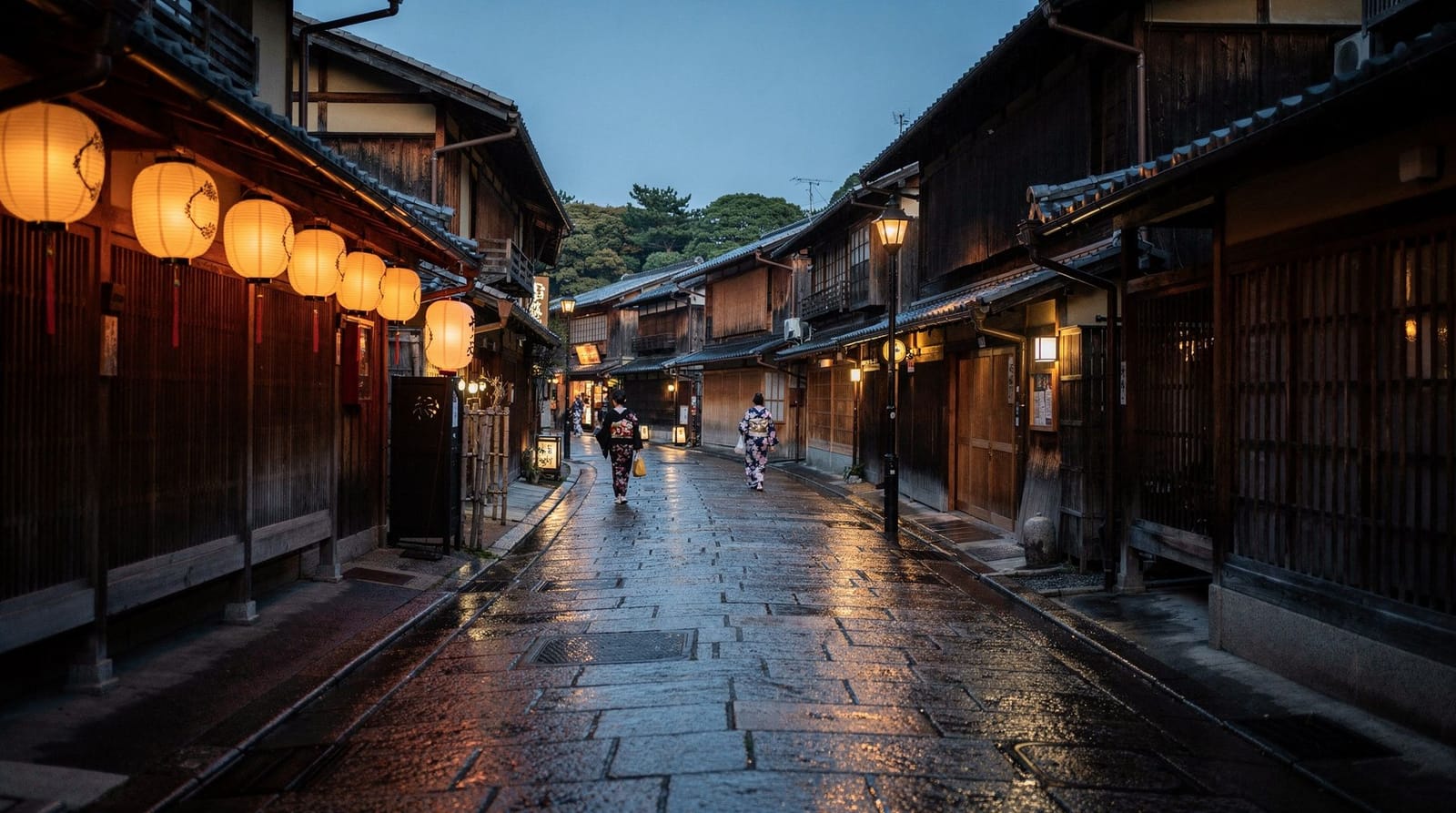
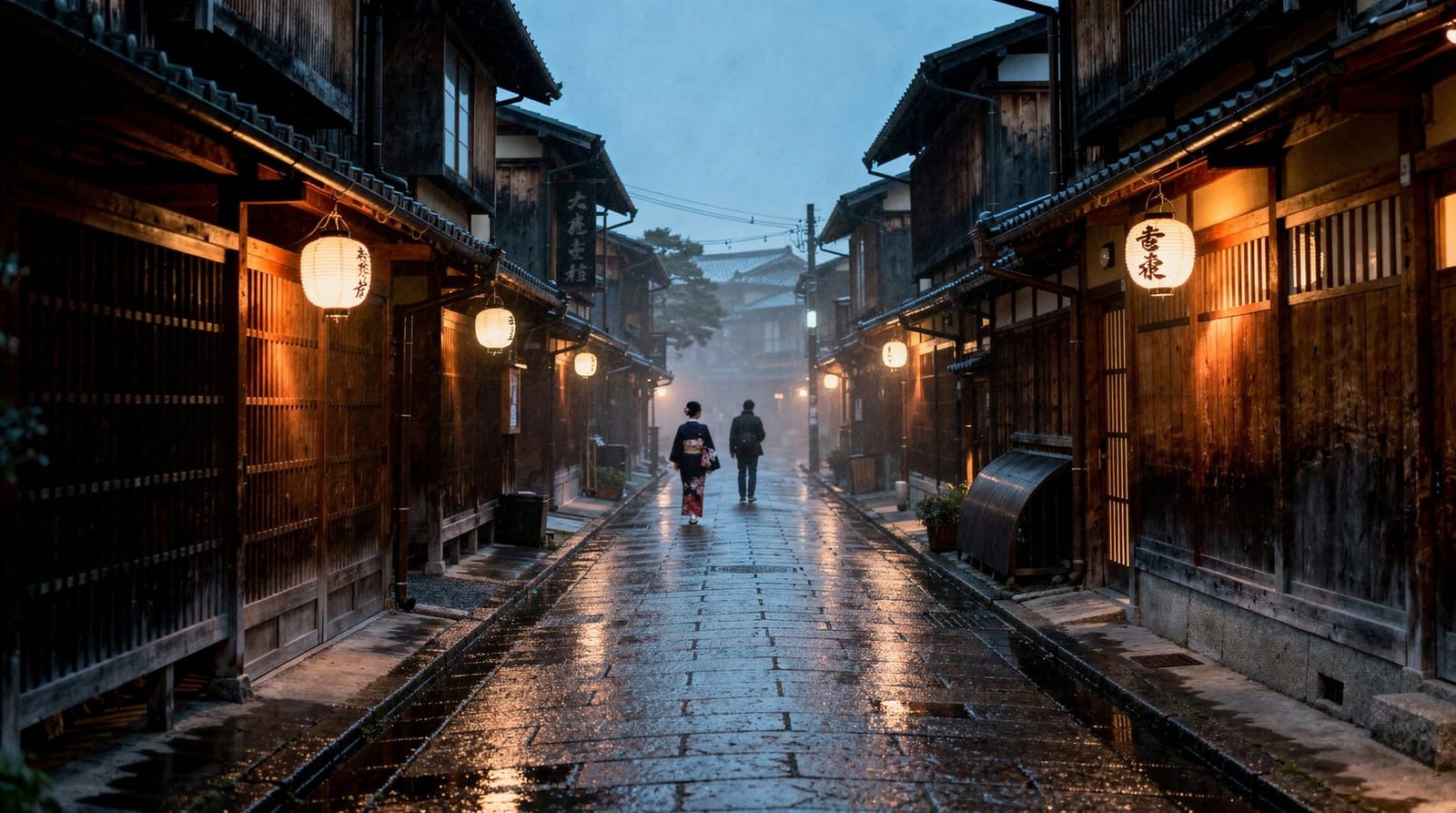
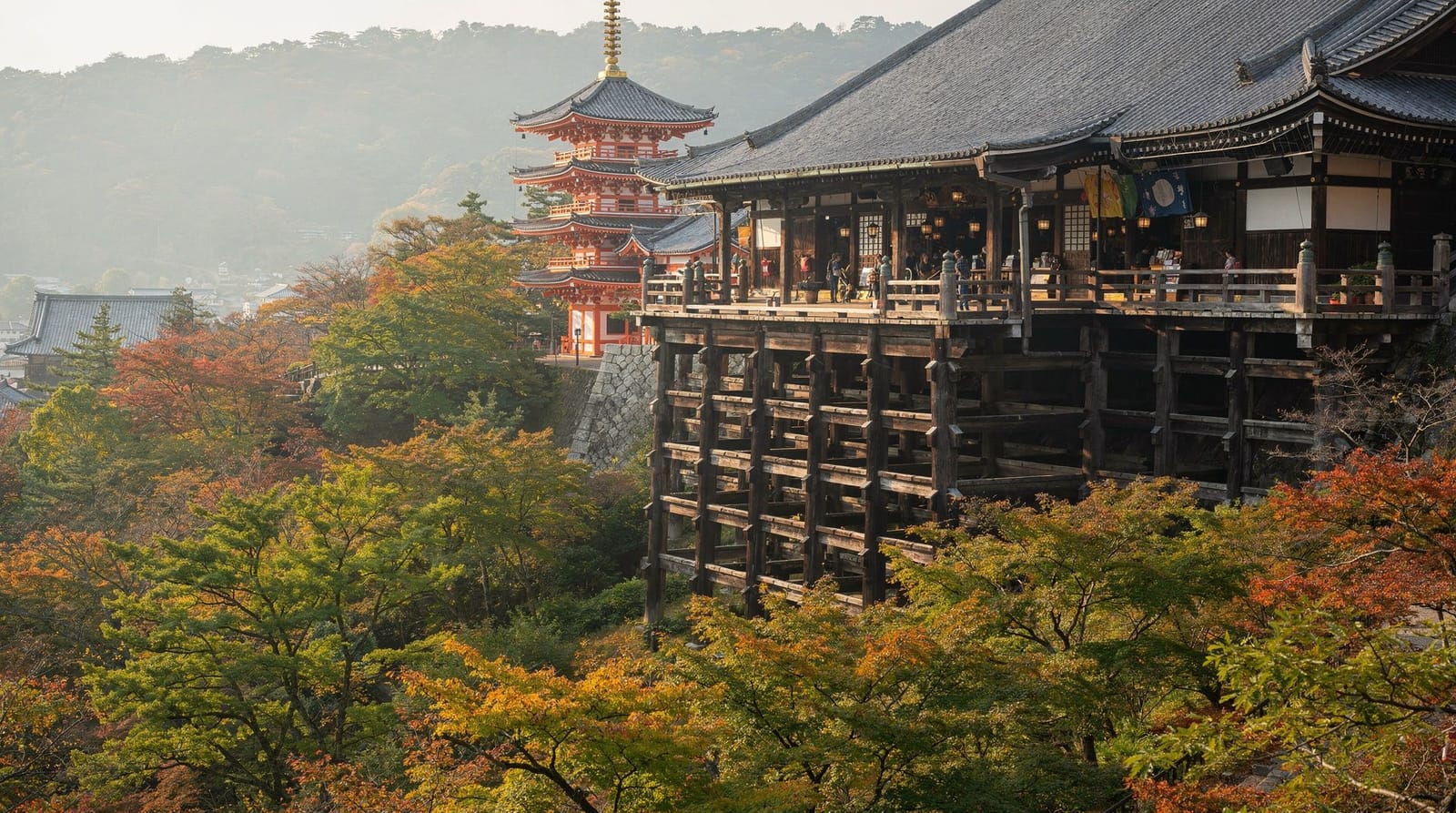
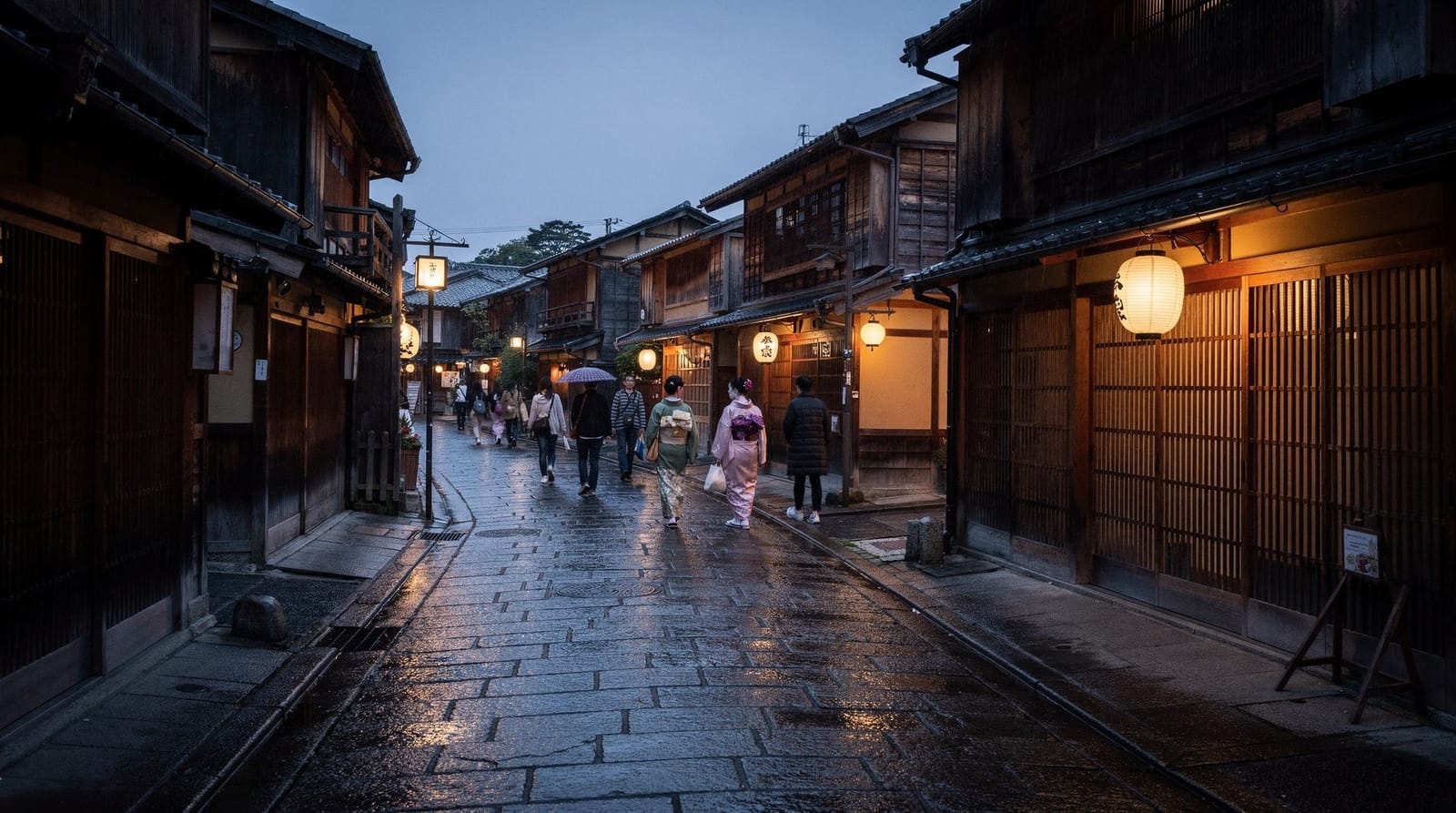
Walk through Gion, Higashiyama, or the approach to Kiyomizu-dera on any given day and a meaningful share of the people you pass are wearing a rented kimono — not locals, not working maiko, but visitors who’ve booked a few hours in traditional dress for photos against the city’s temple lanes and lantern-lit streets. It’s become one of Kyoto’s defining tourist activities, distinct enough from the geisha and maiko world it visually borrows from that it’s worth understanding on its own terms: what you’re actually renting, what it costs at each tier, and which streets make the most of it once you’re dressed.
What a rental package actually includes
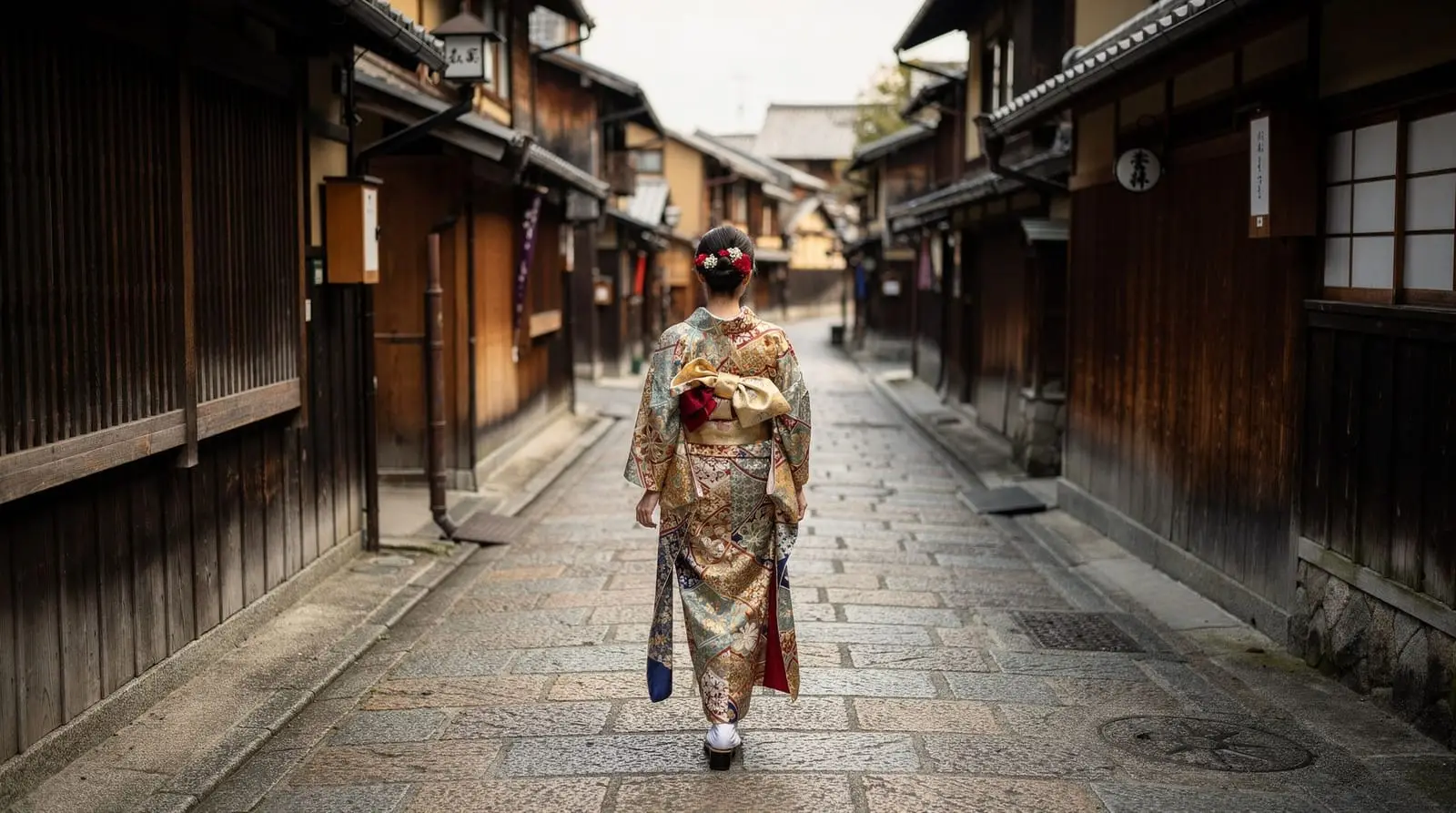
A standard kimono rental covers the kimono itself, an obi (the wide sash tied around the waist), any required underlayers, and basic accessories like a small drawstring bag designed to be carried with kimono. Most shops also include simple hair styling in the base package — enough to look tidy in photos, though not the elaborate updos seen in premium tiers. Staff at the shop dress you; putting on a kimono correctly involves enough steps and specific folds that doing it yourself isn’t a realistic expectation, and every shop budgets 20-30 minutes for the dressing process itself.
Premium packages add a wider selection of fabric patterns and colors (base packages often limit you to a smaller in-stock range), more elaborate hairstyling with ornamental pins, and sometimes a choice of obi styles. The top tier — often marketed as a “maiko transformation” or “geisha experience” — adds full white face makeup, an elaborate wig or hair ornament styling matching maiko conventions, and typically a studio photoshoot with professional lighting and backdrops in addition to (or instead of) walking around the city in the outfit.
This top tier is worth understanding as a distinct product from an actual maiko encounter — you become the maiko for photos, but no working maiko or geiko is involved. The maiko experience guide covers the difference in more detail and where to book if a real maiko encounter, rather than a costume, is what you’re after.
Traditional kimono rental near Gion with a photoshoot is a solid mid-tier option covering the core package plus guided photo opportunities at nearby landmarks, useful if you want good photos without arranging your own route and timing.
What it costs, by tier
Base packages, covering a standard kimono, obi, simple hair styling, and same-day rental until the shop’s evening closing, generally run ¥3,000-5,000 (about $20-33) per person. Mid-tier packages with a broader fabric selection and more thorough hairstyling sit around ¥6,000-12,000 (about $40-80).
Kimono rental with hairstyling and accessories falls in this range, adding ornamental hairpieces and a more complete accessory set to the base rental. The maiko-transformation tier, with full makeup and a studio photoshoot, typically runs ¥10,000-20,000 (about $65-135), reflecting the additional time (often 1.5-2 hours for makeup and dressing alone) and the professional photography included.
A professional photoshoot in traditional kimono sits toward this upper tier, aimed at visitors who want polished, professionally shot images rather than photos taken on their own phone while walking around the city.
Pricing generally scales with how much choice and styling time you get, not with garment quality alone — even base-tier kimono are generally clean, well-maintained, and appropriate for photos; the extra cost buys variety and presentation rather than access to a fundamentally nicer garment.
Kimono versus yukata
Shops distinguish between kimono, the layered, more formal garment associated with year-round wear, and yukata, a simpler single-layer cotton robe traditionally worn in summer and at festivals. Yukata rentals are typically cheaper and faster to put on, and most shops offer them primarily during the warmer months (roughly June through September), when the lighter cotton is more comfortable in Kyoto’s humid summer heat. Outside summer, kimono is effectively the only rental option most shops offer, since yukata’s thin fabric isn’t practical in cooler weather.
Family and kids’ packages
Renting kimono as a family or group is common enough that most shops build specific packages around it. A kimono experience for kids and families at WARGO, one of the larger rental chains with a Gion location, covers children’s sizing and simplified dressing appropriate for younger visitors, alongside matching adult packages so an entire family can be dressed together for the same photos. Children’s rentals are generally priced lower than adult packages and take less time to fit, which matters if you’re managing a group with a limited patience budget for the dressing process.
Where to actually walk once you’re dressed
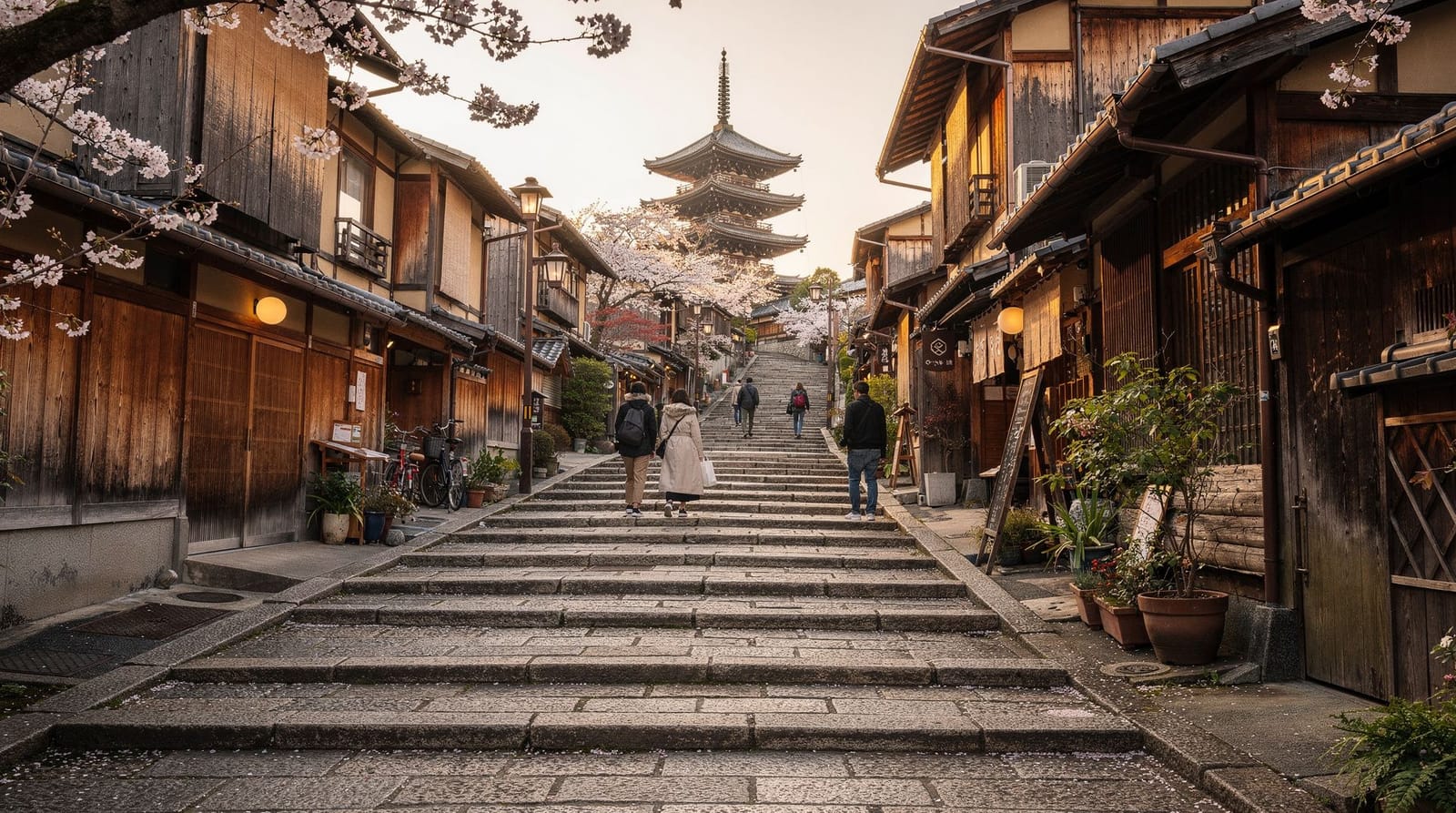
The point of renting isn’t the shop, it’s the streets afterward, and a handful of routes consistently deliver the best results. Ninenzaka and Sannenzaka, the stone-paved slopes leading up to Kiyomizu-dera, are the single most popular kimono backdrop in the city — traditional wooden shopfronts, tea houses, and a consistent uphill sightline that photographs well in nearly any light. Kiyomizu-dera itself offers discounted admission to visitors in kimono at some periods, a small but genuine incentive on top of the setting.
Gion’s Hanamikoji-dori and the Shirakawa canal area give a different backdrop — narrower lanes, willow trees, and machiya facades — and put you in the same streets where actual maiko and geiko walk in the early evening, which is part of why some visitors specifically time their kimono day to end with an evening walk through Gion (details on sightings and etiquette in the Gion geisha guide). Higashiyama’s broader network of preserved streets extends the same aesthetic further north, with fewer crowds than the Kiyomizu-dera approach itself on busy days.
Timing your kimono day
Nearly all rentals run for a single day, picked up in the morning and returned by the shop’s closing time, typically 6-7pm. Most visitors collect their kimono between 9 and 11am, giving a full day for walking and photos before an evening return, and shops near Gion and Higashiyama structure their schedules around exactly this pattern. Morning light on Ninenzaka and Sannenzaka before the crowds build (roughly 8-9:30am) is the best photography window if that’s a priority, which means booking the earliest available dressing slot is worth doing specifically for photographers rather than casual sightseers.
Walking in kimono is noticeably slower and less flexible than in ordinary clothes — the fitted obi restricts stride length, and traditional sandals (zori or geta) take some adjustment — so budget more time than you’d normally need to cover the same ground, and expect stairs and uneven stone paving, common throughout Higashiyama, to slow you further.
Booking ahead versus walking in
During cherry blossom season (late March through April) and peak autumn foliage (November), the most established shops near Gion and Kiyomizu-dera routinely sell out their best morning slots days or even weeks ahead, so advance booking matters if a specific date or an early start is important to your plans. Outside those two windows, same-day walk-in availability is generally reliable, particularly at larger chain shops with multiple locations, though the smallest independent shops with the most distinctive fabric selections tend to fill up faster regardless of season.
Getting good photos without hiring a professional
Most visitors take their own kimono photos while walking rather than booking a dedicated photoshoot package, and a few practical habits make a real difference in the results. Shooting in the early morning or late afternoon avoids the flat, harsh light of midday, particularly on the stone streets around Kiyomizu-dera where direct overhead sun washes out the warm tones of the wooden shopfronts.
Standing slightly off to the side of the main pedestrian flow on Ninenzaka and Sannenzaka, rather than in the dead center, both improves the composition and avoids blocking other visitors, some of whom are also in kimono and equally trying to get a clear shot. Gion’s Shirakawa canal, lined with willow trees and stone bridges, offers a quieter and arguably more distinctive backdrop than the more crowded Kiyomizu-dera approach, worth prioritizing if you’re choosing between the two with limited time.
If your priority really is professional-quality images rather than casual phone photos, booking a package that explicitly includes a photographer — such as the professional photoshoot option covered above — removes the guesswork and gets you a photographer who knows the best angles and timing at each specific location, generally worth the added cost if photos are the main point of the day rather than a byproduct of it.
Solo travelers, couples, and groups
Kimono rental works fine solo — plenty of visitors rent and walk alone, and shop staff are used to dressing individuals rather than only couples or groups. Couples’ packages, dressing both partners together often with a small discount over booking separately, are widely available and popular enough that most shops list them as a standard option rather than a special request.
Larger groups, including the family and kids’ packages covered above, are handled routinely at bigger shops with enough staff and stock to dress several people within a reasonable window, though very large groups (six or more) are worth booking ahead specifically to make sure the shop can dress everyone within a similar timeframe rather than staggering the group’s start times by an hour or more.
Gion versus Arashiyama versus Kiyomizu-dera: where to actually rent
Shops cluster in three main areas, and which one makes sense depends on where you plan to spend the day. The highest concentration of kimono rental shops sits around Gion and the approach to Kiyomizu-dera, in and around Higashiyama — convenient if your day centers on temple streets, Ninenzaka and Sannenzaka, and an evening walk through Gion itself, since you can pick up and return without much extra travel.
A smaller cluster operates near Arashiyama in western Kyoto, aimed at visitors combining kimono photos with the bamboo grove and the Togetsukyo bridge — a genuinely different aesthetic backdrop from Higashiyama’s temple lanes, worth considering if bamboo-grove photos matter more to you than the Gion streetscape. A third, smaller group operates near Kyoto Station and downtown, generally the least scenic option for walking but the most convenient if your accommodation or onward travel plans are based there rather than in the eastern old town.
For a first-time visitor without a strong preference, the Higashiyama/Gion cluster is the more efficient choice, since it puts the rental shop, the best photo streets, and (if you want it) an evening Gion walk all within the same compact area rather than requiring a cross-city trip mid-kimono-day.
Common mistakes worth avoiding
A handful of avoidable problems come up often enough to flag directly. Underestimating how much slower walking is in kimono and geta sandals is the most common — allow noticeably more time than your usual walking pace, particularly on the stone-paved slopes around Kiyomizu-dera, which are uneven and can be slick when wet. Booking the latest available morning slot during cherry blossom or autumn foliage season, rather than the earliest, means arriving at popular photo spots after they’re already crowded, losing much of the quiet-morning advantage that makes an early rental worthwhile.
Eating or drinking casually while wearing the kimono risks stains that can incur a cleaning fee on return, so most visitors plan meals for before pickup or after return rather than mid-day. And skipping sunscreen or a hat on a hot day because you’re dressed formally is a mistake that has nothing to do with the kimono itself but catches out a fair number of visitors anyway, particularly during Kyoto’s humid summer months.
Weather and seasonal considerations
Kyoto’s climate varies enough across the year to affect the kimono-rental experience directly. Summer (June through September) is hot and humid, which is exactly why yukata, the lighter cotton alternative, becomes widely available during these months — a kimono’s multiple layers can be genuinely uncomfortable in July and August heat, and some shops will actively steer summer visitors toward yukata for this reason.
Spring and autumn, Kyoto’s two peak tourist seasons, offer the most comfortable temperatures for a full day of walking in kimono and also the heaviest demand on rental shops, a trade-off worth weighing against your tolerance for crowds. Winter is cold enough that some shops offer a haori (a short kimono jacket layered over the top) as a practical add-on, and while kimono rental continues year-round, winter is genuinely the quietest season for both booking availability and crowds at the popular photo streets.
What to know before you book
A few practical notes that don’t fit neatly into pricing or location: most shops require a modicum of underlayer clothing of your own (form-fitting, without a high neckline) for hygiene and fit reasons, and provide simple undergarments if you don’t have appropriate ones. Personal belongings are usually stored at the shop or carried in the small provided kimono bag, since kimono sleeves aren’t designed to hold a phone or wallet the way ordinary clothing does. And returning kimono soiled or damaged can incur a cleaning or repair fee, worth being mindful of around food and drink during the day — most visitors plan meals for before or after their kimono rental rather than mid-walk in the outfit itself.
Frequently asked questions about Kimono rental in Kyoto — where to rent and what it actually costs
What's the difference between renting a kimono and a yukata?
Is it cultural appropriation for tourists to wear kimono in Kyoto?
Can you wear a rented kimono into temples and shrines?
How long can you keep a rented kimono?
Do you need to book kimono rental in advance?
Can men rent kimono too?
Top experiences
Bookable activities with verified prices and instant confirmation on GetYourGuide.