Kyoto traditional crafts — Nishijin weaving, Kiyomizu-yaki, and yuzen dyeing
Kyoto: Traditional Japanese Pottery Painting Workshop
Duration: 1-1.5 hours
What are Kyoto's most famous traditional crafts?
Nishijin-ori (a centuries-old silk weaving technique used for kimono obi and textiles), Kiyomizu-yaki (hand-painted ceramics historically fired near Kiyomizu-dera), yuzen dyeing (elaborate hand-painted or stencil-dyed silk patterns used on formal kimono), and Kyoto folding fans (sensu) are the four most historically significant. Several museums and workshops around the city let visitors watch these crafts made and, for pottery and simpler dyeing techniques, try a hands-on version themselves.
Kyoto’s traditional crafts aren’t museum pieces — Nishijin-ori weavers, Kiyomizu-yaki potters and yuzen dyers still work today, and several offer hands-on workshops that produce a genuine, usable result within a single session. This guide covers where to watch each craft made, which workshops are worth booking, and how to tell a genuine piece from a mass-produced import.
| Where | Nishijin (weaving), Gojozaka/Higashiyama (pottery), downtown Kyoto (shopping) |
| Workshop length | Around 45-90 minutes for most beginner sessions |
| Cost | Around ¥3,000-8,000 per person for a pottery, calligraphy or ikebana session |
| Best for | Visitors who want a keepsake made, not just bought |
| Booking | Advance booking recommended, especially for popular pottery sessions |
Why these crafts developed here specifically
Kyoto’s position as capital for over a thousand years, from 794 until the imperial seat moved to Tokyo in 1868, concentrated an unusual density of skilled artisan labor in one relatively compact city, sustained across centuries by demand from the imperial court, the aristocracy, and the major religious institutions that also called Kyoto home. Unlike craft traditions that developed around a single material resource — a nearby clay deposit, a regional silk industry — several of Kyoto’s crafts developed specifically because sustained, high-end demand from a wealthy, culturally sophisticated urban population justified generations of specialization and refinement that a smaller or less prosperous city couldn’t have supported.
That history is a meaningful part of why Kyoto specifically, rather than other historic Japanese cities, retains such a broad and still-active concentration of these traditions today, even as individual crafts face real pressure from changing consumer habits and shrinking demand for formal kimono and traditional tableware in everyday Japanese life.
A city where craft and daily life were never separate
Kyoto’s status as Japan’s imperial capital for over a thousand years didn’t just produce temples and gardens — it built an economy of specialized craft, since an imperial court and the aristocratic class around it required a constant supply of fine textiles, ceramics, lacquerware, and decorative objects made locally by dedicated artisan districts.
Several of those districts and their crafts survive today as living traditions rather than museum displays: Nishijin-ori weavers still work looms in northwest Kyoto, Kiyomizu-yaki potters still fire kilns near the temple that gave the style its name, and yuzen dyers still hand-paint silk using techniques codified over three centuries ago. This guide covers the four crafts visitors encounter most often, where to watch them made, and which workshops are worth actually booking versus which are better left as a shop visit.
Nishijin-ori: the silk weaving district
Nishijin, a district in northwest Kyoto, takes its name from a 15th-century battle encampment and has been the city’s center for elaborate silk weaving since shortly after, producing the richly patterned brocade historically used for kimono and, especially, the wide obi sashes worn with formal kimono. Nishijin-ori weaving is technically demanding — patterns are woven directly into the fabric using specialized looms rather than printed or embroidered afterward, a process that can take weeks for a single high-quality obi length, and remains largely reliant on skilled individual weavers rather than full automation even today.
The Nishijin Textile Center, in the heart of the district, offers demonstrations of the weaving process on traditional looms alongside a small kimono fashion show aimed at visitors — a reasonable, low-commitment introduction to the craft’s techniques and history.
Visiting an actual working weaving studio generally requires advance arrangement rather than walking in, since most remaining looms operate as functioning small businesses producing for the kimono trade rather than as tourist attractions, and the number of these studios has shrunk considerably as domestic kimono demand has declined over recent decades — worth knowing as context for why the craft, while still active, is under genuine economic pressure rather than a static heritage industry.
Kiyomizu-yaki: pottery from the temple slope
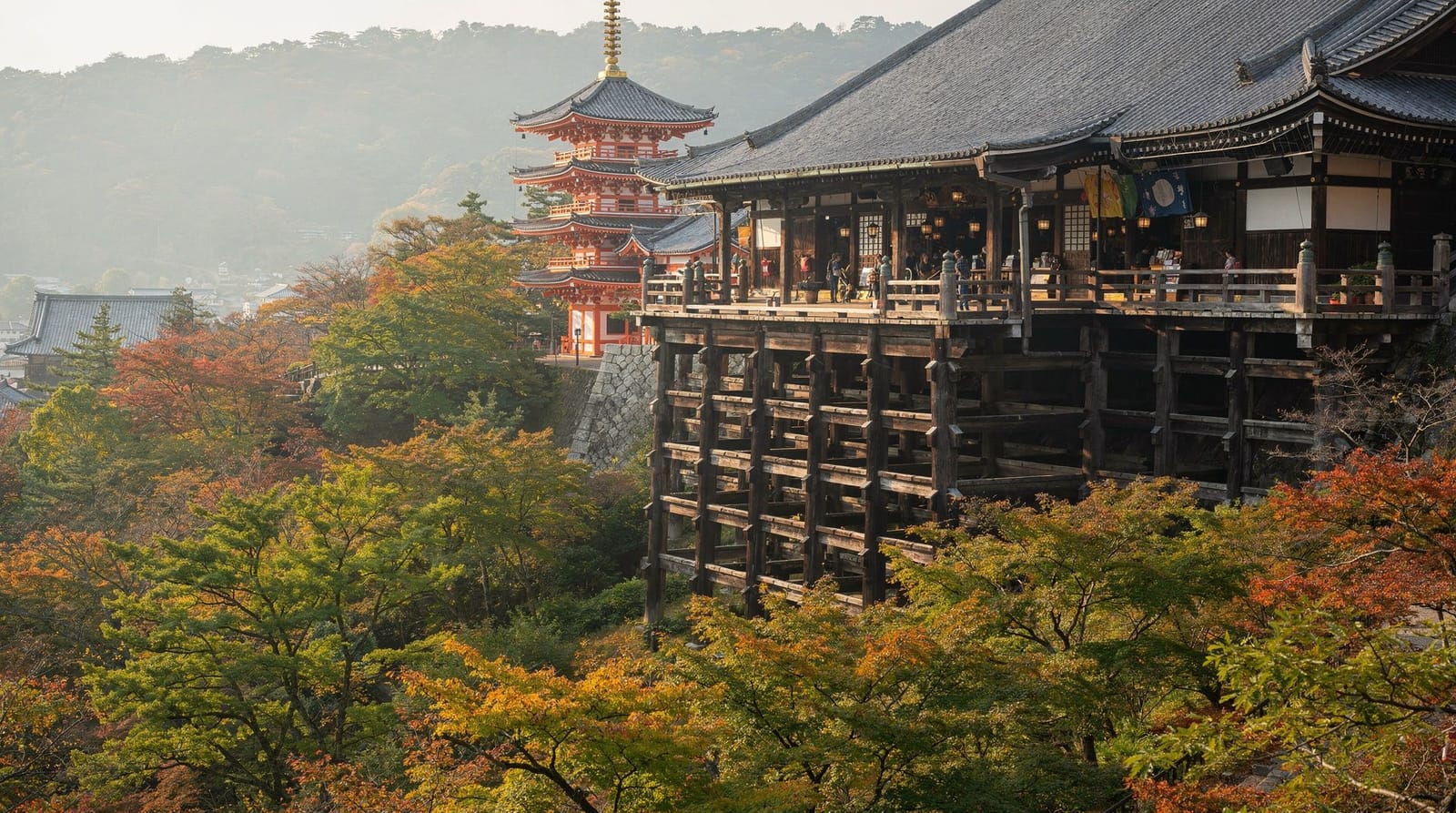
Kiyomizu-yaki takes its name from Kiyomizu-dera, since the ceramics tradition developed around kilns historically clustered on the Gojozaka slope leading up to the temple. The style covers a wide range — from simple, functional tableware to elaborate, hand-painted decorative pieces — but is generally recognized by detailed, often delicate painted decoration applied over a variety of glazes and forms, without a single unifying color palette or motif the way some other regional Japanese ceramic traditions have.
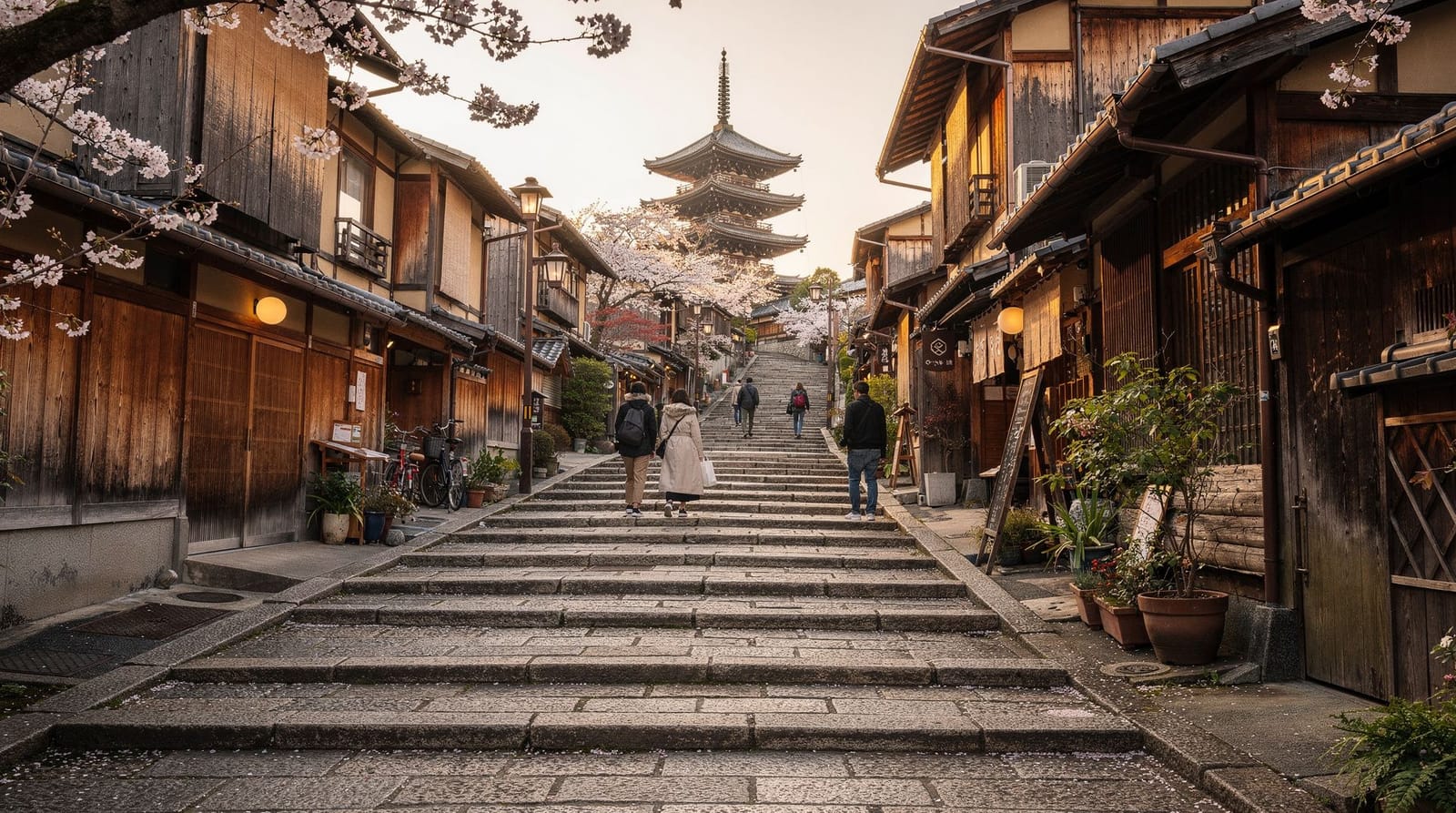
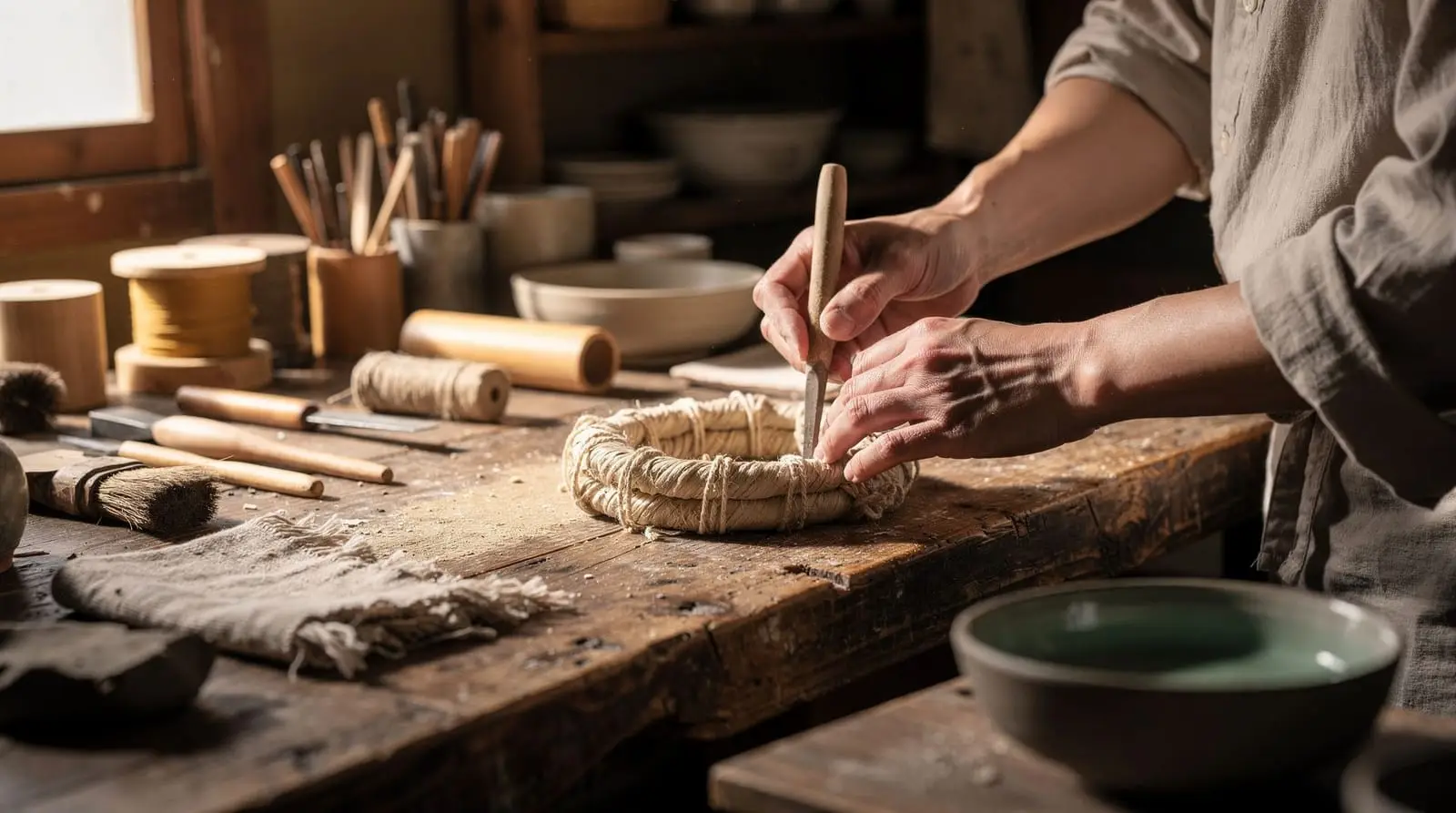
Shops and studios remain concentrated in the Gojozaka and Kiyomizu areas today, making it easy to combine a visit with a trip to Kiyomizu-dera itself. A traditional Japanese pottery painting workshop is the most accessible hands-on option for visitors — decorating a pre-made unglazed ceramic piece under instruction, which is then fired and either shipped to you or available for pickup later, requiring no prior skill and producing a genuinely usable, personal result within a single session.
For visitors drawn to a different, related ceramic tradition, a kintsugi workshop teaches the technique of repairing broken ceramics with gold-dusted lacquer, a practice historically and aesthetically connected to the same wabi-sabi philosophy that shapes tea ceremony and Zen aesthetics more broadly — repair and imperfection treated as worth honoring rather than concealing, a genuinely distinctive craft experience compared to painting or throwing pottery from scratch.
Yuzen dyeing: painted silk
Yuzen is a resist-dyeing technique developed in Kyoto in the late 17th century, credited to a fan painter named Miyazaki Yuzen, producing detailed, painterly multicolor patterns on silk — florals, landscapes, and seasonal motifs rendered with a level of detail closer to painting than most dyeing techniques achieve.
Traditional hand-painted yuzen (tegaki yuzen) is an extremely slow, highly skilled process, sometimes taking weeks of work for a single kimono length of fabric, with rice-paste resist applied by hand to control exactly where dye does and doesn’t penetrate the silk. A faster, stencil-based version (kata-yuzen), developed later to make the aesthetic more commercially viable, remains the more common technique taught in visitor-oriented workshops today, since full tegaki yuzen training takes years to master and isn’t realistically teachable in a single session.
Visitor workshops for yuzen tend to focus on simplified versions — dyeing a small piece of fabric such as a handkerchief or coaster using stencils and a limited color palette — giving a genuine sense of the resist-dyeing principle without requiring the years of training real tegaki yuzen artisans undergo.
Spotting authenticity versus mass production
A recurring practical problem for visitors is distinguishing a genuinely handmade Kiyomizu-yaki bowl or hand-dyed yuzen cloth from a machine-printed or imported approximation sold at a similar-looking price in a tourist-zone shop. A few reasonably reliable signals help: genuine hand-painted ceramics show small, natural inconsistencies in the brushwork that a printed pattern won’t have; real yuzen fabric has a slight raised texture where dye and resist paste were applied by hand, absent in printed silk; and legitimate craft shops are generally willing to explain where and by whom a piece was made, while shops selling imported or mass-produced goods tend to be vaguer on specifics when asked directly.
Price is an imperfect but real signal too — genuinely handmade pieces from a working artisan tradition simply cost more to produce than a printed or molded equivalent, so a suspiciously low price on an item marketed as traditional Kyoto craftsmanship is worth treating with some skepticism.
Folding fans and other smaller crafts
Kyoto folding fans (Kyo-sensu) are another long-standing local craft, produced through a genuinely intricate multi-step process involving dozens of individual bamboo ribs and hand-applied paper or silk, historically used for both practical cooling and as accessories in tea ceremony, dance, and formal dress. Fan-making workshops for visitors are less common than pottery or calligraphy sessions, but fan shops with genuine local production, concentrated in downtown Kyoto and around Gion, remain some of the more distinctive and less commonly sought-out souvenir purchases for visitors who go looking for them specifically.
Calligraphy (shodo) is a different kind of craft — a practiced art form rather than an object-making tradition — but sits alongside these others as one of Kyoto’s most accessible hands-on cultural activities for visitors. A Japanese calligraphy class teaches basic brush technique and character formation, generally producing a piece you keep, and pairs naturally with a broader traditional-arts day alongside pottery or tea ceremony.
Ikebana, the art of formal flower arrangement, rounds out the set of traditional practices most visitor programs group under the broader “traditional arts” umbrella. An ikebana flower composition experience in a traditional house teaches the underlying principles of asymmetry, seasonal awareness, and negative space that distinguish ikebana from Western flower arranging, taught in a genuinely traditional machiya setting rather than a generic classroom.
Where to shop for the real thing
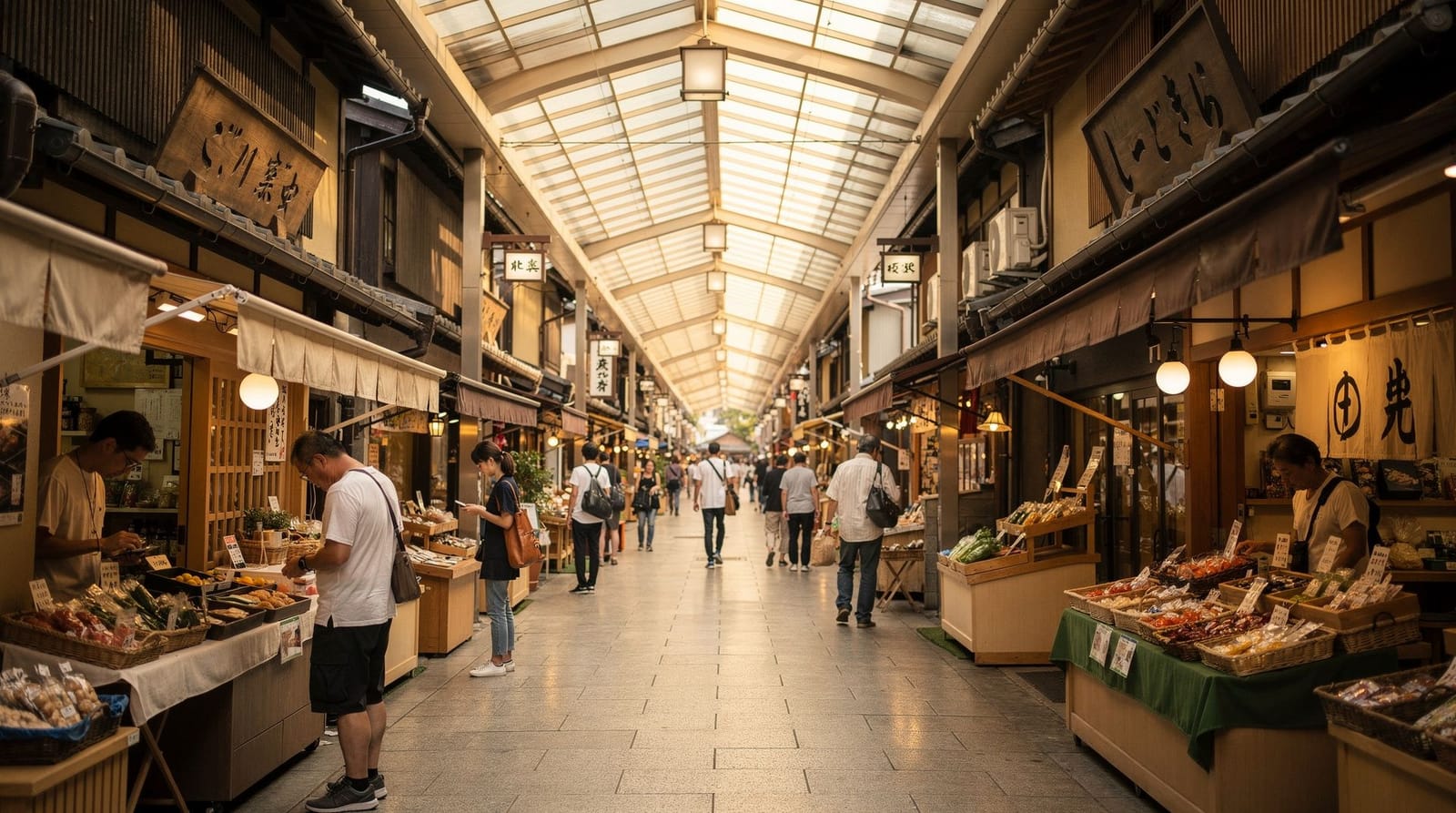
Two areas consistently offer the strongest concentration of long-established shops selling genuinely locally made crafts rather than imported souvenirs. Downtown Kyoto, particularly the Teramachi and Shinkyogoku covered shopping streets and the area around Nishiki Market, mixes generations-old craft and specialty shops with modern retail, worth a slower browse than a typical souvenir stop allows.
The Gojozaka slope near Kiyomizu-dera, within Higashiyama, concentrates specifically on Kiyomizu-yaki pottery, with working studios and shops lining the approach to the temple. Prices at genuine craft shops in both areas run noticeably higher than mass-produced items in generic tourist-zone stalls — a rough but reasonably reliable signal, alongside asking directly about where and how a piece was made, that you’re buying something actually produced by the tradition rather than an imported approximation of it.
Why booking a workshop matters beyond the souvenir
Several of these crafts, Nishijin-ori weaving in particular, face genuine economic pressure from declining domestic demand and an aging population of trained artisans with fewer successors training to continue the work. Visitor workshops and tourism-driven purchases have become a real, if partial, source of income helping some studios and family workshops remain viable, which gives booking a hands-on session with an actual working artisan — rather than only browsing a souvenir shop — some weight beyond the experience itself.
None of this requires treating a workshop booking as an act of charity; the sessions covered here are genuinely enjoyable and produce real, usable results, but it’s worth knowing that your visit has some economic significance to a set of crafts that aren’t guaranteed to still exist in their current, still hand-practiced form a generation from now.
Lacquerware and metalwork, less visited but worth knowing
Beyond the four crafts covered above, Kyoto maintains smaller but genuine traditions in lacquerware (Kyo-shikki) and metal casting and engraving that see far fewer dedicated visitor workshops but remain part of the city’s working craft economy. Kyoto lacquerware, historically used for everything from tea ceremony utensils to formal tableware, involves applying and polishing multiple layers of natural lacquer over a wood or bamboo base, sometimes decorated further with maki-e, a technique of sprinkling gold or silver powder onto wet lacquer to create fine decorative patterns — a process demanding enough that a single high-quality piece can take months of work across its many layers and curing periods.
Metal casting and engraving traditions, tied historically to the production of temple bells, ritual objects, and sword fittings, persist in a small number of workshops, though these are considerably harder for visitors to access directly than the pottery, textile, and dyeing crafts covered above, since they involve equipment and processes less suited to a short demonstration format.
Neither tradition offers the same density of beginner-friendly workshops as pottery or calligraphy, but shops specializing in genuine Kyoto lacquerware, concentrated in the same downtown and Higashiyama areas as the city’s other craft retail, are worth seeking out specifically if a smaller, more distinctive purchase interests you beyond the more commonly bought pottery or textile souvenirs.
How these crafts connect to what you see in temples and gardens
Much of what a visitor encounters elsewhere in Kyoto — the painted screens inside a temple hall, the specific glaze on a tea bowl used in a ceremony, the woven obi on a maiko’s kimono in Gion — is itself a product of these same craft traditions, made by artisans working in the same districts covered in this guide.
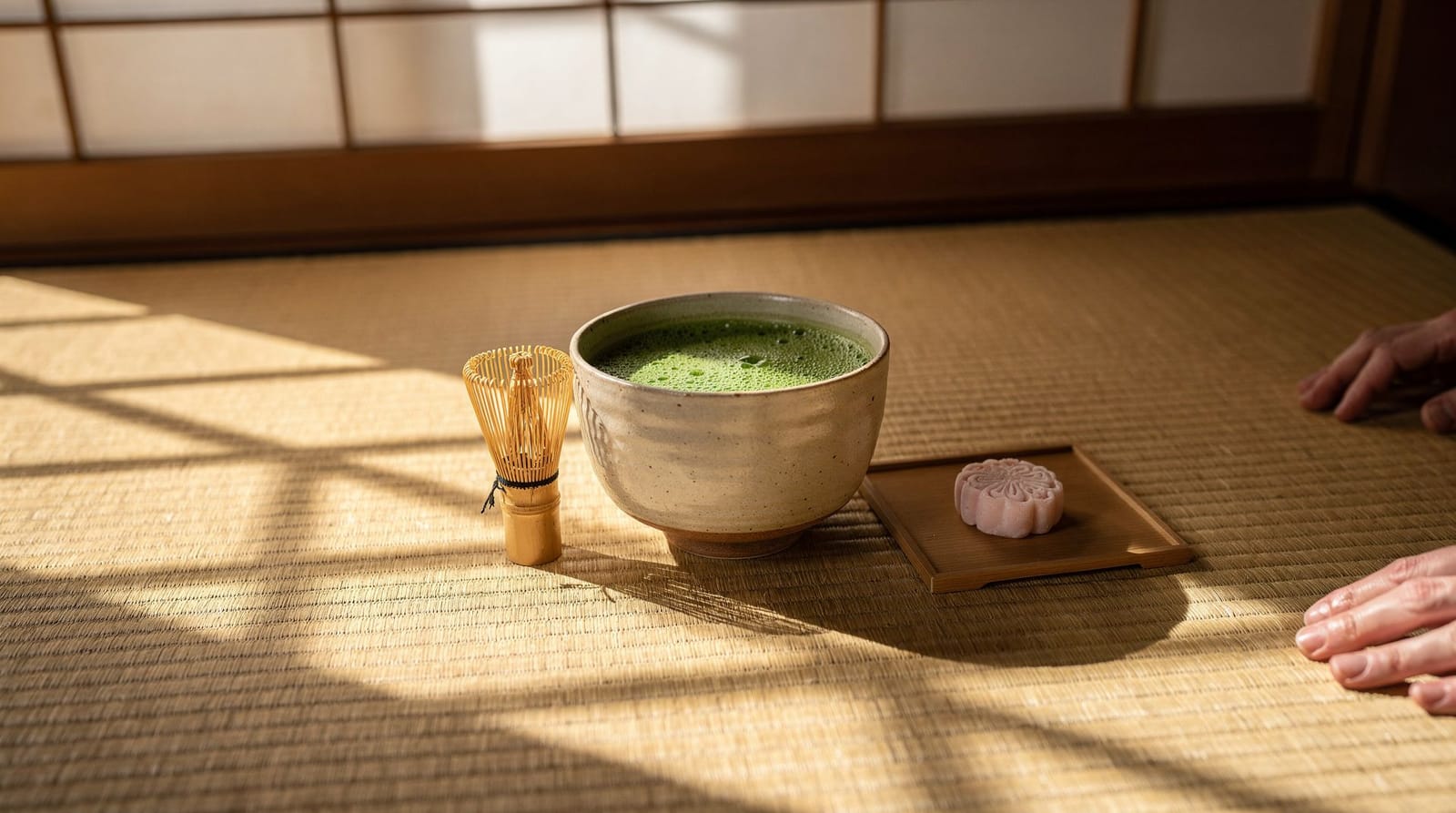
Recognizing Nishijin-ori weaving in an obi sash, or Kiyomizu-yaki in a tea bowl used during a tea ceremony session, adds a layer of context to sightseeing elsewhere in the city that’s easy to miss without knowing the crafts themselves. This is part of why several visitors treat a craft workshop not as a standalone activity but as a way of understanding everything else they see in Kyoto slightly more deeply — the temples, the kimono, the tea bowls, and the fans are all downstream of the same artisan traditions this guide covers directly.
What a workshop actually produces, and managing expectations
For pottery painting, calligraphy, and simplified yuzen dyeing, most beginner workshops genuinely do produce something worth keeping — a decorated bowl, a piece of brushed calligraphy, a dyed cloth — within a single session, since instructors calibrate the format specifically around a beginner completing a full piece in the time available.
Wheel-throwing pottery and any genuinely advanced technique (full tegaki yuzen, traditional Nishijin-ori weaving from scratch) is a different matter: a single session gives a real, hands-on introduction to the physical technique, but the result is honestly a rough first attempt rather than a polished object, and any workshop marketing a beginner wheel-throwing session as producing gallery-quality results is overselling what a first attempt at a genuinely difficult skill can realistically achieve. Most reputable operators are upfront about this distinction, framing wheel-throwing sessions around the experience of trying the technique rather than the quality of the finished piece.
Combining crafts with the rest of your Kyoto day
Most craft workshops run 45-90 minutes, short enough to combine with sightseeing rather than requiring a dedicated day. A Kiyomizu-yaki pottery session pairs naturally with a visit to Kiyomizu-dera itself, given their shared location on the Gojozaka slope. A calligraphy or ikebana session downtown pairs well with browsing Teramachi and Shinkyogoku, or with a stop at Nishiki Market for food between activities.
And for visitors interested in the broader thread connecting Kyoto’s traditional arts and practices, the tea ceremony guide and zen meditation guide both share historical and philosophical roots with the crafts covered here — the same aesthetic values of seasonal awareness, deliberate imperfection, and attentive, unhurried practice run through pottery, tea, calligraphy, and meditation alike, which is part of why so many visitors who try one of these activities find themselves drawn to try another during the same trip.
Choosing between watching, buying, and making
Not every visitor needs to book a workshop to get value from this side of Kyoto. Watching a demonstration at the Nishijin Textile Center costs little beyond time and gives a real sense of the weaving technique without committing to a purchase or a session. Buying from a genuine craft shop in downtown Kyoto or along the Gojozaka slope suits visitors who want an authentic piece without the time commitment of making one themselves.
Booking a hands-on pottery, calligraphy or ikebana session is the right call specifically for visitors who value the process and a personally-made keepsake over simply the finished object — none of the three approaches is more “correct” than the others, and most visitors reasonably mix all three across a single Kyoto trip.
Frequently asked questions about Kyoto traditional crafts — Nishijin weaving, Kiyomizu-yaki, and yuzen dyeing
What is Nishijin-ori and where can you see it made?
What is Kiyomizu-yaki pottery?
Can tourists actually try pottery making in Kyoto, not just watch?
What is yuzen dyeing?
Are Kyoto's traditional crafts dying out?
Where's the best area in Kyoto to shop for authentic traditional crafts?
Top experiences
Bookable activities with verified prices and instant confirmation on GetYourGuide.