Tea ceremony in Kyoto — authentic chado versus the tourist version
Kyoto: Tea Ceremony in a Traditional Tea House near Kiyomizu
Duration: 45 minutes
What's the difference between an authentic tea ceremony and a tourist one in Kyoto?
An authentic chado (tea ceremony) session runs 45 minutes to over an hour, follows the formal sequence of movements with real explanation of their meaning, and usually lets you prepare or at least drink properly whisked matcha in a quiet, purpose-built room. Rushed tourist versions compress the whole thing into 15-20 minutes, skip most of the ritual steps, and focus more on a quick photo than the practice itself. Both exist in Kyoto at similar price points, so checking the stated duration and format before booking matters more than the price tag.
| Where | Gion, Higashiyama/Kiyomizu area, or Uji |
| Cost | Around ¥3,000-6,000 group; ¥8,000-15,000 private |
| Time needed | Around 45-90 minutes for a proper session |
| Format to look for | Participatory (you whisk), not demonstration-only |
| Booking | Advance recommended, especially for private/garden-view slots |
Why Kyoto specifically, and not just any Japanese tea ceremony
Chado is practiced across Japan, but Kyoto’s claim to it runs deeper than most visitors realize before arriving. The city was Japan’s imperial capital for over a thousand years, and the aristocratic and monastic culture that shaped tea ceremony’s development — the connection to Zen monasteries, the patronage of tea masters by the ruling class, the codification of schools like Urasenke that still headquarter in the city today — happened here specifically, not as a generic national tradition that happened to also exist in Kyoto.
That history is part of why a tea ceremony booked in Kyoto carries a different weight than the same activity booked in, say, Tokyo or Osaka: the rooms, the instructors’ lineages, and in some cases the actual buildings involved trace back centuries within the same city rather than being a modern recreation transplanted from elsewhere.
A ritual built around slowing down, sold in a market that moves fast
Chado, “the way of tea,” developed over centuries as a disciplined practice combining hospitality, aesthetics, and a specific philosophy of mindful presence — every movement in a formal tea ceremony, from the fold of a cloth to the angle a bowl is turned, carries deliberate meaning refined by tea masters going back to the 16th century, most famously Sen no Rikyu, whose principles still shape how the ceremony is taught today.
That’s the tradition on offer in Kyoto, and it sits somewhat uneasily alongside a tourism market that increasingly compresses experiences into short, bookable time slots. Both a genuinely worthwhile 45-minute session and a rushed 15-minute photo-op exist under the same search term, at similar price points, and this guide is about telling them apart before you book rather than after.
What actually happens in a proper session
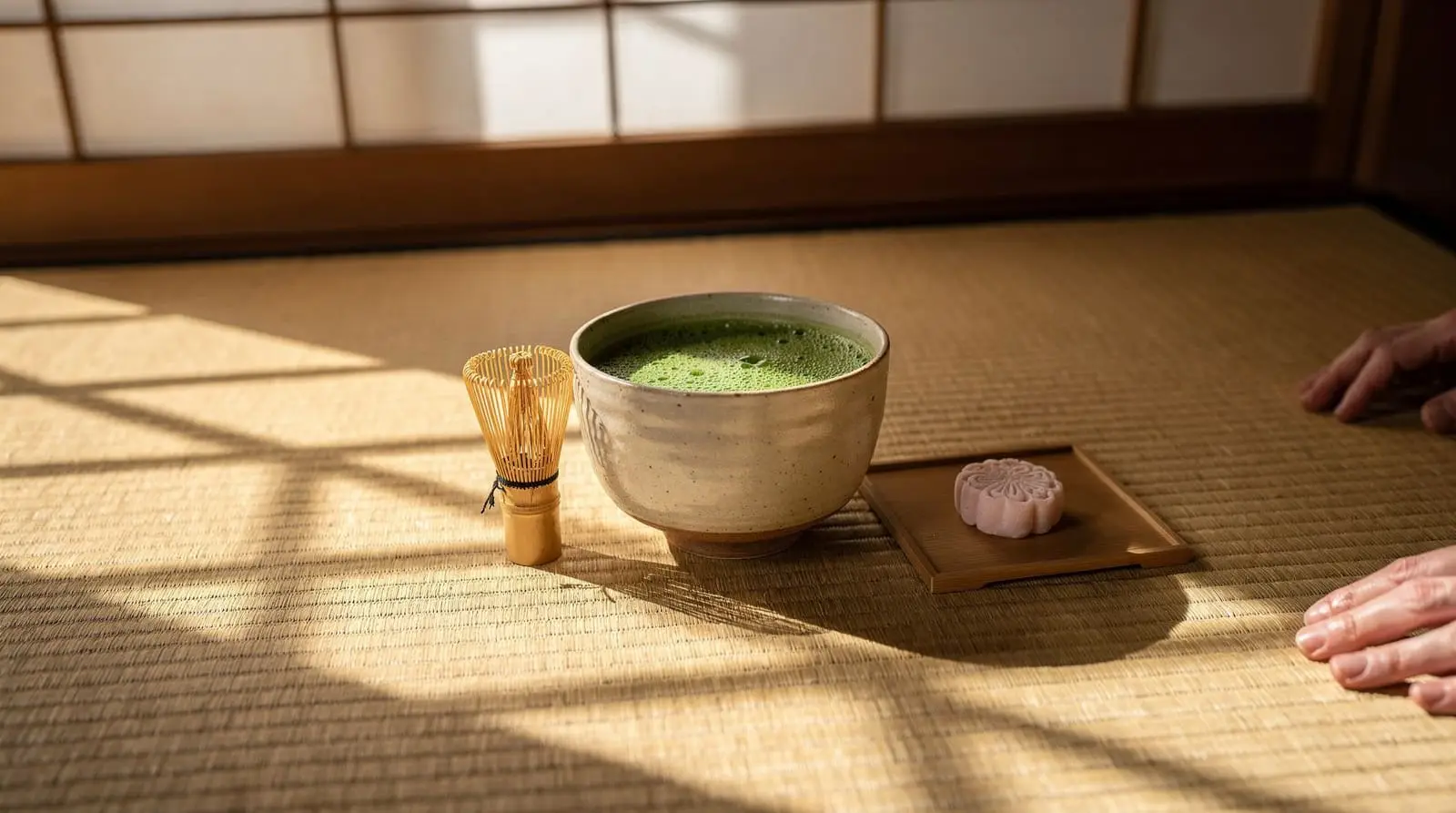
A well-run visitor-oriented tea ceremony, even scaled down from a full traditional chaji, follows a recognizable arc. You’re typically seated on tatami mats (with a low chair option offered at some venues for anyone who can’t kneel comfortably for an extended period), and the host begins by explaining the room itself — the tokonoma alcove with its seasonal scroll and flower arrangement, the layout of the tea utensils, and the reasoning behind the ceremony’s pacing. The host then prepares the matcha using precise, practiced movements: measuring the powdered tea, adding hot water, and whisking with a bamboo chasen until a thick, even froth forms.
A small traditional sweet (wagashi), chosen to complement the season and offset matcha’s natural bitterness, is served before the tea itself — eating the sweet first is part of the sequence, not an optional side dish. The bowl is then presented, traditionally rotated so its front-facing decorated side isn’t the side you drink from, out of respect for the bowl’s design; you rotate it slightly back before returning it. Hands-on sessions extend this by having you attempt the whisking technique yourself under the host’s guidance, generally the most memorable single element for visitors who try it.
The demonstration-versus-participation distinction
The clearest practical distinction between tea ceremony offerings in Kyoto isn’t price, it’s format: whether you watch a demonstration or actually participate. A demonstration has the host prepare and serve tea to you, with explanation throughout but no hands-on component — a reasonable choice if your main interest is understanding the ritual and enjoying the room’s atmosphere rather than acquiring the skill yourself. A participatory session, which most operators now offer as the default or as an add-on, has you whisk your own bowl after watching the technique demonstrated, and generally runs slightly longer to accommodate the extra step.
A 45-minute tea ceremony lesson experience is built specifically around the participatory format, with enough time allotted to actually learn and practice the core movements rather than just observe them once.
Where to actually book
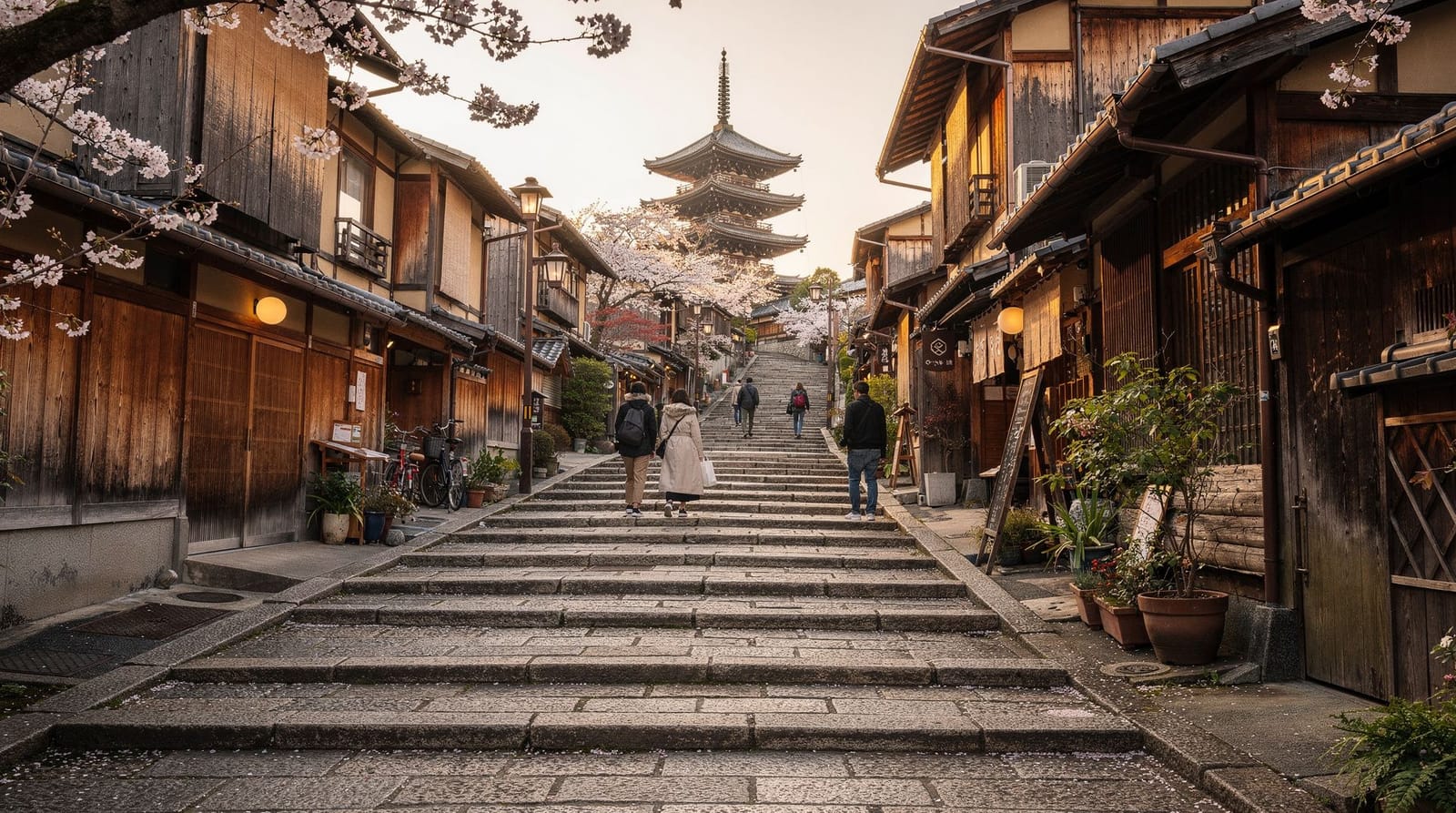
A tea ceremony in a traditional tea house near Kiyomizu takes place in a purpose-built tea room close to Kiyomizu-dera, giving genuine architectural atmosphere — tatami, shoji screens, a proper tokonoma alcove — rather than a generic function room repurposed for the occasion, and pairs naturally with a day already spent walking the Higashiyama temple streets.
An authentic matcha and tea ceremony experience in a traditional house runs in a converted machiya townhouse, a format many visitors find atmospheric in a different way than a temple-adjacent tea house — closer to how tea ceremony would have been practiced in a private home setting historically, with the host often speaking more informally about the tradition’s role in daily life rather than purely its formal theory.
For a session with a more dramatic physical setting, a private tea ceremony with a garden view adds a landscaped garden visible from the tea room, which changes the pacing of the experience somewhat — more time spent appreciating the seasonal view as part of the ritual’s broader aesthetic philosophy, which traditionally treats the garden and the room as a single composed experience rather than separate elements.
Temple-affiliated ceremonies
A number of Kyoto’s Zen temples maintain their own tea rooms and occasionally offer tea ceremony sessions tied to the temple’s own practice rather than a purely commercial booking — these tend to carry a more contemplative, less performance-oriented framing, since chado developed historically alongside Zen Buddhist practice and shares much of its philosophical grounding in mindfulness and simplicity.
The zen meditation guide covers several temples, including Kennin-ji and Shunko-in, that combine zazen sessions with tea ceremony elements for visitors interested in both practices within the same visit, since the two traditions are historically and philosophically intertwined rather than separate interests.
What it costs
Prices for visitor-oriented tea ceremony sessions in Kyoto generally run ¥3,000-6,000 (about $20-40) per person for a standard 45-60 minute group session with participation, rising to ¥8,000-15,000 (about $53-100) for private sessions, smaller group sizes, or particularly atmospheric venues such as a garden-view or historic tea house setting.
Sessions combined with a maiko’s presence — covered separately in the maiko experience guide — run considerably higher, reflecting the added booking complexity rather than the tea ceremony portion itself. As a rule, price correlates more with group size, venue exclusivity, and add-ons than with authenticity — a modestly priced group session at a genuine tea house can be more properly “authentic” than an expensive private booking that still rushes through the ritual in fifteen minutes.
Uji: for visitors who want the tea itself, not just the ceremony
Uji, a 20-30 minute train ride south of central Kyoto, has been Japan’s most prestigious tea-growing region since medieval times and offers a different angle on the same interest: working tea fields, historic tea shops, and ceremony experiences framed around the tea’s origin rather than purely the ritual. It’s a worthwhile half-day addition for visitors whose interest in tea ceremony extends to where and how the tea itself is grown and processed, distinct from — and genuinely complementary to — a ceremony session within Kyoto proper.
Group size and how it changes the experience
Group size affects a tea ceremony session more than almost any other variable, since chado is traditionally an intimate practice built around a host’s attention to a small number of guests. A large group session — ten or more participants, common at lower-priced venues catering to bus tour groups — necessarily compresses the individual attention any one guest receives, with the host demonstrating once for the whole room rather than guiding each person through the hands-on whisking step individually.
A smaller group of two to six generally allows the host to correct technique, answer individual questions, and slow the pacing to match the room rather than a fixed schedule. Private sessions, booked for a single party, go furthest in this direction, sometimes allowing the host to adjust the entire session’s content based on what the guests seem most interested in — more historical context for one group, more hands-on practice time for another.
None of this means large-group sessions aren’t worthwhile; they’re considerably cheaper and still deliver a genuine introduction to the ritual. But if a personally guided, unhurried experience matters more to you than price, checking group size before booking is at least as important as checking duration.
What to wear and other practical notes
No special clothing is required — ordinary comfortable clothes are fine, though loose, easily removable footwear is genuinely useful since shoes come off before entering most tea rooms, and kneeling or sitting cross-legged on tatami for the session’s duration is more comfortable in looser trousers or a skirt than in tight clothing.
Many venues offer a low chair or bench option for guests who can’t kneel comfortably, worth asking about in advance if mobility is a concern rather than assuming seiza (formal kneeling) is the only option. Photography rules vary by venue — some permit photos of the room and utensils before or after the ceremony but ask that phones be put away during the ritual itself, in keeping with the same spirit of undivided attention the practice is built around.
Etiquette that actually matters
A few points come up in nearly every session and are worth knowing in advance, even though hosts explain them on-site. Enter the tea room with humility — traditionally through a low door (nijiriguchi) requiring a bow just to pass through, a deliberate design meant to place all guests, regardless of social rank, on equal footing before the host. Receive the tea bowl with your right hand, supporting its base with your left, and rotate it slightly counterclockwise before drinking so you’re not drinking from the bowl’s decorated front.
Finish the bowl completely rather than leaving tea in it, and a light bow toward the host after finishing is the customary way to express thanks. None of this requires advance study — every visitor-oriented session walks through it at the start — but knowing the shape of it beforehand makes the actual experience less about remembering instructions and more about actually being present in the room, which is rather the point of the whole practice.
A short history worth knowing before you sit down
Tea drinking arrived in Japan from China centuries before the ceremony as it’s practiced today took shape, initially as a medicinal and monastic practice among Zen Buddhist monks who used powdered tea to stay alert during long meditation sessions. The ritualized form most visitors now associate with “tea ceremony” developed through the 15th and 16th centuries, reaching its most influential codification under Sen no Rikyu, a tea master whose principles of wabi-sabi — finding beauty in simplicity, imperfection, and transience — still define how chado is taught in Kyoto’s tea schools today.
Rikyu’s descendants and the schools that trace back to him, most prominently Urasenke, Omotesenke, and Mushanokoji-senke, continue to train practitioners in Kyoto specifically, which is part of why the city carries particular weight as a place to experience the ceremony rather than simply one location among many where it happens to be offered.
That monastic, meditative origin is also why chado and Zen practice remain so closely linked in how the ceremony is taught and framed today — the same values of stillness, attention, and deliberate simplicity run through both, discussed further in the zen meditation guide.
The tools and why they matter
Part of what a good host explains, and part of what separates a thoughtful session from a rushed one, is the specific purpose of each tool used. The chawan (tea bowl) is often handmade, sometimes by a recognized ceramicist, and its shape, glaze, and even minor asymmetries are chosen deliberately in keeping with wabi-sabi aesthetics rather than treated as flaws to be corrected.
The chasen (bamboo whisk) is carved from a single piece of bamboo into dozens of fine tines and used only for whisking, never stirred with a spoon, since the whisking motion itself is what produces matcha’s characteristic froth. The chashaku (bamboo tea scoop) measures the powdered tea with a level of precision that experienced hosts judge by feel rather than a written measurement. None of these tools are decorative props — each has a specific, functional role in producing the tea correctly, and a host who takes time to explain them is generally a sign of a more thorough, less rushed session overall.
Combining a tea ceremony with the rest of your day
Because most visitor-oriented sessions run under two hours, a tea ceremony slots naturally into a broader day rather than requiring one of its own. Pairing a morning or early-afternoon session near Higashiyama with a temple visit to Kiyomizu-dera beforehand or afterward is a common and efficient combination, given how close several tea ceremony venues sit to the temple’s approach streets.
Visitors interested in the fuller traditional-arts picture sometimes pair a tea ceremony with the traditional crafts guide’s pottery or calligraphy options on the same day, since several venues and neighborhoods overlap between the two interests. A tea ceremony booked in Gion works well ahead of an early-evening walk through the district, timed for when maiko and geiko move between appointments, covered in the Gion geisha guide.
How to spot a rushed, low-value version before booking
A few signals in a listing are worth checking before you commit. Total duration under 30 minutes for the whole booking is the single strongest indicator of a compressed, demonstration-only format rather than something closer to a full chakai. Listings that emphasize “photo opportunity” prominently over “learn,” “practice,” or “participate” tend to be built around a quick visual experience rather than the ritual itself.
And venues that don’t specify tatami seating or a dedicated tea room, describing the setting only as a “traditional space,” are sometimes running sessions in a generic room dressed up for the occasion rather than a purpose-built or historically authentic tea house — not necessarily bad, but worth knowing if atmosphere is a priority for you.
Frequently asked questions about Tea ceremony in Kyoto — authentic chado versus the tourist version
How long does a real tea ceremony take?
Do you need to know special etiquette for a tea ceremony?
Can you actually make the tea yourself, or do you only watch?
What's the difference between matcha at a tea ceremony and matcha at a cafe?
Is a tea ceremony worth doing if you don't like matcha?
Where's the best place in Kyoto for an authentic tea ceremony?
Top experiences
Bookable activities with verified prices and instant confirmation on GetYourGuide.