Gion night tour — what a booked evening walk actually covers
Night Walk in Gion: Kyoto’s Geisha District
Duration: 2 hours
Is a Gion night tour worth booking, or can you just walk it yourself?
A guided night tour adds real value in Gion specifically because a self-guided walk gives you the same lantern-lit streets without the historical context or the timing knowledge for when maiko and geiko are most likely to pass between okiya and evening appointments. A self-guided walk works fine if the goal is atmosphere and dinner; a booked tour works better if the goal is understanding what you're looking at and maximizing the narrow 5:30-7pm sighting window.
A Gion night tour is a specific, bookable product — a guided evening walk through Kyoto’s most famous geisha district, timed for the narrow window when maiko and geiko are actually out on the street. It’s not the same thing as a self-guided evening stroll, and it’s not the same thing as a geisha show or dinner either, though tour listings sometimes blur the three together. This guide covers what an actual night tour includes, when it runs, what it realistically delivers versus what it promises, and how it compares to walking Gion yourself or booking Pontocho instead.
| Where | Hanamikoji-dori, Shirakawa canal, Gion Kobu |
| Start time | Around 5:30–6:30pm for best sighting odds |
| Length | Around 1.5–2 hours |
| Cost (group tour) | Around ¥4,000–6,000 (about $27–40) |
| Sighting guaranteed? | No — this is a walk, not a show or dinner |
What a Gion night tour actually includes
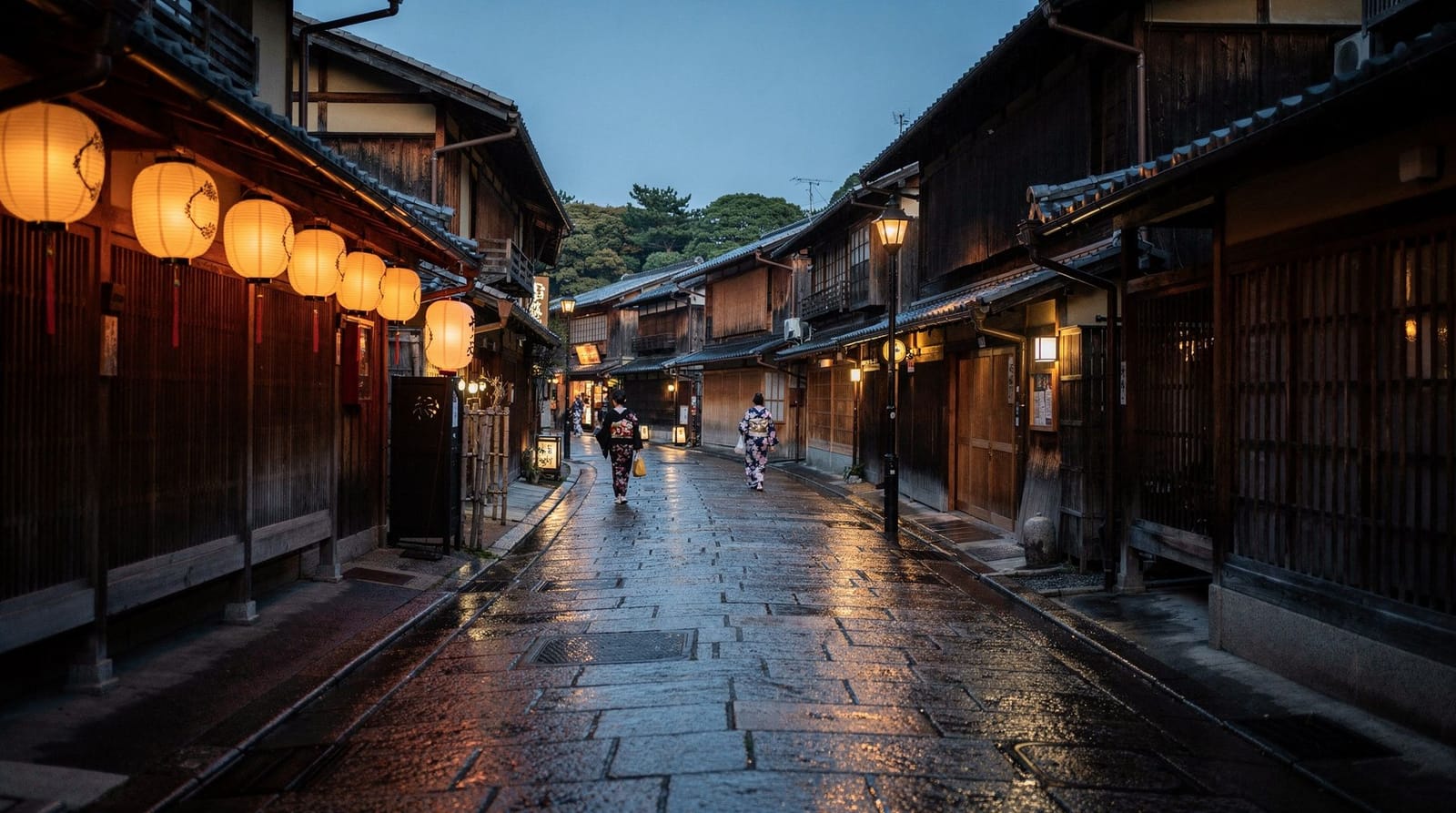
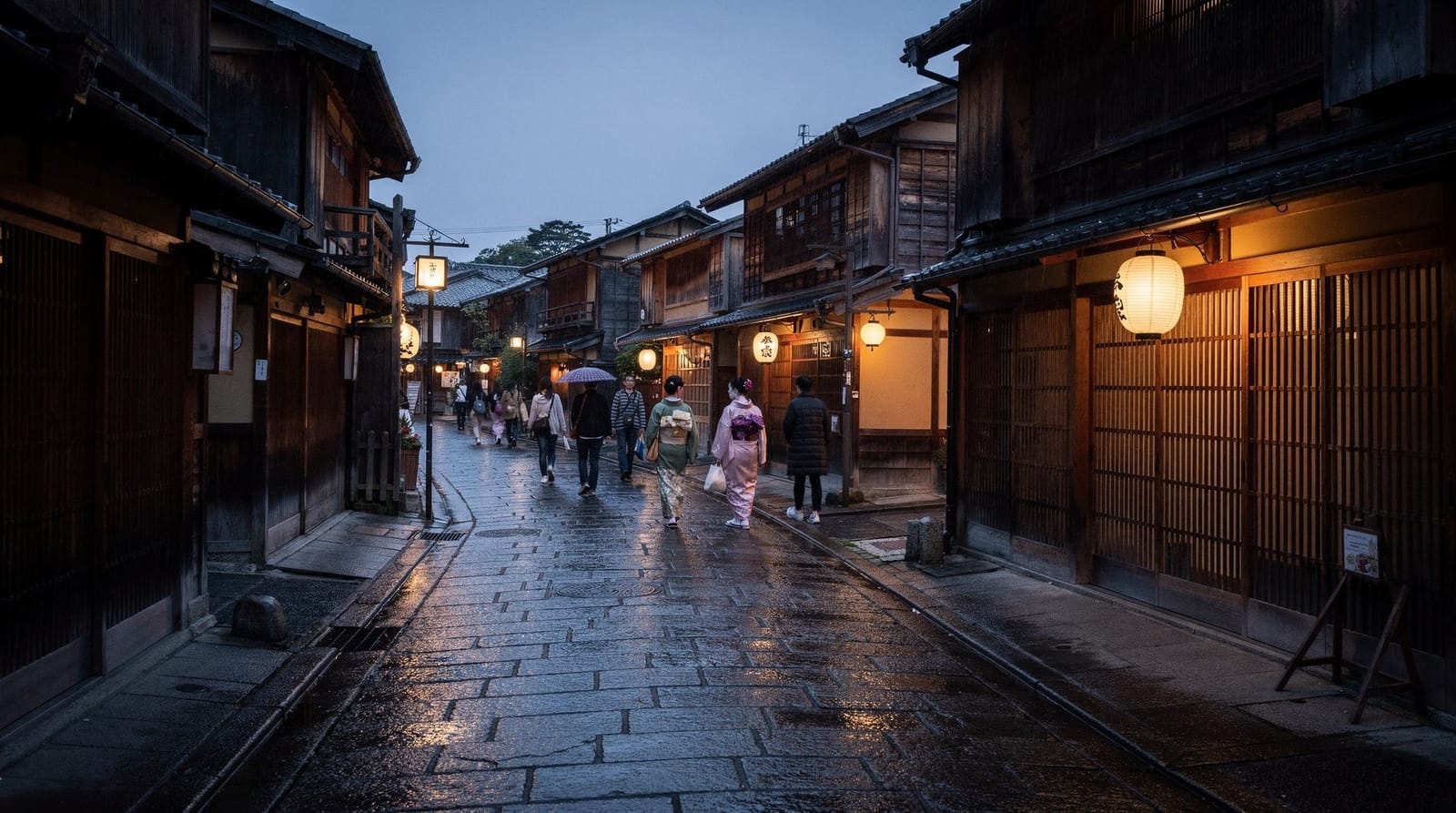
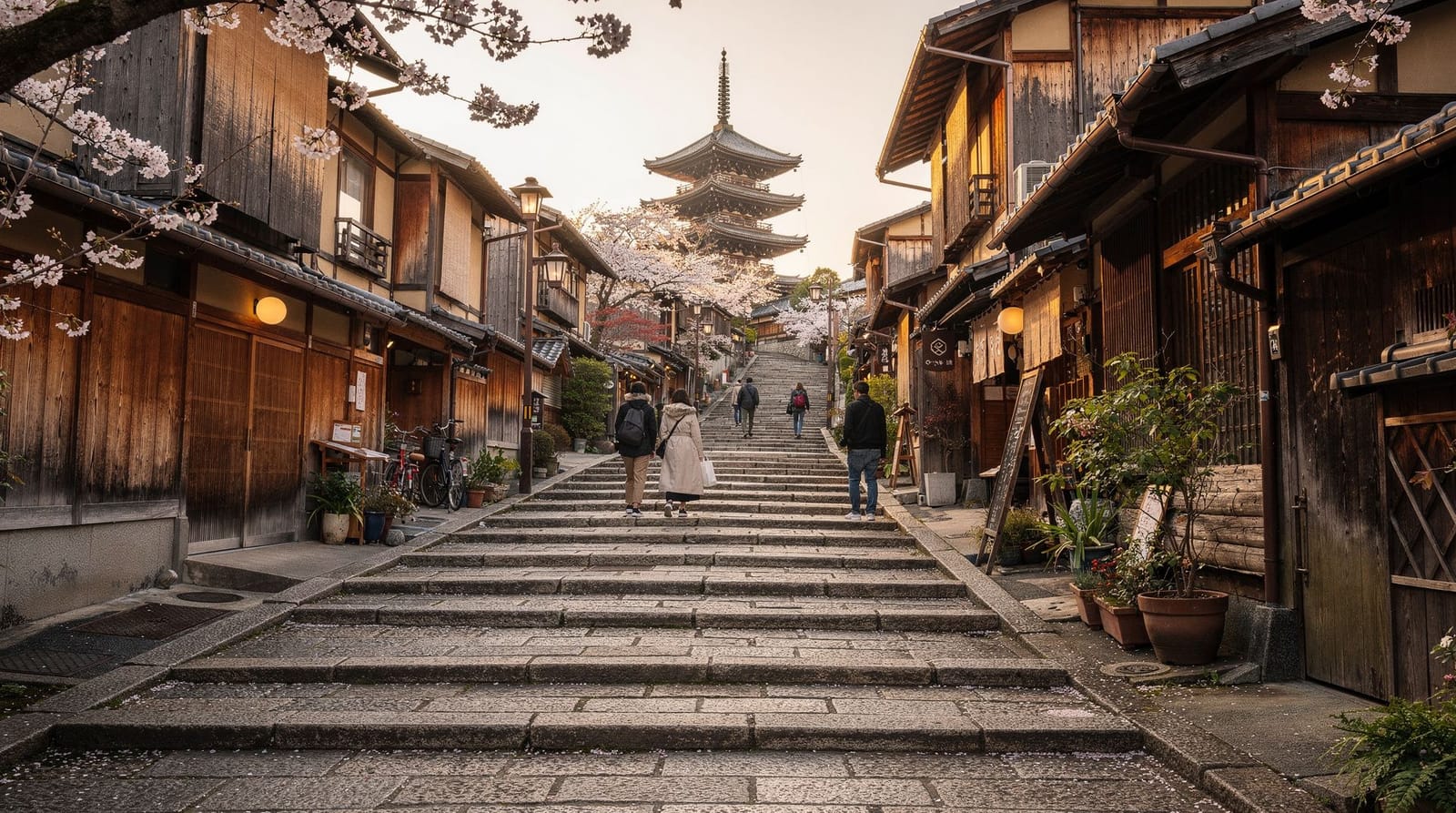
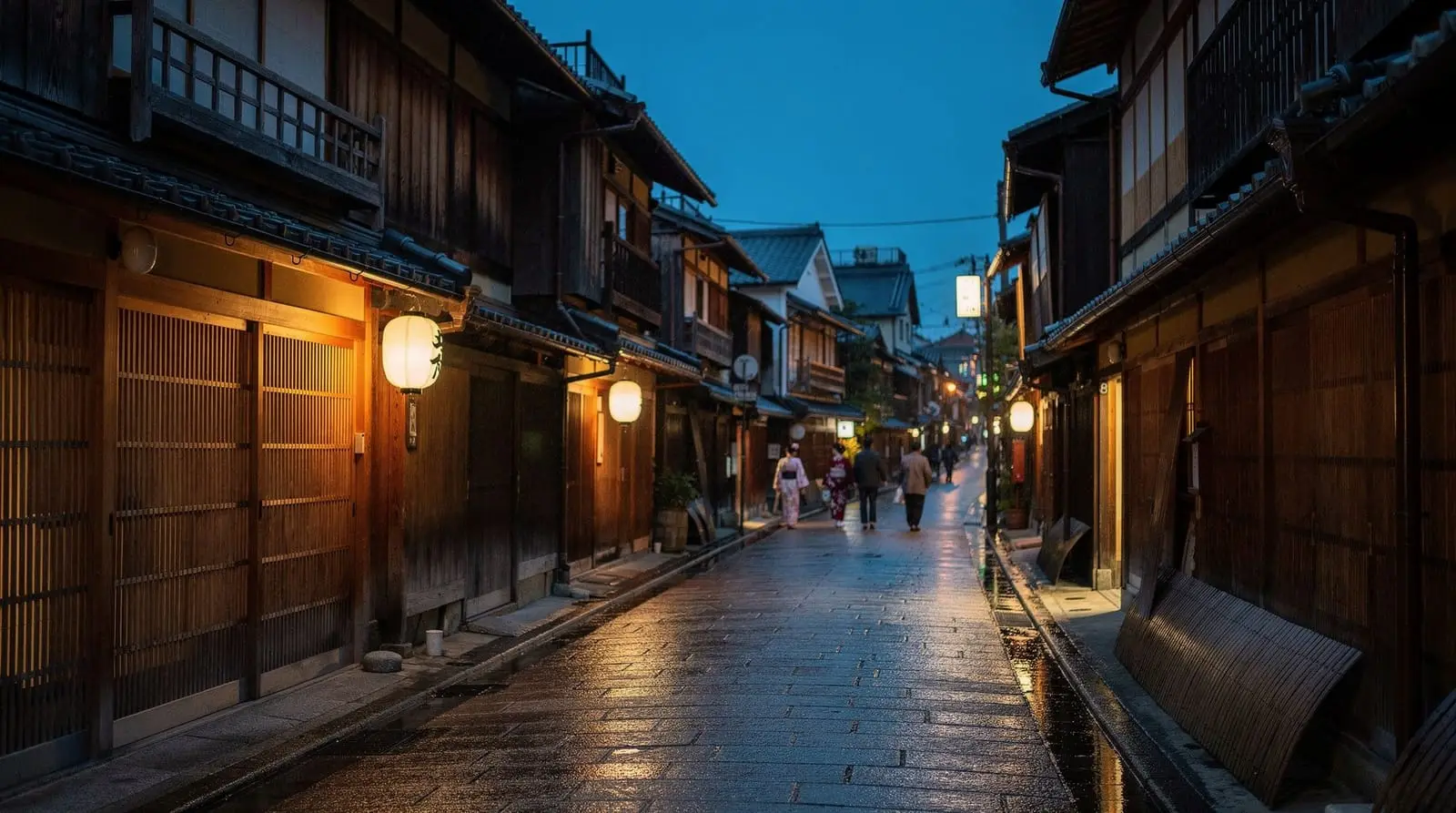
A typical booked evening walk runs 1.5 to 2 hours, starting between 5:30pm and 6:30pm, and covers Hanamikoji-dori (Gion Kobu’s main street), the Shirakawa canal area a block north, and usually a pass by Yasaka Shrine’s western gate, which sits at Gion’s eastern edge.
A guide explains the hanamachi system — okiya (lodging and training houses), ochaya (teahouses where private banquets happen), and the difference between geiko (Kyoto’s term for a fully trained geisha) and maiko (apprentices) — while walking the same streets where an actual sighting might occur. The full background on that distinction, and on Gion’s history as a district, is covered separately in the Gion geisha guide, which this tour guide assumes as background rather than repeating in full.
What most tours don’t include: a guaranteed sighting, entry to any ochaya, or contact with a working geiko or maiko. A night tour is a walking-and-explaining product, not a performance booking.
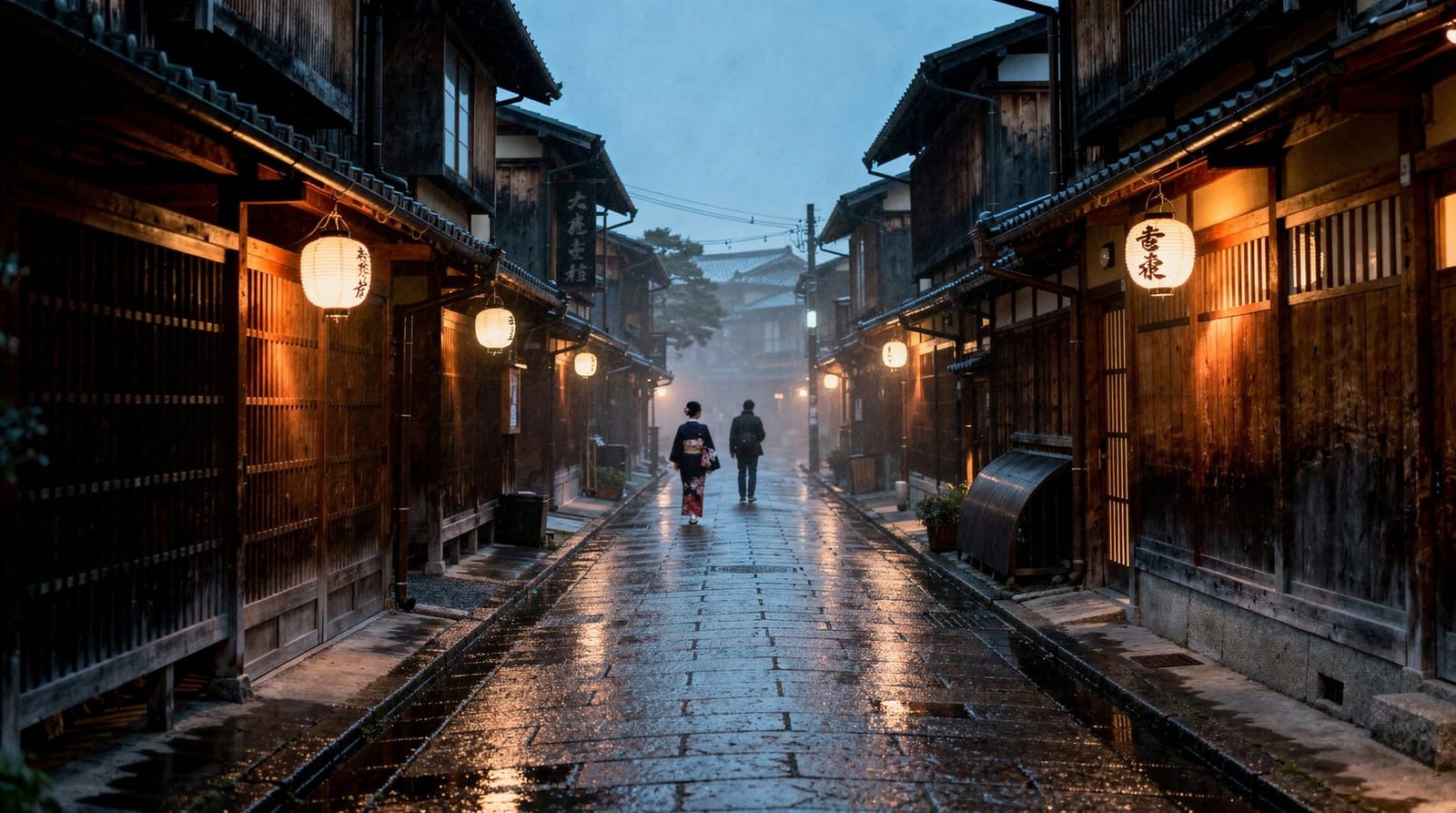
An evening night walk through Gion’s geisha district is the most directly timed option for this — a 5:30-7pm route through Hanamikoji-dori and the Shirakawa canal, explained by a guide as you go, honest about the fact that a sighting isn’t promised.
Why the timing matters more than the route
Nearly every operator runs a version of the same walk, because the useful streets in Gion Kobu are a small, well-known set. What actually differentiates a good booking is start time. Maiko and geiko leave their okiya for evening appointments roughly between 5:30 and 6:30pm; by 7:30pm, most who are working that evening have already reached their destination and won’t reappear on the street until much later, if at all, when they head home.
A tour that starts at 8pm for scheduling convenience is functionally a lantern-and-history walk with near-zero sighting odds, even though it covers the same physical streets as an earlier one. If a sighting is part of your motivation for booking, confirm the start time before paying rather than assuming “evening tour” means the right window.
A Gion magical night walking tour with geisha trivia runs during that same early window and adds a more conversational, game-based format to the history — a reasonable option for families or groups who want the content delivered more casually than a straight historical lecture.
Pontocho: the quieter alternative worth knowing about
Pontocho is a single narrow lane running parallel to the Kamo River near downtown Kyoto, a few minutes’ walk west of Gion Kobu. It has its own hanamachi tradition, its own ochaya, and a lantern-lit atmosphere that’s genuinely comparable to Gion — with noticeably fewer tourists per block, since it doesn’t sit next to Yasaka Shrine and Kiyomizu-dera the way Gion does. Most visitors treat Pontocho as a dinner destination rather than a sightseeing one, and that’s the right instinct: its restaurants, several with riverside terraces open in summer, are the lane’s real draw.
A Pontocho bar-hopping tour at night — pricing runs around $107 for a 3.5-hour route — treats the lane as a nightlife crawl rather than a geisha-district walk, stopping at several small bars and izakaya along the alley with a guide who can navigate the often unmarked, reservation-only entrances that make Pontocho intimidating to a first-time visitor working it alone.
Etiquette that carries a real fine, not just a suggestion
Since 2019, the private lanes south of Hanamikoji-dori — Ishibei-koji and the narrower residential streets around it — have carried signage banning photography of geiko and maiko, backed by a ¥10,000 (about $65) fine for anyone caught blocking their path or photographing them without consent. This followed years of documented harassment: tourists surrounding a maiko mid-walk, grabbing kimono sleeves, forcing her into a doorway for a photo. A guided tour will generally route around this specific area automatically, but it’s worth knowing the boundary yourself if you plan any part of a self-guided evening in Gion — the ban covers those private lanes specifically, not Hanamikoji-dori itself or the Shirakawa canal path.
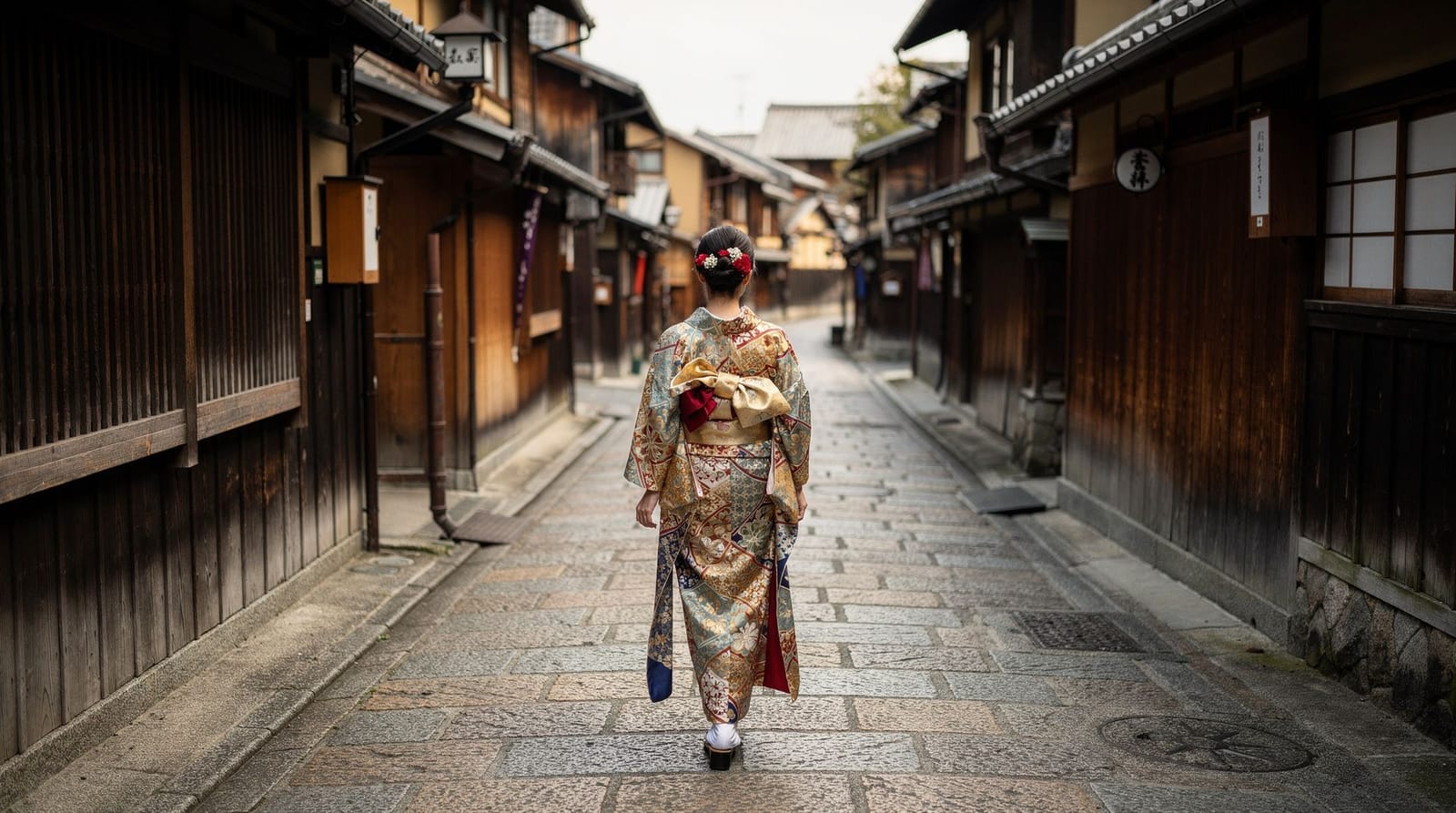
The same courtesy matters everywhere in the district, fine or no fine: no blocking a walking path, no flash in someone’s face, no asking a working geiko or maiko to stop and pose. None of this applies to tourists in rental kimono, who are almost always happy to be photographed — see the kimono rental guide for how that works if that’s part of your evening plan.
Food as part of the evening
A number of night-tour listings bundle a walking route with food stops rather than pure sightseeing, which is worth considering if dinner logistics in Gion — small restaurants, limited English menus, some reservation-only — feel like a separate hassle you’d rather have solved.
An evening Gion food tour combines the district’s lantern-lit lanes with several food stops timed for the same early-evening sighting window, guided by someone who can order and explain dishes rather than leaving you to point at a menu. It’s a reasonable single booking for anyone who wants the walk and dinner solved in one evening rather than two separate plans.
What a night tour doesn’t replace
If seeing an actual geiko or maiko perform, rather than simply passing one on the street, is the real goal, a night walk is the wrong product to pin that hope on. A structured geisha show in a theater setting guarantees a performance; a geisha dinner gets close to a genuine ozashiki banquet with conversation and a short performance included.
Both cost more — a show runs roughly ¥5,000-8,000 (about $33-53), a dinner ¥15,000-30,000 (about $100-200) per person — and neither involves the walking-district atmosphere a night tour delivers. The maiko experience guide covers what those bookings include and what they cost in full detail; treat a night tour and a show or dinner as complementary bookings on different evenings rather than substitutes for each other.
Combining a night tour with the rest of the evening
Gion sits at the western edge of Higashiyama, which makes a natural late-afternoon-into-evening sequence: temple lanes and shopping streets in Higashiyama by daylight, then a walk down into Gion timed for the 5:30-6:30pm sighting window as the light fades and lanterns come on, finishing with dinner in Gion itself or a short walk over to Pontocho.
This is close to what most self-organized visitors do without booking anything, and a guided tour mostly adds context and timing precision on top of a route you could otherwise piece together from a map. For a broader look at what else runs after dark across the rest of the city — illuminated temples, izakaya districts, seasonal light-ups — see the Kyoto by night guide.
Should you book, or walk it yourself
A self-guided version of this walk costs nothing beyond dinner and takes the same route any tour would — Hanamikoji-dori, the Shirakawa canal, a loop past Yasaka Shrine’s western gate — and works fine if atmosphere and a possible sighting are enough on their own.
A booked tour earns its cost (typically ¥4,000-6,000, about $27-40, for a 1.5-2 hour walk) through historical context that’s genuinely hard to piece together on your own — what an okiya actually is, how the apprenticeship system works, which lanes are private and why — plus a guide’s practiced sense of timing and positioning that improves sighting odds beyond what a first-time visitor checking a map would manage alone. Neither option guarantees a sighting; the difference is mostly in what you understand about what you’re looking at, if you get lucky.
Getting there and when to go
Gion is reachable by bus 100 or 206 to the Gion stop, by Keihan line to Gion-Shijo station (a short walk in), or on foot from Higashiyama or downtown Kyoto. Weekday evenings tend to run less crowded than weekends, and the window between late April and early October, when daylight extends past 6:30pm, gives a longer stretch of visible dusk light for photos before full dark sets in — a genuine consideration if photography is part of your reason for going, separate from any sighting.
Group size and what to expect on the walk itself
Most bookable Gion night tours run as small groups, typically six to twelve people, walking together behind a guide who carries a small sign or flag to stay visible in Gion’s evening foot traffic. That group size matters for two practical reasons: it’s large enough to keep costs down to the ¥4,000-6,000 range quoted earlier, and small enough that the group itself doesn’t become the kind of blocking, sidewalk-clogging cluster that draws complaints from residents and, on occasion, from actual geiko trying to get past. A guide worth booking will keep the group moving in single file or small clusters through the narrower lanes rather than stopping to lecture in the middle of Hanamikoji-dori at its busiest points.
Private and semi-private versions of the same walk exist through several operators, running two to four times the per-person cost of a shared group tour but allowing a slower pace, more flexible timing around a specific dinner reservation, and a guide who can adjust the route on the fly if word passes that a particular ochaya’s evening banquet is starting late. For most first-time visitors, the shared group version delivers the same core experience — history, timing, the right streets — without the added cost, and the group-size consideration above is a minor one rather than a reason to avoid it.
Language and what a guide can realistically explain
English-language Gion night tours are common enough that finding one isn’t the challenge; the variation is in how deep a guide can go. Better guides can explain specifics — how a maiko’s obi (sash) knot differs from a geiko’s, why an okiya takes on new apprentices at all given the shrinking numbers, what an ochaya’s “first-timers refused” introduction system historically required — rather than a generic overview of “geisha culture” assembled from the same few facts every visitor already half-knows from films.
If a specific guide’s background matters to you (some are former hospitality workers with direct ochaya connections, others are general tour guides who’ve studied the district), checking reviews for mentions of depth of knowledge, rather than just punctuality and friendliness, is a reasonable filter before booking.
What locals actually think of the tours
Gion’s relationship with organized tourism is genuinely mixed, and it’s worth being honest about that rather than presenting night tours as an unambiguous good. Local business associations and some geiko themselves have publicly criticized the volume of evening foot traffic through the district’s narrow lanes, and the 2019 photography restrictions were a direct response to tour-driven crowding as much as to individual bad actors.
At the same time, licensed, well-run tours that keep groups moving, avoid the restricted lanes, and route their guests toward legitimate dinner and show bookings are broadly seen as less disruptive than the unstructured crowds of independent visitors who linger, block streets, and don’t know which lanes are private. Booking through an established operator with a guide who enforces group etiquette is, in that sense, part of being a better guest in the district rather than a neutral consumer choice — the difference between a tour group that moves through respectfully and one that doesn’t is entirely down to the guide’s discipline and the group’s willingness to follow it.
A realistic evening itinerary
For a first visit, a workable sequence runs: arrive in Higashiyama by mid-afternoon for Kiyomizu-dera and the Ninenzaka/Sannenzaka shopping lanes, walk or bus down into Gion by around 5pm, join a booked night walk or wander Hanamikoji-dori and the Shirakawa canal independently through the 5:30-6:30pm window, then either continue into a booked dinner or food tour, or walk over to Pontocho for dinner on your own once the sighting window has passed. This keeps the higher-odds sighting period as the evening’s centerpiece without requiring the whole night to revolve around it, and it fits naturally with how Higashiyama and Gion sit next to each other geographically.
Seasonal timing worth knowing before booking
A handful of dates change what a Gion night tour actually delivers. Throughout April, Gion Kobu’s geiko and maiko are heavily committed to rehearsing and performing the Miyako Odori, the district’s major public dance recital, which can thin out ordinary evening street traffic even as visitor numbers peak for cherry blossom season — a case where the best month to see Gion isn’t necessarily the best month for a casual sighting.
Similarly, early August’s Gion Matsuri festival period draws enormous crowds into the district for parade-related events, and while it’s a legitimate reason to visit on its own, a standard night tour during peak festival days will contend with crowd density that changes the whole character of the walk. Rain doesn’t cancel most tours — Gion’s covered arcades and narrow lanes handle a light evening shower reasonably well — but heavier rain tends to keep maiko and geiko moving faster between appointments with less time spent visible on the street, which modestly lowers sighting odds on wet evenings without eliminating them.
Frequently asked questions about Gion night tours
What time does a Gion night tour usually start?
Most operators start between 5:30pm and 6:30pm, timed for when maiko and geiko leave their okiya for evening appointments. A tour starting closer to 8pm shifts toward atmosphere and dinner rather than sighting odds.
Will I definitely see a geiko or maiko on a night tour?
No. Roughly 200-250 geiko and maiko work across Kyoto’s five hanamachi, and only a handful pass through Gion’s public streets on any given evening. A well-timed tour improves the odds; it doesn’t guarantee them.
Is Pontocho a good alternative to Gion for an evening walk?
Yes — a similar lantern-lit lane near downtown Kyoto with fewer tourists, though better suited to dinner than to daytime sightseeing density, since it lacks Gion’s proximity to Yasaka Shrine and Higashiyama’s temples.
What happens if I photograph a maiko in the wrong part of Gion?
The private lanes south of Hanamikoji-dori, including Ishibei-koji, carry a photography ban with a ¥10,000 (about $65) fine for violations. Public streets like Hanamikoji-dori itself aren’t covered, but a good guide routes around the boundary regardless.
Should I book a night walk, a geisha show, or a dinner?
They’re different products. A night walk offers history and a chance sighting; a show guarantees a performance; a dinner gets closest to a real banquet at real cost. Many visitors book one of each across separate evenings.
Is a night tour safe for solo travelers, including women?
Yes — Gion and Pontocho are well-lit, heavily trafficked, low-crime areas after dark, and a guided group adds company on top of that baseline.
Group tour vs. self-guided walk, side by side
| Group night tour | Self-guided walk | |
|---|---|---|
| Cost | Around ¥4,000–6,000 | Free |
| Historical context | Guide explains as you go | You research beforehand |
| Route knowledge | Guide knows current private-lane boundaries | You need to check yourself |
| Sighting odds | Slightly better (guide timing/positioning) | Same window, less precision |
| Flexibility | Fixed schedule, group pace | Entirely your own pace |
Neither option guarantees a sighting, and both cover essentially the same streets. The honest differentiator is context and timing precision, not access to something a self-guided visitor couldn’t otherwise see.
What to wear and bring on a night tour
Comfortable walking shoes matter more than anything else — the route covers uneven stone paving and narrow lanes for 1.5-2 hours, and a group tour won’t wait for someone struggling in unsuitable footwear. Evenings in Kyoto can cool down noticeably compared to daytime, especially outside the summer months, so a light layer is worth carrying even on a warm afternoon. A small, quiet camera or phone is fine; avoid large camera bags or tripods, which are cumbersome in Gion’s narrow lanes and can mark you as exactly the kind of visitor the district’s etiquette rules were written to curb. Cash is useful if the tour includes a food stop or ends near Pontocho, since some smaller restaurants and bars in both districts don’t take cards.
Frequently asked questions about Gion night tour — what a booked evening walk actually covers
What time does a Gion night tour usually start?
Will I definitely see a geiko or maiko on a night tour?
Is Pontocho a good alternative to Gion for an evening walk?
What happens if I photograph a maiko in the wrong part of Gion?
Should I book a night walk, a geisha show, or a dinner?
Is a night tour safe for solo travelers, including women?
Top experiences
Bookable activities with verified prices and instant confirmation on GetYourGuide.