Kyoto by night — illuminations, night-open temples, and where to eat
Kyoto: Station and Tower Night Tour with Light Show
What's worth doing in Kyoto after dark?
Most of Kyoto's temples close at dusk year-round, so nighttime activity concentrates in a few specific things: seasonal illumination events at a handful of temples and gardens (spring cherry blossoms, autumn foliage, each typically two to four weeks), Kyoto Tower and Kyoto Station's own night lighting, and the restaurant and bar districts of Gion, Pontocho, and Kiyamachi. Outside a seasonal illumination window, an evening in Kyoto is mostly a dining and neighborhood-walking experience rather than a sightseeing one.
Kyoto is built around temples that close at dusk, which surprises visitors expecting a city that stays lit and open the way Osaka or Tokyo does. That’s not a flaw in the city so much as a fact worth planning around: nighttime in Kyoto concentrates into a narrower set of specific activities — seasonal illumination events, a couple of genuinely night-open sights, and the restaurant and bar districts clustered along the Kamo River — rather than a broadly lit-up city center. This guide covers what’s actually open and worth doing after dark, honestly separating the handful of real highlights from the many ordinary evenings when Kyoto is mostly a dinner-and-a-walk city.
Why most of Kyoto goes dark by 6pm
Kyoto’s temples and shrines are overwhelmingly run on daytime hours, typically opening between 8 and 9am and closing between 4:30 and 5:30pm, with last entry often 30 minutes before closing. This is standard across Kinkaku-ji, Kiyomizu-dera, Nijo Castle, and nearly every other major sight, and it’s not seasonal — it holds true year-round outside the specific illumination events below. Shrines, being open Shinto grounds rather than gated Buddhist temple complexes, technically remain accessible after their offices close, but with nothing lit and no reason to linger, an evening visit to an ordinary shrine is rarely worthwhile except as a quiet, empty-feeling contrast to its daytime crowds.
Seasonal illuminations: the real reason to plan a Kyoto evening
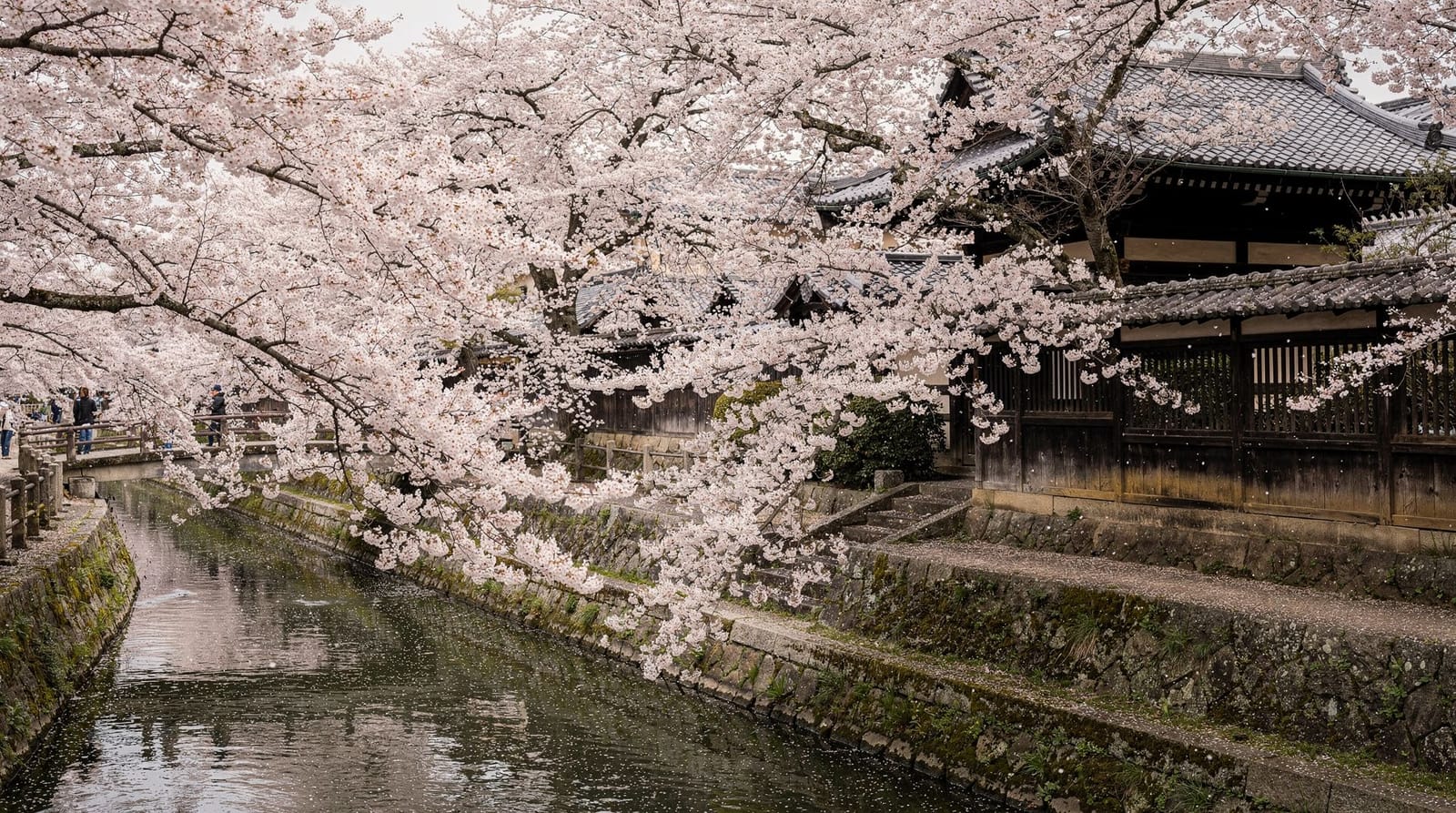
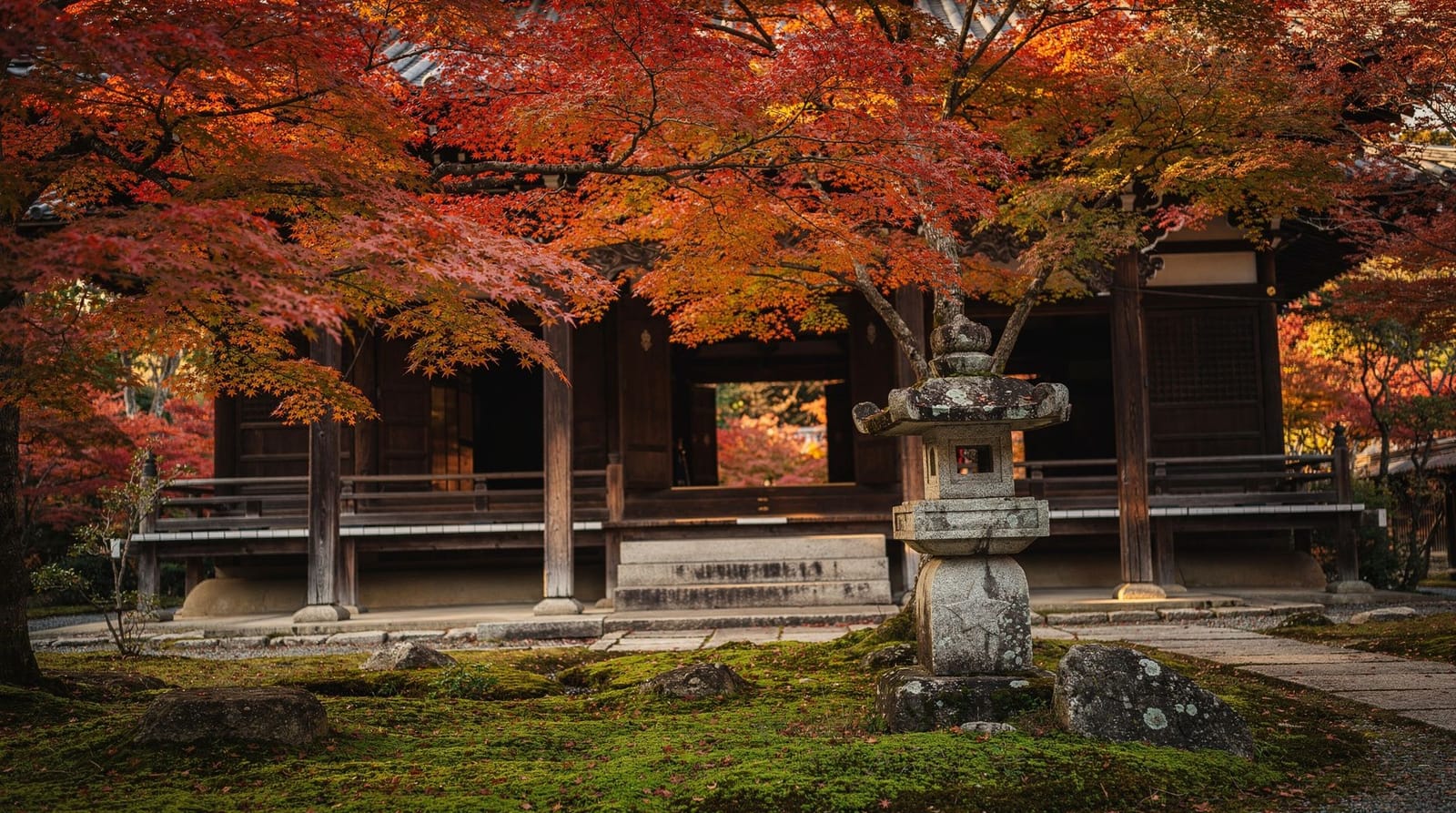
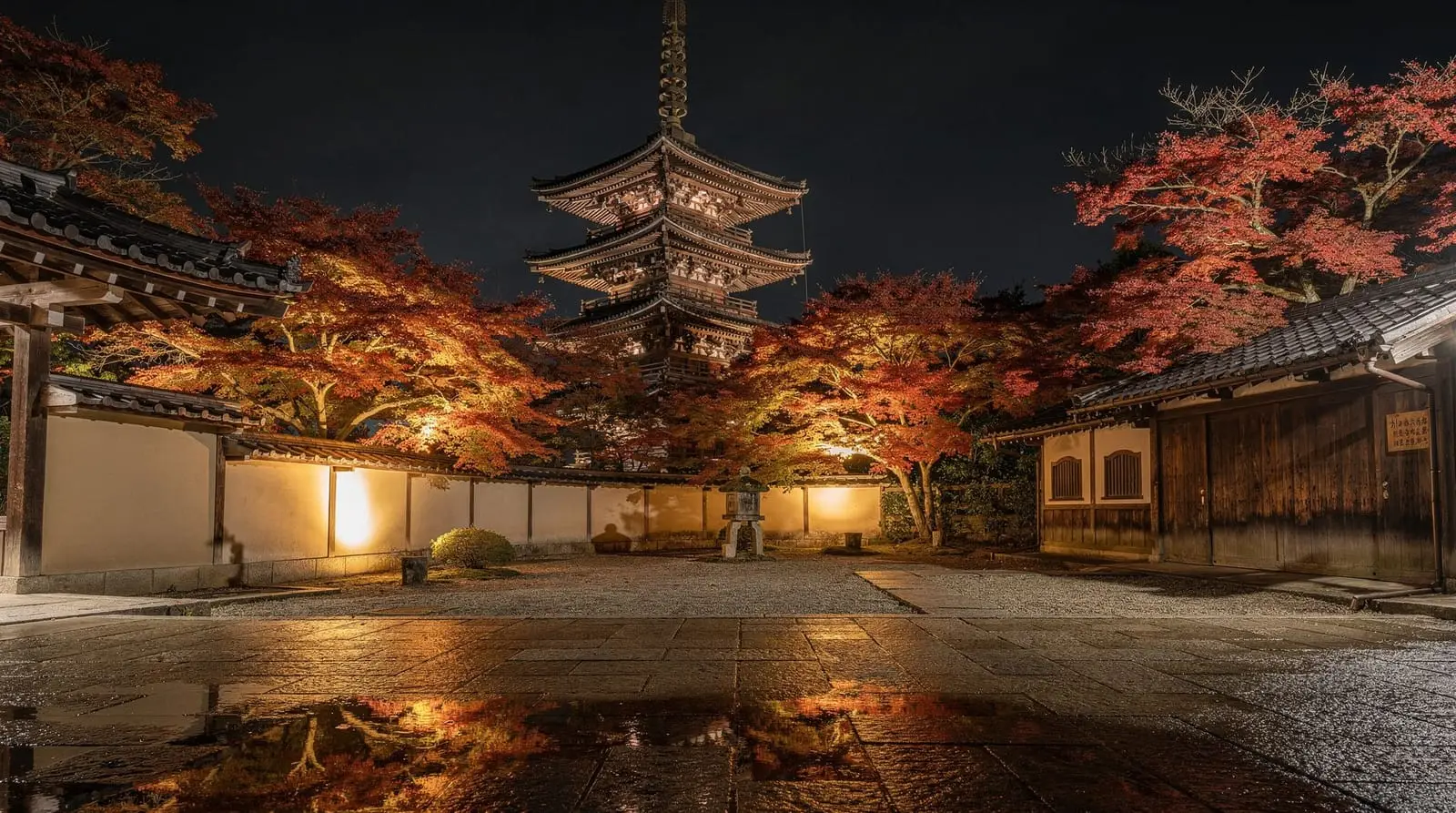
A raito appu, or illumination event, is a temple or garden specifically opening at night with lighting installed on ponds, gardens, and buildings, timed to either cherry blossom season (roughly late March to mid-April) or autumn foliage (roughly mid-November to early December). These are genuinely worth building an evening around if your dates line up, since temple grounds designed around reflection ponds and maple canopies look substantially different under illumination than in daylight.
Kiyomizu-dera runs one of the most visited illuminations, its wooden stage and pagoda lit against the Higashiyama hillside during both spring and autumn windows. Kodai-ji, a smaller temple nearby with a notable garden and bamboo grove, runs a quieter, less crowded illumination in the same seasons. Eikan-do, known for its maple garden, is considered one of the best single autumn illuminations in the city. The temples around Kinkaku-ji in the Kinkakuji-Kitayama area add their own seasonal openings, though Kinkaku-ji itself does not typically run night illumination.
Dates shift by a week or two each year depending on when blossoms or foliage actually peak, so checking current-year dates close to travel, rather than relying on a fixed calendar date, matters more here than for most Kyoto sightseeing. The cherry blossom guide and autumn foliage guide both cover expected date ranges and how they’ve shifted in recent years.
Fushimi Inari and Arashiyama at night: two different experiences
Fushimi Inari Taisha is unusual among Kyoto’s major sights in that its outer grounds and the lower torii gate paths never close — it’s a working shrine with no gate, open 24 hours, and a genuinely different, quieter experience after the daytime crowds thin out, with the vermillion gates lit by their own scattered lamps rather than a designed illumination.
A Fushimi Inari and Arashiyama night walking tour pairs both areas in one evening, taking advantage of Fushimi Inari’s round-the-clock access alongside Arashiyama’s own quieter, lantern-lit streets once its famous bamboo grove has emptied out for the day — a genuinely different atmosphere from either area’s usual daytime crowds.
A Gion and Fushimi Inari magic night walk combines the two most-searched night activities — a chance at a Gion sighting in the early evening window and a Fushimi Inari visit once darkness has fully set in — into a single booked route, useful for visitors trying to cover both without piecing together transport themselves.
Kyoto Tower and Kyoto Station: the modern night view
Away from the temple-and-garden model, Kyoto Station itself and the adjacent Kyoto Tower offer a more conventional night-city experience — an illuminated modern building against the older skyline, with an observation deck and, at points, a coordinated light show run through the station’s glass-roofed atrium.
A Kyoto Station and Tower night tour with light show covers this specifically, timed for after-dark viewing of both the tower’s observation deck and the station’s own architectural lighting — a reasonable option for an evening that doesn’t require transport out to Higashiyama or Arashiyama, since it starts and ends at the transit hub most visitors pass through daily regardless.
Where people actually eat and drink after dark
Pontocho and Kiyamachi, two parallel streets a block apart along the Kamo River near downtown Kyoto, hold Kyoto’s highest concentration of restaurants, izakaya, and bars open past 10pm. Pontocho leans more traditional and slightly more expensive, with several restaurants offering riverside terrace seating (kawadoko) in summer; Kiyamachi runs a broader, more casual and younger mix, including chain izakaya alongside independent spots. Both are walkable from Gion, Shijo-Kawaramachi, and Kyoto’s main downtown shopping streets.
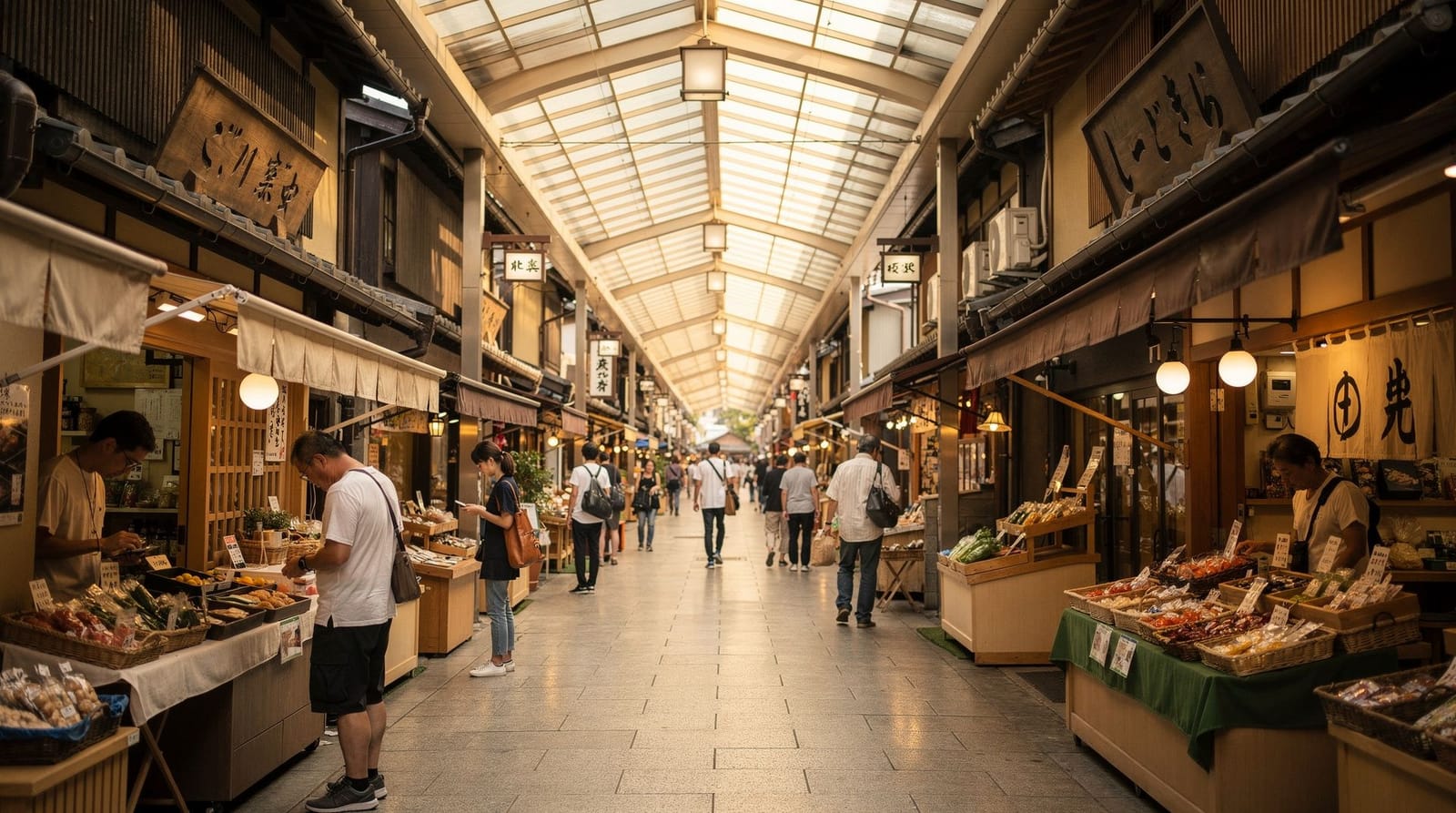
A Kyoto night food tour and izakaya crawl solves the main friction of exploring this area independently — small, often unmarked izakaya with Japanese-only menus and occasional cover charges that aren’t clearly disclosed — by guiding a small group through several stops with a local who knows which places are worth it. For a broader look at Kyoto’s food scene beyond the nighttime-specific angle, see the Kyoto street food guide.
Gion at night: a different kind of evening
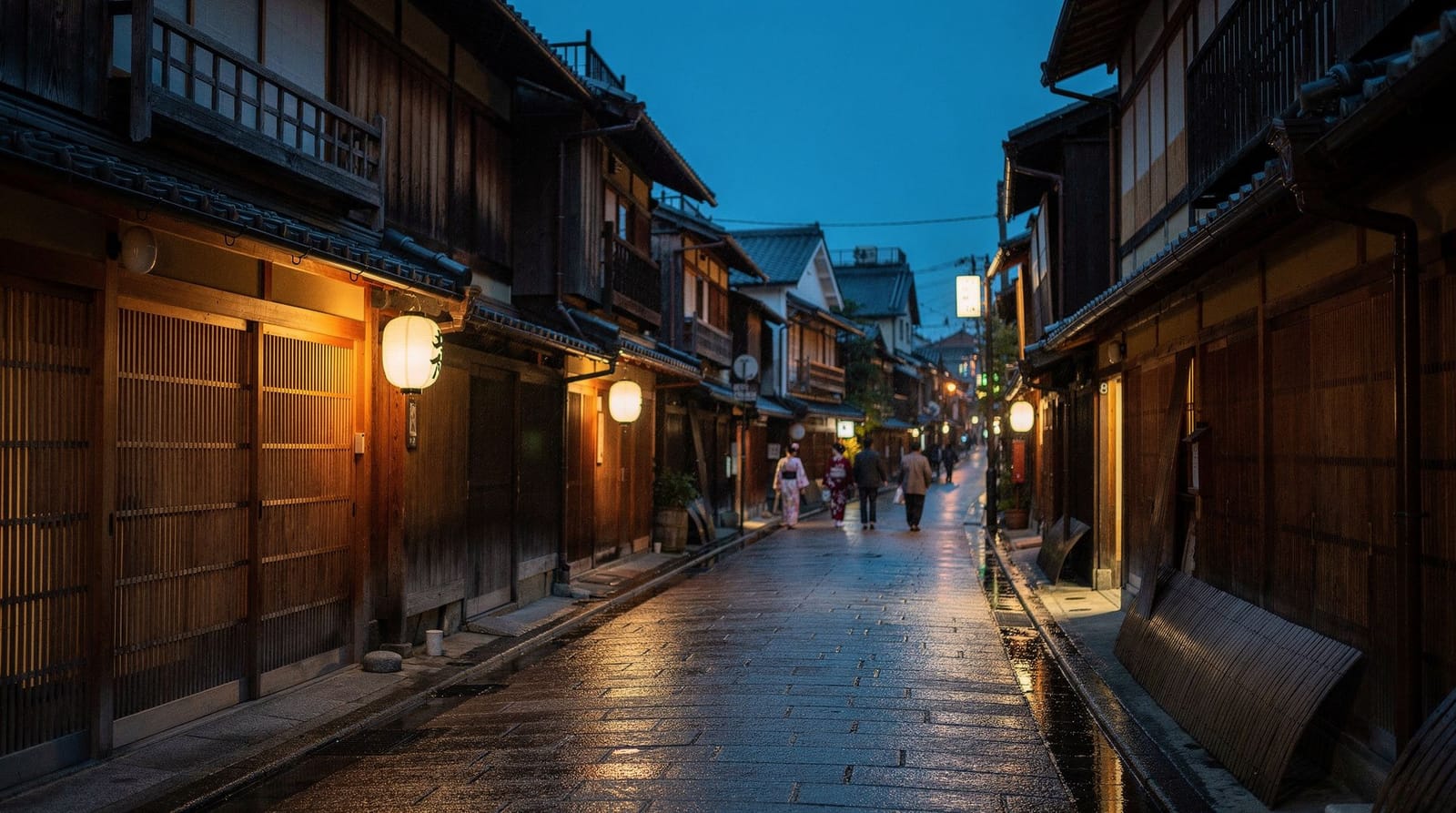
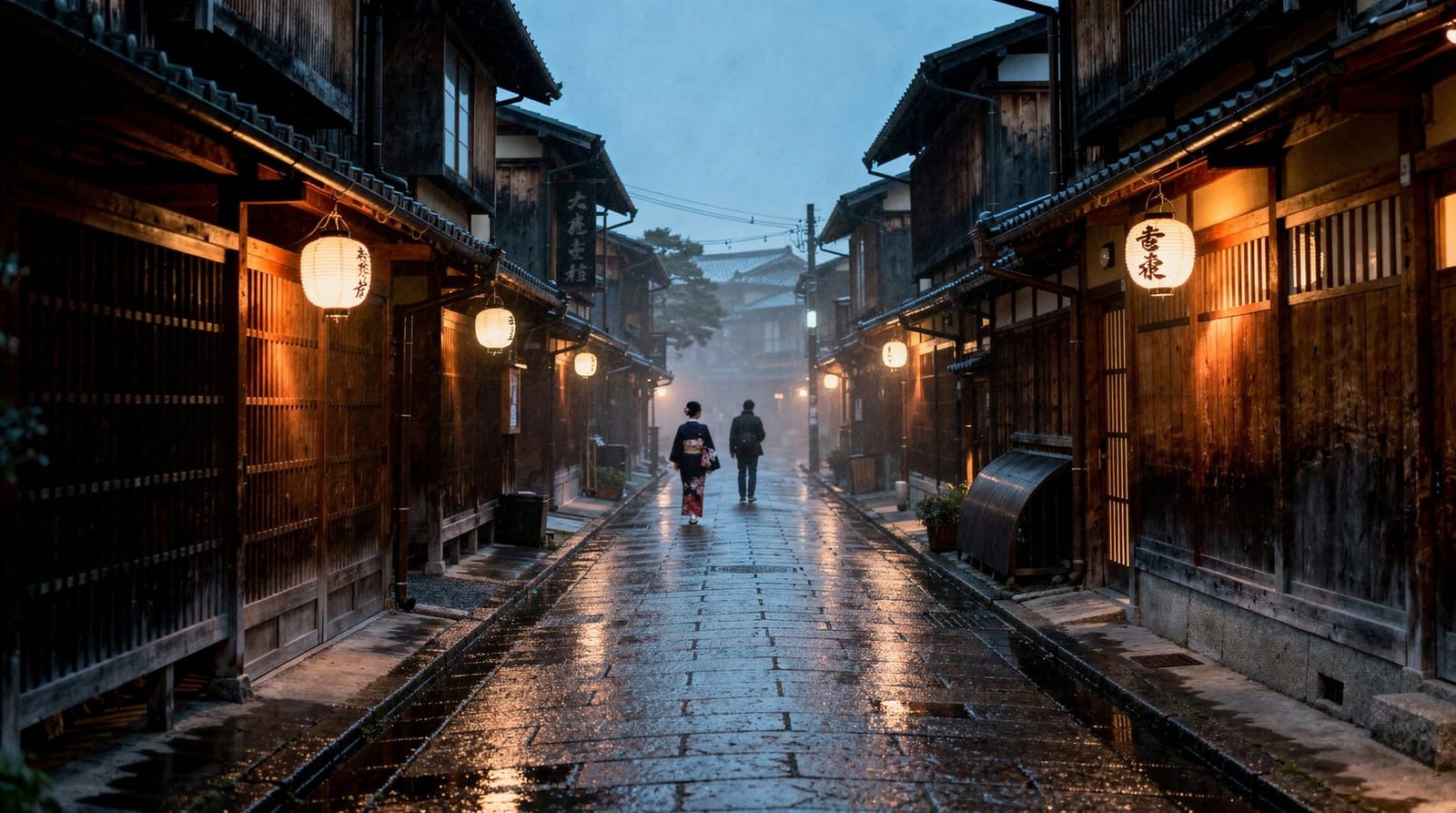
Gion deserves its own separate treatment given how much visitor interest it draws specifically after dark — the district’s connection to Kyoto’s geiko and maiko tradition, the timing needed to catch an early-evening sighting, and the etiquette that carries a real fine in parts of the neighborhood. The full breakdown of what a Gion evening actually involves, when to go, and what a booked night tour includes is covered in the Gion night tour guide, which this guide treats as a companion piece rather than duplicating here.
Gion Matsuri’s Yoiyama nights: the best planned event on the calendar
If a trip can be timed around it, the three Yoiyama evenings preceding Gion Matsuri’s main July 17 parade (typically July 14-16) turn central Kyoto’s Shijo and Karasuma-dori area into a lantern-lit festival street, with elaborately decorated yamaboko floats on display, food stalls lining the closed-off roads, and a genuinely festive atmosphere that’s unlike any other night in the city’s calendar. It draws large crowds and July’s heat and humidity are a real factor, but as a single planned night-out event, it’s arguably the best one Kyoto offers, distinct from both the quieter seasonal illuminations and the everyday Pontocho and Kiyamachi scene.
Kyoto Hanatouro: the lantern-path event most visitors miss
Kyoto Hanatouro is an annual lantern festival that transforms Higashiyama in mid-March and Arashiyama in December into pedestrian lantern paths — hundreds of handmade lanterns lining the streets between Kiyomizu-dera, Yasaka Shrine, and Ninenzaka in the Higashiyama edition, or through the bamboo grove and along the Togetsukyo bridge approach in the Arashiyama edition, with several participating temples opening for evening viewing alongside the street lanterns.
It’s less internationally known than the cherry blossom or autumn illuminations, which keeps its crowds noticeably lighter for a comparable atmosphere, and it’s free to walk the lantern paths themselves, with only the temple night-openings inside charging separate admission. Because the two editions run in different neighborhoods on different dates, checking which one aligns with a given trip’s timing matters — a March Kyoto trip can catch Higashiyama’s version, a December one Arashiyama’s, but not both in the same visit.
Arashiyama’s bamboo grove after dark
Arashiyama’s bamboo grove, one of Kyoto’s most photographed daytime sights, takes on a genuinely different character after dark during Hanatouro’s December run, when sections of the path are lit from below with small lanterns rather than the harsh midday sun visitors usually experience.
Outside that specific event window, the grove itself has no permanent night lighting and the path effectively goes dark once the sun sets, which is worth knowing if the plan is a spontaneous evening visit rather than one timed to the festival — most of the grove’s daytime crowd-avoidance advice (arriving at opening, not after dark) still applies the rest of the year. The Arashiyama destination guide covers the area’s daytime layout and the rest of its sights in more detail.
What a night out actually costs
For budgeting purposes, a realistic Kyoto evening breaks down into a few rough bands. A temple illumination admission runs ¥400-1,000 (about $3-7) per site, on top of any transport getting there. Dinner in Pontocho or Kiyamachi, at a mid-range izakaya rather than a high-end kaiseki restaurant, typically runs ¥3,000-5,000 (about $20-33) per person including a couple of drinks. A guided night walking tour, whether in Gion or elsewhere, generally falls in the ¥4,000-8,000 (about $27-53) range depending on length and whether food is included.
A late-night taxi back to accommodation, assuming a ride of 10-15 minutes within the central city, adds another ¥1,200-2,000 (about $8-14). None of this is expensive by international standards, but stacking an illumination visit, dinner, and a guided walk into one evening can reasonably run ¥10,000-15,000 (about $67-100) per person once transport is included — worth planning for rather than being surprised by on a night that started as “just dinner.”
What to wear and bring
Evenings in Kyoto, even in warmer months, run noticeably cooler than daytime once the sun sets, particularly near the Kamo River in Pontocho and Kiyamachi or on the hillside approach to Kiyomizu-dera. A light layer beyond whatever was comfortable at midday is worth carrying rather than assuming daytime warmth holds.
Comfortable walking shoes matter more at night than most visitors expect, since many of the atmospheric streets — Ninenzaka, Sannenzaka, Gion’s stone-paved lanes, the Arashiyama bamboo path — are uneven, occasionally poorly lit, and unpleasant to navigate in anything without decent grip. A portable phone charger is a practical addition for anyone planning to photograph illuminations, since low-light photography drains battery faster than daytime use.
Getting home: the real constraint on a late Kyoto night
The practical limit on any Kyoto evening isn’t venue hours so much as transport. City buses stop running around 10:30-11pm, and the subway shortly after, though some Keihan and Hankyu lines run a bit later. Restaurants and bars in Pontocho and Kiyamachi commonly stay open well past midnight without any transport option to match, which means a taxi is the default way home after last train or bus — a manageable cost for most in-city rides, covered in more detail in the getting around Kyoto guide. Staying within walking distance of Gion, downtown Kyoto, or Kyoto Station removes this constraint almost entirely for anyone planning a late night out.
What to honestly skip
A few night activities marketed to tourists are worth approaching with some skepticism. Kiyamachi in particular has a history of touts approaching passersby with offers for bars carrying inflated, sometimes undisclosed cover charges once seated — walking past without engaging avoids this reliably, and it’s a known enough pattern that most Kyoto residents will confirm it without hesitation. Separately, several “night tour” listings bundle a Gion walk with vague promises of guaranteed geiko sightings; as covered in the Gion night tour guide, no honest operator can promise that, and pricing that seems to bake in a “guarantee” is worth double-checking rather than taking at face value.
Photographing Kyoto after dark
Night photography in Kyoto rewards specific planning more than most daytime shots do. Illuminated temple ponds — Eikan-do and Kodai-ji both use reflection ponds as a deliberate part of their lighting design — photograph best with a tripod or at minimum a steady surface, since most venues prohibit flash and low ambient light means slower shutter speeds. Fushimi Inari’s lower torii gates, lit by their own scattered lamps rather than a designed illumination, work reasonably well handheld on a modern phone camera given how closely spaced the lights are along the path.
Kyoto Tower and the station’s own architectural lighting are the most forgiving subjects for casual photography, bright and stable enough for a handheld shot without special equipment. A fuller rundown of the city’s best photo locations, day and night, including specific timing recommendations to avoid crowds in frame, is in the Kyoto photo spots guide.
Day-trip evenings: Uji, Nara, and Otsu after dark
For visitors staying multiple nights, a couple of nearby towns offer a different evening change of pace from repeating Gion or Pontocho. Uji, roughly 20-30 minutes south by JR or Keihan, has a much smaller and quieter evening scene built around its riverside setting and matcha-focused cafes, several open into the evening, without anything resembling Kyoto’s illumination events.
Otsu, on Lake Biwa’s shore about 15 minutes from Kyoto Station, offers a lakeside evening walk and, during summer months, its own fireworks display that draws a meaningfully smaller crowd than Osaka’s or Tokyo’s equivalents. Neither destination is a full evening’s itinerary on its own the way central Kyoto is, but either works as a change of scenery for a second or third night if the goal is avoiding repeat visits to the same downtown streets.
Planning an evening around one anchor activity
The most reliable way to structure a Kyoto night, rather than wandering and hoping something turns up, is picking one anchor activity — an illumination, a booked walk, a food tour — and building dinner and transport around it, rather than treating the whole evening as open-ended sightseeing the way a Kyoto afternoon might work. Because so few sights stay open past dusk, an evening without a specific plan tends to default to whichever restaurant district is closest, which is a perfectly reasonable outcome but worth choosing deliberately rather than by accident on a night when an illumination or festival was actually running somewhere else in the city.
Solo travelers and couples: different anchor choices
A solo evening in Kyoto works best around a booked activity rather than open-ended wandering, since Pontocho and Kiyamachi’s small, counter-style izakaya can feel less welcoming to a party of one without a reservation or a guide easing the way in. A guided night walk or food tour solves this cleanly, giving a solo traveler both company and a structured itinerary rather than hesitating outside unfamiliar doorways.
Couples have more flexibility and often do best pairing a quieter illumination visit with a slower Pontocho dinner, saving the livelier Kiyamachi scene for a night with a bigger group. Either way, the Gion night tour guide and the food tour options above cover the two most reliable ways to turn a single evening into something more than dinner and a walk back to the hotel.
How a Kyoto evening compares to Tokyo’s or Osaka’s
Visitors coming from Tokyo or Osaka often expect a comparably lit-up, all-hours city center, and the adjustment is worth naming directly: Kyoto’s temple-town layout means nightlife concentrates into a handful of specific streets rather than spreading across the whole downtown grid the way Osaka’s Dotonbori or Tokyo’s Shinjuku does.
This isn’t a lesser evening, just a narrower one — Pontocho and Kiyamachi pack a genuinely good restaurant and bar scene into two streets, and the seasonal illuminations offer something neither Tokyo nor Osaka can match. For visitors splitting a trip between cities, it’s worth planning Kyoto’s evenings around its specific strengths (illuminations, Gion, a quieter dinner) rather than expecting an equivalent to Osaka’s late-night energy.
Frequently asked questions about Kyoto by night
Are Kyoto’s temples open at night?
Almost never by default — most close between 4:30 and 5:30pm year-round. A handful open specifically for seasonal illumination events in spring and autumn, and Fushimi Inari’s outer grounds never close.
What is a temple illumination event, and is it worth planning around?
An illumination is a temple or garden opening at night with lighting on gardens and buildings, timed to cherry blossoms or autumn foliage. Kiyomizu-dera, Kodai-ji, and Eikan-do run well-known versions, genuinely worth planning a trip around if dates align.
Where do people actually go for nightlife in Kyoto?
Pontocho and Kiyamachi, two streets near downtown Kyoto along the Kamo River, hold the highest concentration of bars and izakaya open past 10pm. Gion leans more toward dinner than late-night drinking.
Is Kyoto safe to walk around at night?
Yes — Kyoto has low crime and its main evening districts are well-lit and busy past 10pm. The main caution is Kiyamachi touts pushing bars with undisclosed cover charges.
What time does Kyoto really shut down?
Public transport is the real limit — buses stop around 10:30-11pm, subway shortly after. Bars and restaurants often stay open past midnight, so a taxi is the standard way home afterward.
Are there fireworks or festivals worth timing a night visit around?
Gion Matsuri’s Yoiyama nights in mid-July are the standout planned event, with lantern-lit streets and decorated floats. Kyoto itself doesn’t run a major fireworks display, though nearby Kansai cities do in summer.
Frequently asked questions about Kyoto by night — illuminations, night-open temples, and where to eat
Are Kyoto's temples open at night?
What is a temple illumination event, and is it worth planning around?
Where do people actually go for nightlife in Kyoto?
Is Kyoto safe to walk around at night?
What time does Kyoto really shut down?
Are there fireworks or festivals worth timing a night visit around?
Top experiences
Bookable activities with verified prices and instant confirmation on GetYourGuide.