Pontocho alley guide — Kyoto's narrowest night out
Kyoto: Bar Hopping Tour in Pontocho Alley at Night
Duration: 3.5 hours
What is Pontocho and how much should a meal there cost?
Pontocho is a roughly 500-meter pedestrian alley running along the Kamo River's west bank, packed with restaurants and bars from casual izakaya to formal kaiseki. Realistic budgets range from ¥3,000-5,000 (about $20-33) per person at a standing bar or casual izakaya to ¥15,000-30,000+ (about $100-200+) for a multi-course kaiseki dinner, with the alley's summer riverside kawadoko platforms typically adding a seasonal premium to whatever tier you're eating at.
A 500-meter alley that punches well above its width
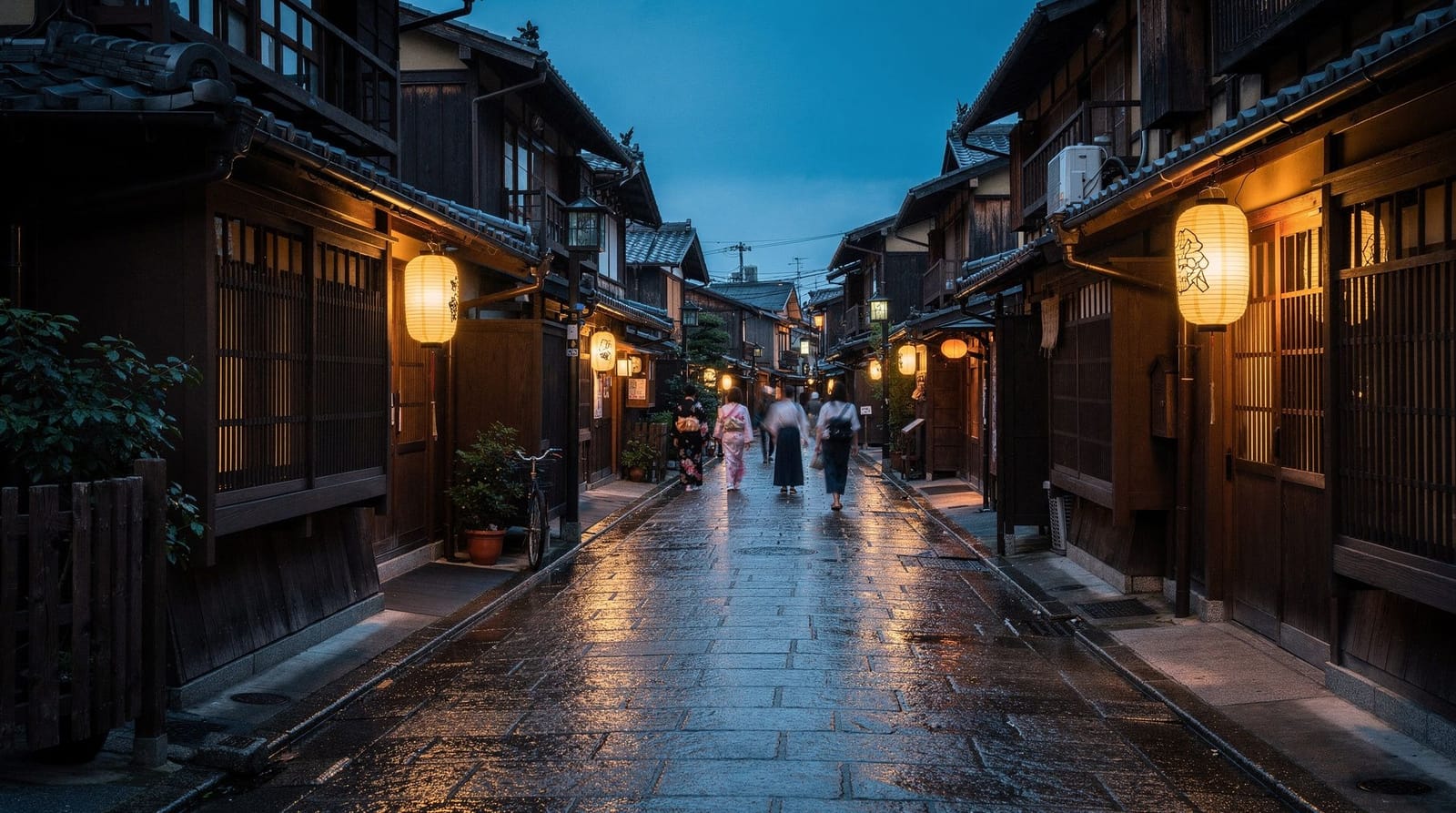
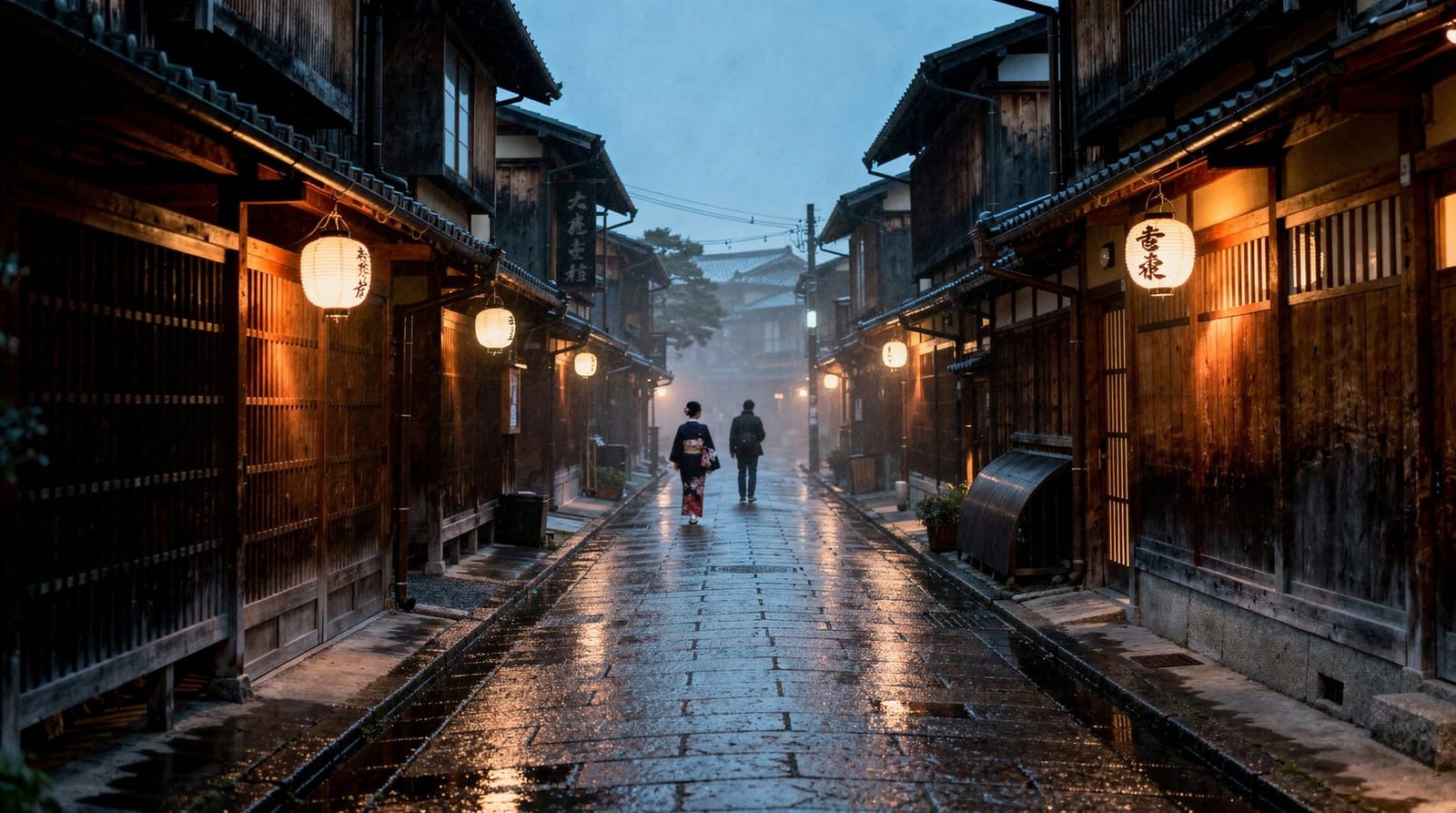
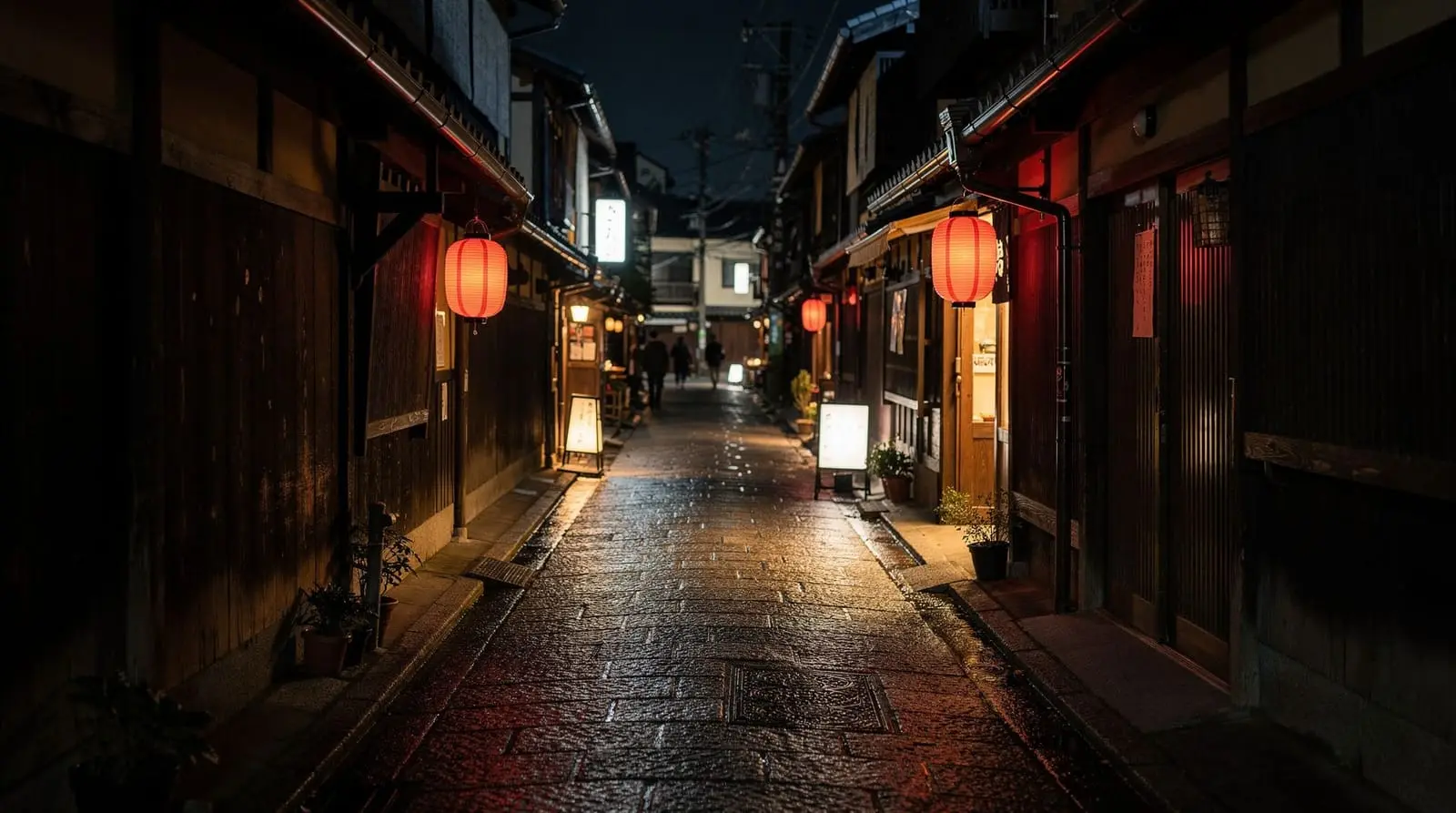
Pontocho is easy to underestimate on a map — a single pedestrian alley, often narrower than two meters, running roughly 500 meters along the Kamo River’s west bank between Sanjo-dori and Shijo-dori. In person, it’s one of Kyoto’s most concentrated dining and nightlife stretches, packed with everything from standing yakitori bars to some of the city’s most formal kaiseki restaurants, lit by hanging lanterns and narrow doorways that give little away about what’s actually inside. Navigating it well is less about finding one “best” restaurant and more about understanding the range on offer and reading the signals that tell you what tier you’re walking into.
| Where | Kamo River west bank, Sanjo-dori to Shijo-dori |
| Cost | ¥3,000-5,000 izakaya to ¥15,000-30,000+ kaiseki |
| Kawadoko season | May-September, riverside platform dining |
| Getting there | Kawaramachi Station or Sanjo/Shijo (Keihan line) |
| Best time | Early evening, roughly 6-8pm |
A short history: licensed entertainment since the 1600s
Pontocho traces back to the early 17th century as one of Kyoto’s officially licensed hanamachi (entertainment districts), developing along reclaimed riverside land as teahouses and, later, restaurants and bars filled in the narrow lots created by the area’s dense subdivision.
The alley shares its origins with Gion as one of Kyoto’s historic geisha districts, and Pontocho maintains its own smaller community of geiko and maiko today, distinct from Gion’s — a detail many visitors miss, assuming Gion is the only geisha district in the city. The exact origin of the name “Pontocho” isn’t fully settled by historians, with theories ranging from Portuguese trading-era influence to purely local etymology, but the alley’s identity as a dining and entertainment corridor has held consistently for roughly four centuries.
Kawadoko: eating over the river in summer
From around May through September, many Pontocho restaurants build wooden platforms — called kawadoko or kawayuka — extending toward or directly over the Kamo River, letting diners eat with an open-air river view and the genuine cooling benefit of evening air moving off the water during Kyoto’s notoriously hot, humid summers. It’s a specific, seasonal draw distinct from anything available the rest of the year, and worth timing a visit around if riverside dining is a priority — outside the kawadoko season, the same restaurants revert to standard indoor seating with no river view. Reservations for kawadoko seating, especially at popular spots on weekend evenings, are worth making a few days ahead during peak summer.
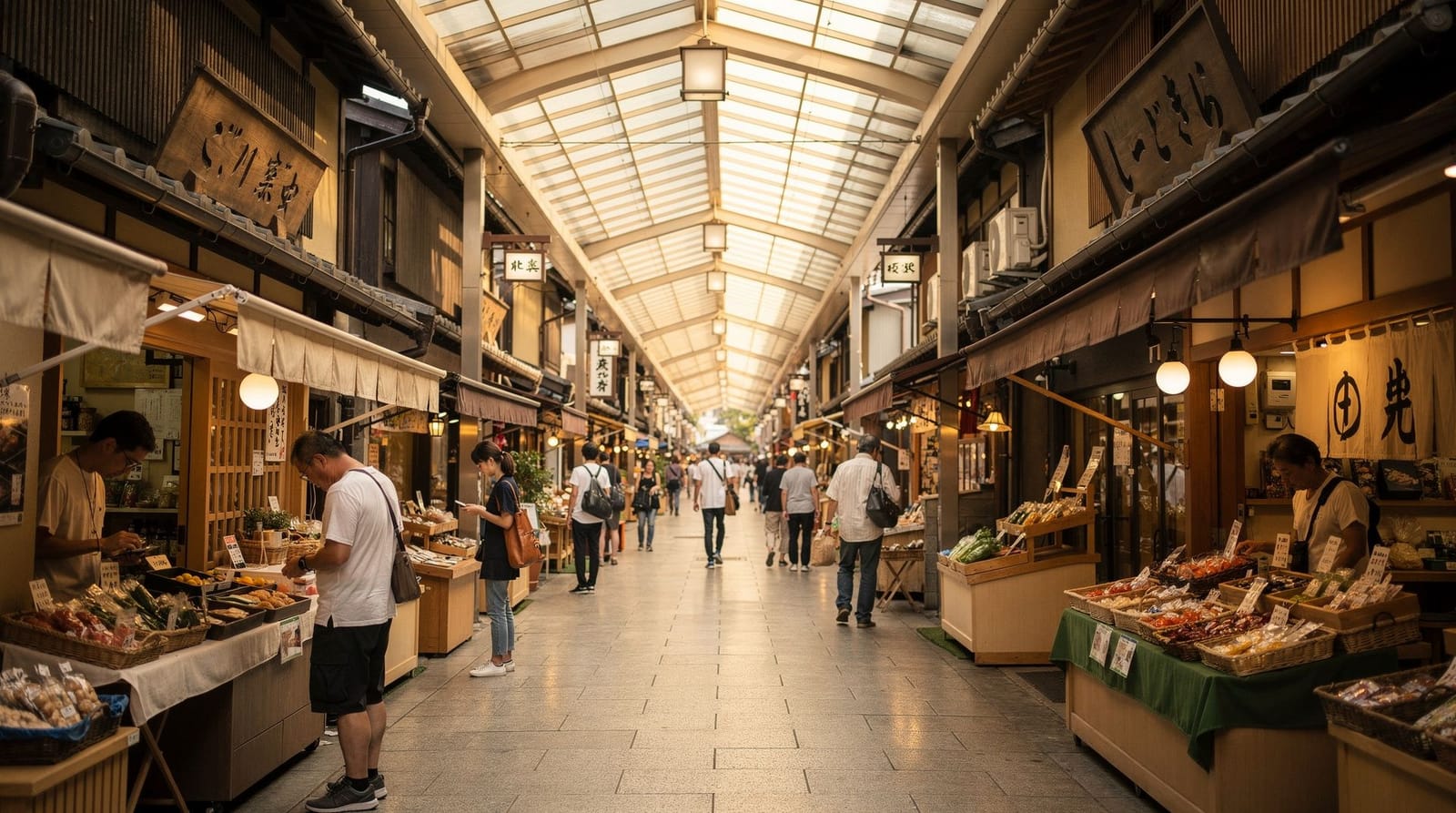
Gion and Pontocho food tour, 13 dishesReal prices: what you’ll actually pay
Pontocho’s reputation for being expensive is only half accurate. A casual izakaya or yakitori counter runs roughly ¥3,000-5,000 (about $20-33) per person for food and a few drinks, comparable to casual dining anywhere in central Kyoto. Mid-range restaurants with a set course menu land around ¥6,000-12,000 (about $40-80) per person.
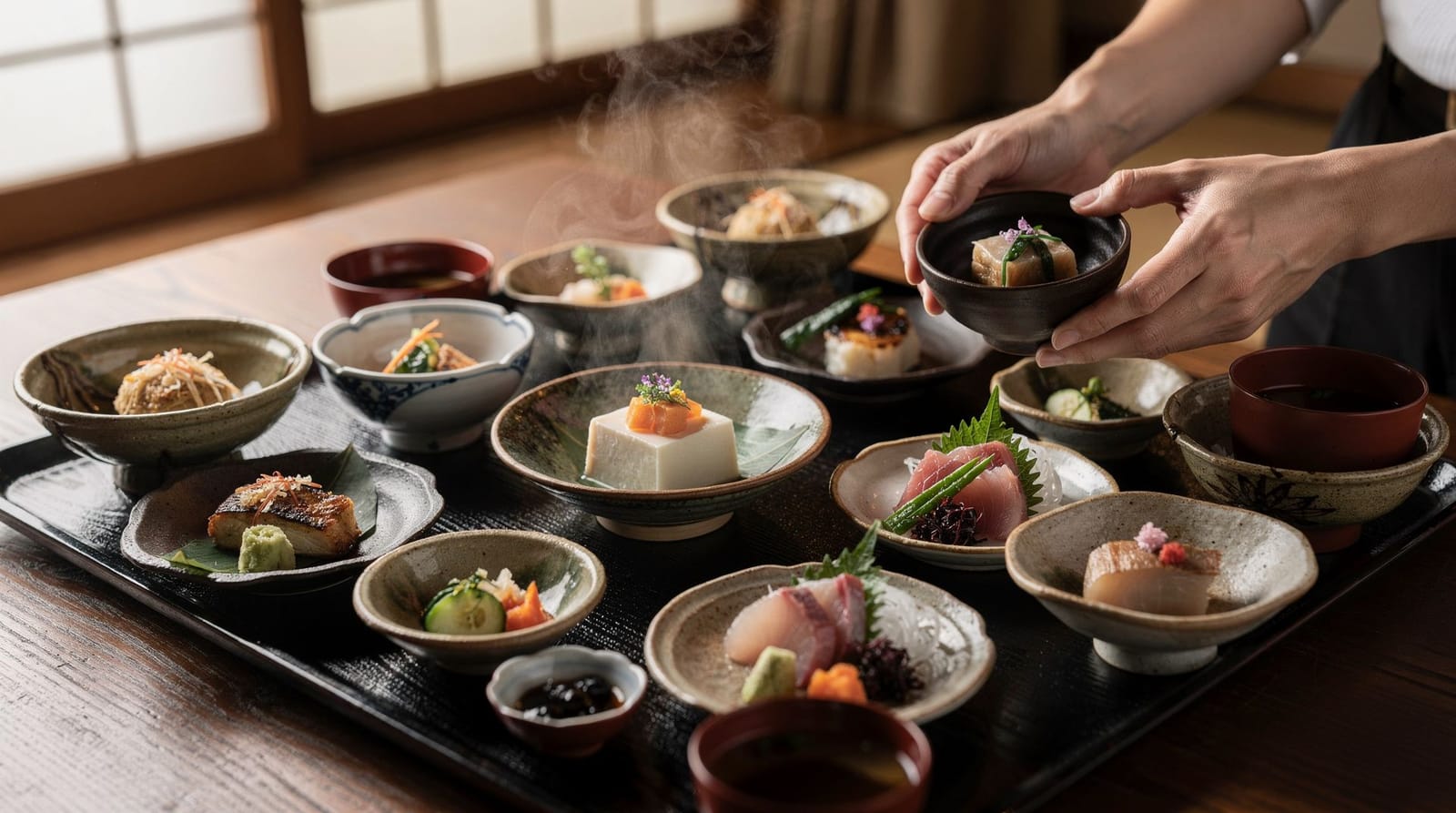
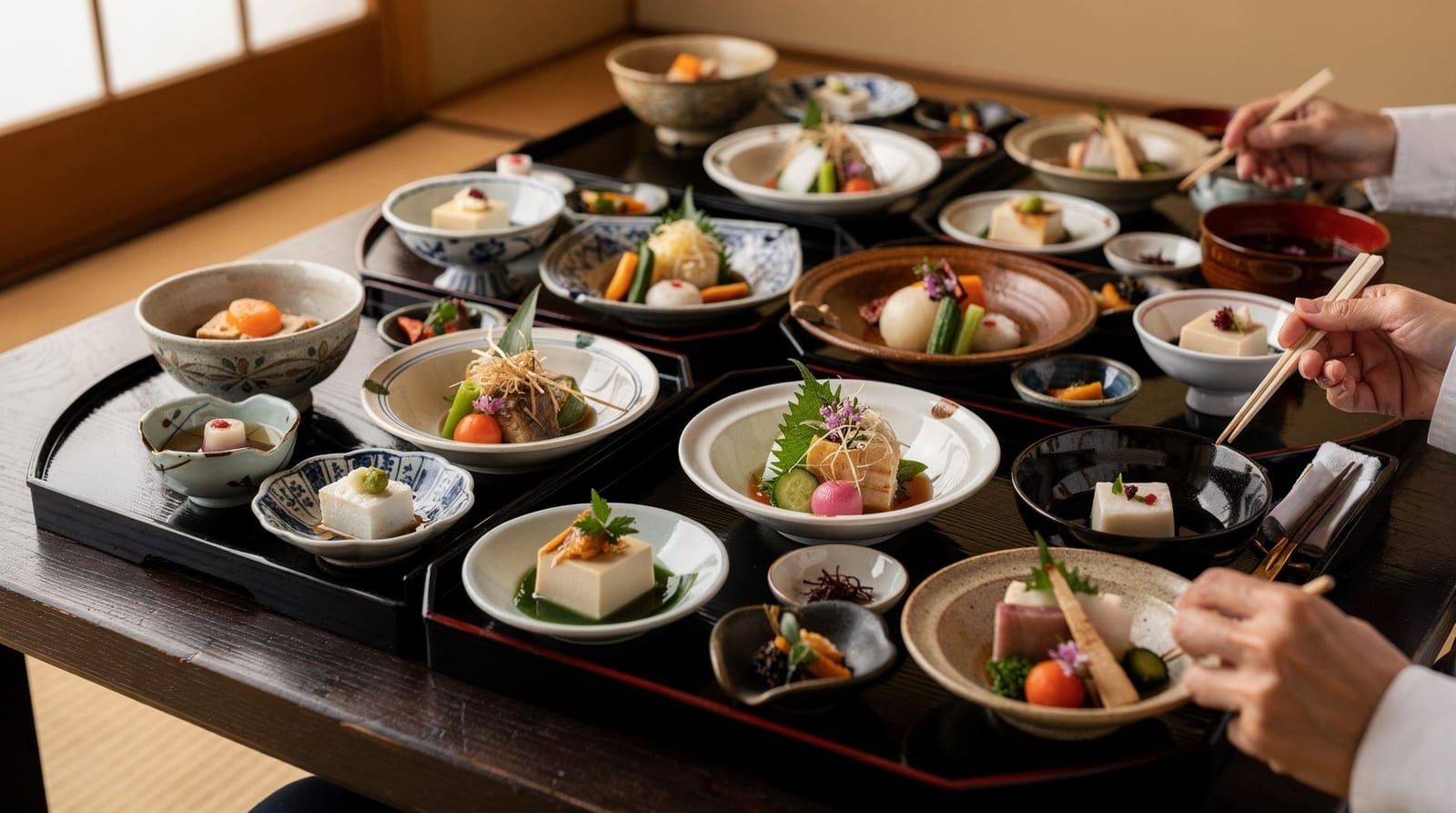
Formal kaiseki dining, which Pontocho has a genuine concentration of, runs ¥15,000-30,000 or more (about $100-200+) per person for a full multi-course meal, and kawadoko riverside seating in summer typically adds a premium on top of standard pricing at whichever tier you’re eating in. The alley genuinely spans this entire range within the same 500 meters, which is exactly why price-checking before sitting down matters here more than in most Kyoto dining areas.
How to tell what you’re walking into
Most casual izakaya and yakitori spots post a menu with prices near the entrance, in Japanese and often English or with photos, making the cost and style of food reasonably clear before you commit to a seat. High-end kaiseki restaurants typically post no pricing at all, sometimes not even a visible menu, and generally expect reservations arranged in advance — occasionally, at the most exclusive end, requiring an introduction from an existing customer in the traditional Kyoto style.
If you’re walking Pontocho without a reservation and want to avoid an unpleasant pricing surprise, a restaurant with no posted prices and no English signage is a reasonable one to skip unless you’re specifically seeking that formal tier and have planned for it. See the kaiseki dining guide for what a full multi-course meal actually involves and how to book one properly.
Bar hopping tour in Pontocho Alley at nightIzakaya culture: the more accessible half of Pontocho
Alongside its formal dining reputation, Pontocho has a strong, more accessible izakaya scene — casual Japanese pubs serving small plates alongside beer, sake, and shochu, often with counter seating that puts you a few feet from the kitchen. These are typically walk-in friendly, especially earlier in the evening before peak dinner hours, and represent the most budget-realistic way to experience Pontocho’s atmosphere without committing to a formal, reservation-only meal. Standing bars and smaller counter spots, tucked between the alley’s more visible restaurant entrances, add a further, even more casual layer for a quick drink and a snack rather than a full sit-down meal.
Kyoto night food tour: local bar and izakaya crawlGeiko and maiko in Pontocho: a smaller, quieter district
Pontocho maintains its own hanamachi (geisha district) community, smaller and less visited than Gion’s, with a comparable structure of okiya (residences) and ochaya (teahouses) operating on the same reservation-and-introduction basis. Sightings of geiko or maiko moving through the alley toward evening appointments do happen, though less predictably discussed than Gion’s dusk window, and the same etiquette applies: no chasing, blocking, or intrusive photography of anyone actually working. See the Gion district guide for the fuller etiquette breakdown, most of which applies equally here.
Getting to Pontocho
Pontocho sits between Sanjo-dori and Shijo-dori on the Kamo River’s west bank, a short walk from Kawaramachi Station (Hankyu line) or Sanjo/Shijo stations on the Keihan line, and easily reached on foot from the downtown Kyoto shopping core just a block or two west. From Kyoto Station, it’s roughly 10-15 minutes by bus or a similar duration via a Karasuma/Keihan combination with one transfer.
Combining Pontocho with the rest of a Kyoto evening
Pontocho pairs naturally with a Gion walk on the same evening, since the two districts sit only 10-15 minutes apart across the Kamo River — a common pattern is Gion first for Hanamikoji-dori and Shirakawa’s atmosphere, then crossing the river to Pontocho for dinner once appetite (and darkness) sets in. It also connects easily to downtown Kyoto’s Nishiki Market and Kawaramachi shopping streets for an afternoon that flows straight into an evening in the alley without requiring separate trips across the city.
Best time to visit
Early evening, roughly 6-8pm, is when Pontocho comes alive — lanterns lit, restaurants opening, and the alley filling without yet reaching its latest-night peak crowd density. Daytime Pontocho is markedly quiet, with many restaurants not yet open, so a walk-through before evening shows little of what makes the alley distinctive; treat any daytime visit as reconnaissance for choosing where to return later rather than the main event itself.
Accessibility and practical notes
Pontocho’s narrow, uneven paving and tightly packed restaurant entrances make it a genuinely tricky alley for wheelchair users or anyone with significant mobility limitations, and kawadoko riverside platforms typically involve a step up or down from street level. There are no public restrooms inside the alley itself, so plan around nearby facilities in Kawaramachi or the Gion side of the river if needed. Cash remains more commonly required at smaller, older establishments than at larger restaurants, so carrying yen rather than assuming card acceptance everywhere is a sensible precaution.
Sake, shochu, and what to actually drink
Pontocho’s bars and izakaya offer one of the denser concentrations of sake and shochu options in central Kyoto, ranging from casual standing bars pouring a handful of house options to specialist bars with extensive regional sake lists drawing on breweries throughout the Kansai region, including several from nearby Fushimi, one of Japan’s most historically significant sake-brewing districts. Ordering can feel intimidating without Japanese, but most bars are used to guiding visitors through a basic choice between dry (karakuchi) and sweet (amakuchi) styles, and staff at counter-style bars are frequently willing to make a direct recommendation if simply asked.
Shochu, a distilled spirit typically made from barley, sweet potato, or rice, shows up on many of the same menus, usually served on the rocks, with soda, or mixed with hot water in colder months — a genuinely different drinking experience from sake worth trying at least once if you haven’t already. Craft cocktail bars have also expanded into Pontocho over the past decade, sitting alongside the more traditional sake and shochu-focused spots, giving the alley a wider range than its historic reputation as a purely traditional dining district might suggest.
What Pontocho looks like across the seasons beyond kawadoko
Outside the May-through-September kawadoko season, Pontocho doesn’t lose its character so much as shift it indoors — the same restaurants operate with standard seating, and the alley’s narrow lanterns and wooden facades remain the defining visual regardless of season.
Winter brings a quieter, more intimate atmosphere, with steam rising from ramen and nabe (hot pot) restaurants visible through doorways and a noticeably lower volume of visitors than the summer riverside season, making it a reasonable time to visit if avoiding crowds matters more to you than eating outdoors. Cherry blossom season along the nearby Kamo River embankment, just steps from Pontocho’s western entrances, adds a natural draw that pairs easily with an evening in the alley, since the blossom viewing and the dinner destination sit only a few minutes’ walk apart.
Dietary restrictions and English menus
English menus are common at the casual end of Pontocho — izakaya and yakitori counters used to visitors tend to have at least a photo-based menu, if not a translated one — but they thin out considerably at the formal kaiseki end, where menus are frequently untranslated and staff may have limited English.
Vegetarian and vegan options are genuinely limited across most of the alley, since dashi (fish-based stock) underlies a large share of Japanese cooking even in dishes that look plant-based on the surface; a few modern restaurants cater specifically to dietary restrictions, but they’re the exception rather than the norm here. If specific dietary needs are non-negotiable, checking a restaurant’s menu online or asking a hotel concierge to confirm in advance is worth the extra step, since Pontocho’s narrow, low-lit entrances make an in-person judgment call harder than at a more open restaurant street.
Reservations: when you need one and when you don’t
Casual izakaya and yakitori counters are generally walk-in friendly, especially before 7pm on a weeknight, though a small group showing up after 8pm on a Friday or Saturday should expect a short wait or a full house at the most popular spots. Formal kaiseki restaurants are the opposite — most expect a reservation made at least a few days ahead, and the most exclusive names sometimes require an introduction or a booking through a concierge or hotel, in keeping with Kyoto’s traditional reservation culture. Kawadoko riverside seating during summer occupies a middle ground: reserving a few days ahead is sensible for weekend evenings in peak season, but weekday availability often opens up without much notice.
The honest verdict
Pontocho’s reputation oscillates between “essential Kyoto experience” and “overpriced tourist trap,” and the accurate picture sits somewhere in between: it’s a genuinely atmospheric, historic alley with real dining range, from ¥3,000 izakaya plates to ¥30,000 kaiseki courses, and the quality of any given restaurant has more to do with individual choice than which end of the alley it sits on. Walking in with a rough price expectation, checking posted menus before sitting down, and treating the kawadoko season as a specific seasonal bonus rather than a year-round guarantee will get you a considerably better night than wandering in with no plan and hoping for the best.
Frequently asked questions about Pontocho alley guide — Kyoto's narrowest night out
What does “Pontocho” actually mean and why is the alley so narrow?
What is kawadoko and when can you experience it?
Is Pontocho expensive compared to eating elsewhere in Kyoto?
How do you choose a restaurant in Pontocho without a reservation?
Is Pontocho safe and appropriate to walk through at night?
How does Pontocho compare to Gion for an evening out?
What's the best time of day to walk through Pontocho even without eating?
Can you do a food tour of Pontocho instead of choosing a restaurant yourself?
Top experiences
Bookable activities with verified prices and instant confirmation on GetYourGuide.