Arashiyama guided tour review — bamboo grove beyond the 10-minute photo stop
Kyoto: Arashiyama Hidden Temples & Bamboo Grove Guided Tour
Beyond the ten-minute bamboo photo
Quick answer: the bamboo grove itself is free and open 24 hours, so a guided Arashiyama tour (roughly ¥4,000-7,000 / $27-47 per person for a half-day) is worth booking mainly for what it adds beyond the grove — Tenryu-ji’s garden context, quieter side temples, and an early-morning start that genuinely beats the crowds. A rushed solo visit that only hits the bamboo path and leaves risks missing most of what makes Arashiyama worthwhile.
| Where | Arashiyama district, western Kyoto |
| Cost | Around ¥4,000-7,000 / $27-47 per person (guided) |
| Time needed | Half-day (grove + Tenryu-ji); full day with river boat |
| Getting there | JR Sagano Line, Randen tram, or Hankyu line, 15-25 min from central Kyoto |
| Best time | Before 8am for a quiet grove; mid-November for autumn colour |
Arashiyama’s bamboo grove is one of the most photographed single stretches of pathway in Japan, and it’s also, in isolation, a fairly quick visit — most people walk the main grove path in 10-15 minutes. The mistake a lot of rushed itineraries make is treating Arashiyama as a bamboo-grove photo stop rather than a district with a genuine half-day’s worth of sights: a UNESCO World Heritage temple garden, a scenic river bridge, a hillside monkey park with panoramic views, and several quiet temples that most day-trippers never see because they don’t know to look past the grove.
The Arashiyama hidden temples and bamboo grove guided tour is built specifically to counter this — routing you through the grove alongside at least one or two of the district’s quieter temples rather than treating bamboo as the entire itinerary.
What’s actually in Arashiyama beyond the grove
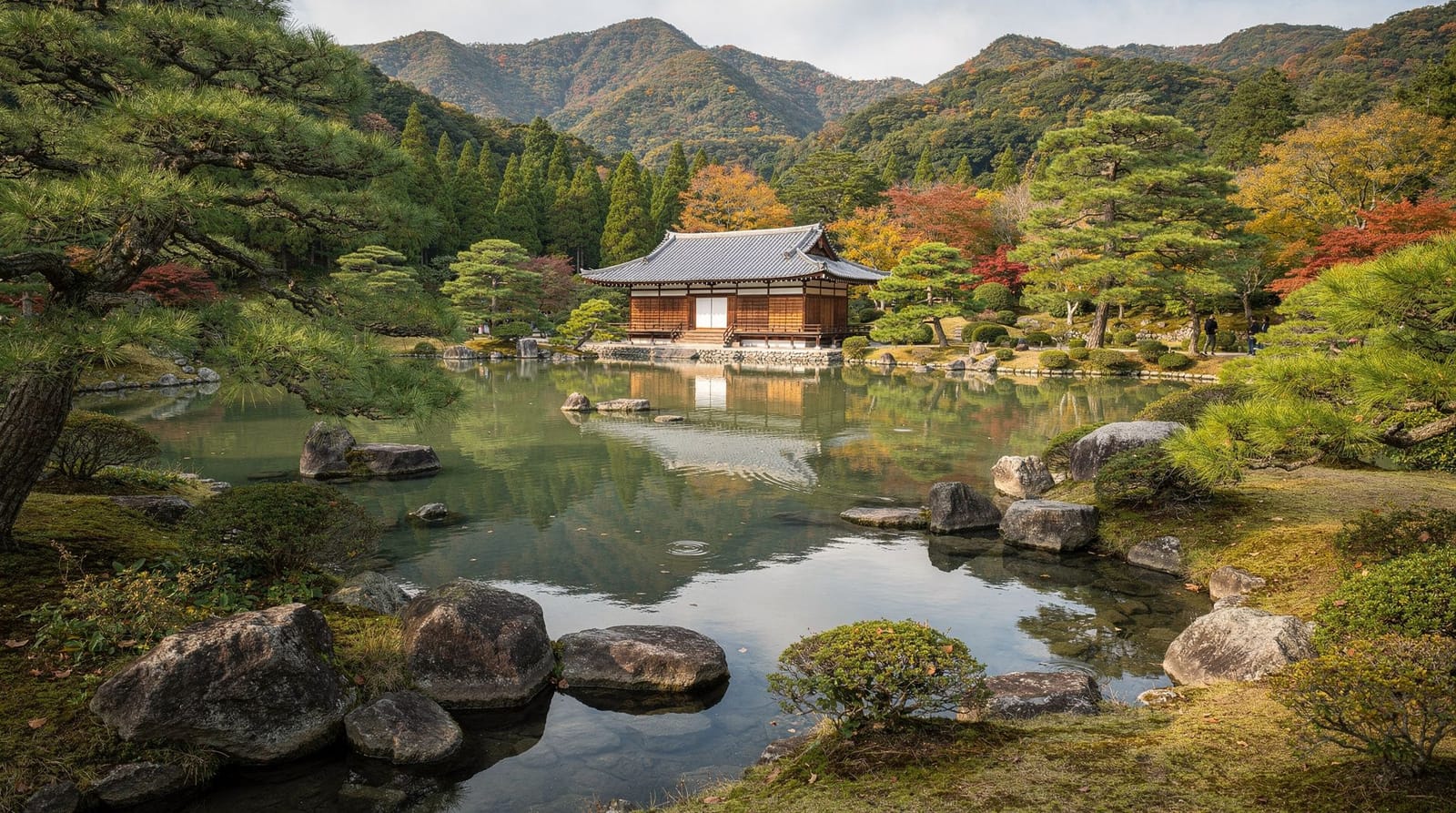
Tenryu-ji, the UNESCO World Heritage temple the grove effectively serves as an approach path for, has one of Kyoto’s best-regarded Zen gardens, designed around a central pond with Arashiyama’s forested hills used as deliberate “borrowed scenery” in the background — a garden design technique worth understanding rather than just photographing. Entry runs around ¥500 ($3.35) for the garden alone, more for building access, and it’s genuinely worth the fee.
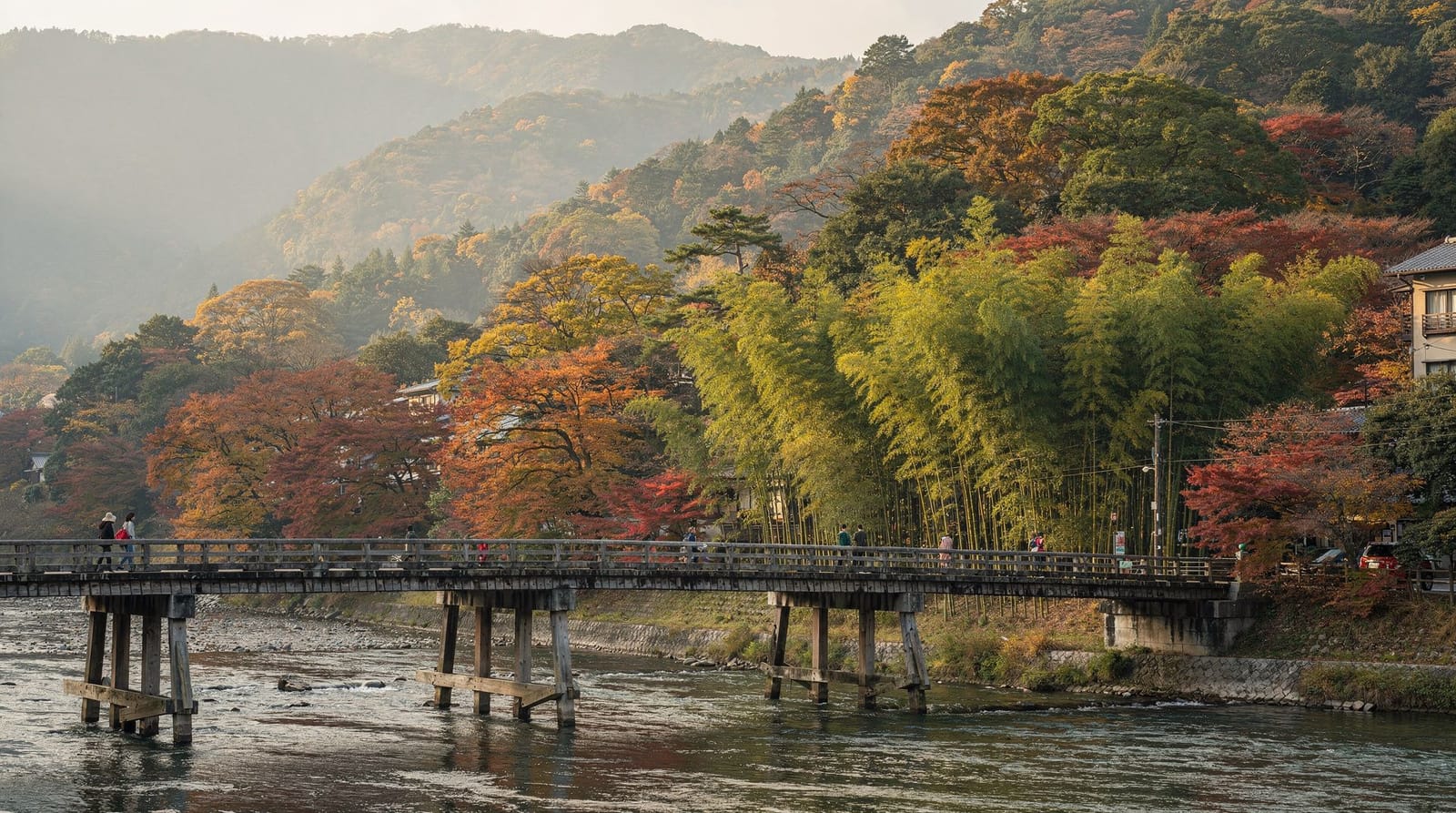
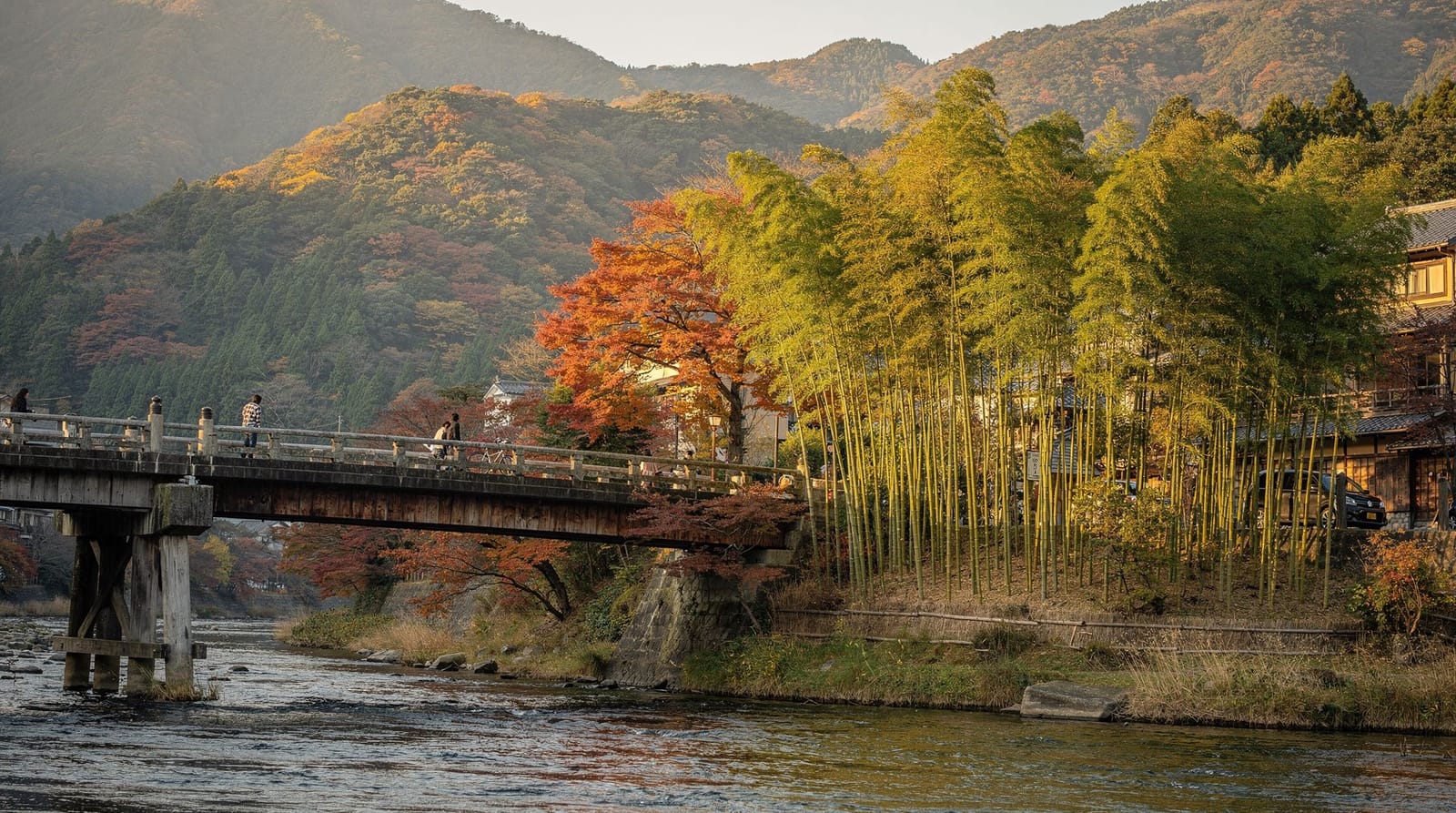
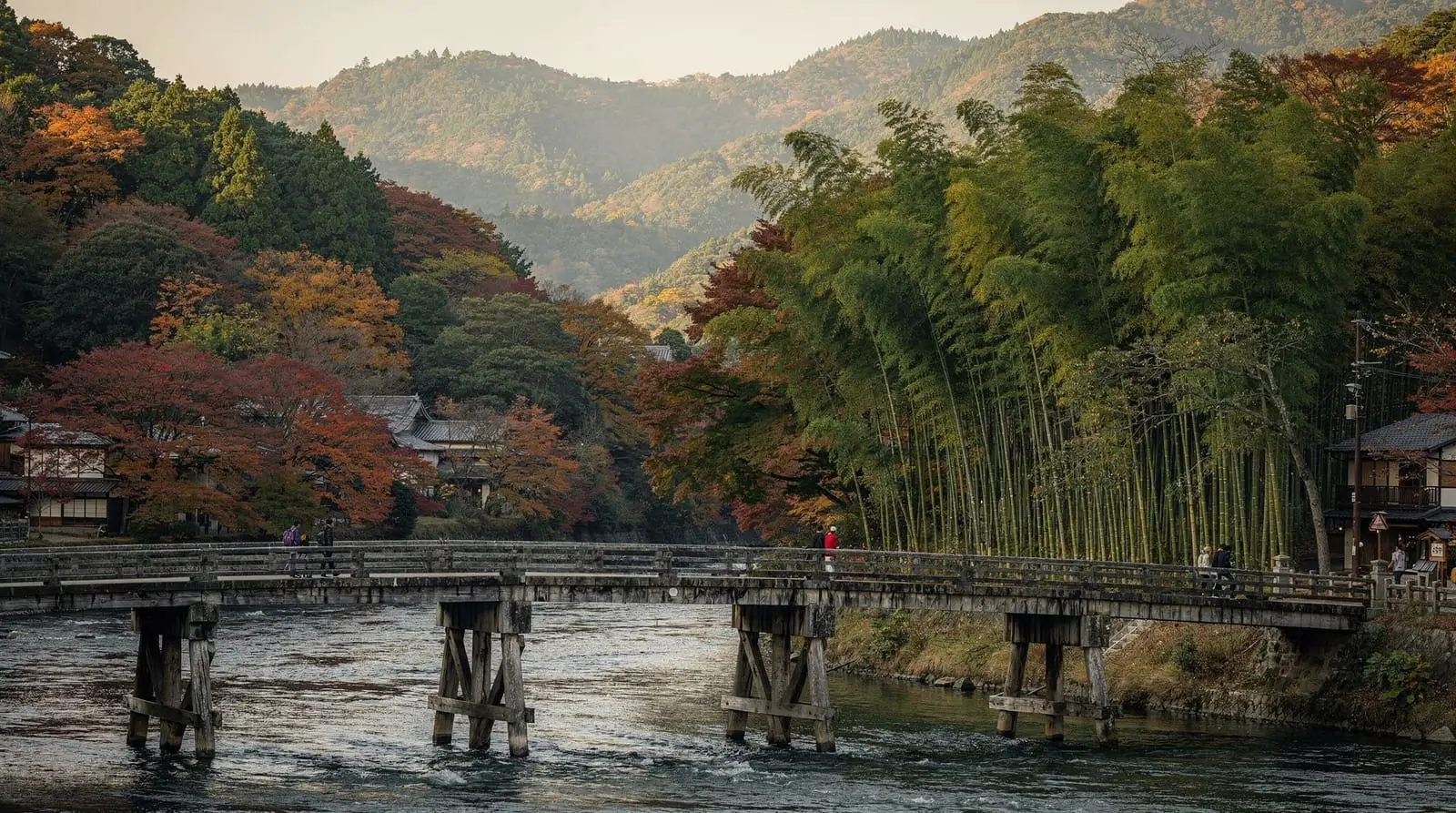
The Togetsukyo bridge crossing the Katsura (also called Hozu) River is a short walk from the grove and offers one of the more scenic, uncrowded river views in the district — a natural spot to pause before continuing to Okochi Sanso villa, a former actor’s hillside estate with excellent views over Kyoto and a garden walk that ends with a bowl of matcha included in the roughly ¥1,000 ($6.70) entry fee. Further up the hillside, the Arashiyama Monkey Park (Iwatayama) is a genuine short hike, not a flat stroll, rewarding visitors with wild monkeys at close range and one of the better panoramic Kyoto views available from any accessible point in the city.
Comparing the main tour formats
The Arashiyama bamboo grove and Monkey Mountain walking tour pairs the grove with the Iwatayama hike specifically, worth choosing if a panoramic Kyoto view and wildlife encounter matter more to you than temple architecture — note this does involve genuine uphill walking, so it’s not the right pick if mobility is a concern.
The serene morning walk in Arashiyama bamboo grove is the crowd-avoidance-first option, timed for the earliest quiet window before the grove’s main path fills with the day’s foot traffic — the strongest choice if a genuinely peaceful, uncrowded bamboo photo is your top priority over covering maximum ground.
The Arashiyama day trip, private and personalized is the flexible option for families or travelers who want to set their own pace and skip whichever stop isn’t landing — worth the premium over a group tour if you’re traveling with kids or older relatives whose stamina is hard to predict in advance.
| Format | Best for | Trade-off |
|---|---|---|
| Hidden temples + bamboo grove | First-timers wanting the full district | Standard group pace |
| Bamboo grove + Monkey Mountain | Wildlife and panoramic views | Genuine uphill walking |
| Serene morning walk | Crowd-avoidance above all else | Covers less ground |
| Private, personalized | Families, mixed mobility | Highest per-person price |
Independent visit: a genuinely reasonable choice here
Arashiyama is easy to reach independently — the JR Sagano Line, the Randen (Keifuku) tram, or the Hankyu line all connect from central Kyoto in 15-25 minutes, and the district itself is compact and well-signed. If you’re comfortable using the Arashiyama bamboo grove guide to plan your own route through the grove, Tenryu-ji, and one or two secondary sights, a self-guided day is entirely workable and saves the tour cost. Where a guide earns their fee is context (what Tenryu-ji’s garden design is actually doing, why certain smaller temples like Jojakko-ji are worth the detour) and routing efficiency that avoids doubling back across the district.
Timing: the one lever that matters most
Arrive before 8am if a quiet bamboo grove photo is a real priority — the grove has no gate and no fixed hours, so an early start genuinely works here in a way it doesn’t at ticketed attractions with set opening times. By mid-morning, the main grove path between the Tenryu-ji north gate and Okochi Sanso is dense with foot traffic and stays that way through the afternoon. Autumn foliage season (mid-November) and cherry blossom season (late March-early April) intensify this substantially — see the avoiding crowds in Kyoto guide for broader seasonal strategy across the city, not just this district.
Tenryu-ji’s garden, explained rather than just photographed
Tenryu-ji was founded in 1339 by the shogun Ashikaga Takauji, dedicated to the memory of Emperor Go-Daigo, and its garden — attributed to the renowned garden designer Muso Soseki — is considered one of the oldest surviving examples of a specific Japanese garden technique called shakkei, or borrowed scenery, where the garden’s design deliberately incorporates the surrounding landscape (in this case, Arashiyama’s forested hills) as part of the composition rather than screening it out.
This is genuinely one of the harder concepts to appreciate without explanation: at a glance, the garden looks like a well-kept pond and rock arrangement; understood as shakkei, it’s a deliberate visual argument about where a garden’s boundaries actually lie, using the borrowed mountain backdrop as an inseparable part of the design.
A guide who explains this transforms perhaps ten minutes of quiet pond-viewing into something considerably richer — worth the modest additional time even if you’re planning to move quickly through the rest of Arashiyama. The temple also survived several fires over its history (the current main hall dates to a 1899 reconstruction), a detail that contextualizes why so much of Kyoto’s “ancient” temple architecture is actually a series of careful historical reconstructions rather than unbroken original structures, a nuance easy to miss without a guide raising it directly.
The less-visited temples worth a genuine detour
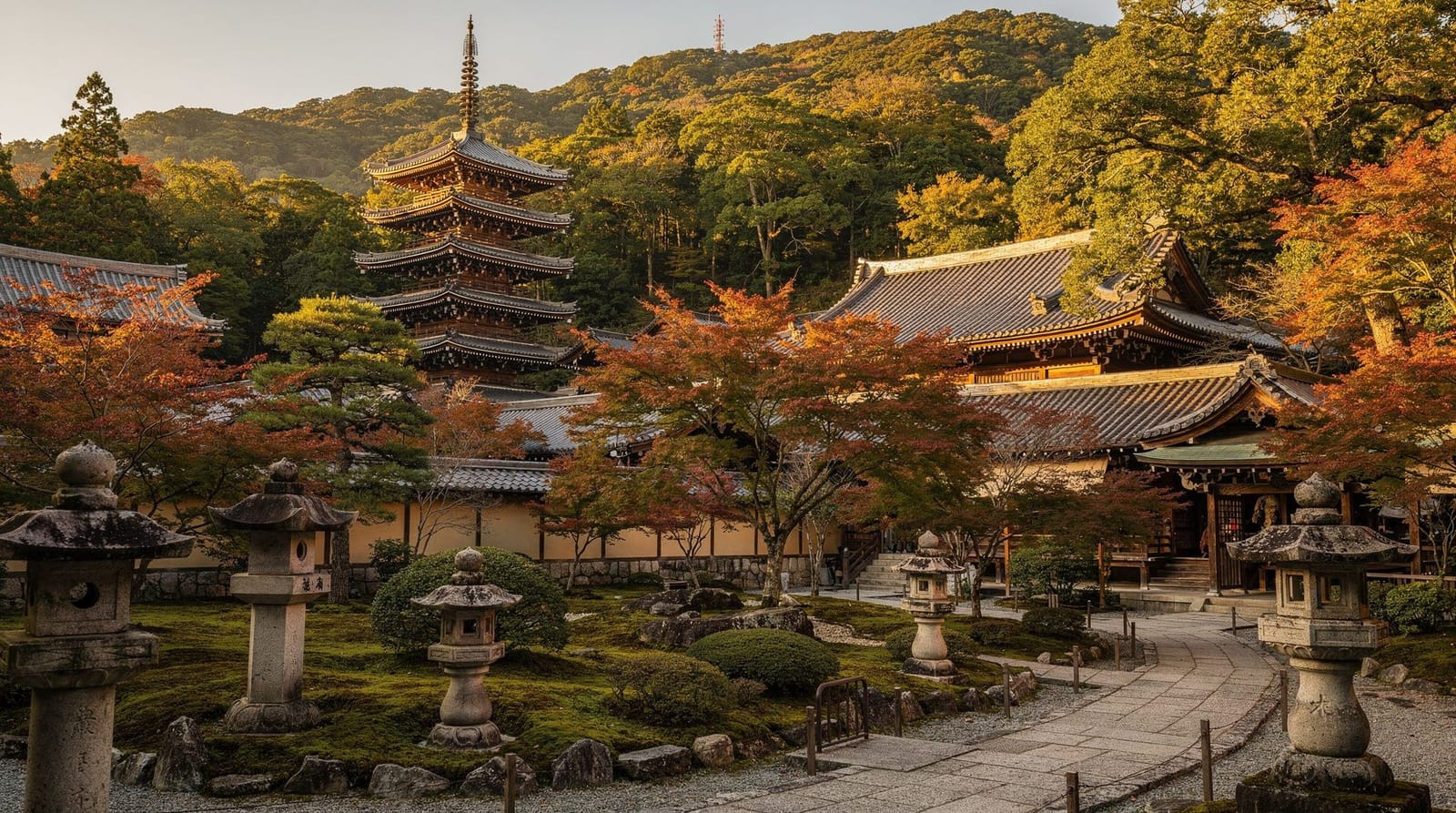
Beyond Tenryu-ji, Arashiyama holds several smaller temples that see a fraction of the bamboo grove’s foot traffic. Jojakko-ji, a short uphill walk from the main grove path, offers genuinely quiet grounds and a notable pagoda with hillside views, particularly striking during autumn foliage season when its maple trees turn while remaining far less crowded than the grove itself. Gio-ji, further along, is known for its moss garden and connection to a tragic historical tale involving a 12th-century shirabyoshi dancer — the kind of story that rewards a guide’s narration considerably more than a self-guided walk with no context.
These detours require genuine extra walking time and aren’t well-suited to a rushed half-day visit, but they’re precisely the kind of stops a good guided tour builds in specifically because independent visitors, focused on the grove and Tenryu-ji, rarely discover them without deliberately researching beforehand.
Getting there: three routes, three different experiences
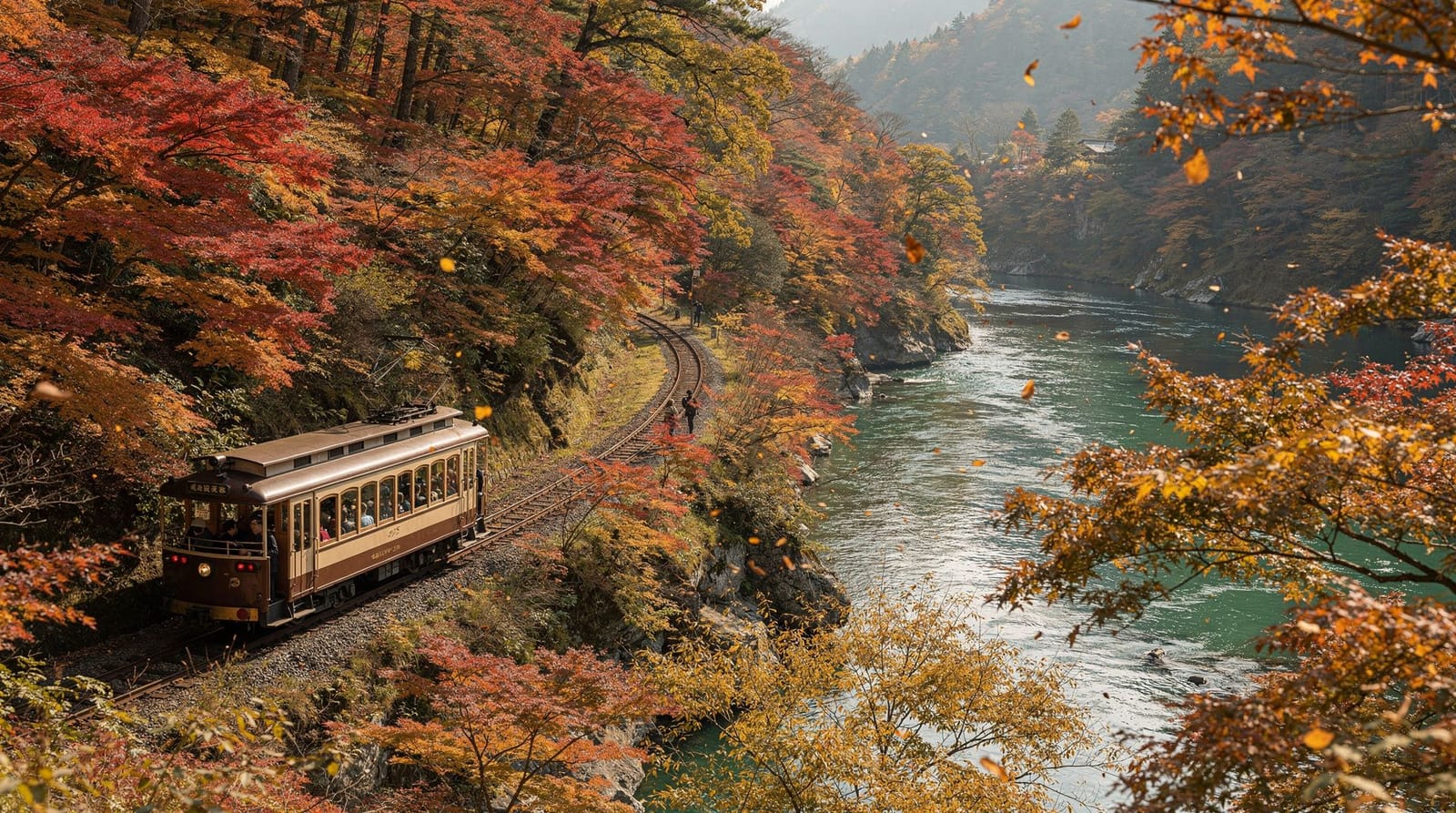
How you arrive in Arashiyama meaningfully shapes the day, and it’s worth choosing deliberately rather than defaulting to whichever route a map app suggests first. The JR Sagano Line is fastest, roughly 15 minutes from Kyoto Station, but delivers you directly into the district with no scenic build-up. The Randen (Keifuku) tram, Kyoto’s last surviving old-style tram line, takes longer (around 25 minutes with a transfer from central Kyoto) but is itself a genuinely charming, old-fashioned ride worth experiencing rather than treating purely as transit. The Hankyu line, useful if you’re coming from the Kawaramachi or Shijo area, offers a third practical option with a short walk from Arashiyama Station to the bamboo grove itself.
For a memorable one-way trip, some visitors take the JR line in and the Randen tram out (or vice versa), turning the transit itself into a small part of the day’s experience rather than a purely functional commute — worth considering if you’re not tightly time-constrained.
What a full Arashiyama day actually costs
Budgeting realistically: Tenryu-ji garden entry (¥500 / $3.35), Okochi Sanso villa (¥1,000 / $6.70, includes matcha), Arashiyama Monkey Park (¥550 / $3.70), plus round-trip transport from central Kyoto (¥500-600 / $3.35-4 depending on route) totals roughly ¥2,500-3,000 ($17-20) for a full independent day covering the district’s main paid sights, on top of whatever you spend on food along the way. A guided half-day tour at ¥4,000-7,000 ($27-47) per person is a genuine premium over this baseline, worth paying specifically for the context and routing efficiency discussed above rather than for the sights themselves, which remain equally accessible either way.
Combining Arashiyama with the Hozugawa river boat
For travelers with a full day rather than a rushed half-day, pairing a guided Arashiyama walk with the Hozugawa river boat trip (which arrives directly into the district near Togetsukyo bridge) is a genuinely strong combination — see the Hozugawa river boat tour review for what that adds.
A sensible sequence takes the boat downstream from Kameoka first, arriving into Arashiyama by water for a scenic, unhurried start, then spends the afternoon walking the bamboo grove, Tenryu-ji, and whichever secondary temples fit your remaining energy and time. This sequencing avoids the common mistake of trying to fit both the boat trip and a thorough district walk into a rushed single morning, which tends to shortchange both experiences.
Weather considerations specific to Arashiyama
The bamboo grove and Tenryu-ji’s garden are both largely outdoor, exposed experiences, so weather affects an Arashiyama visit more directly than an indoor-heavy itinerary would be. Light rain doesn’t meaningfully disrupt the grove itself — the dense bamboo canopy provides real overhead cover along much of the main path — but does affect photo quality and comfort in the more open temple garden areas.
Summer heat is a genuine factor too: the district has less shade cover than the forested trail up Fushimi Inari, and the walk between the grove, Tenryu-ji, and the monkey park adds up to real sun exposure over a half-day. Check the forecast and, if given a choice, favor a morning slot over afternoon during summer months specifically to avoid the worst of the midday heat.
A note on the Arashiyama rickshaw alternative
For travelers wanting a guided narrative through the district without walking the full distance themselves, a traditional rickshaw (jinrikisha) ride is a common Arashiyama-specific alternative to a walking tour, with runners who double as local guides, pointing out sights while pulling you through the grove and nearby streets. It covers less ground than a guided walking tour and costs more per hour, but it’s a genuinely different, lower-effort way to experience the district’s atmosphere, particularly appealing for travelers with limited mobility or simply wanting a novel way to see the bamboo grove beyond walking it on foot like everyone else.
Verdict
The bamboo grove alone doesn’t justify a paid tour — it’s free, quick, and simple enough to walk solo. What justifies booking is everything Arashiyama has beyond the grove that a rushed independent visitor typically misses: Tenryu-ji’s garden, the river, the hillside views, and the quieter temples tucked away from the main path. The hidden temples and bamboo grove tour is the strongest pick for a first-time visitor who wants the full district, not just the photo everyone already has.