Arashiyama Bamboo Grove — when to go, what it costs, and what's next door
Kyoto: Arashiyama Bamboo Grove, Monkey Mountain Walking Tour
What time should you visit the Arashiyama Bamboo Grove to avoid crowds?
Before 8am. The grove is free, has no gate or ticket booth, and is open 24 hours, so it goes from nearly empty at dawn to genuinely packed by mid-morning, roughly 9:30-10am onward, once tour groups and day-trippers arrive. Weekday mornings, especially outside cherry blossom and autumn foliage season, are the most reliable quiet window.
A free path that behaves like a ticketed attraction at peak hours
The Arashiyama Bamboo Grove is, on paper, one of the simplest sights in Kyoto to visit: a roughly 500-meter public path lined with towering bamboo stalks, free to enter, with no gate and no opening hours. In practice, it’s also one of the most crowd-sensitive, because that same lack of a ticket or capped entry means nothing controls how many people are on the narrow path at once. Understanding the grove’s actual crowd pattern — not just “it gets busy” but the specific hours when it shifts from empty to packed — is the single most useful thing to know before visiting.
| Where | Arashiyama, western Kyoto (Saga-Arashiyama / Randen / Hankyu stations) |
| Cost | Free (Okochi Sanso detour around ¥1,000) |
| Time needed | 10-30 minutes for the path; half a morning with Tenryu-ji |
| Getting there | ~15-20 min by JR from Kyoto Station |
| Best time | Before 8am, on a weekday, outside sakura/momiji season |
The path itself: what you’re actually walking through
The bamboo grove path runs roughly north-south between Tenryu-ji’s grounds and the approach to Okochi Sanso, with towering Moso bamboo stalks — some reaching well over 20 meters — filtering sunlight into shifting patterns overhead, a visual effect enhanced by wind moving through the grove and producing a distinctive rustling sound that’s been formally recognized by Japan’s Ministry of the Environment as one of the country’s “100 soundscapes” worth preserving. A brisk walk covers the main stretch in 10-15 minutes; most visitors take 20-30 minutes given how often the path invites stopping for photos, and how much slower movement becomes once crowding sets in during peak hours.
The exact timing that separates an empty photo from a packed one
Arashiyama as a district follows a predictable daily crowd curve, and the bamboo grove is the most sensitive part of it. Early morning — realistically before 8am — is close to empty, since most day-trippers and tour groups haven’t yet arrived from central Kyoto or Osaka. By 9:30-10am, the path is noticeably busier, and from late morning through mid-afternoon it’s at its most crowded, often requiring patience to get a clear photo without other visitors in frame.
Late afternoon offers a partial second lull as day-trip groups head back toward the station, though it’s rarely as quiet as the early-morning window. If a genuinely uncrowded bamboo grove photo matters to your trip, plan around the 7-8am window specifically, not just “morning” in general.
Serene morning walk in the Arashiyama Bamboo GroveTenryu-ji: the temple whose gate opens straight into the bamboo
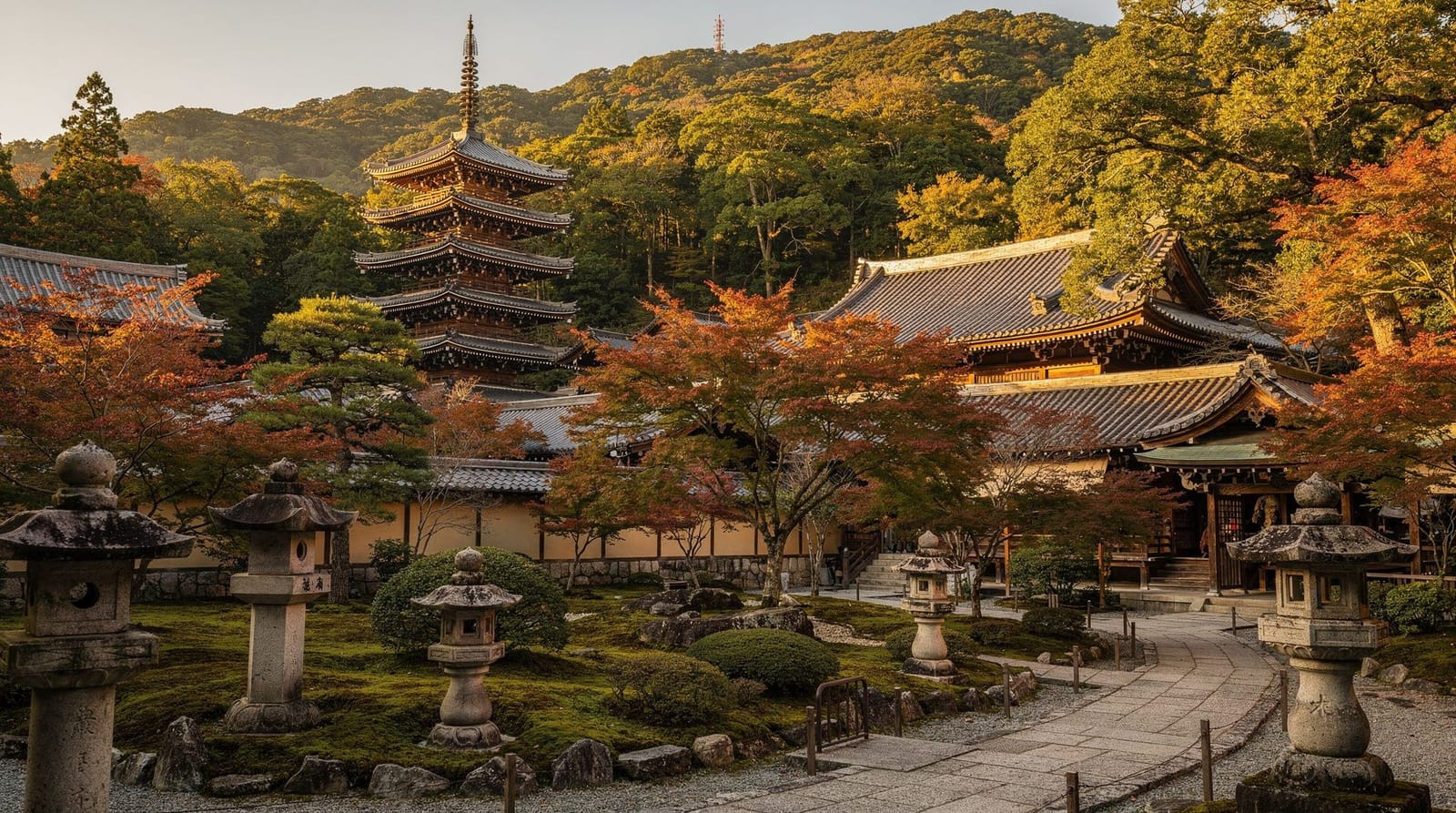
The most practical thing to know about the grove’s layout is that Tenryu-ji, a UNESCO World Heritage Zen temple, sits directly adjacent, with its north gate opening onto the bamboo path itself. Most visitors treat the two as one continuous stop: enter Tenryu-ji through its main south gate, walk the Sogenchi pond garden, and exit north straight into the bamboo, or do the same route in reverse depending on which direction you’re arriving from. Garden admission to Tenryu-ji is ¥500, with an extra ¥300 for the temple’s interior buildings — full details, including exact hours and the temple’s own history, are in the Tenryu-ji guide.
Tenryu-ji temple guided tour in ArashiyamaOkochi Sanso: a ticketed, quieter alternative at the grove’s north end
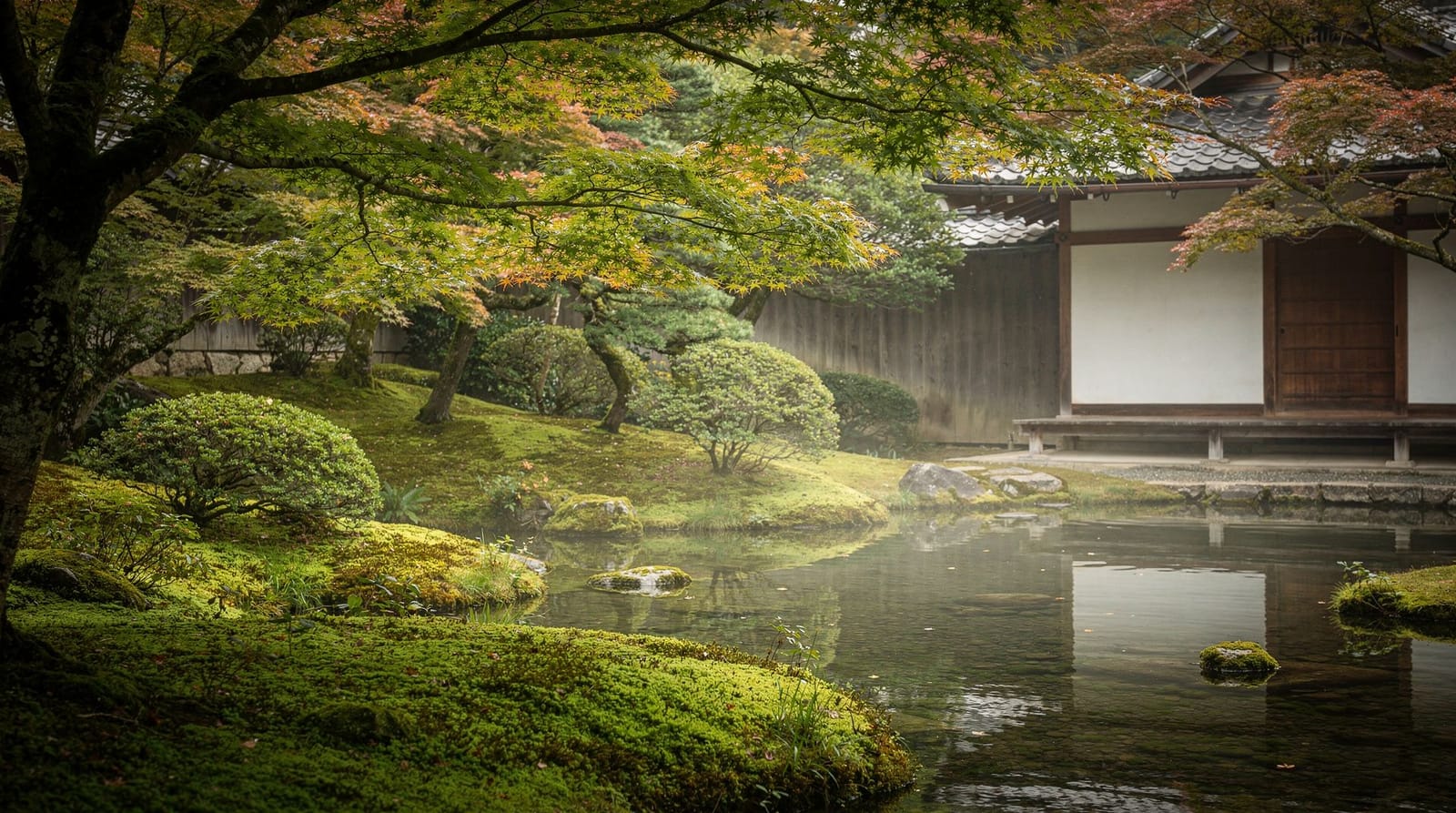
At the northern end of the bamboo path sits Okochi Sanso, the former hillside villa and garden of Denjiro Okochi, a prominent Japanese silent-film actor who built the estate over roughly 30 years starting in the 1920s. Admission (around ¥1,000) includes a cup of matcha and a small sweet served in a teahouse overlooking the garden, with views that extend, from certain vantage points, across the Arashiyama hills and toward the city beyond. Because it’s ticketed, Okochi Sanso sees a fraction of the bamboo grove’s foot traffic even during peak season, making it a legitimate option for visitors who want a calmer, paid alternative rather than fighting crowds on the free path.
Quieter bamboo alternatives elsewhere in Kyoto
If you’ve already experienced Arashiyama’s grove at its most crowded and want a second, calmer bamboo encounter, two realistic alternatives exist. A smaller bamboo-lined path runs near Kodai-ji in the Higashiyama district, on the opposite side of the city, convenient if your itinerary is already centered there. Further out, Adashino Nenbutsu-ji, in the Sagano area beyond Arashiyama’s main cluster, has a quieter approach path lined with bamboo, reached via a walk or the Sagano scenic railway rather than Arashiyama’s main tourist core. Neither matches the scale or fame of the main grove, but both deliver a genuinely quieter version of the same visual experience.
Arashiyama hidden temples and bamboo grove guided tourGetting there from central Kyoto
The grove is reached via JR Saga-Arashiyama Station (about 15-20 minutes from Kyoto Station on the JR Sagano/San-in Line), Randen (Keifuku) Arashiyama Station, or Hankyu Arashiyama Station, all within a 5-15 minute walk of the grove entrance depending on which line you’re arriving on. A taxi from Kyoto Station takes roughly 25-30 minutes depending on traffic, generally slower than the train given Arashiyama’s distance from the station. See the Arashiyama destination guide for the full station breakdown and how the grove connects to other district sights.
What else is nearby if you’re spending a full morning
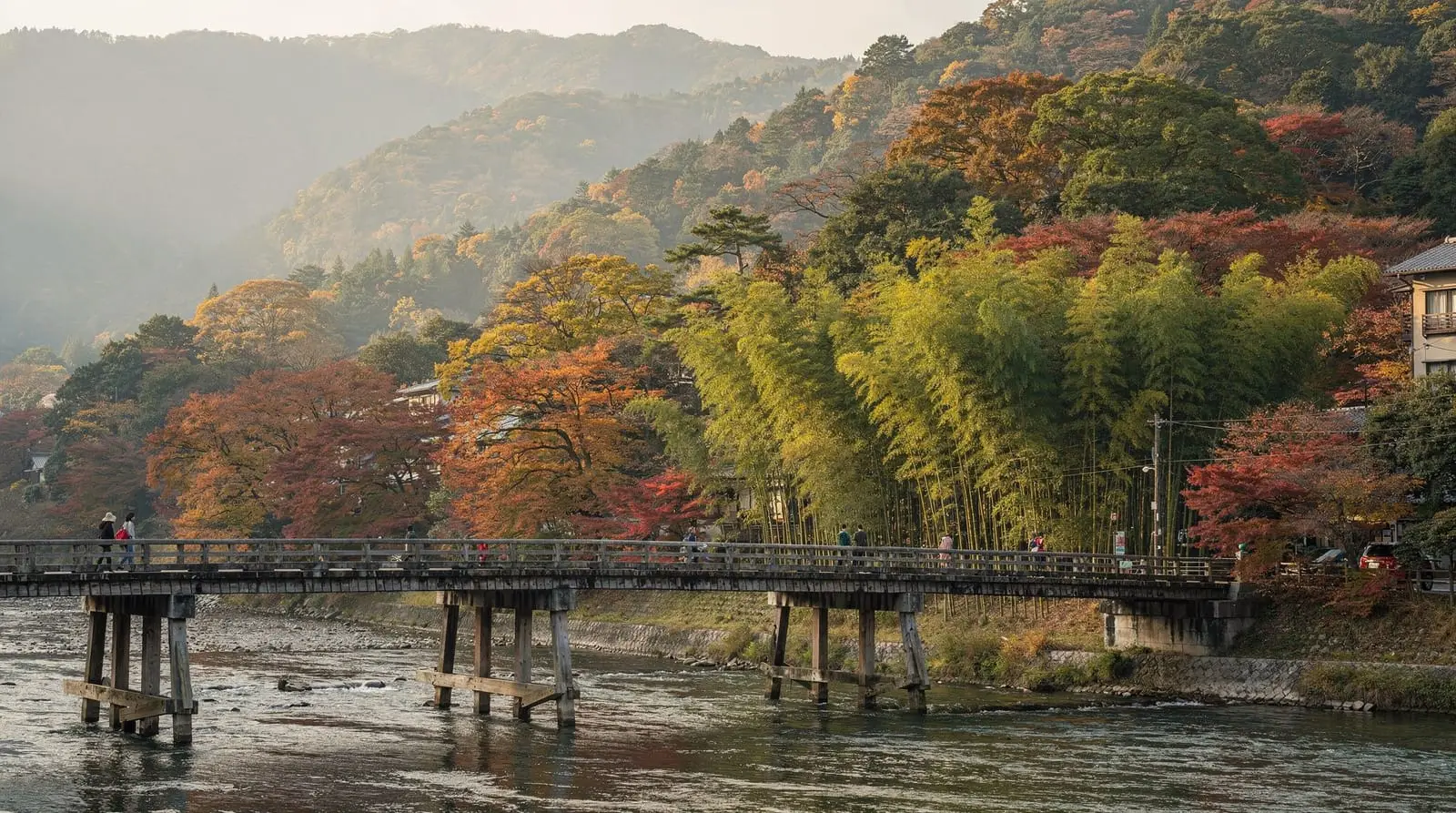
Beyond Tenryu-ji and Okochi Sanso, the Togetsukyo Bridge and riverside sit a short walk south of the grove, and Iwatayama Monkey Park’s entrance is close by as well, involving a steep 20-minute climb for those willing to make the trek up for city views and resident wild macaques. A realistic half-day plan covers the bamboo grove, Tenryu-ji, and one additional stop — bridge, monkey park, or Okochi Sanso — without feeling rushed; trying to fit all of Arashiyama’s major sights into a single morning generally means shortchanging at least one of them.
Rickshaw and bike options through the district
Cycling isn’t permitted directly on the main bamboo path, though bike rental is a popular way to cover the wider Arashiyama district efficiently once you’re off the grove itself. Rickshaw (jinrikisha) rides, pulled by a runner-guide, are available near the grove entrance and travel sections of the route at a slower, guided pace, typically sold as 30-90 minute packages covering the bamboo and one or two nearby sights — a comfortable option for visitors who’d rather not walk the entire district on foot.
Seasonal notes: what actually changes and what doesn’t
Because the bamboo itself is evergreen, the grove doesn’t transform dramatically with the seasons the way Kyoto’s maple and cherry blossom spots do — what changes instead is almost entirely the crowd level. Spring (late March-early April) and autumn (mid-to-late November) bring Arashiyama’s heaviest crowds overall, driven by cherry blossoms and maple foliage at nearby sights rather than the bamboo itself. Winter (December-February) is consistently the quietest season across the district, making it, somewhat counterintuitively, one of the better times to see the grove close to how it looks in the famous empty-path photographs.
Common mistakes first-time visitors make
The most common mistake is arriving at the bamboo grove mid-morning or early afternoon expecting the quiet, empty-path experience seen in photos — by that point, the path is typically at its busiest, and no amount of patience fully replicates a dawn visit. A second mistake is treating the grove as a standalone destination worth a special trip on its own, when in practice it’s a 10-15 minute walk best combined with Tenryu-ji, Okochi Sanso, or the wider Arashiyama district rather than visited in isolation.
A third is skipping Okochi Sanso entirely on the assumption it’s just another temple garden — the matcha-and-view combination and comparatively low crowd levels make it a worthwhile ¥1,000 detour for many visitors who’d otherwise only see the free, crowded bamboo path.
Accessibility
The main bamboo path is flat, paved, and one of the more accessible short walks in Arashiyama, manageable for most visitors including those with limited mobility, though it does narrow considerably in places and can be difficult to navigate through during peak crowding regardless of physical ability. Okochi Sanso’s garden involves more uneven, hillside terrain with some stepped sections, and Iwatayama Monkey Park’s approach is a genuinely steep climb unsuitable for wheelchairs or significant mobility limitations.
Why this particular bamboo grove became so famous
Bamboo groves exist throughout Japan, and even within Kyoto, Arashiyama’s isn’t the only one — so it’s worth asking why this specific path became one of the most photographed sights in the country. Part of the answer is scale and density: the Moso bamboo here grows unusually tall and tightly packed along a path narrow enough that the stalks feel immersive rather than merely scenic, an effect harder to achieve in a more open planting. Part of it is proximity to Tenryu-ji and the rest of Arashiyama’s historic sightseeing cluster, which meant the grove was already part of an established travel route rather than an isolated natural feature requiring a special trip.
And part of it is simply momentum: once a handful of iconic, widely circulated photographs established the grove as a must-see image of Japan, that reputation became self-reinforcing, drawing more visitors and more photographs in a cycle that’s continued for decades. The rustling sound of wind moving through the bamboo, formally recognized by Japan’s Ministry of the Environment as one of the country’s protected “soundscapes,” adds a sensory dimension that photographs alone don’t capture — worth pausing for at any time of day, crowded or not, since it’s arguably the grove’s most distinctive feature that a photo can’t convey.
What to bring and wear for an early-morning visit
An early start, particularly the 7-8am window that gives the clearest shot at an uncrowded path, means factoring in Kyoto’s temperature swings, especially in spring and autumn when mornings can run noticeably cooler than the afternoon. Comfortable, flat footwear is worth prioritizing over anything else, since the visit typically extends into a longer walk around the wider Arashiyama district rather than stopping at the bamboo path alone.
If photography is a priority, arriving with camera settings and any tripod or stabilizing gear already sorted before entering the grove saves time on a path that, even at its quietest, doesn’t leave much room for other visitors to pass around someone fumbling with equipment. A reusable water bottle is worth carrying, since options for buying drinks are more limited in the immediate grove area than in the more commercial stretches of central Arashiyama near the station.
Budgeting your time and money
The bamboo grove itself costs nothing and takes 10-30 minutes depending on pace and crowd level. Adding Tenryu-ji (¥500-800) brings a combined visit to roughly 45-60 minutes. Okochi Sanso (¥1,000) adds another 30-45 minutes including the tea service. A realistic half-day Arashiyama budget covering the grove, Tenryu-ji, and one additional stop runs ¥1,500-2,500 per person excluding transport and food, with the bamboo grove itself remaining the one genuinely free major sight in the entire district.
Crowd levels by time of day, at a glance
| Time | What it’s actually like |
|---|---|
| Before 8am | Near-empty; the closest you’ll get to the famous photos |
| 8-9:30am | Filling in, still walkable at a normal pace |
| 9:30am-2pm | Peak; shoulder-to-shoulder in the narrowest sections |
| Late afternoon | Partial lull as day-trip groups head back to the station |
| After dusk | Path lighting is minimal; not a realistic option for most visitors |
If an early start isn’t realistic
Not every itinerary allows for a 7am start, and the grove doesn’t stop being worth seeing outside that window — it just changes character. A late-afternoon visit, roughly 4-5pm depending on the season’s daylight, catches a second, smaller lull as tour groups head back toward central Kyoto, though it’s rarely as quiet as dawn. If the trip only allows a midday slot, pairing the bamboo grove with Okochi Sanso is the better trade: the ticketed garden gives a genuinely calmer stretch of the visit even when the free path itself is at its busiest, and the grove is still worth the short, crowded walk for anyone who hasn’t seen it before regardless of the hour.
Where to eat and rest nearby
The stretch between the Randen Arashiyama station and Tenryu-ji’s main gate is dense with small tofu restaurants, matcha cafés and street-food stalls selling grilled mochi and sweet potato, and is worth budgeting 20-30 minutes for even on a tight schedule — it’s one of the more pleasant places in the district to sit down after the bamboo path’s foot traffic. Yudofu (simmered tofu) is a local specialty near several of the temples in this area, typically served as a set course; it’s a heavier, sit-down option better suited to lunch than a quick between-sights snack.
Frequently asked questions about Arashiyama Bamboo Grove — when to go, what it costs, and what's next door
Is the Arashiyama Bamboo Grove free to enter?
How long does it take to walk through the bamboo grove?
What is Okochi Sanso and is it worth the extra stop?
Does Tenryu-ji connect directly to the bamboo grove?
Are there quieter bamboo groves in Kyoto besides Arashiyama's?
Can you cycle or rickshaw through the bamboo grove?
What's the best season to photograph the bamboo grove?
Is the bamboo grove disappointing in person compared to photos?
Top experiences
Bookable activities with verified prices and instant confirmation on GetYourGuide.