Avoiding crowds in Kyoto — real strategies that actually work
Kyoto: Early Morning Fushimi Inari Shrine - Beat the Crowds
What's the single best way to avoid crowds in Kyoto?
Arrive before 8am. Fushimi Inari, Kiyomizu-dera, and Arashiyama's bamboo grove all go from near-empty to genuinely crowded within a two-hour window each morning, usually starting between 8:30 and 9:30am when tour buses and day-trippers arrive. No other single strategy — season, day of week, alternate routes — reduces crowd exposure as reliably as simply starting the day early.
Kyoto’s crowd problem is real and well-documented — overtourism has become enough of a local issue that the city has restricted photography in parts of Gion and experimented with visitor caps at a few sites. None of that needs to define a first-time visit, though, since the crowding is heavily concentrated by time of day and by a small number of headline sights. This guide covers the specific tactics that reliably work, based on how each major sight’s crowd pattern actually behaves through the day.
| Best single tactic | Arrive before 8am at the day’s priority sight |
| Worst weeks | Late March-early April (sakura), mid-to-late Nov (momiji), Golden Week, Obon |
| Best weekday | Tuesday-Thursday, over Saturday-Sunday |
| Cost | Free (early start); ¥1,500-3,000 for a pre-transit taxi if needed |
| Works everywhere? | Best at Fushimi Inari, the bamboo grove, Kiyomizu-dera; less so at ticketed sights with fixed queues |
Crowds in Kyoto follow a predictable clock, not luck
Kyoto received over 50 million visitor-days a year before recent moderation efforts, concentrated overwhelmingly onto a small handful of headline sights — Fushimi Inari, Kiyomizu-dera, Arashiyama’s bamboo grove, and Kinkaku-ji account for a hugely disproportionate share of that traffic. The useful news is that crowding at each of these follows a remarkably consistent daily pattern: near-empty at dawn, filling steadily from around 8:30-9:30am, packed by late morning, and staying busy until the day-trip crowds thin out in late afternoon. Understanding that pattern, rather than hoping for a lucky quiet day, is what actually works.
The single most effective strategy: arrive before 8am
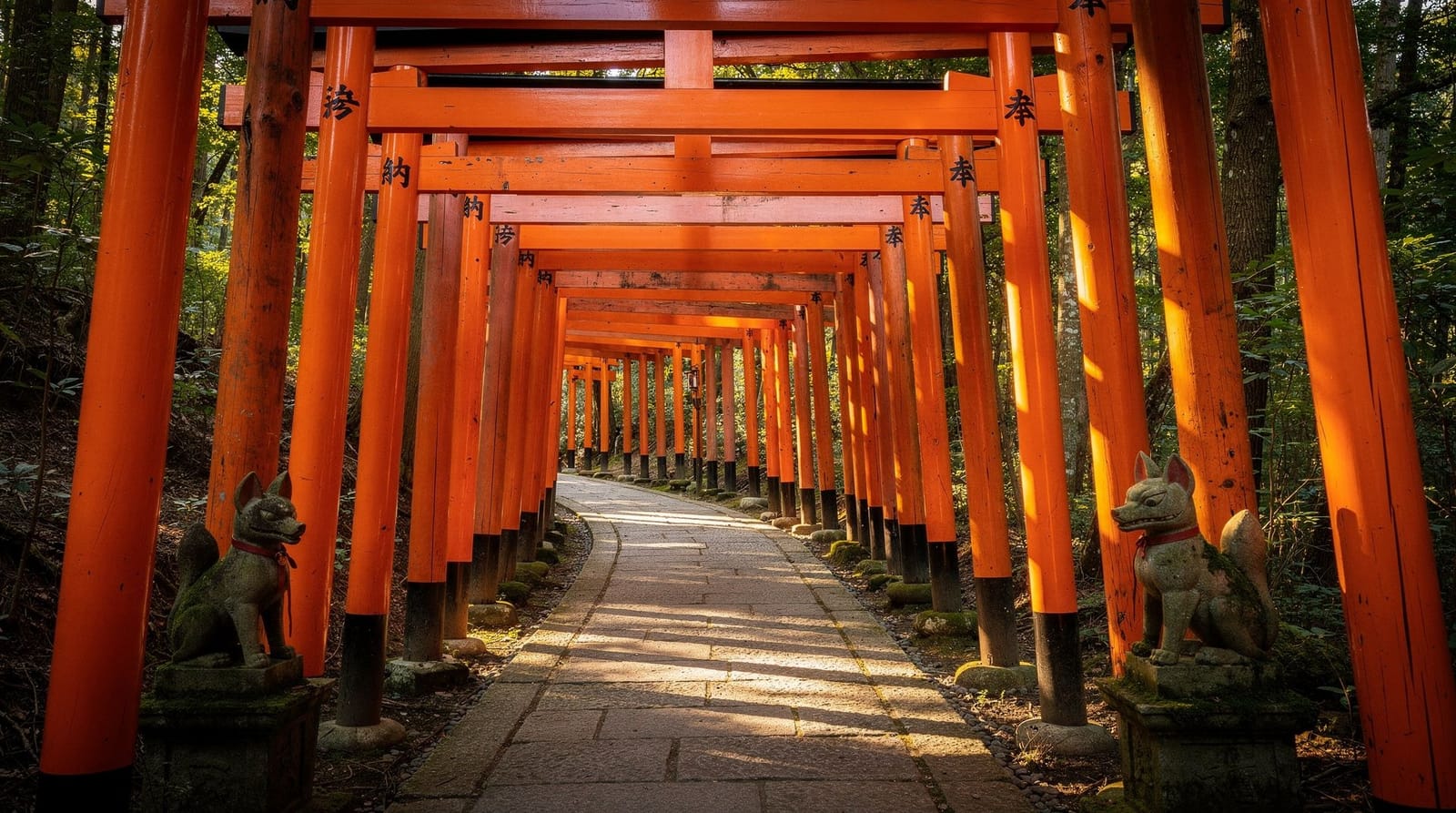
No other tactic on this list matters as much as simply starting early. At Fushimi Inari, the Senbon Torii tunnel — the single most photographed and most crowded stretch of the entire shrine — is close to empty before 8am and visibly filling by 9am. Since the shrine has no admission fee and no opening hours (it’s accessible 24 hours a day), the only cost of an early visit is losing part of a morning’s sleep, which is a genuinely favorable trade against what you gain.
Early-morning Fushimi Inari shrine tour — structured around the pre-8am windowThe same pattern holds at Arashiyama’s bamboo grove (fills from around 9-10am as tour buses and day-trip groups arrive from Osaka and central Kyoto) and Kiyomizu-dera (which actually opens at 6am, earlier than almost any other major temple, specifically rewarding an early start). Building a first-thing-in-the-morning visit to whichever sight is the day’s priority, before anything else on the schedule, is the highest-leverage single change to a Kyoto itinerary.
Kiyomizu-dera and the Higashiyama walk
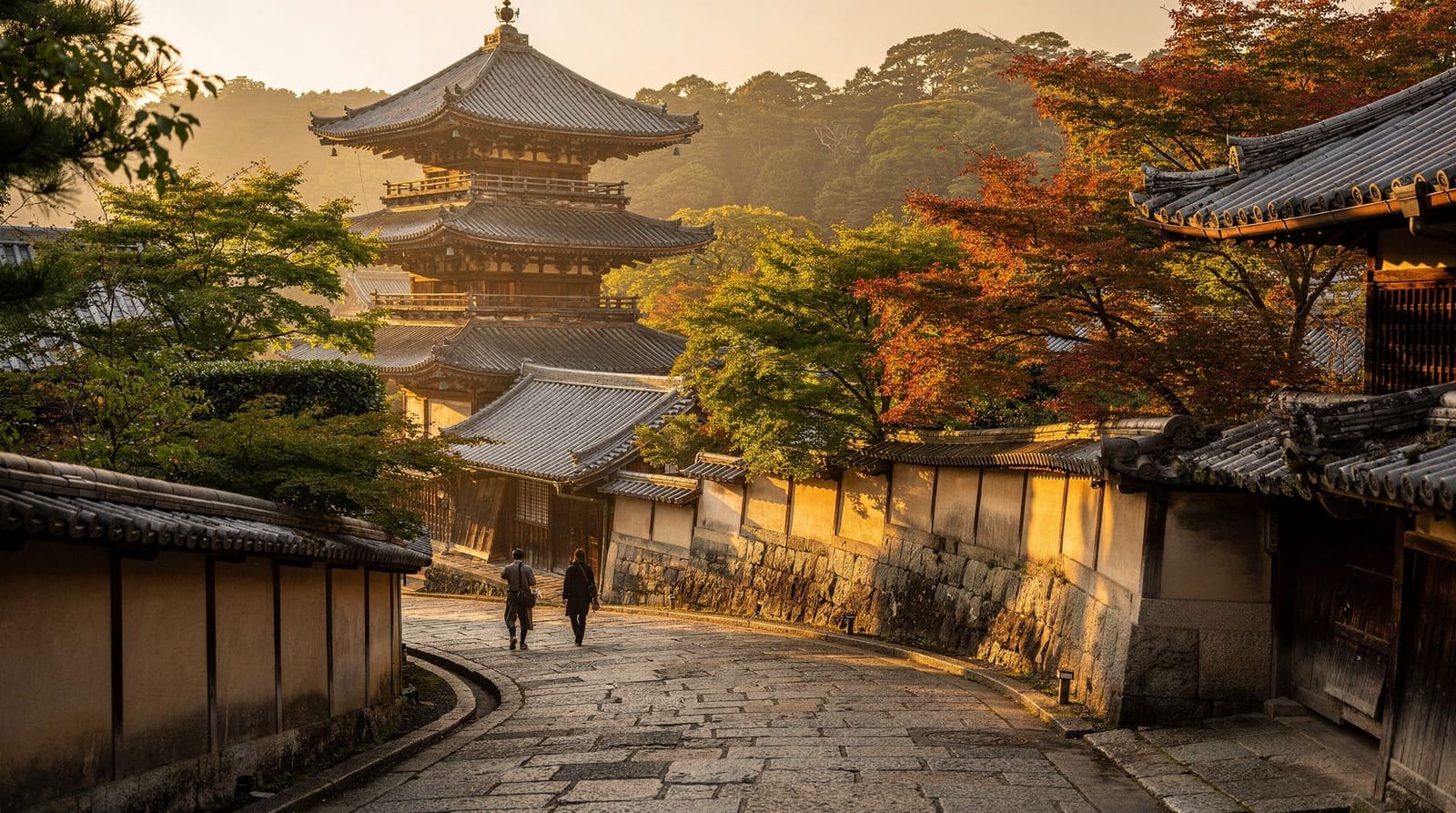
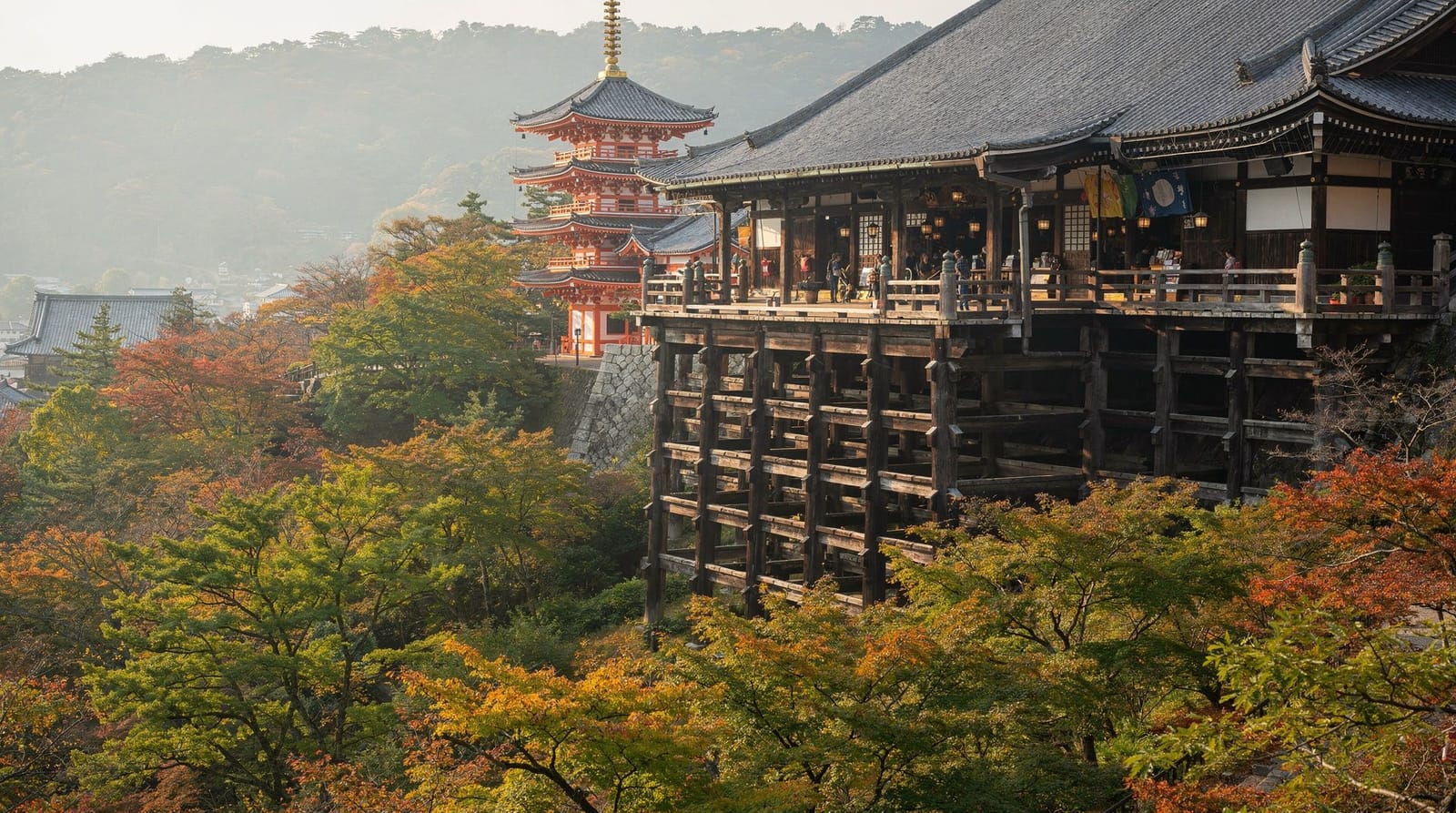
Kiyomizu-dera’s 6am opening is a genuine, underused advantage — arriving at or near opening gets the wooden stage and the temple’s approach roads close to empty, a dramatically different experience from the queues that build by mid-morning. The Sannenzaka and Ninenzaka lanes leading up to the temple follow the same pattern, dense with tour groups by 9am and comparatively calm before 8am.
Crowd-free tour of Kiyomizu-dera and Ginkaku-ji — timed specifically around the quiet windows at both templesFor the wider Higashiyama walk, working from the top down — Kiyomizu-dera first, then descending through Sannenzaka toward Yasaka Shrine and Gion — means finishing at the calmer, later-crowding end of the route as the morning progresses, rather than starting where crowds are already building.
Arashiyama: the small grove that fills fast
Arashiyama’s bamboo grove is short enough — the main path takes only 10-15 minutes to walk — that even a moderate crowd creates a near-constant stream of people in any wide shot, which makes the timing window narrower than it might seem. A 7:30-8am arrival, before the first tour buses and train groups from Kyoto Station arrive around 9-10am, is close to essential for the genuinely quiet grove experience most photos of the location imply.
Serene morning walk in Arashiyama’s bamboo grove — a guided early visit built around the pre-crowd windowA secondary, less reliable option is a late-afternoon visit (after 5pm in summer, when longer daylight keeps the area walkable), since the grove has no gate and no closing time. Tenryu-ji temple adjacent to the grove does have set hours and its own separate admission crowd pattern, generally calmer than the free, unticketed bamboo grove itself.
Quieter alternatives to the headline sights
Several less-publicized sights deliver a comparable experience to Kyoto’s most famous stops with meaningfully fewer visitors. Ginkaku-ji, the Silver Pavilion, sits at the northern end of the Philosopher’s Path and draws a fraction of Kinkaku-ji’s crowds despite similar historical and aesthetic significance. Ryoan-ji’s Zen rock garden, one of Japan’s most influential garden designs, is rarely as crowded as its reputation might suggest. Otagi Nenbutsu-ji, a small temple in the hills above Arashiyama with 1,200 individually carved stone statues, sees only a fraction of the bamboo grove’s foot traffic despite being a short uphill walk from it.
In the Higashiyama area, Nanzenji and its surrounding sub-temples draw noticeably fewer visitors than Kiyomizu-dera despite sitting only a short walk from the Philosopher’s Path, and its impressive brick aqueduct and Zen gardens hold up well against more famous nearby alternatives. In Fushimi, walking the sake district’s Horikawa canal instead of only the main shrine trail offers a genuinely different, much quieter experience covering similar historical ground. None of these substitutions mean skipping the famous sights entirely — they work best as a second stop on a day when the headline sight has already been covered early, giving the day a quieter close rather than a second dose of crowds.
After-dark options: Fushimi Inari’s overlooked advantage
Because Fushimi Inari never closes, an after-dark visit is a legitimate, underused alternative to the early-morning strategy — lanterns light the lower gates, and the shrine takes on a genuinely different atmosphere from its daytime crowds. The trade-off is visibility on the upper mountain trail, where lighting thins considerably; a phone flashlight or headlamp, and ideally company rather than a solo hike, make the after-dark upper trail more comfortable.
Fushimi Inari night hike — a guided option that handles the visibility question directlyKinkaku-ji and Nijo Castle: a different crowd shape
Kinkaku-ji (the Golden Pavilion) and Nijo Castle both crowd differently from Fushimi Inari or the bamboo grove, since they’re ticketed with set opening hours rather than freely accessible around the clock. Kinkaku-ji opens at 9am, and arriving right at opening is the closest equivalent to the early-morning strategy elsewhere — the single viewing point across the pond where everyone photographs the gold pavilion gets genuinely congested within the first hour of opening as tour groups arrive on a tight schedule.
Nijo Castle, opening at 8:45am, follows a similar pattern, with the Ninomaru Palace’s famous “nightingale floors” corridor becoming a bottleneck by mid-morning as visitor flow is funneled through a single route. For both, the last entry slot before closing (typically 30-60 minutes before closing time) is a lesser-known second window that’s often nearly as calm as opening, since most day-trip visitors front-load these sights earlier in the day.
Nishiki Market and downtown: crowds without a clear opening time
Nishiki Market, downtown’s covered food market arcade, doesn’t have the same dawn-to-dusk crowd curve as the temples, since it’s a shopping and eating destination rather than a single ticketed sight. It’s calmest in the first hour after most stalls open (typically 9-10am) and again in the mid-afternoon lull between lunch and dinner crowds; the narrow covered arcade becomes genuinely difficult to move through during the lunch rush (12-1:30pm) and again in early evening as it doubles as a pre-dinner browsing spot. If Nishiki Market is on the day’s plan, treating it as a mid-morning or mid-afternoon stop rather than a lunchtime one avoids the worst of the foot traffic.
Gion in the evening: a different kind of crowd
Gion’s evening crowd isn’t primarily about temple-visiting tourists but about the growing number of visitors specifically hoping to spot a geisha or maiko on their way to an appointment, typically between 5:30 and 7pm. This has become enough of a local friction point — crowds blocking narrow lanes, occasional harassment of working geisha — that several backstreets are now off-limits to photography entirely, with posted fines.
A quieter, more respectful approach is walking Gion’s main streets (Hanamikoji, Shirakawa) at a normal pace without stopping to wait for a sighting, which both avoids contributing to the crowding problem and tends to produce a more pleasant experience regardless. See the Kyoto etiquette guide for the specifics on geisha photography norms.
How tour bus schedules create predictable crowd waves
A meaningful share of Kyoto’s daytime crowding comes in waves tied to organized tour bus schedules rather than a smooth, steadily rising curve. Buses from Osaka and Kobe hotels commonly depart in the 7-8am window and arrive at their first Kyoto stop around 9-9:30am, which is part of why that specific window marks such a sharp transition from calm to crowded at sights like the bamboo grove and Kinkaku-ji. A second wave often arrives from a lunch-stop changeover in the early afternoon. Independent travelers who understand this pattern can use it directly — arriving 30-60 minutes ahead of a bus wave’s typical arrival time at any given sight reliably beats the crowd, even without an especially early start.
Rainy days: an underused crowd-avoidance tool
Light rain measurably thins crowds at outdoor sights like Fushimi Inari and the bamboo grove, since a meaningful share of casual day-trippers reschedule or skip outdoor plans on a wet forecast. For a traveler willing to pack a rain jacket and accept slightly less ideal photo conditions, a moderate-rain morning can deliver a crowd level similar to a very early clear-weather visit, without needing to wake before dawn. This works best during Kyoto’s rainy season (June to mid-July), when light, intermittent rain is common rather than the heavier, less predictable downpours of typhoon season later in the year.
Weekday versus weekend timing
Crowd levels at every major Kyoto sight run measurably higher on weekends and Japanese public holidays than on weekdays, since domestic Japanese travelers make up a larger share of Kyoto’s visitor numbers than international tourists specifically. If trip dates are flexible, structuring a visit to run Tuesday through Thursday rather than spanning a Saturday or Sunday reduces crowd exposure at every single stop on an itinerary, independent of any other timing strategy.
Seasons and weeks to actively avoid
Beyond daily timing, four windows compound crowding beyond what early starts alone can offset: peak cherry blossom (roughly the last week of March through early-to-mid April), peak autumn foliage (mid-to-late November), Golden Week (April 29-May 5), and Obon (mid-August). Within any of these, an early-morning strategy still helps meaningfully, but the baseline crowd level even at 7am is higher than an equivalent early visit during a quieter month.
If avoiding crowds outranks seeing peak seasonal color as a priority, targeting the weeks immediately before or after these peaks — or an entirely different season like June or February — has more impact than any single-day tactic. See the best time to visit Kyoto guide for the full seasonal breakdown.
Staying overnight near a headline sight
For a genuinely serious attempt at empty-photo timing, staying overnight within walking distance of the day’s priority sight removes the biggest practical obstacle to an early start: getting there before transit runs. A hotel or ryokan near Fushimi Inari, southeast Kyoto, or in the Higashiyama area near Kiyomizu-dera lets you walk to the entrance at 6-6:30am without needing a taxi or waiting for the first bus. This isn’t necessary for most travelers, but for anyone whose trip specifically prioritizes an uncrowded photograph at one particular sight, it’s the single most reliable way to guarantee the timing works, since it removes the dependency on transit schedules entirely.
Combining crowd avoidance with day trips
Kyoto-based day trips to Nara, Arashiyama’s outer Sagano district, or Osaka follow their own, separate crowd patterns worth planning around. Nara’s Todai-ji and the deer park draw their heaviest crowds from late-morning day-trippers arriving on a similar schedule to Kyoto’s own tour buses, so an early departure from Kyoto — ideally arriving in Nara by 8-9am — captures a comparably quieter window there too. Osaka, by contrast, is more of an evening and nightlife destination for most visitors, so its crowd pattern skews later in the day, meaning a Kyoto-crowd-optimized early start doesn’t need to carry over into an equally early Osaka arrival if that’s the same day’s second stop.
Getting to an early-morning sight before public transit is running
One practical wrinkle to the early-morning strategy: Kyoto’s city buses typically don’t start running until around 6-7am, and the first useful JR and subway trains of the day usually begin service around 5:30-6am, which can complicate a genuinely pre-dawn start for sights further from your hotel.
A short taxi ride (¥1,500-3,000 depending on distance) is often the practical solution for reaching Fushimi Inari, Arashiyama, or the base of the Higashiyama walk before scheduled transit begins, and it’s a cost worth weighing against the crowd-avoidance payoff — for a headline sight on a bucket-list morning, it’s usually worth it. Staying at a hotel within walking distance of your first stop removes this friction entirely, which is one more reason location matters when booking accommodation for a crowd-conscious itinerary.
Building a whole-day itinerary around crowd timing
The strategies above work best combined into a deliberate order rather than applied to a single stop in isolation. A well-sequenced day starts with the single most crowd-sensitive sight on the plan (typically Fushimi Inari or the bamboo grove) at opening or before, moves to a second, slightly less time-sensitive sight by mid-morning, and reserves less crowd-dependent activities — a market, a museum, a sit-down meal — for the busiest midday hours when outdoor sights are at their most crowded regardless of strategy. This sequencing, more than any single trick, is what separates a Kyoto day that feels calm and unhurried from one that feels like a constant negotiation with tour groups.
Photography-specific crowd considerations
For anyone specifically prioritizing crowd-free photographs rather than just a comfortable visit, the bar is slightly higher than the general timing advice above. A genuinely empty Senbon Torii tunnel shot at Fushimi Inari typically requires arriving by 6:30-7am rather than the 8am general guidance, since even a handful of other early visitors can appear in a wide-angle frame. Weekday mornings outperform weekend mornings for this purpose by a wide margin, and shooting during the narrow off-season windows (mid-January to mid-February, for instance) stacks the odds further in a photographer’s favor than any single-day tactic can on its own.
What doesn’t help as much as people expect
A few common crowd-avoidance ideas deliver less than expected. Visiting slightly less famous sights within the same neighborhood at the same peak-crowd hour still means fighting through the crowds heading to and from the main attraction, even if the site itself is quieter — location matters as much as sight choice. Paid skip-the-line tickets help at a handful of specific sights with formal timed-entry systems, but most of Kyoto’s crowding isn’t queue-based in the way, say, a museum’s ticketed entrance is — it’s ambient density throughout an open site, which a fast-track ticket doesn’t resolve. The genuinely reliable lever remains time of day, more than money spent or sight selection.
A note on why some crowding is worth accepting
Not every moment of a Kyoto trip needs to be crowd-optimized, and chasing empty photos at every single stop can become its own source of stress rather than the antidote to it. Midday crowds at a headline sight, accepted rather than fought, still deliver the historical and architectural substance that makes the sight worth visiting — the crowd changes the atmosphere and the photos, not the underlying experience of standing somewhere genuinely significant. Reserving the early-morning strategy for the one or two sights that matter most to you, rather than trying to apply it to every single stop on a busy itinerary, tends to produce a more sustainable and less exhausting trip than treating crowd avoidance as a rule to apply everywhere at once.
Putting it all together
The most effective Kyoto itinerary treats crowd timing as a design constraint from the start, not a problem to solve after the fact. Pick the day’s single most crowd-sensitive sight and schedule everything else around getting there first, before general opening hours or bus wave arrivals. Accept that some crowding is simply unavoidable at the handful of truly world-famous spots during their busiest hours, and plan a second, quieter stop for that window instead of fighting the crowd head-on.
Combined with the seasonal and weekday guidance above, this approach turns crowd avoidance from a source of stress into a straightforward scheduling exercise. See the first-time Kyoto guide and how many days in Kyoto guide for how to build these timing strategies into a complete trip plan.
Which sights the early-start strategy matters most for
Not every sight rewards an early start equally, and it’s worth ranking the effort against the payoff. Fushimi Inari and the Arashiyama bamboo grove see the single largest swing in crowd density between dawn and mid-morning, making them the top priority for anyone with only one or two early starts to spend on a trip. Kiyomizu-dera and Kinkaku-ji reward it too, though slightly less dramatically since both are ticketed with fixed opening times rather than open around the clock.
Museums, covered markets like Nishiki, and indoor cultural experiences (tea ceremonies, kimono rental studios) don’t follow the same dawn-to-crowded curve at all, so there’s little benefit to rushing to those first thing — save the early-morning window specifically for the outdoor, unticketed sights where it makes the biggest difference.
Frequently asked questions about Avoiding crowds in Kyoto — real strategies that actually work
What time should I arrive at Fushimi Inari to avoid crowds?
How do I avoid crowds at Arashiyama's bamboo grove?
Are there quieter alternatives to Kyoto's most crowded temples?
Does visiting Kyoto on a weekday actually reduce crowds?
Is it worth paying for a guided tour to skip crowds?
What are the worst times of year for crowds in Kyoto?
Top experiences
Bookable activities with verified prices and instant confirmation on GetYourGuide.