Hozugawa river boat tour review — is the 2-hour ride worth it?
Kyoto Hozugawa River Boat Sagano Romantic Train Tour
Two hours of gorge scenery you can’t get any other way
Quick answer: the Hozugawa river boat ride runs about 2 hours from Kameoka to Arashiyama for roughly ¥5,000-6,000 ($33-40) per person, navigated traditionally by pole and oar through a forested gorge. It’s worth it as a scenic, unhurried arrival into Arashiyama, best in autumn foliage season, and best combined with the Sagano Romantic Train for the gorge from two different perspectives.
| Where | Kameoka to Arashiyama, via the Hoze/Hozugawa gorge |
| Cost | Around ¥5,000-6,000 / $33-40 per person |
| Time needed | About 2 hours on the water |
| Getting there | JR train to Kameoka Station, ~25 min, then shuttle to the dock |
| Best time | November for autumn colour; book a week or two ahead then |
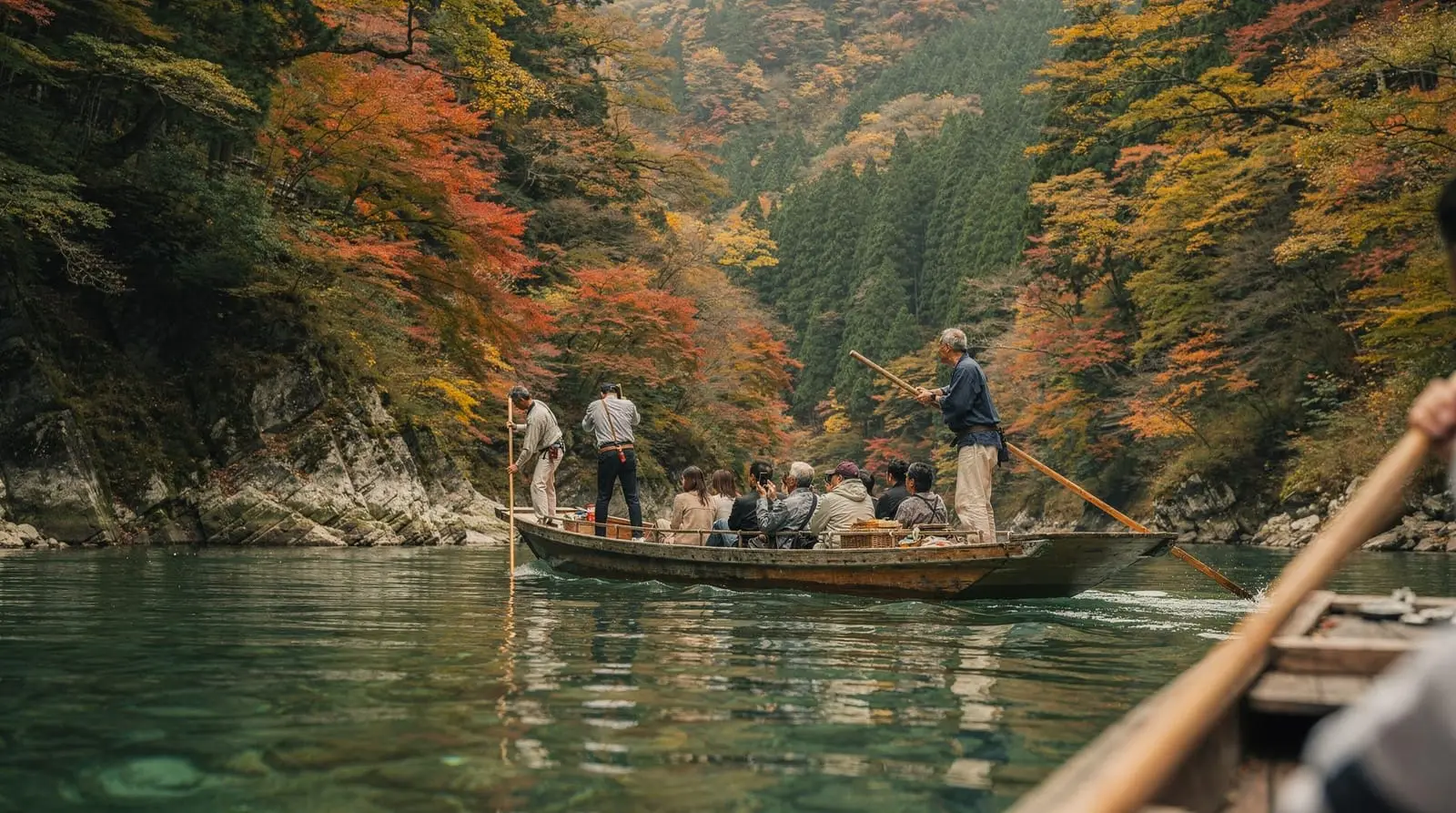
The Hozugawa (Hoze river) boat trip is one of the older continuously operated tourist experiences in the Kyoto area, running boats through a roughly 16km stretch of forested gorge between Kameoka and Arashiyama using traditional poling and oaring rather than motors. It’s genuinely scenic rather than a novelty ride — the gorge includes small rapids, cliff faces, and dense forest that you simply cannot see from a train window or the Arashiyama district itself, which sits at the gorge’s downstream end.
The Hozugawa river boat and Sagano romantic train tour is the standard, most popular format — combining the boat with the Sagano Scenic Railway for the gorge experience from both a moving train and a slow, human-powered boat.
What the two hours on the water actually involve
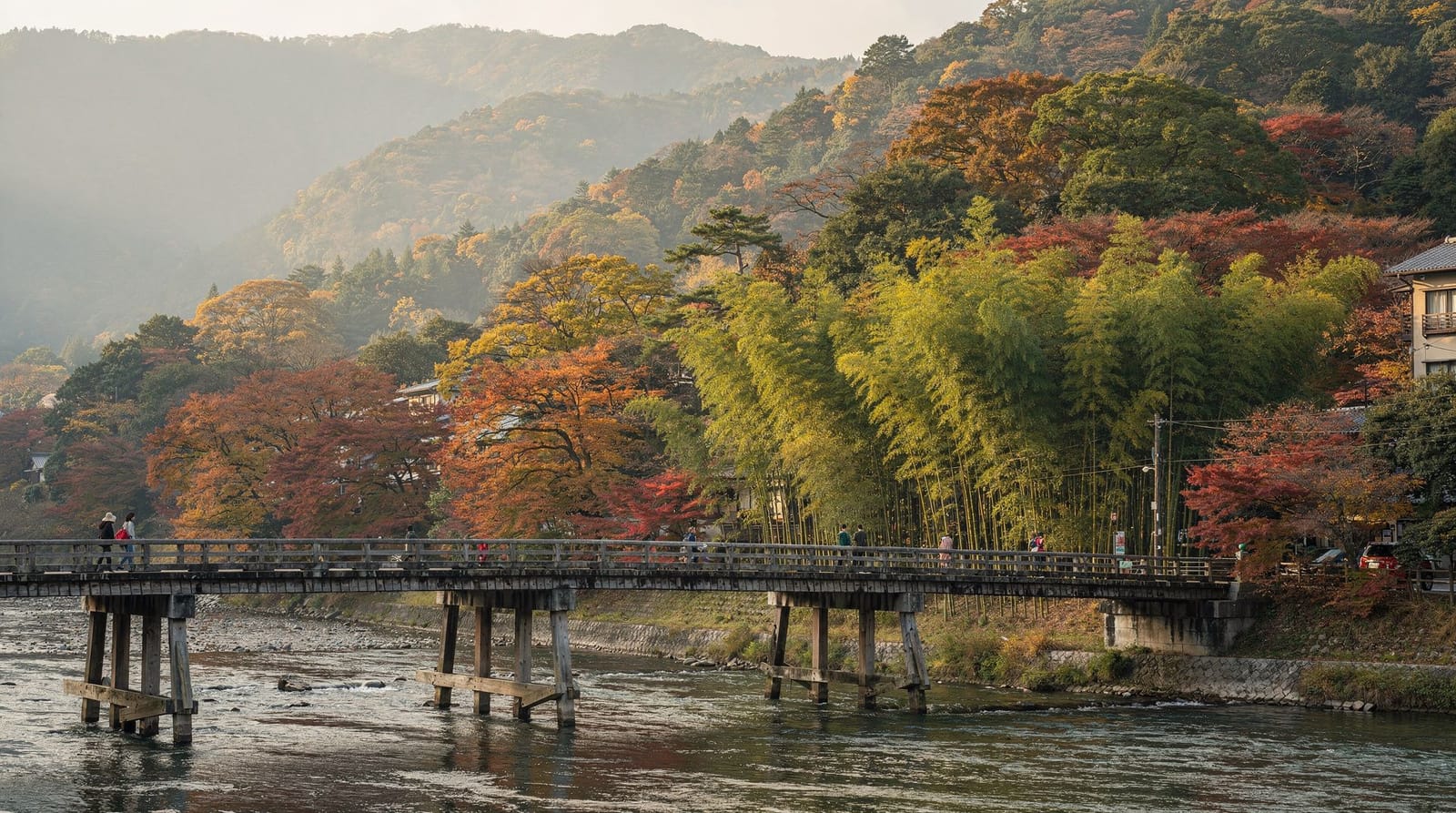
You board an open wooden boat at Kameoka, crewed by three boatmen who handle the poling, oaring, and steering through the gorge’s mild rapids using techniques largely unchanged for generations. Passengers sit passively — there’s no rowing expected of you — and the pace alternates between calm, slow stretches through wider parts of the river and quicker sections through narrower, rockier passages where the boatmen’s skill becomes genuinely apparent. The full journey covers about 16km and takes roughly 2 hours, ending near the Togetsukyo bridge in Arashiyama.
Because the boats are open-air with minimal cover, weather and season matter more here than for most Kyoto activities. Dress for the temperature and bring layers regardless of season — river air runs noticeably cooler than the surrounding city even in summer, and colder months require real winter clothing despite heated covers some operators provide.
Pairing with the Sagano Romantic Train: the classic combination
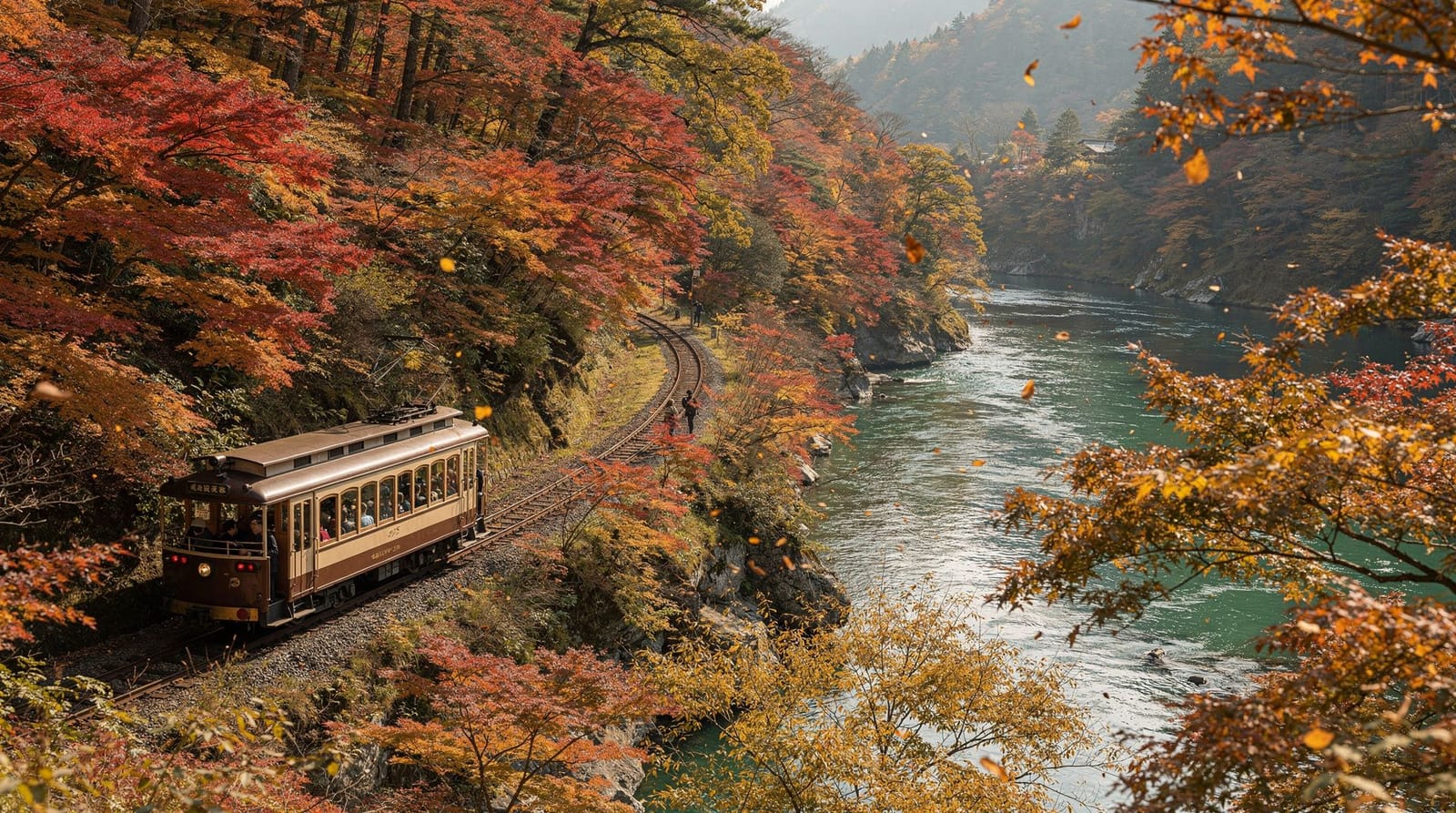
The most popular way to experience this route is the train-then-boat combination: ride the Sagano Scenic Railway (commonly called the Romantic Train) from Arashiyama upstream to Kameoka first — a 25-minute ride in vintage open-window carriages along the same gorge — then return by Hozugawa boat back downstream to Arashiyama. This gives you the gorge scenery twice, from genuinely different vantage points and speeds: the train’s elevated, faster perspective going up, the boat’s slow, water-level view coming back down. It’s worth the modest extra time and cost over doing either leg alone, and it’s how most first-time visitors should plan this experience if time allows.
The Arashiyama day tour with train, boat, and onsen extends this further, adding an onsen (hot spring bath) stop — a genuinely pleasant way to close out a half-day that’s otherwise entirely scenery-focused, particularly appealing in cooler months when a hot bath after an open-air river trip is a real comfort rather than a novelty add-on.
| Format | Best for | Trade-off |
|---|---|---|
| Boat + Romantic Train | Gorge scenery from two vantage points | Most popular, so busiest departures |
| Boat + train + onsen | A full, relaxing half-day | Longest time commitment |
| Boat alone | Budget or time-limited visitors | Misses the train’s elevated view |
Season matters more here than almost any other Kyoto activity
Autumn, specifically November, is widely regarded as the best time for this route — the gorge’s forested slopes turn deep red and gold, and the boat ride becomes as much a foliage-viewing experience as a river trip. It’s also the busiest and most expensive season; boats can genuinely sell out days in advance during peak color weeks, so book well ahead if autumn is your window. See the Kyoto in autumn guide for how this fits into broader autumn planning across the city.
Spring brings cherry blossoms along sections of the route, summer offers a cooler escape from city humidity, and winter is quieter and colder with occasional snow-dusted cliffs — genuinely atmospheric for visitors dressed appropriately, and a reasonable choice if you’re specifically trying to avoid autumn’s crowds and price premium.
Combining with Arashiyama’s other sights
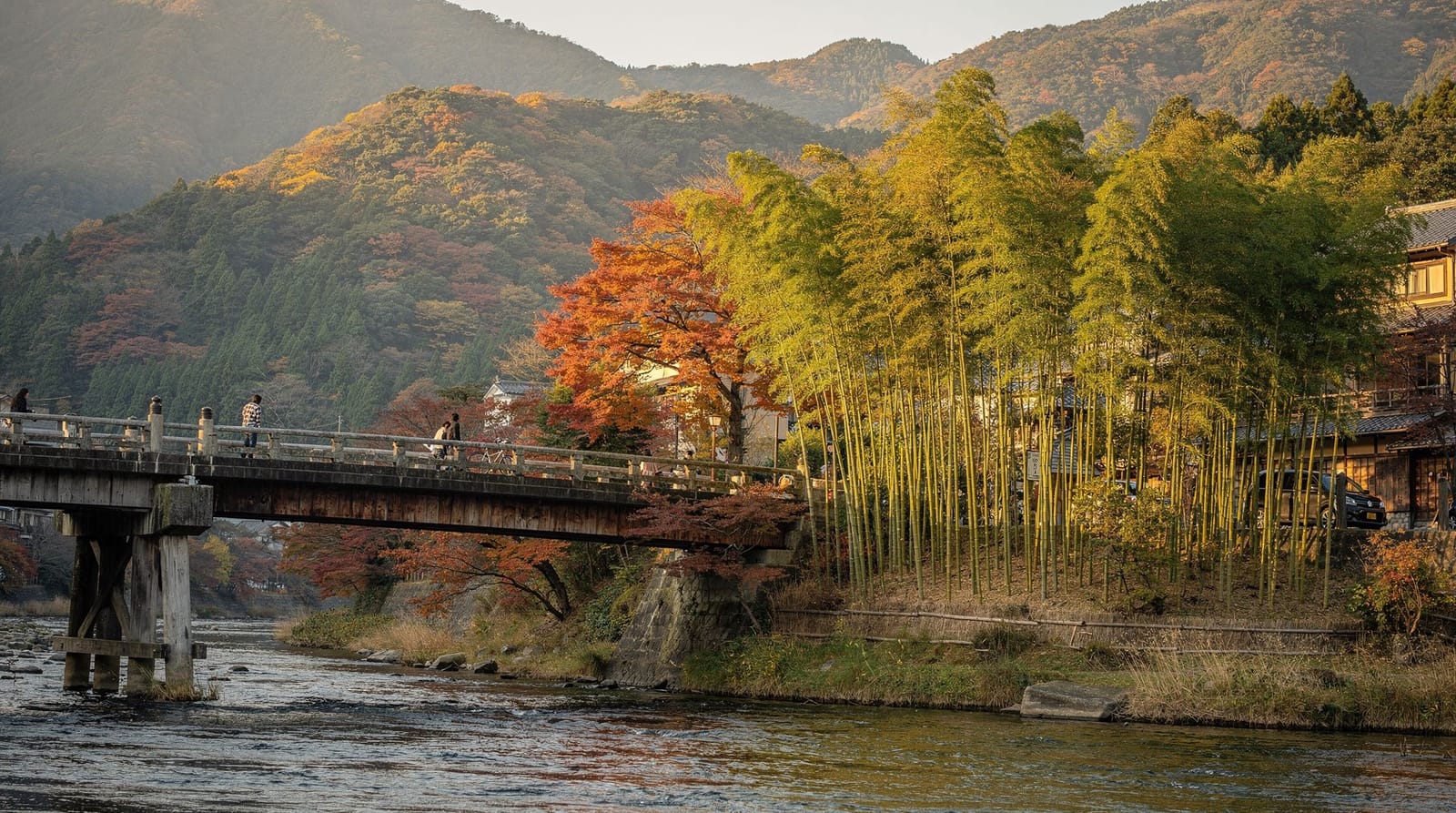
Since the boat trip ends in Arashiyama, it pairs naturally with the district’s other sights — the bamboo grove, Tenryu-ji’s UNESCO garden, and the surrounding temples are all a short walk from the boat’s arrival point near Togetsukyo bridge. The Arashiyama/Tenryu-ji temple guided tour is a sensible add-on if you’re arriving by boat with energy left for a temple visit, and the bamboo grove and Monkey Mountain walking tour works well for travelers wanting to extend the day with a hillside view and wildlife encounter after the river.
See the Arashiyama guided tour review for a fuller look at what the district offers beyond the boat’s arrival point, and the Sagano destination guide for the wider area the gorge cuts through.
Is it worth it versus just walking Arashiyama?
These aren’t really substitutes for each other. Walking Arashiyama covers the bamboo grove, temples, and district streets on foot; the boat trip is 2 hours of river gorge scenery unavailable from land. If you only have a half-day in the area, the district’s walkable sights arguably deliver more per hour, and the boat trip is worth prioritizing on a longer visit or a return trip. If you have a full day, doing the boat first (arriving into Arashiyama by water) and then walking the district afterward is the strongest sequence, letting the scenic arrival set up the rest of the day naturally.
The history of the boatmen’s craft
The Hozugawa boat trade dates back roughly 400 years, originally developed to transport timber and goods downstream from the Kameoka basin toward Kyoto before roads and rail made the route commercially obsolete for cargo. The boatmen’s poling and steering techniques through the gorge’s rapids were originally purely functional skills for moving freight safely, and the tourist version of the ride, which began in the early 20th century, preserves these techniques largely intact rather than staging a simplified reenactment.
Crews typically include a bow poler managing the boat’s direction through rapids, a stern oarsman providing steering control, and a third crew member who often narrates points of interest along the gorge in Japanese, with English materials or subtitled information often provided separately for international visitors depending on the operator.
This history matters for understanding what you’re watching during the trip’s more technical stretches — the way boatmen read the current and adjust their pole placement through narrower rapid sections reflects genuine generational skill, not a performance choreographed purely for tourists, even though tourism is now the boats’ sole commercial purpose.
What to expect if you get wet, and other practical realities
The boats occasionally take on light spray through the livelier rapid sections, particularly if water levels are higher after rain — this is normal and not usually enough to soak through clothing, but a light waterproof layer is a sensible precaution rather than an overreaction, especially in cooler months when a wet layer is genuinely uncomfortable rather than just an inconvenience. Bags and cameras are generally fine held normally, though a dry bag or plastic covering for phones and cameras is a reasonable extra precaution during the rapid sections specifically.
Restroom access is limited to the departure and arrival points — there’s no facility on board, so plan accordingly before boarding, particularly with children. Snacks and drinks are sometimes available for purchase on board from the crew, though this varies by operator and shouldn’t be relied upon; bringing your own water is the safer approach for a 2-hour trip with no fixed stops along the way.
Booking logistics and how far ahead to plan
Standard departures run several times daily, typically every hour or so during peak season, from Kameoka’s boarding dock, which is itself reachable from Kyoto by JR train (roughly 25 minutes to Kameoka Station, then a short walk or shuttle to the dock) — most combined tour packages handle this transport logistics for you, which is a genuine convenience over arranging the Kameoka leg independently.
During autumn foliage season specifically, book at least a week ahead, ideally two, since the most scenic weekend departures in peak color weeks (typically mid-to-late November, though exact timing shifts year to year with weather) sell out well in advance. Weekday departures during the same season have meaningfully better last-minute availability than weekends.
Outside peak season, booking a few days ahead is generally sufficient, and some operators accept same-day bookings when availability allows, though this isn’t guaranteed and shouldn’t be relied upon if your schedule is inflexible.
Comparing this to other river and boat experiences near Kyoto
The Hozugawa trip is the standout river experience specifically associated with Arashiyama, but it’s worth knowing it’s not the only water-based activity in the wider Kyoto area — Lake Biwa near Otsu offers a considerably calmer, lake-based boating and cycling combination, a genuinely different character of outing suited to travelers wanting flat water rather than gorge rapids.
For most first-time Kyoto visitors with limited time, the Hozugawa trip’s combination of accessibility (a straightforward train connection from Kyoto), scenic payoff, and pairing with Arashiyama’s other sights makes it the stronger single choice; Lake Biwa is a better fit for a second visit or a specifically nature-and-cycling-focused day trip. Travelers wanting a quieter riverside walk without a boat booking can also see the Philosopher’s Path destination guide on the other side of the city, a genuinely different, canal-side alternative.
Who this trip suits, and who might find it underwhelming
Travelers who genuinely enjoy slow, scenic experiences over fast-paced sightseeing get the most from this trip — 2 hours is a real time commitment for what is, in essence, a float down a river with intermittent rapids, and visitors expecting constant action or a packed itinerary of stops may find long calm stretches between the more exciting rapid sections less engaging than anticipated.
It’s a strong fit for travelers on their second or third Kyoto visit who’ve already covered the city’s major temples and are looking for a different kind of experience, or for anyone specifically drawn to Japan’s traditional craft and boatmanship culture. Families with young children generally enjoy it, though very young kids may need encouragement to stay seated calmly through the quieter stretches of the 2-hour ride.
Photography tips specific to a moving boat on open water
Getting good photos from a moving wooden boat requires a slightly different approach than static land-based photography. A wrist strap or neck strap for cameras and phones is a genuinely sensible precaution given the boat’s occasional rocking through rapid sections, and a faster shutter speed setting (or simply your phone’s standard mode rather than a long-exposure setting) handles the boat’s motion better than manual slow-shutter attempts. The best shots typically come during the calmer stretches between rapids, when the boat is more stable and you have time to compose rather than react — save more ambitious shots for these sections rather than the faster, bumpier rapid passages where simply holding on takes priority over photography.
Verdict
The Hozugawa boat trip delivers a genuinely different kind of Kyoto-area experience — slow, scenic, and physically undemanding — that’s hard to replicate any other way. It’s not a must-do on a tight one-day Kyoto visit, but it’s one of the strongest half-day bookings for a second day in the Arashiyama area or a longer trip with room for a dedicated scenic outing. The combined boat and Romantic Train tour is the version worth booking — doing just one leg leaves real value on the table for a modest extra cost.