Nishiki Market food tour review — worth it or just walk it yourself?
Kyoto: Nishiki Market Food Tour-7 Tastings
Kyoto’s kitchen, four centuries in
Quick answer: a Nishiki Market food tour costs roughly ¥6,000-9,000 ($40-60) per person for 6-8 tastings over 90 minutes to 2 hours. It’s worth booking specifically for the curation and stall-selection help — the market is genuinely walkable solo, but knowing which of its roughly 130 shops are worth stopping at versus which are tourist-priced filler is the actual value a guide provides.
| Where | Nishiki Market, parallel to Shijo-dori, downtown Kyoto |
| Cost | Around ¥6,000-9,000 / $40-60 per person, incl. 6-8 tastings |
| Time needed | 90 minutes to 2 hours |
| Getting there | Central downtown Kyoto, walkable from Shijo/Kawaramachi |
| Best time | Before 10am or 11am-3pm avoided; closes by ~6pm |
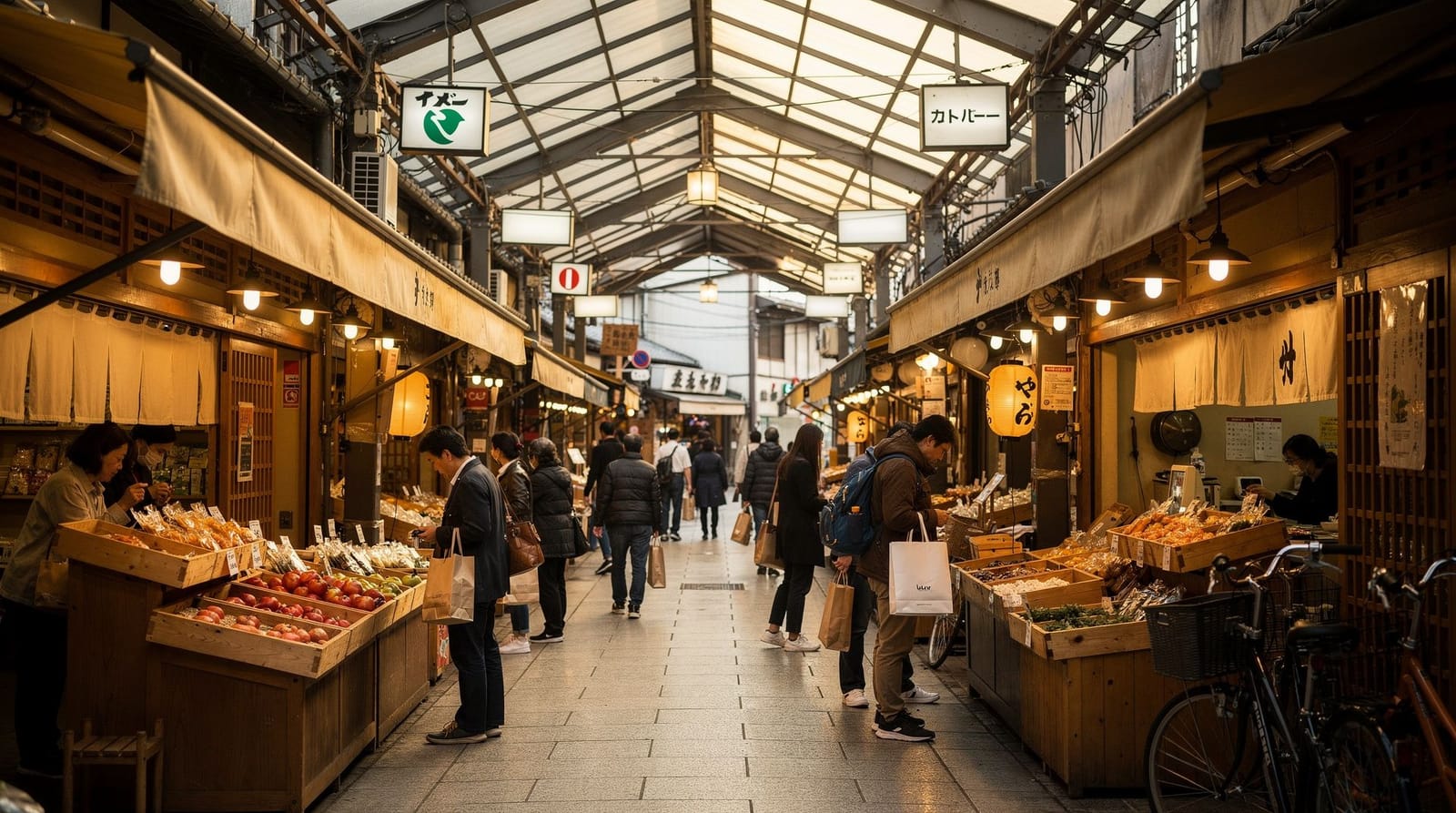
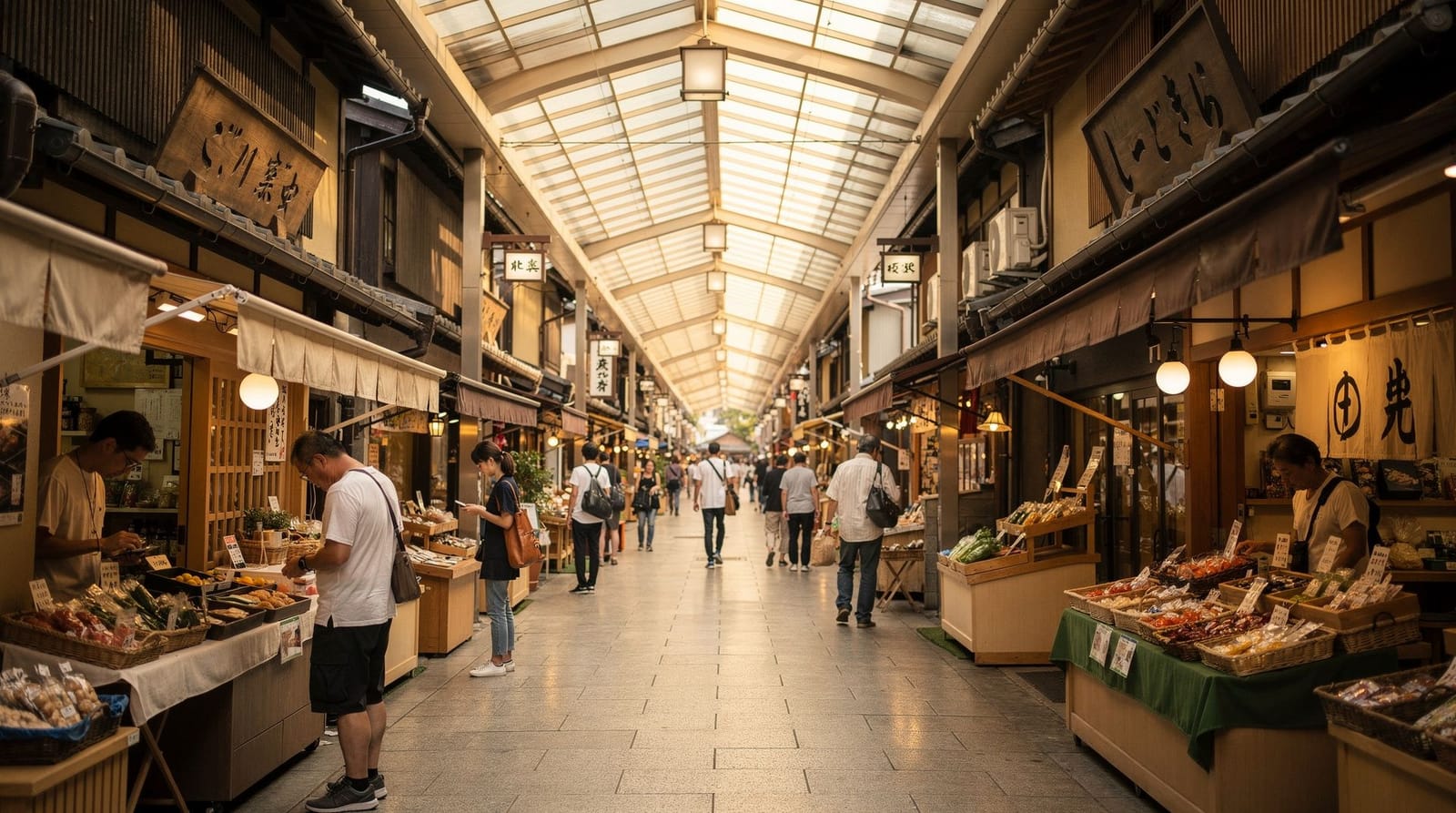
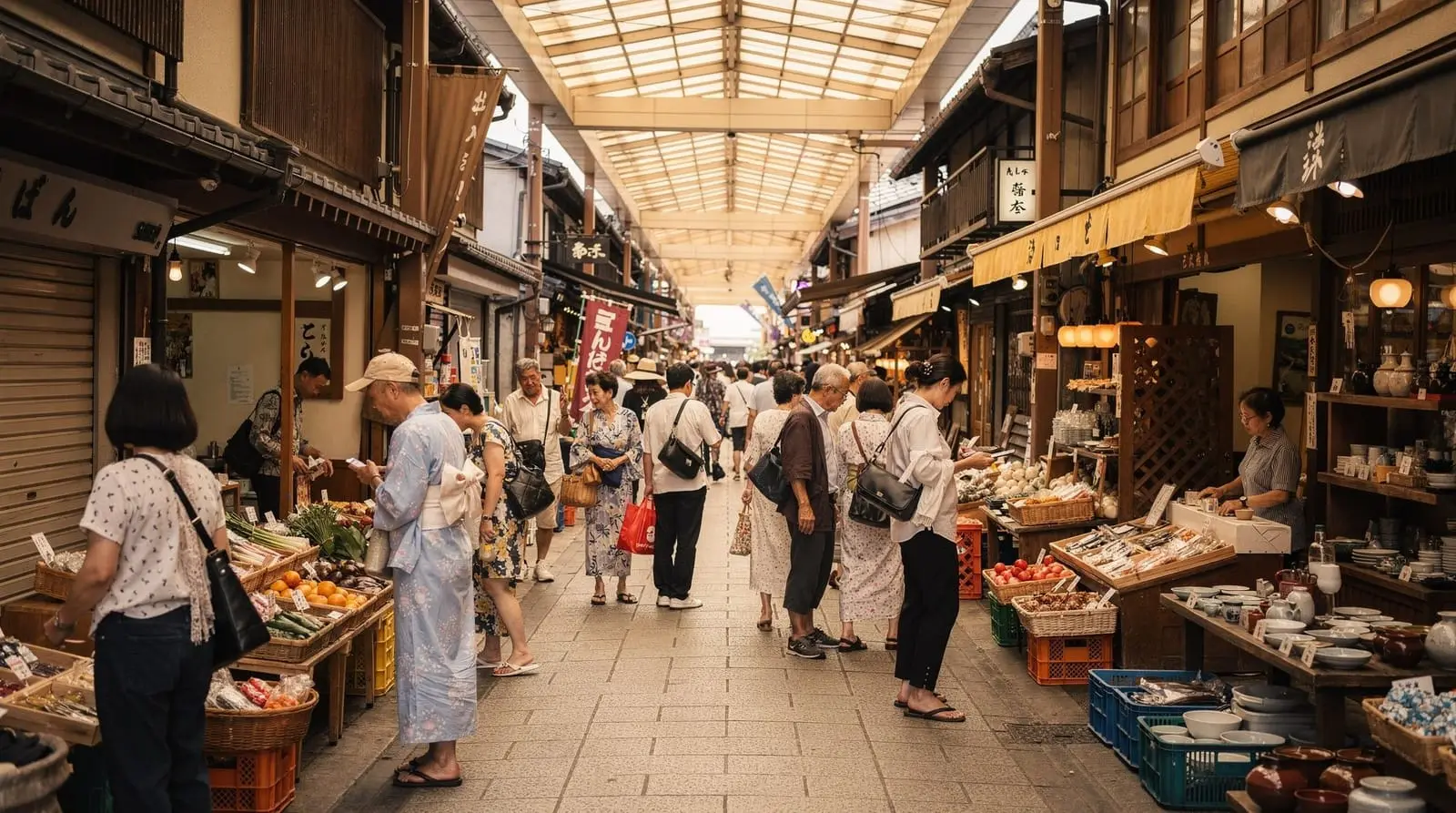
Nishiki Market is a roughly 400-meter covered shopping arcade running parallel to Shijo-dori in downtown Kyoto, lined with somewhere around 130 shops selling everything from fresh seafood and Kyoto-style pickles to skewered street snacks and specialty knife shops. It’s genuinely old — food commerce here traces back some 400 years, largely thanks to well water quality that made it a natural fishmongers’ district — and it’s still called Kyoto’s Kitchen, though the balance has shifted toward snack-format tourist food over the past decade alongside the surviving specialty vendors.
You do not need a tour to walk through it. What you’re actually deciding when booking a food tour is whether you want a local to filter out the mediocre, overpriced stalls that have proliferated near the busiest entrances, and to translate and explain what you’re eating at the genuinely good ones.
What a typical tour covers
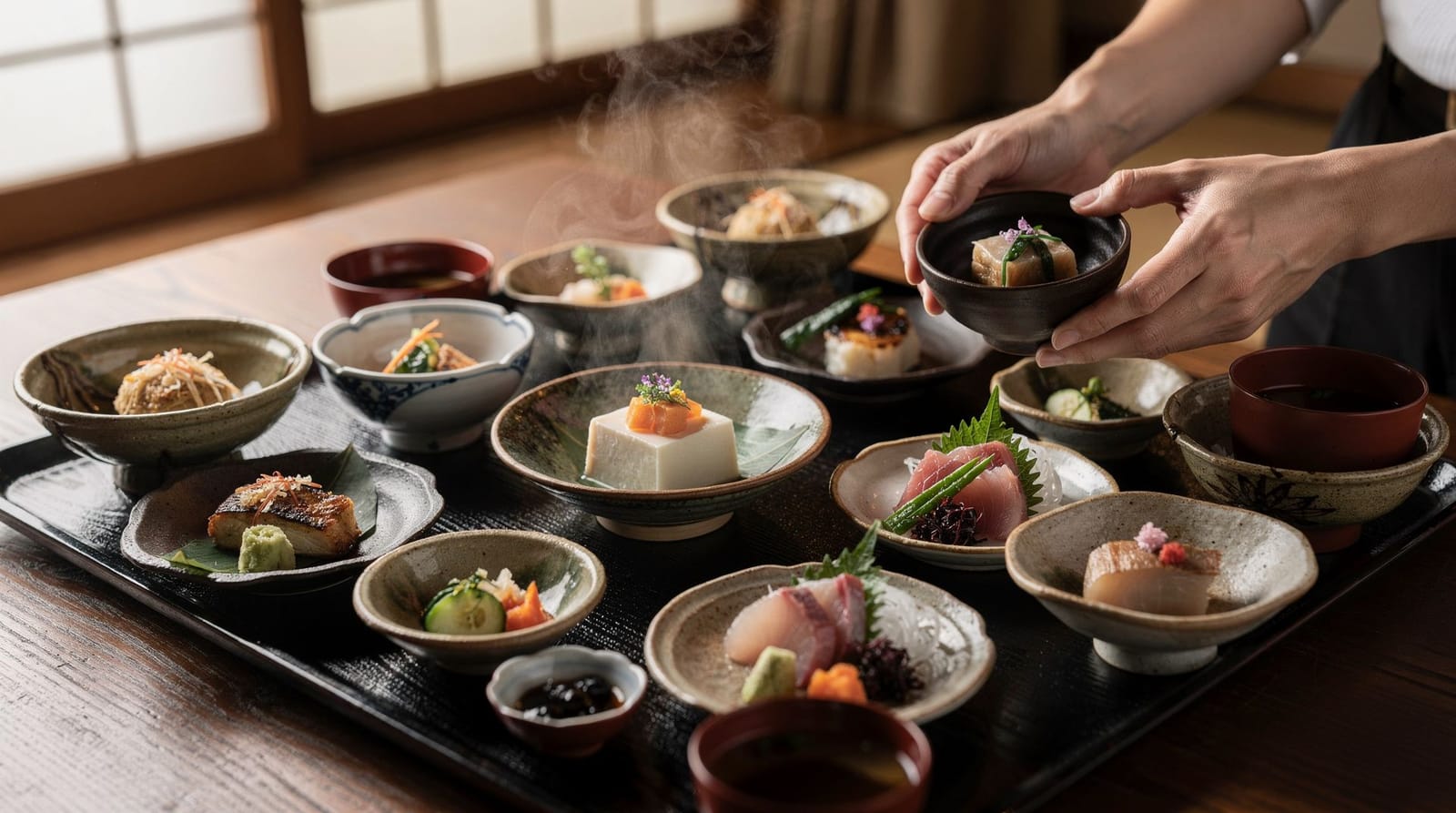
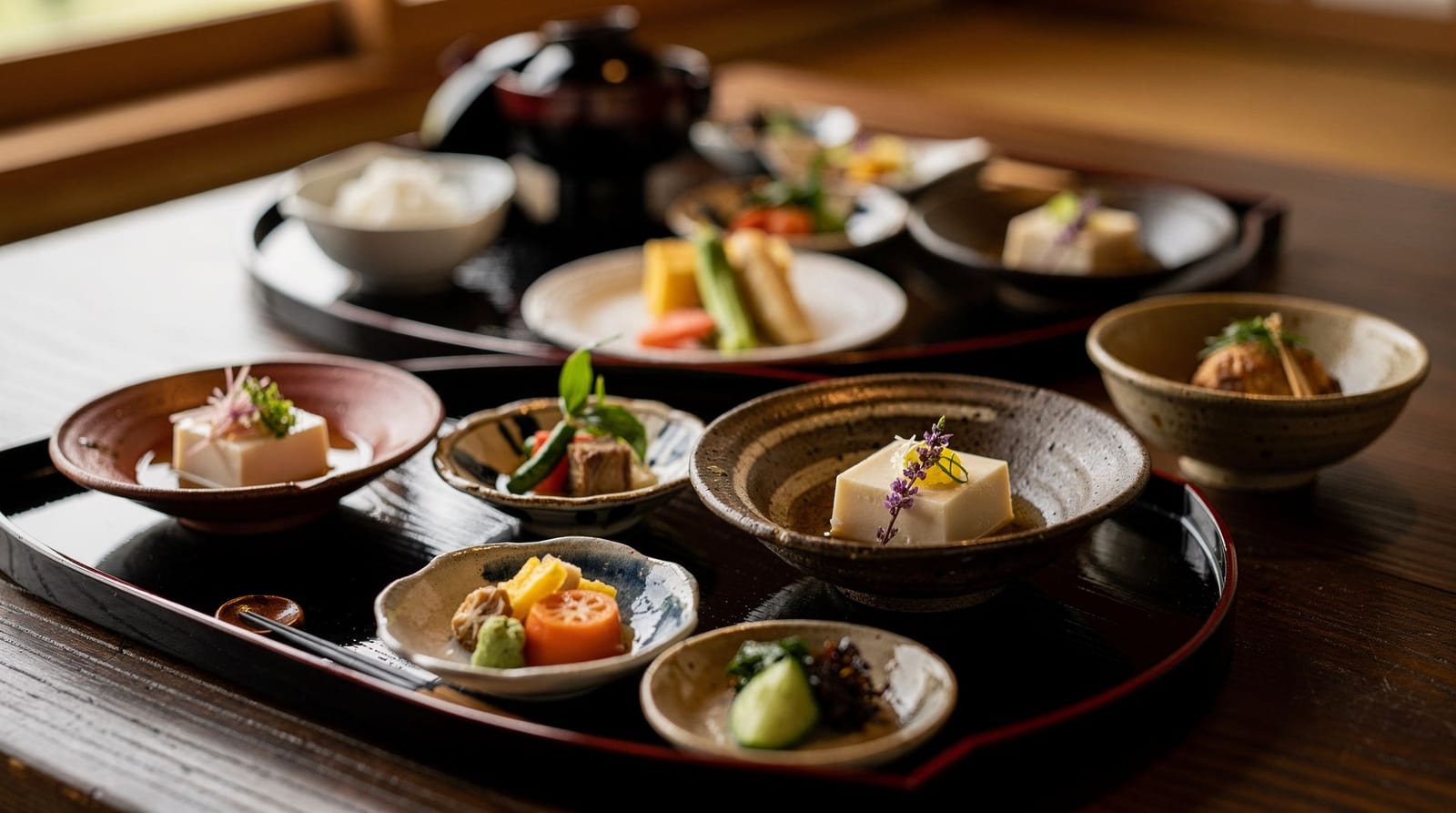
The Nishiki Market food tour with 7 tastings is a representative format: a small group, English-speaking local guide, and seven stops sequenced from savory to sweet across roughly 90 minutes. Expect a mix along these lines — yuba (fresh tofu skin, a Kyoto specialty tied to the city’s temple cuisine tradition), tsukemono pickles from a specialist shop (Kyoto pickling traditions are distinct from what you’ll find in Tokyo or Osaka, worth understanding rather than just tasting), a fresh seafood skewer that varies seasonally, tamagoyaki from one of the market’s well-known rolled-omelette specialists, and a final mochi or wagashi sweet.
Good guides also stop at a sake or shochu specialty bottle shop for a small tasting, and will point out (without necessarily stopping at) the shops that are genuinely historic versus the newer stalls capitalizing on foot traffic. This distinction matters more here than it sounds — Nishiki’s popularity has drawn in a real amount of interchangeable skewer stands aimed purely at tourists, alongside multi-generation family businesses that are worth the slightly higher price and the wait.
Comparing the main tour formats
The Nishiki Market and depachika food tour with a local extends the format to include a department store basement food hall (depachika) — worth choosing if you want to see the contrast between the market’s centuries-old stall culture and the ultra-polished, boxed-gift aesthetic of a modern Japanese department store basement, which is its own genuinely interesting food experience and one most first-time visitors wouldn’t think to seek out alone.
The local food tasting tour at the Nishiki Market and the Taste of Nishiki Market walking food tour with a local guide both run similar small-group formats to the 7-tastings version; differences between these largely come down to specific guide availability, exact tasting count (5-8 range across operators), and start time, since Nishiki gets substantially busier after 11am. If a specific time slot matters for your itinerary, compare start times across these three rather than assuming one is meaningfully better than another — the core experience is comparable.
| Format | Best for | Trade-off |
|---|---|---|
| 7-tastings tour | Balanced first-time introduction | Standard format, most popular |
| Market + depachika | Contrast with department-store food culture | Adds a stop, less time per market shop |
| Local food tasting tour | Similar core experience, flexible timing | Compare start times across operators |
| Taste of Nishiki with local guide | Similar core experience | Compare exact tasting count (5-8 range) |
Independent grazing: the real alternative
If you’re comfortable navigating a market without English signage and don’t mind some trial and error, walking Nishiki solo and buying as you go is a legitimate and cheaper approach. Budget ¥300-800 ($2-5.50) per item and expect to spend ¥2,500-5,000 ($17-33) for a satisfying grazing session of 6-8 items — genuinely less than most guided tours.
The two things you give up: curation (you’ll likely hit some of the tourist-priced filler stalls without knowing better) and the contextual explanation of what you’re eating, which matters more at Nishiki than at a typical food market because several specialties here — fu (wheat gluten cakes), unusual pickled vegetables, seasonal seafood you may not recognize — aren’t self-explanatory from a stall display alone.
A reasonable middle path: use the Nishiki Market guide to identify 6-8 specific shops worth seeking out, then walk the market independently and skip the tour cost entirely. This works well if you’re confident reading a written guide and pointing at menu items; it works less well if you specifically want the social, guided-tour format or plan to ask food questions as you go.
Timing and crowd management
Arrive before 10am or plan for the arcade’s central third to be genuinely congested between 11am and 3pm, when tour groups and independent visitors overlap most heavily in a covered space that doesn’t allow much room to spread out. Guided tours typically start earlier than most independent visitors show up, which is a real practical benefit beyond the food itself. Most stalls wind down by 6pm and some close earlier, so this is fundamentally a late-morning to mid-afternoon activity, not an evening one — for dinner, look toward Gion or Pontocho instead.
What separates a genuinely good tour guide from a mediocre one here
The quality gap between operators at Nishiki is real and worth understanding before booking on price alone. A strong guide does three things a weaker one doesn’t: they time stops to avoid the worst congestion points in the arcade (some sections are genuinely a single-file bottleneck at peak hours), they choose stalls based on actual quality and fair pricing rather than which shop pays the largest commission to tour operators (a real dynamic in dense tourist markets worldwide, Nishiki included), and they explain the cultural and historical context of what you’re eating rather than just handing you food and moving on.
Reviews mentioning specific stall names and genuine local history are a reasonably good signal; reviews that only mention “fun atmosphere” without naming what was actually eaten are a weaker signal.
Group size matters too. Tours capped at 8-10 people move through the market’s narrow sections far more smoothly than larger groups of 15-20, which can create real bottlenecks and mean guides have to shout to be heard over market noise — check group size caps when comparing similarly priced tours, since this affects the experience more than most other variables.
Dietary restrictions and how well Nishiki accommodates them
Nishiki’s food is heavily seafood- and dashi-based (dashi, the foundational Japanese stock, is traditionally made with bonito flakes, meaning many seemingly vegetable-forward dishes aren’t vegetarian by default). Vegetarian and vegan travelers should flag this when booking a guided tour — most established tour operators can adjust the tasting lineup toward yuba, vegetable tempura, and plant-based sweets with advance notice, but this isn’t automatic, and a tour booked without mentioning dietary needs will likely include several seafood-based tastings by default. Shellfish and other specific allergies are also worth flagging explicitly rather than assuming a guide will proactively ask, since not every operator screens for this upfront.
Gluten-free travelers face a genuinely harder time at Nishiki specifically — many traditional snacks use wheat-based batters or soy sauce with wheat content, and cross-contamination in small stall kitchens is common. If this is a strict dietary requirement rather than a preference, mention it explicitly when booking and expect a more limited, adjusted tasting selection rather than the full standard lineup.
Shops worth knowing by name
A handful of Nishiki stalls have genuine multi-generation reputations worth seeking out whether or not you book a guided tour. Aritsugu, a knife shop operating since the 16th century, is a legitimate destination for anyone interested in Japanese kitchen knives, not a tourist gimmick — professional chefs from across Japan order from Aritsugu, and the shop’s history predates the market’s current tourist-facing identity by centuries.
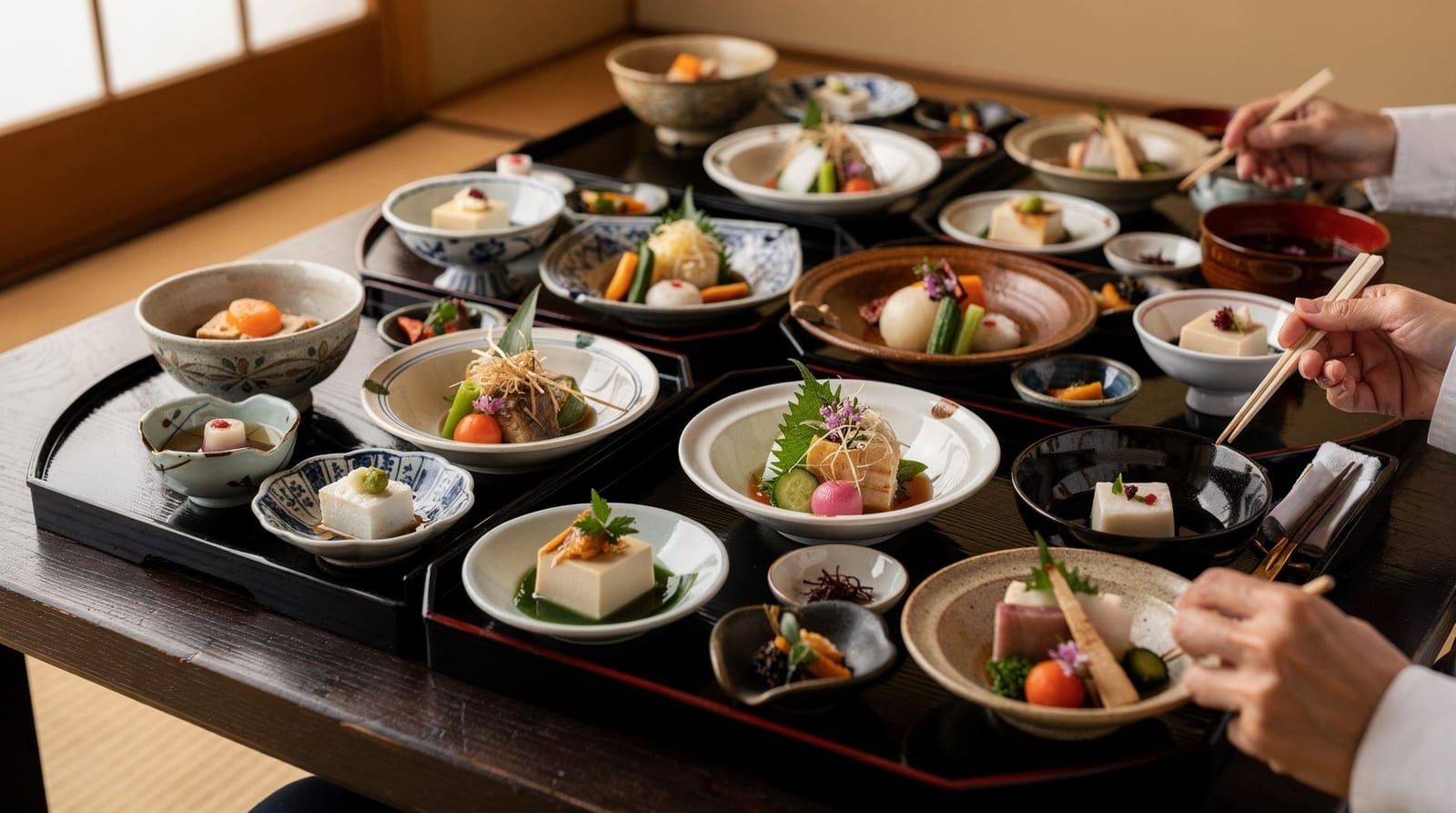
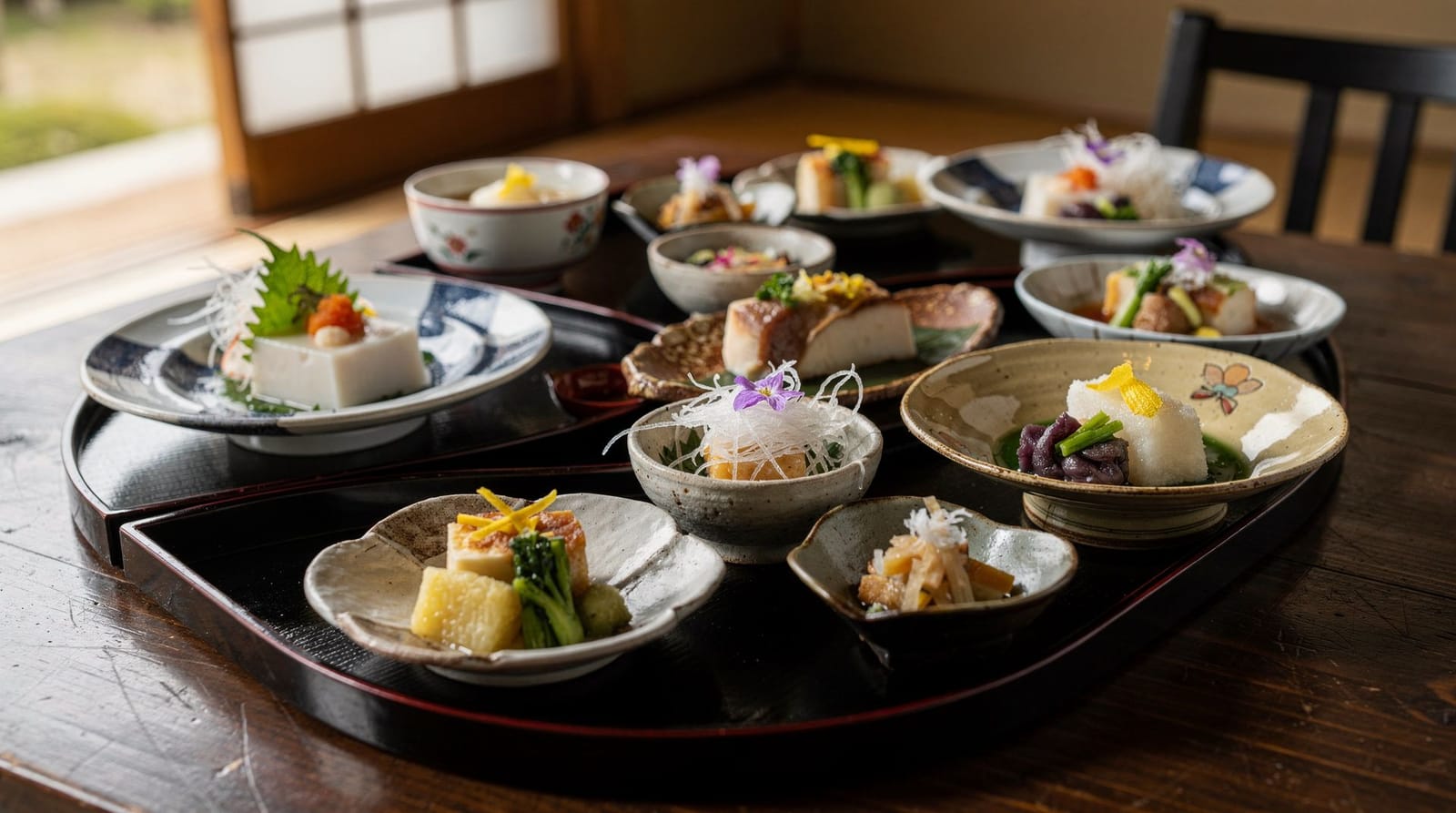
Konjaku Nishimura and other tsukemono specialists sell Kyoto-style pickles that differ meaningfully from what’s available in Tokyo or Osaka, using techniques and ingredient ratios specific to Kyoto’s culinary tradition. Several yuba (fresh tofu skin) specialists sell a product tied directly to the city’s Buddhist temple cuisine (shojin ryori) history, worth understanding as more than a novelty texture.
A good guide names these shops specifically and explains why they matter rather than treating every stall as interchangeable — this distinction, more than the raw tasting count, is what separates a genuinely educational tour from a walking snack crawl.
Money-saving approach if you want some guidance without full tour cost
A middle path exists between a full guided tour and pure independent exploration: several operators offer shorter, lower-cost “highlights” format tours (30-45 minutes, 3-4 tastings) at a meaningfully lower price than the full 7-8 tasting format, aimed at travelers who want guided curation without the full time or cost commitment. This is worth considering if your Kyoto itinerary is tight and you’d rather spend the saved time and money elsewhere, such as the Fushimi Inari guided tour or a kimono rental experience the same day.
Alternatively, read the Kyoto food guide and Kyoto street food guide beforehand, note 5-6 specific stalls by name, and walk the market solo with that shortlist — this captures most of a guided tour’s curation value at a fraction of the cost, provided you’re comfortable navigating without live translation help at each stop.
What a first-time visitor typically underestimates
Two things surprise most first-time Nishiki visitors regardless of whether they’ve booked a tour. First, the sheer length and narrowness of the arcade — at roughly 400 meters lined densely with shops on both sides, it’s easy to underestimate how long a genuinely thorough walk-through takes, particularly once you factor in queuing at individual stalls.
Second, how quickly small tastings add up to a genuinely filling meal — visitors expecting a light snack often find themselves full well before reaching the market’s far end, which is worth planning around if you have lunch or dinner reservations elsewhere the same day. Pacing yourself across fewer, more deliberately chosen stalls tends to produce a more satisfying visit than trying to sample everything that looks appealing.
Nishiki as a souvenir shopping stop, not just a food destination
Beyond tastings, Nishiki is a legitimate place to buy Kyoto-specific food souvenirs to bring home — dried goods, quality tea, knives, and specialty condiments travel considerably better than perishable snacks, and several shops sell vacuum-sealed or shelf-stable versions of local specialties specifically for this purpose. If souvenir shopping matters to your visit, budget extra time beyond the tasting portion of any tour, since guided food tours generally don’t build in dedicated shopping time and move through the market at a pace geared toward eating rather than browsing.
Verdict
A Nishiki Market food tour is a reasonable, moderately priced way to get a curated, well-explained introduction to Kyoto’s most concentrated food street without the guesswork of picking stalls yourself. It’s not essential — a guide from the Nishiki Market guide and a willingness to grab-and-go at unfamiliar stalls gets you 80% of the experience for less money. But if you’d rather not gamble on stall quality with limited time in Kyoto, the 7-tastings tour is a well-paced, well-curated version of the market at its best.