Kyoto street food guide — yatsuhashi, mochi, dango and where to eat on the go
Kyoto: Nishiki Market Food Tour-7 Tastings
What are the must-try street foods in Kyoto?
Yatsuhashi (a cinnamon-scented rice-flour sweet, both baked and fresh), mochi and mitarashi dango (skewered rice dumplings glazed in sweet soy sauce, which likely originated in Kyoto), matcha soft serve, and savory skewers like tako tamago (baby octopus with a quail egg) at Nishiki Market. Most items cost ¥150-500 (US$1-3.30) per piece, and Nishiki Market and Arashiyama's approach to Tenryu-ji and the bamboo grove are the two densest street food areas in the city.
Kyoto’s street food is less about a single night market and more about grazing your way between covered arcades, temple approach lanes and station kiosks — cheap, varied and easy to fit around a day of sightseeing rather than a dedicated meal stop.
| Where | Nishiki Market, Arashiyama’s approach lanes, Sannenzaka/Ninenzaka |
| Cost per item | Around ¥150-500 (US$1-3.30) |
| Grazing session | Around ¥1,500-2,500 for 5-6 items |
| Style | Sweet-leaning (mochi, dango, yatsuhashi) more than fried skewers |
| Etiquette | Eat near the stall, not while walking |
Grazing your way through the city, cheaply
Kyoto’s street food scene isn’t built around a single night market the way some other Asian cities are — it’s spread across covered market arcades, temple approach lanes, and station kiosks, and it rewards grazing rather than a single planned stop. The upside is that it’s genuinely cheap: most individual items cost ¥150-500 (US$1-3.30), and a proper grazing session of five or six snacks, enough to cover a light lunch, runs roughly ¥1,500-2,500 (US$10-17) — a fraction of even a modest sit-down meal.
The other thing worth knowing upfront is that Kyoto’s street food leans sweet and snack-oriented more than the noodle-and-skewer street food culture you’d find in Osaka. Kyoto’s savory street food exists, but its reputation and its best offerings sit more with mochi, dango and wagashi-adjacent sweets than with fried, filling street meals.
Yatsuhashi: Kyoto’s signature regional sweet
Yatsuhashi is the closest thing Kyoto has to a single defining street snack — a thin, cinnamon-and-sugar-scented rice-flour sweet that comes in two main forms. The original is a hard, baked cracker, crisp and lightly sweet. The far more common version now is nama yatsuhashi — soft, fresh, usually folded into a small triangle around a sweet filling, most often red bean paste, though modern variations include matcha, strawberry and chestnut fillings.
Specific brands carry real history: Shogoin Yatsuhashi traces its origins to the late 1600s and is one of the most recognized names, alongside brands like Izutsu Yatsuhashi. It’s sold across the city, but the heaviest concentration is around Kyoto Station, Arashiyama’s approach streets, and Nishiki Market — small packs run roughly ¥400-800 (US$2.70-5.30) for several pieces, making it one of the more practical souvenir-and-snack items to pick up on the go.
Mitarashi dango: skewered rice dumplings with a Kyoto origin story
Mitarashi dango — small, chewy rice-flour balls threaded on a skewer, grilled and coated in a glossy soy-sugar glaze — is sold across Japan today, but local tradition ties its specific origin to Shimogamo Shrine in northern Kyoto. The dumpling’s shape and spacing on the skewer are said to represent a human body, connected to a purification ritual once performed at the shrine’s Mitarashi pond, from which the dish takes its name. Whether or not every detail of that origin story is precisely accurate, Kyoto’s claim to the dish is well established in local food history, and it’s worth trying here specifically for that reason.
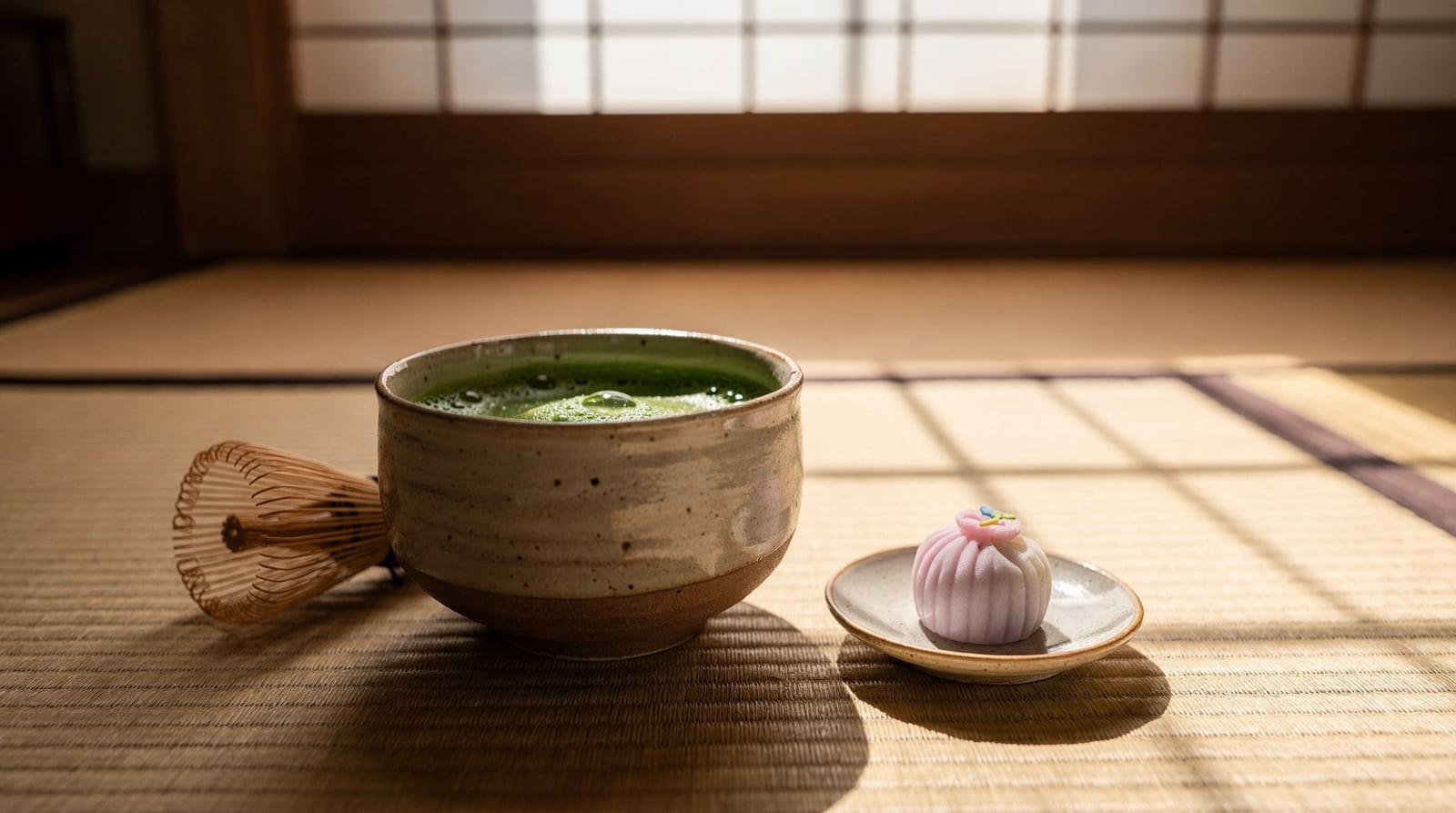
Matcha and mitarashi dango sweet-making workshopA skewer typically costs ¥150-300 (US$1-2), sold at stalls throughout Nishiki Market, Gion and near major temples.
Mochi, dango and the wider sweet-snack category
Beyond mitarashi dango specifically, Kyoto’s street stalls sell a wide range of mochi (pounded sticky rice, often stuffed with sweet red bean) and other dango varieties, alongside seasonal specialties tied to cherry blossom and autumn foliage periods. Small mochi pieces run ¥150-350 (US$1-2.30) each, and a mixed box of several varieties from a specialty shop makes a reasonable, shareable snack for ¥600-1,200 (US$4-8).
For a hands-on version of this category rather than just buying it, a wagashi-making workshop covers similar sweet-making techniques with a guide walking through the process — see the Kyoto food guide for more on wagashi’s role in the city’s broader food culture.
Wagashi sweets cooking class in KyotoSavory street food beyond skewers
Kyoto’s savory street food leans smaller and more delicate than the deep-fried, filling street food associated with Osaka, but it’s not limited to tako tamago and tamagoyaki. Croquettes (korokke) — breaded and fried mashed potato or vegetable patties, sold hot from small counters — are a common, cheap option at roughly ¥150-300 (US$1-2) each, and a reliable choice for a savory bite that isn’t seafood-based. Yakitori (grilled skewered chicken) stalls appear around Gion and Pontocho in the evening rather than during the day, seasoned simply with salt or a sweet soy tare glaze, typically ¥150-400 (US$1-2.70) per skewer.
Karaage (Japanese fried chicken) and small fried tofu bites also show up at market stalls and near stations, generally in the same ¥300-600 (US$2-4) range for a small paper cone’s worth. None of these are uniquely Kyoto dishes the way yatsuhashi or mitarashi dango are, but they round out a grazing session with something more filling if sweets and delicate skewers alone aren’t enough.
Festival food: a different category from everyday street stalls
It’s worth distinguishing everyday street food from matsuri yatai — the temporary food stalls that appear specifically during festivals like Gion Matsuri in July, set up along blocked-off streets for the duration of the event and then gone. These lean into a more classic, carnival-style Japanese festival food lineup: takoyaki (octopus batter balls), yakisoba (fried noodles), chocolate-covered bananas, shaved ice (kakigori) in summer, and grilled corn, priced similarly to regular street food but with the atmosphere of a temporary, crowded event rather than a permanent market.
If your trip coincides with a festival, this is a genuinely different, worthwhile experience from the daily Nishiki Market or Arashiyama grazing described elsewhere in this guide — but it’s date-dependent and won’t be there outside festival periods.
Where the stalls actually cluster: Nishiki Market
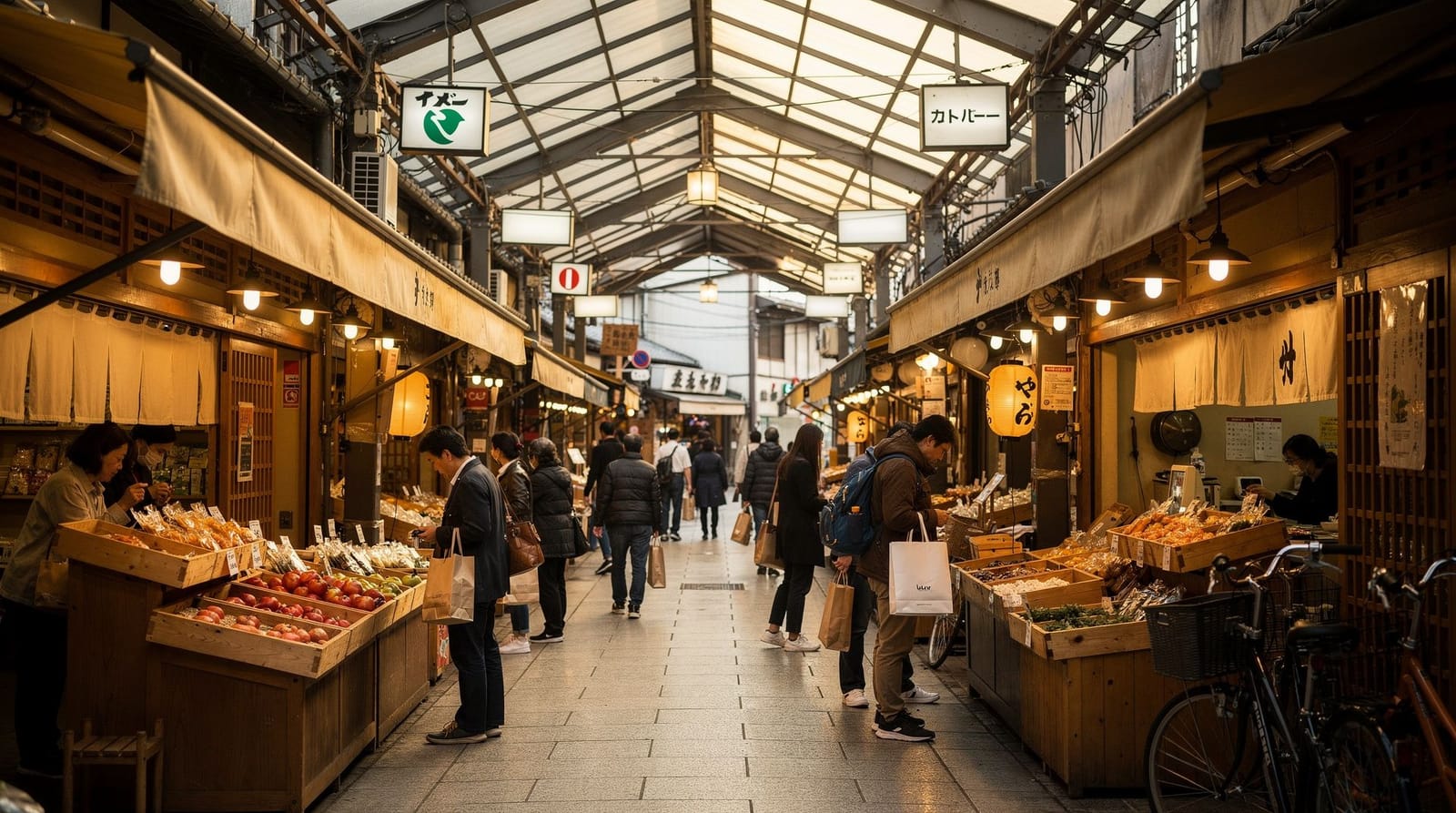
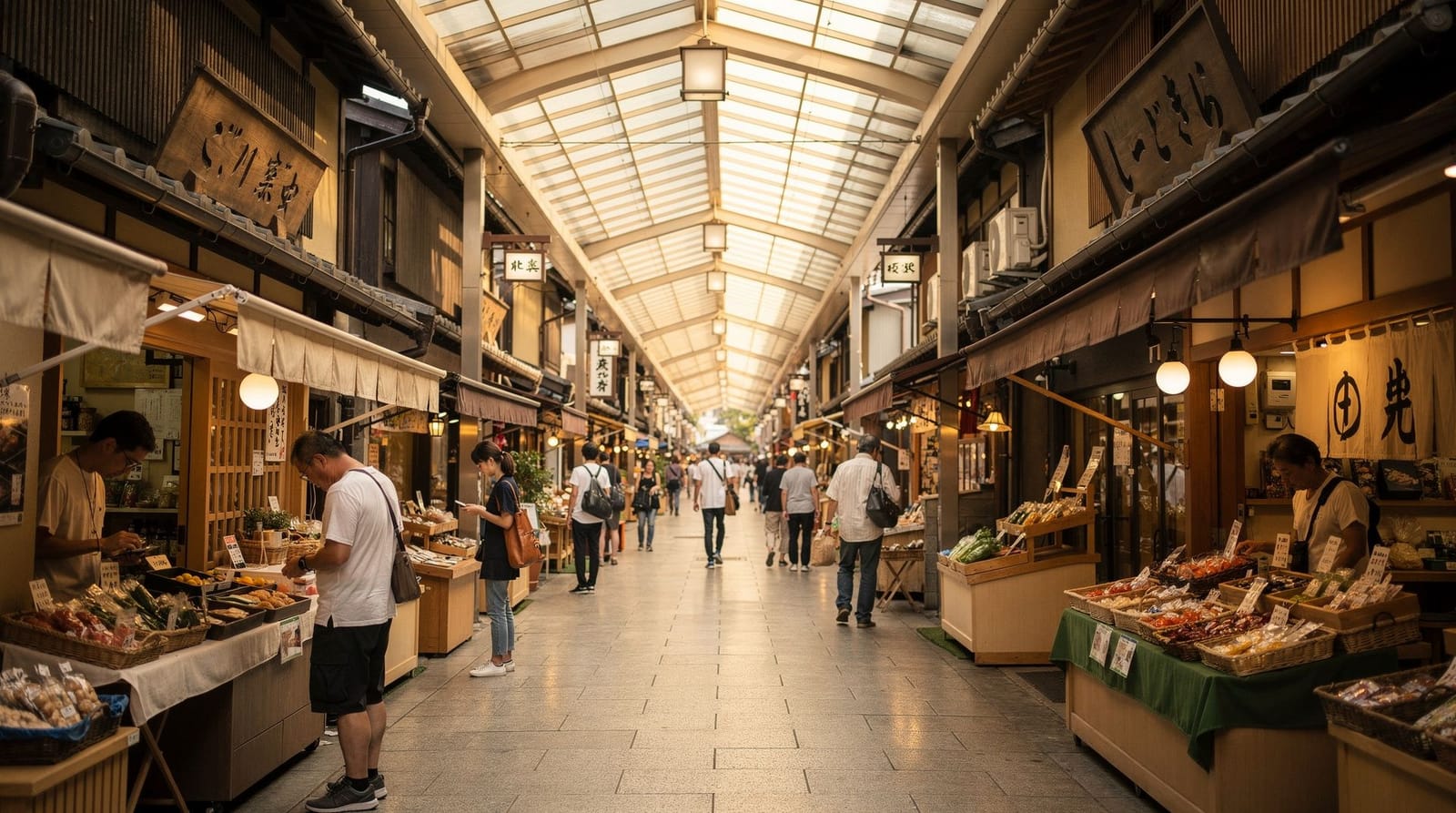
Nishiki Market, the covered arcade in downtown Kyoto, is the single densest concentration of street food in the city — roughly 130 stalls and shops over about 400 meters, mixing sweet snacks with savory items like tako tamago (baby octopus stuffed with a quail egg on a skewer) and fresh tamagoyaki. It deserves its own dedicated visit rather than a quick pass-through; the full breakdown of stalls, hours and etiquette is covered in the Nishiki Market guide.
Nishiki Market food tour with 7 tastingsArashiyama: matcha soft serve and the bamboo grove approach
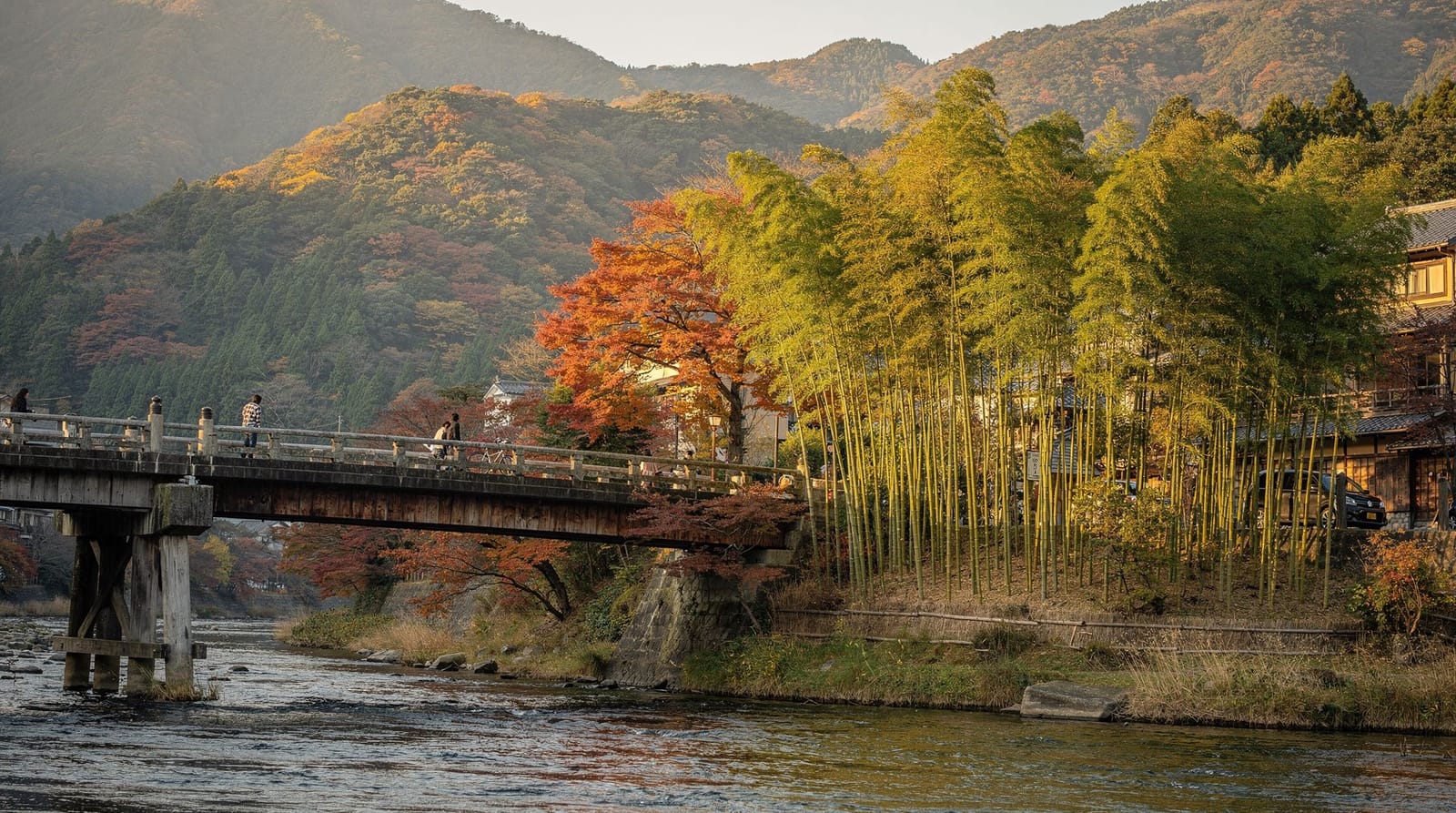
The second-densest street food stretch in the city runs along the approach to Tenryu-ji temple and the bamboo grove in Arashiyama, where a steady flow of visitors supports a cluster of stalls and small shops selling matcha soft serve, croquettes, grilled skewers and sweets. It’s a more scattered, open-air version of the Nishiki Market experience — good for grazing between the bamboo grove and the temple rather than a single dedicated food stop. See the Arashiyama destination guide for the wider area, including how the food stalls fit alongside the bamboo grove and Tenryu-ji itself.
Sannenzaka and Ninenzaka: snacking on the way to Kiyomizu-dera
The preserved pedestrian lanes below Kiyomizu-dera — Sannenzaka and Ninenzaka — are another concentrated stretch of small shops selling matcha sweets, pickles, senbei (rice crackers) and skewered snacks, aimed at the steady foot traffic heading up to or down from the temple. Prices here run similar to Nishiki Market, though a few shops closest to the temple gate charge a small premium over what you’d pay for the same item lower down the lane.
Dietary notes: what looks vegetarian isn’t always
Worth flagging honestly: many savory Kyoto street snacks use dashi made from bonito flakes as a base seasoning, even in dishes that otherwise look vegetable-based, so this isn’t a reliably vegetarian category by default. Tako tamago and other seafood-based skewers are obviously non-vegetarian, but even some simmered or grilled vegetable items can carry a bonito-based glaze. Sweet items — yatsuhashi, mochi, dango — are generally vegetarian, though some modern variations use gelatin-based glazes or dairy, so it’s worth checking specifics if you have a firm dietary restriction rather than assuming based on appearance.
Etiquette: eat near the stall, don’t walk and eat
Eating while actively walking through a crowd is still considered a minor breach of etiquette in most Japanese public spaces, even though the practice has loosened somewhat around dedicated food streets. The practical norm at Nishiki Market and similar spots is to step slightly to the side after buying, eat near the stall, and dispose of any skewer or wrapper in a bin there rather than carrying it off. It’s a small courtesy, but a consistently expected one.
Frequently asked questions about Kyoto street food
What is yatsuhashi and where does it come from?
Yatsuhashi is a thin, cinnamon-and-sugar-scented rice-flour sweet, sold as a hard baked cracker or as a soft, fresh version (nama yatsuhashi) folded around a sweet filling. Brands like Shogoin Yatsuhashi trace their history to the late 1600s. It’s especially concentrated around Kyoto Station, Arashiyama and Nishiki Market.
What is mitarashi dango and is it really from Kyoto?
Mitarashi dango is a skewer of chewy rice-flour balls glazed in sweet soy sauce. Local tradition ties its origin to Shimogamo Shrine in Kyoto, connected to a purification ritual at the shrine’s Mitarashi pond. It’s sold widely across Japan today, but Kyoto’s claim to its origin is well established.
How much does Kyoto street food typically cost?
Most individual items run ¥150-500 (US$1-3.30). A grazing session of five or six snacks, enough for a light lunch, typically totals ¥1,500-2,500 (US$10-17).
Where in Kyoto has the most street food, besides Nishiki Market?
The approach to Tenryu-ji and the bamboo grove in Arashiyama has a dense cluster of stalls. Sannenzaka and Ninenzaka below Kiyomizu-dera are another concentrated stretch, and Gion’s approach streets have scattered stalls, particularly in the evening.
Is it acceptable to eat while walking around Kyoto?
It’s more accepted than it used to be, but the practical norm is to step to the side, eat near the stall you bought from, and dispose of packaging there rather than eating on the move through a crowd.
What street food should visitors with dietary restrictions be careful about?
Many savory snacks use bonito-based dashi even in vegetable-looking dishes, so this isn’t reliably vegetarian by default. Sweet items like yatsuhashi, mochi and dango are generally vegetarian, though some modern versions use gelatin or dairy — check specifics if it matters to you.
Can you find Kyoto street food outside of markets and temple approach streets?
Yes, though less densely — bakeries, sweet shops, convenience stores and station kiosks throughout the city sell grab-and-go snacks. The concentrated, browse-and-graze experience is specific to markets and temple approach lanes.
Building a street food afternoon
A reasonable plan: start at Nishiki Market for a savory-leaning grazing session (tako tamago, tamagoyaki, a few pickles), then head toward Arashiyama or the Kiyomizu-dera lanes later in the day for the sweeter side — matcha soft serve, dango, a pack of fresh yatsuhashi to take back to your hotel. Spreading it across two locations avoids over-ordering in one spot and gives a better sense of how the savory and sweet sides of Kyoto’s street food differ. For the wider food picture beyond snacking, see the Kyoto food guide.
Matcha snacks beyond soft serve
Uji, just south of Kyoto, is one of Japan’s most respected matcha-growing regions, and that reputation feeds directly into the street snack scene — matcha-dusted yatsuhashi, matcha dango, and matcha soft serve of noticeably higher quality than the matcha-flavored snacks sold elsewhere in Japan. Nishiki Market and Arashiyama’s stalls both carry a genuine range of matcha grades, from a basic ¥300-400 soft serve to a premium ¥600-800 version made with ceremonial-grade tea. See the Uji matcha guide for the fuller picture if matcha specifically is a priority, including the option of visiting Uji itself for a tasting closer to the source.
Downtown Kyoto: snacking away from the temple circuit
Beyond Nishiki Market, downtown Kyoto’s Teramachi and Shinkyogoku covered shopping streets carry their own scattering of sweet shops and bakeries selling grab-and-go snacks, generally with shorter queues than Nishiki Market itself since fewer visitors think to look there specifically for food. It’s a reasonable fallback stop on a day that doesn’t otherwise pass through the market, and a few long-established wagashi shops along these streets are worth a stop even without a specific destination in mind.
Frequently asked questions about Kyoto street food guide — yatsuhashi, mochi, dango and where to eat on the go
What is yatsuhashi and where does it come from?
What is mitarashi dango and is it really from Kyoto?
How much does Kyoto street food typically cost?
Where in Kyoto has the most street food, besides Nishiki Market?
Is it acceptable to eat while walking around Kyoto?
What street food should visitors with dietary restrictions be careful about?
Can you find Kyoto street food outside of markets and temple approach streets?
Top experiences
Bookable activities with verified prices and instant confirmation on GetYourGuide.