Fushimi Inari guided tour review — do you actually need a guide?
Kyoto: Fushimi Inari Taisha Guided Walking Tour
The shrine that needs no ticket, and a guide who explains why that matters
Quick answer: Fushimi Inari is free and open 24 hours, so a guided tour (roughly ¥3,500-6,000 / $23-40 per person) buys you narration, an early-morning crowd-beating start, and route knowledge — not access. It’s worth booking if you want the symbolism explained as you walk or a forced early start; skip it if you’re comfortable setting your own 7am alarm and reading up beforehand.
| Where | Fushimi Inari Taisha, Inari Station (JR Nara Line) |
| Cost | Free entry; guided tour around ¥3,500-6,000 / $23-40 |
| Time needed | 45-60 min to Yotsutsuji; 2-3 hrs for the full summit hike |
| Getting there | JR Nara Line from Kyoto Station, 2 stops, ~5 min |
| Best time | Before 8am or after sunset to avoid the Senbon Torii crowds |
Fushimi Inari Taisha is unusual among major Kyoto sights in that a guided tour adds nothing you’re locked out of otherwise — there’s no ticket booth, no closing time, and the entrance sits directly across from Inari Station, two stops and about five minutes from Kyoto Station on the JR Nara Line. This is worth stating plainly before you book anything: you are never paying for access here, only for context, pacing, and — in the case of the early-morning options — a genuine crowd-avoidance strategy that a guide enforces by fixing your start time.
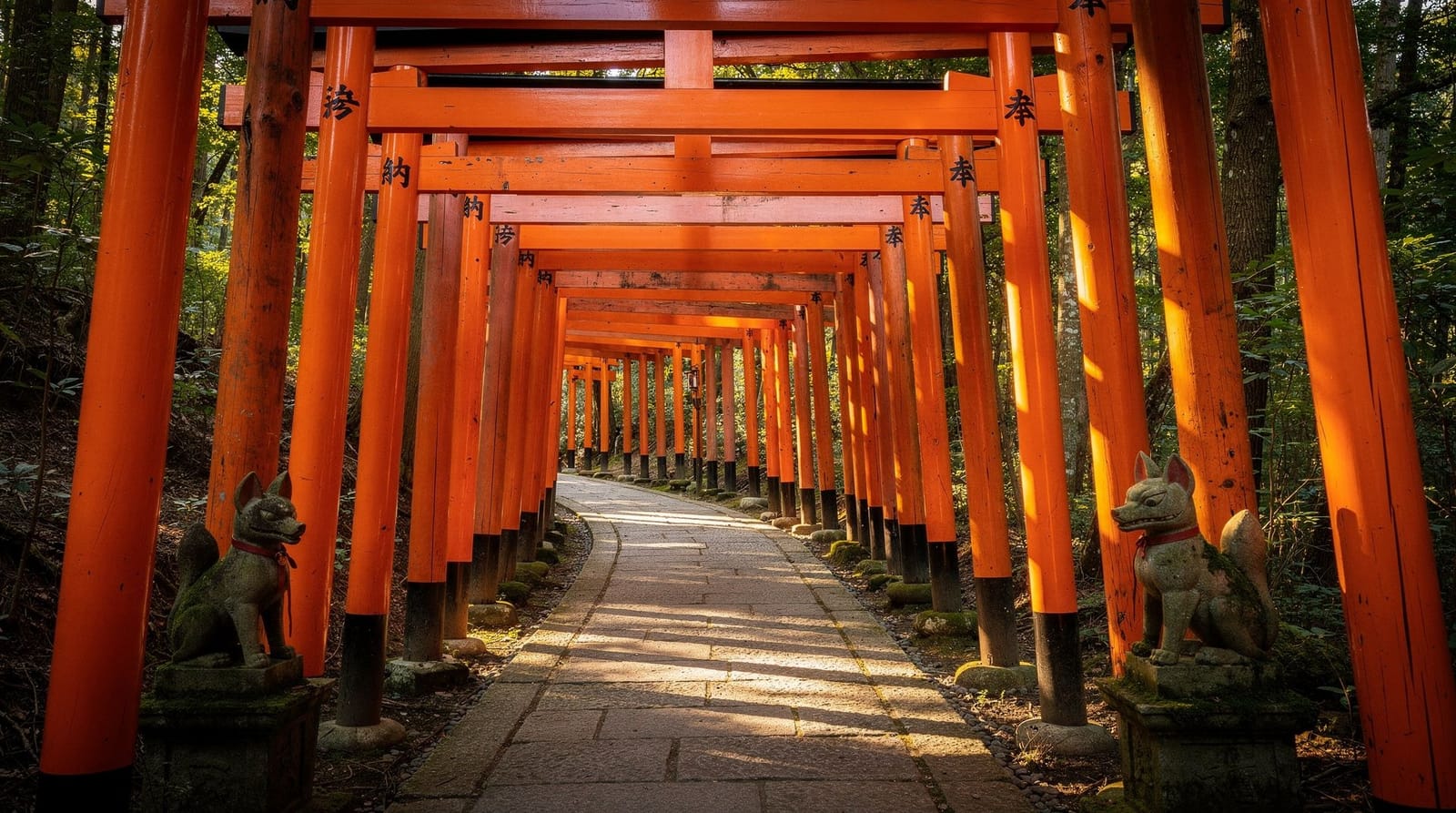
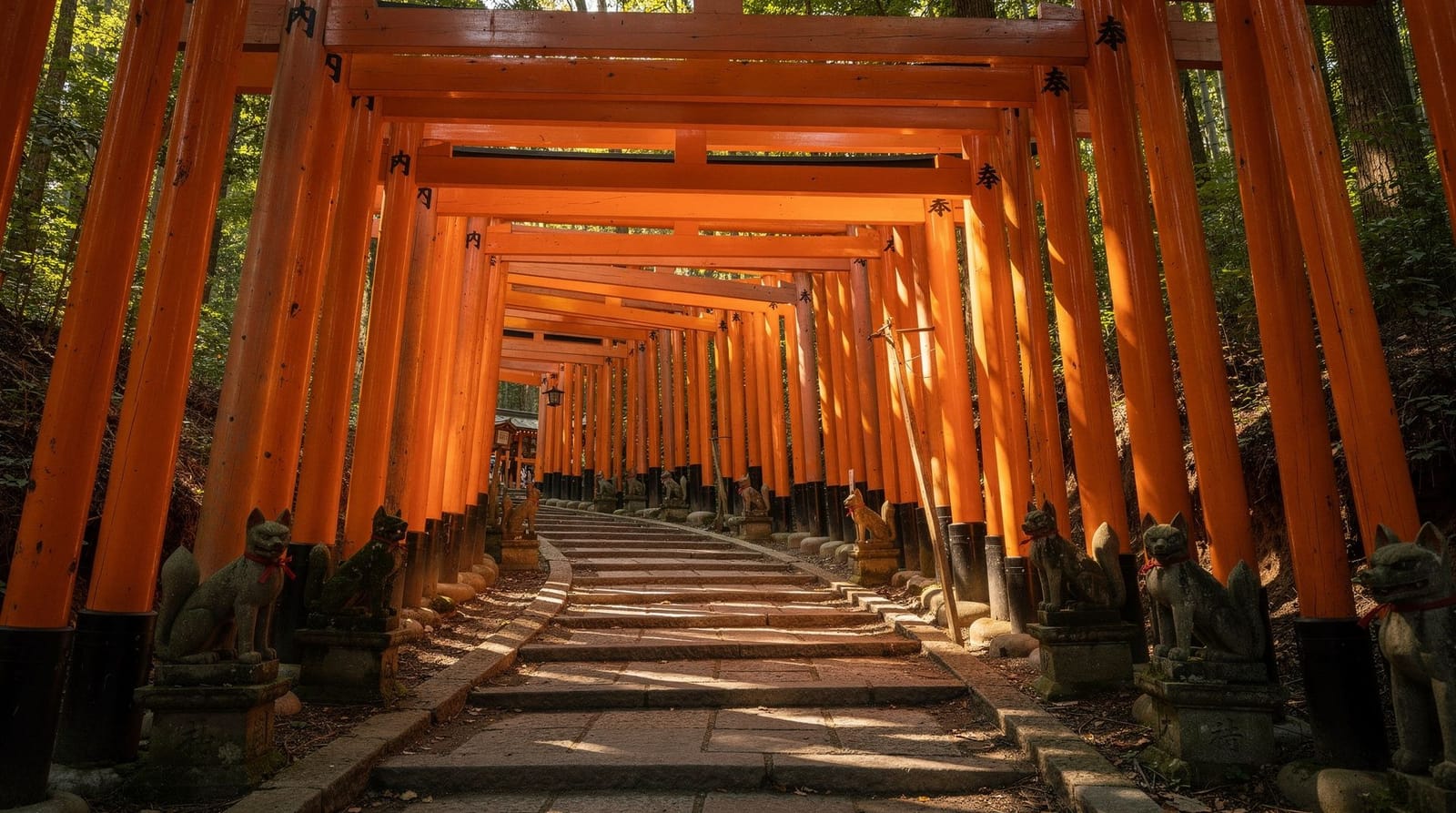
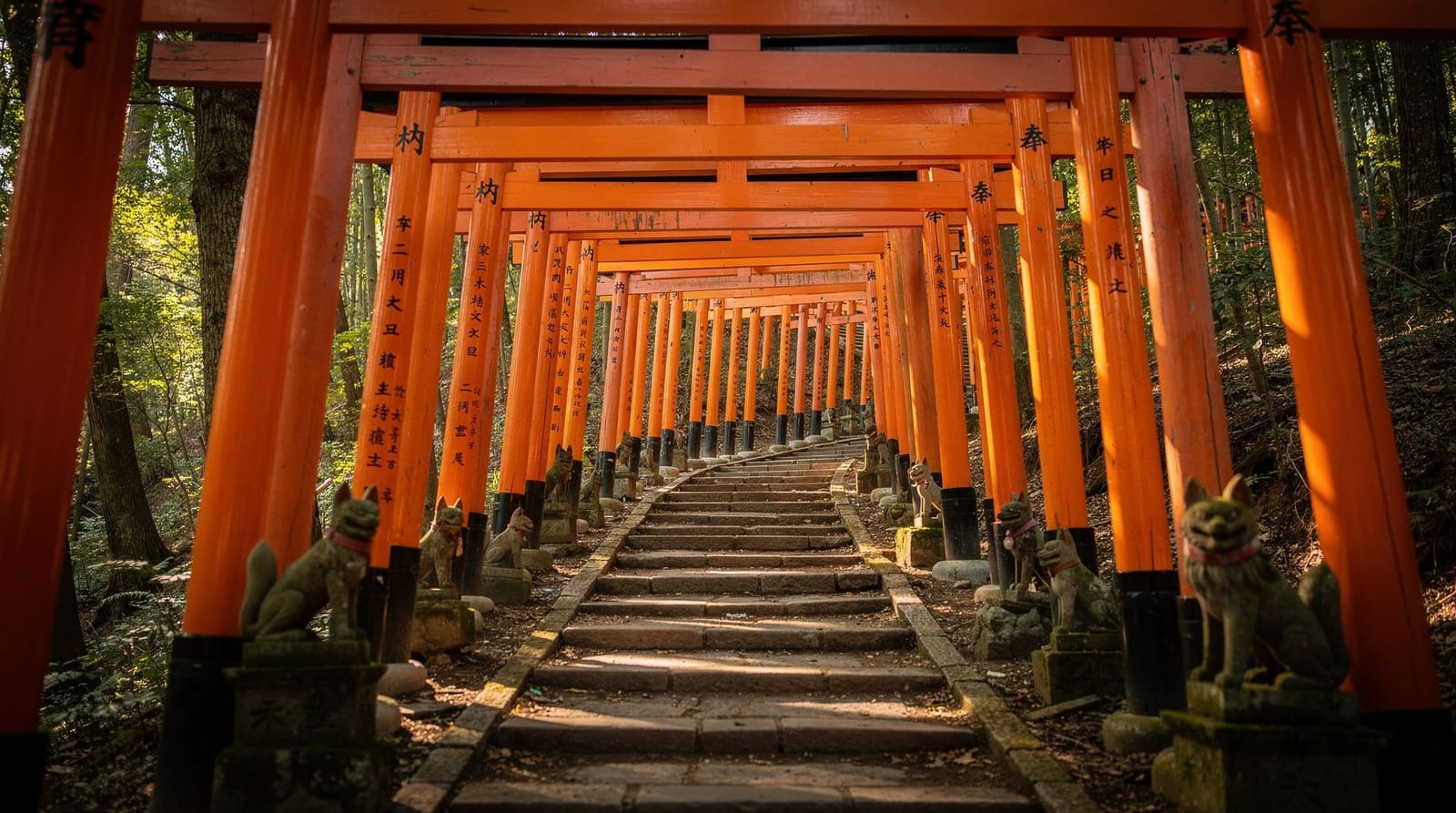
The Fushimi Inari Taisha guided walking tour is the standard format: a local guide walks you through the Senbon Torii tunnel and up toward Yotsutsuji, explaining the shrine’s dedication to Inari (the Shinto deity of rice, sake, and business prosperity), the roughly 10,000 donated torii gates lining the trail, and the fox (kitsune) symbolism that appears throughout the grounds.
What a guide actually adds over a solo visit
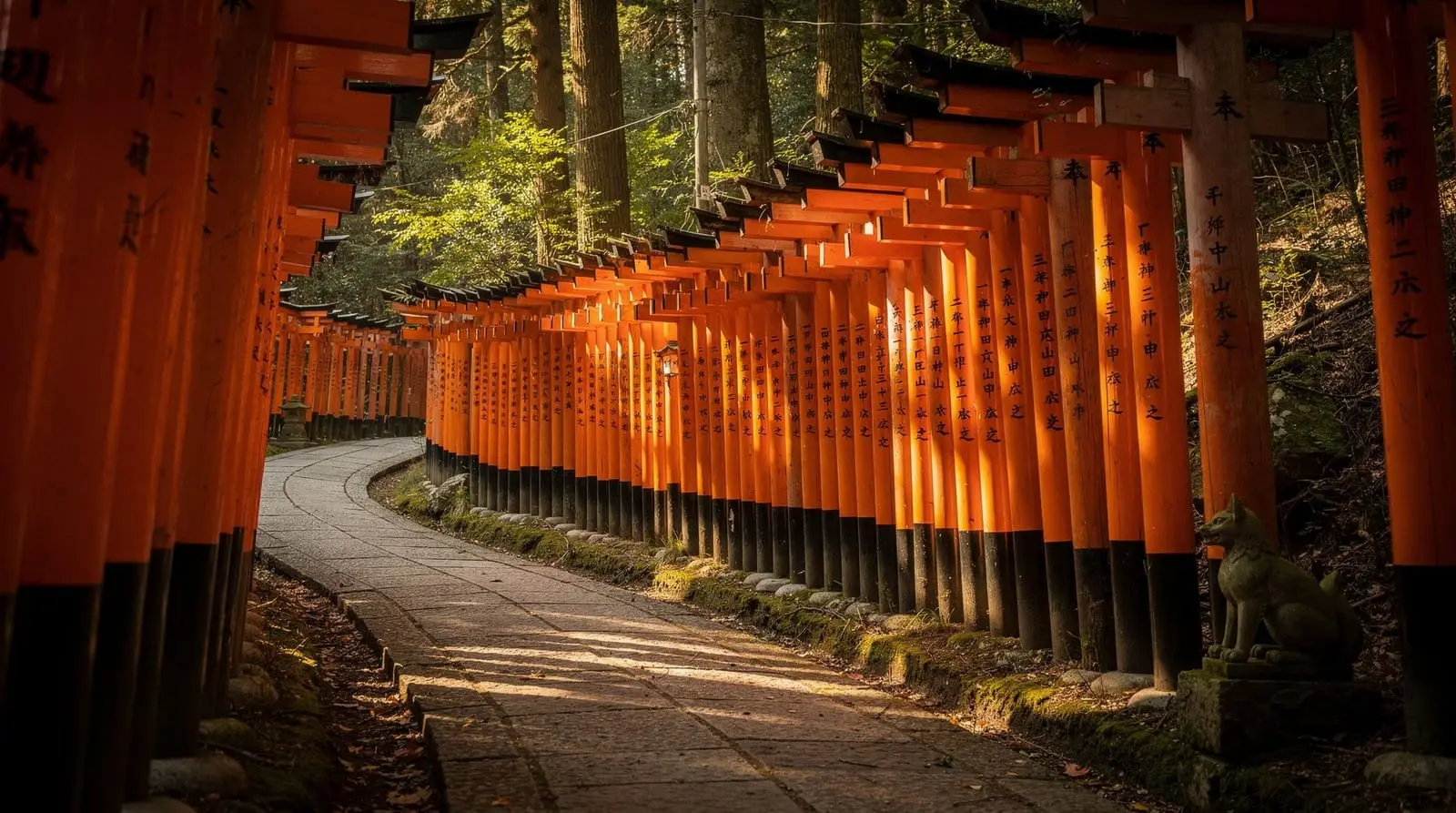
The shrine dates to 711, predating the city of Kyoto itself (founded 794), and the torii gates were donated over centuries by individuals and businesses as offerings for good fortune — each one carries the donor’s name and date painted in black on the back. This kind of detail is easy to miss walking through alone with a phone guide, and it’s genuinely the strongest argument for a guided visit: understanding what you’re looking at changes a 20-minute photo stop into something closer to an actual historical visit.
A guide also knows the side paths — smaller, less-photographed torii-lined routes that branch off the main tunnel and offer a quieter, more contemplative version of the same walk without the crowd density. And critically, a guide sets a fixed early start time. This sounds minor but is the single biggest lever on whether your Fushimi Inari experience is a crowded shuffle through a tunnel of camera phones or something closer to serene.
Early morning vs standard vs night: pick based on your priority
The early morning Fushimi Inari Shrine tour is the strongest recommendation if a clean, uncrowded Senbon Torii photo is a genuine priority — starting before or right around sunrise light means you’ll walk the tunnel with a fraction of the day’s eventual foot traffic. This is worth the earlier wake-up call more than almost any other timing decision in Kyoto sightseeing.
The Fushimi Inari Shrine and Mount Inari guided tour is built for visitors who want the full summit hike rather than stopping at Yotsutsuji — a guide paces the 2-3 hour round trip and explains the smaller sub-shrines and viewpoints along the upper trail that most solo visitors walk past without context, since they’re not marked in English.
The Fushimi Inari night hike is the genuinely different option — lantern-lit lower gates, a materially calmer atmosphere, and a guide providing the lighting and route knowledge that an unlit upper trail requires after dark. This isn’t a crowd-avoidance hack so much as a distinct mood: quieter, moodier, and better suited to travelers who’ve already done a daytime visit or specifically want the atmospheric version over the classic bright-daylight photo.
| Format | Priority | Trade-off |
|---|---|---|
| Early morning | Clean, uncrowded torii photos | Earliest wake-up |
| Standard walking tour | Narration and pacing | Shares the tunnel with day crowds |
| Mount Inari summit | Full 2-3 hr hike, upper sub-shrines | Longest, most physically demanding |
| Night hike | Quiet, lantern-lit atmosphere | Harder photography, less symbolism visible |
The honest case for skipping a paid tour entirely
If you’re comfortable reading the Fushimi Inari guide beforehand and setting an early alarm yourself, there’s a real case for visiting solo and free. The shrine requires no navigation skill beyond following signed paths, English information boards exist at key points, and the entire appeal — walking through the torii tunnel and up the mountain at your own pace — doesn’t strictly require narration to enjoy.
Budget-conscious travelers or those with limited time who’d rather spend tour money on an experience that does require access (like the Nishiki Market food tour or a sake brewery tasting nearby) have a reasonable case for skipping this one.
Practical logistics
Take the JR Nara Line from Kyoto Station to Inari Station — two stops, about 5 minutes, ¥150. The Keihan Main Line’s Fushimi-Inari Station is a similar-distance walk if you’re coming from Gion or elsewhere via Keihan. There’s no admission fee at any hour, so there’s no ticket queue to plan around — the only queue that matters is the human one at the Senbon Torii tunnel entrance during peak hours.
Wear real walking shoes if you’re attempting any portion of the mountain trail; it’s a genuine incline with uneven stone steps in sections, not a flat paved path. Fushimi’s sake-brewing district along the Horikawa canal is a short walk or one train stop away and pairs naturally with a morning shrine visit — see the Fushimi destination guide for how to combine both in a half-day.
The symbolism worth actually understanding
Beyond the raw scale of 10,000 torii gates, the details a guide points out tend to be the ones a solo visitor walks straight past. Each gate is inscribed on its rear pillar with the donor’s name and the date of dedication — walk slowly enough to read a few and you’ll notice company names alongside individuals, since businesses have donated gates seeking prosperity for centuries and continue to do so today, meaning the practice isn’t a historical curiosity but a living tradition still adding gates to the mountain.
The fox statues (kitsune) scattered throughout the grounds are messengers of Inari rather than the deity itself, and many hold objects in their mouths — a key (to the rice granary), a jewel, a scroll, or a sheaf of rice — each with slightly different symbolic meaning that varies by which sub-shrine you’re standing near.
Smaller sub-shrines along the upper trail, easy to walk past without a guide pointing them out, mark specific requests — business success, safe childbirth, romantic fortune — and are where you’ll see the smaller, densely clustered mini-torii donated by individuals rather than the larger commercial gates lower down. This shift in scale and density as you climb is itself part of the story: a visual record of how the shrine’s meaning has been continuously renewed by ordinary visitors’ offerings across centuries, not just corporate donations.
Weather and physical considerations for the hike
Kyoto summers are genuinely humid, and Mount Inari’s trail — largely uncovered stone steps with limited shade in sections — gets uncomfortably hot by mid-morning from June through September. An early guided tour solves the crowd problem and the heat problem simultaneously, since both peak later in the day. Bring water regardless of season; there are vending machines at intervals along the trail, but not densely enough to rely on without carrying some water yourself, particularly on the upper sections past Yotsutsuji.
Winter visits are considerably quieter and cooler, and the shrine takes on a genuinely different character with fewer crowds and, occasionally, light snow dusting the vermillion gates — a worthwhile visit for repeat Kyoto travelers looking for a different version of a sight they’ve already seen in peak season. Rain doesn’t meaningfully disrupt a visit here since much of the lower trail has some tree cover, though the stone steps become slippery and warrant more careful footing throughout.
Group size and pacing on the mountain
Unlike an indoor tour where group size mainly affects noise and crowding, group size on Fushimi Inari’s trail directly affects your pace and photo opportunities, since the trail is a single, sometimes narrow path shared with everyone else on the mountain. Smaller groups (6-10 people) move faster and can stop more flexibly for photos without holding up a long line of participants; larger groups (15+) common on some budget operators’ tours tend to move at a fixed, sometimes rushed pace dictated by keeping the group together on narrow stretches.
If you specifically want time to linger at Yotsutsuji’s viewpoint or photograph the Senbon Torii tunnel without feeling rushed, check group size caps when comparing tour options, since this affects the experience more directly here than at most guided sights.
What a night hike misses that a daytime visit captures, and vice versa
It’s worth being explicit about the trade-off between the two main timing options rather than treating the night hike as a strictly superior “secret” alternative. Daytime visits, even early-morning ones, let you see the full color and detail of the vermillion torii gates against greenery, read the donor inscriptions clearly, and get genuinely bright, well-lit photos.
Night hikes trade this visual clarity for atmosphere — lantern-lit lower gates, a hushed quiet inconceivable during any daytime hour, and considerably fewer people, but photography becomes harder without a tripod, and the deeper symbolic details (donor names, fox iconography) are genuinely difficult to make out without daylight. Neither is objectively better; they’re different experiences suited to different priorities, and travelers with time for only one visit should choose based on whether photo clarity or atmosphere matters more.
Combining Fushimi Inari with a sake tasting the same day
Since Fushimi Inari and Fushimi’s sake-brewing district along the Horikawa canal sit within the same ward, a natural full-day combination is a guided shrine visit in the early morning followed by sake tasting once the hike is done — see the Fushimi sake tasting tour review for what that afternoon looks like. This sequencing makes practical sense beyond convenience: you don’t want to be climbing Mount Inari’s stone steps after an afternoon of sake tastings, and the shrine’s early-morning crowd-avoidance window aligns naturally with saving the sake district, which doesn’t have comparable time-of-day crowd dynamics, for later in the day.
What to bring beyond the obvious
Comfortable, broken-in walking shoes matter more here than at almost any other Kyoto sight — the trail’s stone steps are uneven and, if you’re attempting any real portion of the mountain climb, genuinely demanding over a sustained distance. A small towel is worth packing in summer, since the climb through humid, largely shaded forest generates real sweat even on a short section.
Cash in small denominations is useful for the handful of small vendor stalls selling drinks, snacks, and fox-shaped ema plaques along the lower trail, since not all accept cards. If you’re doing the early-morning or night option, a fully charged phone or dedicated flashlight isn’t optional — the upper trail’s lighting is genuinely minimal outside of full daylight hours.
Verdict
Fushimi Inari doesn’t require a guide to visit, and knowing that upfront should shape your decision more than any tour marketing does. Where a guided tour earns its cost is context and timing discipline — the early morning tour in particular solves the one real problem (crowds) that no amount of independent research fixes unless you’re genuinely willing to show up before 7am on your own. If you are that disciplined, skip the tour and pocket the savings. If you’re not, the early tour is worth every yen.