Gion Matsuri — Kyoto's July festival, explained month by month
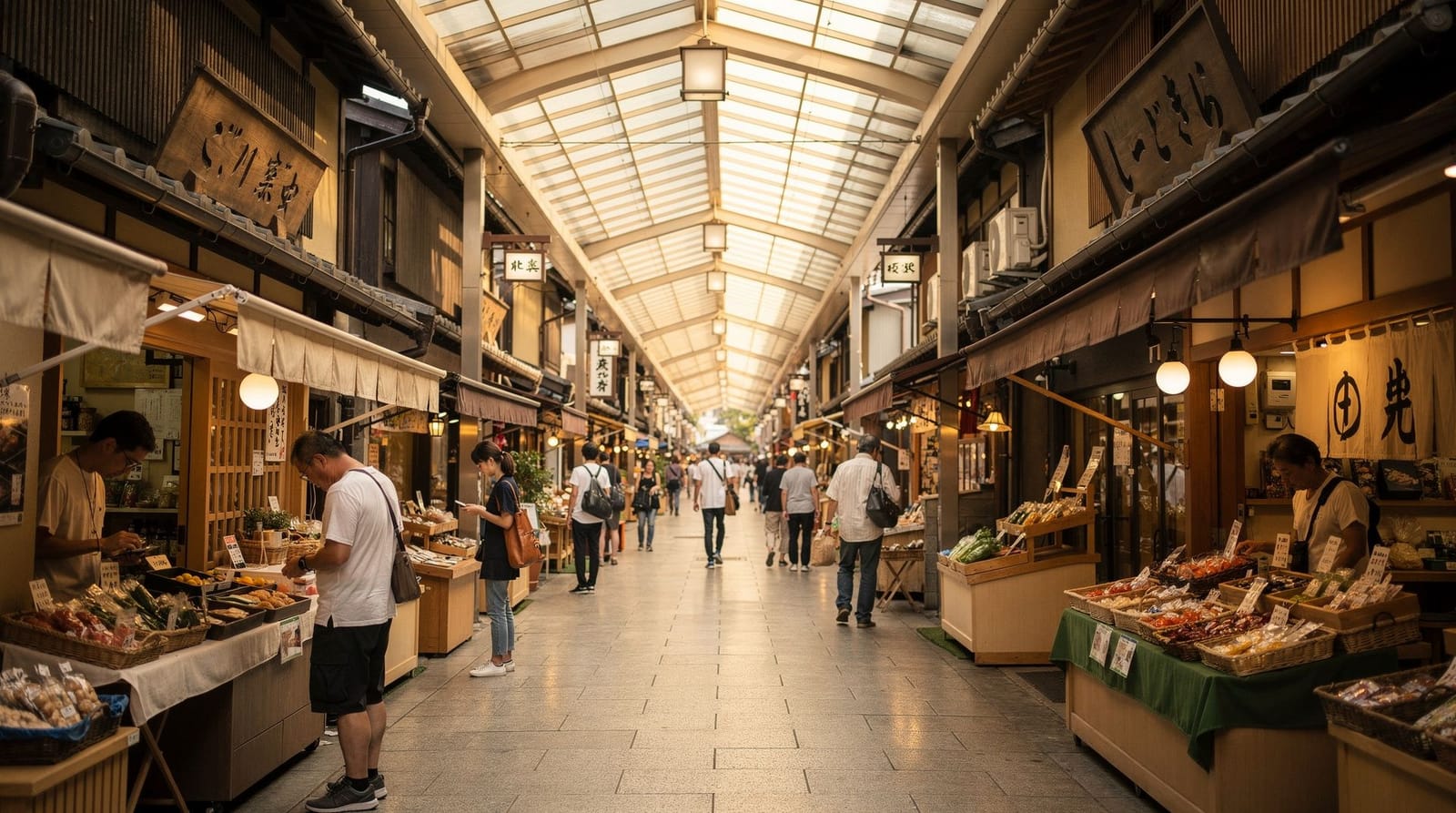
Kyoto: visite culinaire Gion Pontocho, 13 plats
What is Gion Matsuri and when does it happen?
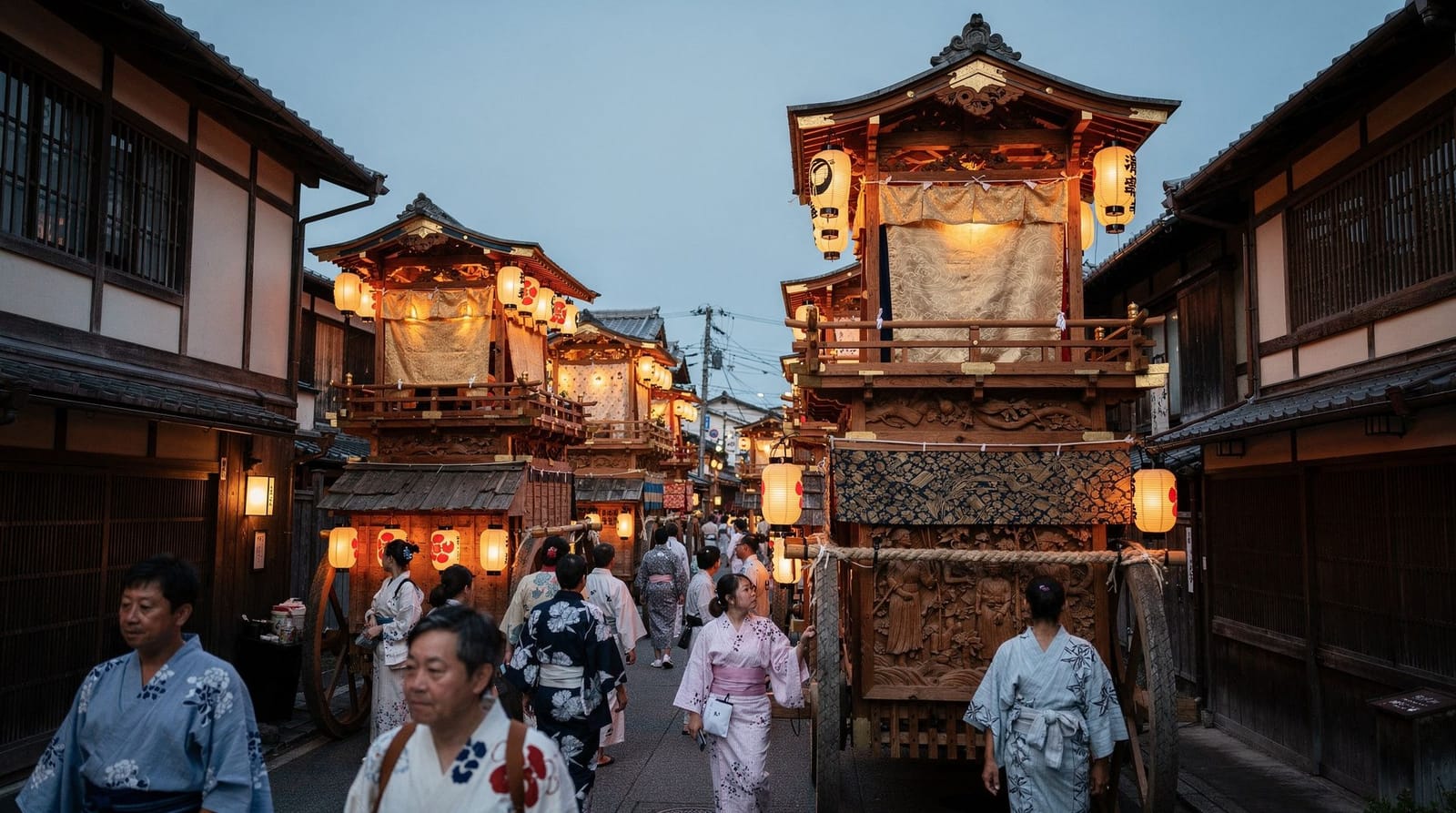
Gion Matsuri is Kyoto's largest annual festival, running through most of July, with its two main highlights being the yamaboko junko float processions on July 17 and July 24 and the three preceding evenings of pedestrian-only street festival (yoiyama) on July 14-16, when downtown Kyoto closes to traffic for a night market around the illuminated floats.
Gion Matsuri is Kyoto’s largest annual festival and, at over a thousand years old, one of the longest-running in Japan — a month-long observance built around two float processions and three nights of pedestrian street festival that turn central Kyoto into something unlike any other week on the calendar. This guide focuses specifically on the festival itself: what actually happens, when, where to stand, and how to handle the logistics of a major event that runs through the hottest month of the year. For July’s broader weather and seasonal context, see Kyoto in summer.
| When | Runs through July; core dates July 14–17 |
| Yoiyama (night market) | July 14–16, from early evening |
| Main procession | July 17, starts around 9am |
| Free viewing | Along Shijo-dori, Kawaramachi-dori, Oike-dori |
| Reserved seating | Around a few thousand yen, book ahead |
What Gion Matsuri actually is
Gion Matsuri originated in 869 as a Shinto purification ritual intended to ward off a plague epidemic sweeping the city, centered on Yasaka Shrine in the Gion district. Over more than a millennium it grew into a month-long series of rituals, culminating in two processions of elaborately decorated wooden floats (yamaboko) pulled by hand through downtown Kyoto. It’s run in some form almost continuously since its founding, interrupted only briefly during wartime periods in the 20th century, making it one of Japan’s oldest continuously observed annual festivals.
The floats themselves fall into two types: yama, smaller floats carried or pulled that typically depict a specific historical or mythological scene, and hoko, the larger, taller floats — some over 20 meters tall and weighing several tons — pulled by dozens of people and requiring specific techniques to navigate street corners.
The festival calendar: what happens across July
Gion Matsuri technically spans the entire month of July, with smaller rituals and preparatory events happening throughout, but the two windows that matter for most visitors are concentrated around the two processions. The first and larger cycle runs July 10-17, building through float assembly, yoiyama (July 14-16), and the main Saki Matsuri procession on July 17. A second, smaller cycle runs July 18-24, with a shorter yoiyama on July 21-23 and the Ato Matsuri procession on July 24.
Most visitors planning around a single trip should target the July 14-17 window, since it includes both the larger of the two processions and the more extensively documented yoiyama nights — though the July 24 Ato Matsuri procession, with roughly a third the number of floats, offers a smaller, less crowded version of the same spectacle for anyone specifically prioritizing lighter crowds over scale.
Yoiyama: the three nights before
Yoiyama refers to the evenings immediately preceding each procession — July 14-16 for the larger Saki Matsuri, and July 21-23 for the smaller Ato Matsuri — when the assembled floats are illuminated with lanterns and set up for public viewing along the streets where they’re stored between processions. Central downtown streets close to vehicle traffic during the peak evening hours, and food and game stalls line the pedestrianized routes in a genuine night-market atmosphere, distinct from the more formal daytime procession.
Gion and Pontocho food tour, 13 dishes — a practical way to eat well during festival week without navigating stalls soloThe final night, July 16 (yoiyoiyama, the night immediately before the main procession), is typically the busiest and most crowded of the three, with the largest gathering of both floats on display and visitors in the streets. July 14, the first night, offers a comparatively calmer version of the same atmosphere for visitors who want to see the illuminated floats with somewhat more room to move.
Yamaboko junko: the procession itself
The main procession, on July 17 (Saki Matsuri) and July 24 (Ato Matsuri), sees the assembled floats pulled by hand along a route through Shijo-dori, Kawaramachi-dori, and Oike-dori in downtown Kyoto, starting around 9am and lasting several hours as each float in sequence makes its way along the full route. Naginataboko, distinguished by a halberd mounted at its top and traditionally carrying a young boy in the sacred chigo role, leads the July 17 procession and is the only float pulled entirely by human effort at every stage, including the sharp 90-degree corner turns.
Those corner turns are one of the procession’s most-watched moments — turning a multi-ton wooden float on solid wheels requires a specific technique using wet bamboo mats laid under the wheels to reduce friction, executed by teams of pullers in a coordinated, physically demanding maneuver that draws crowds specifically to the route’s corners rather than the straight stretches.
Where to actually watch
Free viewing is available along the entire procession route, and arriving 60-90 minutes before the roughly 9am start is generally enough to secure reasonable street-level standing room, particularly away from the route’s most photographed corners. The corners themselves — where the float-turning technique happens — draw the densest crowds and require an earlier arrival if a clear view of that specific moment matters.
Paid reserved seating, sold in advance through official festival channels, is available along stretches of Gojo-dori and Karasuma-dori and guarantees a seated spot without the early-arrival requirement — a reasonable option for anyone visiting during Kyoto’s July heat who’d rather not stand in direct sun for over an hour beforehand.
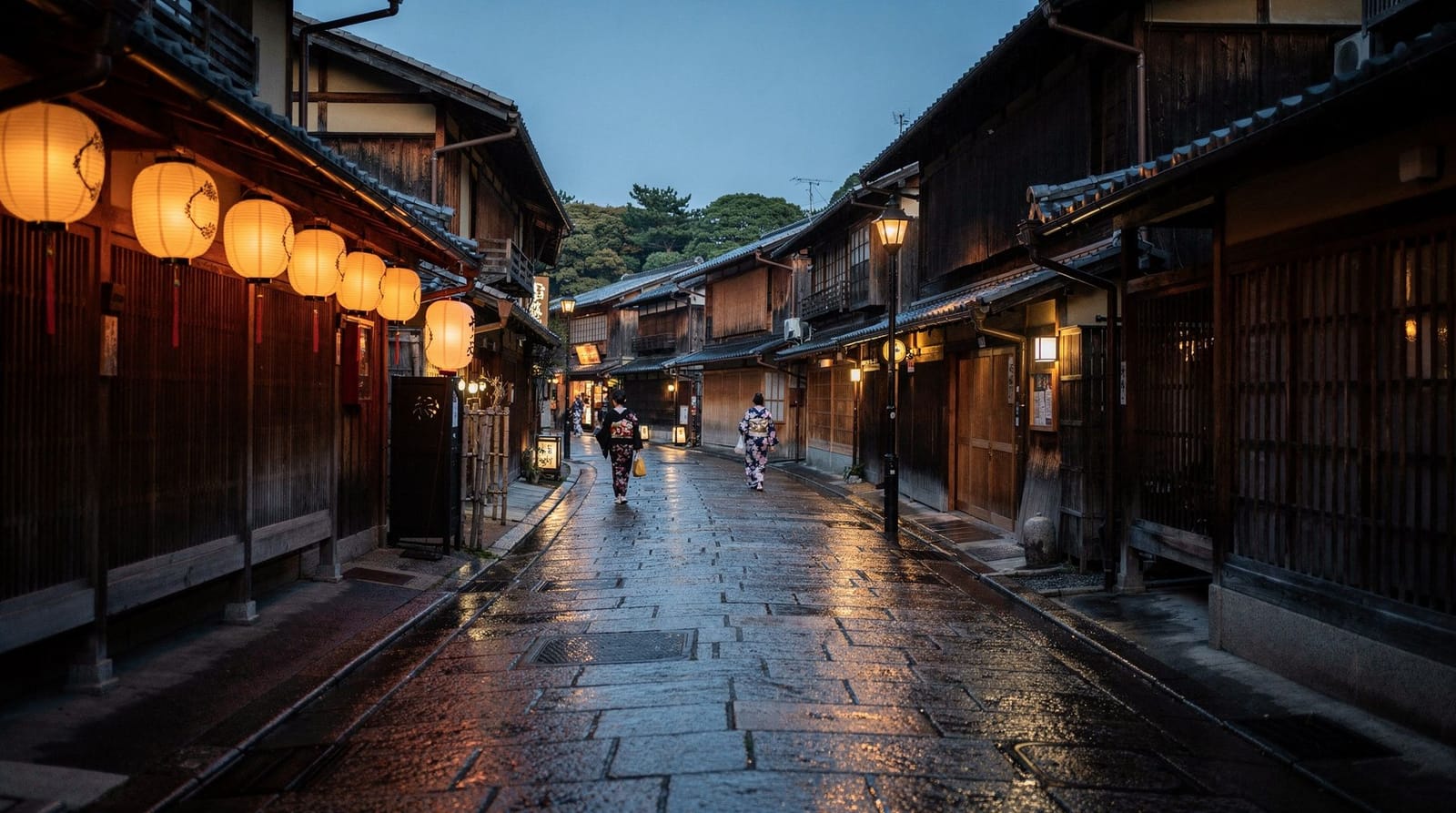
Night walk through Gion’s geisha district — pairs naturally with an evening in the neighborhood during festival weekCrowd logistics: what to actually expect
Yoiyama evenings, particularly July 16, involve a genuinely dense, slow-moving crowd through downtown’s pedestrianized streets — closer to a packed night market than an open-air festival with room to spread out. The July 17 daytime procession, spread along a considerably longer route, is more manageable in terms of density, though total attendance is comparable or higher. Public transit and the surrounding streets both run at significantly reduced capacity during peak festival hours, and walking rather than relying on buses or taxis within the downtown core is generally faster during the festival’s busiest windows.
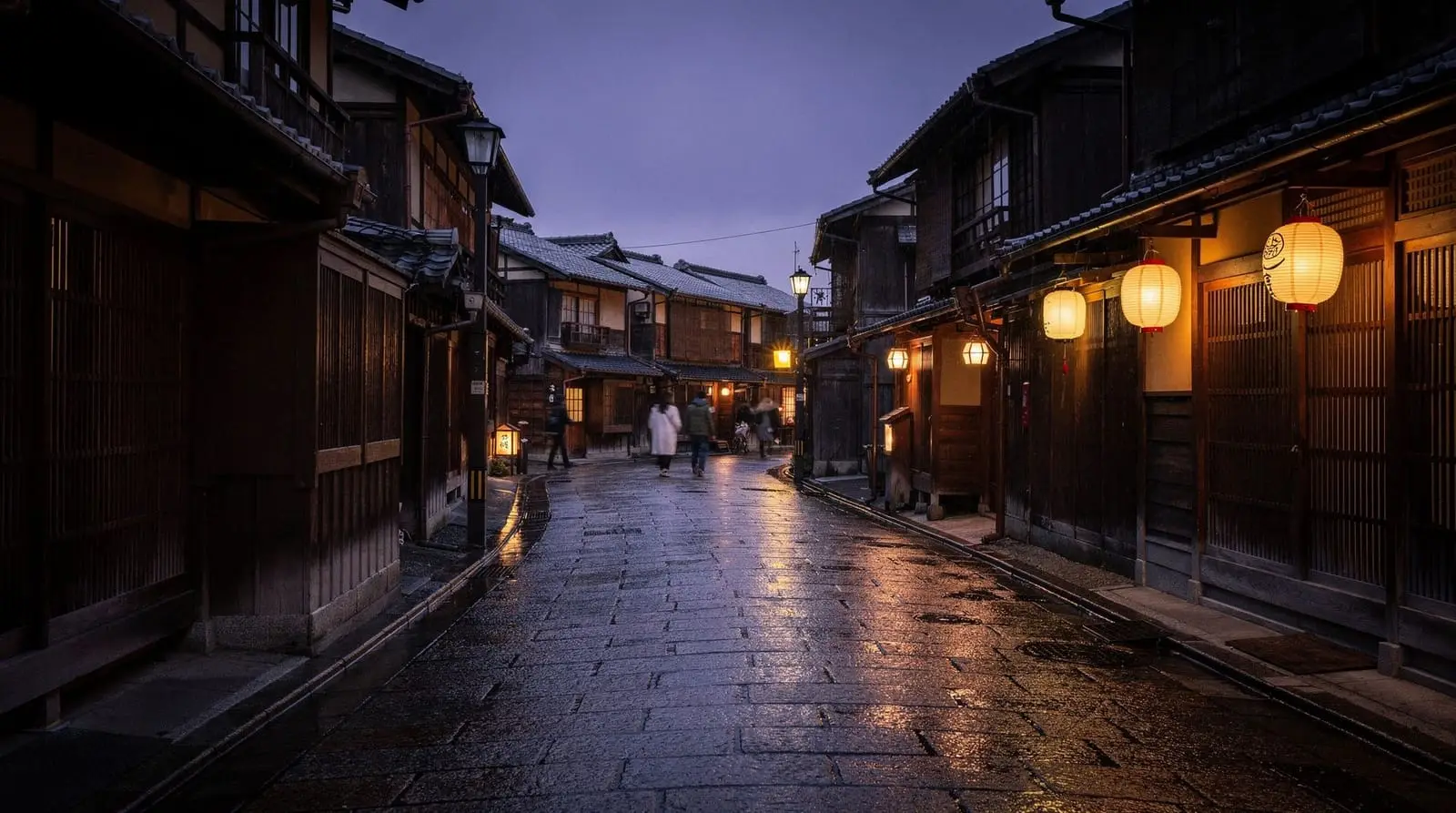
Gion history and geisha culture walking tour — useful context for the neighborhood the festival is rooted in, outside peak festival hoursWhat to wear and bring
Light, breathable clothing is close to essential, since the festival runs through Kyoto’s hottest, most humid month, and yoiyama’s dense crowds reduce airflow further. Comfortable, broken-in walking shoes matter for the same reason — standing and slow-moving crowd navigation for extended periods is genuinely more tiring in July heat than it sounds. Many visitors, both Japanese and international, wear yukata (a casual cotton summer kimono) during yoiyama specifically; it’s culturally appropriate for the occasion and widely available for rental from several shops in the downtown area in the days leading up to the festival.
Carrying water, a hand fan or portable electric fan, and cash (many festival food stalls are cash-only) are all practical essentials given the combination of heat and crowd density.
Booking accommodation around the festival
Hotels in central Kyoto during the July 14-17 core window book out well in advance and run at a price premium comparable to cherry blossom or momiji season, given the concentration of visitors specifically for this single week. Booking several months ahead, particularly for anything within easy walking distance of the downtown procession route, is worth prioritizing over waiting to see how travel plans firm up. See the Kyoto travel budget guide for how festival-week pricing compares to Kyoto’s other seasonal peaks.
Combining the festival with the rest of a Kyoto trip
Gion Matsuri’s core events are concentrated in the downtown area around Kawaramachi Station, making it straightforward to combine with normal sightseeing during non-festival hours of the same trip rather than requiring an entire itinerary built solely around it. A daytime visit to Gion or downtown Kyoto earlier in the day, followed by yoiyama in the evening, is a natural pairing that most festival-week visitors follow without needing to restructure the rest of their trip.
See Kyoto in summer for how the festival fits into July’s broader heat and crowd patterns, and avoiding crowds in Kyoto for general crowd-management tactics that apply even during a single-focus event like this one.
Festival food and drink specific to Gion Matsuri
Yoiyama’s food stalls (yatai) sell the standard array of Japanese festival street food — yakisoba, takoyaki, kakigori shaved ice (particularly welcome given the July heat), and grilled skewers — but also a handful of items specific to the neighborhoods the floats pass through.
Chimaki, a bamboo-leaf-wrapped bundle sold at each float’s storage location during the festival, isn’t a food item in this context but a protective charm believed to ward off illness and misfortune when hung at a home’s entrance; each of the roughly two dozen floats sells its own version, and collecting or choosing one associated with a specific float’s legend is a genuine local tradition rather than a tourist souvenir. Beer and chilled sake, sold from stalls and at pop-up bars set up specifically for the festival, are a practical, expected part of navigating yoiyama’s heat.
How the floats are built and stored
Each yamaboko float is assembled in the days immediately before its yoiyama display, using a traditional joinery technique that avoids nails entirely, relying instead on rope lashing to hold the wooden frame together — a technique passed down through the specific neighborhood associations (each float is owned and maintained by a distinct downtown neighborhood) responsible for each float.
Between festivals, the disassembled floats and their decorative textiles, some centuries old and originally imported from Europe, the Middle East, and China via historic trade routes, are stored by these neighborhood associations and brought out annually for assembly — a detail that explains both the festival’s deep neighborhood-level community involvement and the genuine historical and artistic value of textiles that predate the modern tourism era by centuries.
Comparing Gion Matsuri to Kyoto’s other major festivals
Gion Matsuri is one of Kyoto’s three major annual festivals alongside Aoi Matsuri (May 15) and Jidai Matsuri (October 22), and it stands apart from the other two in scale, duration, and atmosphere. Aoi Matsuri and Jidai Matsuri are both single-day costume processions, more formal and considerably shorter to experience than Gion Matsuri’s month-long build and multi-day core events.
Gion Matsuri’s yoiyama evenings, with their night-market atmosphere and pedestrianized streets, have no real equivalent in the other two festivals, making it the most immersive and logistically involved of the three for a visiting traveler. See Kyoto in spring for Aoi Matsuri’s context and Kyoto in autumn for Jidai Matsuri’s, if comparing which festival might best fit a trip’s dates.
Practical transit tips during festival week
Kawaramachi and Shijo stations, along with the surrounding downtown streets, see significant pedestrian traffic restrictions during yoiyama evenings and the procession itself, with several roads closed to vehicles entirely for the duration. Taxis become considerably less useful within the immediate festival zone during peak hours, since road closures often force long detours; walking, or using the subway to a station just outside the closed zone and continuing on foot, is generally the faster option. Coin lockers at Kyoto Station and major subway stations are worth using for any bags or shopping, since navigating a dense yoiyama crowd is considerably easier without extra items to carry.
Byobu Matsuri: a lesser-known parallel event
Byobu Matsuri, held during the yoiyama evenings, sees several downtown merchant houses and businesses open their entrances to display family-owned folding screens (byobu), some genuine antiques passed down for generations, to passersby on the street. It’s an unofficial but long-standing tradition running alongside the main festival, concentrated on specific streets in the historic merchant district, and offers a quieter, more contemplative counterpoint to the density of the main float-viewing areas — worth a short detour during a yoiyama evening for travelers interested in traditional crafts and local history beyond the floats themselves.
A realistic festival-week day plan
For a visitor with one full day to dedicate to the festival, a reasonable structure opens with a relaxed morning covering nearby Gion or downtown sightseeing during the cooler part of the day, shifts into an indoor midday break given July’s heat, and moves into the festival proper from late afternoon onward — visiting the assembled floats while still in daylight (many are viewable, though not yet fully illuminated, from mid-afternoon), followed by dinner at a Gion or Pontocho restaurant timed to finish before the evening crowd peaks, then joining yoiyama’s pedestrianized streets once lanterns are lit, typically from early evening onward.
For the July 17 procession itself, arriving by 7:30-8am to claim street-level viewing space, watching the procession through its multi-hour route, and treating the rest of the day as a lower-key recovery from both the early start and the heat rounds out a realistic single-day approach to the festival’s two core elements.
Why Gion Matsuri matters beyond the spectacle
Unlike many festivals that have become primarily tourist spectacles, Gion Matsuri retains genuine, active community ownership — each float is built, maintained, and operated by a specific downtown neighborhood association, often the same families and local businesses that have held that role for generations.
This isn’t a staged historical reenactment but a continuously living tradition, which is part of why the festival’s textiles, techniques, and rituals carry weight beyond their visual spectacle. Approaching the festival with that context — as a community’s living religious and cultural practice rather than purely a photo opportunity — is worth keeping in mind when navigating crowds, taking photos near the floats, or interacting with the neighborhood volunteers running each float’s chimaki stall.
Booking accommodation for festival week
Hotels within walking distance of the procession route and yoiyama streets book out several months ahead for the July 14-17 core window, at rates comparable to Kyoto’s other seasonal peaks despite July’s generally lower baseline demand outside the festival. Booking considerably earlier than a typical July trip would otherwise require is worth prioritizing specifically for this week, and travelers with flexible dates who still want to experience the festival’s atmosphere without the tightest logistics can consider staying slightly outside the immediate downtown core and taking the short train or subway ride in for the evening events, trading a few minutes of transit time for meaningfully easier and cheaper booking.
Gion Matsuri for families and less experienced festival-goers
Yoiyama’s dense evening crowds are genuinely challenging to navigate with young children or for visitors unaccustomed to large, slow-moving crowds in Japan’s summer heat — arriving early in the evening, before the peak crowd builds from around 7-8pm onward, and choosing July 14 (the calmest of the three yoiyama nights) over July 16 (the busiest) both meaningfully ease the experience for less crowd-tolerant visitors. The July 17 daytime procession, spread along its longer outdoor route, is generally a more manageable choice for families than yoiyama’s concentrated evening density, provided sun and heat protection are taken seriously given the July timing.
Combining the smaller July 24 procession into a trip
Travelers whose dates don’t align with the July 17 core window shouldn’t discount the festival entirely — the July 24 Ato Matsuri procession, with roughly a third the number of floats, offers a genuinely lighter-crowd version of the same spectacle, preceded by its own smaller yoiyama on July 21-23. It’s a reasonable, less logistically demanding alternative for travelers specifically prioritizing a calmer festival experience over the largest possible scale, and hotel availability and pricing around this second window are noticeably easier than the July 14-17 core dates.
The three yoiyama nights, compared
Not all three yoiyama evenings are equal, and picking the right one matters more than most first-time visitors expect.
| Night | Crowd density | Best for |
|---|---|---|
| July 14 | Lightest of the three | First-timers, families, unhurried photos |
| July 15 | Moderate, building | A middle ground — atmosphere without the worst crush |
| July 16 (yoiyoiyama) | Densest, most crowded | Visitors who want the full spectacle and don’t mind the crowd |
If a trip’s dates allow choosing, July 14 gives the most comfortable version of the same illuminated-float atmosphere, while July 16 delivers the biggest crowd and the most floats on display simultaneously.
Photographing the floats and the procession
The evening yoiyama display, with lanterns lit against the dark and crowds thinner than the daytime procession, tends to reward photography more than the July 17 procession itself, where dense street-level crowds make anything beyond a phone snapshot over people’s heads genuinely difficult without a reserved seat or an elevated vantage point. Arriving at a float early in the evening, before the crowd peaks around 8pm, gives the cleanest compositions.
During the daytime procession, the street corners where floats execute their turning maneuver draw the heaviest photographer crowds specifically because the moment is visually dramatic — arriving well before 9am to claim a corner spot is worth it if that’s the shot you want, otherwise a straighter stretch of Shijo-dori or Kawaramachi-dori offers an easier, less contested view of the floats passing at a steady pace. A monopod or simply holding a phone above the crowd works better than trying to shoot at eye level once the street fills in.
Frequently asked questions about Gion Matsuri — Kyoto's July festival, explained month by month
What is the difference between yoiyama and yamaboko junko?
Where is the best place to watch the float procession?
Is Gion Matsuri very crowded?
What should I wear to Gion Matsuri?
Do I need to book anything in advance for Gion Matsuri?
What is Naginataboko and why does it lead the procession?
How long has Gion Matsuri been held?
Can I combine Gion Matsuri with other Kyoto sightseeing on the same trip?
Which yoiyama night should I pick if I can only go to one?
Is Gion Matsuri suitable for a first visit to Kyoto?
Top experiences
Bookable activities with verified prices and instant confirmation on GetYourGuide.