Kyoto in spring — month-by-month weather, festivals, and crowds
Kyoto: Imperial Palace & Nijo Castle Guided Walking Tour
Duration: 3 hours
What is spring like in Kyoto?
Spring runs March through May, opening cool (8-14°C in March) and warming to comfortable 18-24°C by May. Early April brings peak cherry blossoms and the year's heaviest crowds; Golden Week (April 29-May 5) adds a second crowd spike; late May offers some of the year's most comfortable, least crowded weather.
| Peak sakura | First two weeks of April |
| Avoid if flexible | Golden Week, April 29-May 5 |
| Best value window | Late May |
| Temperature range | 8-24°C across the season |
| Book ahead | 4-6 months for early April |
Spring is the season most first-time visitors picture when they imagine Kyoto, and for good reason — it covers the city’s most famous single event (cherry blossom season) alongside two considerably calmer, cheaper months that most itineraries overlook entirely. This guide breaks spring down month by month, covering weather, crowds, and festivals, so a spring trip can be planned around realistic expectations rather than a single postcard image of blossoms. For a deep dive on cherry blossom timing and spots specifically, see the cherry blossom guide; for the full year, see best time to visit Kyoto.
March: cold mornings, plum blossoms, the sakura build-up
March opens cool, with morning temperatures often near freezing and afternoons reaching a mild 8-14°C by month’s end. Early March is too early for cherry blossoms in most years, but it’s plum blossom (ume) season — Kitano Tenmangu and a handful of other temple gardens run reliable, uncrowded ume displays through late February and into early March, offering a quieter, less-hyped preview of spring’s flowering season.
By the last week of March, sakura anticipation builds noticeably — hotel rates in central Kyoto start climbing ahead of the forecast bloom date, and the first blossoms typically open in Kyoto’s warmer, more sheltered spots even before the citywide forecast date. Weather remains genuinely variable through the month, with rain showers and occasional cold snaps common enough to pack for regardless of forecast.
Early April: peak sakura, peak crowds
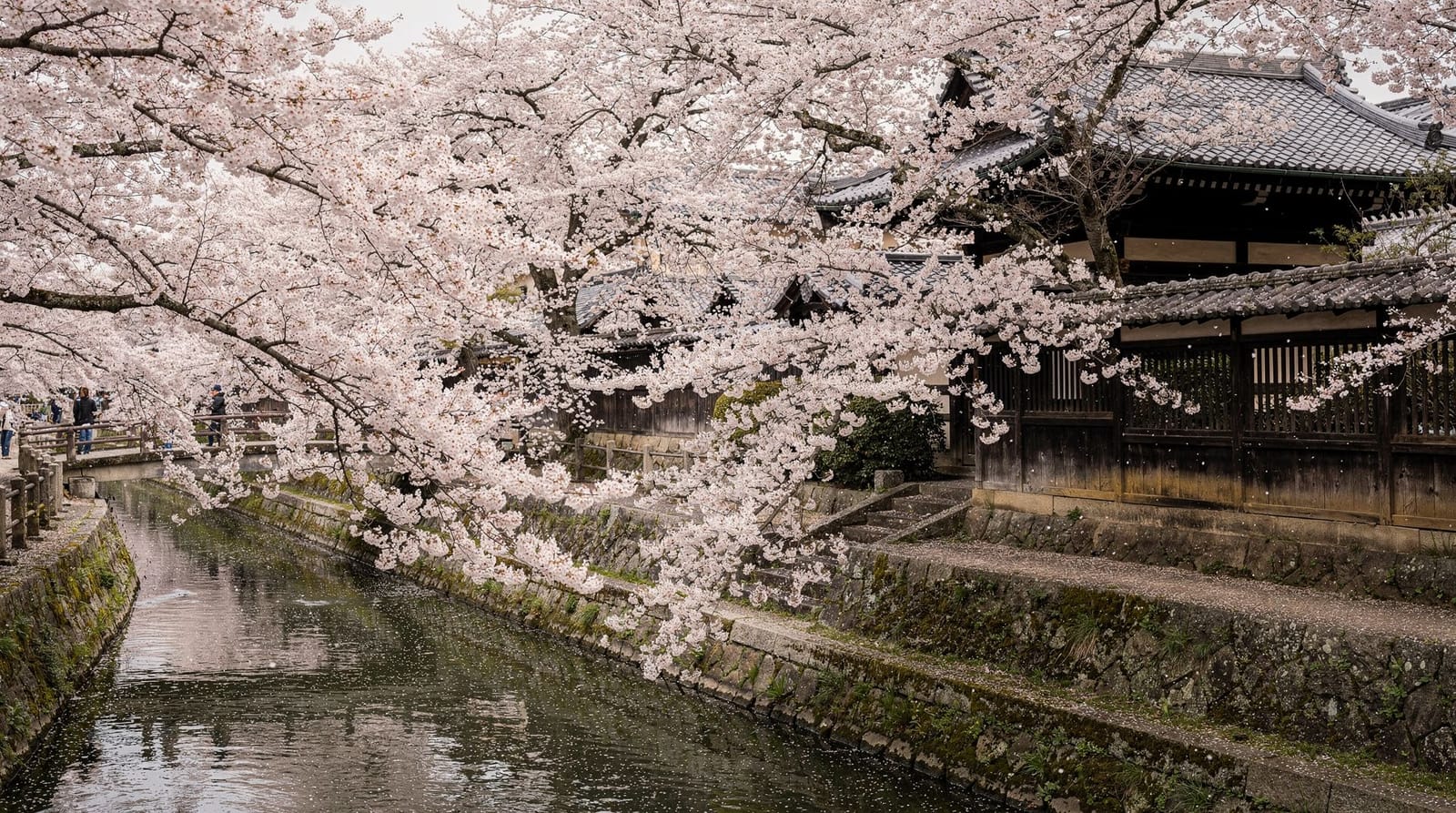
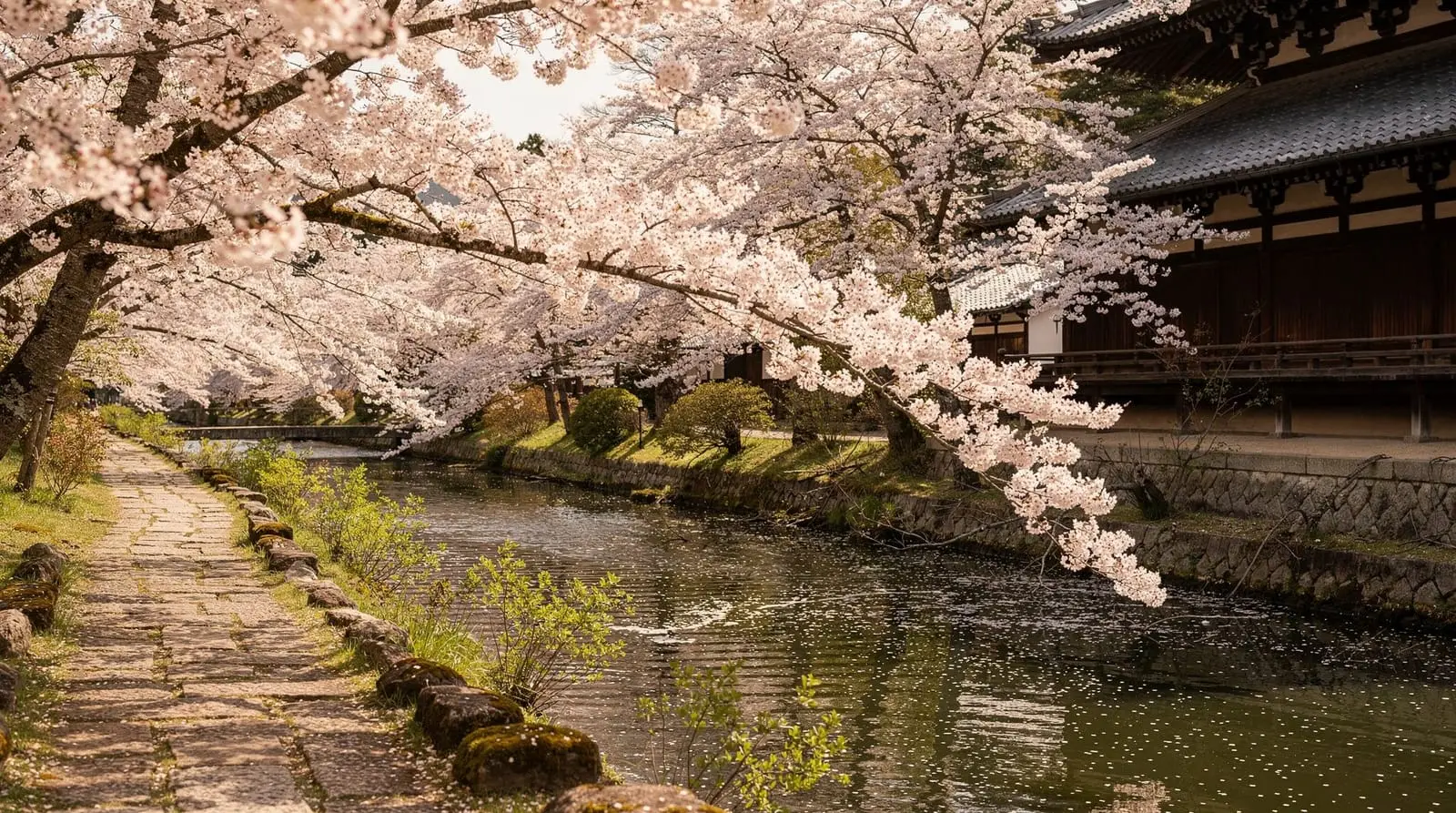
The first two weeks of April are Kyoto’s most visually dramatic and most crowded window of the entire year. Full bloom (mankai) most commonly lands in the first week, though the exact date shifts 5-10 days year to year. The Philosopher’s Path, Maruyama Park, and Arashiyama all draw their heaviest crowds of the year during this stretch, and hotel rates commonly run 60-100% above baseline.
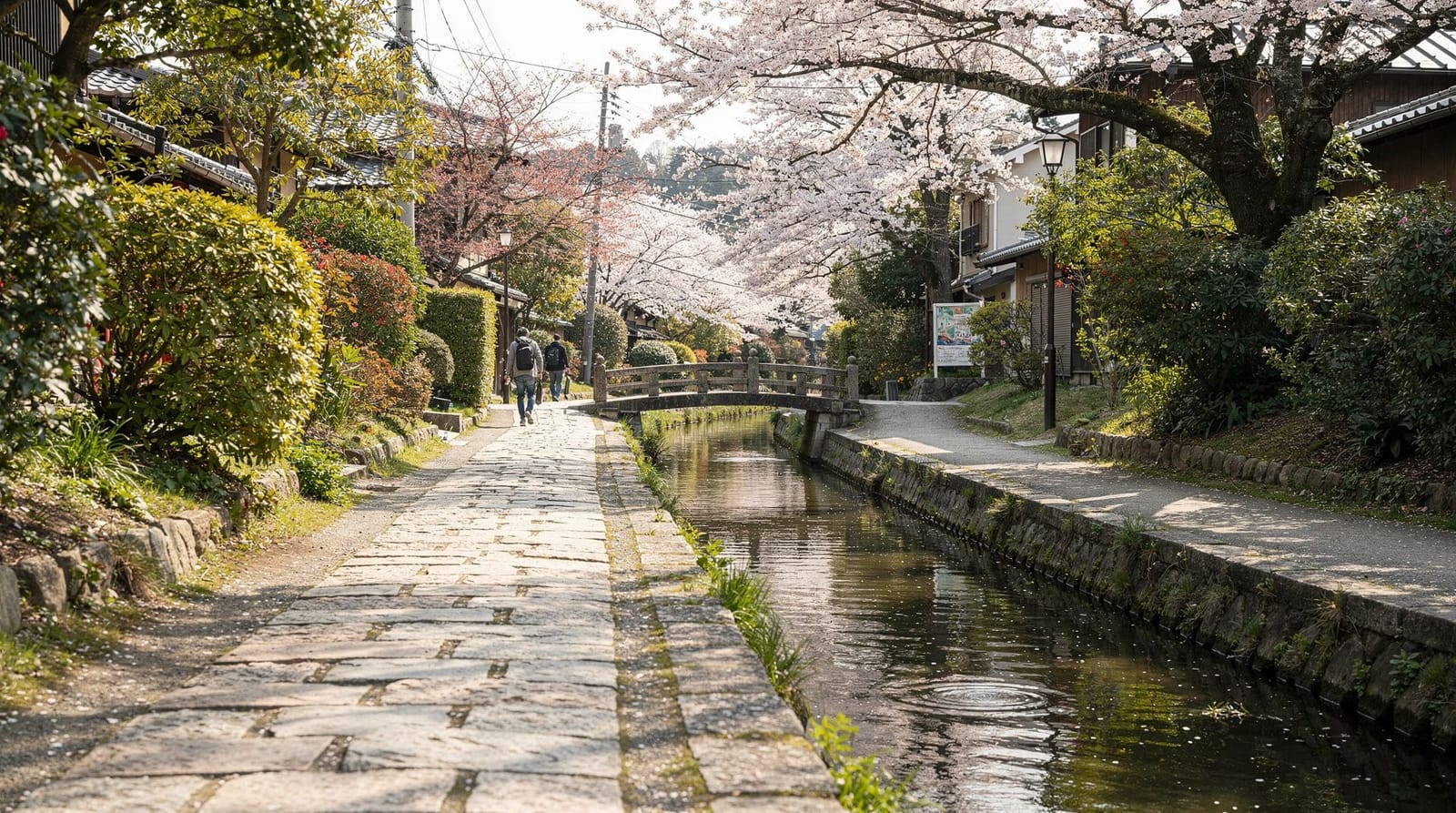
Guided walking tour along the Philosopher’s Path, timed for peak sakuraSee the dedicated cherry blossom guide for a full spot-by-spot breakdown, bloom forecasting, and hanami etiquette — this window deserves its own planning beyond what a single month-by-month section can cover.
Mid-to-late April: sakura fades, spring settles in
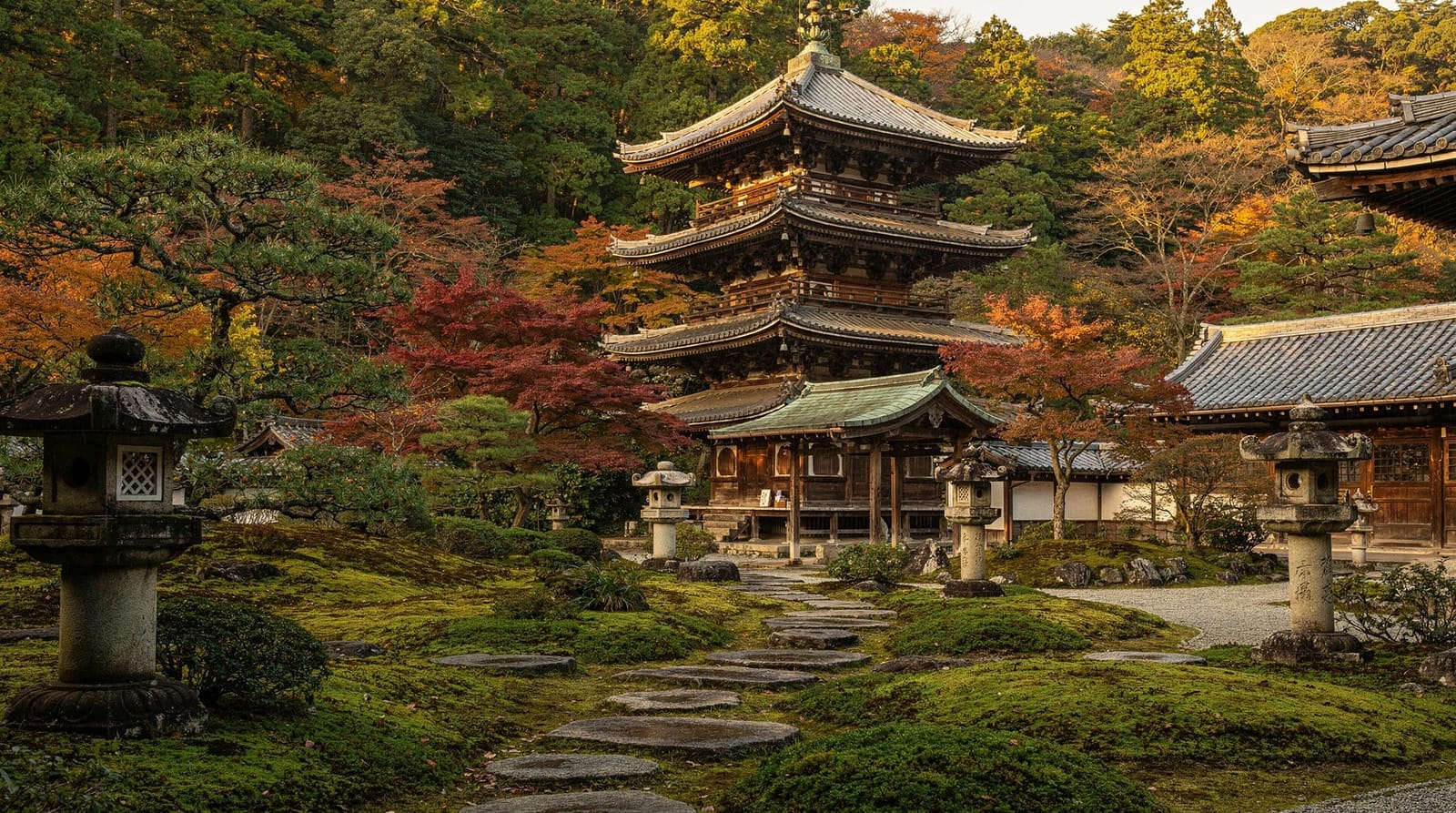
Once petals fall (usually by mid-April, sometimes stretching to the very end of the month depending on the year’s bloom timing), Kyoto’s crowds thin noticeably from the early-April peak, though they remain above the citywide average heading into Golden Week. Temperatures climb into a genuinely comfortable 15-20°C range, and fresh green foliage (shinryoku) begins appearing in the temple gardens, a preview of May’s most striking visual quality.
Nijo Castle’s grounds and Imperial Palace Park both look particularly good during this transitional stretch, combining late blossoms with fresh green growth.
Imperial Palace and Nijo Castle guided walking tourGolden Week: April 29-May 5, avoid if flexible
Golden Week is a cluster of national holidays — Showa Day, Constitution Memorial Day, Greenery Day, and Children’s Day, falling close together — that creates Japan’s single largest domestic travel period of the year. Kyoto’s major sights, trains, and hotels all run at or near capacity during this week, on top of whatever residual sakura-season crowd remains. If trip dates are flexible at all, shifting even a few days outside this specific window makes a meaningful difference to both crowd levels and hotel pricing. If a trip must land during Golden Week, booking accommodation and any must-see reservations several months ahead is close to necessary.
May: the underrated month
May, particularly the stretch after Golden Week ends (May 6 onward), is arguably spring’s best-kept secret and one of the most underrated months in Kyoto’s entire calendar. Temperatures settle into a comfortable 18-24°C, temple gardens are at their greenest (shinryoku, fresh green foliage, is at its peak), and crowds drop well below April’s levels while remaining comfortably below summer’s heat.
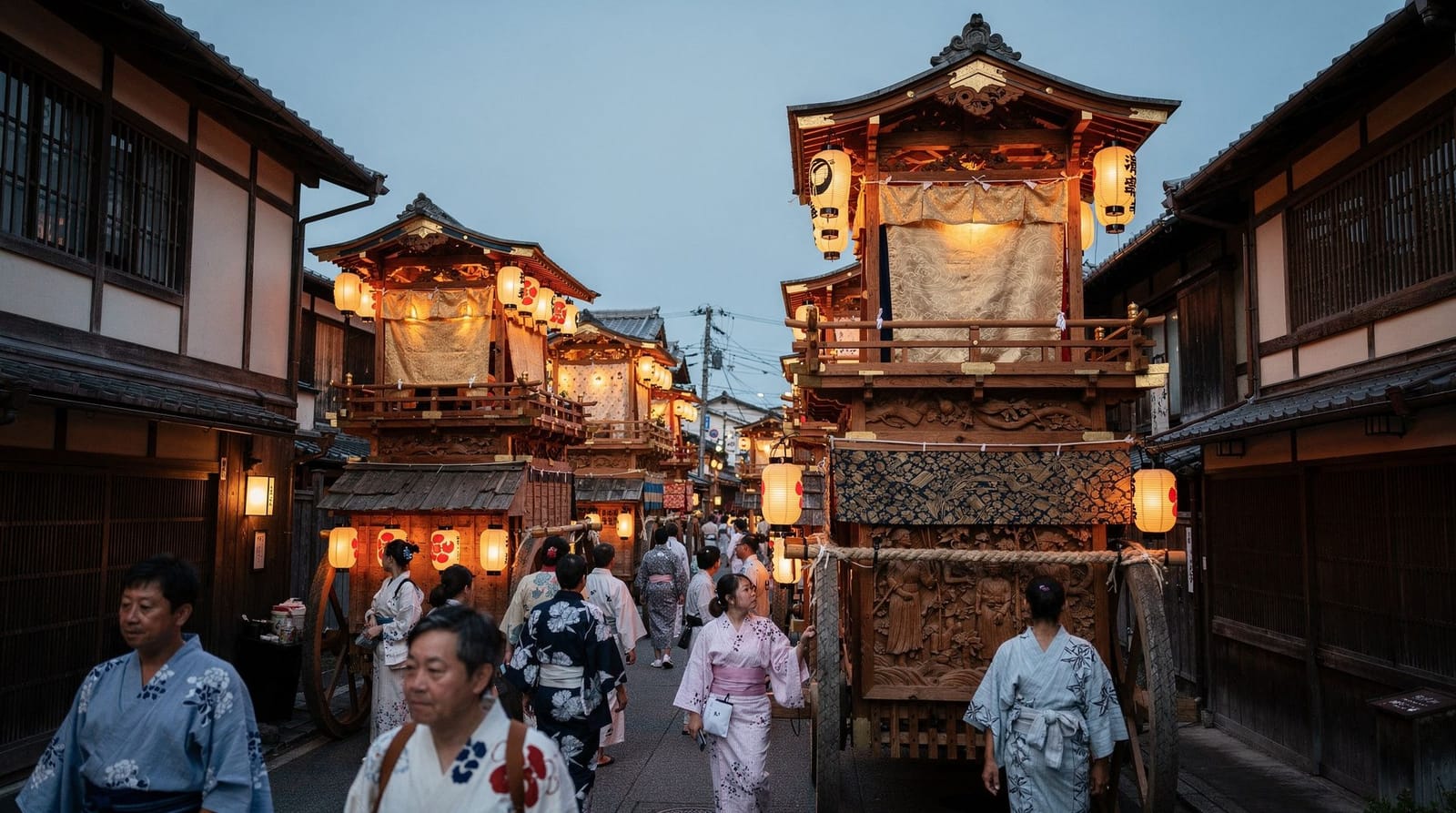
Aoi Matsuri, one of Kyoto’s three major annual festivals alongside Gion Matsuri and Jidai Matsuri, runs on May 15 — a Heian-period costume procession moving from the Imperial Palace to Shimogamo and Kamigamo shrines, a genuinely distinctive event worth building a free afternoon around if dates align, without requiring restructuring an entire trip.
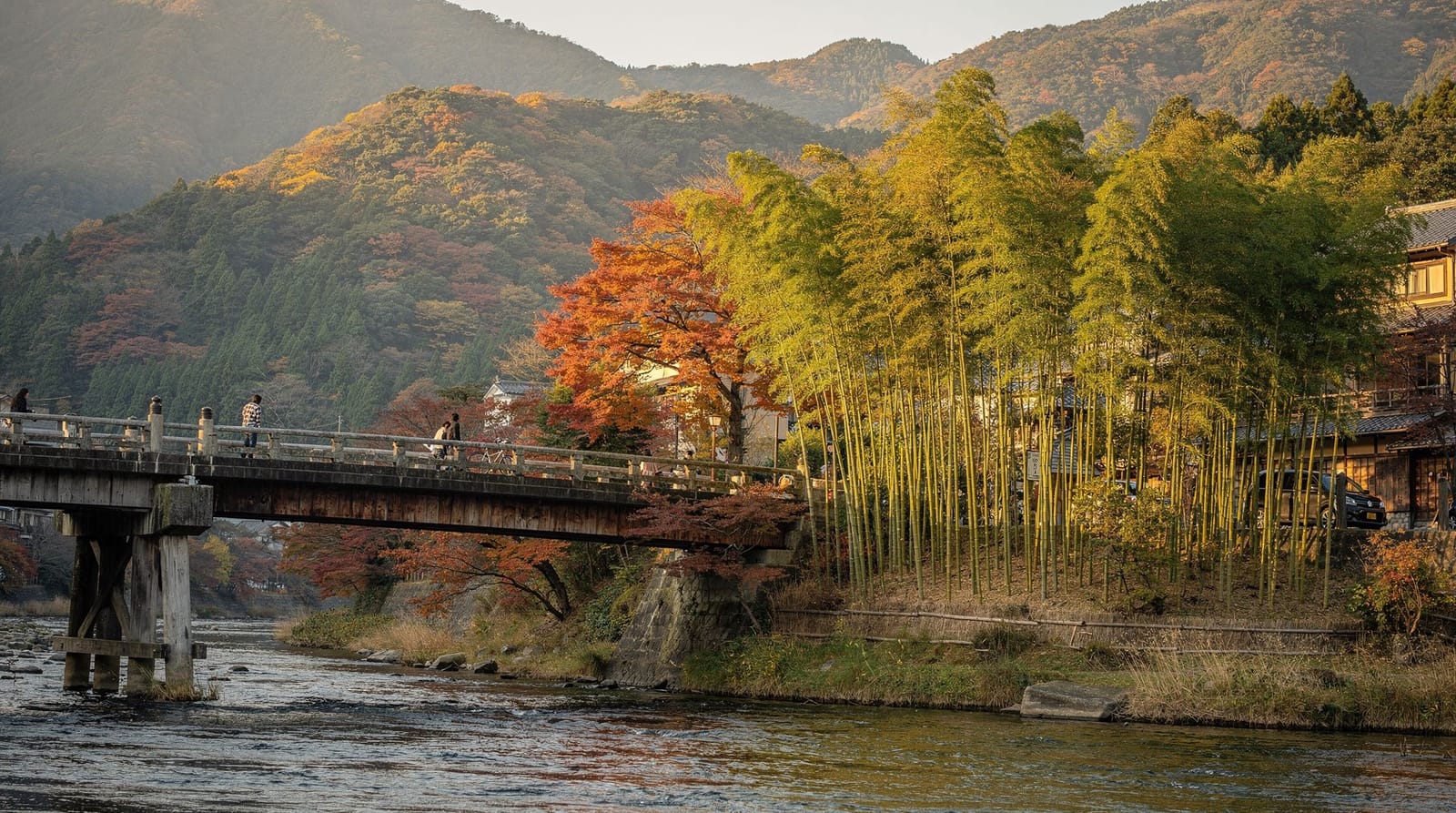
Arashiyama bamboo forest morning bike tour — comfortable in May’s mild temperaturesRainfall and weather variability across spring
Spring rainfall in Kyoto is real but manageable — March and April see occasional showers, rarely multi-day washouts, and May is typically the driest of the three months, sitting just ahead of Japan’s June-to-mid-July rainy season. A light, packable rain jacket is worth carrying throughout spring regardless of forecast, since a clear morning can turn to a passing shower by afternoon often enough to matter for a temple-heavy, walking-intensive itinerary.
How spring crowds compare across the season
Crowd levels across spring aren’t uniform — early April (peak sakura) and Golden Week are genuine spikes, while March, late April (post-sakura, pre-Golden Week), and most of May sit at or below the citywide average. A trip built around avoiding both spikes — arriving in the second half of March for plum blossoms and quiet, or in mid-to-late May for comfortable weather and green gardens — trades the single most famous week of the year for a considerably easier, cheaper trip. See avoiding crowds in Kyoto for tactics that apply within any of these windows, including which specific sights benefit most from an early-morning start.
Planning a spring itinerary around weather and crowds together
For a first spring trip, pairing weather comfort with crowd tolerance is the most useful planning lens: early April trades comfort and calm for the year’s single most photogenic week, while May trades a degree of visual drama for comfort, cost, and ease at nearly every stop. Neither choice is wrong — see how many days in Kyoto for general pacing and Kyoto for first-time visitors for how a spring trip fits into a broader first visit to the city, whichever window ends up chosen.
Spring day trips
Nara’s cherry blossoms and Todai-ji grounds, and Arashiyama’s Sagano district, both work well as spring day-trip extensions from central Kyoto, colouring and greening on a similar schedule to the city itself. See the Nara destination guide and Arashiyama destination guide for transport details and what to prioritize on a spring visit to either.
Spring food and seasonal specialties
Spring brings a distinct seasonal identity to Kyoto’s food scene worth building into any trip beyond the sakura mochi and hanami dango tied specifically to cherry blossom season. Takenoko (bamboo shoot), harvested locally around Nishikyo and Arashiyama in April, appears on kaiseki menus and in home-style dishes for a short window each spring, prized for its tenderness compared to the tougher shoots available the rest of the year.
Sansai (mountain vegetables) — foraged greens like warabi and zenmai — show up in tempura and simmered dishes through March and April, a genuinely seasonal marker distinct from the vegetables available year-round. Ichigo (strawberry) desserts, from parfaits to shortcakes, peak in quality and availability through spring, and several cafés run limited seasonal strawberry menus through the season.
Clothing by month: a practical breakdown
March calls for a proper coat or heavy jacket, with mornings often near freezing even as afternoons warm into the low teens Celsius — gloves and a scarf are reasonable additions for early-morning temple visits. April sits in a genuine transition zone: a mid-weight jacket that can come off by midday works for most of the month, though early April mornings still run cool enough to want a layer.
May is the month layering matters least — a light jacket for cooler mornings and evenings is generally enough, with T-shirt weather common by midday. Rain gear (a packable jacket rather than an umbrella, which is less practical for temple-hopping) is worth carrying throughout the season regardless of month, since spring showers arrive with little warning even on days with a fair forecast.
Sample spring itinerary structure
A first-time spring trip built around five to seven days might reasonably open with a day or two in central and eastern Kyoto (downtown, Higashiyama, Kiyomizu-dera) before the cherry blossom crowds peak, shift into a dedicated sakura-focused day or two at the Philosopher’s Path and Arashiyama during the forecast bloom window, and close with western and northern Kyoto (Kinkaku-ji, Ryoan-ji) or a day trip to Nara or Uji once the peak sakura crowds have thinned.
Building this kind of sequence — general sightseeing before and after a dedicated flower-viewing window — spreads crowd exposure across the trip rather than concentrating every day into the single most crowded stretch of the entire Kyoto calendar. See how many days in Kyoto for a fuller breakdown of pacing across different trip lengths.
Comparing spring to Kyoto’s other seasons
Spring’s closest rival for visual drama is autumn’s momiji season, covered in Kyoto in autumn — both carry a comparable crowd and cost premium during their respective peaks, and the choice between them often comes down to personal preference (soft pink blossoms and a festive hanami atmosphere versus deep red foliage and a calmer, more solitary viewing tradition) rather than one being objectively better.
Compared to summer, covered in Kyoto in summer, spring offers far more comfortable walking weather at the cost of significantly higher crowds and prices during the sakura peak specifically. Compared to winter, covered in Kyoto in winter, spring trades winter’s calm and low cost for the reward of the year’s most photogenic week, for travelers who prioritize that trade-off.
Spring festivals and events beyond Aoi Matsuri
Beyond Aoi Matsuri’s May 15 procession, spring carries a handful of smaller but genuine local events worth knowing about. Miyako Odori, a traditional geiko and maiko dance performance held in Gion through April, offers a rare, accessible glimpse into a normally closed-off performance tradition, running for a set month-long season rather than a single date, making it easier to fit into a spring itinerary than a fixed one-day event.
Kyoto Cherry Blossom Festival events at various temples, distinct from the general sakura viewing already covered, sometimes include tea ceremonies or seasonal food events timed to the bloom. Several shrines also hold smaller spring purification and seasonal-transition rituals through March and April that, while not major tourist draws, add to the sense that spring in Kyoto is a season of transition and renewal beyond just the flowers themselves.
Booking timelines: how far ahead for a spring trip
Because sakura bloom dates aren’t confirmed with real precision until 3-4 weeks out, booking a spring trip involves a specific two-stage approach that differs from booking other seasons. Flights and refundable or flexible-rate accommodation are worth securing 4-6 months ahead, targeting the historical average bloom window (roughly the last week of March through the second week of April) without expecting exact precision.
Once forecasts firm up in the 3-4 weeks before travel, adjusting specific day-by-day plans — which days go to the Philosopher’s Path versus other sightseeing — around the confirmed forecast is the more realistic second stage, rather than trying to lock exact dates a year in advance. Non-flexible, heavily discounted bookings carry real risk during this specific season in a way they don’t during more weather-stable months like October or February.
Spring for families and less mobile travelers
Spring’s mild temperatures and long daylight hours make it one of the more forgiving seasons for families and travelers with mobility considerations, avoiding both summer’s heat stress and winter’s occasional icy conditions on temple stone paths. The trade-off is crowd density during peak sakura weeks, which can be genuinely difficult to navigate with a stroller or for anyone needing more space and slower pacing than a dense crowd allows. Families prioritizing ease over peak bloom timing are often better served targeting May specifically, which retains spring’s comfortable weather while avoiding both the sakura crowd peak and Golden Week’s domestic travel surge.
Transport considerations across spring
Kyoto’s bus network runs at its most strained during the two spring crowd peaks — early April’s sakura window and Golden Week — with routes serving the Philosopher’s Path, Arashiyama, and Kiyomizu-dera all prone to standing-room-only conditions and schedule delays through the middle of the day. Outside those two specific windows, March and most of May see normal, manageable bus and train service. An Icoca IC card, loaded on arrival, remains the simplest way to handle transit across the season regardless of crowd level, and switching to train or subway lines over buses during the two peak windows specifically reduces the amount of time lost to transit delays.
Spring for photographers beyond sakura
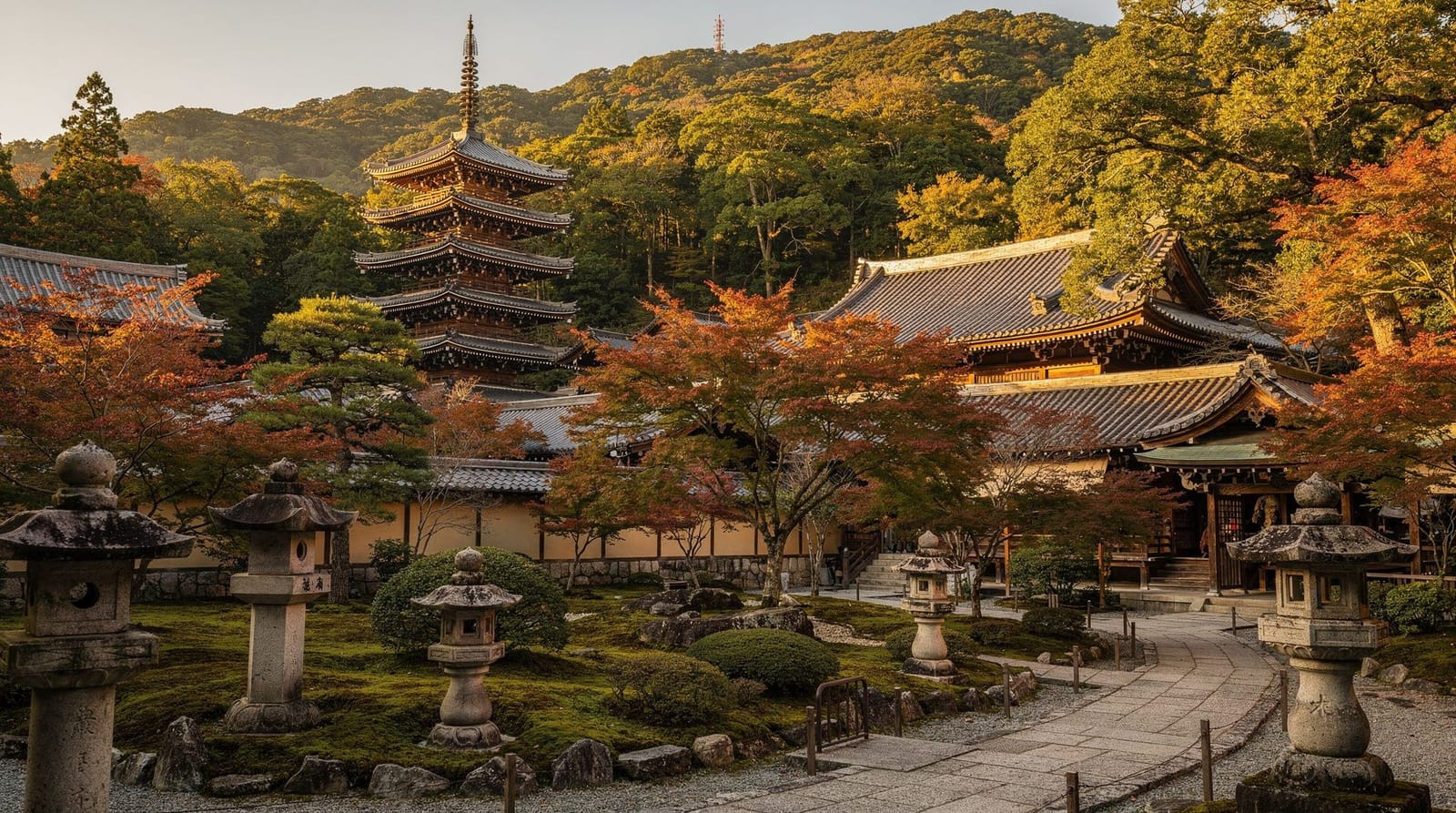
While cherry blossoms dominate spring’s photography reputation, the season offers other strong subjects worth building into a trip. Shinryoku, the fresh green foliage that appears through late April and May, gives temple gardens — particularly moss gardens and the borrowed-scenery (shakkei) gardens at temples like Tenryu-ji — a vivid, saturated quality distinct from any other season, often photographed as a deliberate counterpoint to the more famous pink-toned sakura shots.
Wisteria, blooming at a handful of specific gardens in late April and early May, offers a purple-toned seasonal alternative for photographers who’ve already covered sakura extensively on previous trips. Early morning mist, more common in spring than other seasons given the temperature transitions typical of the period, adds atmosphere to temple garden photography at spots like Arashiyama’s bamboo grove when conditions align.
Spring shopping and seasonal goods
Spring brings a specific rotation of seasonal goods worth knowing about beyond food. Sakura-themed goods — stationery, ceramics, textiles — appear in shops citywide during the season and represent a more considered souvenir than generic gift-shop items, often produced by local craftspeople specifically for the season rather than mass-produced year-round stock.
Nishiki Market’s stalls rotate toward spring vegetables and seasonal prepared foods during the season, worth a browse even without buying, as a way to see the seasonal rhythm reflected in the market’s actual offerings rather than just in tourist-facing displays. See the Nishiki Market guide for a fuller picture of what the market offers across the year.
Spring for day-trip planning
Spring’s mild, predictable weather (outside the occasional shower) makes it one of the more reliable seasons for day trips beyond Kyoto itself. Nara’s own cherry blossoms, timed close to Kyoto’s own bloom window, and its famously docile deer, make a spring day trip there a natural extension of a sakura-focused visit. Uji’s tea fields, greener and more vivid in late spring than any other season, pair well with a May visit specifically, once the sakura rush has passed and the fields are at their most photogenic. See the Uji destination guide for what a spring day trip there looks like beyond the general matcha-focused sightseeing most itineraries default to.
Final planning notes for a spring trip
Spring rewards travelers who plan with genuine flexibility rather than locking every day to a fixed sight months in advance — bloom timing, weather variability, and the sheer density of crowds during the two peak windows (early April and Golden Week) all argue for keeping at least one or two days loosely structured, ready to shift toward whichever spots are least crowded or best timed once a trip is actually underway. A spring trip built this way, rather than around a single rigid must-see list, tends to deliver a noticeably better experience than one that insists on hitting every headline spot at its absolute theoretical peak.
Spring for first-time versus repeat visitors
A first Kyoto trip has a reasonable case for accepting early April’s crowds specifically for the sakura, since it’s the single most iconic week the city offers and hard to substitute for on a first visit. A repeat visitor who has already experienced peak bloom once gains more from targeting late May instead, trading the flowers for fresh green temple gardens, thinner crowds, and noticeably better value across accommodation and dining. See Kyoto for first-time visitors for how a spring trip fits into a broader first visit, and the cherry blossom guide for spot-by-spot bloom forecasting if sakura is the priority.
Arashiyama hidden temples and bamboo grove tour — a quieter spring alternative to the busiest sakura spotsFrequently asked questions about Kyoto in spring — month-by-month weather, festivals, and crowds
What should I pack for spring in Kyoto?
Is March too early to see cherry blossoms in Kyoto?
What is Golden Week and should I avoid it?
Is April or May better for a first-time visit to Kyoto?
Does it rain a lot in Kyoto during spring?
What festivals happen in Kyoto during spring?
Is spring the most expensive time to visit Kyoto?
Top experiences
Bookable activities with verified prices and instant confirmation on GetYourGuide.