Kyoto travel budget — real daily costs by travel style
JR West: Kansai Mini Pass
How much does a day in Kyoto cost?
A budget traveler can get by on roughly ¥8,000-12,000 (US$53-80) a day covering hostel accommodation, transit, and simple meals. A mid-range day — a comfortable hotel, sit-down meals, a couple of paid attractions — runs ¥20,000-30,000 (US$130-200). A luxury day with a high-end hotel and kaiseki dining can exceed ¥60,000 (US$395) without much effort.
Kyoto’s cost varies more by choice than by any fixed “cost of Japan” figure — the same day can run ¥8,000 or ¥80,000 depending almost entirely on accommodation tier and how many paid experiences you stack in. This guide breaks down what a real day costs at three levels, where the money actually goes, and which money-saving habits genuinely move the needle versus which ones save pocket change while costing convenience.
| Budget day | Around ¥8,000-12,000 (US$53-80) |
| Mid-range day | Around ¥20,000-30,000 (US$130-200) |
| Luxury day | ¥60,000+ (US$395+) |
| Biggest lever | Accommodation, 40-55% of daily spend |
| Cheapest season | June-early July and Jan-early March |
Three tiers, side by side
| Category | Budget | Mid-range | Luxury |
|---|---|---|---|
| Accommodation | ¥4,000-6,000 | ¥15,000-22,000 | ¥50,000-100,000+ |
| Food (3 meals) | ¥2,500-3,500 | ¥4,000-6,000 | ¥15,000-30,000 (kaiseki) |
| Transport | ¥1,000-1,500 | ¥2,000-3,000 | Private car/guide |
| Temple admission | ¥500-1,500 | ¥1,500-3,000 | Included in tours |
Three real daily budgets, not a vague range
Generic “Kyoto is affordable” or “Kyoto is expensive” advice isn’t useful without a baseline. What follows are three concrete daily figures — budget, mid-range, and luxury — built from actual line items (a specific hotel tier, specific meals, specific transit costs) rather than a single vague number, at a working exchange rate of roughly ¥150 to US$1.
Budget day: ¥8,000-12,000 (US$53-80)
A budget day starts with hostel or capsule accommodation at ¥4,000-6,000 a night, split as roughly ¥5,000 for a private hostel room if traveling solo, or divide a shared room cost for two. Add ¥1,000-1,500 for a day’s local transport (an Icoca IC card covering 4-5 short trips), ¥2,500-3,500 for food across three meals (a ¥500-800 convenience store or bakery breakfast, a ¥900-1,200 noodle or curry lunch set, a ¥1,200-1,800 casual dinner), and ¥500-1,500 for one modest temple entrance fee, and the day lands around ¥8,000-12,000 excluding any splurge.
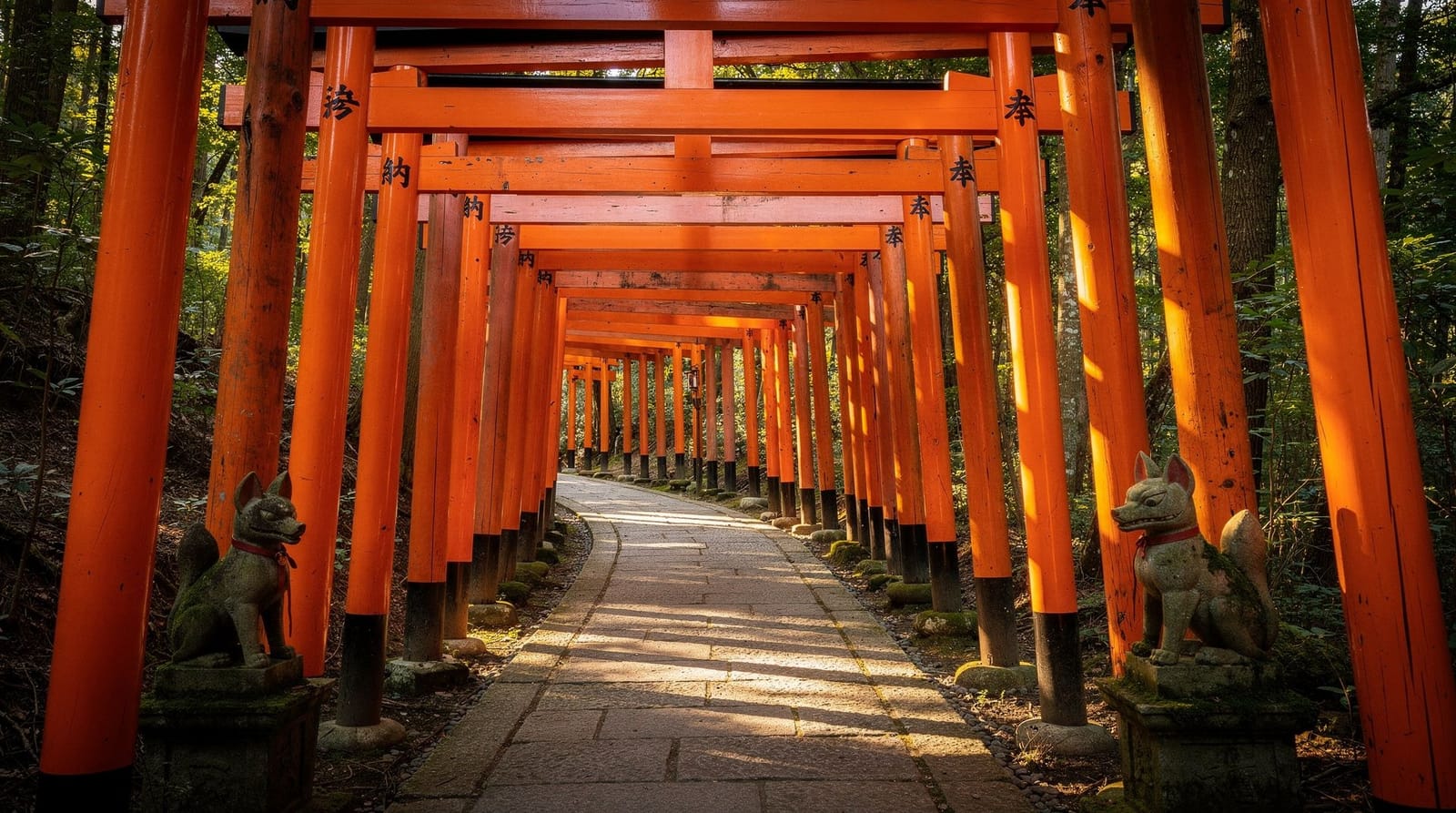
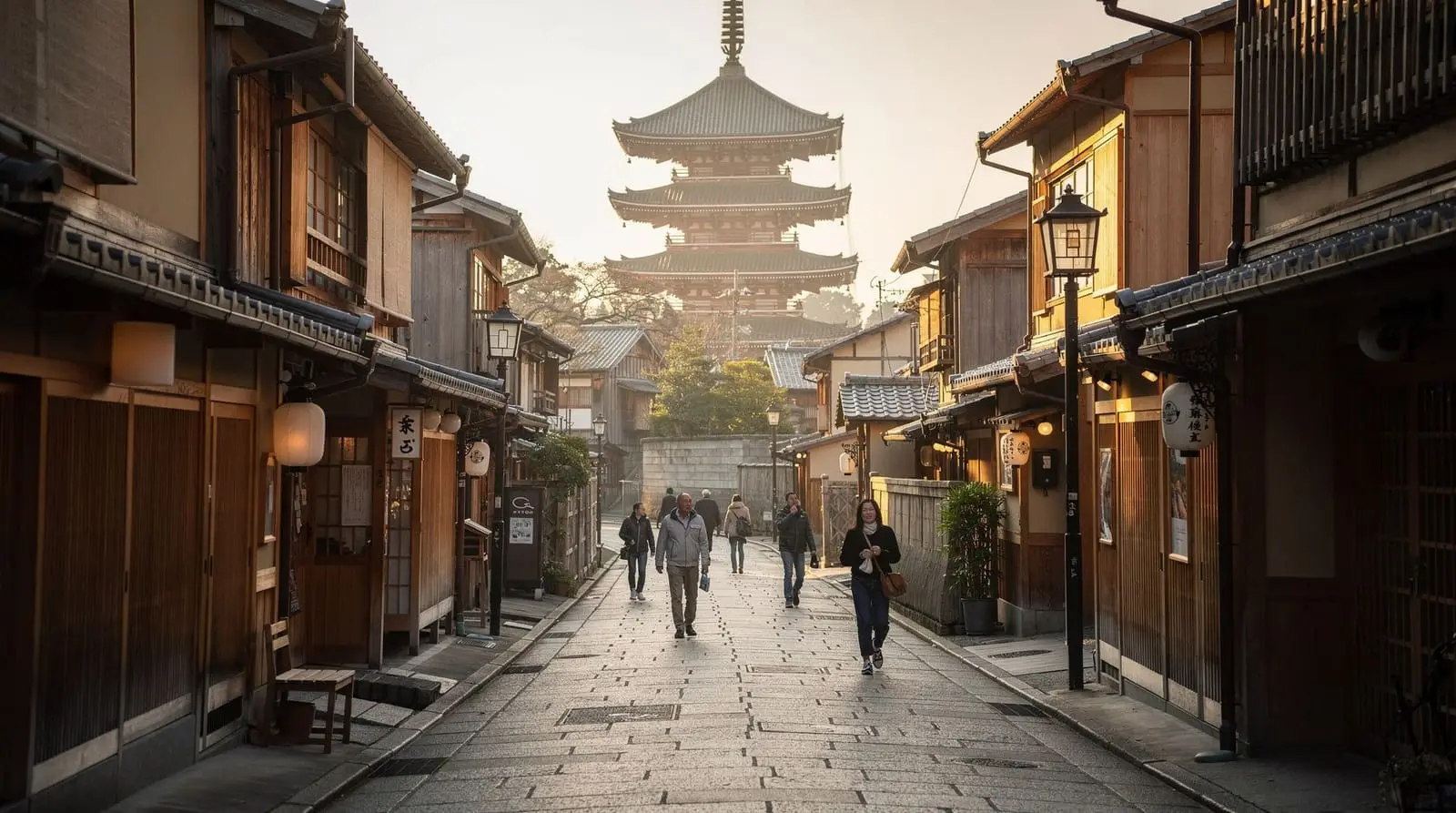
This tier works well in Kyoto specifically because so many of the city’s best experiences — Fushimi Inari, the Philosopher’s Path, walking through Gion at dusk — are free. A budget traveler who prioritizes free shrines and walking routes over paid temple interiors and guided tours can hold costs down without missing the city’s signature sights.
Mid-range day: ¥20,000-30,000 (US$130-200)
A mid-range day assumes a comfortable 3-star hotel or well-located business hotel at ¥15,000-22,000 a night, ¥2,000-3,000 in local transport including a taxi or two for convenience, ¥4,000-6,000 in food across three proper sit-down meals, and ¥1,500-3,000 in temple and shrine admission covering two or three paid sights. A single paid experience — a guided tour, a tea ceremony, a kimono rental — adds another ¥3,000-8,000 on the days it happens, which is roughly every other day on a typical itinerary rather than daily.
Hop-on hop-off sightseeing bus ticket — one flat cost covering a full day of stops between the main areasThis tier represents the most common real-world Kyoto trip — comfortable, unrushed, without either scrimping on meals or upgrading to luxury accommodation, and it’s the baseline most of this site’s budget comparisons use.
Luxury day: ¥60,000+ (US$395+)
A luxury day starts with a high-end hotel or traditional ryokan at ¥50,000-100,000+ a night (Park Hyatt Kyoto, Four Seasons Kyoto, or a top-tier ryokan like Hoshinoya Kyoto all fall in or above this range), a private guided tour or car service at ¥15,000-40,000, and a kaiseki dinner at ¥15,000-30,000 per person. Add temple entrance fees and incidental transport, and a full luxury day easily exceeds ¥100,000-150,000 per person before flights.
The honest note here: luxury spending in Kyoto buys genuine quality — a centuries-old ryokan experience, an exceptional kaiseki meal, a licensed private guide who can get context a self-guided visitor won’t — rather than simply a nicer version of the same experience. It’s worth it for travelers who value those specific things, and not a meaningful upgrade for travelers who’d rather put the difference toward more days in the city instead.
Where the money actually goes: accommodation dominates
Across all three tiers, accommodation is the single largest cost, typically 40-55% of total daily spending. This is the lever with the most room to move — the gap between a ¥6,000 hostel bed and a ¥25,000 mid-range hotel room is larger than the gap between a budget and mid-range food or transport day combined. See the where to stay in Kyoto guide for how neighborhood choice affects this cost, since price varies as much by location as by hotel category.
Temple and shrine admission: a Kyoto-specific cost
Unlike Tokyo, where most major sights (parks, shrines, city viewpoints) are free, Kyoto’s headline temples mostly charge admission — typically ¥300-600 per site. Kiyomizu-dera runs ¥500, Kinkaku-ji ¥500, Ginkaku-ji ¥500, Nijo Castle ¥800-1,300 depending on which areas you enter. A day visiting three or four paid temples can run ¥1,500-2,500 in admission alone, before any food or transport.
The offsetting fact: Fushimi Inari, most Shinto shrines, and many temple grounds (though not always their inner halls) are free to enter. Structuring an itinerary to alternate paid temple days with free shrine-and-walking days — Fushimi Inari one day, Kiyomizu-dera and Kinkaku-ji the next — spreads this cost out rather than front-loading it.
Guided tours: when they’re worth the extra cost
A guided tour or ticketed package typically costs more upfront than visiting the same sights independently, but the comparison isn’t always straightforward. A full-day guided bus tour covering Kinkaku-ji, Nijo Castle, and Fushimi Inari with entrance tickets included, for instance, often runs close to what independent transport and separate admission tickets would cost anyway, once bus fares and the time value of navigating multiple transfers are factored in — the main thing you’re actually paying extra for is the guide’s context and the efficiency of a fixed route.
For first-time visitors short on time, or anyone who values historical context over independent pacing, this can be reasonable value rather than a pure premium. For a longer, slower trip with time to research independently, self-guided visits with a good guidebook or this site’s individual sight guides usually work out cheaper for the same sights.
Transport: IC card beats day passes for most itineraries
Load an Icoca IC card on arrival and use it for every bus, train, and subway ride rather than buying individual tickets or a day pass. Kyoto’s city buses run a flat ¥230 fare regardless of distance, and the subway and JR lines charge by distance, typically ¥220-360 for trips within the city. A one-day bus pass exists but only pays off with four or more bus rides in a single day, which most itineraries — grouped by neighborhood rather than crisscrossing the city — don’t hit.
JR West Kansai Mini Pass — worth pricing out if your trip includes Osaka, Nara, or Himeji day tripsFor trips extending beyond Kyoto itself — Osaka, Nara, Himeji, Kobe — the Kansai regional rail passes are worth pricing against individual tickets. They rarely pay off for Kyoto-only sightseeing, since local transport here runs mostly on buses and the subway rather than the JR lines these passes cover, but they can save real money once two or three day trips outside the city are on the itinerary.
Kansai Wide Area Rail and Bus Pass — covers a broader day-trip radius including Himeji and the airport transferConnectivity: eSIM versus pocket wifi versus roaming
A data connection is close to essential for navigating Kyoto’s bus network and translating menus, and the cost comparison is straightforward: an eSIM data plan runs roughly ¥3,000-5,000 (US$20-33) for a week of data, a rented pocket wifi device runs similarly but requires airport pickup and return, and most home carrier international roaming plans cost several times more per day than either option. For a trip of a week or less, an eSIM set up before departure is generally the cheapest and least logistically demanding choice.
Japan/Asia eSIM roaming data plan — set up before you land, no airport counter neededFood: where the range is widest
Food costs vary more by choice than almost any other budget category. A convenience store (konbini) breakfast and lunch can run ¥600-1,000 combined, while the same two meals at sit-down restaurants run ¥3,000-4,500. Nishiki Market’s stalls offer a middle path — ¥300-800 per item, letting you sample several dishes for less than one full sit-down meal. Splurging on one kaiseki dinner during a trip, even on an otherwise budget-conscious itinerary, is a common and reasonable choice — it’s worth treating as a planned one-off cost (¥8,000-25,000 per person) rather than a nightly habit.
How season swings the numbers
Every figure in this guide assumes a normal, non-peak season. During cherry blossom (roughly last week of March through the first two weeks of April) and autumn foliage (mid-to-late November), accommodation rates in central Kyoto commonly run 60-100% above the baseline used here, which alone can push a mid-range ¥20,000-30,000 day to ¥30,000-45,000 without any other spending changing. Golden Week (April 29-May 5) and Obon (mid-August) see a similar, if slightly smaller, spike driven by domestic Japanese travel rather than international visitors specifically.
The flip side: January through early March (excluding New Year), June through mid-July, and most of September see meaningfully lower accommodation rates — sometimes 20-30% below the baseline — while food, transport, and admission costs stay essentially flat year-round. For a budget-conscious trip with flexible dates, shifting into one of these lower-demand windows is a bigger lever than any single money-saving habit within a fixed travel window. The best time to visit Kyoto guide covers the full month-by-month breakdown, including which lower-cost months still offer strong weather and foliage.
Money-saving habits that actually move the needle
A handful of habits meaningfully reduce cost without meaningfully reducing quality of experience. Booking accommodation outside the cherry blossom and autumn foliage peaks, when rates roughly double, is the single largest lever. Eating your main meal at lunch (set lunch menus, teishoku, commonly run 30-40% cheaper than the identical dinner menu at the same restaurant) rather than dinner is a reliable, low-effort saving. Walking between nearby sights instead of taking short taxi or bus rides adds up over a multi-day trip, particularly within already-compact areas like Higashiyama or Arashiyama. None of these require sacrificing the sights or food that make a trip worthwhile — they shift when and how you pay for the same experiences.
How Kyoto compares to Tokyo and Osaka
Kyoto sits close to Tokyo in most cost categories — accommodation, food, and local transport all run similar ranges, and neither city is meaningfully cheaper across the board. The real difference is structural: Tokyo’s major sights (Meiji Shrine, most parks, most city viewpoints) are largely free, while Kyoto’s equivalent headline sights are mostly paid temples, which pushes a temple-heavy Kyoto day ¥2,000-4,000 higher in admission fees alone than an equivalent Tokyo sightseeing day.
Osaka runs slightly cheaper than both for food specifically — its street food and casual dining culture (Dotonbori’s takoyaki and okonomiyaki stalls, for instance) delivers a satisfying meal for ¥500-1,000 more consistently than Kyoto’s more formal dining scene, where casual options exist but the median meal skews slightly more expensive.
Cash, cards, and topping up your IC card
Japan’s reputation as a cash-heavy society has softened considerably in tourist-facing Kyoto — most hotels, department stores, and chain restaurants accept credit cards, and IC cards themselves can be tapped for small purchases at convenience stores and vending machines. That said, smaller family-run restaurants, some temple ticket counters, and local shops in Nishiki Market or the Higashiyama lanes still operate cash-only, so carrying ¥10,000-20,000 in cash at any time is a reasonable buffer rather than an outdated precaution. IC cards can be topped up at station machines and most convenience stores in ¥1,000 increments using cash or, increasingly, card.
No tipping, and no need to budget for it
Japan has no tipping culture, in restaurants, taxis, or for tour guides, and attempting to tip — leaving cash on a table or handing money directly to staff — is more likely to cause confusion than gratitude, occasionally prompting a server to chase you down to return money they assume you forgot. This is worth knowing purely so it doesn’t factor into your budget planning: unlike destinations where a 15-20% tip is an assumed addition to every restaurant bill, the listed menu price in Kyoto is the actual price, with sales tax already included on nearly everything.
Budget mistakes that quietly inflate a trip
A few patterns push costs up without travelers noticing until the final tally. Taking taxis for short distances that a 10-minute walk or a ¥230 bus ride would cover just as well is the most common — a habit that can add ¥5,000-10,000 over a week without ever feeling like a big single expense. Booking accommodation during cherry blossom or autumn foliage season without checking the calendar first is the second, since the same room can cost double what it would three weeks earlier or later.
A third is treating every meal as a sit-down restaurant meal rather than mixing in convenience store or market-stall options for at least one meal a day, which on a week-long trip is the difference between a mid-range and a near-luxury food budget without any corresponding increase in enjoyment.
Budgeting for families and groups
Family and group budgets don’t scale purely by headcount in Kyoto. Many hotel rooms are priced per room up to a maximum occupancy rather than per person, so a family of four sharing one larger room often costs less per person than two adults each booking separate rooms. Temple and shrine admission is typically discounted or free for children under a set age (commonly elementary-school age or younger, varying by site), which meaningfully reduces the per-day admission total for a family day of sightseeing. Transport is one area that doesn’t discount as much — IC card fares apply per rider regardless of group size, though children under 6 generally ride free and ages 6-11 pay a reduced child fare on most trains and buses.
Free things worth building into any budget
It’s worth stating directly that a meaningful share of Kyoto’s best experiences cost nothing at all — Fushimi Inari’s entire trail, the Philosopher’s Path, walking through Gion at dusk, most Shinto shrine grounds, and simply wandering the Higashiyama lanes between paid temple stops are all free. A budget-conscious itinerary that leans into these free experiences rather than treating them as filler between paid attractions can deliver a genuinely rich trip without the admission-fee category ever becoming a significant line item, which is worth remembering when the daily figures above start to feel discouraging.
Souvenirs and incidentals
Most travel budgets underweight the small, recurring costs — bottled water and drinks from vending machines (¥120-180 each, and Kyoto’s summer heat means several a day is normal), coin lockers at train stations for day-trip luggage (¥300-700 depending on size), and the inevitable omiyage (souvenir gifts, often edible, that Japanese travel culture treats as near-obligatory for colleagues and family back home). Budgeting a flat ¥1,000-2,000 a day for this category, separate from meals and transport, keeps the running total honest rather than discovering a ¥15,000 gap at the end of the trip.
Putting it together for your trip length
Multiply whichever daily figure matches your travel style by your planned nights, then add international flights and any pre-trip purchases (JR Pass, eSIM, tours booked in advance) separately, since those don’t scale per day the same way. A mid-range 4-night Kyoto stay lands around ¥100,000-140,000 (US$660-925) in on-the-ground costs; a budget 4-night stay closer to ¥40,000-60,000 (US$265-395). See the how many days in Kyoto guide for how trip length interacts with this budget, and the first-time Kyoto guide for how a first trip typically balances these costs across a full itinerary.
More detailed tactics for stretching a budget day
This guide sets the baseline daily figures; the Kyoto on a budget guide goes further into specific tactics — which convenience store meals actually satisfy, which free sights substitute well for paid ones, and how to structure a genuinely low-cost multi-day itinerary rather than a single budget day in isolation.
Timing also matters as much as any single habit: visiting Fushimi Inari and other free sights before 8am avoids both the crowds and any pressure to pay for a guided option just to skip a queue, and the avoiding crowds guide covers timing strategies that indirectly save money by removing the temptation of paid shortcuts.
Frequently asked questions about Kyoto travel budget — real daily costs by travel style
Is Kyoto expensive compared to Tokyo?
What is the biggest cost in a Kyoto trip?
Do temple entrance fees really add up in Kyoto?
How much should you budget for food per day in Kyoto?
Is an IC card or a bus day pass better value in Kyoto?
How much does a full week in Kyoto cost?
Top experiences
Bookable activities with verified prices and instant confirmation on GetYourGuide.