How many days do you need in Kyoto — 2, 3, 4 or 5 day breakdowns
From Kyoto: Nara heritage half-day tour
Duration: Half day
How many days should you spend in Kyoto?
Three full days is the sweet spot for a first visit — enough for Fushimi Inari, the Higashiyama temple walk, and Arashiyama without rushing. Two days works if you accept dropping one of those three areas. Five days adds a day trip to Nara or Uji plus real rest time, which matters given how much walking a temple-heavy itinerary involves.
| Days | Covers | Best for |
|---|---|---|
| 1 day | Fushimi Inari + shortened Higashiyama | Osaka-based day-trippers |
| 2 days | Two of the four core areas | Short Japan stops |
| 3 days | All three core areas properly | First-time visitors (sweet spot) |
| 4 days | + Northwest cluster (Kinkaku-ji, Nijo Castle) | Slower-paced first visits |
| 5+ days | + Nara, Uji, Osaka, or Himeji day trip | Repeat visitors, deeper trips |
“How many days in Kyoto” is one of the most common planning questions for a Japan trip, and the honest answer depends less on a fixed number and more on how many of the city’s distinct sightseeing areas you want to cover properly, and whether you’re willing to start early enough each morning to beat the crowds that build at every major sight by mid-morning. This guide breaks the question down by day count so you can match trip length to what you actually want to see, rather than picking an arbitrary number and hoping it fits.
The three-area rule of thumb
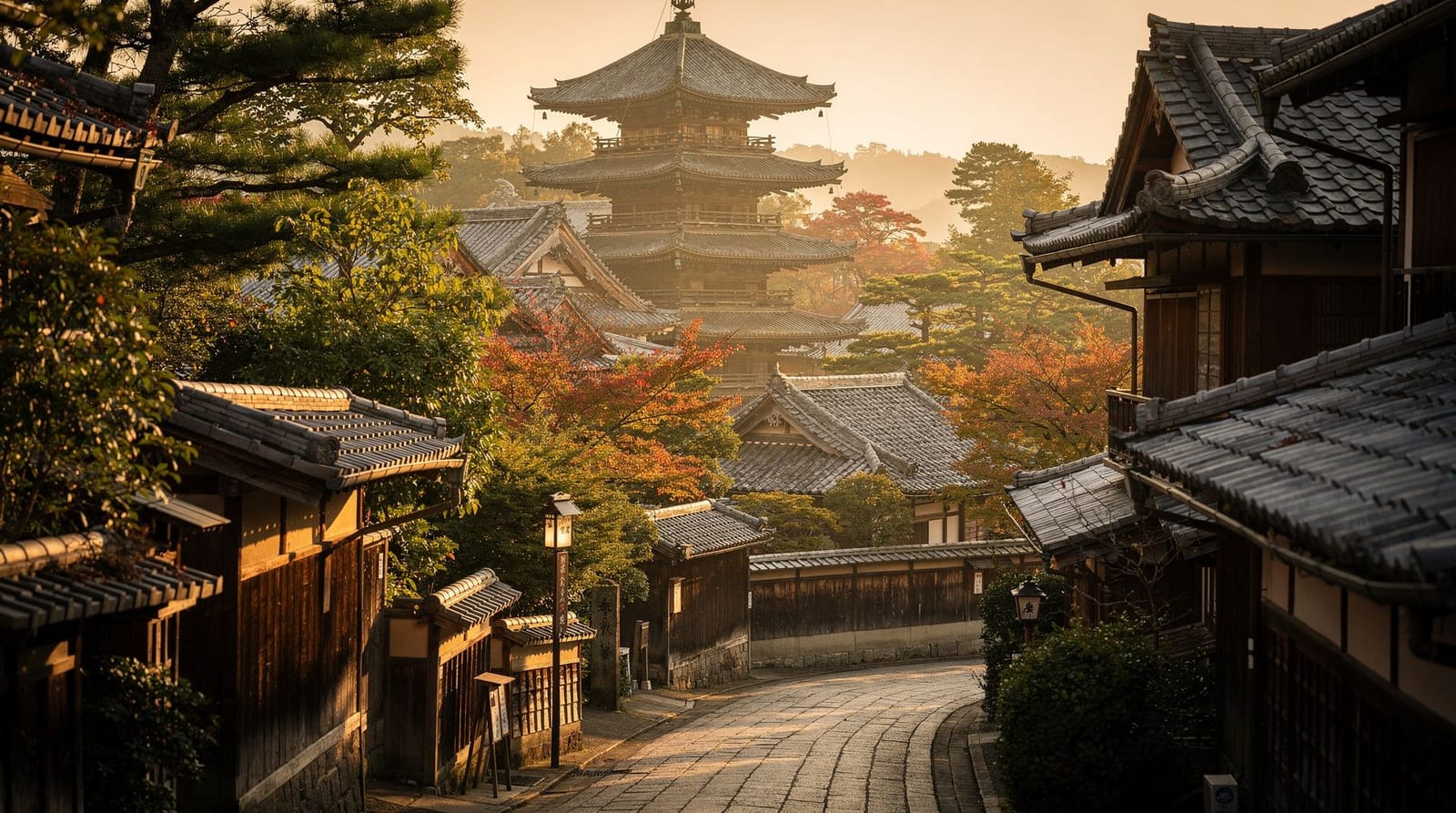
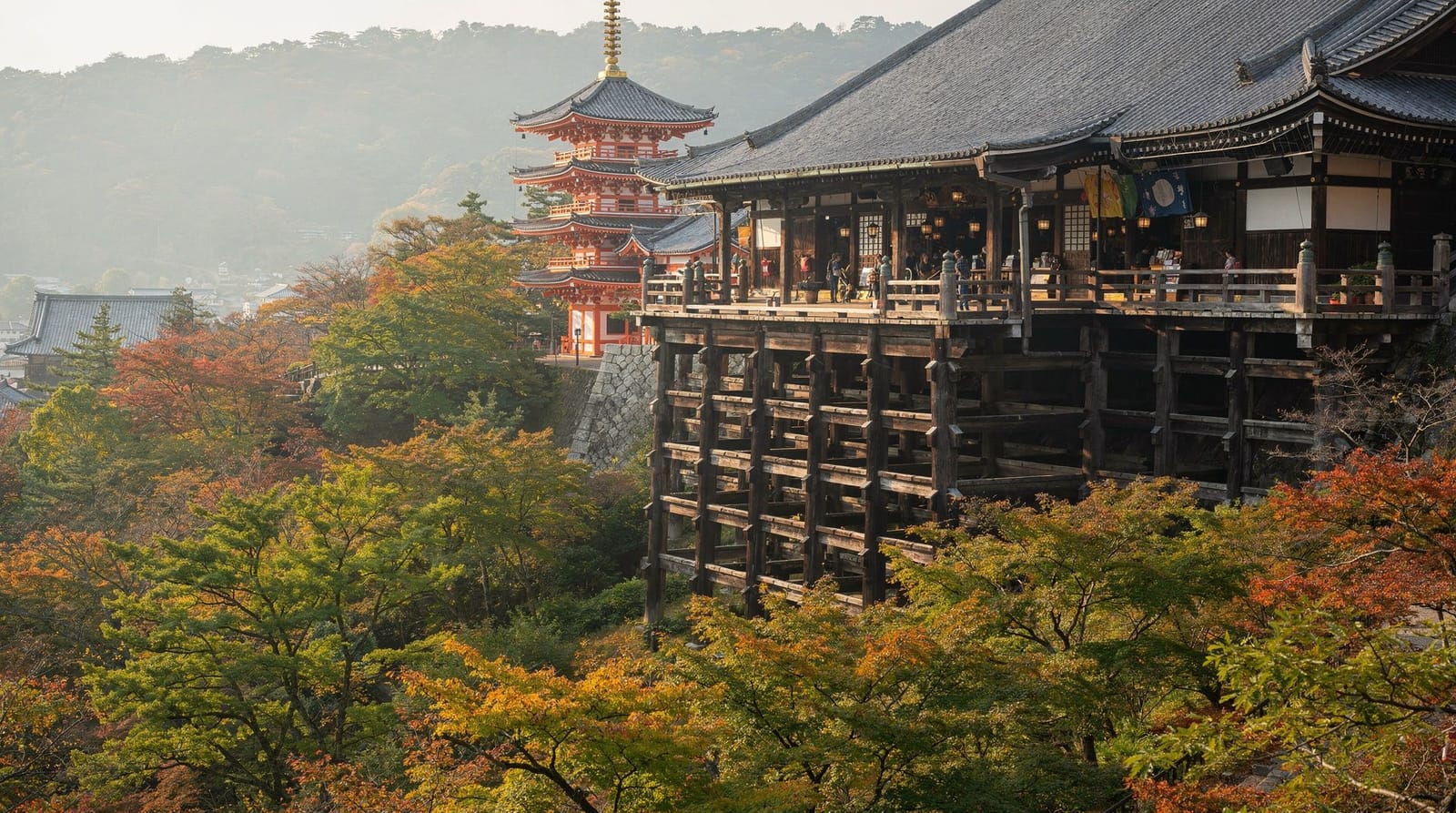
Kyoto’s main sights cluster into roughly four distinct areas that don’t overlap on foot: Fushimi (Fushimi Inari and the sake district, south of the city center), Higashiyama (Kiyomizu-dera, Sannenzaka, Gion, the eastern hills), Arashiyama (the bamboo grove and Tenryu-ji, west of the center), and the northwest cluster (Kinkaku-ji, Ryoan-ji, Nijo Castle). Each realistically needs its own half day to full day rather than a rushed morning stop, and that’s the single most useful planning fact for deciding trip length — count the areas you want, not the individual temples within them.
1 day: what actually fits
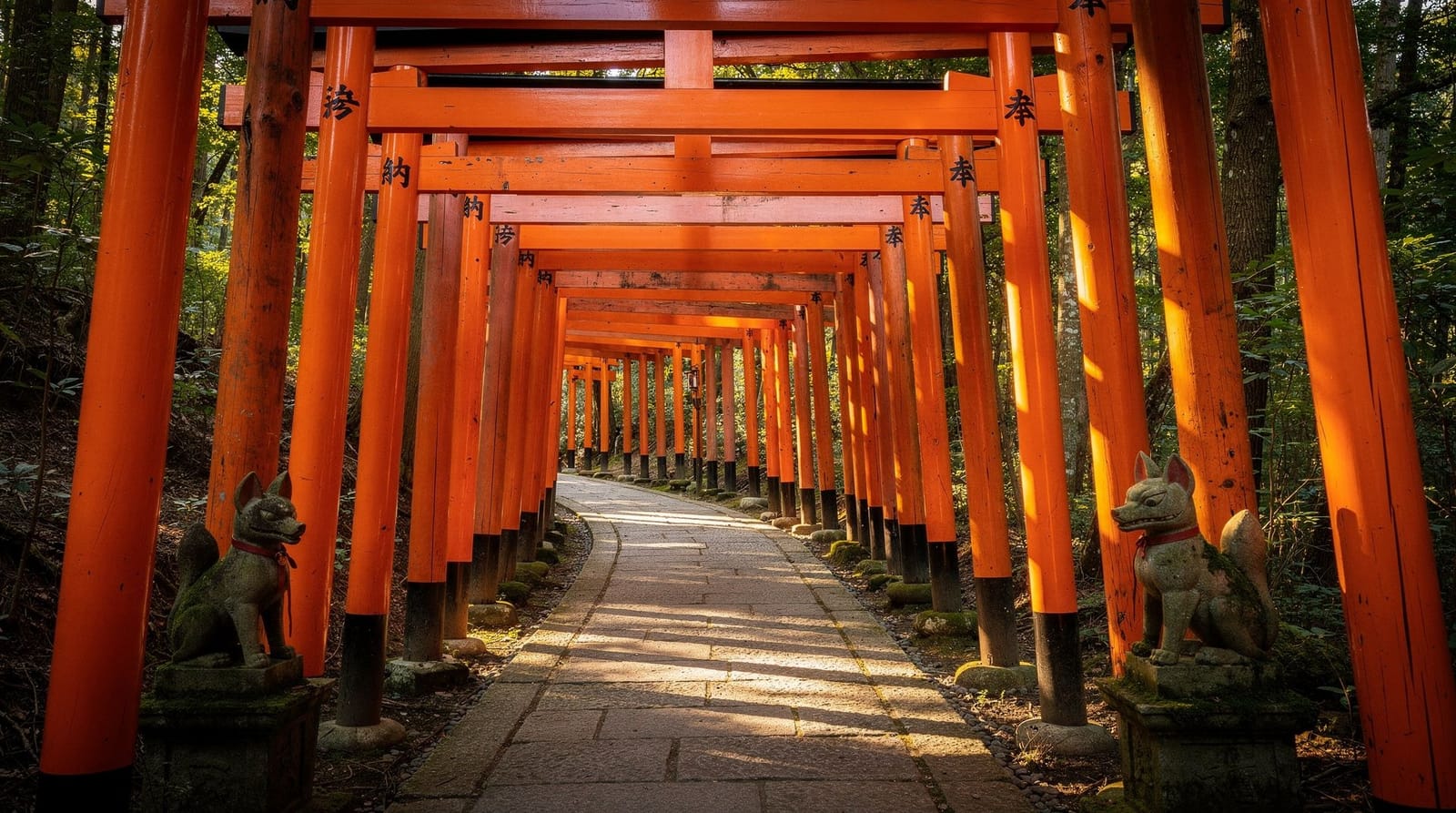
A single day, whether as a stop within a longer trip or a day trip from Osaka, realistically covers one and a half of the four areas — most commonly Fushimi Inari in the morning (arrive by 7-8am to beat the crowds, allow 2-3 hours including a partial hike) followed by a shortened Higashiyama walk in the afternoon, hitting Kiyomizu-dera and Yasaka Shrine but skipping the slower wander through Sannenzaka’s side lanes. Arashiyama and the northwest cluster don’t fit in any reasonable one-day plan without turning the day into a transit-heavy sprint between three distant parts of the city.
If Kyoto is genuinely a single-day stop, prioritizing depth over breadth tends to produce a better day than trying to touch all four areas briefly — one guided full-day tour covering Fushimi Inari, Kinkaku-ji, and Nijo Castle by bus, for instance, moves efficiently between sights that would otherwise require multiple train changes and long walks to link up independently.
2 days: pick two of the four areas
Two full days means choosing two of the four clusters and letting the others go, or seeing them in abbreviated form. The most common combination is Fushimi Inari (a half-day visit works fine, since the core Senbon Torii experience and a partial hike take 2-3 hours) paired with Higashiyama in the same or following day. Arashiyama, being furthest from the center by train, is the one most often cut on a 2-day visit.
A workable 2-day skeleton: day one, Fushimi Inari at opening (7-8am) followed by downtown Kyoto and Nishiki Market for the afternoon; day two, the Higashiyama temple walk from Kiyomizu-dera through Gion, finishing with an evening walk through Pontocho. This leaves Arashiyama and the northwest temples for a return visit — genuinely common, since Kyoto rewards repeat trips more than most cities.
An alternative 2-day plan swaps Fushimi Inari for Arashiyama if bamboo groves and river scenery matter more to you than the torii gates — day one becomes Arashiyama’s bamboo grove and Tenryu-ji in the morning, then Kinkaku-ji in the afternoon since both sit on the western side of the city with a manageable bus connection between them, while day two stays Higashiyama. Either version leaves out one full area, which is the honest trade-off of a 2-day visit rather than something to plan around avoiding entirely.
The two-day visitor’s most common regret, based on how first-time itineraries tend to play out, isn’t which area got cut but starting too late in the morning — arriving at Fushimi Inari or Kiyomizu-dera at 10am instead of 7am costs the single highest-value hour of the entire visit, since both sights go from near-empty to genuinely crowded within that window.
Nara heritage half-day tour from Kyoto — if you’d rather trade Arashiyama for Nara on a tight schedule3 days: the core experience, done properly
Three full days is where Kyoto stops feeling rushed. Day one covers Fushimi Inari and the Fushimi sake district. Day two covers the Higashiyama walk — Kiyomizu-dera, Sannenzaka, Ninenzaka, Kodai-ji, Yasaka Shrine, ending in Gion. Day three covers Arashiyama’s bamboo grove, Tenryu-ji, and the Hozugawa riverside, with Kinkaku-ji added in the afternoon if energy allows (it’s a separate bus or taxi ride from Arashiyama, roughly 30 minutes, not walkable between the two).
This is the itinerary length where the early-morning strategy pays off most clearly — hitting Fushimi Inari, Kiyomizu-dera, and Arashiyama’s bamboo grove all before 8am across the three days means experiencing each at its quietest, since none of them have any real off-peak hours during the day. The avoiding crowds in Kyoto guide covers the specific timing windows for each.
Three days also leaves natural gaps for the things a rushed itinerary skips — the Fushimi sake district’s tasting rooms after the shrine hike, an actual sit-down lunch instead of a quick stand at a food stall, or a detour into one of the smaller sub-temples along the Higashiyama walk (Kodai-ji’s bamboo grove and rock garden, easily missed between the two headline stops on either side of it). None of these require extra days on paper, just the buffer that a well-paced 3-day plan naturally has and a 2-day plan usually doesn’t.
Transit between the three core areas is straightforward but not instant: Fushimi Inari to central Kyoto is a 5-minute JR ride, central Kyoto to Arashiyama is 15-20 minutes by JR Sagano Line, and Higashiyama is mostly reached by bus (20-30 minutes from Kyoto Station depending on traffic) rather than train. Building in these transit windows rather than assuming point-to-point sights connect instantly is part of why the three-area, three-day structure works better than trying to mix areas within a single day.
Arashiyama day tour with train, boat, and onsen — a full day covering the area properly4 days: add the northwest cluster
A fourth day is best spent on Kinkaku-ji (the Golden Pavilion), Ryoan-ji’s famous rock garden, and Nijo Castle, all in Kyoto’s northwest, which sit far enough from the Higashiyama-Arashiyama-Fushimi core that squeezing them into an already-full day means significant backtracking across the city. Treating the northwest as its own half or full day avoids that.
This is also the point where a slower pace becomes realistic rather than a luxury — a fourth day with only two stops instead of three, or an afternoon left genuinely unscheduled for a café, a bookshop, or simply walking without a destination, tends to be what people remember fondly a year later, more than the fact that they saw one additional temple.
5 days: day trips start to make sense
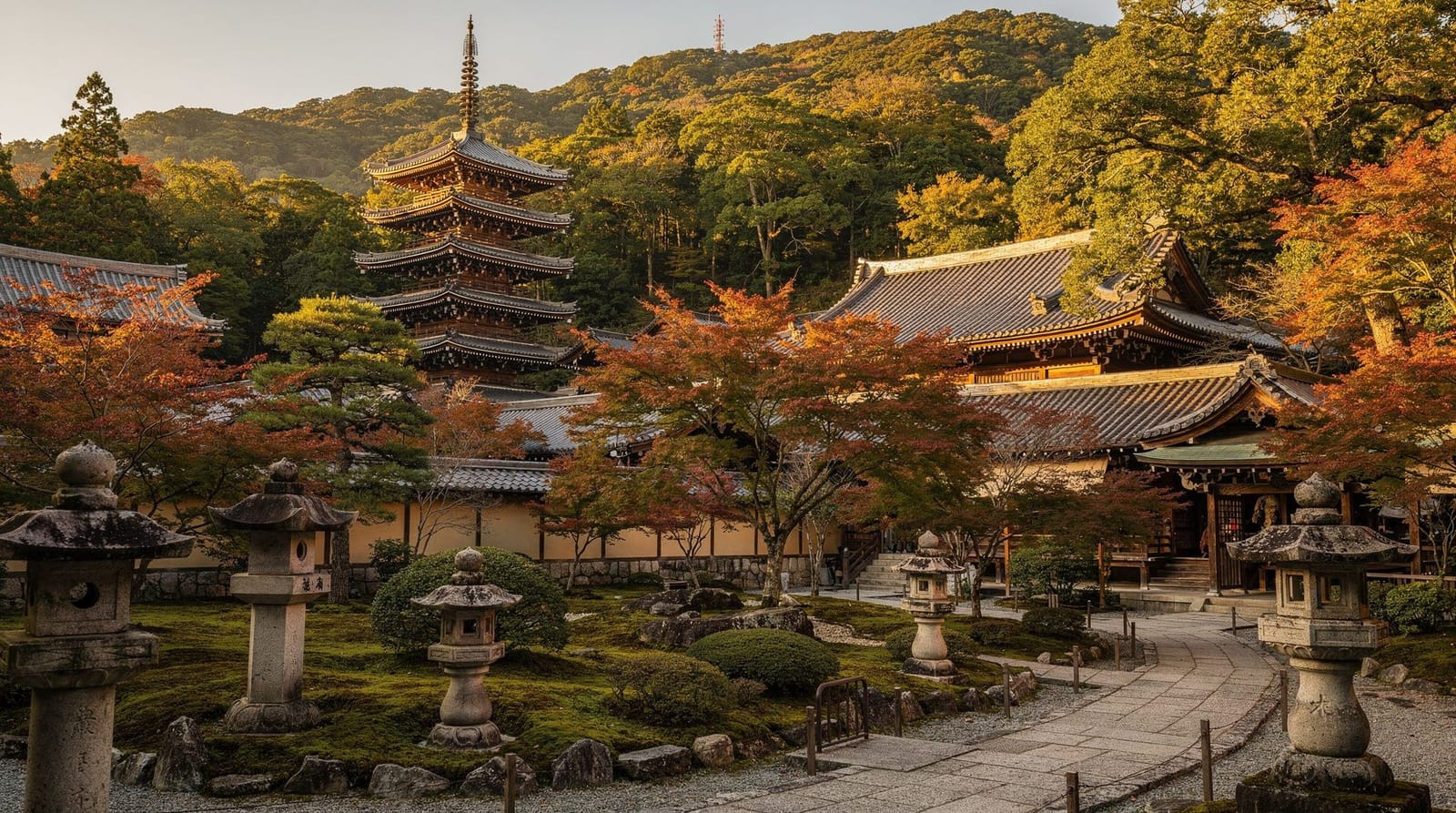
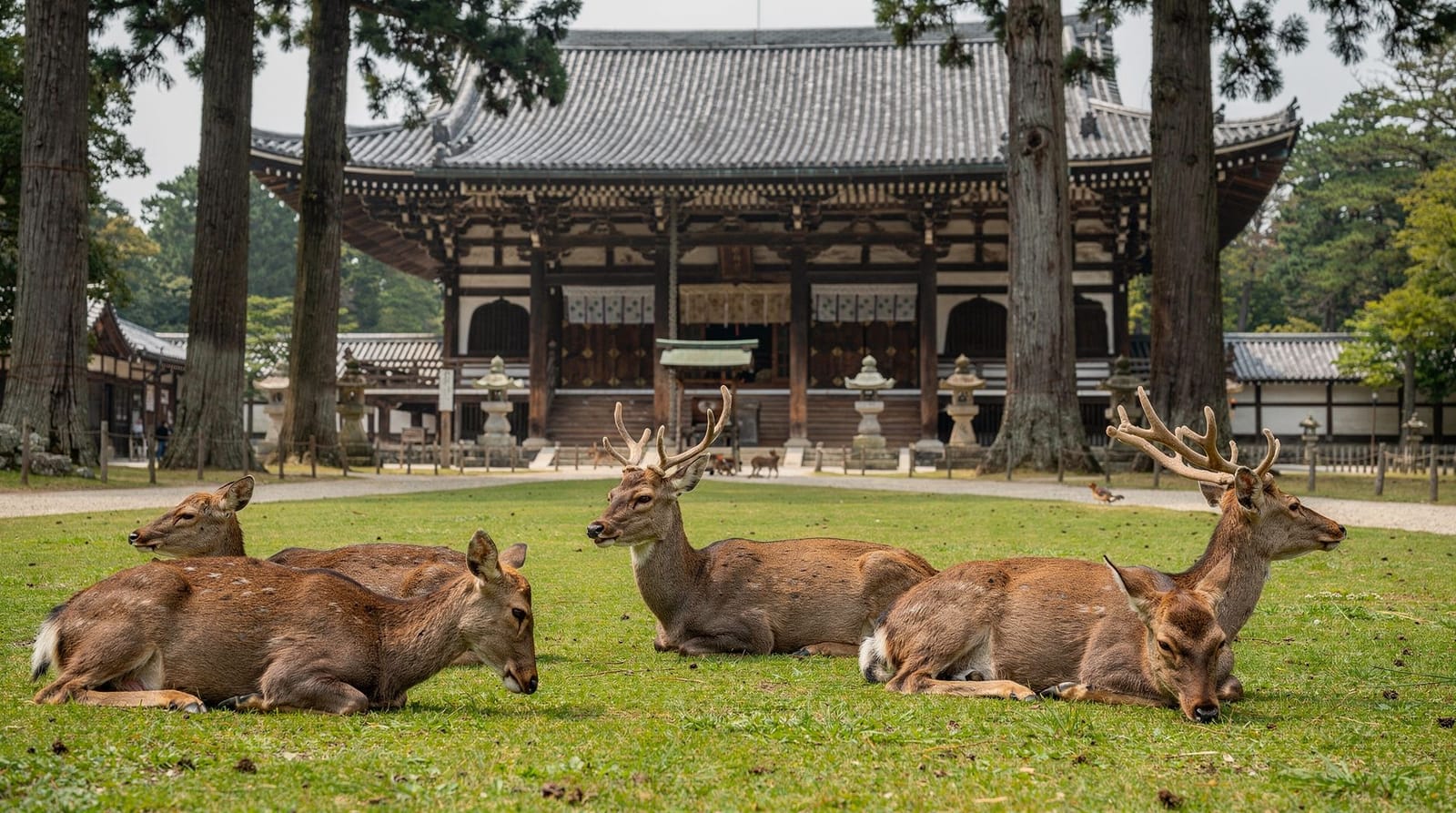
With five days, a day trip outside central Kyoto becomes worth the transit time. Nara — 45 minutes by JR or Kintetsu train — offers the free-roaming deer park and Todai-ji’s Great Buddha hall as a genuinely different experience from Kyoto’s temple density; a half day covers the highlights, a full day allows for Nara Park’s quieter southern sections and Kasuga Taisha’s lantern-lined approach. Uji — 20 minutes by JR — centers on Japan’s matcha-growing region and Byodo-in temple, the one pictured on the ¥10 coin, and works well as a half-day trip combined with a return to Kyoto by early afternoon.
Uji matcha experience and World Heritage tour — a structured half-day out of central KyotoOsaka (15 minutes by shinkansen) and Kobe or Himeji (both under 90 minutes) are other common fifth-day options, particularly if food and modern city energy are a welcome contrast after four days of temples. Himeji specifically is worth the extra 30 minutes past Kobe for anyone interested in castles — Himeji Castle is Japan’s best-preserved original feudal castle and a genuinely different sight from anything in Kyoto’s temple-heavy core. The Nara and Uji destination guides cover both in full.
Adjusting trip length for specific interests
The day counts above assume a general first-time sightseeing trip. A few common variations shift the math. Photography-focused visitors often want more days, not more sights — returning to Fushimi Inari or Arashiyama’s bamboo grove at a second early-morning slot to catch different light, rather than adding a new location, tends to produce better results than spreading thin across more places.
Families traveling with young children generally need roughly 30-50% more time per area than the estimates above, since a 6am temple visit that works for adults is a harder sell with kids, and the pace of a joint itinerary needs more built-in rest. A trip built specifically around a cultural deep dive — a multi-session tea ceremony course, a kimono and photography day, a pottery or calligraphy workshop — can reasonably spend a full day on a single activity that this guide’s area-based breakdown treats as an hour-long add-on, which pushes overall trip length up independent of how many sightseeing areas you’re covering.
How much of a Japan trip should go to Kyoto
For a first trip to Japan combining Tokyo, Kyoto, and Osaka — the standard route for most first-time visitors — a common split for a 10-14 day trip is roughly 5-6 days in Tokyo, 3-4 in Kyoto, and 2-3 in Osaka, with day trips (Nikko from Tokyo, Nara or Himeji from Kyoto or Osaka) layered in depending on remaining days. Kyoto tends to get shortchanged in first-draft itineraries because Tokyo’s sheer size and Osaka’s food reputation both pull for more time, but three days is close to the minimum for Kyoto to feel complete rather than rushed, given how much walking and how many separate areas are involved compared to a single-district Tokyo day.
If total trip time is under 10 days, it’s worth deliberately protecting Kyoto’s three days rather than letting Tokyo’s longer list of neighborhoods absorb extra time by default — Kyoto’s sights lose more from being rushed than Tokyo’s do, since so much of the Kyoto experience depends on early-morning timing and unhurried walking through temple grounds.
Weekday versus weekend timing
Trip length calculations assume a roughly even crowd level, but Kyoto is measurably busier on weekends and around Japanese public holidays than on weekdays, particularly at Fushimi Inari, Kiyomizu-dera, and Arashiyama’s bamboo grove. If your trip dates are flexible, shifting a 3-day visit to run Tuesday-Thursday instead of Friday-Sunday can meaningfully thin out the crowds at the same sights without changing anything else about the itinerary. This matters more for trip length than it first appears: a 3-day weekday visit often covers the same ground more comfortably than a 4-day visit that includes a Saturday, simply because weekend crowd levels slow down each stop.
Two national holiday periods are worth actively avoiding regardless of trip length if you have any flexibility: Golden Week (April 29-May 5) and Obon (mid-August), when domestic Japanese travel spikes and both trains and popular sights run at their most crowded levels of the year. A trip that would otherwise need only 3 days can effectively need 4 during either period, simply to absorb the extra time each crowded stop takes.
Beyond a week: when it stops making sense
A week or more spent purely in central Kyoto without day trips tends to run out of new must-see sights by day 5 or 6 — at that point, the choice is between repeat visits to favorites (a second early-morning Fushimi Inari visit hits differently once you already know the trail), going deep on a specific interest like pottery, tea ceremony, or a single temple’s seasonal changes, or extending outward to day trips in Kyoto Prefecture (Kurama-Kibune’s hot springs and hiking, Ohara’s rural temples) that most itineraries never reach. None of this is a bad use of a week — it’s just a different kind of trip than the highlights-focused first visit most guides, including this one, are built around.
How trip length interacts with season
The ideal trip length shifts slightly with season. During cherry blossom (late March-early April) and autumn foliage (mid-to-late November), a shorter, more tightly scheduled 3-day visit focused purely on the highlights often works better than a leisurely week, since accommodation costs roughly double and the best viewing windows for peak color are narrow and weather-dependent. Outside those two peaks — early summer, winter, or the shoulder months of May and October — a longer, slower trip has more room to breathe, since neither crowds nor cost create the same pressure to move fast. See the best time to visit Kyoto guide for the month-by-month detail.
Matching trip length to a home base
Trip length also affects where you should stay. A 2-3 day visit benefits from a single well-located base — Kyoto Station or downtown — to minimize the time lost to changing hotels. A 5+ day trip that includes day trips to Nara or Osaka can justify a base with faster access to those routes, though switching hotels mid-trip rarely pays off for anything under a week given the time cost of packing and checking in twice. The where to stay in Kyoto guide covers the neighborhood trade-offs for each trip length in more detail, and the Kyoto travel budget guide shows how daily costs scale with a longer stay.
Budget and accommodation cost by trip length
Trip length has a direct budget impact worth factoring into the decision, not just the sightseeing math. Accommodation is the largest daily cost in Kyoto for most travelers, and a mid-range hotel room running ¥15,000-25,000 (roughly US$100-165) a night means the difference between a 3-day and 5-day trip is commonly ¥30,000-50,000 (US$200-330) before any other spending.
That’s not a reason to cut a trip short if five days genuinely suits your interests, but it’s worth weighing against adding a day purely out of a sense that more is automatically better — a well-paced 3-day visit with early starts and no wasted transit time often delivers more per day than a slower 5-day trip with late mornings and repeat visits to similar sights. The Kyoto travel budget guide breaks down daily costs by travel style if you’re weighing trip length against a fixed total budget.
A quick reference
One day: Fushimi Inari plus a shortened Higashiyama walk, or a guided bus tour linking distant sights efficiently. Two days: pick two of Fushimi, Higashiyama, Arashiyama, and start early both mornings. Three days: all three, done properly, with real time for the sake district, Gion, and unhurried temple walks. Four days: add the northwest cluster (Kinkaku-ji, Ryoan-ji, Nijo Castle) as its own half or full day rather than squeezing it into an already-full schedule. Five-plus days: add a day trip to Nara, Uji, Osaka, or Himeji, and build in genuinely unscheduled time rather than a sixth or seventh sight.
For a first visit, three to five days covers Kyoto thoroughly without either rushing or running out of things worth doing — see the first-time Kyoto guide for how these building blocks fit into a complete trip plan, and the where to stay in Kyoto guide for matching your base to whichever length you land on.
Frequently asked questions about How many days do you need in Kyoto — 2, 3, 4 or 5 day breakdowns
Is 2 days enough for Kyoto?
Is 3 days in Kyoto enough?
What can you add with 4 or 5 days in Kyoto?
Should you split your time between Kyoto and Osaka?
Is one week too long for Kyoto alone?
What's the minimum for Kyoto as a day trip from Osaka?
Does trip length change depending on the season I visit?
Is 4 days better spent adding Kinkaku-ji or a day trip?
Top experiences
Bookable activities with verified prices and instant confirmation on GetYourGuide.