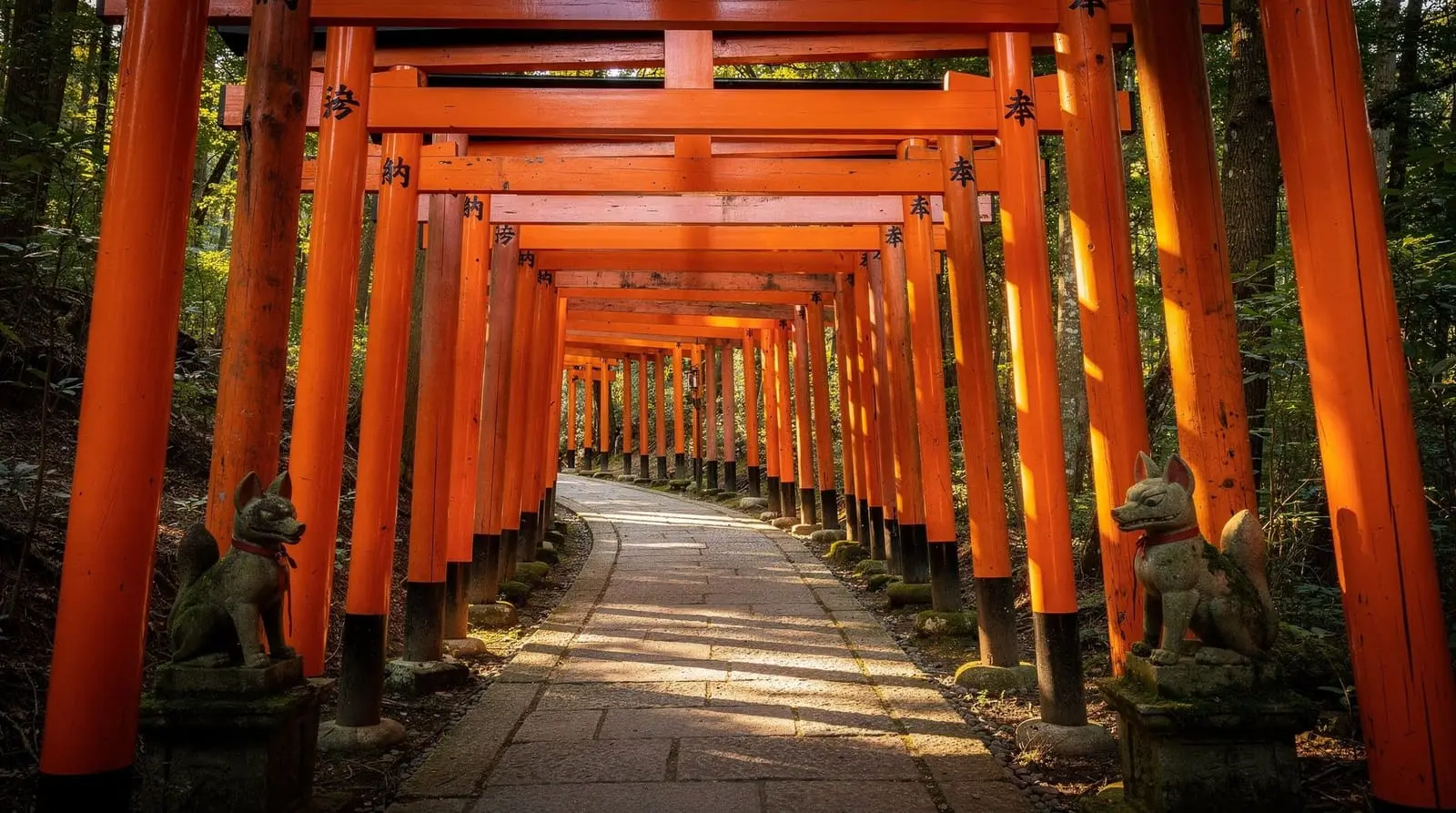
Fushimi Inari guide — 10,000 torii gates and the Mount Inari hike
Kyoto: Fushimi Inari Taisha Guided Walking Tour
Is Fushimi Inari free and how long does the full hike take?
Yes — Fushimi Inari Taisha is free to enter and open 24 hours a day, every day. The Senbon Torii tunnel near the base takes 15-20 minutes round trip. The full loop to the summit of Mount Inari and back covers roughly 4km and takes 2-3 hours at a moderate pace, with a meaningful drop-off in crowds after the first 20 minutes of trail.
| Admission | Free, 24 hours, every day |
| Getting there | JR Nara Line to Inari, 2 stops, ~5min, ¥150 |
| Senbon Torii loop | 15-20min round trip |
| Full summit hike | ~4km, 2-3hrs |
| Quietest windows | Before 8am or after dark |
Ten thousand gates, one very steep hill
Fushimi Inari Taisha is the shrine behind Kyoto’s most reproduced image: a tunnel of vermillion torii gates climbing a wooded hillside. It’s also free, open around the clock, and one of the easiest major sights in the city to reach — a two-stop train ride from Kyoto Station. Those three facts together explain why it draws enormous numbers of visitors, and why timing your visit matters more here than the entrance fee ever could, since there isn’t one.
The shrine is dedicated to Inari, the Shinto deity of rice, sake, and business prosperity, and dates back to 711, making it older than the city of Kyoto itself (founded in 794). The roughly 10,000 torii gates lining the trail were donated over centuries by individuals and companies seeking good fortune — each carries its donor’s name and the donation date painted on the back in black.
Admission and hours: free, all day, every day
There’s no ticket booth and no closing time at Fushimi Inari. The shrine grounds and the full Mount Inari trail are open 24 hours, 365 days a year, and entry has never cost anything. This makes it one of the few major sights in Kyoto where “best time to visit” is purely about crowd avoidance, not about working around opening hours.
The trade-off with 24-hour access is lighting: the upper sections of the mountain have minimal illumination after dark. A phone flashlight or headlamp is genuinely useful for a night visit, and going with company rather than alone is the more comfortable choice once you’re past the well-lit lower gates.
Senbon Torii: the photo everyone takes
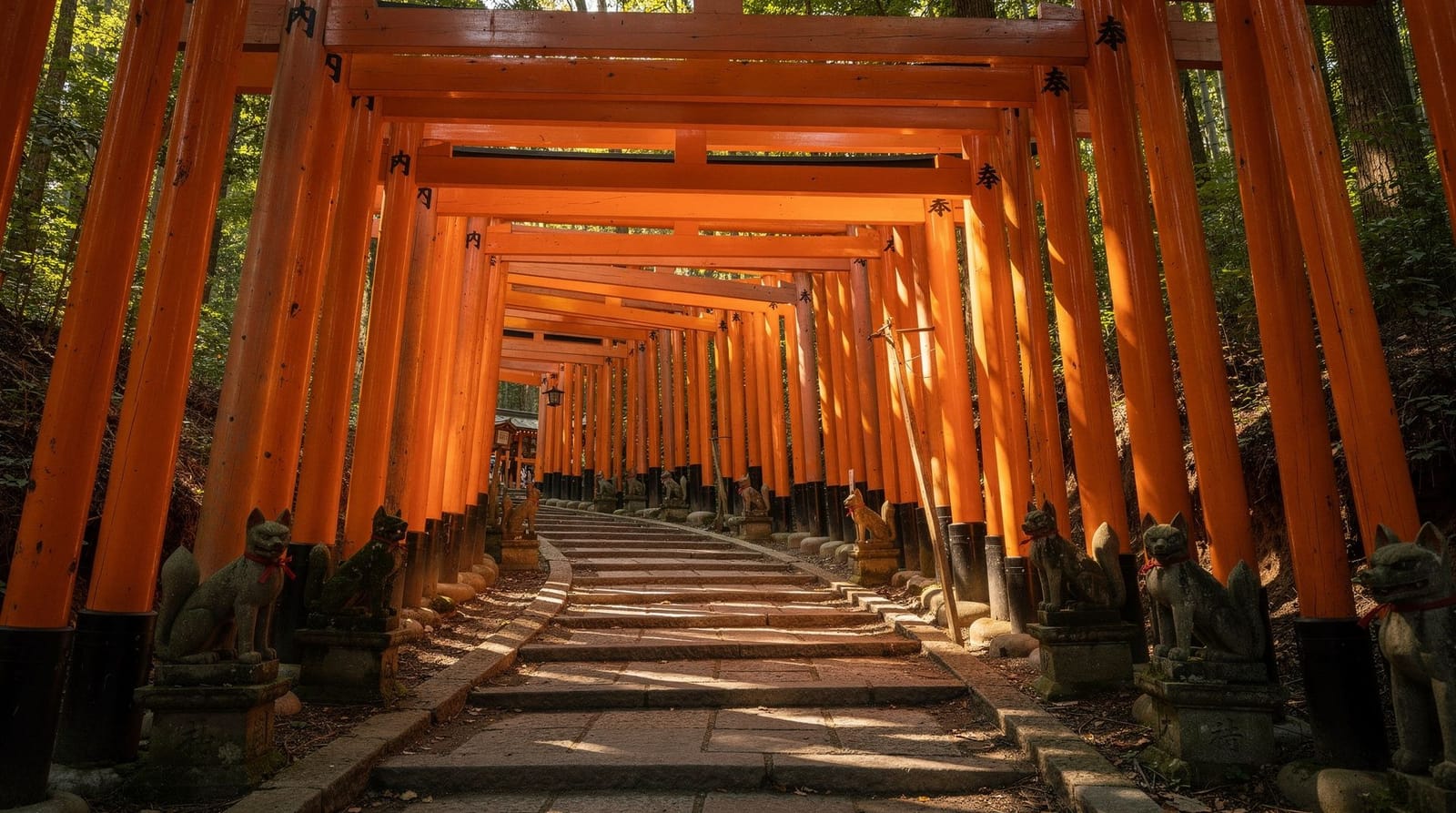
The Senbon Torii — “thousand torii” — is the double-row tunnel of gates just past the main shrine buildings, close enough to the entrance that it’s the section every visitor passes through regardless of how far up the mountain they go. It’s also, unsurprisingly, the most photographed and most crowded stretch of the entire trail.
Guided walking tour of Fushimi Inari TaishaPast Senbon Torii, the gates continue but space out, and the crowd thins with each switchback — most visitors never go beyond the first viewpoint at Yotsutsuji, which means the upper mountain, torii-lined the whole way, can feel almost solitary even at midday.
The Mount Inari hike: how far to go
The full round trip to the 233-meter summit and back covers about 4km and takes 2-3 hours at an unhurried pace, including stops at the smaller shrines and fox statues along the way. It’s a genuine hike — stone steps, moderate inclines, no railings in most sections — rather than a flat stroll, though nothing on it requires technical fitness.
Yotsutsuji, an intersection roughly a third of the way up, is the natural turnaround point for anyone short on time. It has a real view over southern Kyoto and Kyoto Tower, and getting there and back from the shrine base takes about 45-60 minutes. Past Yotsutsuji, the trail splits into a loop around the summit, with fewer visitors, smaller sub-shrines, and teahouses selling inari-zushi (fried tofu pouches stuffed with rice, named for the same deity) and cold drinks.
Fushimi Inari shrine and Mount Inari guided hikeFox statues and ema: what the symbols mean
Inari’s messengers are foxes, not the deity itself, which is why kitsune statues — usually shown holding a key, a jewel, or a sheaf of rice in their mouths — flank the shrine buildings and gates rather than statues of Inari in human form. Some older statues on the grounds have visibly weathered faces from centuries of exposure.
Small wooden ema plaques shaped like fox faces are sold near the main shrine for a few hundred yen. Visitors draw a face on the blank fox and write a wish on the back before hanging it at a designated rack — a common practice across Japanese shrines, adapted here to the shrine’s fox motif.
Best time to visit: before 8am or after dark
Fushimi Inari has no slow season in the way some temples do — Senbon Torii is busy from mid-morning through early evening essentially year-round, cherry blossoms or not. The two genuinely different experiences of the shrine come from timing within the day rather than the calendar.
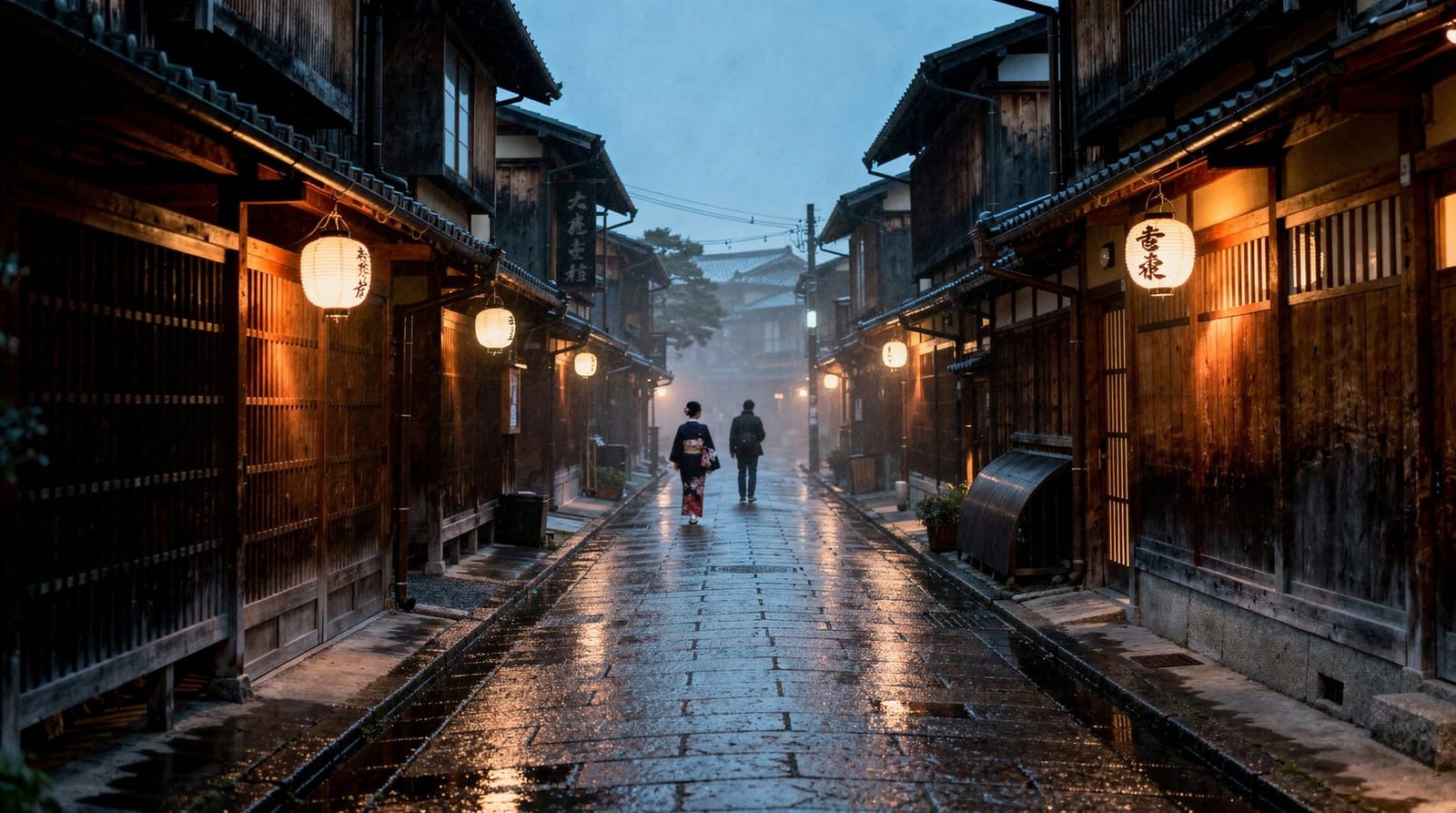
Before 8am, the Senbon Torii tunnel that’s otherwise packed with visitors taking the same photo can be close to empty, especially on weekdays. After dark, lanterns along the lower path create a different atmosphere entirely, and the shrine’s open-all-hours policy means there’s no rush to leave before a closing time that doesn’t exist.
Early-morning Fushimi Inari shrine, beat the crowdsBoth windows have a practical catch: early morning means arranging transport before most hotel breakfasts open, and after dark means less lighting on the upper trail. A guided night hike solves the visibility question if you’d rather not navigate the switchbacks with just a phone flashlight.
Fushimi Inari night hikeGetting there: the easiest major sight to reach by train
From Kyoto Station, take the JR Nara Line to Inari Station — two stops, about 5 minutes, ¥150 one way. The shrine’s main entrance is directly across the street from the station exit, with no further walking or bus transfer required. This makes Fushimi Inari one of the simplest sights in the city to slot into a morning before heading elsewhere.
An alternative route uses the Keihan Main Line to Fushimi-Inari Station, a few minutes’ walk from the shrine along a different approach — useful if you’re coming from Gion or the Kyoto Station area via Keihan rather than JR. Both stations serve the same shrine, so pick whichever line matches your starting point.
Combining Fushimi Inari with the rest of the district
Fushimi the neighborhood extends well beyond the shrine, with a historic sake-brewing district along the Horikawa canal a short walk or one train stop from Inari Station. The Fushimi destination guide covers the sake breweries, tasting rooms, and Tofuku-ji’s maple bridge in more detail if you’re building a fuller day around the shrine.
Several tours pair Fushimi Inari with Arashiyama’s bamboo grove as a half-day loop, or with Nara’s deer park as a full day trip south of the city — see the Tenryu-ji guide for what a combined Arashiyama-Fushimi day can look like, or the Gion destination guide if you’re finishing the day with an evening walk through the geisha district instead.
What to wear and bring for the hike
Even the shortened Yotsutsuji version of the trail involves real stone steps and a sustained incline, so flat, closed-toe shoes with actual grip matter more here than at flatter sights elsewhere in the city. Steps can be slick after rain, and the trail has no railings on most sections. Summer heat and humidity build quickly on the climb — carrying water is worth the extra weight, since the small teahouses along the upper trail, while a reasonable backup, don’t appear with predictable frequency.
If you’re planning a night visit, a headlamp or a fully charged phone with a flashlight function is genuinely useful past the well-lit Senbon Torii section — the upper mountain has minimal artificial lighting, and the gates themselves, while photogenic in low light, don’t illuminate the ground beneath your feet.
Common mistakes first-time visitors make
The most common mistake is assuming the entire trail looks like Senbon Torii — the dense double-row tunnel near the base. In reality, that tunnel is a small fraction of the full 4km route; past it, gates space out considerably, and the density that makes the famous photo work simply doesn’t continue all the way up. Visitors expecting a continuous gate tunnel for the full hike are often surprised by how quickly it thins out.
A second common mistake is not budgeting enough time for the shrine’s approach and main buildings before starting the hike itself — the honden (main hall) and the areas immediately around it are worth 15-20 minutes on their own, and skipping straight to the torii tunnel means missing the shrine’s actual religious center.
A third mistake is turning around too early out of uncertainty about the trail’s difficulty. Yotsutsuji, the recommended turnaround point for time-limited visitors, is a genuine milestone with a clear view — many visitors give up well before reaching it, closer to the base, having assumed the crowd and the incline would only get worse, when in fact both improve noticeably past the first 15-20 minutes.
Food and shops along the trail
Small teahouses and stalls appear at intervals along the lower and middle sections of the trail, most consistently around Yotsutsuji, selling inari-zushi (fried tofu pouches stuffed with vinegared rice, named for the same deity the shrine honors), kitsune udon, and cold drinks. Prices are reasonable compared to more tourist-dense areas of the city, generally ¥500-900 for a light meal. Above Yotsutsuji, options thin out considerably, so it’s worth eating or restocking water at that point if you’re continuing to the summit.
Near the shrine’s base, stalls sell fox-themed ema plaques, small charms, and souvenirs specific to Fushimi Inari — a reasonable stop before or after the hike rather than partway through, since carrying extra items up the mountain adds unnecessary weight.
How Fushimi Inari compares to Kyoto’s other major shrines and temples
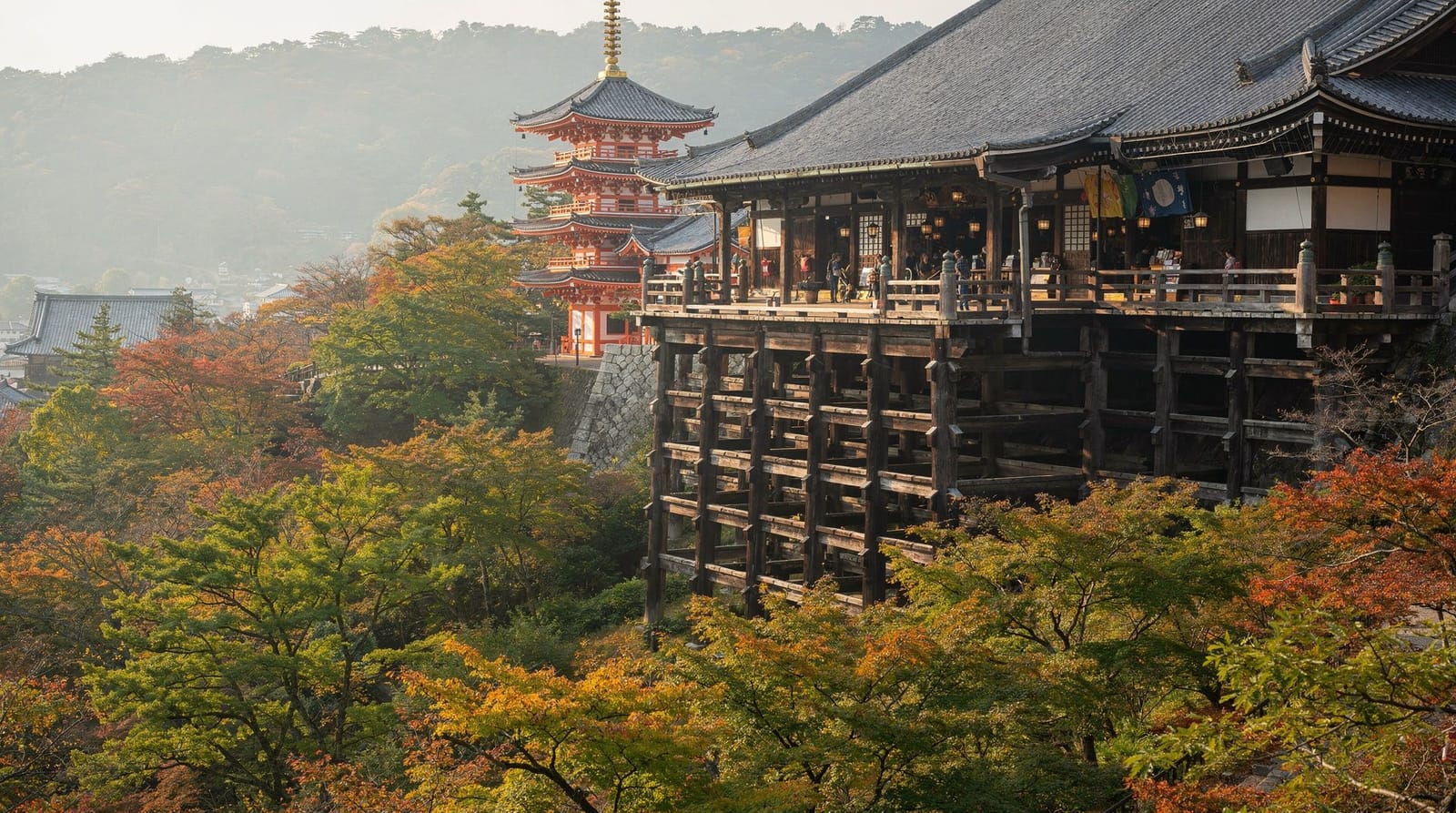
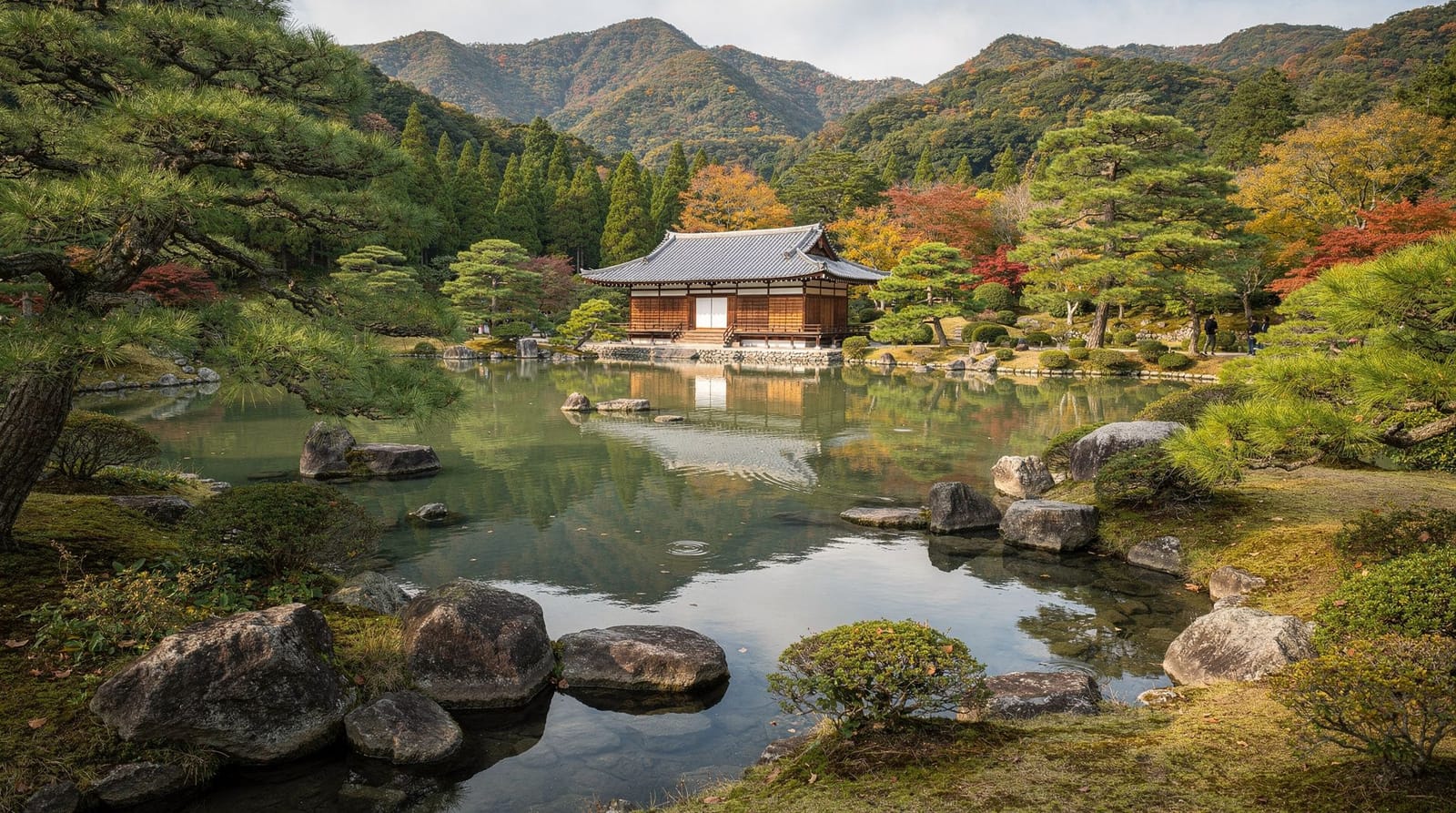
Fushimi Inari’s appeal is almost entirely about repetition and scale — thousands of nearly identical gates creating a visual effect no single structure could replicate — which sets it apart from architecture-focused sights like Kiyomizu-dera or garden-focused sights like Ryoan-ji. It’s also unusual among major Kyoto sights in offering genuine physical activity — the Mount Inari hike is a real trail, not a flat walking loop, which makes it a different kind of visit than most temple stops in the city.
Because it’s free and open 24 hours, Fushimi Inari is also one of the most flexible sights on any Kyoto itinerary — it can be slotted into an early morning before other plans, a late evening after dinner, or a full afternoon if the hike is the day’s main activity, in a way that ticketed, fixed-hours sights like Kinkaku-ji simply can’t match.
Accessibility notes
The shrine’s base and Senbon Torii section are on relatively flat, paved ground and manageable for most visitors with limited mobility, though the path does narrow at points. Past Senbon Torii, the trail becomes a genuine hike with stone steps and no elevator or accessible alternative — visitors with significant mobility limitations should plan to experience the shrine’s base and lower gates rather than attempting the climb to Yotsutsuji or the summit.
A brief history of the shrine and the gates
Fushimi Inari Taisha was founded in 711, making it one of the oldest continuously operating shrines in the Kyoto region, predating the city’s establishment as Japan’s capital in 794 by more than eight decades. It serves as the head shrine for roughly 30,000 Inari shrines across Japan, making it the center of one of the country’s most widespread religious traditions rather than a single standalone site.
The torii gates themselves are a later addition to the shrine’s long history, with the custom of donating a gate as a prayer for business success or good fortune becoming widespread from the Edo period (1603-1868) onward. Individual gates are not permanent — wood weathers and gates are periodically removed and replaced by new donations, meaning the physical tunnel visitors walk through today is a rolling reconstruction of centuries of accumulated offerings rather than a single unchanged structure. A new small gate can cost several hundred thousand yen to a few million yen depending on size, which is inscribed with the donor company or individual’s name upon installation.
Practical tips: cash, restrooms, and cell service
There are no ticket gates or admission booths anywhere on the grounds, so there’s no need to carry cash specifically for entry — but the teahouses and stalls along the trail are mostly cash-only or IC-card-only, without wider card acceptance, so carrying some cash is still useful if you plan to eat or drink along the way. Restrooms are available near the shrine’s base and at a couple of points partway up the trail, but they thin out considerably past Yotsutsuji, so it’s worth using the facilities before continuing to the summit loop.
Cell service is generally reliable along most of the trail given its popularity and proximity to central Kyoto, though signal can weaken in the densest sections of the gate tunnels. Downloading an offline map of the trail beforehand is a reasonable precaution if you’re hiking alone or after dark.
Seasonal notes: New Year, summer festivals, and quiet winter
Fushimi Inari’s single busiest period of the entire year is the first three days of January, when hundreds of thousands of visitors come for hatsumode, the traditional first shrine visit of the new year — as the head shrine for a deity associated with business prosperity, it’s a particularly popular destination for the ritual. If your trip overlaps with early January, expect crowd conditions unlike any other time of year, with queues simply to enter the shrine grounds.
Outside that window, summer (July-August) brings heat and humidity that make the uphill sections genuinely demanding, though the trail’s tree cover offers meaningful shade for most of the climb. Autumn, particularly November, adds foliage color to the wooded sections between gates without the extreme crowding some other Kyoto sights see during peak leaf season, since Fushimi Inari’s appeal isn’t primarily foliage-driven. Winter is the quietest season overall outside the New Year period, and a light dusting of snow on the vermillion gates — when it happens — is a striking, uncommon sight worth the cold.
Budgeting your time: three visit lengths
For visitors with only 30-45 minutes, focus on the main shrine buildings and the Senbon Torii tunnel itself — enough to see the iconic gate sequence without committing to the hike. For a 1.5-2 hour visit, add the walk to Yotsutsuji and back, which includes a genuine viewpoint and noticeably fewer crowds past the first 15 minutes. For the full 2-3 hour experience, continue past Yotsutsuji to the summit loop, passing smaller sub-shrines, teahouses, and considerably quieter stretches of trail that most day-trippers never see.
Smaller sub-shrines along the way
Scattered along the trail, particularly in the upper sections past Yotsutsuji, are dozens of smaller sub-shrines and stone altars, many marked with their own miniature torii donated by individuals or small businesses over the decades. These are worth a slower look for visitors interested in the shrine’s living religious function rather than just the photogenic main tunnel — many are still actively maintained, with fresh offerings of sake bottles or fruit left at their bases. None require a detour from the main path, since most sit directly alongside it, but they’re easy to walk past quickly if you’re focused only on reaching the summit.
How Fushimi Inari fits into a wider Fushimi day
The shrine is only one part of the wider Fushimi district, and travelers with a full day rather than a quick stop have real options nearby. The Fushimi destination guide covers the historic sake-brewing quarter along the Horikawa canal, walkable from Inari Station, where several breweries offer tastings in a genuinely different atmosphere from the shrine’s crowds.
The dedicated sake guide goes deeper on which breweries welcome walk-in visitors versus requiring reservations. For travelers continuing south, Uji’s matcha culture and Byodo-in temple are a further 15-20 minutes by JR from Inari Station, making a Fushimi Inari-to-Uji day a realistic pairing without backtracking through central Kyoto in between — see the Uji matcha guide for that leg of the day.
Rain and weather considerations for the hike
Fushimi Inari’s trail stays open in essentially any weather short of a typhoon warning, but rain changes the visit meaningfully. Stone steps get genuinely slick, particularly on the steeper switchbacks past Yotsutsuji, so grippy, closed-toe shoes matter even more than on a dry day. A lighter upside: rain thins the crowds noticeably, even at Senbon Torii, and the wet vermillion gates take on a deeper, more saturated color that photographs distinctively well against grey skies.
Typhoon season (roughly August-October) occasionally brings conditions serious enough to warrant postponing the upper-mountain sections entirely — check current advisories on a trip during this window rather than assuming the trail’s usual all-weather openness applies to genuinely severe conditions. Summer thunderstorms tend to be brief and localized rather than daylong, so waiting out a shower at one of the trail’s teahouses is often a more practical response than abandoning the hike.
Frequently asked questions about Fushimi Inari guide — 10,000 torii gates and the Mount Inari hike
How many torii gates are there at Fushimi Inari?
Is Fushimi Inari really open 24 hours?
What is the Senbon Torii and is it different from the rest of the trail?
How long is the hike to the top of Mount Inari?
What is the best time to visit Fushimi Inari to avoid crowds?
What do the fox statues and ema plaques mean?
How do you get to Fushimi Inari from Kyoto Station?
Can Fushimi Inari be combined with other sights in one day?
Top experiences
Bookable activities with verified prices and instant confirmation on GetYourGuide.