Autumn foliage in Kyoto — momiji timing, best spots, and illuminations
Kyoto: Tofuku-ji Temple and Komyo-in Guided Walking Tour
When and where is autumn foliage best in Kyoto?
Peak momiji (maple color) typically falls in the last two weeks of November, sometimes stretching into early December, and shifts by roughly a week year to year with autumn temperatures. Tofuku-ji's maple-lined valley bridge and Arashiyama are the most photographed spots; Ohara's rural temples offer a quieter, less crowded version of the same color.
Momiji season rivals cherry blossom season as Kyoto’s most visually dramatic window, and arguably surpasses it for reliability — the color window runs longer than sakura’s, and the deep reds of maple trees against dark wood temple architecture photograph, for many visitors, even better than the softer pink of spring blossoms. This guide focuses specifically on the autumn foliage season itself: timing, the best spots ranked honestly by what they’re like on the ground, and the illumination events worth planning an evening around. For the broader autumn season and its festivals, see Kyoto in autumn; for a full-year comparison, see best time to visit Kyoto.
| When | Last two weeks of November, into early December |
| Best spots | Tofuku-ji (dense canopy), Arashiyama (landscape), Ohara (quiet) |
| Cost | Most temples ¥400-800; illuminations often ticketed separately |
| Crowds | Heaviest on the 3rd/4th weekend of November |
| Booking | Illuminations and accommodation ahead; temples themselves are walk-in |
How momiji timing actually works
Autumn color in Japan moves roughly north to south and high to low elevation, meaning Kyoto’s peak generally lands after Tokyo’s and before areas further south, and higher, shadier spots within the city color before lower, sunnier ones. Forecasts from the Japan Meteorological Corporation and independent foliage trackers begin publishing predictions in September, refining through October and November as the season approaches. Most years put peak color (mankoyo) somewhere between mid-November and early December, with the last two weeks of November the single most reliable window citywide — though, like sakura, the exact date shifts by a week or more depending on how the preceding weeks’ temperatures ran.
Unlike sakura’s short, fragile bloom, momiji color develops and holds over a longer period — typically two to three weeks from first color change to significant leaf-fall — making it a somewhat more forgiving season to plan a trip around without hitting the exact peak day.
Tofuku-ji: the single most photographed spot, and how to see it right
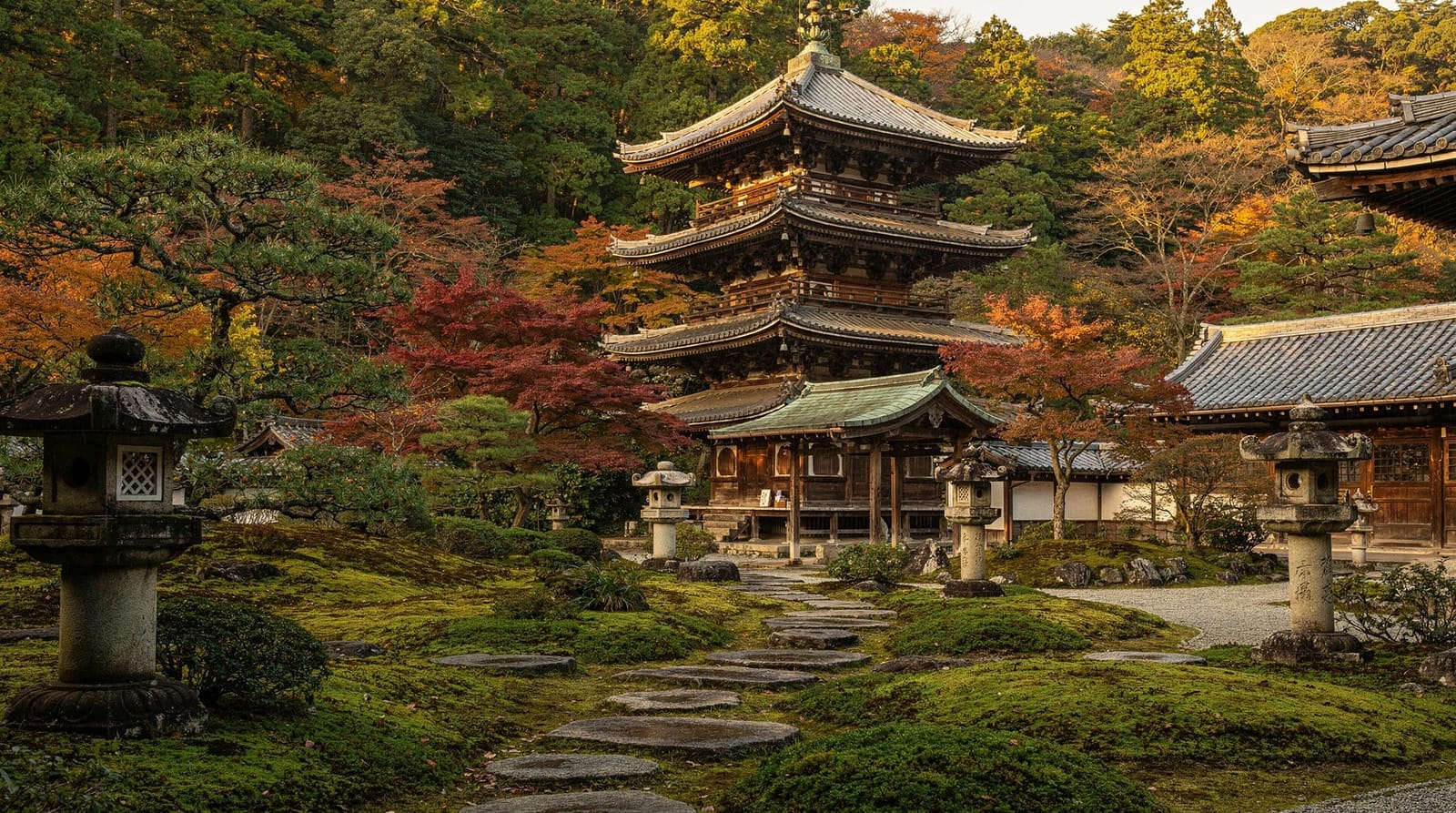
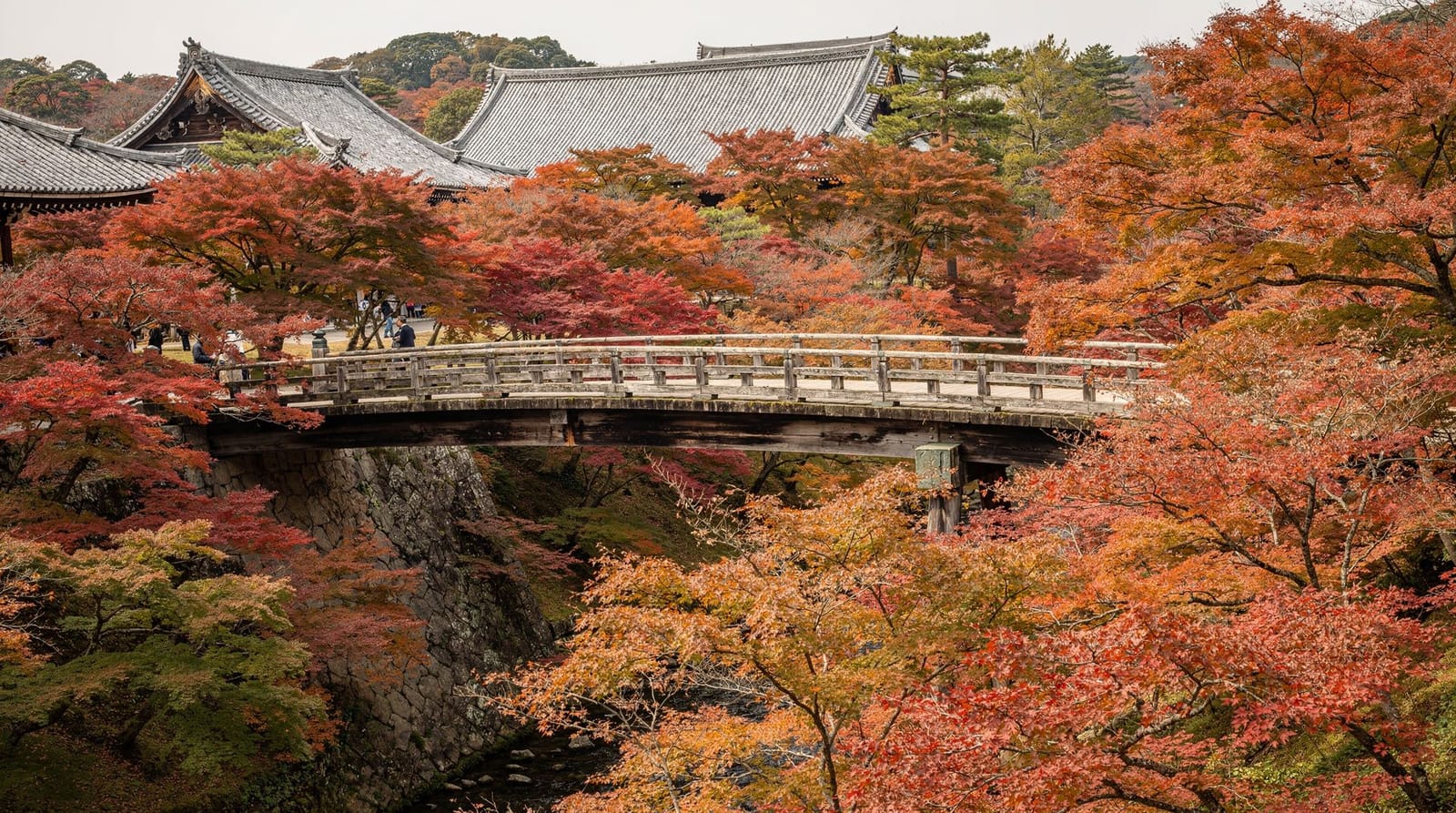
Tofuku-ji, a large Zen temple complex in southeastern Kyoto, is home to the Tsutenkyo Bridge, which crosses a valley densely planted with roughly 2,000 maple trees — the resulting canopy view, looking out from the covered bridge across an unbroken sea of red and orange, is arguably the single most recognizable momiji image in the city.
Tofuku-ji and Komyo-in guided walking tour, timed for peak momijiThe trade-off for that density is crowding: Tofuku-ji draws some of the largest momiji-season crowds in Kyoto, and by mid-morning on a peak weekend the bridge itself can be genuinely difficult to move through, let alone photograph without other visitors in frame. Arriving at or near the 8:30am opening is close to essential — the difference between an 8:30am and an 11am visit here is one of the largest crowd-density swings of any single sight in the city during any season. Komyo-in, a smaller sub-temple within the same complex known for its rock garden set among maples, offers a quieter adjunct experience worth combining with the main bridge visit.
Eikan-do: temple, garden, and the best illumination in the city
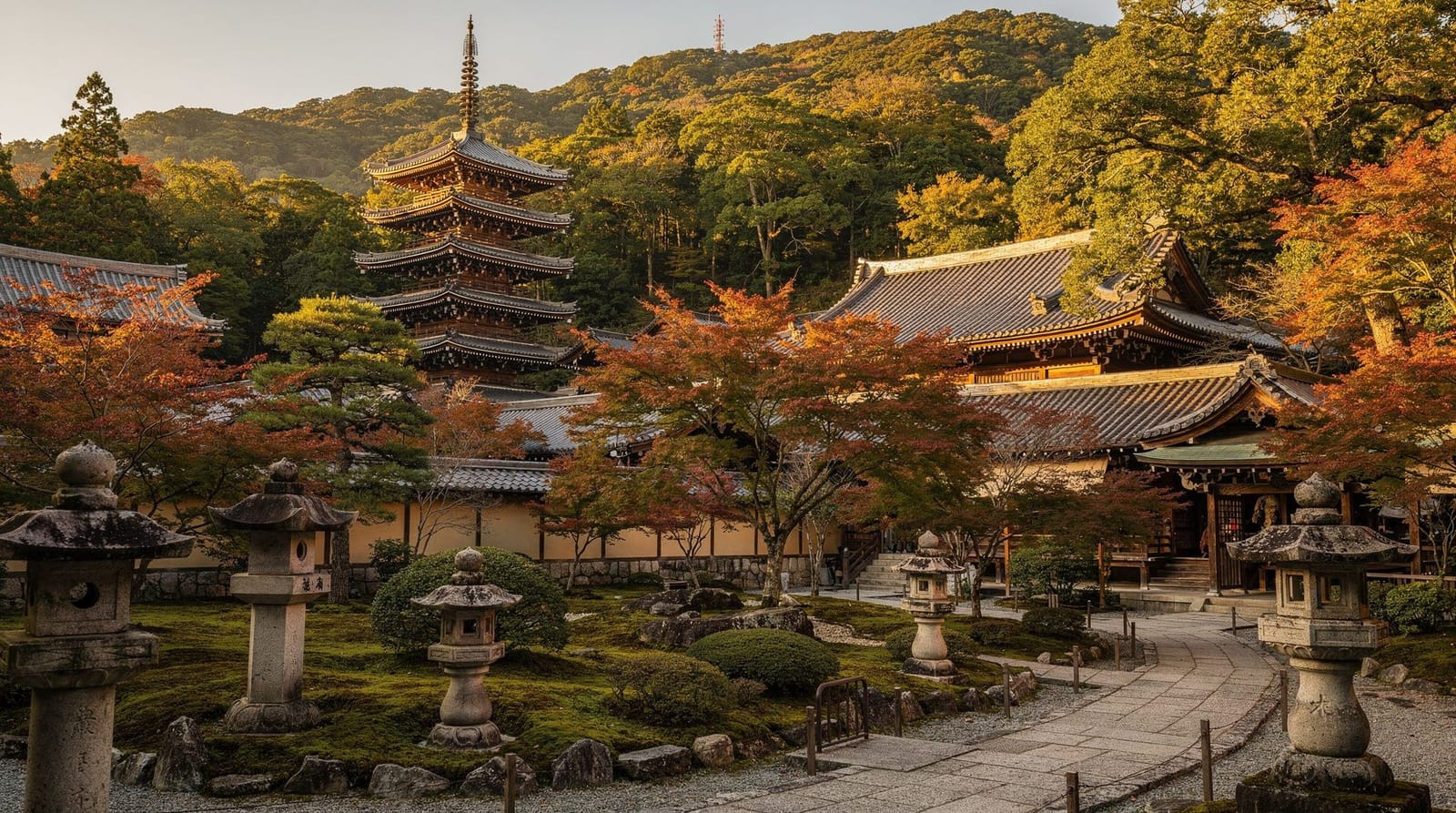
Eikan-do, formally Zenrin-ji, sits in the Higashiyama hills and combines a hillside garden dense with maple trees, a pond reflecting the color, and — during peak season — a paid evening illumination event widely regarded as one of Kyoto’s best. The illumination lights the maple canopy and pond reflection from below, producing a genuinely different scene from the daytime view rather than simply a lit-up version of it; deep reds glow against black water and dark sky in a way daytime light doesn’t replicate.
Crowd-free Kiyomizu-dera and Ginkaku-ji tour — a structured way to pair two momiji-season temples while avoiding the worst crowdsIllumination tickets are typically sold for a set evening window during the peak weeks (usually mid-to-late November); arriving close to the opening of that window, rather than at its midpoint, avoids the worst of the illumination-specific crowd that builds through the evening.
Arashiyama: momiji on a bigger canvas
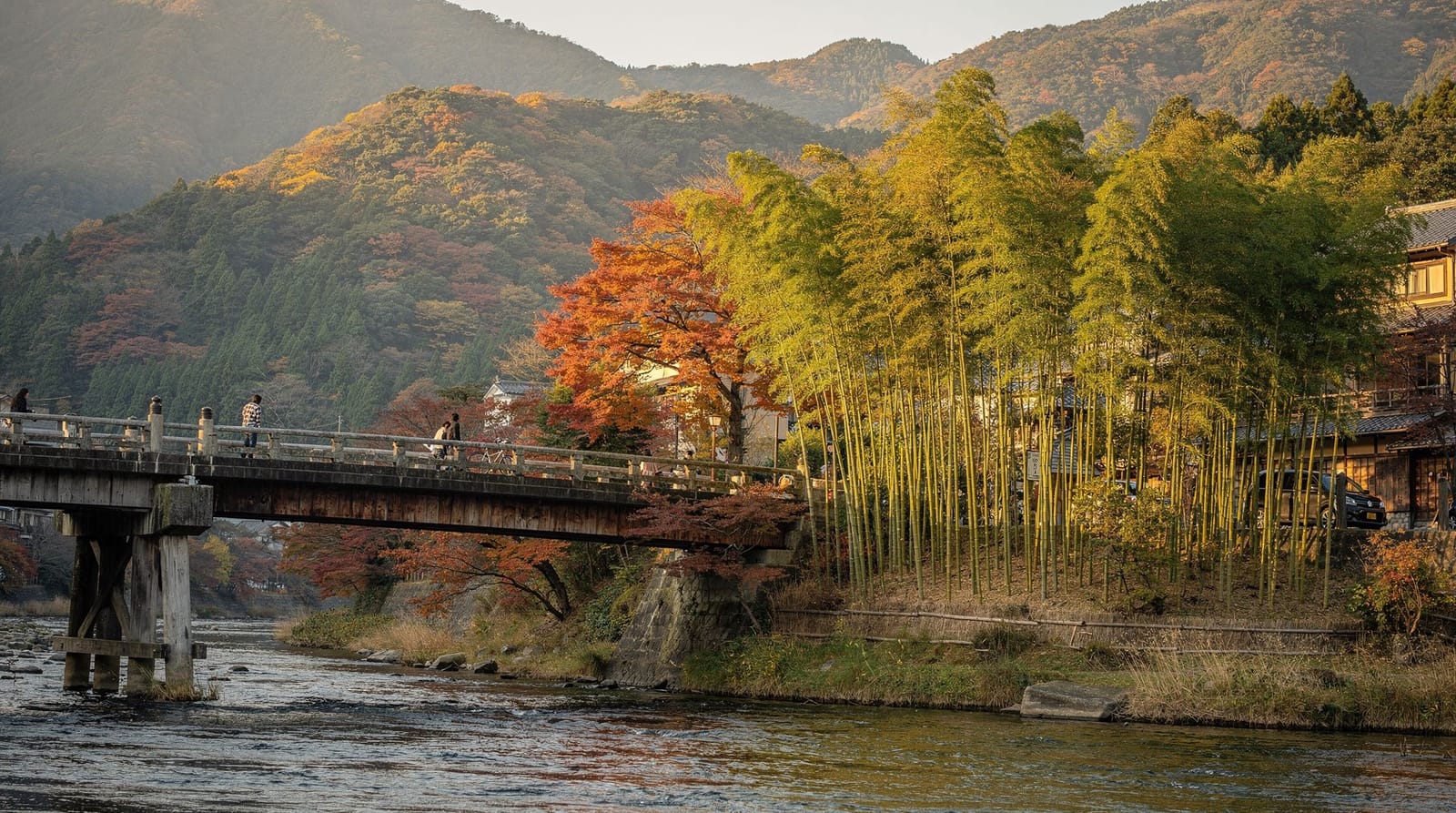
Arashiyama’s autumn color spreads across a wider landscape than Tofuku-ji’s concentrated bridge view — maples along the Katsura River, on the hillsides visible from Togetsukyo Bridge, and at the edges of the bamboo grove combine into scenery rather than a single iconic composition. Tenryu-ji’s landscape garden, borrowing the surrounding hillside color as part of its design (a technique called shakkei, or “borrowed scenery”), is one of the more distinctive momiji settings in the city precisely because the garden was designed with the autumn backdrop in mind centuries ago.
Arashiyama draws heavy crowds regardless of season, and momiji season is no exception, particularly on weekends. See the Arashiyama destination guide for a full neighborhood layout and crowd patterns by time of day.
Ohara: the quiet, rural alternative
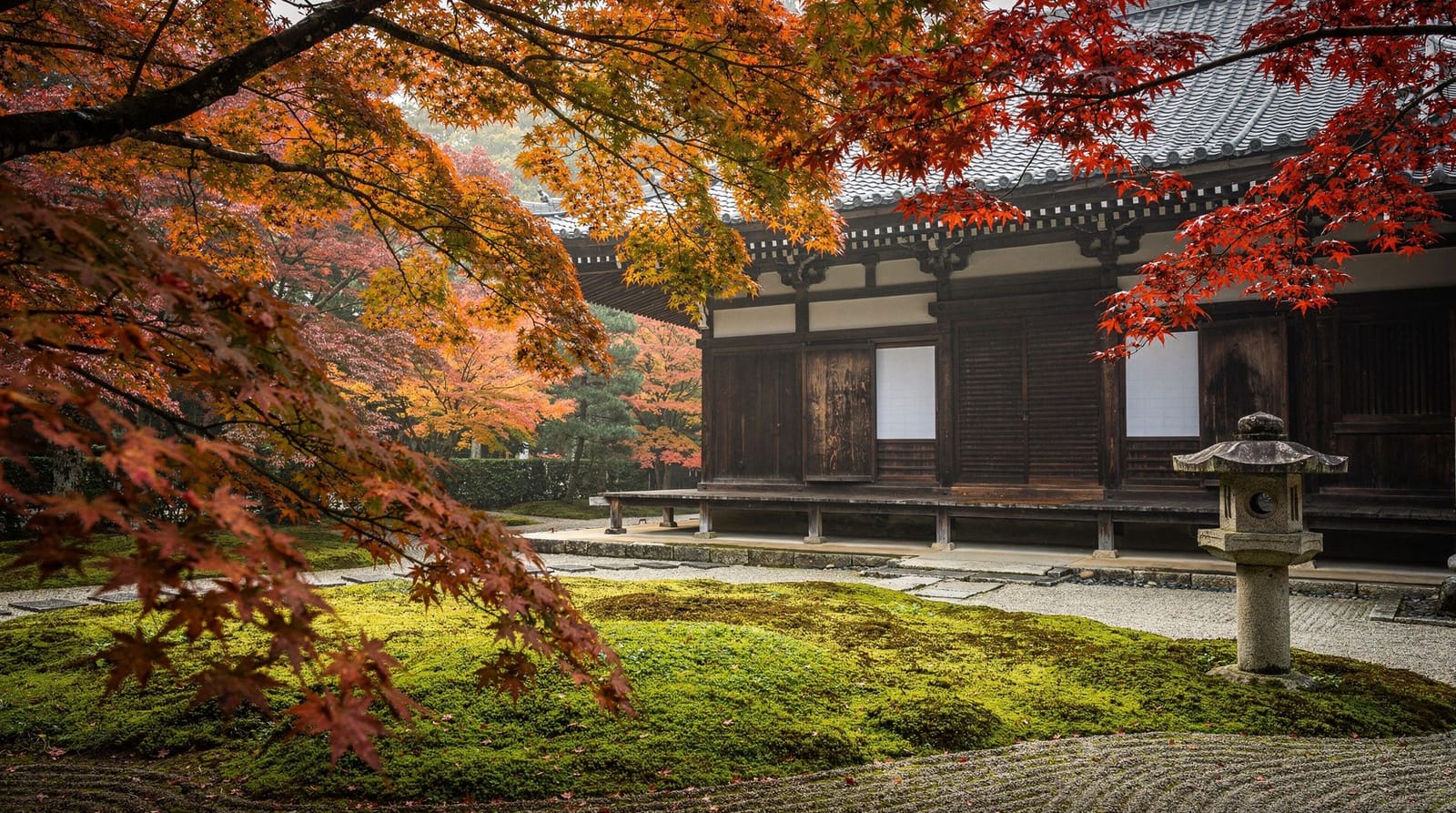
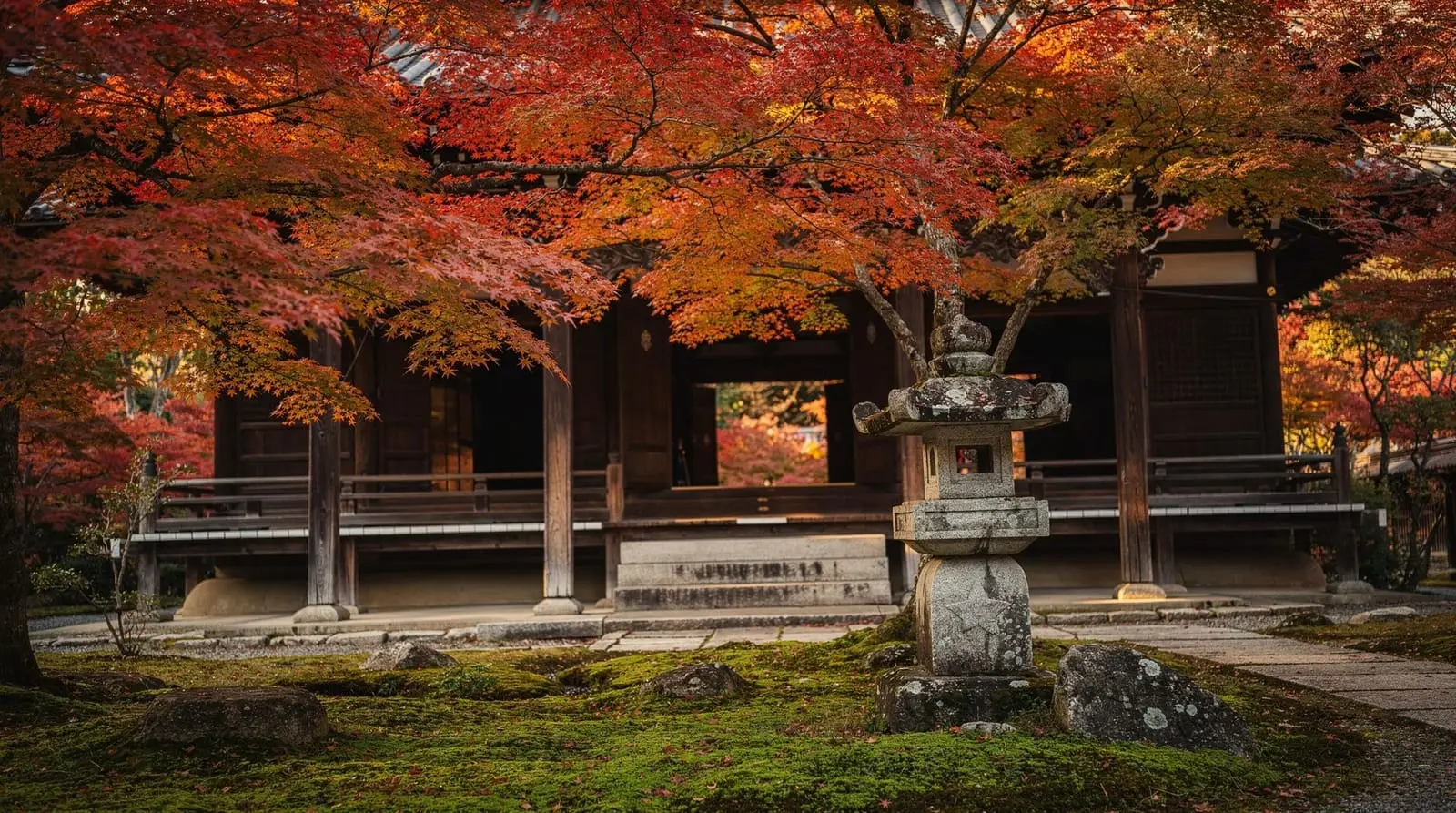
Ohara, a rural valley roughly one hour by bus from central Kyoto, offers a genuinely different momiji experience — moss gardens, rustic temple buildings, and maple color set against a farming-village landscape rather than dense urban temple grounds. Sanzen-in, Ohara’s best-known temple, combines a moss garden with maples in a setting considerably quieter than any of the central Higashiyama or Arashiyama spots, at the cost of the longer trip out.
For travelers who’ve already covered Tofuku-ji or Arashiyama on a previous visit, or who simply prioritize atmosphere and quiet over density and a widely recognized photo, Ohara is one of the better trade-offs in the city during momiji season. See the Ohara destination guide for transport details and a fuller picture of what else the valley offers beyond Sanzen-in.
Higashiyama’s temple cluster: momiji layered onto an already-packed itinerary
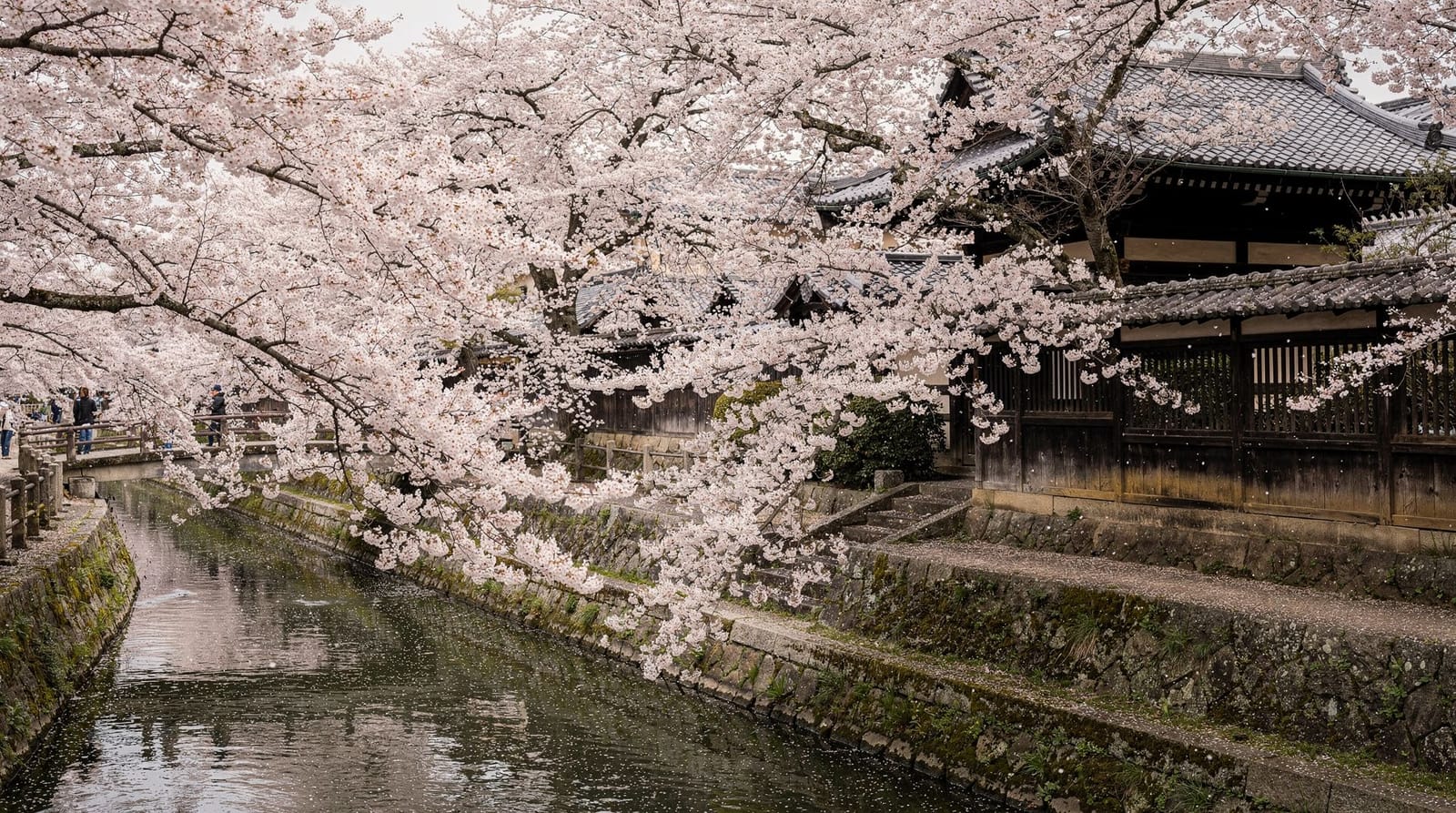
The Higashiyama district — Kiyomizu-dera, Kodai-ji, Nanzen-ji, and the Philosopher’s Path — colors well during momiji season and has the advantage of being walkable as a single route, meaning foliage viewing layers naturally onto sightseeing most first-time itineraries already include rather than requiring a dedicated trip. Nanzen-ji’s Zen halls and gardens, and the Philosopher’s Path’s canal-side maples (a direct seasonal counterpart to its spring cherry blossoms), both color reliably through the peak window.
Kiyomizu-dera’s wooden stage, framed by maples on the surrounding hillside, is one of the more efficient momiji-and-landmark combinations in the city, since it’s already on most itineraries for its architecture alone. Some years the temple runs its own evening illumination during peak momiji, lighting the stage and hillside similarly to its spring sakura illumination.
Crowd patterns: what actually changes at each spot
Momiji season crowds follow a broadly similar pattern to sakura season — weekends far busier than weekdays, and the two or three peak color weekends of the season (usually the third and fourth weekends of November) considerably busier than the shoulder weeks on either side. Unlike sakura, where the entire bloom-to-fall window is under two weeks, momiji’s longer color-holding period means a trip timed for the first or third week of the peak window, rather than the absolute center, still has a reasonable chance of good color with meaningfully lighter crowds. See avoiding crowds in Kyoto for the early-morning arrival strategy that applies across every spot in this guide.
Booking accommodation and restaurants around momiji season
Hotel rates in central Kyoto during peak momiji weeks run comparably high to sakura season — commonly 60-100% above baseline — and popular restaurants and any temple-adjacent accommodation book out weeks to months ahead once the forecast window firms up. Because momiji’s forecast window is somewhat more predictable year to year than sakura’s, booking a trip for the last two weeks of November carries less date risk than booking for a specific early-April sakura date, but the crowd and cost premium during that window is comparable. See the Kyoto travel budget guide for how season affects overall trip cost.
Photography tips specific to momiji
Momiji’s deep, saturated reds tend to photograph most dramatically in either soft overcast light (which avoids blown highlights on bright red leaves) or backlit golden-hour light in the late afternoon, when sunlight passing through the leaves intensifies their color considerably compared to flat midday light. Tofuku-ji’s bridge faces a direction that catches reasonable morning light; Eikan-do’s illumination is, by definition, an evening-only shot. A polarizing filter, if carrying one, cuts glare off wet leaves and water reflections on the frequent overcast or recently-rained days common during this transitional season.
Sakura or momiji: revisited for the autumn traveler
Travelers who’ve already experienced Kyoto’s sakura season on a previous trip and are weighing whether momiji delivers a comparably strong experience can be reassured — momiji’s longer color window and arguably more dramatic color saturation make it, if anything, the more reliable of the two headline seasons, even if it carries slightly less cultural ceremony (no hanami-style picnicking tradition attached to momiji specifically). See the cherry blossom guide for the spring counterpart to this guide, and how many days in Kyoto for general itinerary pacing that applies regardless of season.
Combining momiji viewing with day trips
Nara’s Todai-ji and Kasuga Taisha grounds, and Arashiyama’s Sagano district further west, both color well during the same window and are reasonable additions to a Kyoto-based momiji trip via day trip. See the Nara destination guide for transport details if extending a momiji-focused trip beyond the city itself.
Regional variation of momiji timing within Kyoto
Momiji color doesn’t arrive uniformly across the city — higher elevation and more shaded spots color first, meaning Kurama, parts of Ohara, and the higher reaches of the northern hills typically turn 7-10 days before central, lower-elevation temples like Tofuku-ji or the Higashiyama cluster.
This variation is genuinely useful for extending a trip’s practical color-viewing window: a visit arriving slightly before the citywide forecast peak can often still catch strong color at these higher-elevation spots, while a visit arriving slightly after peak can find central Kyoto’s lower-elevation temples still holding color after the mountain spots have already dropped their leaves. Checking a foliage-progress tracker by elevation and district, rather than relying on a single citywide “peak” date, is worth the effort for any trip where momiji is the priority.
What to pack for a momiji-season trip
Late November in Kyoto runs cool — daytime highs typically 12-16°C, mornings closer to 5-8°C — cold enough that layering matters more than it does during the sakura or summer seasons. A warm jacket, a scarf, and gloves for early-morning temple visits are worth packing, along with comfortable walking shoes suited to gravel paths and temple stone steps, since a full momiji day easily covers 10-15km on foot between spots.
Evenings, particularly around illumination events like Eikan-do’s, run noticeably colder than daytime, so a layer that goes on after dark is worth having in the bag rather than left at the hotel. Rain is a real possibility in late November; a compact umbrella or light rain jacket is a sensible addition given how often the season’s overcast days turn into actual rain by afternoon.
Momiji-season food and seasonal menus
Autumn brings its own seasonal food identity to Kyoto, worth building into a momiji-focused trip alongside the temple visits. Matsutake mushroom, a prized autumn delicacy with a short, expensive season, appears on kaiseki menus citywide through October and November, typically grilled simply or served in a clear dashi broth to let its distinctive aroma stand out.
Chestnuts (kuri) show up in seasonal wagashi and in kuri gohan (chestnut rice), a common autumn home-style dish also served at many restaurants during the season. Persimmons (kaki), often visible drying on strings outside rural homes in areas like Ohara, are a genuine seasonal marker as much as the maple leaves themselves. Several cafés also run momiji-themed seasonal menus — maple-shaped sweets, autumn-color-matched desserts — during the peak weeks, similar to the sakura-season menu shifts each spring.
Getting around during peak momiji season
Buses serving Tofuku-ji, Arashiyama, and the Higashiyama temple cluster run at reduced reliability during peak momiji weekends, similar to sakura season’s crowding pattern — standing-room-only conditions and schedule delays are common through the middle of the day on the two or three peak weekends of the season. Tofuku-ji specifically is well served by train (JR Nara Line and Keihan Main Line both stop within walking distance), which is generally a more reliable option than the bus network during peak weeks. Arriving and departing outside the midday crush — early morning or, for spots with evening illumination, staying through to the post-illumination crowd thinning — reduces transit friction considerably compared to a midday visit.
Common momiji-season mistakes to avoid
The most common mistake is treating Tofuku-ji as a quick stop rather than building in a genuine early-morning arrival — its crowd density by mid-morning on a peak weekend is among the highest of any single sight in Kyoto during any season, and a late arrival changes the experience considerably.
A second mistake is assuming momiji and sakura seasons behave identically in terms of timing predictability — momiji’s longer color-holding window (two to three weeks versus sakura’s one to two) makes it considerably more forgiving for a trip booked without exact forecast precision. A third is skipping the quieter alternatives entirely in favor of only the most-photographed spots; Ohara and Komyo-in both deliver a comparably strong momiji experience with a fraction of the crowd density of Tofuku-ji’s main bridge or Arashiyama’s riverside.
Momiji photography by time of day and light
Momiji’s saturated reds respond differently to light than sakura’s softer pinks, which changes the optimal shooting windows. Backlit late-afternoon sun passing through maple leaves intensifies their red and orange tones considerably compared to flat overhead light, making the two hours before sunset one of the strongest windows for momiji photography specifically, particularly at east-facing or hillside spots like Kiyomizu-dera and parts of Arashiyama.
Overcast days, common in November, actually suit momiji photography well by avoiding blown highlights on the brightest leaves while still rendering deep color saturation. Eikan-do’s illumination, by definition an evening-only subject, rewards arriving right at the start of the paid viewing window, both for a clearer shot before the crowd builds and for the deepest ambient darkness needed to make the lit foliage stand out most dramatically.
What a realistic two-day momiji itinerary looks like
Two full days covers Kyoto’s core momiji spots without needing to rush between them. A reasonable structure: day one opens at 8-8:30am at Tofuku-ji, arriving as close to opening as possible for the clearest view of the Tsutenkyo Bridge canopy, continues to nearby Komyo-in for a quieter counterpoint, and closes with an early-afternoon visit to the Higashiyama temple cluster (Kiyomizu-dera, Nanzen-ji) where color and crowd levels are both more moderate than Tofuku-ji’s peak-morning density.
Day two shifts to Arashiyama for a similarly early start at the bamboo grove and riverside, continues into Tenryu-ji’s shakkei garden, and closes with Eikan-do’s evening illumination if a ticket has been booked, making for a full day that opens and closes with two of the season’s most distinctive experiences. Travelers with a third day available are best served adding Ohara for its quieter, rural counterpoint to the two dense, well-known days that precede it.
Booking accommodation around momiji season
Hotel rates in central Kyoto during the peak momiji window run comparably high to sakura season — commonly 60-100% above baseline for the last two weeks of November specifically — and popular restaurants near Tofuku-ji, Arashiyama, or the Higashiyama cluster book out weeks to months ahead once the forecast firms up.
Because momiji’s forecast window is somewhat more predictable year to year than sakura’s short, fragile bloom, booking accommodation for the last two weeks of November carries less date-mismatch risk than an equivalent early-April sakura booking, though the crowd and cost premium during that window is genuinely comparable. Flexible or refundable booking rates are still worth prioritizing for anyone booking more than two to three months ahead, since even momiji’s relatively predictable timing shifts by a week in either direction depending on the specific year’s autumn temperatures.
Momiji viewing for travelers with limited mobility
Several of Kyoto’s best momiji spots involve genuine walking and, in some cases, stairs — Tofuku-ji’s bridge and surrounding valley paths, and Arashiyama’s riverside and bamboo grove routes, both require sustained walking on uneven or sloped ground.
Eikan-do’s illuminated garden path is comparatively flatter and more manageable, and the Kamo River banks (which also carry light momiji color from riverside trees, alongside their spring sakura) offer a flat, accessible option for travelers prioritizing ease of movement over the single most dramatic canopy views. Sanzen-in in Ohara involves moderate garden paths but rewards the effort with considerably lighter crowds, which itself eases movement compared to navigating Tofuku-ji’s dense peak-weekend foot traffic.
The main momiji spots, compared
| Spot | Best for | Crowd level | Travel from central Kyoto |
|---|---|---|---|
| Tofuku-ji | Dense canopy, the single iconic shot | Very heavy, especially mid-morning | ~10 min by train |
| Eikan-do | Evening illumination | Heavy in the evening slot | ~15 min by bus/taxi |
| Arashiyama | Wide-landscape color, bamboo edges | Heavy, all day | ~20 min by JR |
| Higashiyama cluster | Combining foliage with an existing itinerary | Moderate to heavy | Walkable from Gion |
| Ohara | Quiet, rural atmosphere | Light | ~1 hour by bus |
Should you build a whole trip around momiji?
For travelers who can only visit Kyoto once, momiji is a genuinely strong reason to time a trip for late November rather than another season — the color holds longer than sakura’s and the temple-and-maple combination photographs about as well as anything in the city. That said, it’s also the second-most expensive and crowded window of the year after cherry blossom season, so it suits travelers who prioritize the visual payoff over ease of movement, quiet temples, or lower hotel costs. Anyone who values a calmer, cheaper trip over the specific momiji spectacle is better served visiting in late spring or early winter instead — see best time to visit Kyoto for the full year-round comparison.
A worthwhile middle path for travelers unsure about committing to peak momiji: book flexible or refundable accommodation two to three months out, then confirm exact dates once a reliable foliage forecast is published in late October. This avoids locking into a specific week that then misses the actual color peak by several days, a real risk given how much the window shifts year to year, while still allowing enough lead time to secure a room before the last-minute price spike that hits central Kyoto hotels once the forecast firms up.
Frequently asked questions about Autumn foliage in Kyoto — momiji timing, best spots, and illuminations
When exactly does autumn foliage peak in Kyoto?
Which Kyoto temple has the best autumn foliage?
Is Tofuku-ji worth the crowds during peak momiji season?
Are night illuminations worth booking during momiji season?
Where can I see autumn foliage in Kyoto without the crowds?
Does Arashiyama's autumn color rival Tofuku-ji?
How long does peak autumn color last in Kyoto?
Top experiences
Bookable activities with verified prices and instant confirmation on GetYourGuide.