Kyoto photo spots — the best shots and when to actually get them
Kyoto: Fushimi Inari Shrine After Dusk Photography Tour
What's the single best photo spot in Kyoto?
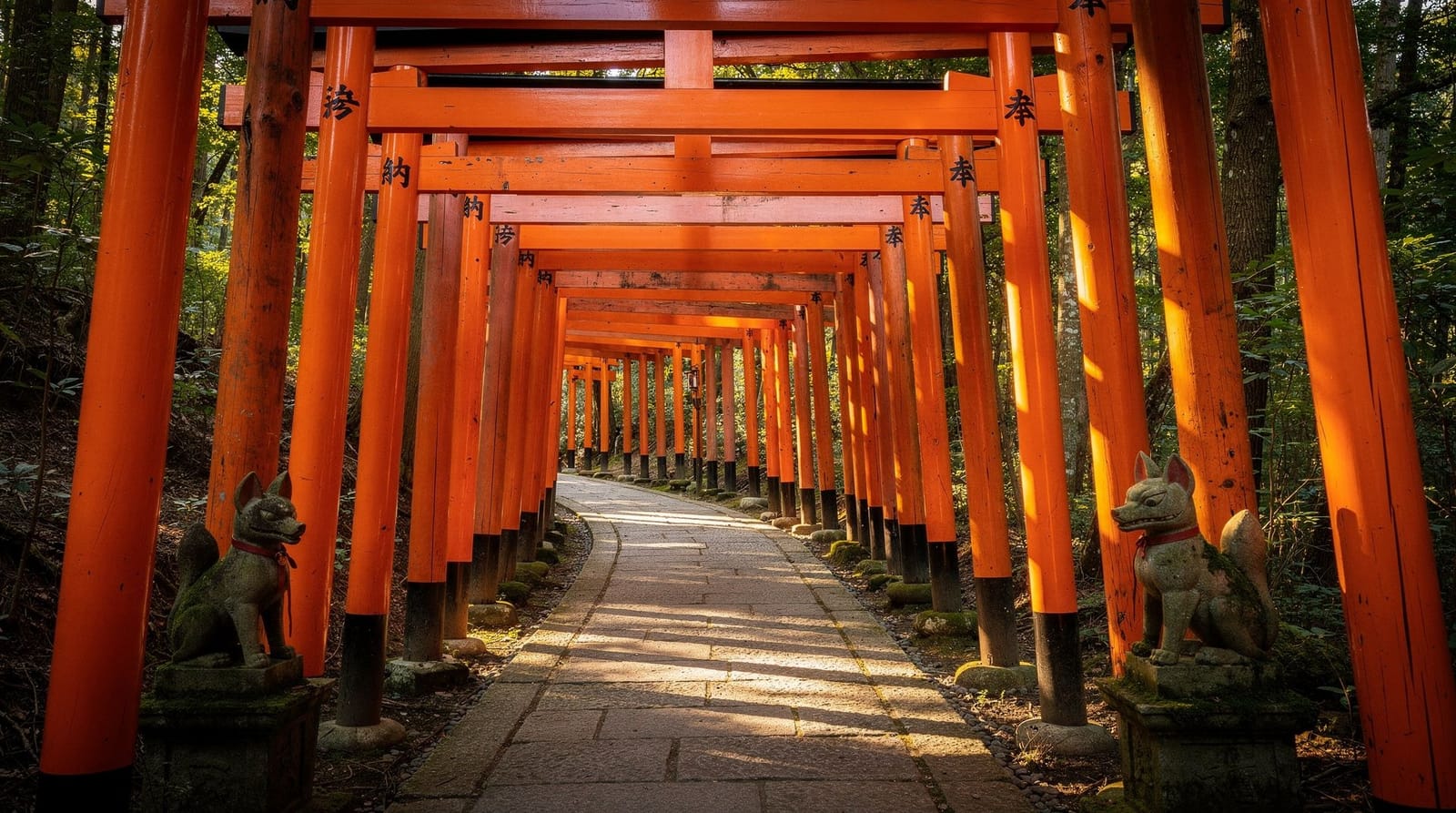
Fushimi Inari Taisha's lower torii gate tunnels, specifically the Senbon Torii section a few minutes' walk from the main gate, deliver the most recognizable Kyoto shot and are accessible 24 hours, which matters because they're genuinely crowd-free only before roughly 7:30am or after sunset. Arashiyama's bamboo grove and Higashiyama's Yasaka Pagoda view down Sannenzaka are the next tier, both similarly crowd-dependent on timing rather than season.
Kyoto’s most photographed sights are photographed constantly for a reason — vermillion torii gates stacked into a tunnel, a bamboo grove with light filtering straight down, a wooden pagoda framed against a stone-paved slope. The gap between the postcard version of these shots and what a visitor actually sees midday isn’t luck or equipment; it’s almost entirely timing. This guide covers the specific spots, the specific hours that make them work, and where a booked photographer earns their cost versus where a phone camera and an early alarm does the same job for free.
| Best window | Before 7:30am or after sunset for the busiest spots |
| Worst window | 9am-4pm at Fushimi Inari and Arashiyama |
| Free option | Phone camera at any of the spots below |
| Paid option | Around ¥15,000-30,000 for a booked photographer session |
| Peak season | Late March-mid April and mid-Nov-early Dec (crowds up, light down) |
Fushimi Inari’s Senbon Torii: Kyoto’s most photographed spot
The tunnel of vermillion torii gates a few minutes’ walk from Fushimi Inari Taisha’s main gate — the Senbon Torii, “thousand torii,” though the full mountain path has closer to ten thousand across its full length — is the single most recognizable Kyoto image, and also the one most damaged by crowding in an ordinary midday photo.
The shrine grounds never close, which makes early morning the real answer: arriving before 7:30am gives a genuine window where the lower tunnels run clear enough for a shot with no other visitors in frame, something that becomes close to impossible by 9am once tour buses and day-trip groups arrive in volume. Climbing higher up the mountain path thins crowds further at any hour, since the majority of visitors only walk the lower loop.
A Fushimi Inari after-dusk photography tour takes the opposite approach to early morning, timed for after sunset when the gates are lit by their own scattered lamps rather than daylight — a moodier, lower-light result led by a guide who knows the specific angles and can help with camera settings for the trickier lighting. The full background on the shrine itself, its layout, and the hike up Mount Inari is in the Fushimi Inari guide.
Arashiyama’s bamboo grove: a 10-minute path, best walked by 8am
Arashiyama’s bamboo grove is short — about 10-15 minutes to walk end to end — free to enter, and always accessible, which means its crowd level is almost entirely a function of arrival time rather than anything else. By 8am, before most tour groups, rental-bike traffic, and rickshaw tours build up, the path is genuinely walkable with clear sightlines up through the bamboo canopy.
By late morning through mid-afternoon during any reasonably busy season, the same path is a slow-moving crowd, and a clean shot without other visitors requires patience between groups rather than good positioning. The Arashiyama destination guide covers the rest of the area, including nearby Tenryu-ji temple and the Togetsukyo bridge, both additional photo opportunities within a short walk of the grove itself.
A private photoshoot experience in the Arashiyama bamboo grove books a photographer for a timed session, useful specifically for portrait-style shots where composition and posing matter more than simply beating the crowds — the photographer’s own timing knowledge and equipment (often including reflectors or off-camera lighting) produce a noticeably different result than a tourist snapping the same path.
Yasaka Pagoda and the Sannenzaka view
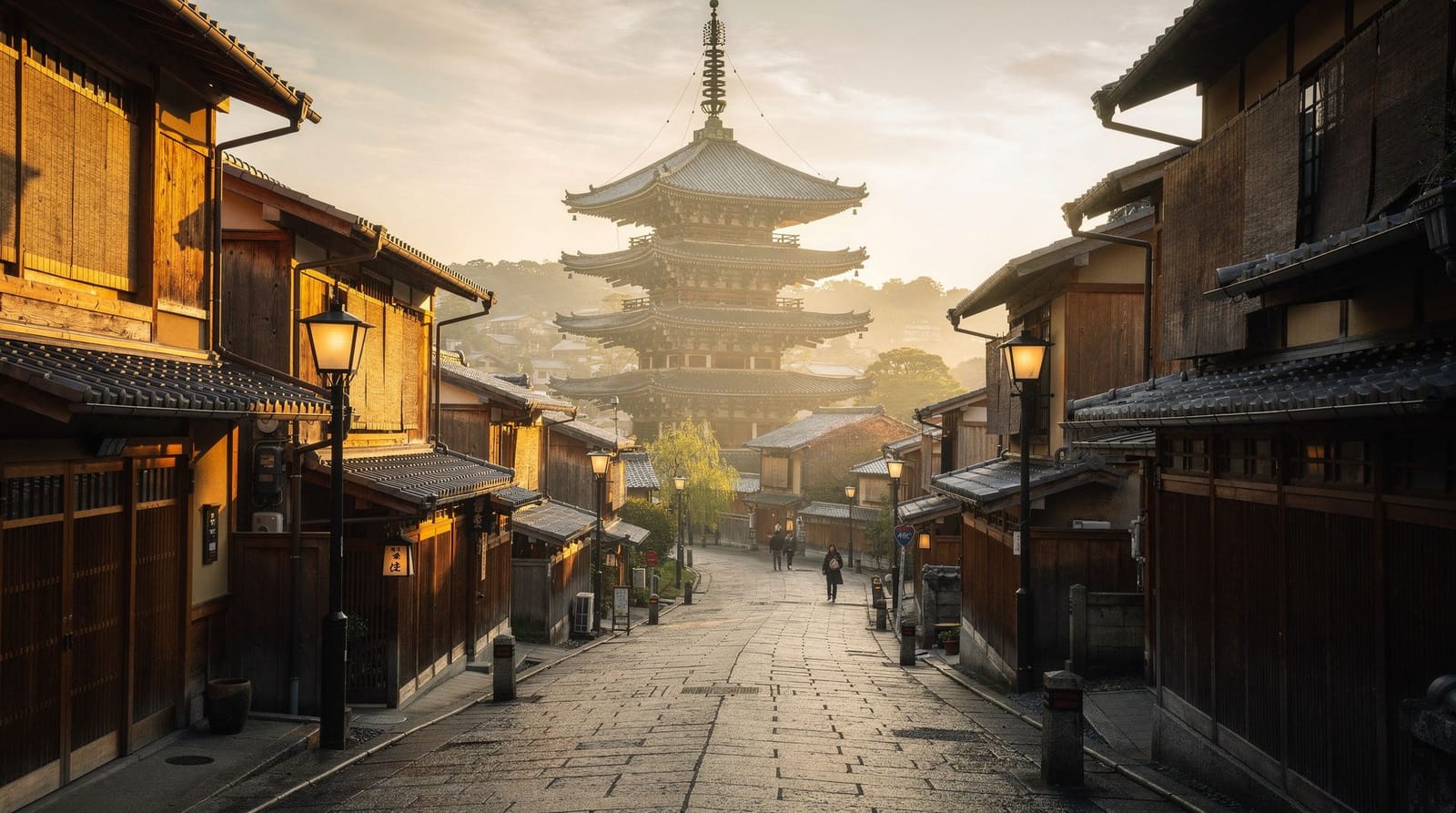
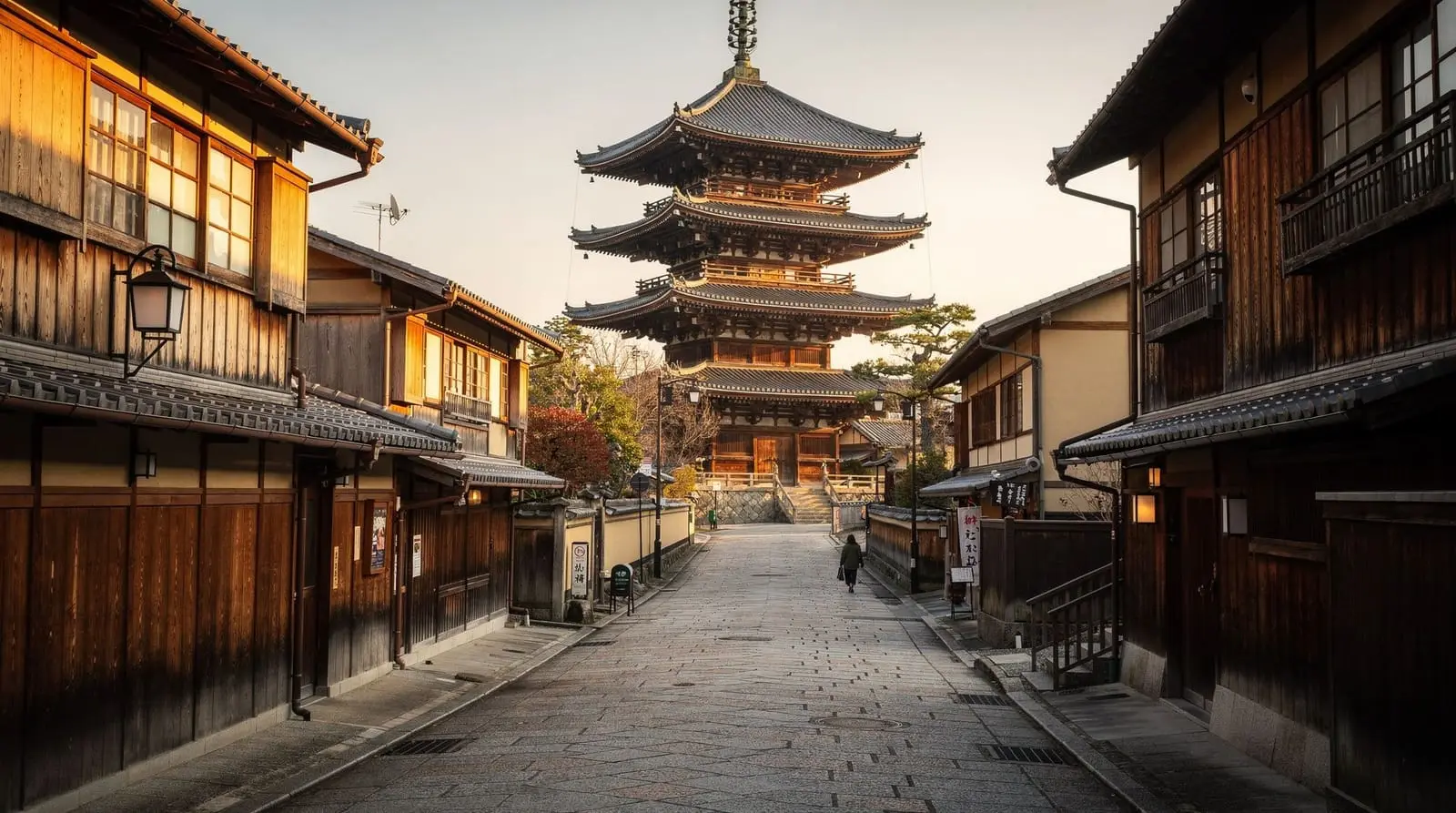
The view down Sannenzaka slope toward Yasaka Pagoda’s five-story silhouette, in Higashiyama, is Kyoto’s other essential wide shot, and unlike the two spots above, it holds up reasonably well through most of the day since the composition itself — a stone-paved slope framed by traditional shopfronts leading the eye to the pagoda — doesn’t depend on an empty foreground the way a torii tunnel or bamboo path does.
That said, early morning (before 8:30am) still gives a meaningfully cleaner shot, particularly on weekends when the slope’s shops draw heavy foot traffic by mid-morning. Late afternoon light, when the sun sits lower and warmer, works well here too, and pairs naturally with an evening continuation into Gion a short walk downhill.
Kiyomizu-dera: the wooden stage and the hillside view
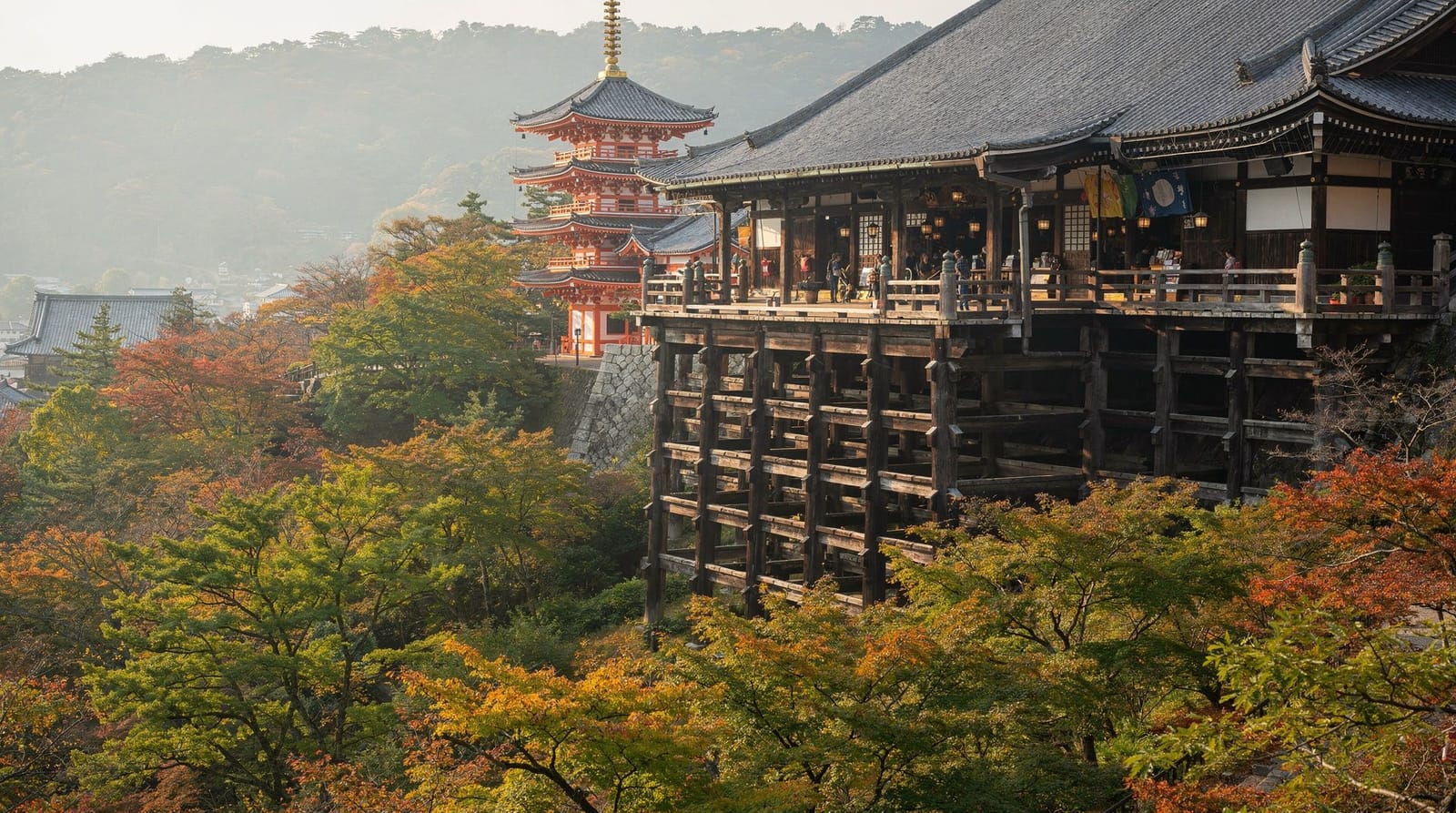
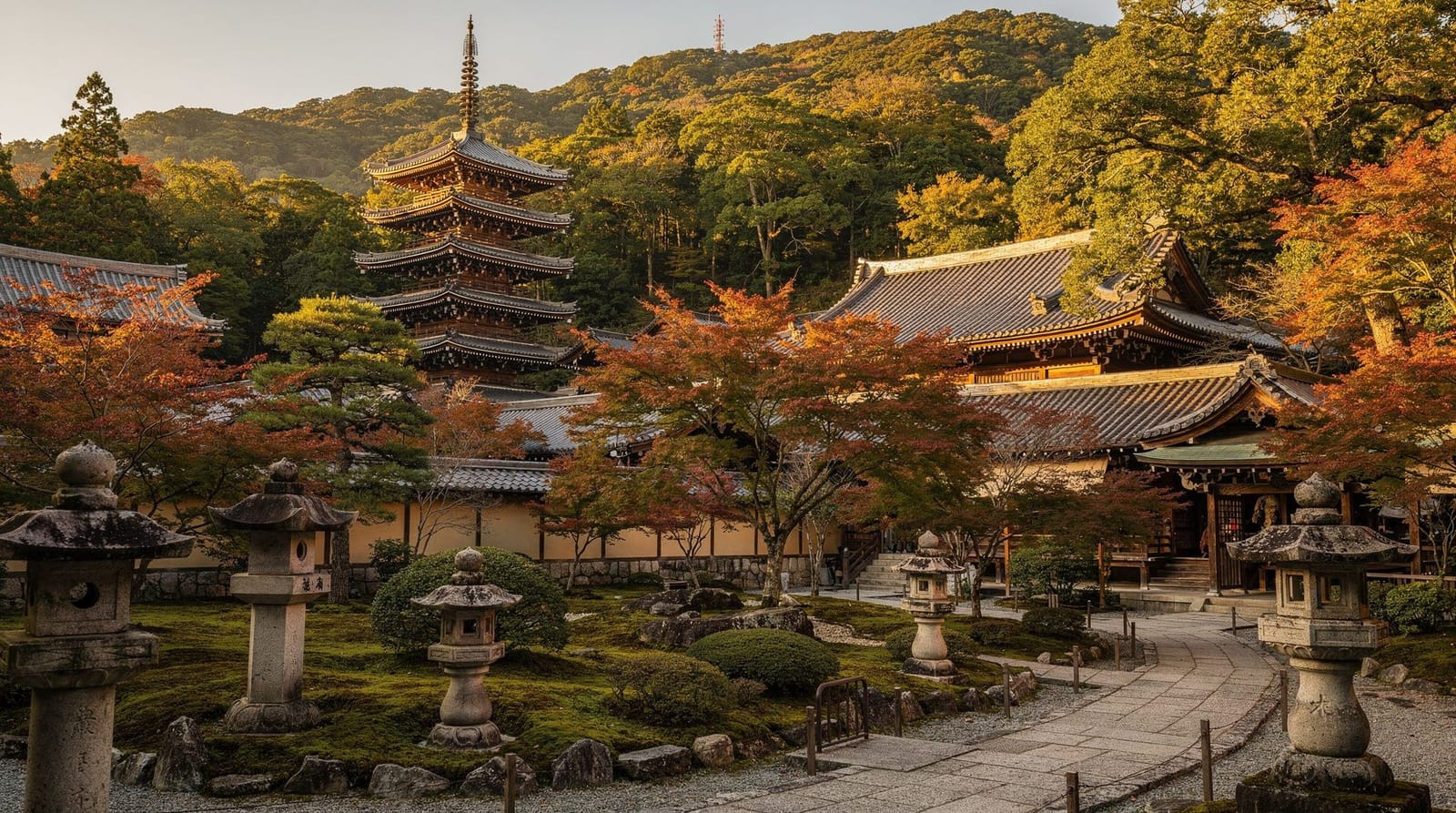
Kiyomizu-dera’s main hall, built on wooden pillars extending out over the hillside, offers two distinct shots: the stage itself viewed from below on the approach path, and the reverse view from the stage looking out over Kyoto’s eastern hills and, in autumn, a canopy of maple color.
Both benefit from the same early-morning logic as the rest of this list — the temple opens around 6am, considerably earlier than most Kyoto sights, specifically to accommodate the volume of visitors it draws, and that early opening is worth using deliberately rather than arriving at a more typical 9 or 10am start. The Kiyomizu-dera guide covers the temple’s layout and history in full; this guide’s interest is narrowly in the photo opportunity itself.
Kimono photography: Arashiyama, Gion, and Kiyomizu-dera
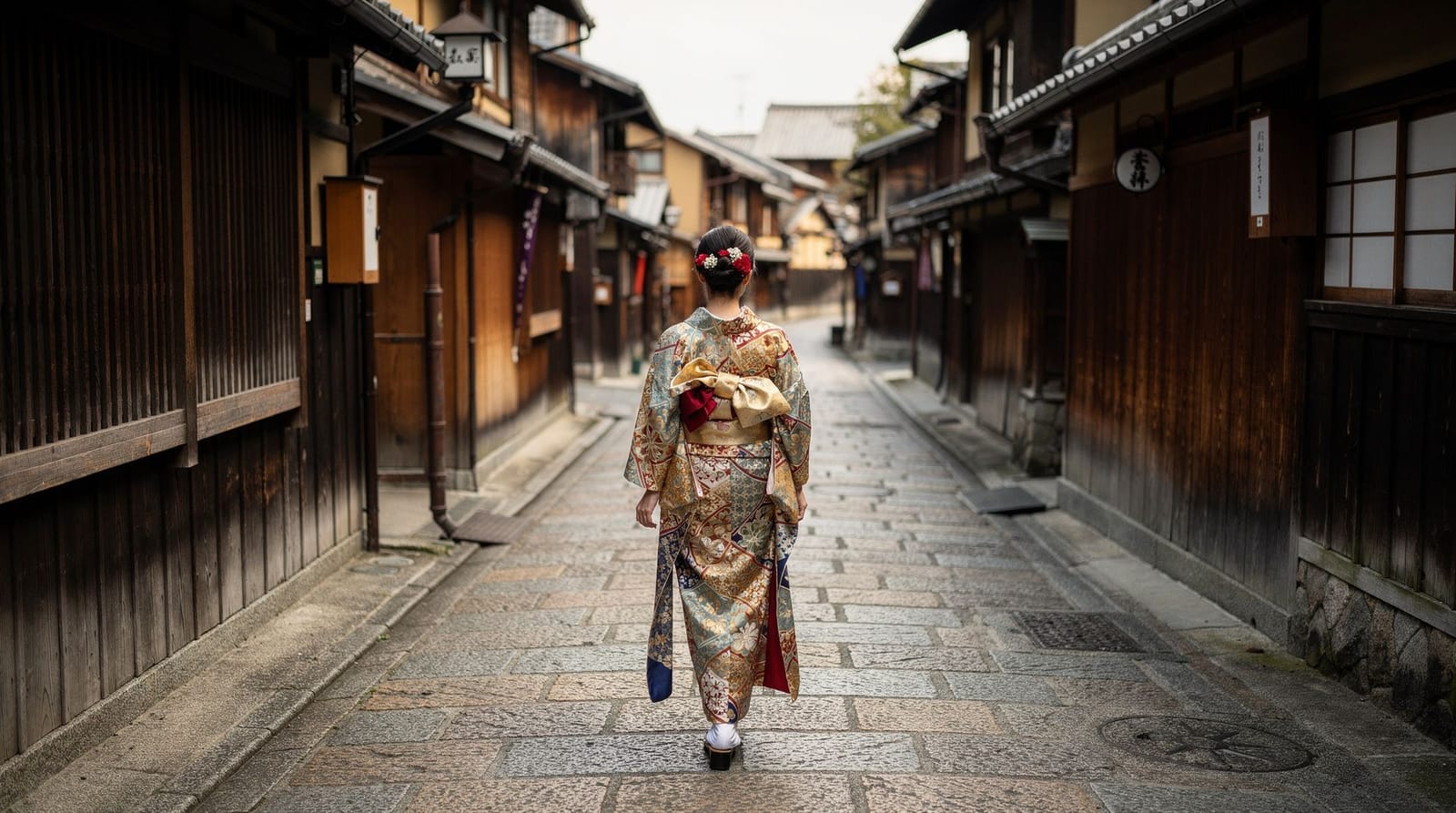
A meaningful share of Kyoto’s most-shared photos aren’t just of the architecture — they’re portraits in rented kimono against these same backdrops. Arashiyama’s bamboo grove, Gion’s Hanamikoji-dori, and the approach to Kiyomizu-dera are the three most common kimono photo locations, each offering a different backdrop (bamboo, traditional machiya streets, temple architecture) for the same rental. The kimono rental guide covers where to rent and what it costs; this guide’s role is pointing out that the timing advice above applies just as much to a kimono shoot as to any other photo — a 7am kimono rental slot at Arashiyama produces a dramatically less crowded background than a 1pm one.
A private vacation photoshoot with a professional photographer is the most flexible option for this kind of portrait work, covering whichever locations and timing a visitor requests rather than being tied to one fixed spot, with a photographer who handles composition, posing direction, and post-processing as part of the booking — worth it specifically for visitors who want portrait-quality results rather than location shots alone.
Equipment and settings that actually matter
Kyoto’s photo spots don’t generally require specialized equipment — a modern phone camera handles the great majority of daytime shots on this list adequately, including Fushimi Inari’s lower torii tunnels and Arashiyama’s bamboo grove in daylight. Where equipment starts to matter is low light: after-dusk photography at Fushimi Inari or an illuminated temple garden benefits substantially from a small tripod or at minimum a stable surface, since ambient lighting is dim enough that handheld shots blur at the shutter speeds needed. A polarizing filter helps meaningfully at Kiyomizu-dera’s outdoor hillside views and anywhere with reflective water, cutting glare on wet stone paths and pond surfaces that otherwise wash out a shot’s color.
Drones: assume they’re banned everywhere
Drone photography is prohibited at nearly every Kyoto temple and shrine, including Fushimi Inari, Kinkaku-ji, and Kiyomizu-dera, both through individual site rules and Japan’s national Civil Aeronautics Act, which restricts drone flight over densely populated areas without a specific permit — a category that covers essentially all of central Kyoto. Visitors bringing a drone from home should plan on it staying in the bag for the entire Kyoto portion of a trip rather than assuming any workaround exists.
Etiquette: what gets a photographer in trouble
A handful of recurring mistakes account for most photography-related friction in Kyoto. Standing in the middle of a narrow path (Fushimi Inari’s tunnels, Arashiyama’s bamboo corridor) to compose a shot blocks other visitors and is a common source of complaints. Photographing maiko or geiko in Gion’s restricted private lanes carries an actual ¥10,000 fine, covered fully in the Gion geisha guide.
Climbing onto temple structures, stepping into roped-off garden areas, or removing shoes-required flooring restrictions for a better angle are all treated seriously by temple staff and, at a few sites, can result in being asked to leave. None of these restrictions are unusual by international heritage-site standards, but Kyoto’s staff enforce them more actively than many visitors expect given how casual the atmosphere otherwise feels.
Beyond the big four: quieter photo locations worth knowing
The Philosopher’s Path, a stone canal-side walkway connecting Ginkaku-ji to Nanzen-ji through northern Higashiyama, photographs well nearly all day thanks to its length spreading crowds out rather than concentrating them at a single bottleneck the way Fushimi Inari’s tunnels do — cherry blossom season in particular turns the canal into a tunnel of pink, and even outside peak bloom the path’s cherry and maple trees, small shrines, and canal reflections make it a reliable, lower-stress alternative to the more famous spots.
Nanzen-ji’s own brick aqueduct, a Meiji-era water channel bridge running through the temple grounds, is a genuinely underused photo location — a piece of Western-style engineering unexpectedly threading through a Zen temple complex, rarely crowded even when Nanzen-ji’s main halls draw a moderate flow of visitors. Nishiki Market, Kyoto’s covered food market near downtown, offers a completely different kind of shot: dense stalls, food close-ups, and street-photography-style candids rather than landscape or architecture, best done on a weekday morning before the narrow covered arcade fills shoulder to shoulder.
Weather and light conditions worth planning around
Overcast days, common through Kyoto’s rainy season in June and periodically in winter, actually improve certain shots by diffusing harsh shadows — Arashiyama’s bamboo grove in particular photographs more evenly under soft, overcast light than in the harsh midday sun of a clear summer day, which otherwise creates strong contrast between lit and shadowed bamboo stalks.
Rain itself, while inconvenient, produces genuinely striking results at Fushimi Inari and along stone-paved streets like Sannenzaka, where wet paving reflects the vermillion torii or lantern light in a way dry pavement doesn’t — worth carrying a small towel or lens cloth rather than writing off a rainy morning entirely. Winter’s bare trees and occasional light snow, while less popular for travel planning generally, give Kinkaku-ji’s Golden Pavilion in particular a striking, less crowded alternative to its usual green or autumn-color backdrop, with snow-dusted roofs against the gold facade a genuinely rare and photogenic combination when conditions align.
Nijo Castle and Kinkaku-ji: two more crowd-timing cases
Nijo Castle’s Ninomaru Palace garden and the castle’s stone walls photograph best in the first hour after its roughly 8:45am opening, before tour groups arriving via chartered bus fill the main courtyard — a pattern that repeats across nearly every Kyoto site covered in this guide, to the point that “arrive at opening” is close to a universal rule rather than a spot-specific tip.
Kinkaku-ji, the Golden Pavilion, presents a slightly different challenge: its signature shot, the gold-leafed pavilion reflected in Kyoko-chi pond, is taken from a fixed viewing path that every visitor walks in the same direction, meaning the crowd in frame is less about arrival time and more about the sheer volume of people funneled through a single vantage point on any given day. Weekday mornings still help, but Kinkaku-ji is one of the few spots on this list where even ideal timing won’t produce a genuinely empty frame — budgeting for some patience, or accepting a few distant figures in the wider shot, is more realistic than chasing a crowd-free version that rarely exists here.
Editing and sharing: what makes Kyoto photos read as authentic
A recurring pattern worth naming honestly: heavily saturated, artificially warmed edits of Fushimi Inari’s torii or Arashiyama’s bamboo are common on social platforms and tend to look noticeably less convincing than photos left closer to their natural color balance, since Kyoto’s actual vermillion and green tones are already vivid enough without exaggeration.
Shooting in the golden-hour light near sunrise or the last hour before sunset, rather than relying on heavy post-processing to manufacture warmth in flat midday light, produces results that hold up better and require less editing afterward — one more reason the early-morning timing strategy that runs through this entire guide pays off twice, once for the crowd level and once for the light itself.
Nara and Osaka: photo spots beyond Kyoto itself
A day trip to Nara adds a genuinely different photo subject to a Kyoto-based trip: the free-roaming deer around Todai-ji and Kasuga Taisha, best photographed in the softer light of early morning before tour buses arrive around 10am, when the deer are also calmer and more approachable.
Osaka, about 30 minutes away by train, offers the opposite kind of shot entirely — Dotonbori’s neon signage and canal reflections photograph best after dark, a useful contrast if a trip’s photo plan leans too heavily on daytime temple and garden shots. Neither requires a dedicated photo-focused day the way Fushimi Inari or Arashiyama do; both work well folded into a normal day-trip itinerary with a camera ready rather than scheduled around specific timing.
A one-day photo itinerary, timed properly
For a single day built specifically around photography rather than general sightseeing: Fushimi Inari at 6:30-7:30am (JR Nara line or Keihan to Fushimi-Inari, both about 15-20 minutes from Kyoto Station), Arashiyama’s bamboo grove by 8:30-9am (roughly 15-20 minutes further by JR Sagano line), Kiyomizu-dera and the Sannenzaka/Yasaka Pagoda view by late morning to early afternoon once the earlier crowds have partially dispersed elsewhere, and Gion in the early evening if a maiko sighting or lantern-lit street shot rounds out the day. This sequence deliberately front-loads the two spots (Fushimi Inari, Arashiyama) where crowding is most severe, saving the more crowd-tolerant Higashiyama shots for later in the day.
How this list compares to the “instagrammable” spots trend
A separate, more curated list of specifically social-media-driven locations — cafes, small shrines, and lesser-known corners that trend heavily on Instagram rather than being classic sightseeing stops — is covered on its own in the best Instagram spots in Kyoto guide. This guide’s focus is narrower and more traditional: the handful of genuinely iconic Kyoto locations, and the specific timing that makes each one work, rather than the broader and faster-changing set of trend-driven spots that guide covers. Both are useful for different planning purposes — this one for a photography-focused day built around known landmarks, the other for finding something a little less expected.
Coin lockers and gear storage on a shoot-focused day
An early-start photography day, particularly one covering Fushimi Inari and Arashiyama back to back before heading into central Kyoto, often means carrying more gear than a typical sightseeing day — a tripod, spare batteries, a change of clothes if a kimono session is planned partway through. Kyoto Station’s coin lockers, covered in more detail in the getting around Kyoto guide, are the most reliable place to drop excess gear before continuing on to a lighter-load afternoon in Higashiyama or Gion, since neither Fushimi Inari nor Arashiyama station has locker capacity comparable to the main hub.
Frequently asked questions about Kyoto photo spots
What time should I get to Fushimi Inari for photos without crowds?
Before 7:30am is the reliable window, since the shrine never closes but tour groups and day-trippers fill the lower tunnels by 8:30-9am. After sunset works too, with a moodier, lamp-lit result.
Is the Arashiyama bamboo grove worth visiting just for photos?
Yes, but timing matters — arriving by 8am, before tour groups and rental-bike traffic build up, is the difference between a clean shot and one full of other visitors.
Do I need a professional photographer, or can I get good shots myself?
A phone camera and good timing cover most location shots. A booked photographer adds real value for portrait-style photos, particularly kimono shoots, where composition and posing matter more than timing alone.
Are drones allowed at Kyoto’s temples and shrines?
No — drone use is banned at nearly every temple and shrine site, both by individual rules and national aviation law restricting flights over crowded areas.
Is it rude to photograph maiko or geiko for a good shot?
It can be illegal in specific parts of Gion, where private lanes carry a ¥10,000 fine for photographing geiko or maiko without consent. See the Gion geisha guide for exactly where that boundary runs.
What’s the best season for Kyoto photography overall?
Cherry blossom and autumn foliage seasons produce the most dramatic results but also the heaviest crowds, working against the early-morning timing that makes most spots photographable. A shoulder season with reliable early access can produce cleaner results overall.
Frequently asked questions about Kyoto photo spots — the best shots and when to actually get them
What time should I get to Fushimi Inari for photos without crowds?
Is the Arashiyama bamboo grove worth visiting just for photos?
Do I need a professional photographer, or can I get good shots myself?
Are drones allowed at Kyoto's temples and shrines?
Is it rude to photograph maiko or geiko for a good shot?
What's the best season for Kyoto photography overall?
Top experiences
Bookable activities with verified prices and instant confirmation on GetYourGuide.