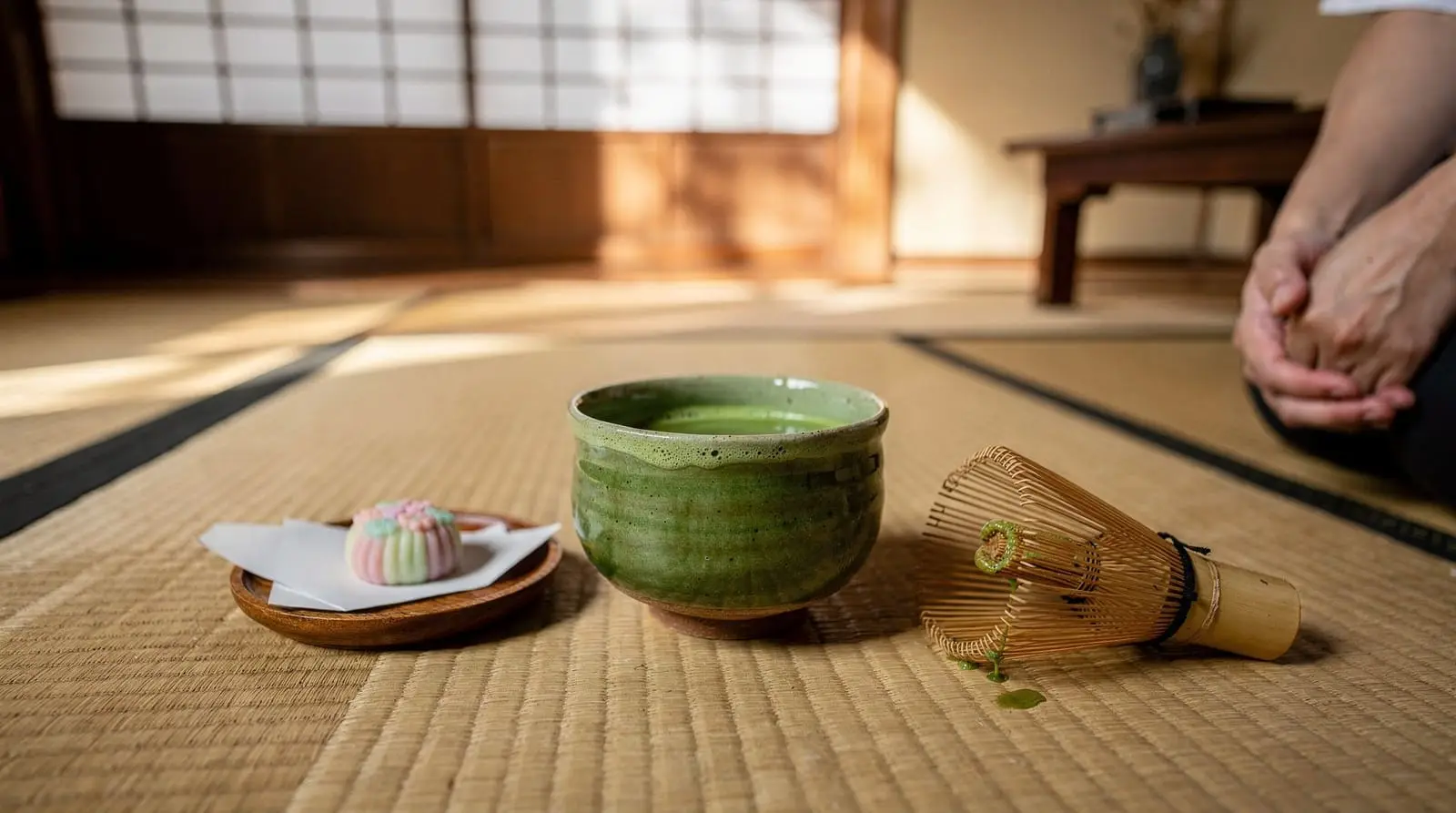
Best matcha in Kyoto and Uji — where locals actually drink it
Kyoto has a genuine matcha problem, in the sense that the drink is now so heavily marketed to visitors that a large share of what’s sold as matcha around the city’s most touristed streets is a diluted, sweetened, or lower-grade product designed to look photogenic rather than taste distinctive. That doesn’t mean good matcha is hard to find — it means knowing roughly where to look, and being willing to travel the 15-20 minutes to Uji, the region most responsible for Japan’s matcha reputation in the first place.
| Where | Uji (20 min from Kyoto Station by JR Nara Line) or central Kyoto |
| Cost | Around ¥800–1,500 (US$5.30–10) for a proper tasting |
| Best for real tea | Nakamura Tokichi, Itoh Kyuemon, Tsuen Tea in Uji |
| Avoid | Soft-serve stands with no loose-leaf tea for sale |
| Time needed | Half day for Uji, an hour or two in central Kyoto |
Uji versus central Kyoto: two different matcha experiences
Uji, a small city just southeast of Kyoto, has grown tea since at least the 13th century and remains the source of some of Japan’s most prized matcha, thanks to a specific combination of soil, river humidity, and the shading technique (growing tencha leaves under cover for the final weeks before harvest) that produces matcha’s concentrated flavor and color. A day trip to Uji, roughly 20 minutes from Kyoto Station by JR Nara Line rapid train, gets you tea houses with their own multi-generation tea fields and a genuinely different level of quality than most central Kyoto cafés selling matcha as a side offering.
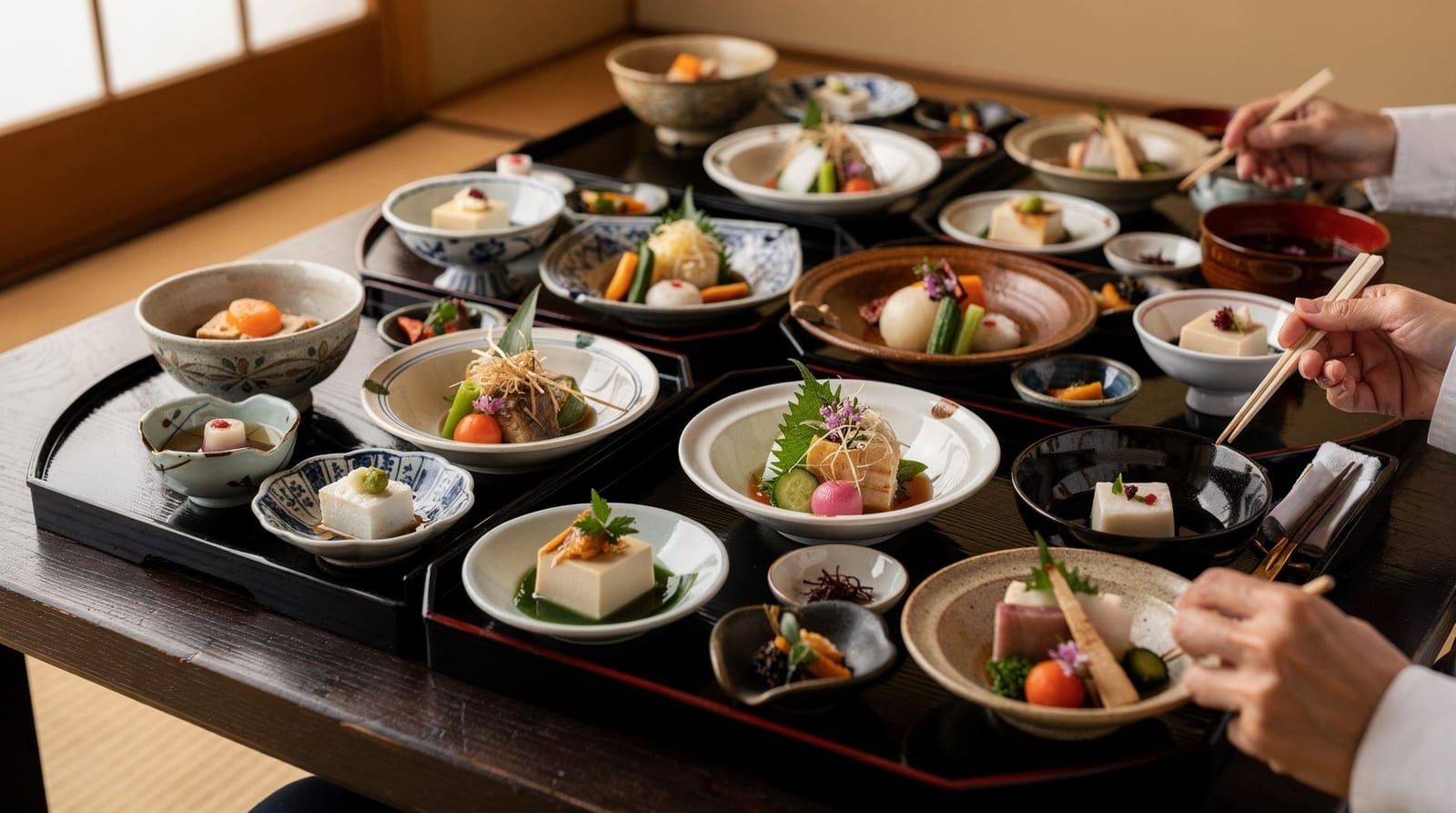
Central Kyoto isn’t short on good matcha either, though — it’s just mixed in with a much larger volume of tourist-oriented matcha soft-serve stands, particularly around Higashiyama, Gion, and Kiyomizu-dera’s approach streets, where quality varies enormously shop to shop. Our full Kyoto food guide covers where matcha fits alongside kaiseki, street food, and the city’s other culinary highlights, and the dedicated Uji matcha guide goes deeper on the town itself if you’re planning to make it the centrepiece of a day.
The best tea houses in Uji, by name
Nakamura Tokichi Honten, a short walk from Uji Station, is probably the best-known name among Uji’s tea houses, run by the same family for generations, and known equally for its matcha parfaits (layered with jelly, ice cream, and a thick matcha syrup, roughly ¥1,500-1,800 or US$10-12) and its more traditional tastings. Itoh Kyuemon, another multi-generation shop nearby, offers a very similar range and is a reasonable second stop or alternative if Nakamura Tokichi has a queue, which it frequently does on weekends.
Tsuen Tea, right by Uji Bridge, claims to be the oldest tea shop in Japan, with a documented history tracing back to the 12th century — worth a stop for that alone, even for visitors mainly interested in buying loose-leaf tea to take home rather than sitting for a drink. For a more hands-on experience, several venues in Uji offer stone-grinding demonstrations where you grind your own matcha from tencha leaves using a traditional mill, typically ¥2,000-4,000 (US$13-27) as a standalone activity.
Half-day matcha tour in Uji with a local guide, home of Japan’s tea cultureWhere to find real matcha inside central Kyoto
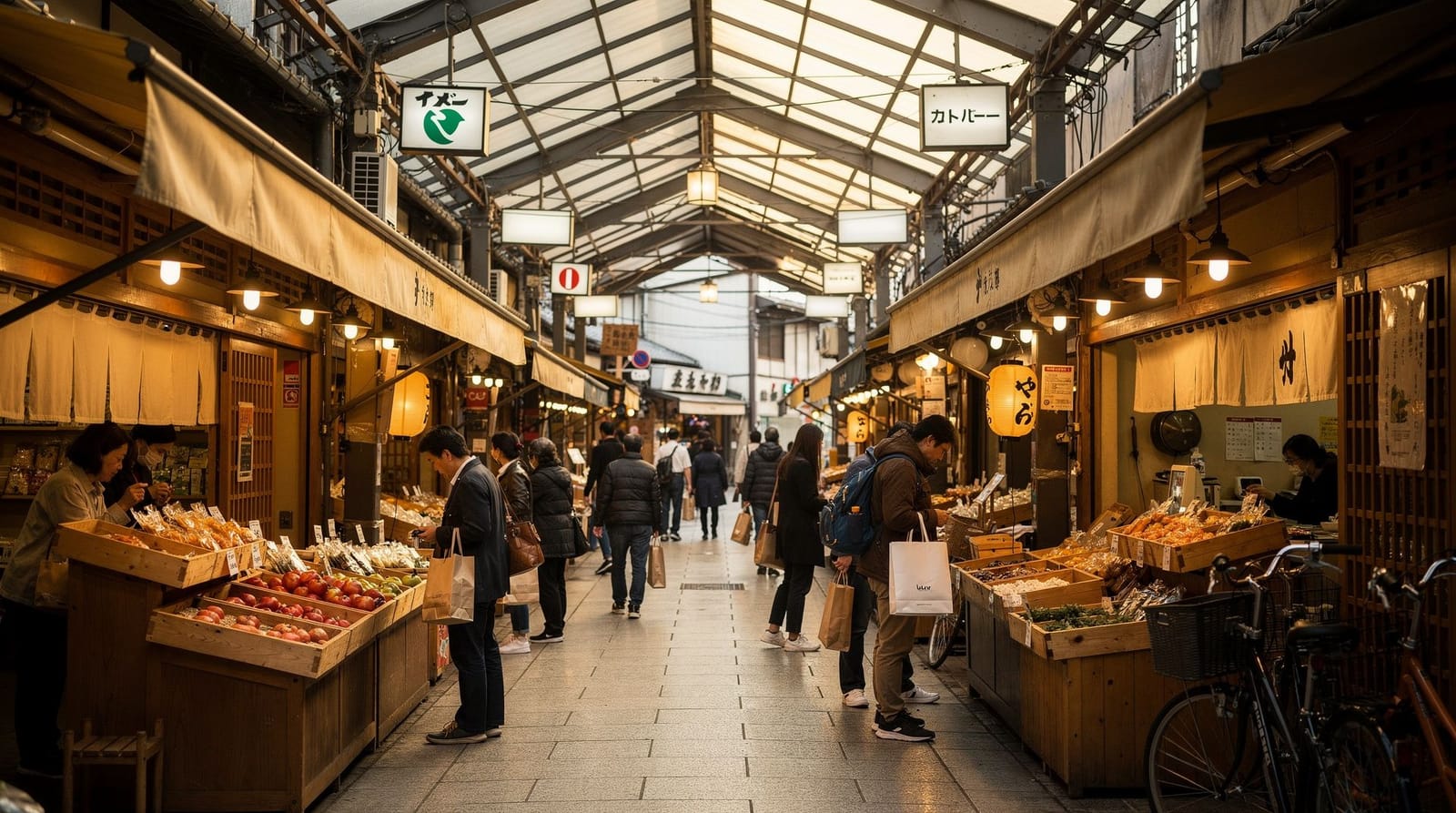
Within the city itself, a handful of names consistently come up among people who actually care about tea rather than just the photo. Marukyu Koyamaen, a matcha producer since 1704, runs a small café near their shop close to Nishiki Market where you can try tea graded specifically for ceremonial versus culinary use side by side, a genuinely useful comparison for understanding why quality varies so much.
Tsujiri, with a flagship near Gion, has been in the matcha and tea business since the mid-19th century and offers both traditional tastings and the more Instagram-friendly parfaits, generally at a level above the average tourist-street stand. If you’re building a broader food crawl around the city, our Kyoto street food guide points to stalls and small shops worth folding into the same afternoon.
For a more experiential approach, several venues combine a matcha tasting with hands-on preparation or a light tea ceremony rather than just serving the drink.
Matcha and mitarashi dango workshop — hands-on preparation of matcha alongside a traditional Japanese sweetHow to spot a tourist-trap matcha shop
A few consistent signs separate a shop taking matcha seriously from one cashing in on the trend. A shop selling only matcha-flavored novelty items — soft serve, Kit Kats, cookies, lattes — with no actual loose-leaf tea for sale and no ability to explain what grade or region their matcha comes from, is aimed squarely at a quick transaction, not tea culture. Genuine tea houses will typically have their own tea fields or a documented multi-generation history, sell tea by weight rather than only in pre-packaged souvenir tins, and staff who can answer a basic question about growing region or grade without hesitation.
Price is a rough but imperfect signal too: a properly made ceremonial-grade matcha, whisked to order, generally costs somewhere between ¥800 and ¥1,500 (roughly US$5.30-10) for a simple tasting with a small sweet. A drink priced noticeably below that, especially a matcha latte or soft serve from a street stand, is very likely made with a lower culinary-grade powder blended with milk and sugar to mask a weaker, more bitter base flavor — not necessarily bad, but a different product from what a dedicated tea house is serving.
Ceremonial grade versus culinary grade — what the difference actually means
Ceremonial-grade matcha is made from the youngest, most tender tea leaves, stone-ground to a very fine powder, and is meant to be whisked with hot water and drunk straight, without milk or sugar — its flavor profile (more vegetal, slightly sweet, less bitter) depends on that quality. Culinary-grade matcha, made from slightly older leaves and often ground coarser, has a more bitter, robust flavor that holds up better when mixed with milk, sugar, or baked into desserts, which is exactly why it’s the grade used in most matcha lattes, ice creams, and pastries around the city.
Neither grade is objectively “better” — they’re suited to different uses — but a shop serving culinary-grade matcha as a straight tasting, rather than as an ingredient in something else, is generally cutting corners rather than offering an authentic ceremonial experience, whatever the menu might imply.
Matcha and a proper tea ceremony — worth combining if you have time
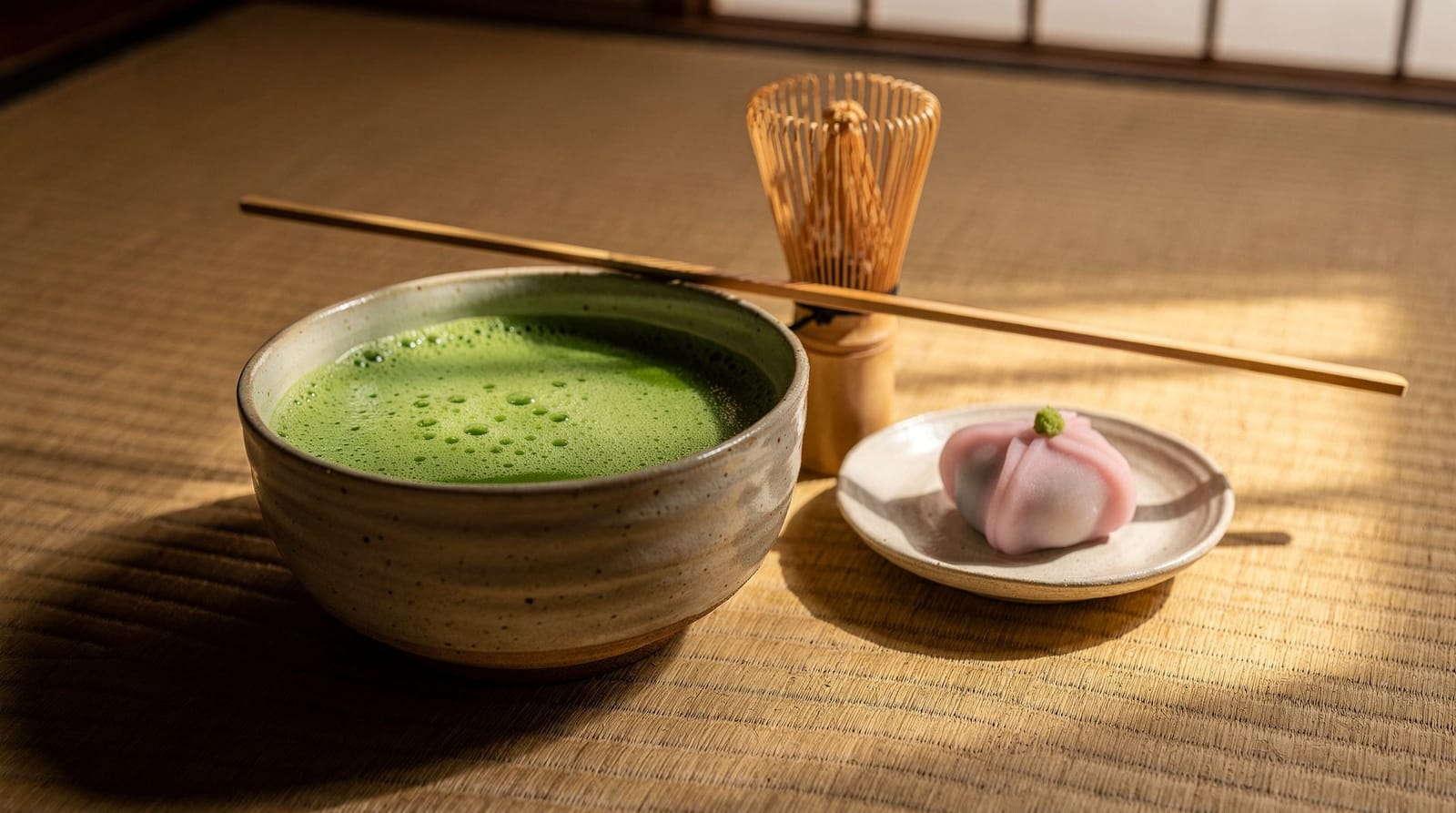
A matcha tasting and a formal tea ceremony (chado or sado) are different experiences. A tasting is informal and quick — a bowl of prepared matcha and a sweet, minutes rather than an hour. A ceremony follows a structured, unhurried sequence of movements rooted in Zen Buddhist practice and usually runs 45 minutes to an hour including instruction on how to hold the bowl, when to bow, and how to properly drink.
For visitors with time for only one deeper matcha experience in Kyoto, a ceremony delivers a considerably richer sense of the culture around the drink than any number of parfait stops, though it’s a fair trade-off against a faster, cheaper tasting if time is limited. Our companion piece on whether the Kyoto tea ceremony is worth it breaks down that trade-off in more detail, and the Kyoto tea ceremony guide covers venue options city-wide, not just in Uji.
Authentic matcha and tea ceremony experience in a traditional Kyoto townhousePlanning a Uji day trip properly
A worthwhile Uji day trip needs more than just a tea house stop to feel complete. Byodo-in, a UNESCO World Heritage Site whose Phoenix Hall appears on the back of Japan’s ¥10 coin, sits a short walk from Uji Station and from most of the town’s main tea houses, making it natural to pair with a tea-focused visit rather than requiring a separate trip. Admission to the grounds runs about ¥700 (US$4.70), with an additional ¥300 (US$2) for the treasure hall museum housing the temple’s original bronze phoenix ornaments and other artifacts.
Budgeting a half day — roughly four to five hours including travel — covers Byodo-in, one or two tea house stops, and a walk along the Uji River without feeling rushed. A full day allows time for a stone-grinding workshop or a more structured guided matcha tour alongside the temple and tea house visits, which is worth it for anyone treating matcha as a genuine trip highlight rather than a quick stop.
The best time of year for a matcha-focused trip
Uji’s tea harvest runs primarily in spring, with the first flush (ichibancha) picked in late April and May generally considered the highest quality of the year, though tea houses serve matcha from stored, properly preserved stock year-round rather than only during harvest season, so a visit at any time of year still gets you legitimate, high-quality tea. Late spring and early summer do bring the added visual interest of seeing actual tea fields near their most active growing period if a tour includes a stop at a working tea field, which isn’t the case for every tea house visit centered purely in town.
What a stone-grinding demonstration actually teaches
Traditional matcha production grinds dried tencha leaves into powder using a stone mill turned by hand, a slow process that produces only a small amount of matcha per hour — part of why properly stone-ground ceremonial matcha commands a real price premium over machine-ground alternatives.
A hands-on grinding demonstration, offered at several venues in Uji, lets visitors turn the mill themselves for a few minutes and see firsthand how little powder results from a meaningful amount of grinding time, a genuinely useful bit of context for understanding why quality matcha isn’t cheap. Most demonstrations pair the grinding with a tasting of the visitor’s own ground tea alongside a professionally prepared comparison bowl, making the quality difference tangible rather than just explained.
Matcha desserts worth seeking out
Beyond the parfait, which has become the default photo-op order at most tea houses, a few other matcha desserts are worth trying if you want a fuller sense of how the flavor is used in Japanese confectionery. Matcha warabimochi — a jelly-like sweet dusted in kinako soybean flour with a matcha syrup drizzle — has a much lighter, more delicate texture than the parfait and tends to be less sweet, letting the tea’s slight bitterness come through.
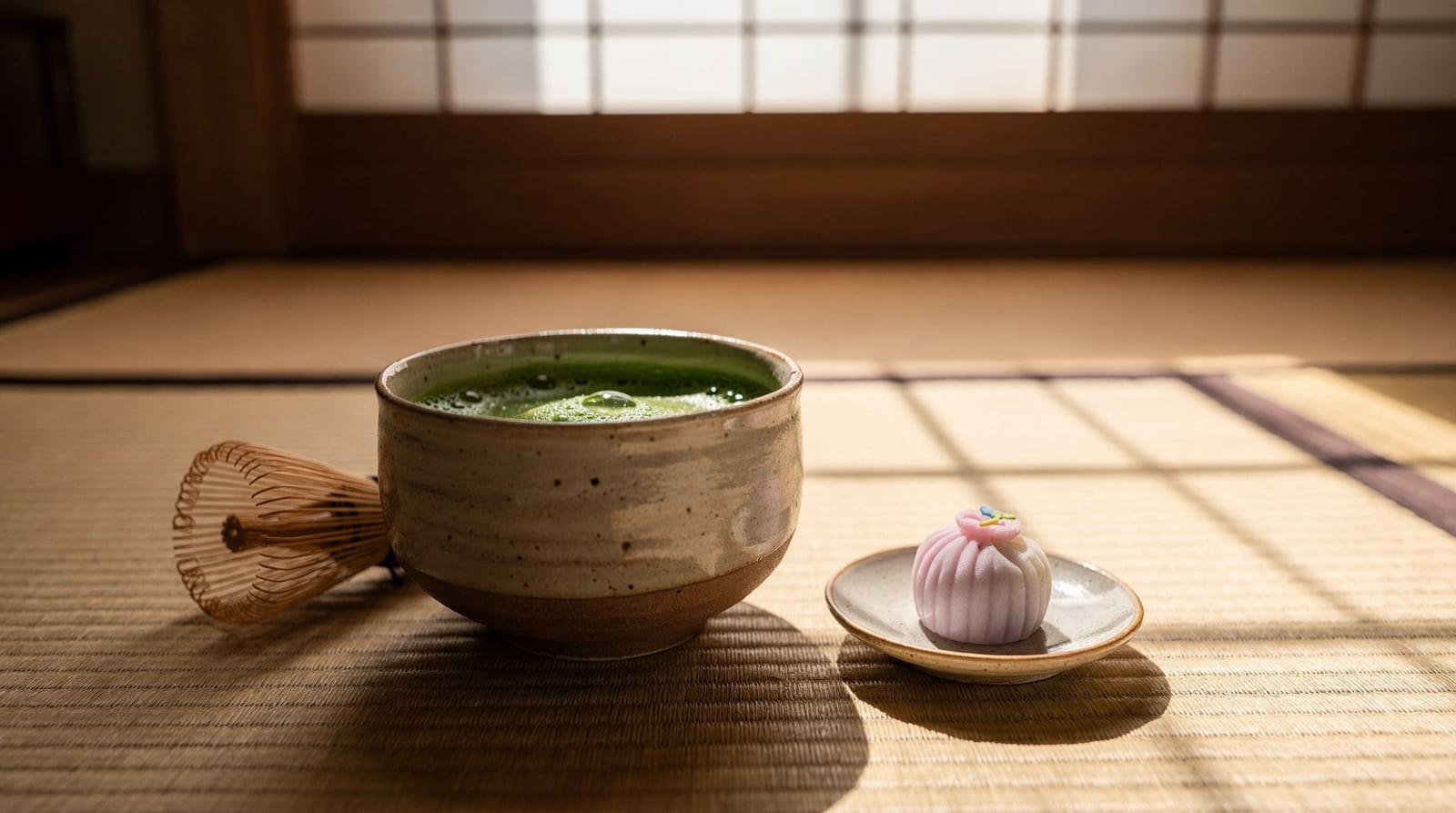
Matcha castella, a sponge cake variant of Nagasaki’s classic castella, shows up in a handful of Uji and central Kyoto bakeries and travels well if you’re buying a gift to take home. Some tea houses also serve a straight matcha tasting alongside a single traditional wagashi sweet rather than a composed dessert — a good option if you want to taste the tea itself rather than a matcha-flavored treat built around it.
What a typical Uji day looks like start to finish
A realistic sequence for a Uji day trip: catch the JR Nara Line rapid from Kyoto Station around mid-morning, arrive in roughly 20 minutes, and start at Byodo-in before the crowds build. From there, walk the short distance to the tea house cluster near Uji Bridge for lunch and a proper tasting or parfait — Nakamura Tokichi or Tsuen Tea both work well as a first stop.
Spend the early afternoon at a stone-grinding demonstration or a second, quieter tea house, then walk along the Uji River before heading back to Kyoto in the late afternoon. The whole loop comfortably fits into four to six hours without feeling rushed, and it pairs naturally with a broader look at Uji itself if you want to extend the visit with more than tea.
Bringing matcha home
For visitors wanting to bring real matcha back rather than just drinking it locally, buying directly from a tea house or a dedicated tea shop rather than an airport souvenir counter is worth the extra effort. Uji’s tea houses and Kyoto shops like Marukyu Koyamaen sell properly sealed tins by weight, typically ¥1,000-3,000 (US$6.70-20) for a modest quantity of decent ceremonial-grade powder, and can usually advise on how quickly it should be used once opened — matcha loses potency and flavor noticeably faster than whole tea leaves once exposed to air, generally within a few weeks rather than months.
Frequently asked questions about Kyoto
Is matcha in Uji actually better than in central Kyoto? Often, yes, particularly at tea houses with their own multi-generation tea fields, because you’re closer to the source and the shops are built around serious tea rather than tourist volume. That said, a handful of central Kyoto shops like Marukyu Koyamaen and Tsujiri hold their own, so it’s not a strict rule — it’s more that Uji has a higher floor and a lower chance of stumbling into a diluted tourist version.
How do I know if a matcha drink is ceremonial or culinary grade without asking? Color and price are rough clues: ceremonial-grade matcha is a brighter, more vivid green and a straight tasting typically runs ¥800–1,500. A very cheap matcha latte or soft serve, or a duller, more yellow-green color, usually signals culinary grade blended with milk or sugar — fine for what it is, but not the same product as a proper tasting.