Hiroshima
Hiroshima from Kyoto — Peace Memorial Park, the Atomic Bomb Dome, and Hiroshima-style okonomiyaki, about 1.5-2 hours each way by shinkansen.
Hiroshima: guided walking tour of Peace Memorial Park
Quick facts
- Distance from Kyoto Station
- 1h35-2h by Tokaido-Sanyo Shinkansen
- One-way fare
- About ¥11,000 (~$73) Nozomi, or JR Pass-eligible Hikari
- Time needed
- Full day, or overnight for a calmer visit
- Best known for
- Peace Memorial Park and Hiroshima-style okonomiyaki
- Best time to visit
- Year-round; spring and autumn for comfortable walking weather
Is Hiroshima worth the trip from Kyoto? Yes, and it’s about more than the history most visitors come for. Hiroshima is roughly 1.5 to 2 hours from Kyoto by shinkansen, and while Peace Memorial Park and the Atomic Bomb Dome are the reason most people first put it on the itinerary, the rest of the city is a genuinely pleasant, rebuilt place with its own tram network and a food specialty — Hiroshima-style okonomiyaki — worth the trip on its own terms.
What a day in Hiroshima actually involves
A Hiroshima day trip from Kyoto has two very different halves, and it helps to know that going in. The morning, if you follow the typical visitor route, centers on Peace Memorial Park — a place designed for reflection, not sightseeing in the usual sense, and one where rushing between photo spots feels obviously wrong once you’re standing in it.
The afternoon and evening, in contrast, are ordinary Japanese city life: trams rattling down wide rebuilt boulevards, department stores, izakaya alleys, and Okonomimura packed with the smell of grilling batter and cabbage. Both halves are part of an honest Hiroshima visit, and neither should be skipped in favor of the other. Visitors who come expecting a city defined entirely by its worst day are usually surprised by how much of Hiroshima is simply a normal, thriving place to spend an afternoon.
If you’re combining Hiroshima with Miyajima — the two are almost always paired, since Miyajima is a short additional hop from Hiroshima Station — budget realistically. Doing both from Kyoto in a single day is possible but long; see the planning section below and our dedicated Hiroshima and Miyajima day trip guide for a structured itinerary.
Peace Memorial Park and the Atomic Bomb Dome
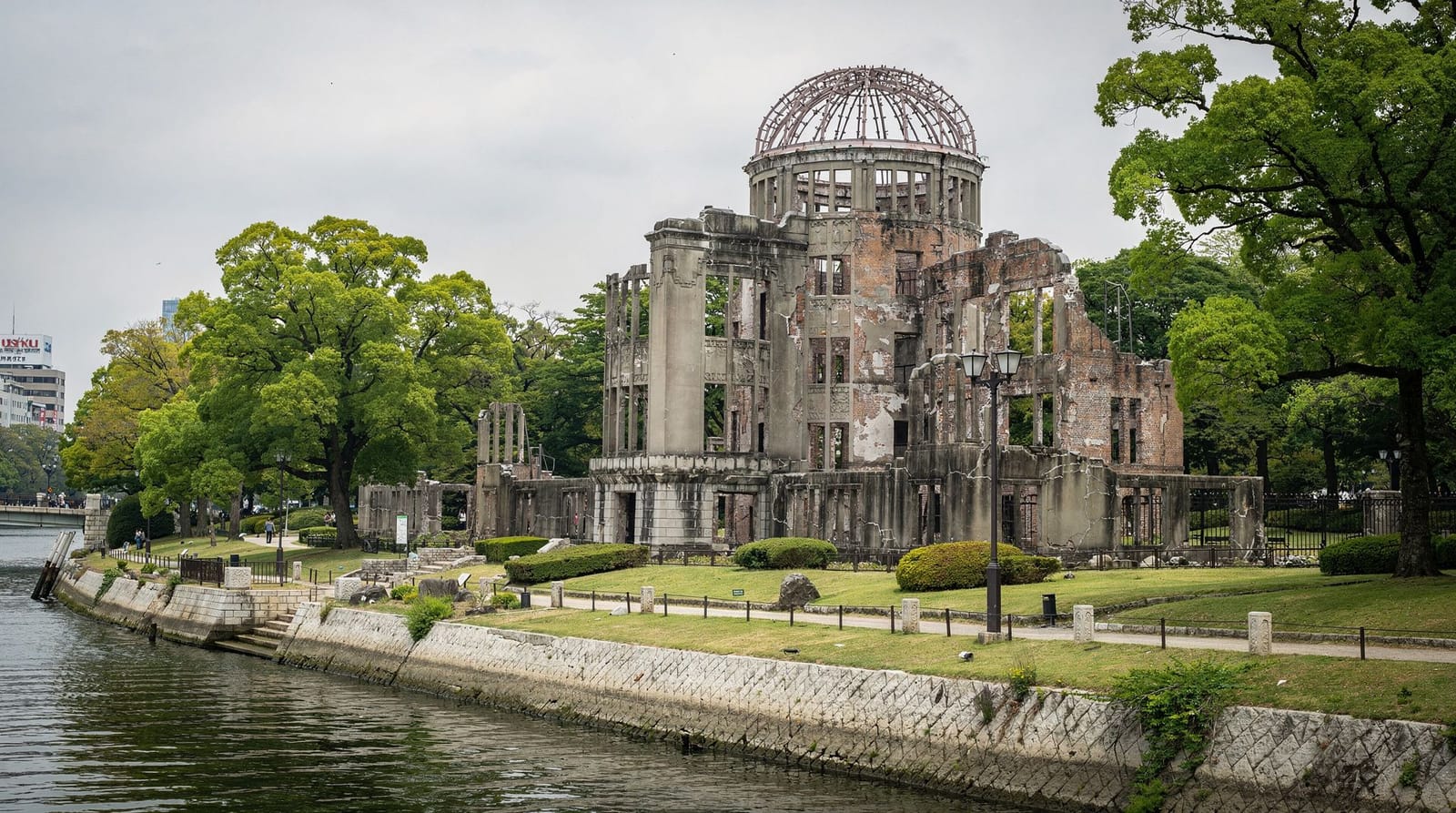
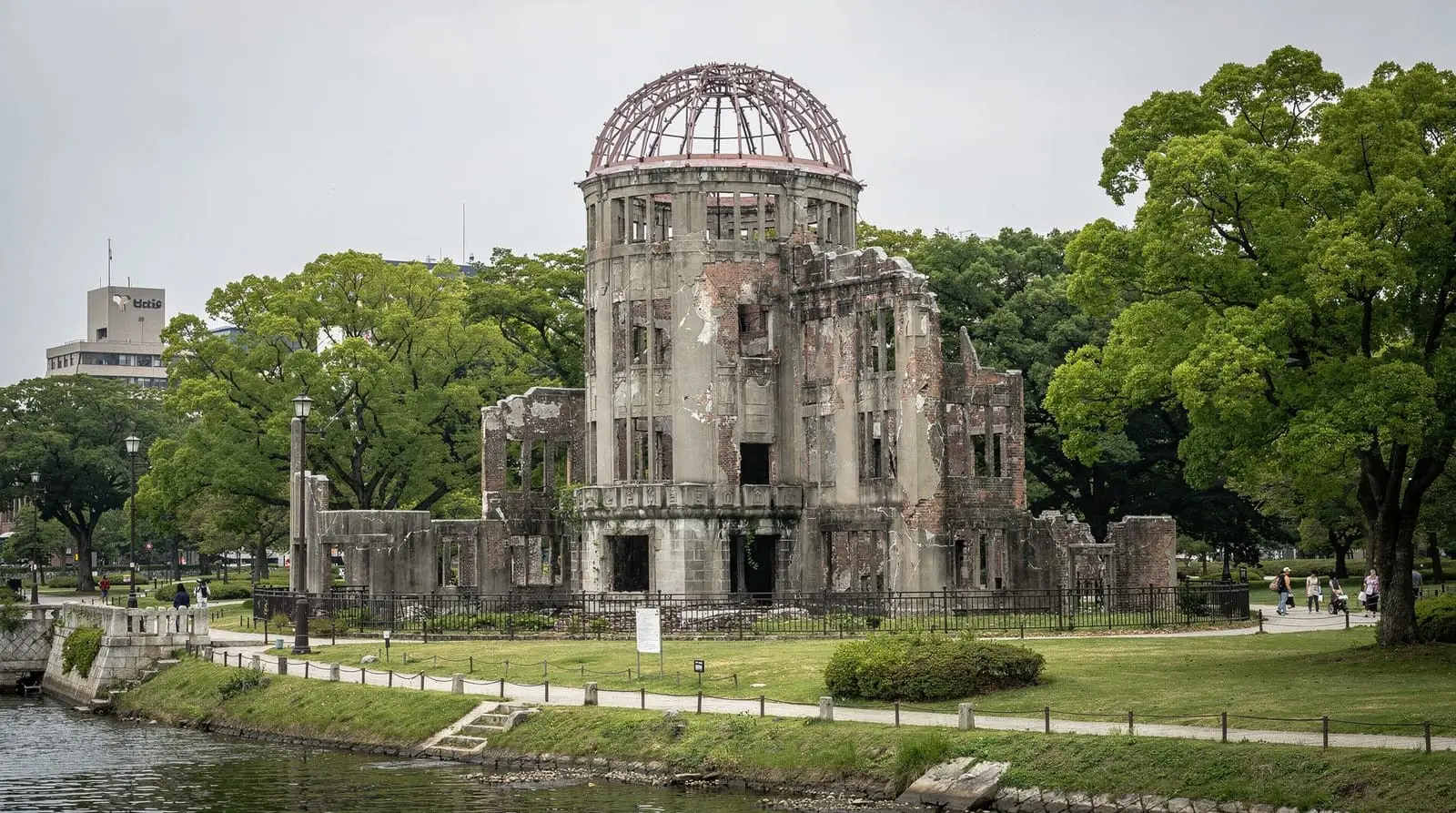
On August 6, 1945, the United States dropped an atomic bomb on Hiroshima, detonating close to the city center and killing an estimated 70,000 to 80,000 people immediately, with tens of thousands more dying in the following months and years from injuries and radiation exposure. The Genbaku Dome — the skeletal ruin of the former Hiroshima Prefectural Industrial Promotion Hall — stands almost exactly at the hypocenter and is one of the only structures in the immediate area left standing.
Its preserved, partially collapsed frame was deliberately left unrestored after the war as a permanent record, and it was designated a UNESCO World Heritage Site in 1996. Seeing it in person, rather than in photographs, is a different and quieter experience than most visitors expect — it sits at the edge of an ordinary riverside park, with joggers and cyclists passing within view of it on a normal afternoon.
Peace Memorial Park itself spreads across the delta where the old city center stood, laid out around the Motoyasu River with the dome as its northern anchor. Walking the park takes you past the Cenotaph for the A-bomb Victims, the Flame of Peace (kept lit until nuclear weapons are eliminated worldwide), and the Children’s Peace Monument, a statue inspired by Sadako Sasaki, a girl who developed leukemia after the bombing and, according to the well-known story, folded paper cranes in the hope of recovering.
Sadako’s story became a symbol of the toll on children specifically, and the monument is surrounded by thousands of colorful paper cranes sent from schoolchildren and visitors around the world, refreshed continually. It’s a genuinely moving stop, not a staged one, and worth slowing down for rather than treating as a photo checkpoint.
For visitors who want the historical and civic context laid out clearly rather than piecing it together from plaques, this guided walking tour of Peace Memorial Park covers the dome, the cenotaph, and the Children’s Peace Monument with a guide who can answer questions in a setting where that context genuinely helps. The park is open at all hours and free to walk through; the dome itself is viewed from outside a perimeter fence, not entered.
The Hiroshima Peace Memorial Museum: what to know before you go
The Hiroshima Peace Memorial Museum sits within the park and reopened its main building after a multi-year renovation completed in 2019, with the east building’s exhibits reorganized to lead with personal belongings and testimonies before broader historical context. Admission is ¥200 (~$1.30) for adults, a deliberately low price to keep it accessible, and the museum is open daily, typically 8:30am to 6pm (later in peak summer months, shorter in winter) — check current hours before you go, since they shift seasonally.
Be honest with yourself and your travel companions about what this museum is. It presents real artifacts — a child’s tricycle, a pocket watch stopped at 8:15am, scorched clothing — alongside photographs and survivor testimonies, and it does not soften the material for effect. This is not a theme-park style museum, and it is not designed to be comfortable. It is, however, presented with restraint rather than shock value, focused on remembrance and a message of peace rather than graphic display.
For families traveling with young children, it’s worth discussing in advance whether the museum is appropriate for your kids’ ages and temperaments; many families choose to have one parent go through with older children while a partner and younger kids spend that hour in the park itself, which is a reasonable and common compromise. Plan for 60 to 90 minutes minimum if you go through the main exhibits at a normal pace.
Modern Hiroshima: a normal, rebuilt city with its own personality
It’s worth saying plainly: most of Hiroshima today is not a memorial site. The city was almost entirely rebuilt after 1945 into a modern regional capital of about 1.2 million people, with wide boulevards, a busy shopping arcade (Hondori), a castle (a 1958 concrete reconstruction of the original, destroyed in the bombing, with a museum inside), and one distinctive feature that sets it apart from most other Japanese cities: Hiroshima kept its streetcar network.
The Hiroshima Electric Railway, known locally as the “hiden,” has run continuously since before the war (some of its vintage cars survived the bombing and remained in service for decades afterward) and remains the easiest way to get around the compact city center today. A day pass costs around ¥700 ($4.70) and covers unlimited rides, or you can pay per trip with an IC card (¥190/$1.30 flat fare within the central zone).
Spend an afternoon in Hiroshima beyond the park and you’ll find a city that feels genuinely lived-in and pleasant — a useful corrective for visitors who arrive expecting a place defined entirely by solemnity. Shukkei-en, a compact Edo-period landscape garden originally laid out in 1620 and rebuilt after the war, is a quiet fifteen-minute walk from the museum and a good place to decompress after Peace Memorial Park; admission is ¥260 (~$1.70).
Hiroshima-style okonomiyaki: layered, not mixed
Hiroshima’s signature dish is okonomiyaki, but it is a genuinely different food from the version most visitors have already tried in Osaka, and conflating the two is a common and easily avoided mistake. Osaka-style okonomiyaki mixes all the ingredients — batter, cabbage, meat or seafood — together before cooking, producing a single thick pancake.
Hiroshima-style okonomiyaki, sometimes called “Hiroshima-yaki” to distinguish it, is built in distinct layers on the griddle: a thin crepe-like batter base, then a generous mound of shredded cabbage, then pork belly or other toppings, and critically, a layer of yakisoba or udon noodles pressed in partway through, finished with a fried egg on top and a generous brushing of a rich, slightly sweet okonomiyaki sauce. The noodle layer is the single biggest structural difference, and it’s what most people mean when they say Hiroshima okonomiyaki is heartier and more of a full meal than a snack.
If you want to see it made and understand the technique rather than just eat it, this okonomiyaki cooking class with a local chef walks through the layering technique step by step and lets you cook your own on a teppan griddle. For a faster, no-reservation option, Okonomimura is the reliable choice locals point visitors toward: a multi-story building in central Hiroshima packed with roughly two dozen independent okonomiyaki stalls, each with its own griddle counter where you watch your meal cooked directly in front of you.
Prices run about ¥900-1,400 (~$6-9.30) per okonomiyaki, and there’s no single “best” stall — picking whichever counter has an open seat and a good crowd is a perfectly reasonable strategy. It’s touristy in the sense that plenty of visitors go, but the food and the cooking method are the real, unaltered local version, not a diluted one.
Getting to Hiroshima from Kyoto
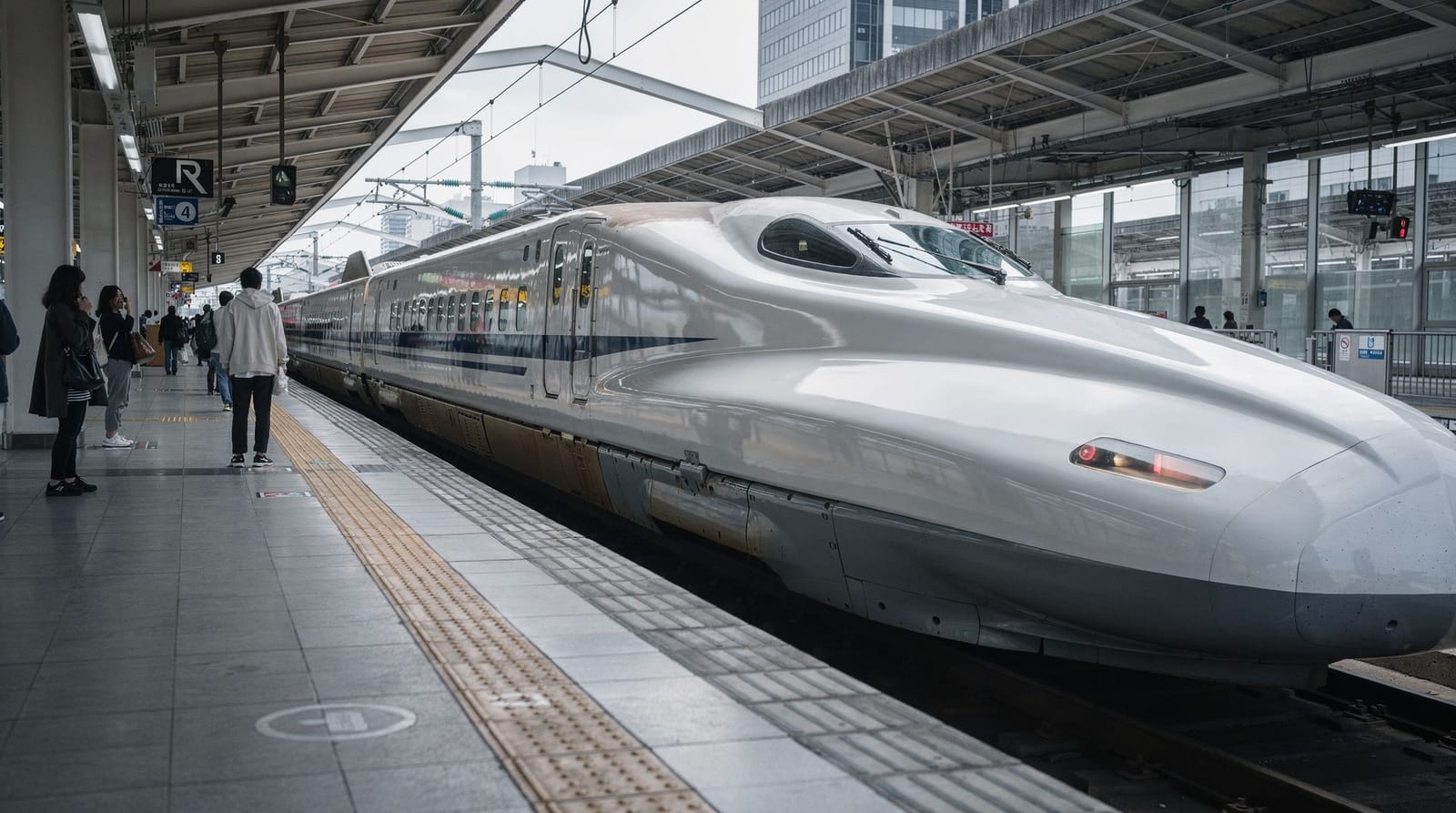
The Tokaido-Sanyo Shinkansen connects Kyoto Station directly to Hiroshima Station with no transfers. The fastest service, the Nozomi, covers the distance in about 1 hour 35 to 40 minutes and costs roughly ¥11,000 (~$73) one way for an unreserved seat — but the Nozomi is explicitly excluded from the Japan Rail Pass, so JR Pass holders cannot ride it. The Hikari service, which is JR Pass-eligible, makes a few more stops and takes closer to 2 hours for the same route; both trains run frequently throughout the day, roughly every 10-15 minutes at peak times, so there’s rarely a long wait either way.
If you’re already holding or planning to buy a Japan Rail Pass for a broader trip, the Hikari is the sensible default and the time difference — about 20-25 minutes each way — is a minor cost for a meaningful fare saving over a full week of pass-eligible travel. If you’re not using a pass, weigh the Nozomi’s speed against its fare; for a single round trip the time saved is often worth the price if you want more hours in Hiroshima itself. Reserved seats cost slightly more than unreserved and are worth it during busy periods (weekends, holidays, cherry blossom and autumn foliage seasons) when unreserved cars can fill up.
Should you combine Hiroshima and Miyajima in one day from Kyoto?
Honestly, only if you’re comfortable with a long day. Hiroshima and Miyajima are geographically close to each other — Miyajima is roughly 45 minutes to an hour from Hiroshima Station including the ferry — which makes pairing them an obvious and popular plan once you’re already in the Hiroshima area. But layering that onto a Kyoto-based day trip means a 1.5-2 hour train each way, plus local transit and the ferry to Miyajima, plus actual time at both destinations. Realistically, that adds up to a 12-hour-plus round trip if you want unhurried time at Peace Memorial Park, the museum, and Miyajima’s Itsukushima Shrine, with an early departure from Kyoto (before 7am) and a late return.
It’s doable, and plenty of visitors do it successfully, especially with a structured guided option like this Kyoto Hiroshima and Miyajima day trip with a guide, which handles the transit logistics and timing so you’re not calculating train connections on the fly.
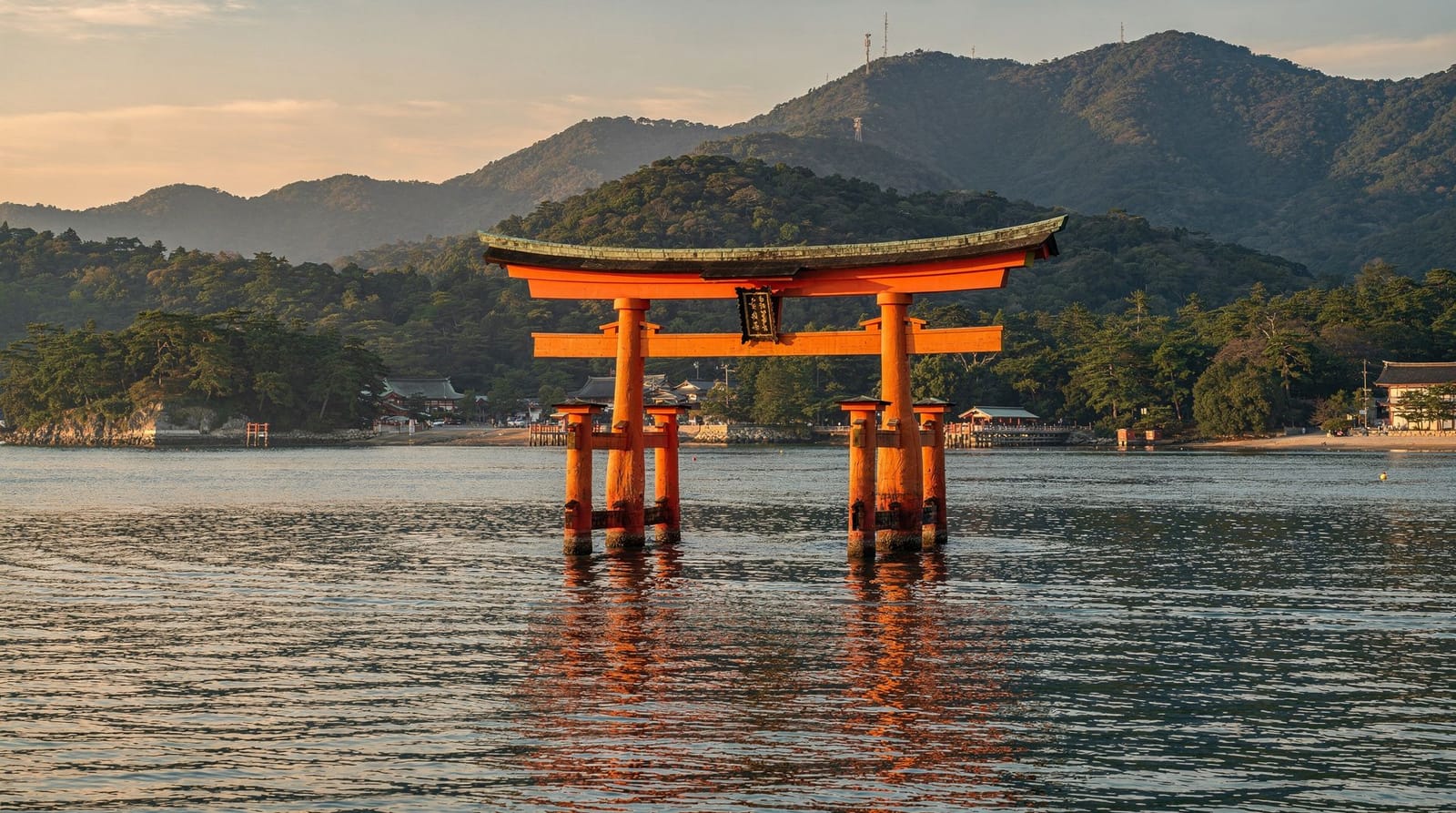
But if your schedule allows any flexibility, an overnight in Hiroshima is the more comfortable option — it removes the time pressure at Peace Memorial Park (a place that genuinely benefits from not being rushed), lets you see Miyajima’s floating torii gate at whatever tide is favorable rather than whatever tide happens to align with a single day trip, and gives you an evening free to explore Hiroshima’s izakaya district around Nagarekawa without racing back to a train. See our Hiroshima and Miyajima day trip guide for both the single-day and overnight versions laid out with specific timing.
If a full private day makes more sense for your group — flexible pacing, a driver-guide, no fixed group schedule — this full-day private guided tour of Hiroshima from Osaka or Kyoto is built around exactly that kind of custom itinerary, and can be adjusted to include or skip Miyajima depending on your pace.
Planning your Hiroshima day: a realistic schedule
If you’re doing Hiroshima only, without Miyajima, a comfortable plan looks like this: catch an early shinkansen (ideally departing Kyoto by 7:30-8am), arrive by mid-morning, spend 2.5 to 3 hours at Peace Memorial Park and the museum, have lunch at Okonomimura or a nearby restaurant, spend the afternoon at Shukkei-en Garden or wandering Hondori and the castle area, and catch a return train in the early evening. That schedule gets you home to Kyoto by dinner with room to breathe, rather than sprinting between stops.
If you’d rather not manage the logistics yourself, a tour that bundles the shinkansen ticket with a structured itinerary — such as one of the combined Hiroshima-Miyajima options — removes the planning overhead entirely, which is worth considering if this is your only full day trip from Kyoto during your stay and you’d rather not spend part of your trip figuring out train times. If you’re building a longer Kansai itinerary that includes Hiroshima alongside other regional stops, our Kansai 7-day itinerary shows one way to fit a Hiroshima-Miyajima leg into a wider trip without over-scheduling it.
For broader context on how a trip like this fits into your overall Kyoto stay, see our best day trips from Kyoto guide, which weighs Hiroshima against Nara, Himeji, and Osaka, and our how many days do you need in Kyoto guide for slotting a full-day trip like this into a broader itinerary.
Single day versus overnight: what actually changes
Deciding between a single long day trip and an overnight in Hiroshima comes down to how much you want to rush Peace Memorial Park and whether Miyajima is part of the plan.
| Single day from Kyoto | Overnight in Hiroshima | |
|---|---|---|
| Total time in transit | ~3-4 hours round trip | Same, but split across two calmer travel days |
| Pace at Peace Memorial Park | Time-pressured if combining with Miyajima | Unhurried |
| Miyajima’s floating torii | Whatever tide happens to align with your day | Can time your visit to a favorable tide |
| Evening options | None — you’re on a return train | Nagarekawa izakaya district, a genuine local evening |
| Best for | Tight itineraries, Hiroshima only | Travelers pairing Hiroshima with Miyajima, or who dislike rushing memorial sites |
If Hiroshima is your only full day trip from Kyoto during your stay, the single-day version comfortably covers Peace Memorial Park, the museum, lunch, and an afternoon in the modern city. If you’re adding Miyajima, an overnight removes real time pressure rather than just being a nicer-to-have.
Where to stay if you go overnight
Sannomiya-equivalent for Hiroshima is the area around Hiroshima Station and the Nagarekawa district a short tram ride into the city center — Nagarekawa specifically is Hiroshima’s main izakaya and nightlife area, dense with small bars and restaurants that don’t factor into a same-day trip at all since you’d normally already be on a return train by dinner. Staying overnight here, rather than immediately at the station, puts you within easy tram reach of Peace Memorial Park in the morning and gives you an actual evening in the city rather than treating Hiroshima purely as a memorial-site day trip.
Frequently asked questions about visiting Hiroshima from Kyoto
How long does it take to get from Kyoto to Hiroshima?
By Nozomi shinkansen, about 1 hour 35 to 40 minutes for roughly ¥11,000 (~$73) one way, though the Nozomi is not covered by the Japan Rail Pass. The JR Pass-eligible Hikari service takes closer to 2 hours for the same route.
Is the Hiroshima Peace Memorial Museum appropriate for children?
It’s genuinely heavy material — real artifacts and testimonies from the 1945 bombing, presented without graphic exaggeration but also without softening. Many families with young children choose to split up, with one adult visiting the museum while another spends that time with the kids in the park itself; there’s no single right answer, and it depends on your children’s ages and how you’d prefer to introduce this history.
What’s the difference between Hiroshima-style and Osaka-style okonomiyaki?
Osaka-style mixes all ingredients into one batter before cooking into a single pancake. Hiroshima-style is built in distinct layers — batter, cabbage, meat, a layer of yakisoba or udon noodles, and a fried egg on top — making it heartier and structurally quite different, despite sharing a name.
Can I visit Hiroshima and Miyajima in one day from Kyoto?
Yes, but it’s a long day — realistically 12 or more hours round trip once you factor in the shinkansen, local transit, the ferry, and time at both destinations. An overnight in Hiroshima is more comfortable if your schedule allows it.
Is Hiroshima just a somber, historical destination?
No — that’s a common misconception. Peace Memorial Park and the museum are a meaningful and important part of a visit, but most of the city is an ordinary, pleasant rebuilt Japanese city with a working tram network, good food, and normal daily life. Plan time for both sides of it.
What is the Children’s Peace Monument?
A statue in Peace Memorial Park inspired by Sadako Sasaki, a girl who developed leukemia after the 1945 bombing and, according to the well-known story, folded paper cranes hoping to recover. It’s surrounded by thousands of cranes sent by schoolchildren and visitors worldwide, and it remains one of the park’s most visited and emotionally resonant spots.
Do I need to book Peace Memorial Museum tickets in advance?
Advance booking generally isn’t required for individual visitors; admission is ¥200 (~$1.30) and tickets are sold on-site. During peak travel seasons it can be worth checking the museum’s current hours online before your visit, since they shift seasonally.
Where’s the best place to try Hiroshima-style okonomiyaki?
Okonomimura, a multi-story building in central Hiroshima with roughly two dozen independent okonomiyaki stalls, is the most reliable no-reservation option — pick any counter with an open seat. For a more guided introduction to the technique, a hands-on cooking class is a good alternative to simply eating it.
Where should I stay if I do an overnight in Hiroshima?
Around Hiroshima Station or the Nagarekawa district a short tram ride into the center. Nagarekawa is Hiroshima’s main izakaya and nightlife area — a good base if you want an actual evening in the city rather than racing back to a train.
Is one day in Hiroshima enough if I’m not also doing Miyajima?
Yes. A comfortable single-day plan covers Peace Memorial Park, the museum, lunch, and an afternoon exploring the modern city, with a return train in the early evening and no need for an overnight.
Top experiences
Bookable activities with verified prices and instant confirmation on GetYourGuide.