Osaka, day trip from Kyoto
Osaka Castle, Dotonbori's neon canal, takoyaki and kushikatsu — how to do Japan's food capital from Kyoto in 29 minutes by train.
Osaka: 2-hour local street food tour, Dotonbori & Namba
Duration: 2 hours
Quick facts
- Distance from Kyoto
- 29 min by JR Special Rapid
- Train fare
- ¥580 (~$3.90) one-way
- Osaka Castle entry
- ¥600 (~$4) tower
- Takoyaki (6-8 pcs)
- ¥500-800 (~$3.30-5.30)
- Days needed
- Full day recommended
- Key contrast
- Loud and casual vs. Kyoto's reserve
Is Osaka worth a day trip from Kyoto? Yes, and it’s the easiest of Kyoto’s day trips logistically: JR Special Rapid trains connect Kyoto Station to Osaka Station in about 29 minutes for ¥580 (~$3.90) one-way. What you get at the other end is a genuinely different city — Osaka is louder, more food-obsessed, and far more casual than Kyoto’s reserved formality, built around a canal-side entertainment district, a rebuilt castle, and a street food culture locals call kuidaore (“eat until you drop”).
For a broader look at how to fold this into a longer stay, see how many days in Kyoto and best day trips from Kyoto, which places Osaka alongside Nara and Uji as the region’s main rail-based options.
Osaka isn’t Kyoto with neon signs — it’s a different register entirely
If you’ve spent a few days in Kyoto working through temples, quiet gardens, and the particular hush of Gion in the early morning, Osaka can feel like a jolt. That’s the point of going. Where Kyoto trades on restraint — subdued color palettes, formal etiquette, centuries of imperial and religious protocol — Osaka has historically been a merchant city, and it wears that history as brashness: illuminated signage stacked three stories high along the Dotonbori canal, restaurant touts calling out from doorways, and a food culture built around eating well, cheaply, and often, rather than kaiseki-style ceremony.
The two cities are close enough (29 minutes by train) that this contrast is easy to use deliberately: do the reserved version of Japan in Kyoto, then spend a day in Osaka for the version that’s loud, hungry, and unbothered by formality. If you’re trying to decide how to split time between the two rather than just adding Osaka as an afternoon add-on, Kyoto vs. Osaka breaks down the practical differences in more depth, and the Kyoto-Osaka 3-day itinerary is a structured way to combine both without doubling back on trains.
If you’re new to the region entirely, Kyoto etiquette is worth a read before either city — Osaka is more relaxed about it than Kyoto, but the basics (queueing, quiet on trains, no eating while walking in crowded areas) still apply.
Osaka Castle: an honest look at what you’re actually visiting
Osaka Castle is one of the most photographed buildings in Japan, and it’s worth knowing exactly what you’re getting before you pay the ¥600 (~$4) tower admission. The castle you see today is a 1931 concrete reconstruction, rebuilt again with reinforced concrete in 1997 during a major renovation — it is not the wooden Edo-period (or earlier, Toyotomi-era) structure.
The interior now functions as a modern museum with elevators, climate control, and multimedia displays about the castle’s history and Toyotomi Hideyoshi, the daimyo who built the original fortress in 1583. That’s a legitimate way to spend an hour, but if you’re expecting an atmospheric wooden interior like Himeji Castle’s, you’ll be disappointed — this is a history museum inside a castle-shaped building, not a preserved original.
What is genuinely worth the visit is everything around the tower: the stone walls, built from massive granite blocks quarried and hauled from across western Japan (some individual stones weigh over 100 tons), the wide moats, and Nishinomaru Garden within the castle grounds, which is one of the better cherry blossom spots in the city in spring. The park surrounding the castle is large, walkable, and free to enter — you only pay if you go up the tower itself.
If you want the history explained on-site rather than reading museum placards, this 3-hour Osaka Castle and Historical Museum guided tour covers both the grounds and the tower interior with a guide, and if crowds are a concern — the castle gets busy with tour groups by mid-morning — this early-morning tour is built specifically around beating that.
Dotonbori: the neon canal everyone photographs, and what’s worth doing there
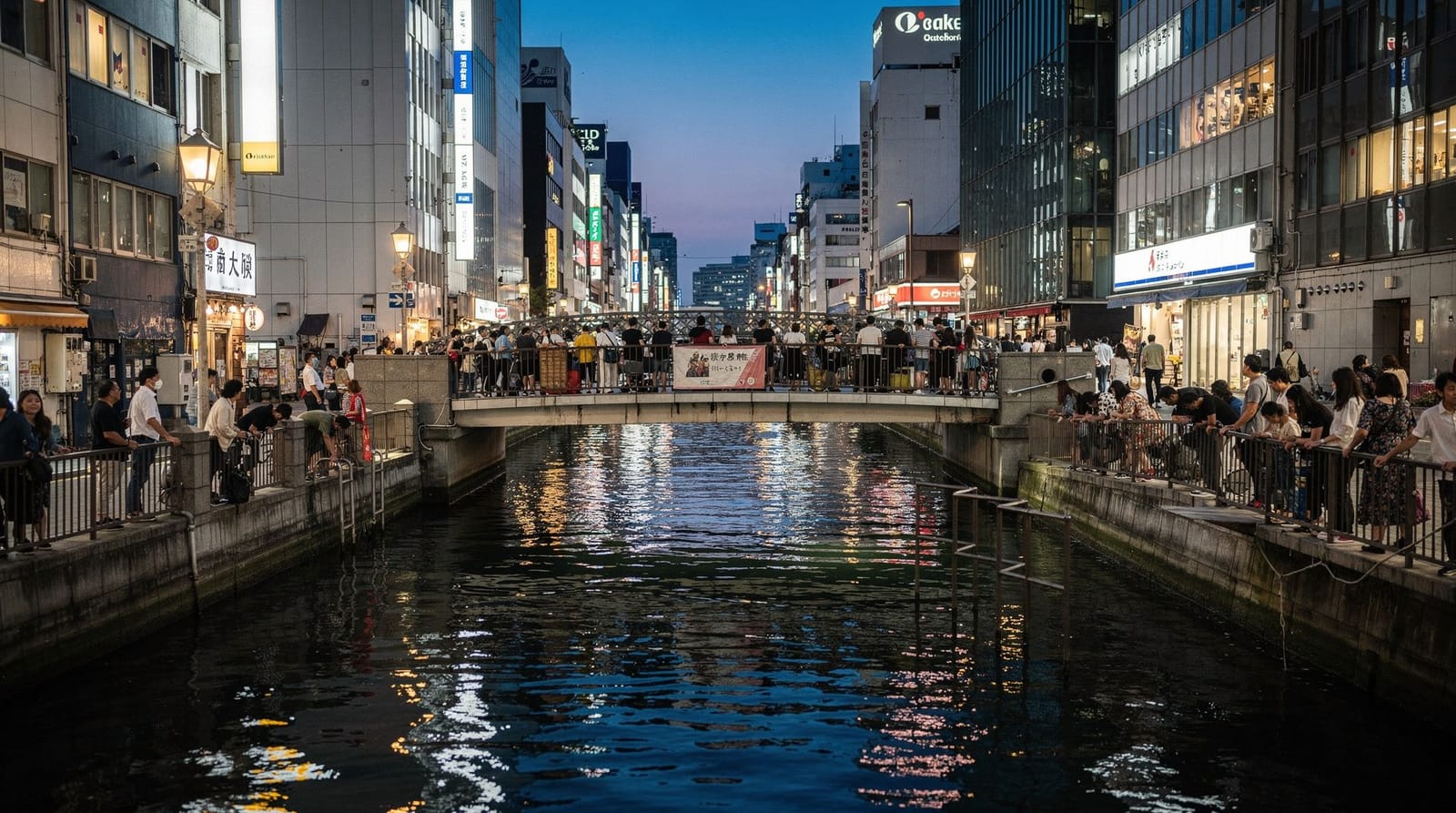
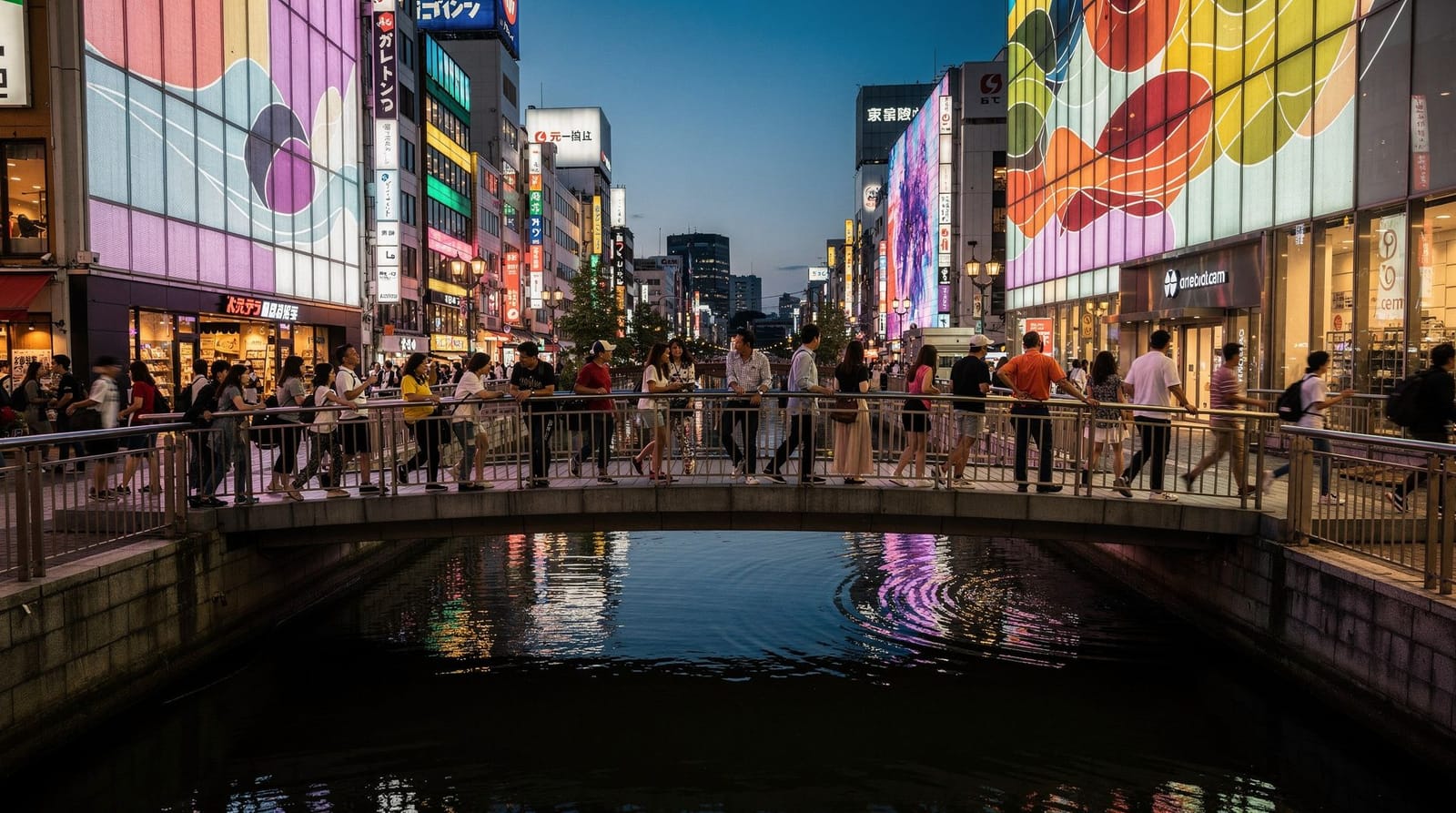
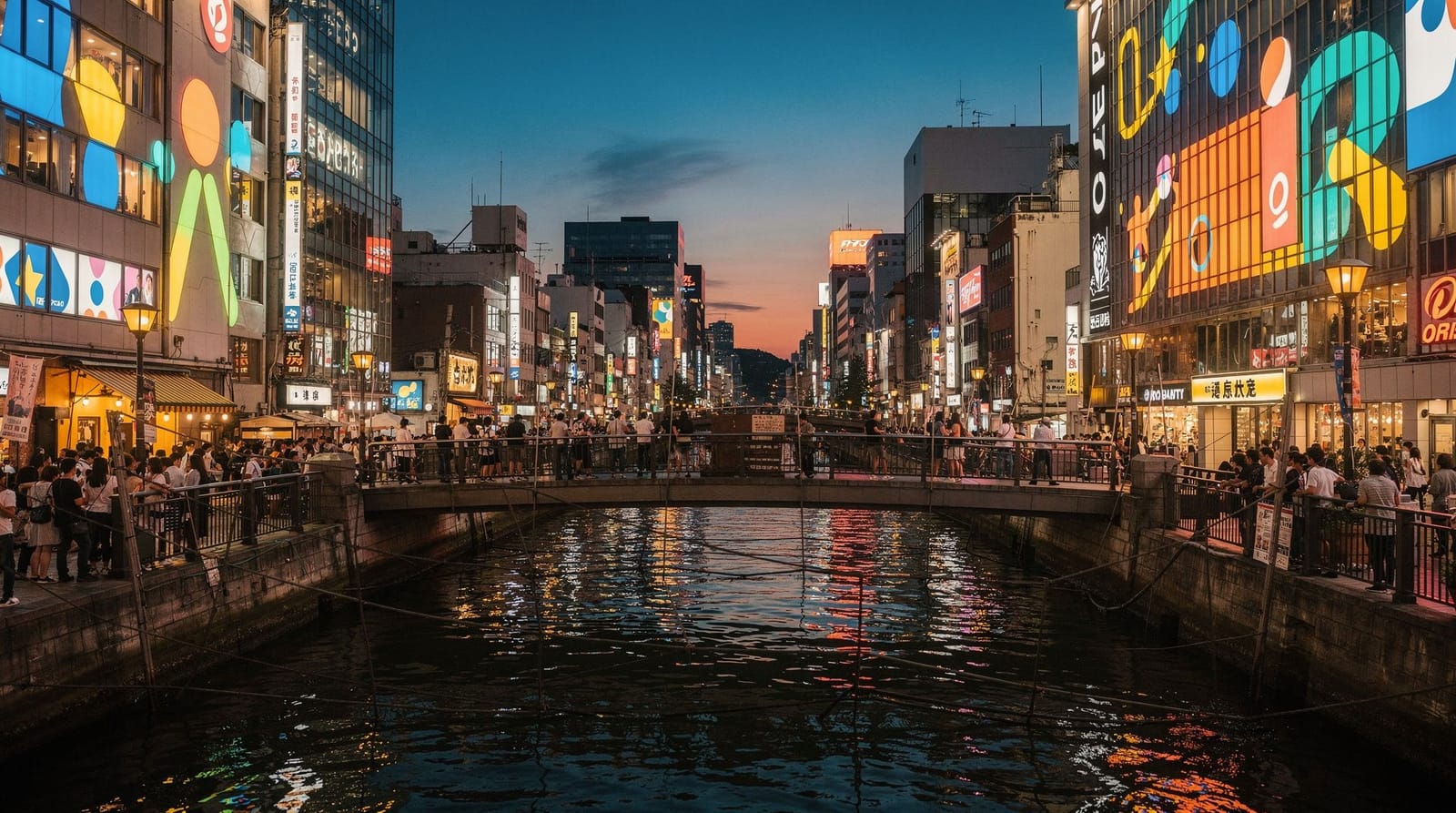
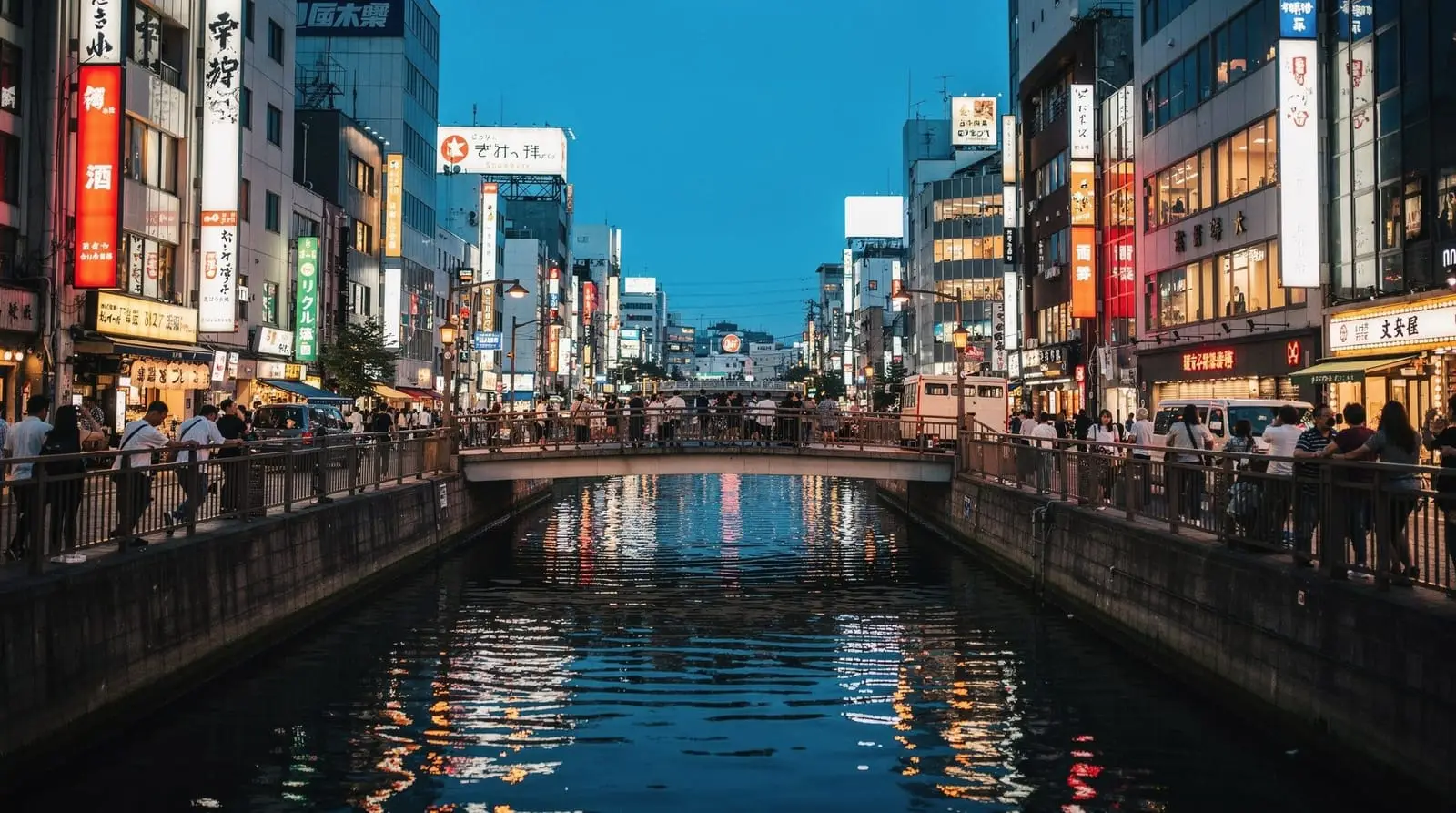
Dotonbori is Osaka’s entertainment and dining district, centered on a canal lined with illuminated signage advertising restaurants, several stories tall in places. The single most photographed of these is the Glico Running Man — a sign of a runner crossing a finish line, in place in some form since 1935 and rebuilt several times since, now LED-lit. It’s a genuinely fun photo spot precisely because everyone’s taking the same picture; don’t overthink it, just get in line at the Ebisubashi bridge like everyone else.
Canal boat rides (Tombori River Cruise) run along the Dotonbori canal, giving a different angle on the signage than street level, with short daytime and evening departures — worth doing once for the novelty, particularly after dark when the neon is at its best.
Beyond the photo, Dotonbori’s side streets (particularly toward Namba) are where the actual food scene is, and it rewards walking a block or two off the main canal-front strip, where prices run higher purely for the location.
Street food: what to actually eat, and what to skip
Osaka’s reputation as Japan’s food capital is earned, not marketing. The city’s own term for its food culture, kuidaore, roughly translates to “eat until you drop” or “eat yourself into ruin” — it’s an old merchant-city expression, and it captures the volume-and-value approach to eating here better than “foodie destination” does.
Takoyaki (octopus balls — a wheat-flour batter ball with diced octopus, tempura scraps, and pickled ginger, grilled in a molded pan and topped with takoyaki sauce, mayonnaise, and bonito flakes) is the dish most associated with Osaka specifically, and Dotonbori has multiple long-running specialist shops. Kukuru and Wanaka are both established names with Dotonbori-area locations and reliably good, freshly grilled takoyaki — expect ¥500-800 (~$3.30-5.30) for a tray of 6-8 pieces. Skip anywhere selling pre-made trays sitting under a heat lamp; fresh-grilled, served hot enough to burn your mouth if you’re not careful, is the entire point.
Beyond the headline three dishes, a few others are worth watching for: kitsune udon, thick wheat noodles topped with a sheet of sweetened fried tofu, is said to have originated in Osaka rather than being a generic Japanese dish, and it’s a good, cheap, filling option between heavier street food stops.
Ikayaki, grilled whole or pressed squid basted in a soy-based sauce, is another Osaka street food staple sold from stalls throughout Dotonbori and Shinsekai, simpler than takoyaki but a good option if you want something lighter. None of these need a specific shop recommendation — they’re sold widely enough across the main food districts that quality is fairly consistent, unlike takoyaki or kushikatsu, where the well-known specialist shops are genuinely worth seeking out over a random stall.
Okonomiyaki is a savory grilled pancake made from a batter of flour, egg, and shredded cabbage, mixed with your choice of pork, seafood, or other fillings, topped with okonomiyaki sauce, mayonnaise, and bonito flakes. It’s worth knowing there are two distinct regional styles: Osaka-style mixes all the ingredients into the batter before grilling as a single pancake, while Hiroshima-style layers the ingredients (batter, cabbage, noodles, egg) rather than mixing them. If you’re also visiting Hiroshima on this trip, trying both versions and noticing the difference is a legitimately interesting side-by-side rather than just eating the same dish twice.
Kushikatsu — breaded, deep-fried skewers of meat, seafood, and vegetables — is strongly associated with the Shinsekai neighborhood, a slightly gritty, retro entertainment district south of Dotonbori built around the Tsutenkaku Tower.
The most famous kushikatsu rule, enforced strictly at old-school spots like Daruma (a Shinsekai institution with multiple branches), is no double-dipping: each skewer gets sauced once, from a shared communal sauce pot, and you eat it in that single dip — dipping a second time after biting into it is considered unsanitary and will get you (politely) corrected by staff or fellow diners. It’s a small rule, but it’s taken seriously, and violating it as a tourist is a minor faux pas worth avoiding on your first visit.
For a guided introduction to all of this rather than hunting down shops solo, this 2-hour street food tour through Dotonbori and Namba covers the main dishes with a local guide, and this foodie tour extending into Shinsekai adds the kushikatsu district specifically. If you’d rather see the neon and eat after dark, a dedicated night food tour covers largely the same ground with an evening-specific route through both areas.
Kuromon Ichiba Market: good food, inflated prices near the entrance
Kuromon Ichiba Market is a roughly 600-meter covered arcade of around 150 stalls selling fresh seafood, produce, street food, and prepared dishes, a few minutes’ walk from Namba Station. It’s a legitimate working market that’s existed since the early 1800s, not a manufactured tourist attraction, and it’s a good place to try grilled scallops, sea urchin, wagyu skewers, and fresh sashimi in small, shareable portions.
The honest caveat: prices at stalls immediately around the main entrances have risen noticeably to match tourist foot traffic, and it’s common to see the same or similar items priced higher there than at stalls 100-150 meters further into the arcade. This isn’t universal price gouging — it’s simple proximity pricing, and it responds to walking a bit further before buying.
Comparing two or three stalls before committing to an expensive item (particularly premium seafood like uni or wagyu skewers, where price differences of a few hundred yen add up fast) is worth the extra five minutes. This 2-hour Kuromon Market street food walk is guided by someone who knows which stalls are worth it, which sidesteps the guesswork if you’d rather not price-compare yourself.
Universal Studios Japan: a full day, not a stop on a day trip
Universal Studios Japan (USJ), a short train ride from central Osaka via the JR Yumesaki Line (the “Universal City” branch line, connecting from Nishikujo Station), is worth flagging even though it doesn’t fit neatly into an Osaka day trip built around food and the castle. USJ is a full theme park, and its Super Nintendo World zone (opened 2021, featuring a Mario Kart ride and immersive recreations of the Mushroom Kingdom) is a major draw with its own timed-entry system separate from general park admission.
Realistically, USJ needs a dedicated day — queue times for headline rides regularly run 60-120 minutes, and trying to combine it with Osaka Castle or Dotonbori in the same day means doing neither justice. If USJ is on your list, treat it as its own day trip from Kyoto rather than folding it into this itinerary; this 1-day pass with Nintendo World entry is the ticket to book in advance, since Nintendo World access has sold out on peak days in the past.
Getting to Osaka from Kyoto, and the Shin-Osaka mix-up to avoid
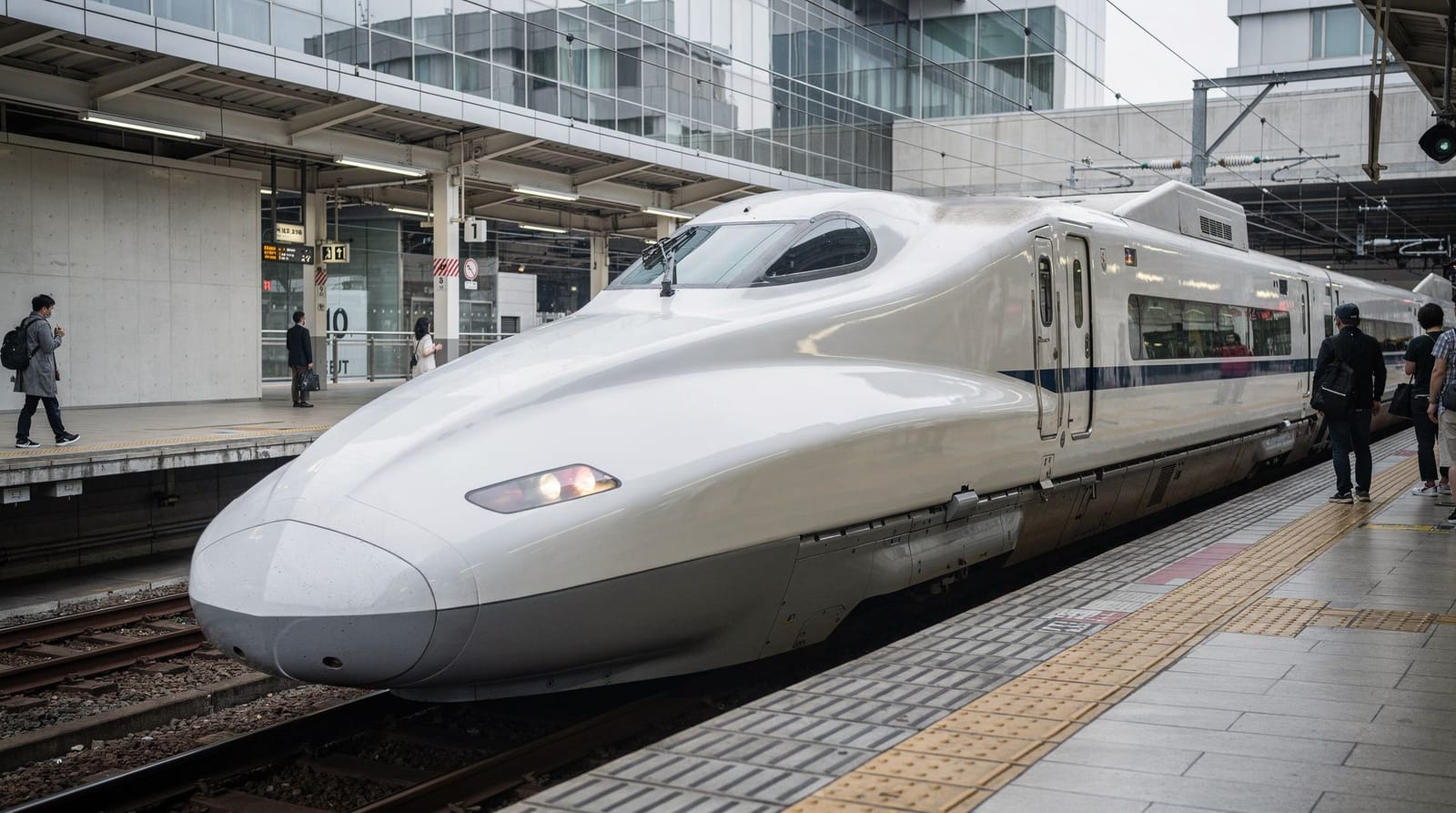
The simplest route is the JR Kyoto Line Special Rapid service, running directly from Kyoto Station to Osaka Station in about 29 minutes for a one-way fare of roughly ¥580 (~$3.90). Trains run frequently — every 10-15 minutes for most of the day — and no reservation is needed. Hankyu and Keihan private railways also connect the two cities from different stations with different endpoints in Osaka (Hankyu to Umeda, Keihan to Yodoyabashi/Kyobashi), but for a first visit, JR is the simplest option and lands you at the most central station.
One distinction that trips up a lot of travelers: Osaka Station (Umeda) and Shin-Osaka Station are not the same place. Osaka Station is the city-center hub for local and rapid trains, Dotonbori, and most sightseeing — it’s where the JR Special Rapid from Kyoto arrives. Shin-Osaka Station, a few stops away by local train or subway, is the Shinkansen (bullet train) stop, used for onward travel to Hiroshima or further west, or arriving from Tokyo.
If you’re connecting from a Shinkansen journey or planning onward bullet train travel, you’ll need to factor in the transfer between Shin-Osaka and Osaka/Umeda — they’re close, but they are not interchangeable, and booking a hotel or activity near “Osaka Station” when you meant Shin-Osaka (or vice versa) is a common and avoidable mistake.
For context on how this fits into broader regional transit — particularly if Osaka is one stop among several day trips — see getting around Kyoto and, if flying in via Kansai International Airport, Kansai Airport to Kyoto, since some airport transit routes pass through or near Osaka anyway. Travelers arriving from Tokyo rather than flying in should check Tokyo to Kyoto for the Shinkansen options, since that same bullet train line is what connects through Shin-Osaka.
Half day or full day: what’s realistic
A full day is the honest recommendation. Osaka Castle’s grounds alone take an hour or two if you go up the tower, Dotonbori and its food deserve an unhurried evening, and Kuromon Market is worth 45 minutes to an hour of grazing. Trying to compress all three into a half day means picking two of the three and rushing the third, which defeats the point of a food-and-atmosphere city.
If you only have a half day, the better call is castle in the morning, train back to Kyoto for lunch, then a separate evening trip back into Osaka specifically for Dotonbori after dark, when the neon and food stalls are at their best — the 29-minute train ride makes a same-day round trip like this genuinely workable, which isn’t true of most of Kyoto’s other day-trip options. Alternatively, skip the castle and spend the full available time on food: this must-visit food tour through Dotonbori and Shinsekai is built to move efficiently between both districts’ best-known stops in a single guided outing.
Namba and Shinsaibashi: where the crowds thin out slightly
Dotonbori itself is a compressed strip a few hundred meters long, and it’s the single most crowded stretch of Osaka most evenings — expect to be shoulder to shoulder along the canal-front on weekend nights, similar to what you’d see at peak hours in Gion back in Kyoto, though the crowd here is out for food and neon rather than geisha-spotting. Two adjacent districts give you similar energy with a bit more room.
Namba, immediately south, is the broader commercial and entertainment hub Dotonbori sits within, home to Namba Yasaka Shrine (notable for its 12-meter lion-head-shaped stage, an unusual piece of shrine architecture worth a quick detour) and a denser concentration of everyday restaurants rather than tourist-facing ones. Shinsaibashi, just north, is Osaka’s main shopping arcade — a roughly 600-meter covered shopping street (Shinsaibashi-suji) running parallel to the flashier canal strip, useful if you want retail therapy or simply a quieter, covered walking route between sights on a rainy day.
Both districts connect to Dotonbori on foot in under ten minutes, so there’s little reason to treat them as separate destinations — think of Dotonbori as the photogenic center of a much larger entertainment and shopping zone, and wander outward from the canal once you’ve got the obligatory Glico Running Man photo.
Beyond Namba and Shinsaibashi, Amerikamura (“America Village”), a compact district just west of Shinsaibashi, is worth a short detour for a different flavor entirely — a concentration of vintage clothing stores, streetwear shops, and youth-culture graffiti-covered walls that grew out of imported American goods sold here from the 1970s onward. It’s a smaller, more walkable area than Dotonbori and gives a sense of Osaka’s contemporary youth culture that the food-and-neon districts don’t really show, useful if you want ten or fifteen minutes of contrast between bigger stops.
Umeda Sky Building: a view most itineraries skip
Near Osaka Station, in the Umeda district, the Umeda Sky Building is a distinctive twin-tower structure connected at the top by an open-air “Floating Garden Observatory,” reached by a set of glass escalators that cross open space between the towers on the final approach — an experience in itself before you even reach the observation deck. The view from the roof takes in the Osaka skyline, and on clear days, the mountains beyond and Osaka Bay in the distance. Admission runs roughly ¥1,500 (~$10) for adults, and sunset is generally considered the best time to go, when the city transitions from daylight into its lit-up evening state while you’re still on the deck.
It’s a legitimate alternative or complement to a Dotonbori evening, particularly if you want a wide, elevated view of the city before descending into the street-level crowds and neon, and it’s rarely mentioned in the same breath as Osaka Castle or Dotonbori despite being one of the more architecturally striking modern buildings in the city. The building also houses a small basement-level recreation of an early-20th-century Osaka street scene, Takimi Koji, with a handful of retro-styled restaurants — a minor bonus stop if you’re already there for the observation deck and want dinner without walking back into central Osaka.
Where to spend the evening: three options compared
| Dotonbori | Shinsekai | Umeda Sky Building | |
|---|---|---|---|
| Vibe | Loud, neon, crowded | Retro, gritty, old-school | Quiet, elevated, scenic |
| Best for | Street food, photos, first-timers | Kushikatsu, Tsutenkaku Tower | Skyline views, a calmer evening |
| Cost | Free to walk, food extra | Free to walk, food extra | About ¥1,500 observation deck |
| Crowd level | Very high, especially weekends | Moderate | Low to moderate |
| Time needed | 2-3 hours | 1-2 hours | 45-60 min |
Osaka after dark: bars, sumo, and the city’s nightlife side
Osaka’s nightlife has a different character from Kyoto’s — less about quiet izakaya tucked down alleys (though those exist here too) and more about density and variety packed into Dotonbori, Namba, and the Umeda area near Osaka Station. If you want an organized introduction rather than picking bars at random, this bar-hopping tour moves between several venues with a guide explaining Japanese drinking customs and unusual regional drinks along the way, which is a reasonable way to sample the scene without wasting an evening on a bar that turns out to be tourist-priced and mediocre.
For something less conventional than a bar crawl, Osaka also hosts live sumo-adjacent shows aimed at visitors — this live sumo show experience includes an audience-participation challenge and a rundown of the sport’s rules and rituals, worth knowing about since actual professional sumo tournaments (honbasho) only happen in Osaka during a specific March tournament each year; outside that window, a show format like this is the realistic way to see the sport up close.
A realistic full-day structure
If you want a default plan rather than assembling one from scratch: start at Osaka Castle in the morning (arrive by 9-9:30am to beat the tour-bus crowds that build by mid-morning), spend an hour to 90 minutes on the grounds and tower, then take the subway or a 20-25 minute walk toward Kuromon Ichiba Market for a late, grazing-style lunch — pace yourself and skip the stalls immediately at the entrances in favor of ones a bit further in. Spend the afternoon working toward Shinsaibashi and Namba on foot, browsing rather than rushing, and time your arrival in Dotonbori for early evening, once the neon signage is lit but before the latest dinner crowds peak.
Eat dinner around takoyaki and okonomiyaki rather than a sit-down restaurant if you want to sample more of the food culture in one evening, and save the canal-front Glico Running Man photo for after dark, when the signage is at its best. Trains back to Kyoto on the JR Kyoto Line run until around midnight, so there’s no need to cut the evening short to catch the last connection, though checking the specific last-departure time for your date is worth doing before you commit to a late dinner.
Frequently asked questions about visiting Osaka from Kyoto
How long does it take to get from Kyoto to Osaka?
About 29 minutes on the JR Kyoto Line Special Rapid train, direct from Kyoto Station to Osaka Station, for roughly ¥580 (~$3.90) one-way. It’s the fastest and simplest of Kyoto’s common day-trip routes.
Is Osaka Castle the original building?
No. The current tower is a 1931 concrete reconstruction, further renovated with reinforced concrete in 1997, and the interior is a modern museum rather than a preserved Edo-period structure. The stone walls, moats, and surrounding castle grounds are the more historically substantial part of the site.
What’s the difference between Osaka Station and Shin-Osaka Station?
Osaka Station (also called Umeda) is the city-center hub for local trains and most sightseeing, including Dotonbori. Shin-Osaka Station, a few stops away, is the Shinkansen (bullet train) stop for onward travel to Hiroshima or Tokyo. They are separate stations and require a transfer between them.
Is Osaka doable as a half-day trip from Kyoto?
It’s possible but rushed — you’ll realistically only manage two of the three main draws (Osaka Castle, Dotonbori food, Kuromon Market) well in a half day. A full day, or two separate shorter trips (daytime for the castle, evening for Dotonbori), makes better use of the city.
What should I eat in Osaka that I can’t easily get in Kyoto?
Takoyaki (grilled octopus balls) is Osaka’s signature street food, alongside Osaka-style okonomiyaki (batter and fillings mixed together, unlike Hiroshima’s layered version) and kushikatsu (breaded fried skewers), most associated with the Shinsekai district. All three are more central to Osaka’s food identity than Kyoto’s.
Are prices at Kuromon Ichiba Market inflated for tourists?
Stalls right at the main entrances tend to charge more than stalls further into the roughly 600-meter arcade, simply due to foot traffic and visibility. Walking a bit further in and comparing a couple of stalls before buying premium items like uni or wagyu skewers is worth the extra few minutes.
Should I combine Universal Studios Japan with sightseeing in Osaka?
Not really. USJ, including the Super Nintendo World zone, is a full theme park experience with ride queues regularly running 60-120 minutes. It’s better treated as its own dedicated day trip from Kyoto rather than combined with Osaka Castle or Dotonbori in the same day.
What’s the “no double-dipping” rule at kushikatsu restaurants?
At kushikatsu spots like Daruma in Shinsekai, each fried skewer is dipped once into a shared communal sauce pot before eating. Dipping a already-bitten skewer back into the shared sauce a second time is considered unsanitary and is a well-known etiquette rule enforced at most traditional kushikatsu counters.
Is the Umeda Sky Building worth visiting instead of Dotonbori at night?
They serve different purposes rather than competing directly — the Umeda Sky Building gives a quieter, elevated skyline view, best at sunset, while Dotonbori is the street-level food and neon experience. Many visitors do both in the same evening, since Umeda is a short train ride from Namba.
Can I see Osaka Castle and Dotonbori in the same half day?
It’s tight but possible if you move efficiently — an hour at the castle grounds and tower, then a subway ride to Dotonbori for a quicker food stop rather than a full grazing evening. A full day, or two separate shorter trips, lets you enjoy both properly.
What is Amerikamura and is it worth visiting?
Amerikamura is a compact youth-culture district just west of Shinsaibashi known for vintage and streetwear shops and graffiti-covered walls. It’s worth a short 10-15 minute detour for contrast if you’re already walking between Shinsaibashi and Dotonbori, though it’s not essential on a tight itinerary.
What other street food should I try beyond takoyaki, okonomiyaki, and kushikatsu?
Kitsune udon (noodles topped with sweetened fried tofu) and ikayaki (grilled squid basted in soy sauce) are both Osaka staples worth trying, and both are sold widely enough across Dotonbori and Shinsekai that quality is consistent without needing a specific shop recommendation.
Top experiences
Bookable activities with verified prices and instant confirmation on GetYourGuide.