Himeji
Himeji Castle day trip from Kyoto — Japan's most complete original castle, Koko-en Garden, Engyo-ji, and honest shinkansen vs local train fares.
Best of Himeji Castle: 3-hour tour with licensed guide
Duration: 3 hours
Quick facts
- Distance from Kyoto
- ~1 hr shinkansen / ~1.5-2 hr local JR
- One-way fare
- ¥5,810 shinkansen (~$38.70) / ¥2,310 local (~$15.40)
- Recommended time
- Full day
- Known for
- Himeji Castle, Koko-en Garden, Engyo-ji
- Castle entry
- ¥1,000 (~$6.70); combined with Koko-en ¥1,050 (~$7)
- Best season
- Cherry blossom (late March-early April) and autumn foliage
Is Himeji Castle worth the day trip from Kyoto? Yes — it’s Japan’s best-preserved original feudal castle and one of only twelve in the country to survive with its wooden keep intact, and it genuinely earns the reputation rather than living on hype alone. Budget a full day: the castle itself deserves two to three unhurried hours, and the direct shinkansen or slower local train from Kyoto Station both make it a manageable round trip on one of Kyoto’s most rewarding UNESCO day trips.
What actually makes Himeji Castle different from other “castles” in Japan
A lot of famous Japanese castles that draw crowds today — Osaka Castle, in nearby Osaka, among them — are concrete reconstructions built in the 20th century after the originals were destroyed by fire, war, or demolition. Himeji Castle is not one of those.
It is one of only twelve castles in Japan that still stands with its original wooden keep structure intact, having survived the Meiji-era demolitions that leveled hundreds of castles across the country, American bombing raids in World War II that flattened much of the surrounding city, and the region’s periodic earthquakes. A bomb reportedly landed on the keep during a 1945 air raid and failed to detonate — one of the more startling near-misses in the castle’s survival story.
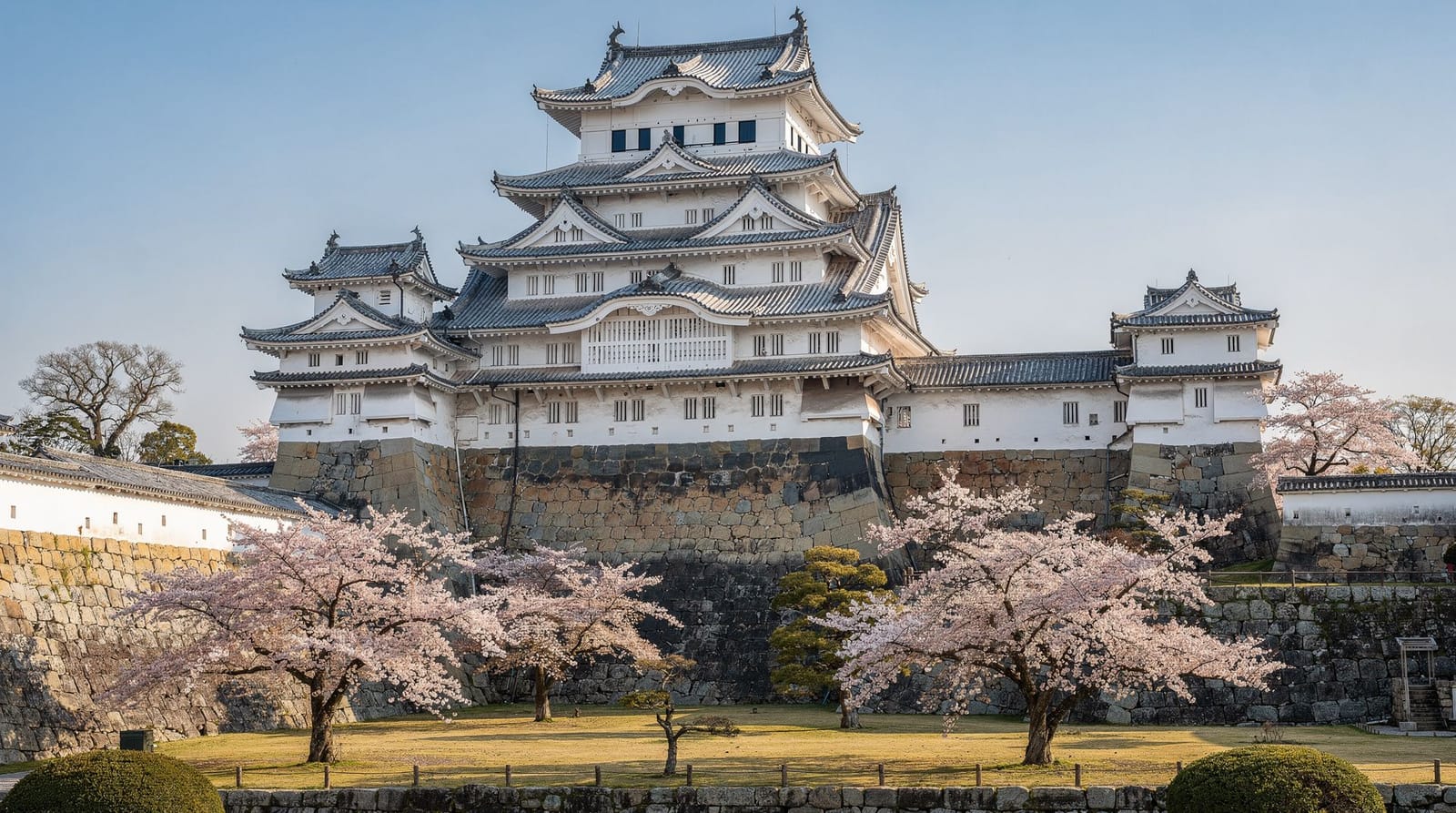
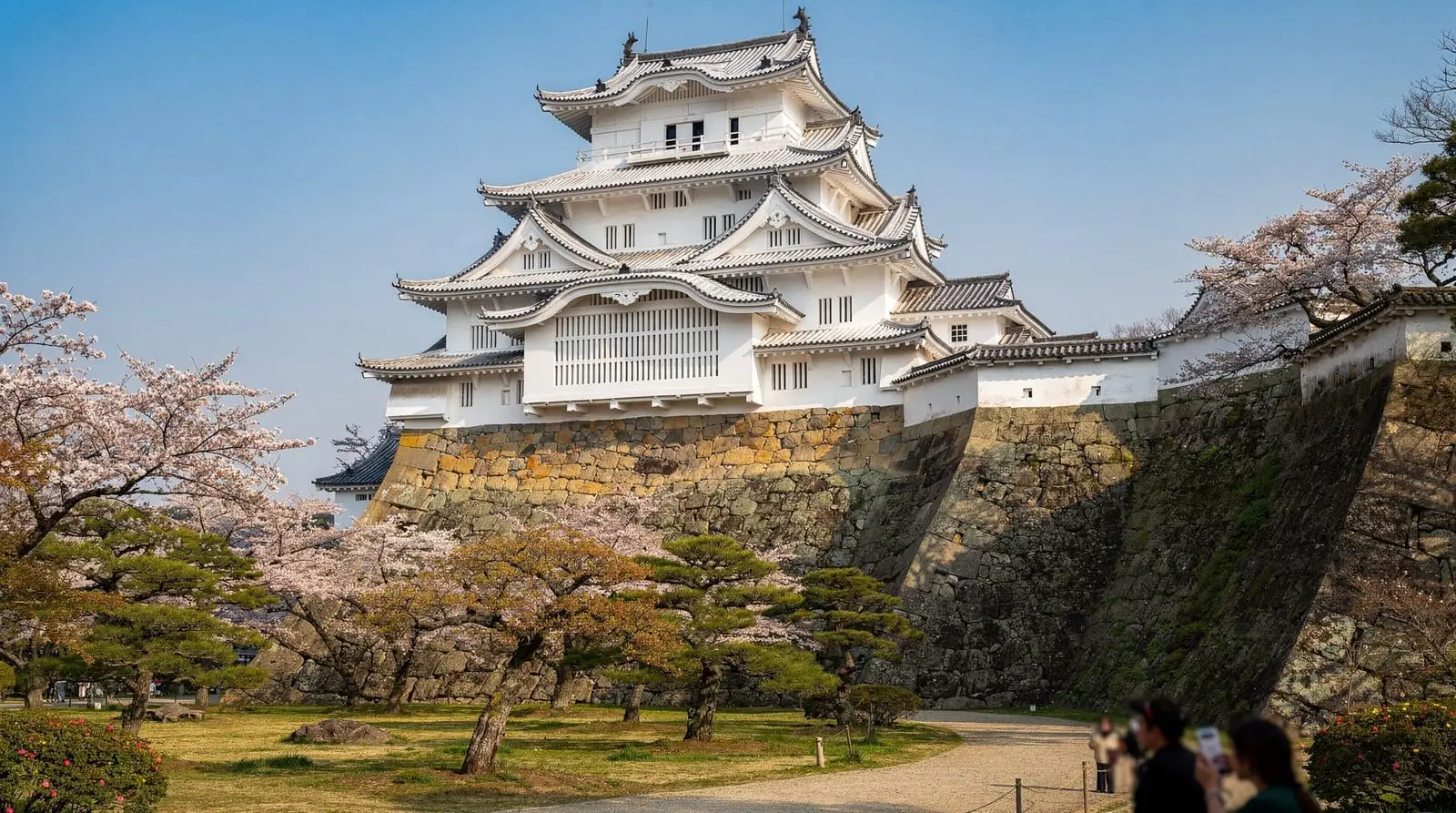
That authenticity is exactly why UNESCO inscribed it as a World Heritage Site in 1993, in the first group of Japanese sites ever listed. The castle’s nickname, Shirasagi-jo, or “White Egret Castle,” comes from its brilliant white plastered walls and the way the roofline is said to evoke a bird taking flight, and the effect is real rather than a marketing flourish — the exterior is genuinely striking against a blue sky.
Inside, the six-story main keep is connected to smaller keeps and a maze of gates, dead-end passages, and baffled approaches specifically engineered to slow down and confuse an attacking force before it ever reached the top. Walking that approach today is one of the castle’s most interesting features precisely because so few surviving Japanese castles let you experience original defensive architecture rather than a rebuilt facsimile of it.
The honest caveat: because it’s this good, it’s also popular, and the approach paths and keep interior can bottleneck badly in the middle of the day during peak cherry blossom or autumn foliage weeks, with narrow original staircases turning into slow-moving queues. Arriving at opening time or in the last two hours before closing thins the crowds considerably.
Entry is ¥1,000 ($6.70) for the castle alone, or ¥1,050 ($7) for a combined ticket with Koko-en Garden — worth the extra ¥50 given how close the two sites sit to each other. Travelers who’d rather not navigate ticketing and timing themselves can book a 3-hour Himeji Castle tour with a licensed guide, which also adds historical context that the on-site English signage doesn’t fully cover, or opt for a shorter express version if time is tighter.
Koko-en: a modern garden built on real samurai ground
Immediately adjacent to the castle’s west side is Koko-en, a garden complex that looks centuries old but was actually completed in 1992, built specifically in the Edo-period garden style on the former site of samurai residences and the castle’s west bailey. Rather than one continuous garden, it’s laid out as nine separate walled gardens connected by paths, each with a distinct design — a pond garden, a bamboo garden, a flower garden, and others — which makes it feel more varied than a single sprawling garden of the same size would.
Because it’s a reconstruction rather than an aged original, some travelers skip it in favor of racing to the next stop, which is a mistake — the layout genuinely rewards a slow walk, especially with autumn foliage reflected in the ponds, and it’s rarely as crowded as the castle itself even on a busy day. One of the nine sections houses a traditional tea house where you can sit and have matcha prepared and served properly, for an additional fee on top of garden entry (typically a few hundred yen). Budget 45 minutes to an hour, more if you stop for tea.
Engyo-ji: the quiet alternative on Mount Shosha
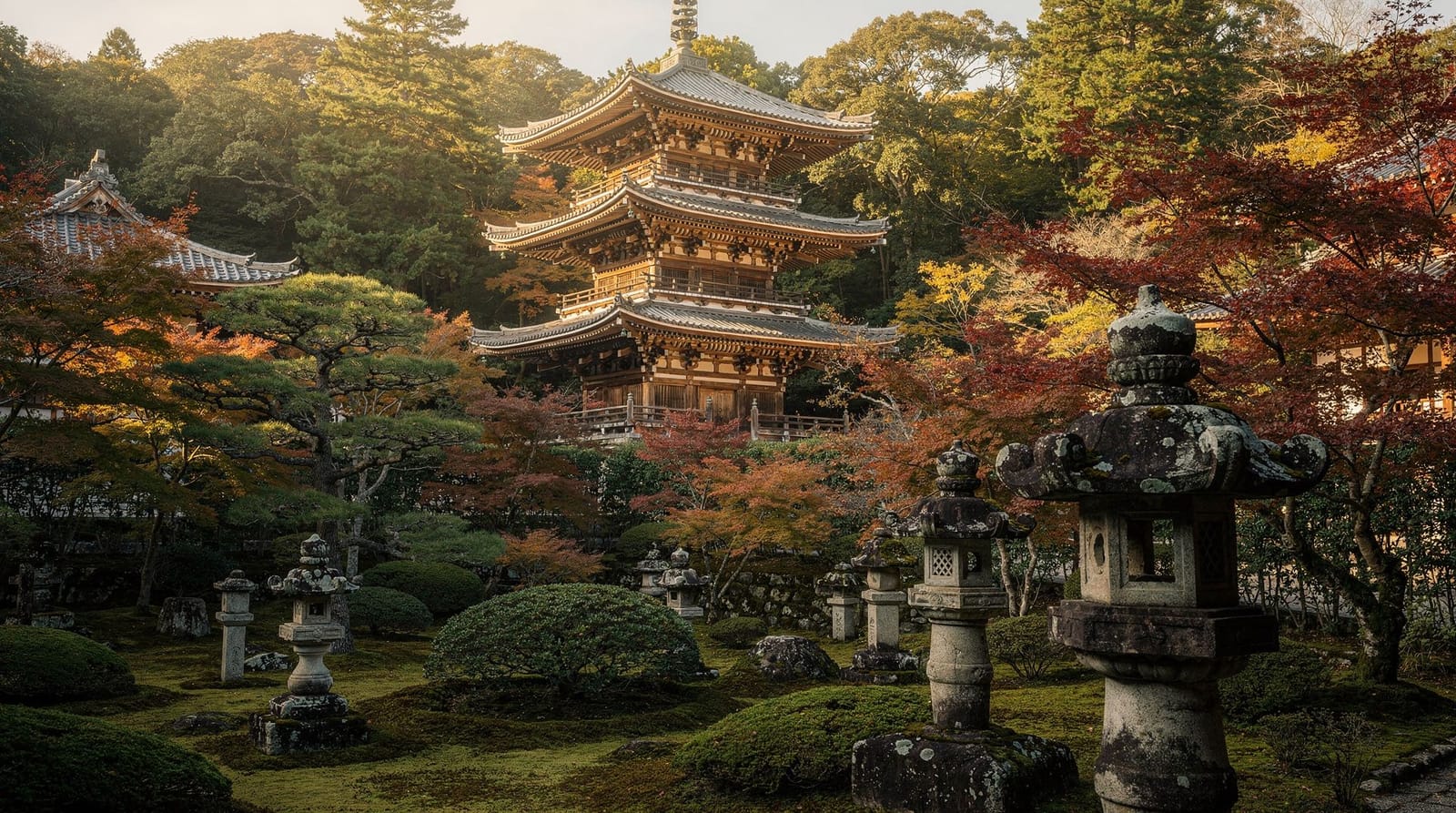
If the castle crowds wear you down, or you simply have more time and want fewer people, Engyo-ji Temple on Mount Shosha is worth the specific detour. It’s reached by a ropeway that climbs the mountainside outside central Himeji, and the temple complex at the top — spread across a wooded mountain rather than concentrated in one building — feels a world away from the crowds below. It gained some international recognition as a filming location for The Last Samurai, and the main hall and surrounding structures have genuine centuries-old atmosphere without the queues that come with Himeji Castle’s fame.
It does take a real chunk of a day to do properly — the ropeway ride, the walk up to the main temple buildings, and time to actually take in the setting easily adds three to four hours round trip from central Himeji — so it suits travelers who are prioritizing a slower, less crowded day over trying to see everything. A guided tour combining Himeji Castle and Engyo-ji Temple is a reasonable way to fit both into one day without having to work out the ropeway schedule and mountain logistics solo.
Getting to Himeji from Kyoto Station — shinkansen vs local, honestly
There are two real ways to get from Kyoto to Himeji, and which one makes sense depends on your budget and whether you already have a rail pass.
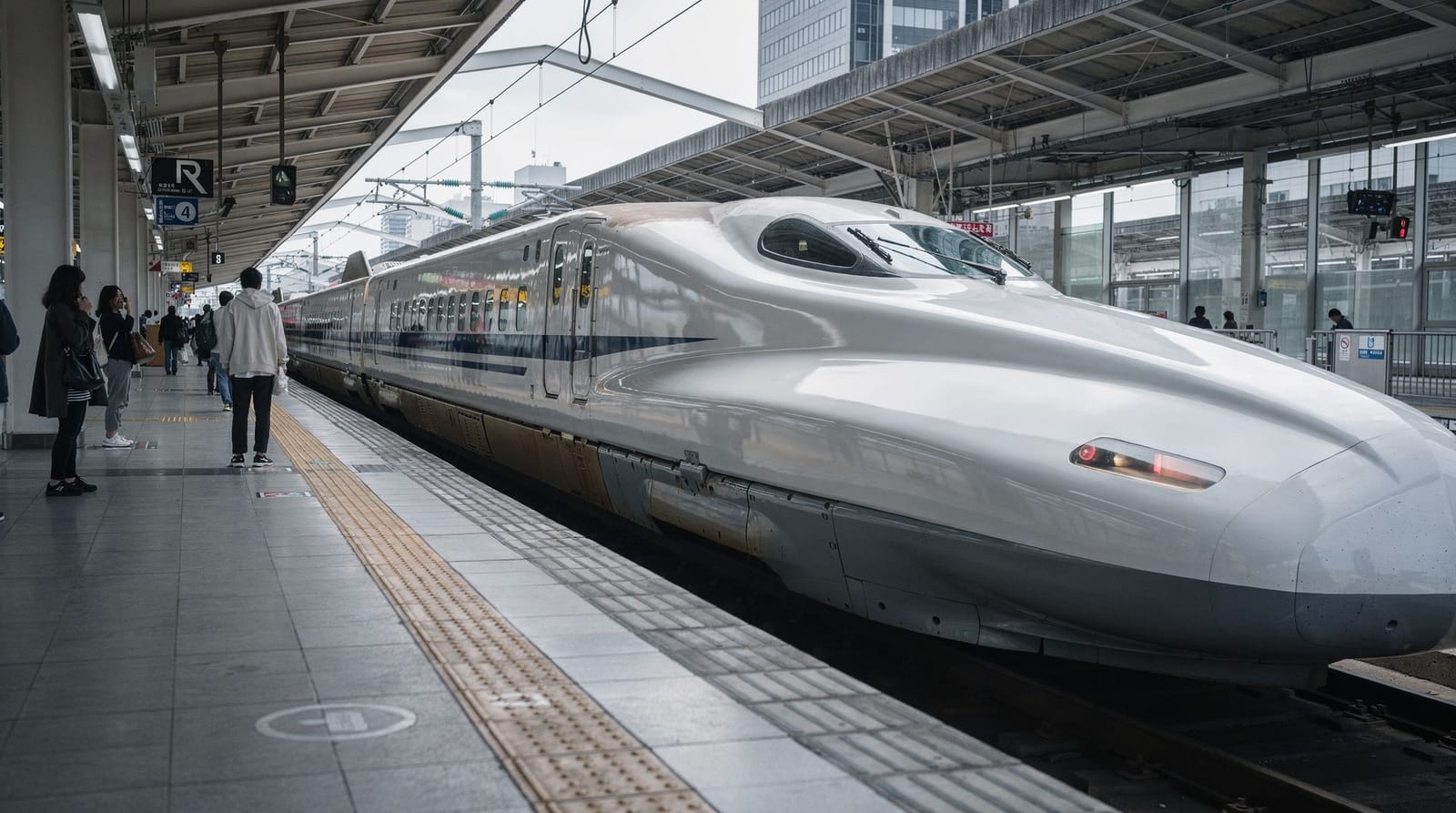
The fast option is the Tokaido-Sanyo Shinkansen, and the trip takes about one hour. There’s an important catch that trips up a lot of travelers: Nozomi services, the fastest shinkansen category, do not stop at Himeji at all. You need a Hikari or Kodama service instead, which are slightly slower but still cover Kyoto to Himeji in roughly an hour.
This actually simplifies one common piece of confusion, because a standard Japan Rail Pass doesn’t cover Nozomi trains anyway — so JR Pass holders are automatically funneled onto Hikari or Kodama services on this route regardless. Without a pass, a one-way unreserved shinkansen ticket runs about ¥5,810 (~$38.70), which is a genuinely steep fare for a single day-trip leg and worth weighing against the slower option below if you’re traveling on a budget.
The slower, cheaper option is the regular JR Special Rapid service, which does not use the shinkansen tracks at all. It takes roughly 1.5 to 2 hours and typically involves a transfer at Osaka or Kobe rather than running direct, but the fare is substantially lower — around ¥2,310 ($15.40) one way. For travelers without a rail pass who are comfortable with one transfer, this route saves more than ¥3,000 ($20) each way compared to the shinkansen, which adds up if you’re also covering Kobe or Osaka fares on other days. See our Kyoto rail pass guide and the Kansai Thru Pass breakdown for whether either pass pays off across your whole trip.
If you’re combining Himeji with Kobe on the same day, a guided option like the Himeji Castle, Koko-en Garden and Kobe nightscape tour from Osaka or the broader Kyoto/Osaka: Kobe and Himeji journey through culture and history handles the train logistics for you, though be realistic about how much ground that covers in a single day — Himeji Castle alone deserves several hours, so pairing it with a full Kobe day trip makes for a long, front-loaded day.
Our broader Kansai 7-day itinerary shows how Himeji fits alongside Kobe, Osaka, and Kyoto without over-packing any single day.
Best time of year to visit
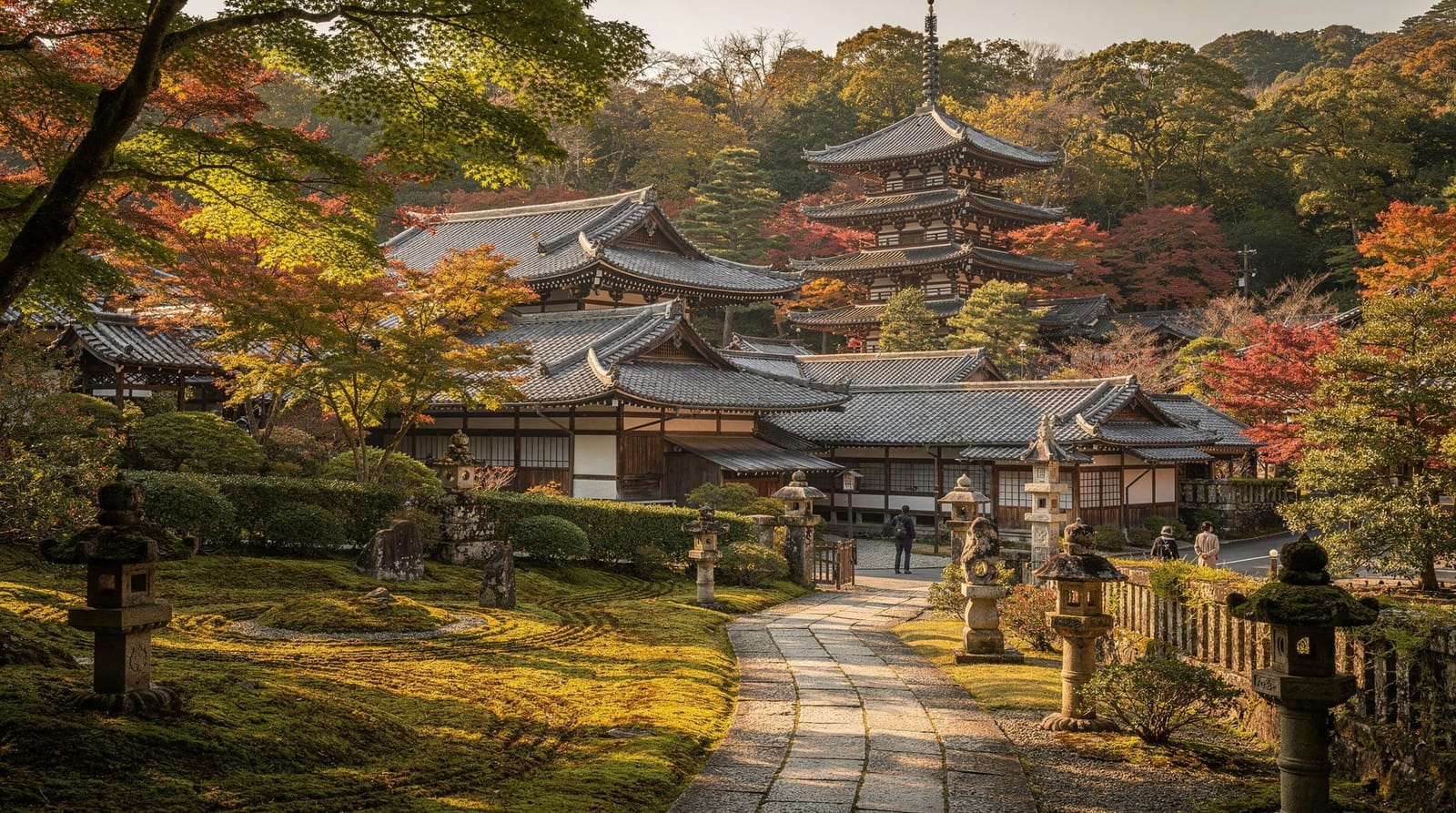
Himeji Castle photographs well in every season thanks to the white plaster exterior, but two windows draw the heaviest crowds and the best color: cherry blossom season, roughly late March into early April, when the castle grounds and surrounding Himeji Castle Park fill with blooming trees framing the keep, and autumn foliage season, typically mid-to-late November, when Koko-en’s gardens in particular turn vivid red and gold against the ponds.
Both windows mean significantly more visitors and longer waits for the keep’s interior staircases, so if your schedule is flexible, a clear day in late spring or a quiet weekday in winter — when the white castle against a blue winter sky is arguably at its most striking, with a fraction of the crowds — can be a better experience than fighting through peak season.
Summer brings heat and humidity that make the uphill approach and the castle’s un-air-conditioned wooden interior genuinely uncomfortable by midday, so an early morning visit is worth prioritizing if you’re traveling June through August. Rainy season, roughly early June to mid-July, adds the further complication of slippery original wooden staircases inside the keep, which are steep even in dry conditions.
A brief note on Himeji beyond the castle
It’s easy to treat Himeji as a single-attraction town built entirely around the castle, and for most visitors’ time budgets that’s a reasonable approach, but the city itself has a longer history than the current castle structure suggests. A fortress has stood on this site since the 14th century, well before the current keep was built by the Ikeda and later Honda clans in the early 1600s during the early Edo period, when the castle took roughly on the form that survives today.
Himeji was also a functioning castle town for centuries, with the layout of the surrounding streets still loosely tracing the old approach roads and merchant districts that grew up to service the castle and its garrison — visible if you know to look for it, though not something most day-trippers will have time to explore in depth given how much the castle and Koko-en already demand.
No, you don’t need a bus from the station
One persistent myth worth correcting directly: you do not need a shuttle bus or taxi to reach Himeji Castle from Himeji Station. The castle sits at the end of a wide, mostly straight boulevard directly north of the station, and the walk takes about 15 minutes at an ordinary pace, with the castle’s white keep visible above the rooftops for much of the way. Buses do exist and loop past the castle grounds for travelers with mobility needs or heavy luggage, but for most visitors it’s simply an easy, well-signed walk — one of the more pleasant approach walks to any major sight in Japan, since the castle stays in view growing larger the entire way.
That said, the stretch of restaurants and souvenir shops immediately around Himeji Station is where a lot of the trip’s overpricing happens. Several cafes and casual restaurants directly outside the station charge tourist-oriented prices for fairly ordinary set meals, banking on visitors grabbing lunch before or after the walk rather than comparing options. Walking a few minutes further, or eating in the streets just south of the castle grounds rather than immediately at the station exit, generally gets better value for a similar meal.
How much time Himeji actually needs
Treat Himeji as one of the fuller day trips from Kyoto rather than a quick add-on to something else. The castle interior alone — climbing through the keep’s steep original staircases, working through the defensive maze of gates and passages, and taking in the views from the top floor — reasonably takes two hours, and that’s before Koko-en next door, which adds another 45 minutes to an hour. Add round-trip travel time (one to two hours each way depending on which train you take) and you’ve comfortably filled a day even without Engyo-ji.
If you do want to add Engyo-ji, it’s worth either accepting a very long day or, if your itinerary allows it, treating Himeji as an overnight rather than a single day trip from Kyoto — though most travelers manage castle-plus-garden comfortably as a day trip and save the mountain temple for a return visit or a slower travel day.
What doesn’t work well is trying to combine Himeji with a full separate destination like Kobe or Osaka on the same day and expecting to see everything properly; something will end up rushed, and it’s usually the castle interior, which is the one part of the day you don’t want to shortchange. For general logistics on trains and tickets around the region, see our getting around Kyoto guide.
Shinkansen versus local train: the real cost comparison
The choice between the shinkansen and the JR Special Rapid service isn’t just about speed — it’s a genuine budget decision worth laying out plainly rather than defaulting to whichever sounds more convenient.
| Shinkansen (Hikari/Kodama) | JR Special Rapid | |
|---|---|---|
| One-way fare | ¥5,810 (~$38.70) | ¥2,310 (~$15.40) |
| Travel time | ~1 hour | 1.5-2 hours |
| Transfers | None from Kyoto Station | Usually one, at Osaka or Kobe |
| JR Pass eligible | Yes (Hikari/Kodama only, not Nozomi) | Yes |
| Best for | Time-pressed itineraries, JR Pass holders | Budget travelers without a pass, comfortable with a transfer |
For a round trip, choosing the local train over the shinkansen saves roughly ¥7,000 (~$47) per person — a meaningful amount if you’re also budgeting for Kobe or Osaka fares elsewhere in your trip, and worth the extra 30-60 minutes each way if your schedule has room for it.
Combining Himeji with a rail pass across a longer trip
Himeji is one of the clearer cases where a multi-day rail pass either pays for itself or clearly doesn’t, depending on what else is on your itinerary. A single Himeji round trip on the shinkansen (roughly ¥11,600/~$77 for both legs) rarely justifies buying a pass on its own, but if you’re also using the same pass for Hiroshima, Osaka, or Kobe on other days, the math shifts quickly in the pass’s favor. See our Kyoto rail pass guide for a fuller breakdown of when a Japan Rail Pass earns back its cost, and the Kansai Thru Pass guide for a regional alternative that covers Himeji along with Osaka and Kobe private-line travel a standard JR Pass doesn’t.
Frequently asked questions about visiting Himeji Castle from Kyoto
Do I need to book Himeji Castle tickets in advance?
Not typically — same-day tickets are usually available at the entrance gate, though during peak cherry blossom and autumn foliage weeks, queues for both tickets and the keep entrance itself can be long. Arriving near opening time avoids most of the wait.
Can I take the Nozomi shinkansen to Himeji?
No — Nozomi services skip Himeji Station entirely. You need a Hikari or Kodama service instead, which still cover Kyoto to Himeji in about an hour. This lines up with how the Japan Rail Pass works anyway, since standard JR Passes don’t cover Nozomi trains.
Is the walk from Himeji Station to the castle difficult?
No — it’s about 15 minutes along a wide, mostly flat, straight boulevard with the castle visible ahead the entire way. A shuttle bus exists for anyone who prefers not to walk, but it isn’t necessary for most visitors.
Is Koko-en Garden worth the extra ticket cost?
Yes, for the modest extra cost — the combined castle-and-garden ticket is only ¥50 (~$0.33) more than the castle alone. Koko-en’s nine walled garden sections are quieter than the castle and particularly rewarding in autumn.
How is Engyo-ji different from the castle?
Engyo-ji sits on Mount Shosha, reached by ropeway, and is a genuinely quiet, atmospheric mountain temple complex rather than a single crowded building — a deliberate contrast to the castle’s popularity. It takes real extra time (three to four hours round trip) and suits travelers prioritizing a slower pace over covering more ground.
Should I eat near Himeji Station?
Be selective — some restaurants immediately outside the station charge tourist prices for ordinary meals. Walking a few minutes further, including toward the streets nearer the castle grounds, tends to find better value.
Is the local JR train worth it to save money over the shinkansen?
If you don’t already hold a rail pass, yes — the Special Rapid saves roughly ¥3,500 (~$23) each way compared to an unreserved shinkansen ticket, at the cost of an extra 30-60 minutes and one transfer, usually at Osaka or Kobe.
Can I combine Himeji with Kobe in one day from Kyoto?
Yes, and several guided tours are built specifically around that combination, but be honest with yourself about pacing — Himeji Castle alone deserves two to three unhurried hours, so adding Kobe makes for a long day best suited to travelers comfortable moving quickly between sights.
When is the best time to see Himeji Castle without heavy crowds?
Early morning right at opening, or the final two hours before closing, are consistently the quietest windows regardless of season. If you can choose your travel dates, a clear weekday outside cherry blossom (late March-early April) and autumn foliage (mid-to-late November) periods will be noticeably calmer than a weekend during either peak window.
Is the castle keep accessible for visitors with mobility difficulties?
Not fully — the interior staircases are original steep wooden stairs without elevators, consistent with the building’s 17th-century construction, so climbing to the top floor requires reasonable mobility. The castle grounds and exterior viewpoints, along with Koko-en Garden, are considerably more accessible than the keep interior itself.
Does a Japan Rail Pass make sense just for a Himeji day trip?
Rarely for Himeji alone — a single round trip doesn’t come close to covering a multi-day pass’s cost. It becomes worthwhile if you’re also using the same pass for Hiroshima, Osaka, or other JR-covered legs during your trip.
How much do I actually save taking the local train instead of the shinkansen?
Roughly ¥3,500 ($23) each way, or about ¥7,000 ($47) for a round trip, at the cost of 30-60 extra minutes and typically one transfer at Osaka or Kobe.
Top experiences
Bookable activities with verified prices and instant confirmation on GetYourGuide.