Kansai in 7 days — Kyoto base with Nara, Osaka, Himeji, and Hiroshima
Kansai: Wide Area Rail and Bus Pass
One base, five cities, no repacking
Seven days is enough to see Kyoto properly and use it as a base for day trips across the wider Kansai region, without the time and hassle of changing hotels every one or two nights. This itinerary keeps you in Kyoto the entire week — ideally somewhere within 10-15 minutes of Kyoto Station, since four of the seven days involve a train departure in the morning and a return in the evening.
| Base | One Kyoto hotel for all 7 nights, near Kyoto Station |
| Cities covered | Kyoto, Nara, Osaka, Himeji, Hiroshima, Miyajima |
| Daily budget | Around ¥15,000-25,000 ($100-167) per person, mid-range |
| Rail pass | 7-day JR Pass pays off mainly because of day 6 (Hiroshima) |
| Toughest day | Day 6 — Hiroshima and Miyajima, roughly 13-14 hours door to door |
| Book ahead | Kyoto hotel 2-3 months out for spring/autumn; trains mostly same-day |
The logic is straightforward: days 1-2 cover Kyoto’s essential sights at a reasonable pace, day 3 is a half-day-scale trip to Nara, day 4 goes to Osaka, day 5 is a compact Himeji Castle day trip, day 6 is the longest and most demanding day — Hiroshima and Miyajima, requiring an early start and a late return — and day 7 either goes deeper into Kyoto’s secondary sights or functions as a lower-key shopping and rest day before departure.
On rail passes: for this specific itinerary, calculate carefully before buying a JR Pass. A 7-day JR Pass costs roughly ¥50,000 ($333) and covers unlimited Shinkansen (excluding Nozomi/Mizuho) and JR trains nationwide. The Kyoto-Hiroshima round trip alone (roughly ¥22,000-22,600 return) covers nearly half that cost, and the Kyoto-Himeji and Kyoto-Nara-Osaka legs add more — for most travelers doing this exact week, the national JR Pass does pay for itself, but only if Hiroshima is included. If you’re doing a shorter version without Hiroshima, a regional option like the Kansai Wide Area Pass plus a standard IC card (Icoca or Suica) is more cost-effective.
the Kansai Wide Area Rail and Bus PassDays 1-2 — Kyoto essentials
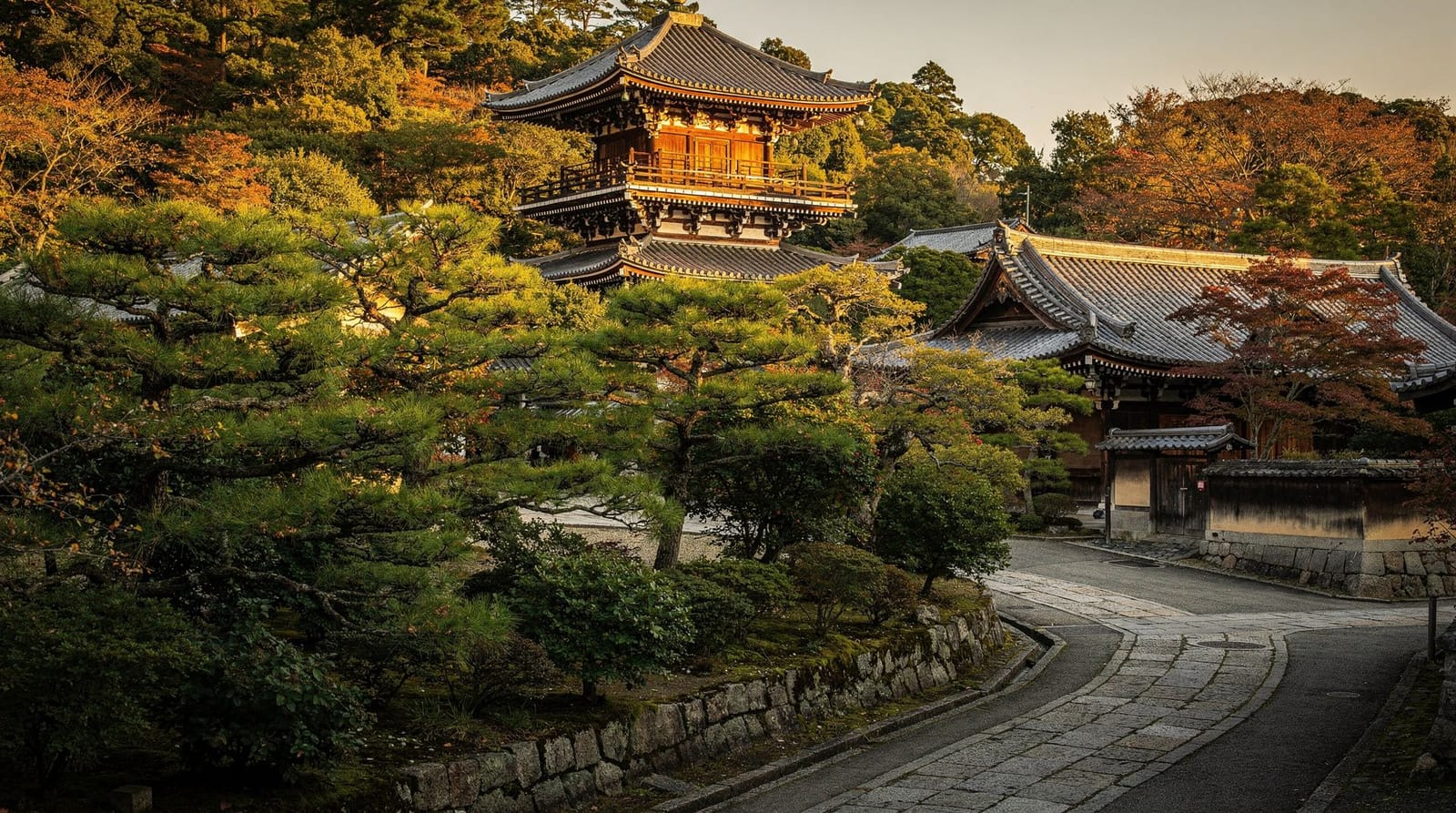
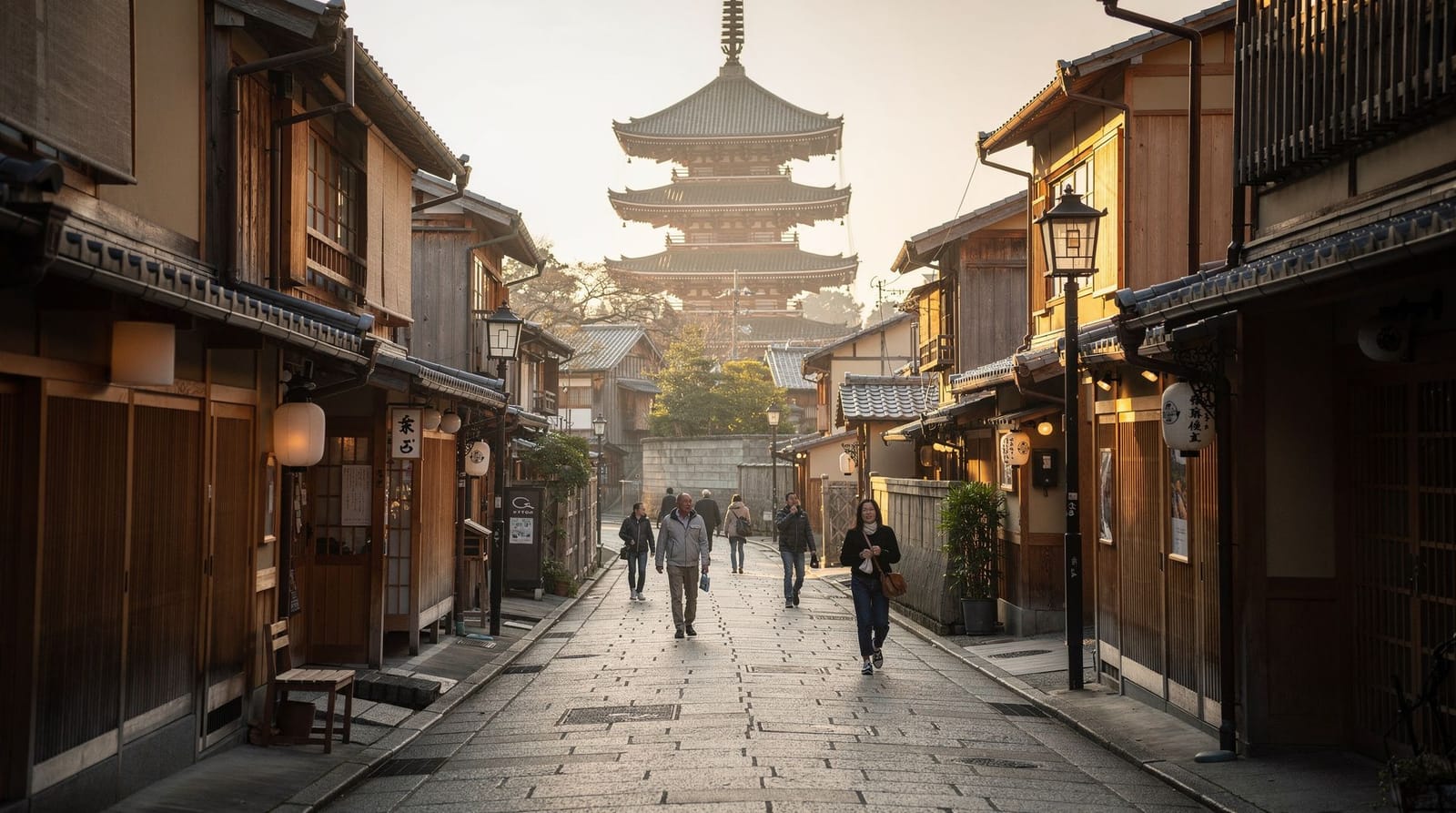
Spend the first two days on Kyoto’s core sights: Fushimi Inari early morning, Kiyomizu-dera and the Higashiyama lanes, Kinkaku-ji and Ryoan-ji in the northwest, and Arashiyama’s bamboo grove and Tenryu-ji. This is close to the pacing of the site’s dedicated 2-day Kyoto itinerary — follow that plan directly for a detailed hour-by-hour breakdown, or use the temples and shrines highlights itinerary if religious architecture is your priority for these two days.
Practical note for this week specifically: keep day 2 evening light, since day 3 starts with an early train to Nara and there’s no benefit to a late night before five straight days that each involve a morning departure.
Day 3 — Nara (JR Nara Line rapid, ~45 min, ¥720 / $4.80 one-way)
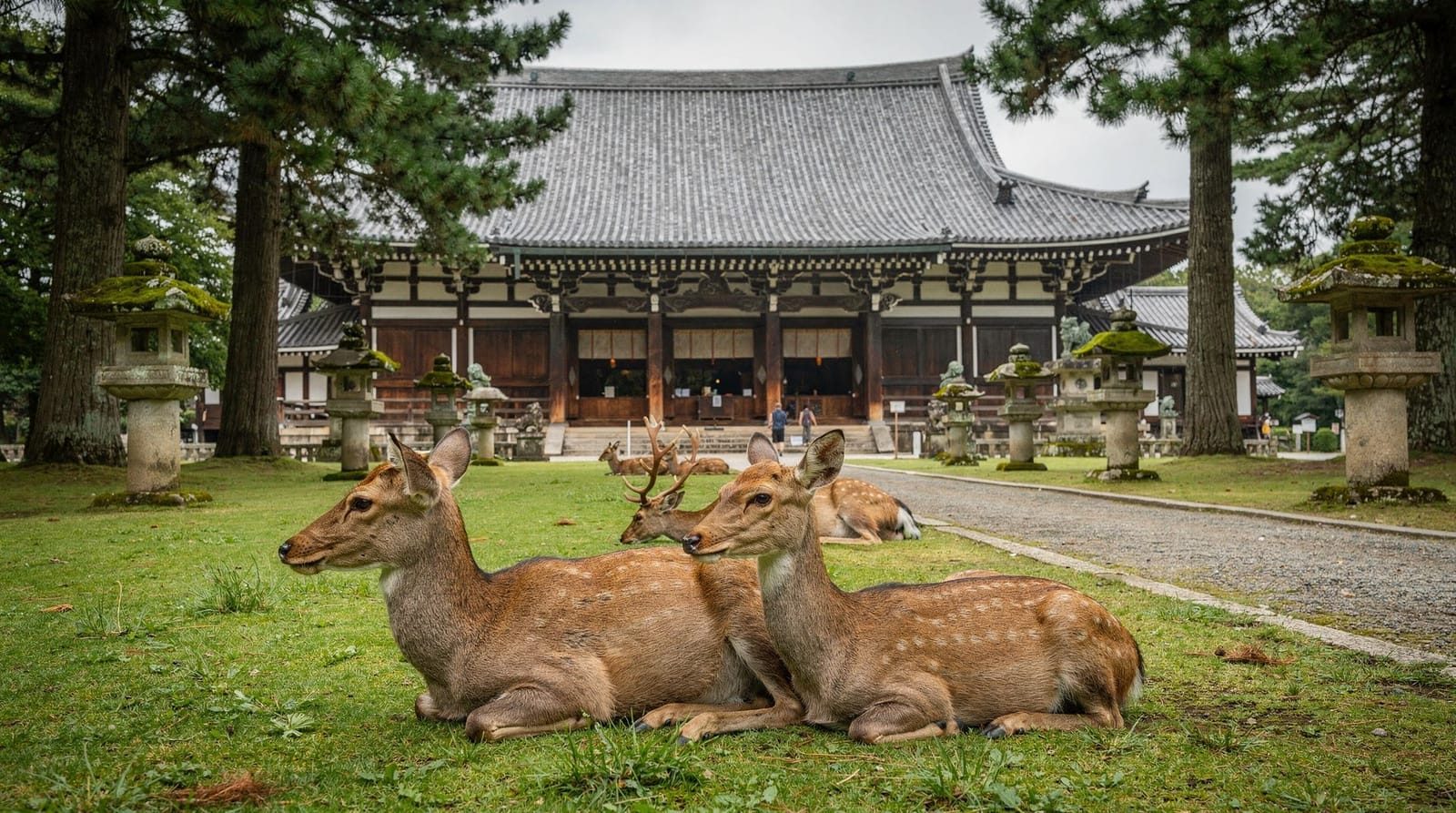
Nara was Japan’s capital before Kyoto (710-794) and makes the simplest day trip on this itinerary — a direct train with no transfers. Nara Park is free to enter and home to over 1,000 free-roaming sika deer that bow for crackers (shika senbei, ¥200); budget 45-60 minutes here. Todai-ji’s Great Buddha Hall (¥600), a short walk from the main deer areas, houses a 15-meter bronze Buddha inside the world’s largest wooden building — allow another 45-60 minutes. Kasuga Taisha, a Shinto shrine known for thousands of bronze and stone lanterns lining its approach, is a further 20-minute walk and worth the extra time if you’re not rushed.
a half-day private tour of Nara’s 4 must-see spots and deer parkLunch near Sanjo-dori (Nara’s main shopping street) runs ¥900-1,400 for standard udon or rice bowl sets. Return to Kyoto by early evening; the whole day, door to door, runs about 6-7 hours including travel.
Day 4 — Osaka (JR Special Rapid, ~30 min, ¥580 / $3.90 one-way)
Osaka is Kyoto’s opposite in tone — louder, more commercial, food-focused rather than temple-focused — and a single day covers the highlights reasonably well. Start at Osaka Castle (¥600 for the main keep, though the surrounding park and moat are free), a 1930s concrete reconstruction rather than an original structure, worth knowing going in so the “reconstruction” framing doesn’t feel like a letdown once you’re inside. Allow 60-90 minutes.
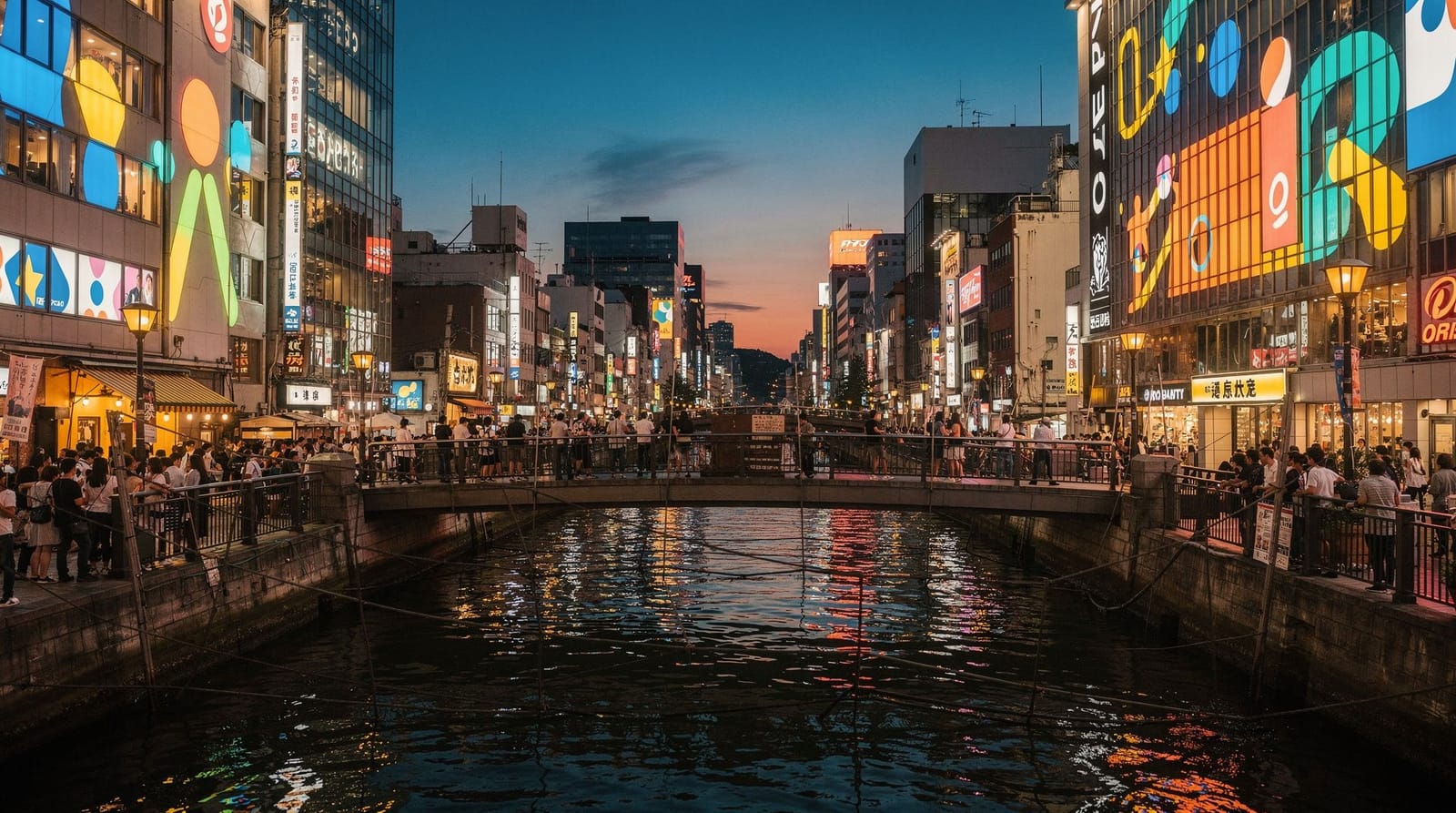
Spend the afternoon in Dotonbori, Osaka’s neon-lit canal district, for takoyaki (fried octopus balls, ¥500-700 for 6-8 pieces), okonomiyaki (savory pancake, ¥900-1,400), and kushikatsu (fried skewers, ¥100-300 per skewer) — this district is built for grazing across several small stops rather than one sit-down meal. If traveling with kids or with time for one more stop, the Osaka Aquarium (Kaiyukan, ¥2,400 adults) is one of the largest in the world and a reasonable full detour if you skip Osaka Castle instead.
Return to Kyoto by JR Special Rapid; trains run frequently until late evening, so there’s no need to rush dinner in Osaka before heading back.
Day 5 — Himeji Castle (Shinkansen ~50 min, ¥5,810 / $38.70; or JR Special Rapid ~90 min, ¥2,310 / $15.40)
Himeji Castle, nicknamed the “White Heron Castle” for its brilliant white plaster exterior, is Japan’s most intact original castle and the country’s most-visited, a UNESCO World Heritage Site since 1993. This matters because most castles in Japan, including Osaka Castle visited the day before, are concrete reconstructions — Himeji’s main keep is original construction dating to 1609, which is a genuinely different experience from walking through a rebuilt structure.
Admission is ¥1,000 ($6.70); the castle is a 20-minute walk straight up the main avenue from Himeji Station, or a short bus ride. Allow 2-2.5 hours to see the main keep properly — the interior involves steep wooden stairs across six floors, and the layout of defensive gates and dead-end passages leading to the keep is part of what makes the castle historically significant, not just the exterior.
a 3-hour licensed guide tour of Himeji CastleKoko-en, a set of nine connected Edo-period-style gardens adjacent to the castle, is a worthwhile add-on (¥300, or ¥1,050 combined with castle admission) if you have another hour. Lunch near Himeji Station — the station building itself has a reasonable food court — keeps this a genuinely compact day; door-to-door from Kyoto, including 2-3 hours on-site, runs about 5-6 hours via Shinkansen or 6-7 hours via the slower, cheaper JR Special Rapid route.
Day 6 — Hiroshima and Miyajima (Shinkansen ~1h40, ¥11,000-11,300 / $73-75 one-way)
This is the longest and most demanding day of the week — budget a genuinely early start (Shinkansen departure by 07:00-07:30) and expect to return to Kyoto around 20:00-21:00. It is also, for many visitors, the single most significant day of a Kansai trip.
Hiroshima Peace Memorial Park (free; museum ¥200 / $1.30)
The Peace Memorial Park and its Atomic Bomb Dome — the skeletal ruin of a building left largely as it was after the August 1945 bombing, and a UNESCO World Heritage Site — sit a short walk from Hiroshima Station via tram (Astram Line or streetcar, about 20 minutes). The Peace Memorial Museum, recently renovated, presents the historical record directly and without softening; allow at least 60-90 minutes, more if you want to read through the museum’s full account rather than move quickly.
This part of the day is heavy by design — go in expecting a serious, reflective couple of hours rather than a typical sightseeing stop, and budget time afterward before Miyajima for that to settle.
Miyajima (ferry ~10 min, ¥360-2,000 depending on operator)
From Hiroshima, a tram or JR train to Miyajimaguchi (25-30 minutes) connects to a short ferry crossing to Miyajima island, home to Itsukushima Shrine and its famous floating torii gate, which appears to rise directly out of the sea at high tide. Check tide tables before you go — at low tide, the gate sits on exposed sand rather than water, which is a genuinely different (and for some visitors, less impressive) sight than the floating version most photos show.
a Hiroshima and Miyajima day trip covering Itsukushima ShrineFree-roaming deer, tamer and more habituated to tourists than Nara’s, wander the island’s main street, which is also lined with shops selling momiji manju (maple-leaf-shaped cakes, ¥150-200 each) — a local specialty worth trying. If time and energy allow, the Miyajima ropeway (¥2,000 round trip) climbs Mount Misen for a panoramic view over the Inland Sea, but this adds 2-3 hours and is realistically optional on an already long day.
Given the day’s length, a guided day-trip tour that bundles transport, timing, and commentary is worth genuine consideration here specifically — coordinating tram, ferry, and Shinkansen connections independently on the longest day of the week adds a layer of logistics that a tour removes.
Day 7 — Kyoto, deeper or slower
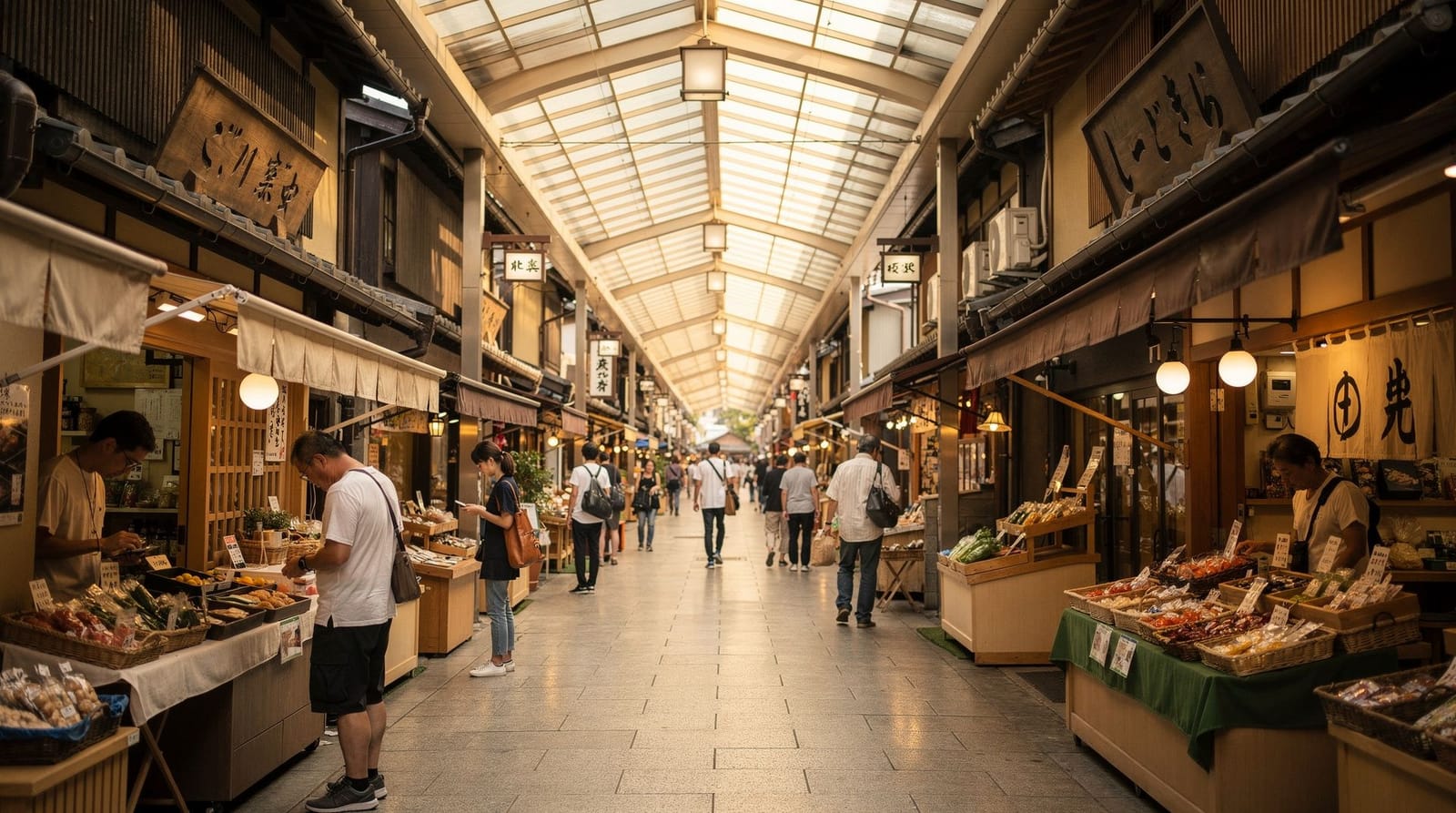
After six days of near-daily train departures, day 7 works well as either a deeper dive into Kyoto sights you didn’t reach in days 1-2 (the Fushimi sake district, Nishiki Market, the Philosopher’s Path) or a genuinely low-key day of shopping and rest before departure. Downtown Kyoto’s Shijo-Kawaramachi shopping district, department stores, and Nishiki Market cover most souvenir needs in a single walkable area.
If you’d rather add one more sight than rest, Nijo Castle or the Fushimi Inari full summit hike (if you only did the short version earlier) are reasonable single-stop additions that don’t require another full-day commitment.
Practical notes for the week
Best season: spring (late March-April) and autumn (November) are visually the most rewarding across all five cities but also the most crowded and the most expensive for accommodation — book Kyoto hotels 2-3 months ahead if traveling in these windows. Winter (December-February) is quieter and Himeji Castle in particular is pleasant with fewer visitors; summer (July-August) is hot and humid across the whole region, which matters most on day 6’s outdoor Peace Park walk.
Transport pass math: a 7-day JR Pass (~¥50,000) breaks even on this itinerary primarily because of day 6’s Hiroshima round trip. Without Hiroshima, most travelers are better off with the Kansai Wide Area Pass (covers Kyoto, Nara, Osaka, Himeji, and Kobe for a set number of days) plus an IC card for local transit — calculate against your specific itinerary before purchasing either.
Budget: for the week, expect ¥15,000-25,000 ($100-167) per day mid-range per person including accommodation, food, local transport, and admission — day 6 runs higher due to the long-distance Shinkansen fare if not covered by a pass. See the Kyoto travel budget guide for a full daily breakdown.
Luggage: staying in one Kyoto base for all seven nights means you’re not hauling luggage between cities — the main practical benefit of this itinerary’s structure over one that changes hotels each night. Day-trip essentials (water, comfortable shoes, a light layer) are all you need to carry on days 3-6.
Shortening the week: for a 5-day version, most travelers drop either Himeji (day 5) or fold Nara and Osaka into a single more compact day — see the Kyoto-Nara 2-day itinerary or the Kyoto-Osaka 3-day itinerary for tighter versions of those specific legs.
The week at a glance
| Day | Focus | Round trip from Kyoto | Rough cost |
|---|---|---|---|
| 1-2 | Kyoto essentials (Fushimi Inari, Higashiyama, Kinkaku-ji, Arashiyama) | — (walking/bus/train within Kyoto) | ¥1,500-2,500/day transit |
| 3 | Nara — deer park, Todai-ji, Kasuga Taisha | ~1h30 total | ¥1,440 train + ¥600 temple |
| 4 | Osaka — castle, Dotonbori food crawl | ~1h total | ¥1,160 train + food |
| 5 | Himeji Castle — Japan’s best-preserved original keep | ~1h40-3h total | ¥2,000-11,600 train + ¥1,000 castle |
| 6 | Hiroshima and Miyajima — Peace Park, floating torii | ~3h20 total | ¥22,000-22,600 train + entries |
| 7 | Kyoto, deeper or slower | — | Variable |
Where to stay for a one-base week
Because this itinerary keeps one hotel for all seven nights, location matters more than usual. Kyoto Station is the pragmatic choice: it sits directly on the JR Nara Line (day 3), the JR Kyoto Line toward Osaka (day 4), and every Shinkansen departure (days 5 and 6), so nothing requires a cross-town trip before the day even starts. Staying in Gion or Higashiyama instead is more atmospheric for the two Kyoto-focused days but adds 10-15 minutes to the start of each day-trip morning — a real cost on the early Hiroshima start specifically. The where to stay in Kyoto guide breaks down neighborhoods in more depth if Kyoto Station’s convenience doesn’t outweigh its lack of charm for you.
Eating your way across five cities
Food is one of the week’s underrated pleasures precisely because each city eats differently. Kyoto leans toward refined kaiseki and Nishiki Market grazing — the Kyoto food guide and Nishiki Market guide cover both. Nara and Himeji are simpler stopovers, best handled with a standard udon or rice-bowl set near the station rather than seeking out a destination meal.
Osaka and Hiroshima are the two food-focused days: budget real time in Dotonbori for takoyaki and okonomiyaki, and don’t skip Hiroshima-style okonomiyaki (layered with noodles, distinct from Osaka’s) if there’s a spare 20 minutes near the station before the Shinkansen back. For a broader sense of what Kyoto itself offers beyond this itinerary’s day-trip stops, the Kyoto street food guide is worth a read before day 1.
a guided Dotonbori and Shinsekai food tour in OsakaRecovering from day 6 before day 7
Day 6 is long enough that arriving back in Kyoto by 20:00-21:00 with any energy left for day 7 sightseeing is genuinely optimistic for most travelers. Treat day 7’s plan as a menu rather than a fixed schedule: if you wake up tired, default to the low-key shopping and rest version (Nishiki Market, Shijo-Kawaramachi, a slow lunch); if you wake up with energy, add Nijo Castle or a walk along the Philosopher’s Path. Deciding the night before which version you’re leaning toward, rather than committing to a fixed day-7 itinerary in advance, is the more realistic way to plan around day 6’s unpredictable toll.
Frequently asked questions about a 7-day Kansai itinerary
Is Kyoto a good single base for a week covering all these cities?
Yes — Kyoto sits centrally enough in the Kansai/Chugoku rail network that Nara (45 min), Osaka (30 min), and Himeji (50-90 min) are all comfortable day trips, and even Hiroshima (1h40 by Shinkansen) is manageable as a long single day. Staying in one hotel for the full week also avoids repacking and re-checking into accommodation five separate times.
Is Hiroshima and Miyajima really doable as a day trip from Kyoto?
Yes, but it’s a long day — realistically 13-14 hours door to door including a 07:00-07:30 departure and a 20:00-21:00 return. It’s the most demanding single day in this itinerary. If you’d prefer a less rushed experience, an overnight stay in Hiroshima or Miyajima (turning this into an 8-day trip) allows a sunset or early-morning view of the floating torii gate, which the compressed day-trip version doesn’t accommodate.
Should I buy a 7-day JR Pass for this specific itinerary?
Calculate first: the Kyoto-Hiroshima round trip alone (~¥22,000-22,600) covers close to half the pass cost, and adding the Himeji and Nara/Osaka legs typically pushes the math in the pass’s favor for this exact route. If you’re modifying the itinerary to drop Hiroshima, a regional pass is usually more economical — run the numbers against your actual planned trips before buying either.
What’s the best order for the day trips — does it matter which day is Himeji vs. Osaka vs. Nara?
Not significantly, though placing Hiroshima (the longest day) mid-week rather than as the first or last day trip gives you a lighter day on either side of it to recover. Nara, being the shortest and simplest day trip, works well as a “warm-up” day trip before the more involved Osaka and Himeji days.
Do I need to book Shinkansen tickets in advance?
Not required for most of this itinerary — Kyoto-Himeji and Kyoto-Hiroshima Shinkansen tickets are generally available same-day at the station, including reserved seats, except during major holiday periods (New Year, Golden Week in late April-early May, and the Obon week in mid-August), when booking a few days ahead is a meaningful precaution.
Is one week enough to also fit Kobe or Lake Biwa into this itinerary?
Not comfortably alongside all five cities in this plan without cutting something else — Kobe and Lake Biwa/Otsu are both legitimate additional day trips from Kyoto, but adding either means dropping one of Nara, Osaka, Himeji, or Hiroshima, or extending the trip to 8-9 days.
What if the weather is bad on the Himeji or Hiroshima day?
Both are largely outdoor days — Himeji Castle’s interior is covered but the approach and gardens are not, and Hiroshima’s Peace Memorial Park is entirely outdoor walking. Neither is a good candidate to skip due to rain given the travel investment already made in the round trip; bring proper rain gear rather than rescheduling, since swapping day trips mid-week disrupts the whole week’s rail bookings if you’ve pre-purchased tickets.
How tired should I expect to be by day 7?
Reasonably tired — six days involving five different cities and, on day 6 specifically, close to 4 hours of round-trip Shinkansen travel is a genuinely active pace. Day 7 is deliberately built as either a lighter sightseeing day or a rest day for exactly this reason; resist the urge to schedule a sixth day trip on day 7 unless you’re confident in your stamina for the week.
Top experiences
Bookable activities with verified prices and instant confirmation on GetYourGuide.