Best day trips from Kyoto, compared
From Kyoto: Nara heritage half-day tour
Duration: Half day
What's the best day trip from Kyoto?
For most first-time visitors with one free day, Nara or Osaka are the easiest and most rewarding choices — both are under 45 minutes away by train and cost less than $5-4 each way. If you have two or more days to spare, add Uji for a quieter, temple-and-matcha pace, or Himeji if you want to see an original (non-reconstructed) castle. Hiroshima and Miyajima are worthwhile but need a full, early-start day given the roughly two-hour journey each way.
What’s the best day trip from Kyoto? It depends entirely on how much time you have and what you want to see. Kyoto sits on or near several fast train corridors, which puts seven genuinely different day trips within reach: Nara, Osaka, Uji and Lake Biwa/Otsu are all under 45 minutes away and cost less than $8 one-way, while Kobe, Himeji and Hiroshima with Miyajima take longer and cost more but reward the extra effort. None of these trips are bad choices — the question is which ones fit the days you actually have free.
| Easiest for 1 day | Nara or Osaka (under 45 min, under $8 each way) |
| Quietest | Uji or Lake Biwa/Otsu |
| Biggest single sight | Himeji Castle (original, UNESCO) |
| Longest trip | Hiroshima + Miyajima (~2 hrs each way) |
| JR Pass worth it? | Only if pairing Himeji + Hiroshima in one week |
This guide compares all seven side by side, then walks through a simple way to decide which to book first. For the full planning picture on how many days to allocate to day trips versus staying in Kyoto itself, see our guide on how many days in Kyoto.
All seven day trips, compared
| Destination | Travel time | One-way cost | Best for |
|---|---|---|---|
| Nara | 35-45 min | ¥720-1,160 (~$4.80-7.70) | First-timers, families, deer + Great Buddha |
| Osaka | 29 min | ¥580 (~$3.90) | Street food, nightlife, flexible planning |
| Uji | 17-20 min | ¥240-310 | Quiet, matcha, low crowds |
| Lake Biwa/Otsu | ~10 min | ¥240 | Shortest, cheapest half-day add-on |
| Kobe | 50-52 min | ¥1,110 (~$7.40) | Kobe beef, sake, pairs with Himeji |
| Himeji | 1-2 hrs | ¥2,310-5,810 (~$15.40-38.70) | Original castle, full-day commitment |
| Hiroshima + Miyajima | ~2 hrs each way | Peace Memorial, floating torii; needs a full early day |
Which day trip should you choose based on your time
Start by counting how many days you can realistically give to trips outside Kyoto — not your total trip length, but the days you’re willing to spend leaving the city.
If you have one day for a day trip: choose Nara or Osaka. Both are close, cheap, easy to navigate without much planning, and deliver a full, satisfying day regardless of season or weather. Nara suits travelers who want temples, history and the sacred deer; Osaka suits travelers who want street food, a lively castle and neon-lit nightlife. Neither requires an early start.
If you have two days: keep one of Nara or Osaka, then add Uji for a quieter, slower-paced day centered on matcha and a UNESCO temple, or add Himeji if seeing an original, non-reconstructed castle matters more to you than a relaxed pace. Uji also works well as a half-day, freeing up the afternoon for something back in Kyoto.
If you have three or more days: this is when Kobe and Hiroshima with Miyajima become realistic. Kobe pairs naturally with Himeji or Osaka since all three sit on the same rail corridor. Hiroshima and Miyajima deserve their own dedicated day — the travel time alone is close to two hours each way, so bolting it onto another destination isn’t practical.
If your total Kyoto stay is under four days, we’d skip Hiroshima and Himeji. Both eat a disproportionate share of a short trip in transit — a shinkansen round trip to Hiroshima alone can consume five hours. Nara, Osaka and Uji deliver more sightseeing per hour spent traveling when time is tight. Our Kyoto travel budget guide breaks down how these transport costs fit into a realistic daily spend.
Nara: the easiest first day trip
Nara is 35-45 minutes from Kyoto Station, either on the JR Nara Line rapid train (¥720, about $4.80) or the Kintetsu limited express (¥1,160, about $7.70, and slightly faster with reserved seating). It’s the most accessible day trip on this list, and usually the first one visitors book.
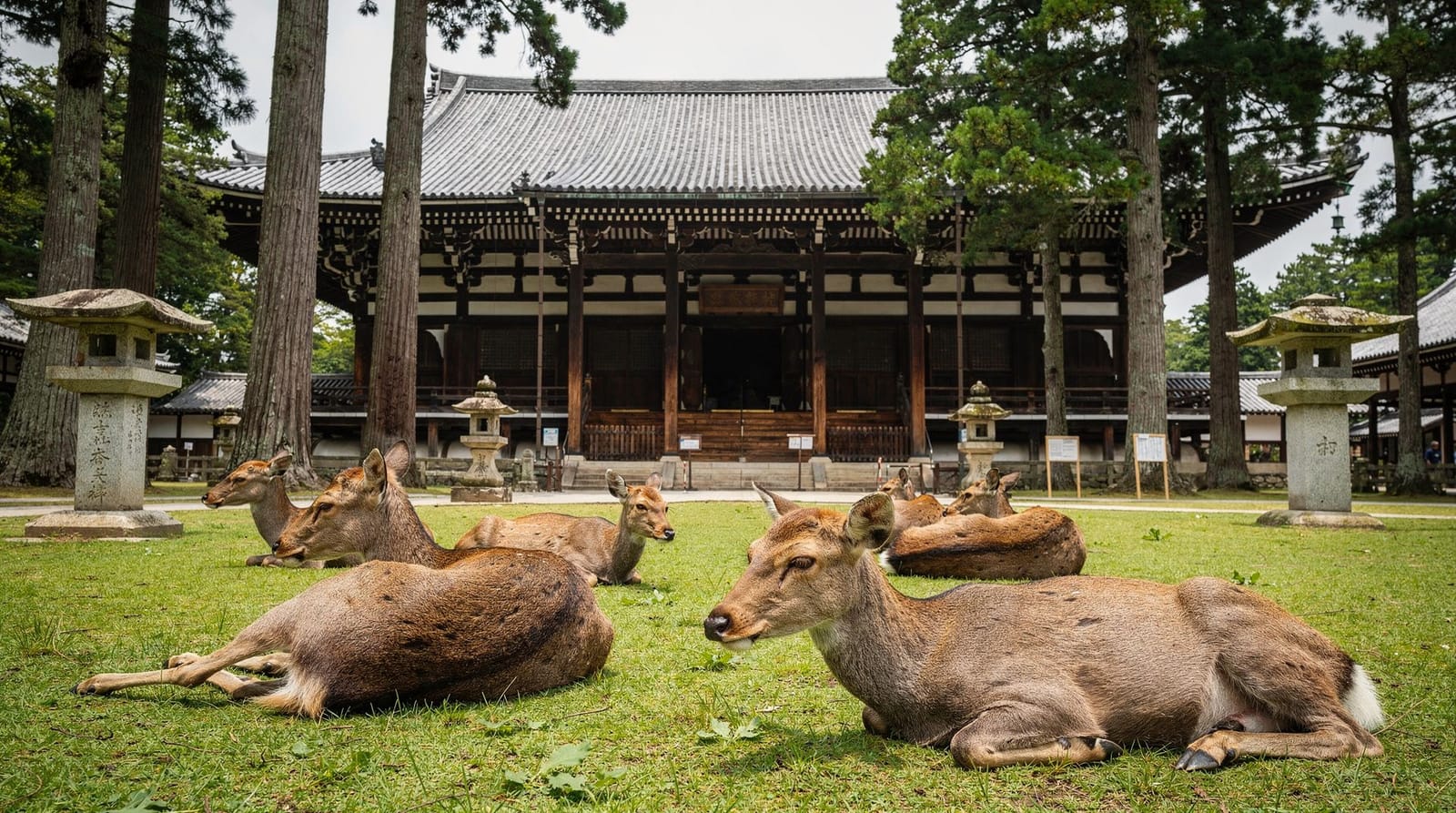
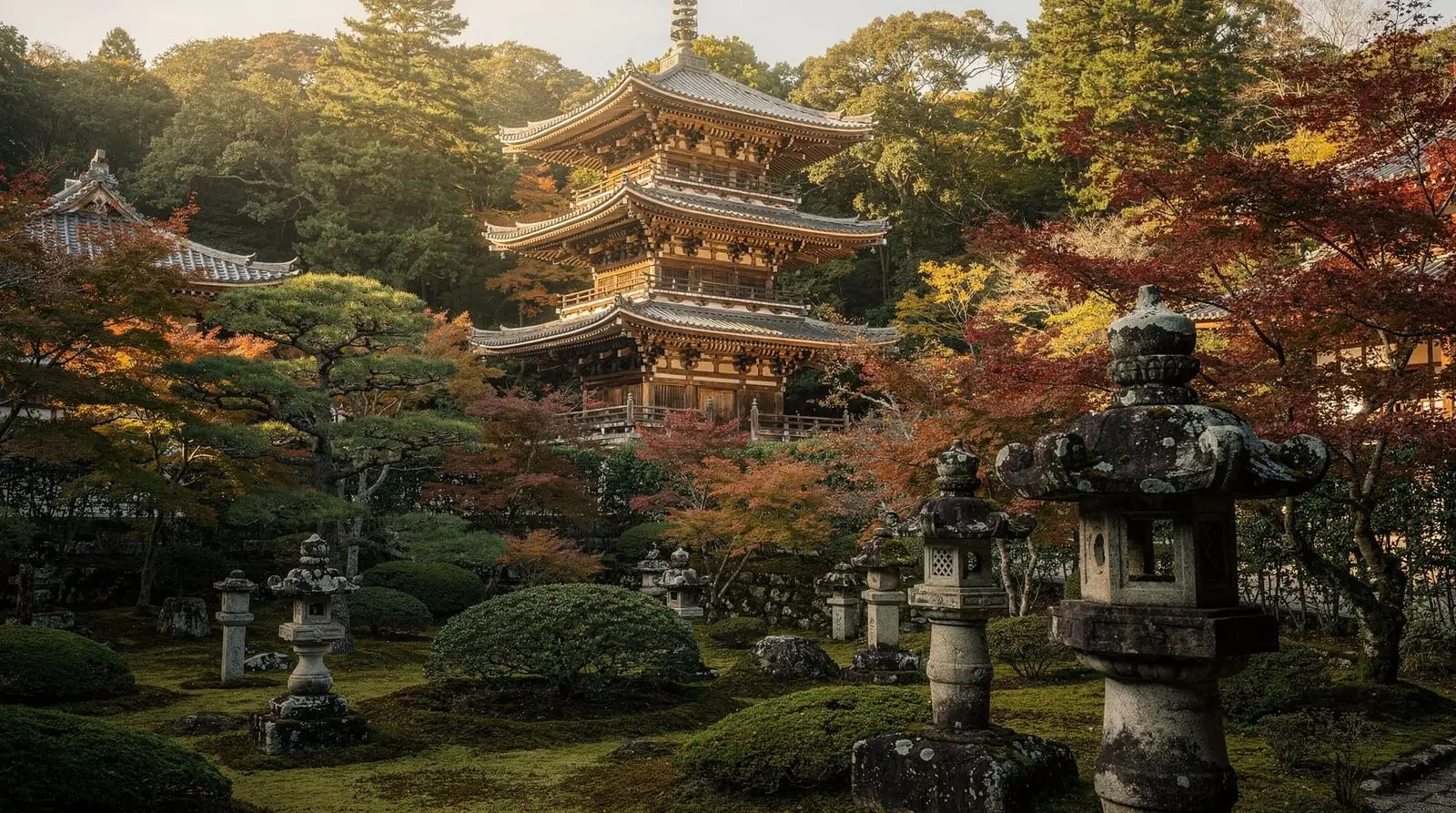
The draw is Todai-ji, home to Japan’s largest bronze Buddha statue, set inside Nara Park where over a thousand semi-wild deer roam freely and will approach for the rice crackers sold nearby. Kasuga Taisha, a Shinto shrine known for its rows of stone and bronze lanterns, is a short walk further into the park. Nara works equally well as a half-day trip (Todai-ji and the deer park alone take about three hours) or a full day if you add Kasuga Taisha and the quieter Naramachi merchant district.
For a guided introduction that covers the temple and park highlights without you having to plan the walking route yourself, the Nara heritage half-day tour from Kyoto is a straightforward option. For the full breakdown of routes, timing and what to skip, see our dedicated Nara day trip guide.
Osaka: the fastest, most flexible day trip
Osaka is the quickest of the classic day trips: 29 minutes on the JR Special Rapid service for ¥580 (about $3.90). It’s also the most forgiving in terms of planning — trains run frequently, the city is easy to navigate, and there’s no single must-see sight that locks you into a rigid schedule.
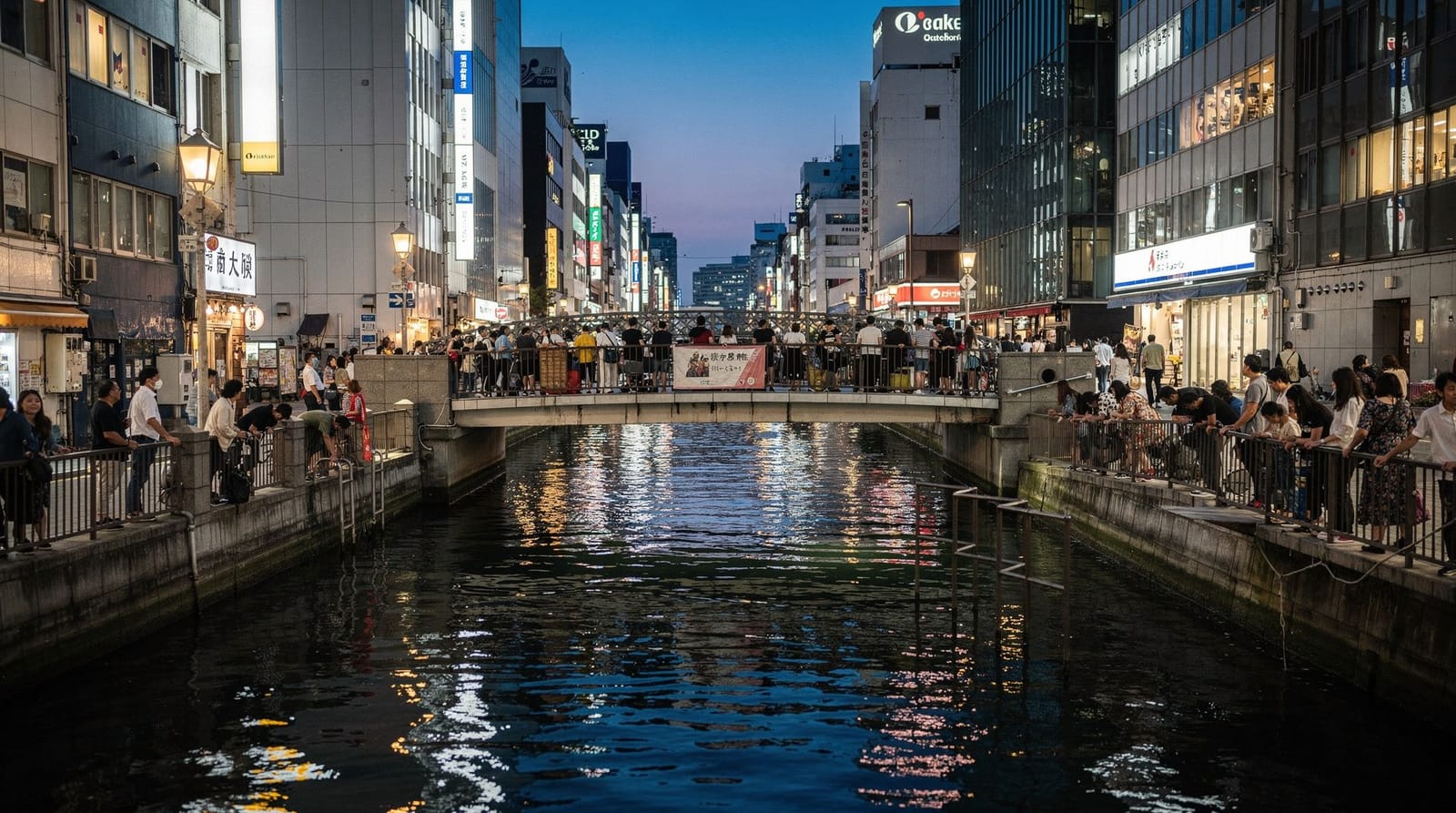
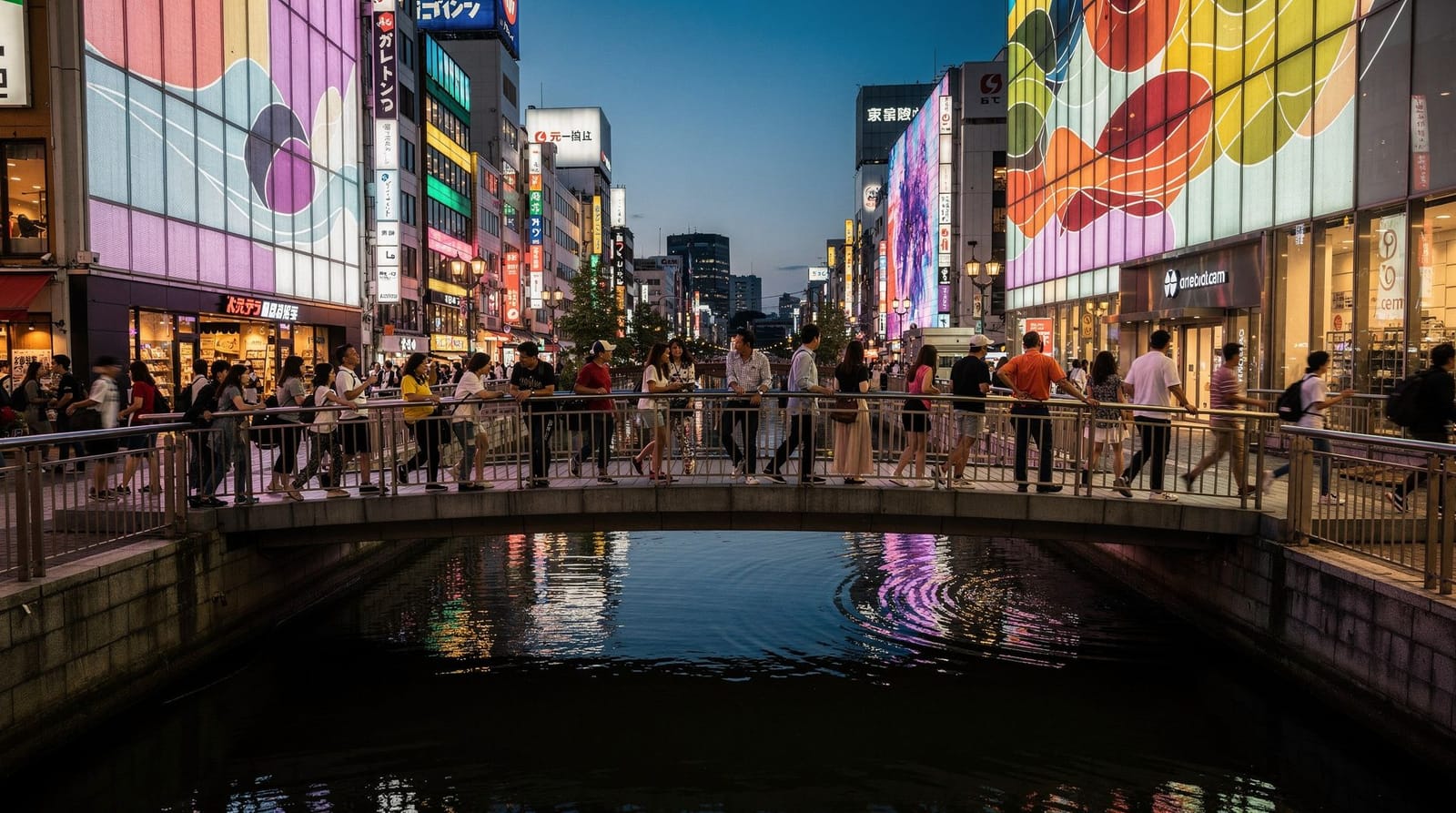
Osaka Castle, a reconstruction rather than an original structure, anchors the day, but most travelers spend more time in Dotonbori, the canal-side district known for street food (takoyaki, okonomiyaki) and the illuminated signage that comes alive after dark. Because the evening atmosphere in Dotonbori is a real part of the appeal, Osaka is best treated as a full day trip with an evening return, rather than compressed into a half-day.
Osaka connects directly onward to Kobe and Himeji on the same rail line, so it’s a natural anchor if you’re planning a multi-day loop west of Kyoto — more on that combination below. See our Osaka day trip guide and our comparison guide on Kyoto versus Osaka if you’re deciding how to split time between the two cities more broadly.
Uji: the quiet, low-crowd option
Uji is close and cheap — 17-20 minutes on the JR Nara Line rapid train (¥240) or the Keihan Line (¥310) — and it sees noticeably fewer tourists than Nara, Osaka or Himeji, which makes it worth calling out on its own.
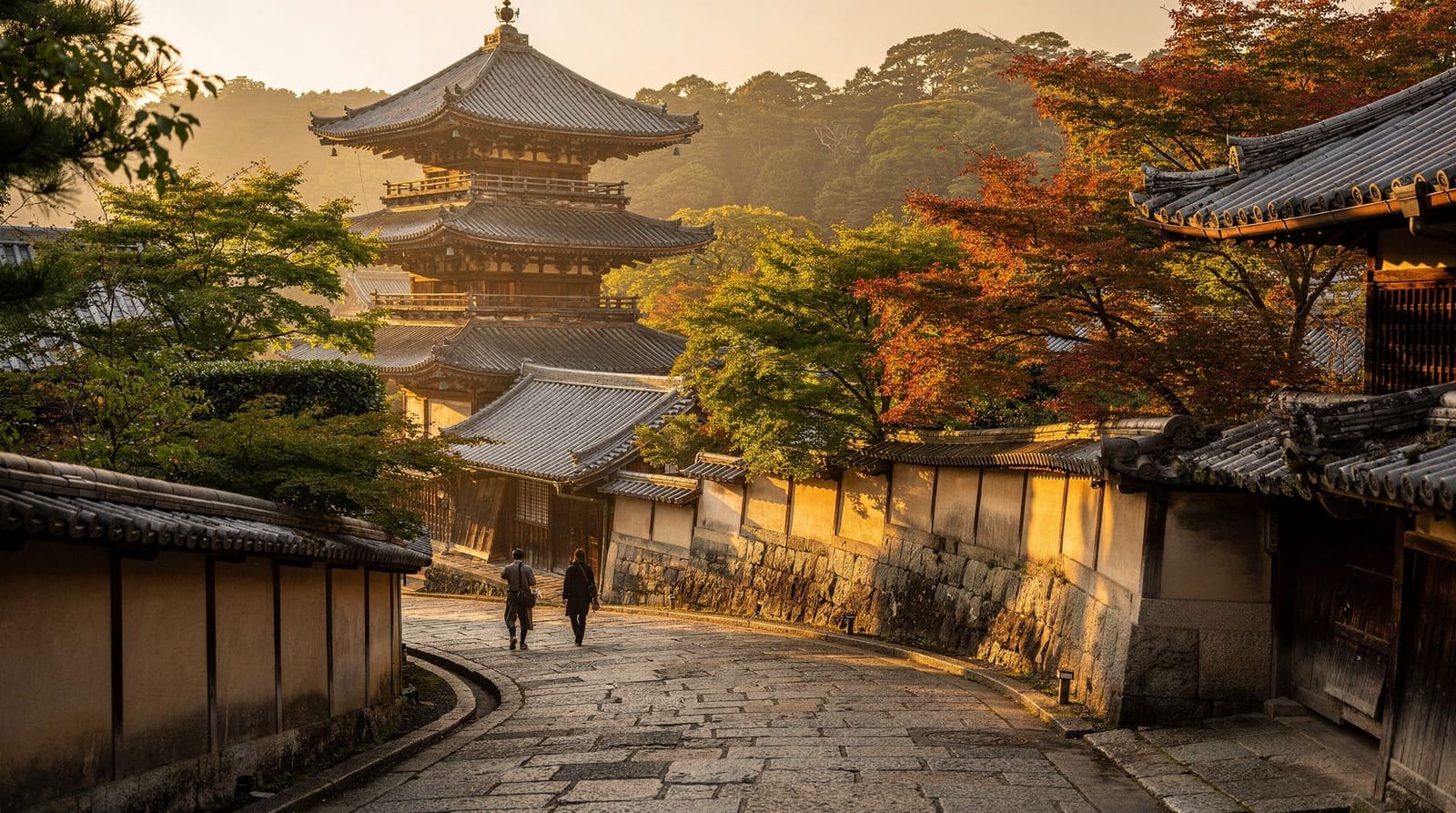
Uji is Japan’s historic matcha-producing region, and the town’s tea houses, shops and cafes reflect that; it’s also home to Byodo-in, a Heian-era temple whose Phoenix Hall appears on the back of the ¥10 coin. A half-day is enough to see Byodo-in and take part in a tea experience; a few extra hours let you browse the tea shops along the main street at a slower pace.
The Kyoto matcha green tea tour in Uji is a practical way to get a hands-on tea experience without having to book a tasting or workshop yourself. For more detail on the tea side of things specifically, see our matcha in Uji guide; for temple and transit logistics, the Uji destination page.
Lake Biwa and Otsu: the closest add-on
Lake Biwa is Japan’s largest lake, and Otsu — the city on its southern shore — is only about 10 minutes from Kyoto Station on the JR Biwako Line for ¥240, making this the shortest and cheapest trip on this list.
Otsu doesn’t have a single headline sight on the scale of Todai-ji or Himeji Castle, but it offers a genuinely different kind of afternoon: Ishiyama-dera, a temple associated with the writing of The Tale of Genji, Mii-dera, a large Tendai Buddhist temple complex, and a paddle-wheel boat cruise on the lake itself. It’s best treated as a half-day and works well as a second stop for travelers who feel they’ve already covered central Kyoto and want an easy, uncrowded add-on rather than a full expedition. Details are on the Lake Biwa and Otsu destination page.
Kobe: food, port views and an easy pairing with Himeji
Kobe is 50-52 minutes from Kyoto on the JR Special Rapid for ¥1,110 (about $7.40) — longer and pricier than Nara or Osaka, but still a straightforward rapid-train trip rather than a shinkansen commitment.
The city is best known for Kobe beef and the sake breweries of the Nada district, both worth building a meal or tasting around, plus the European-influenced Kitano-cho neighborhood and the night view from Mount Rokko, considered one of Japan’s classic nighttime panoramas. Kobe rewards a full day, and because it sits on the same JR corridor as Osaka and Himeji, it’s rarely visited in isolation — most travelers combine it with one or both. See the Kobe destination page for neighborhood-level detail.
Himeji: the original castle, at a real cost in time and money
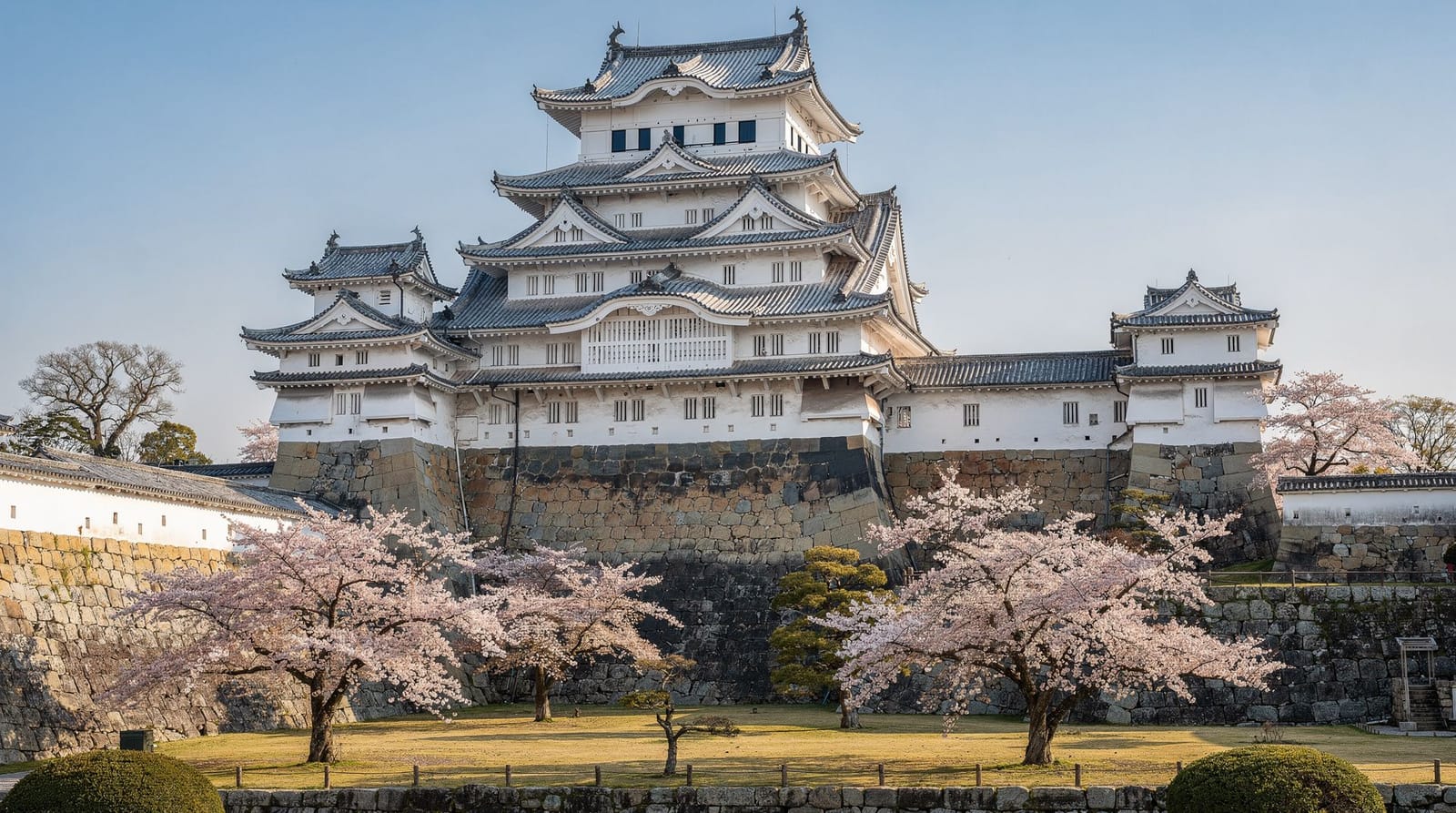
Himeji Castle is the most-photographed reason to leave Kyoto, and unlike Osaka Castle, it’s original — it survived WWII bombing and earthquakes largely intact, and is a UNESCO World Heritage Site. That authenticity comes with the longest and most expensive transport of the “classic” day trips: about an hour by shinkansen (¥5,810, roughly $38.70) or 1.5-2 hours on local trains (¥2,310, about $15.40).
Alongside the castle itself, Koko-en, a set of nine connected Edo-period-style gardens next door, is worth the extra hour if you have it. Himeji is a full-day commitment once you account for the castle’s size (expect two to three hours inside) and the transit time on either end.
The 3-hour Himeji Castle tour with a licensed guide is worth considering here specifically, since a guide can explain the castle’s defensive layout — which is not obvious just walking through it — in a way that’s easy to miss otherwise. Full planning detail is in our Himeji Castle day trip guide.
Hiroshima and Miyajima: the furthest, but doable in one long day
Hiroshima and Miyajima are grouped together because almost nobody visits one without the other, and because the combined trip is the longest and most demanding on this list. Getting to Hiroshima alone takes 1 hour 35 minutes to 2 hours by shinkansen (around ¥11,000, about $73); Miyajima adds another 25-30 minutes by local train plus a roughly 10-minute ferry crossing.
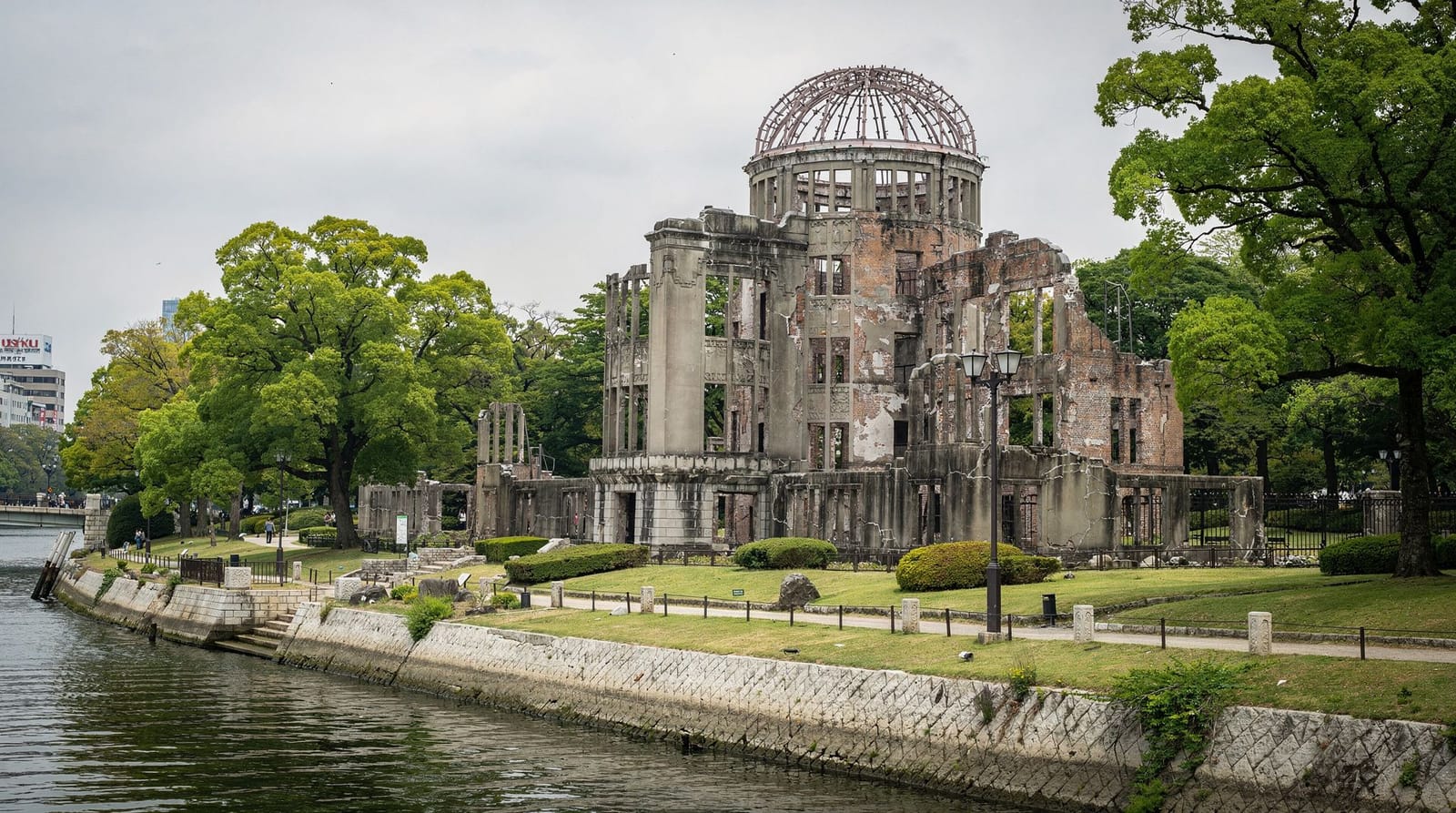
The Peace Memorial Park and Museum in Hiroshima is a sobering, essential stop for most travelers, while Miyajima’s floating torii gate at Itsukushima Shrine is one of the most photographed sights in Japan, especially at high tide. Doing both in a single day from Kyoto is possible with an early start, but it makes for a genuinely full, tightly scheduled day with little slack for delays. Travelers with the flexibility to do so often find it more comfortable to stay one night near Hiroshima or Miyajima rather than returning to Kyoto the same evening.
The Hiroshima and Miyajima day trip from Kyoto with a guide handles the connections and pacing for you, which takes some of the pressure off a day where timing matters. See our Hiroshima and Miyajima day trip guide, plus the Hiroshima and Miyajima destination pages for more detail.
Is a JR Pass worth it for these day trips
Be honest with yourself about this before buying one. A JR Pass is priced around long-distance shinkansen travel, and it only pays off if you’re making multiple long shinkansen trips within its validity window — for example, Himeji one day and Hiroshima another day within the same week.
For Nara, Osaka, Uji or Lake Biwa/Otsu, a JR Pass isn’t worth it. Those trips run on cheap local or rapid trains (¥240-720, or $1.60-4.80) that a pass doesn’t meaningfully discount, and in some cases the fastest route (like the Kintetsu line to Nara) isn’t covered by a JR Pass at all. If your day-trip plans are limited to the close-in destinations, just pay for each ticket individually — it will almost certainly cost less than the pass.
Combining multiple day trips into a multi-day loop
Osaka, Kobe and Himeji sit on the same JR corridor running west from Kyoto, which makes them straightforward to combine into a two- or three-day loop without backtracking through Kyoto after every stop. A common pattern: Kyoto to Osaka on day one, staying the night in Osaka or returning to Kyoto; then Osaka to Kobe to Himeji (or the reverse order) on day two, ending back in Kyoto by train.
Hiroshima and Miyajima don’t fit neatly into that loop — they’re on a different line and far enough west that they’re better treated as a standalone day, ideally with an overnight stay nearby if your schedule allows it. Uji and Lake Biwa/Otsu, being short and close, are easiest to slot into a half-day gap between other Kyoto activities rather than planning a dedicated day around them.
Practical tips for day trips from Kyoto
Book shinkansen seats (for Himeji or Hiroshima) a few days ahead during cherry blossom season (late March-early April) and autumn foliage season (mid-November), when reserved cars sell out. Unreserved cars are available but standing room only is a real possibility on peak dates.
Avoid stacking two full-day trips back to back — Kyoto itself has enough temples, food and neighborhoods that alternating a day trip with a day in the city tends to produce a better-paced trip than four straight days of train travel. If you’re unsure how to budget your overall time between Kyoto and its surroundings, our first-time Kyoto guide covers that planning question in more depth. And if crowding is a bigger concern for you than distance, our guide to avoiding crowds in Kyoto covers timing strategies that apply to several of these day trips too, particularly Nara and Uji.
Finally, check the return train schedule before you leave in the morning, especially for Himeji and Hiroshima — the last convenient shinkansen back to Kyoto is earlier than most people assume, and missing it turns an inexpensive day trip into an expensive taxi or an unplanned hotel night.
Weather and what changes by season
Rainy season (June to mid-July) doesn’t rule out any of these day trips, but it does shift which ones make more sense on a wet forecast day. Nara Park and Nishiki-style covered shopping stretches in Osaka and Kobe hold up reasonably well in light rain, while Himeji Castle’s exterior walkways and Miyajima’s outdoor shrine approach are considerably less pleasant.
Typhoon season (roughly August-October) occasionally disrupts shinkansen schedules for a day at a time — worth checking JR’s service status before a Himeji or Hiroshima trip if a storm is forecast, since a cancelled or delayed shinkansen can strand a day-trip schedule badly. Winter (December-February) sees the thinnest crowds across all seven destinations, and Nara’s deer, Uji’s tea houses and Himeji’s castle grounds are all genuinely pleasant in the season’s crisp, clear light, even if it means packing warmer layers than a spring or autumn day trip would need.
A realistic first-timer’s picking order
For visitors unsure where to start, a reasonable default order is: Nara first (easiest, most universally appealing), Osaka second if a second day trip is available (fastest, most flexible), then Uji as a half-day add-on if a free afternoon opens up. Himeji and Hiroshima are better saved for a return trip to Japan or a Kyoto stay of five days or more, since both demand a genuinely dedicated day that a shorter itinerary rarely has room for without cutting into time in Kyoto itself. This isn’t a rule — travelers with a specific priority (castle architecture, wartime history, a particular photograph) should follow that priority over the default order — but it’s a sensible starting point for anyone without a strong existing preference.
Solo travelers and couples generally have the most flexibility across all seven options, since none of these trips require a minimum group size or a rigid booking window beyond the shinkansen reservations noted above. Groups of three or more should factor in that unreserved shinkansen cars can run standing-room-only during peak season, making a reserved-seat booking more important than it would be for a solo traveler willing to stand for part of a journey.
Frequently asked questions about day trips from Kyoto
Can I visit Nara and Osaka on the same day from Kyoto?
It’s physically possible but rushed. Nara and Osaka aren’t directly connected by a fast line — you’d typically route back through Kyoto or Osaka, adding transfer time. Most travelers get more out of dedicating a full day to each rather than splitting one day between both.
Is Hiroshima and Miyajima doable as a single day trip from Kyoto?
Yes, but it’s a long day. Round-trip travel alone (shinkansen plus the local train and ferry to Miyajima) eats up close to five hours. Plan an early departure, expect to leave Miyajima before sunset to catch the last convenient trains back, and don’t stack anything else onto that day.
Do I need a JR Pass for these day trips?
Usually not. Nara, Osaka, Uji and Lake Biwa/Otsu all run on cheap local or rapid trains ($3.90-4.80 one-way), which a JR Pass doesn’t meaningfully discount. A pass only pays for itself if you’re making multiple long-distance shinkansen trips in the same week, such as Himeji plus Hiroshima.
Which day trip is best for families with young kids?
Nara. The train ride is short, the Grand Buddha and the sacred deer in Nara Park are engaging for children, and there’s no strict itinerary pressure — you can wander at a slow pace and still see the highlights in half a day.
Which day trip has the least crowds?
Uji and Lake Biwa/Otsu see noticeably fewer tourists than Nara, Osaka or Himeji. Uji in particular is a good pick if you’ve already found Kyoto’s temples crowded and want a calmer half-day.
Can I combine Osaka, Kobe and Himeji in one multi-day loop?
Yes — all three sit on the same JR Kobe Line/Special Rapid corridor west of Kyoto, so you can hop between them without backtracking through Kyoto each time. A common pattern is Kyoto to Osaka one day, then Osaka to Kobe to Himeji (or the reverse) on a second day before returning to Kyoto.
Is Himeji worth it if I only have three days in Kyoto?
It’s a stretch. With only three days, most of that time is better spent in Kyoto itself plus one easy trip (Nara or Osaka). Himeji’s original castle is genuinely worth seeing, but the shinkansen cost and travel time make more sense once you have four or more days, or if castle architecture is a specific priority for you.
What’s the shortest, cheapest day trip from Kyoto?
Lake Biwa/Otsu, at around 10 minutes on the JR Biwako Line for ¥240. Uji is a close second at 17-20 minutes for ¥240-310. Both work well as an add-on half-day rather than a full day trip.
Frequently asked questions about Best day trips from Kyoto, compared
Can I visit Nara and Osaka on the same day from Kyoto?
Is Hiroshima and Miyajima doable as a single day trip from Kyoto?
Do I need a JR Pass for these day trips?
Which day trip is best for families with young kids?
Which day trip has the least crowds?
Can I combine Osaka, Kobe and Himeji in one multi-day loop?
Is Himeji worth it if I only have three days in Kyoto?
What's the shortest, cheapest day trip from Kyoto?
Top experiences
Bookable activities with verified prices and instant confirmation on GetYourGuide.