Miyajima
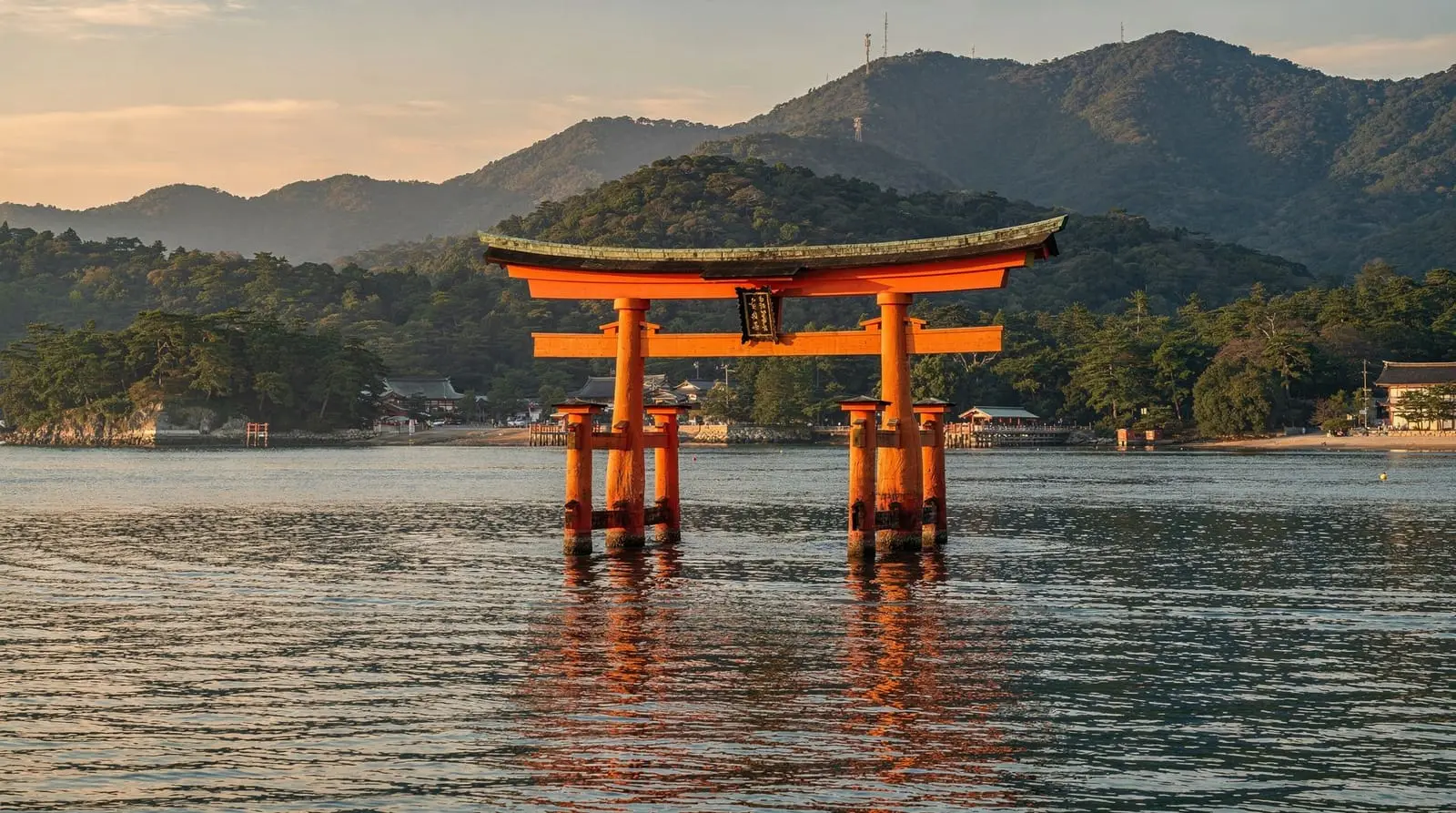
Miyajima's floating torii gate and Itsukushima Shrine, reached via Hiroshima — a realistic 2.5-3 hour trip each way from Kyoto Station.
Hiroshima: Miyajima half-day historical walking tour
Duration: 5.5 hours
Quick facts
- Distance from Kyoto Station
- 2.5-3 hours (shinkansen + train + ferry)
- Ferry crossing
- About 10 min from Miyajimaguchi, free with JR Pass
- Time needed
- Half day minimum, full day for Mount Misen
- Best known for
- Itsukushima Shrine's floating torii gate
- Best time to visit
- Check tide tables before you go — high and low tide are both worth seeing
Is Miyajima a standalone day trip from Kyoto, or an add-on to Hiroshima? Realistically, it’s an add-on. Miyajima sits beyond Hiroshima, reached by shinkansen to Hiroshima, a local train to Miyajimaguchi, and a short ferry — door to door, roughly 2.5 to 3 hours each way from Kyoto Station. Once you’re there, though, it delivers one of Japan’s most photographed sights: Itsukushima Shrine’s vermillion torii gate, appearing to float on the water at high tide and standing on exposed sand at low tide.
The geography, honestly: Miyajima is beyond Hiroshima, not near Kyoto
It’s worth being direct about this before you plan a day around it. Miyajima is not a short trip from Kyoto in the way that, say, Uji or Nara are. It’s an island off the coast near Hiroshima, roughly 45 minutes to an hour beyond Hiroshima Station once you add the local train and ferry. From Kyoto, that means the shinkansen leg to Hiroshima (1.5-2 hours) plus another 40-45 minutes of local transit and ferry crossing before you actually set foot on the island — a genuine 2.5 to 3 hour one-way trip.
That geography makes Miyajima realistically a “while you’re already in Hiroshima” destination rather than a standalone day trip from Kyoto. Most visitors who make the trip do both Hiroshima and Miyajima together in a single long day, or better, over two days with an overnight in Hiroshima. See our Hiroshima day trip guide and the dedicated Hiroshima and Miyajima day trip guide for how the two combine and what a realistic schedule looks like.
Getting to Miyajima from Kyoto Station, step by step
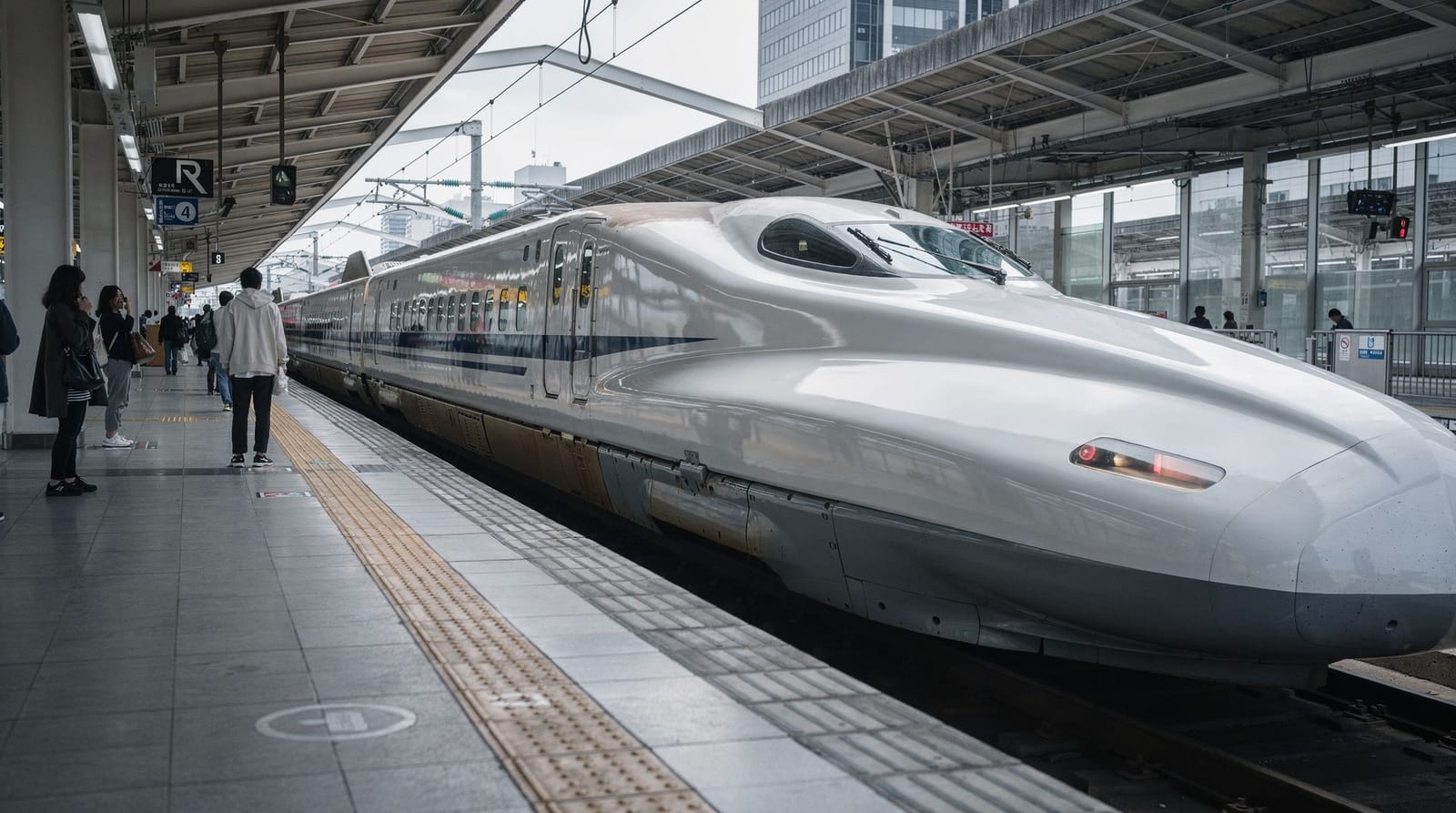
The route runs in three legs. First, the Tokaido-Sanyo Shinkansen from Kyoto Station to Hiroshima Station — the Nozomi takes about 1 hour 35-40 minutes (¥11,000/$73, not JR Pass eligible), or the Hikari takes closer to 2 hours and is JR Pass eligible.
Second, from Hiroshima Station, take the JR Sanyo Line (local or rapid) to Miyajimaguchi Station, which takes about 25-30 minutes and costs around ¥420 (~$2.80); alternatively, the Hiroden streetcar Line 2 also runs from central Hiroshima to Miyajimaguchi, slower at around 70 minutes but scenic and useful if you’re already downtown rather than at the station. Third, from Miyajimaguchi pier, the ferry to Miyajima itself takes about 10 minutes and runs frequently, generally every 15 minutes or so through the day.
Two ferry operators run this route: the JR West Miyajima Ferry, which is included free for Japan Rail Pass holders and JR Sanyo Line pass holders, and the JR-independent Matsudai Kisen ferry, which costs a small fare if you’re not covered by a pass (roughly ¥220/~$1.50 one way) but often runs slightly closer to the torii gate for photos along the way. If you’re holding a JR Pass, take the JR ferry — there’s no reason to pay separately when it’s already covered.
An alternative worth knowing about, though rarely faster: a direct high-speed ferry runs seasonally between Hiroshima’s Peace Memorial Park area and Miyajima, skipping the Miyajimaguchi rail leg entirely. It’s a scenic option if you’re coming straight from the Peace Memorial Park itself rather than from Hiroshima Station, though it typically costs more than the standard rail-plus-ferry route and doesn’t run year-round, so check current schedules before relying on it.
Add it all up and you’re looking at roughly 2.5 to 3 hours door to door from Kyoto Station to Miyajima’s ferry terminal, one way. That’s a meaningful chunk of a single day, which is exactly why pairing this with a night in Hiroshima, or accepting a genuinely long single day trip, is the honest framing rather than treating Miyajima as a quick side trip.
Itsukushima Shrine and the floating torii gate
The reason most people make this trip is Itsukushima Shrine’s torii gate — a roughly 16-meter vermillion gate standing in the water just offshore from the shrine, famous for appearing to float during high tide. The current gate dates to 1875 (the design has been rebuilt many times since the shrine’s founding), and it’s one of Japan’s most recognized images, appearing on postcards, travel posters, and no shortage of Instagram feeds.
What a lot of first-time visitors don’t realize: the torii looks completely different depending on the tide, and neither version is a lesser experience — they’re just different. At high tide, the gate and the shrine’s stilted halls appear to float directly on the sea, the classic postcard image. At low tide, the water recedes far enough that you can actually walk out across the exposed sand to the base of the torii itself, touch it, and see its scale up close in a way that’s impossible at high tide — a genuinely different and worthwhile experience, not a consolation prize.
Because the difference is so significant, check a tide table for Miyajima online before you go (searchable as “Miyajima tide times” or through the local tourism association’s site) and plan your visit — or at least your photo timing — around whichever version you’d rather see. If your schedule allows it, seeing both by staying a few hours is the ideal, but not always realistic on a Kyoto day trip.
| High tide | Low tide | |
|---|---|---|
| Torii gate | Appears to float on the sea | Stands on exposed sand, walkable to |
| Shrine halls | Water visible through floorboards | Dry underneath, less atmospheric |
| Photography | The classic postcard image | Close-up detail and scale |
| Best for | First-time visitors wanting the iconic shot | Visitors who want to touch the gate up close |
Itsukushima Shrine itself, a UNESCO World Heritage Site since 1996, is built almost entirely on stilts over the water in Heian-period style, dating in its current form to the 12th century under the patronage of the warlord Taira no Kiyomori, though a shrine has stood on this site since the 6th century.
Walking its covered wooden corridors at high tide, with water visible through the gaps in the floorboards, is a distinct experience from most shrines you’ll see elsewhere in Japan. Admission is ¥300 (~$2), and the shrine is open roughly 6:30am to 6pm, with hours shifting slightly by season. Arrive early — before 9am — or in the late afternoon to avoid the heaviest crowds, which build steadily through the late morning as day-trippers from Hiroshima and beyond arrive.
For visitors who want the history and religious significance explained on-site rather than pieced together from a guidebook, this Itsukushima Shrine guided tour with a local covers the shrine’s architecture and history directly, and a broader option like this Miyajima half-day historical walking tour extends that context across the island’s main historic sites in about 5.5 hours.
Senjokaku and the five-story pagoda: a quieter stop worth the ten minutes
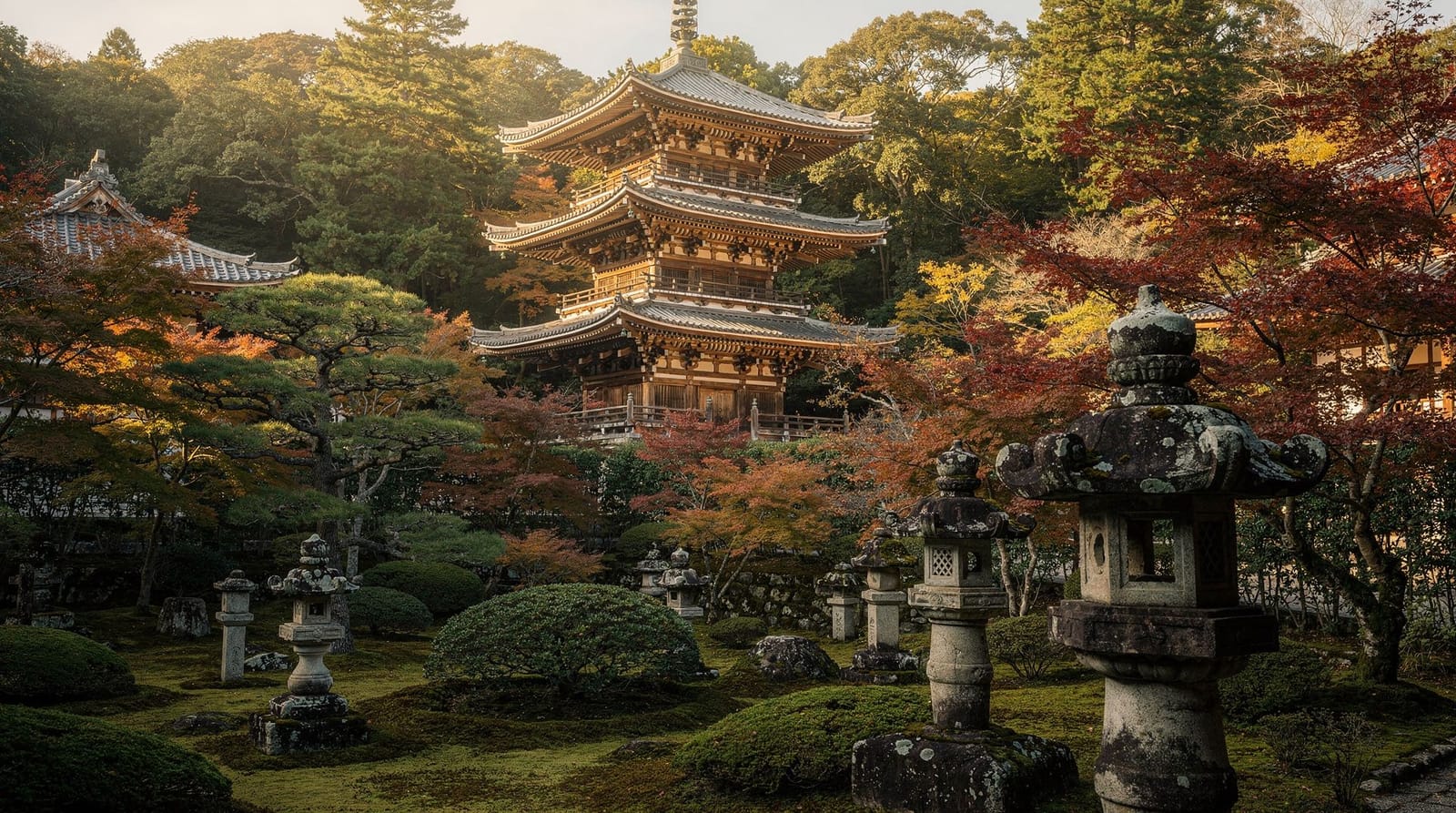
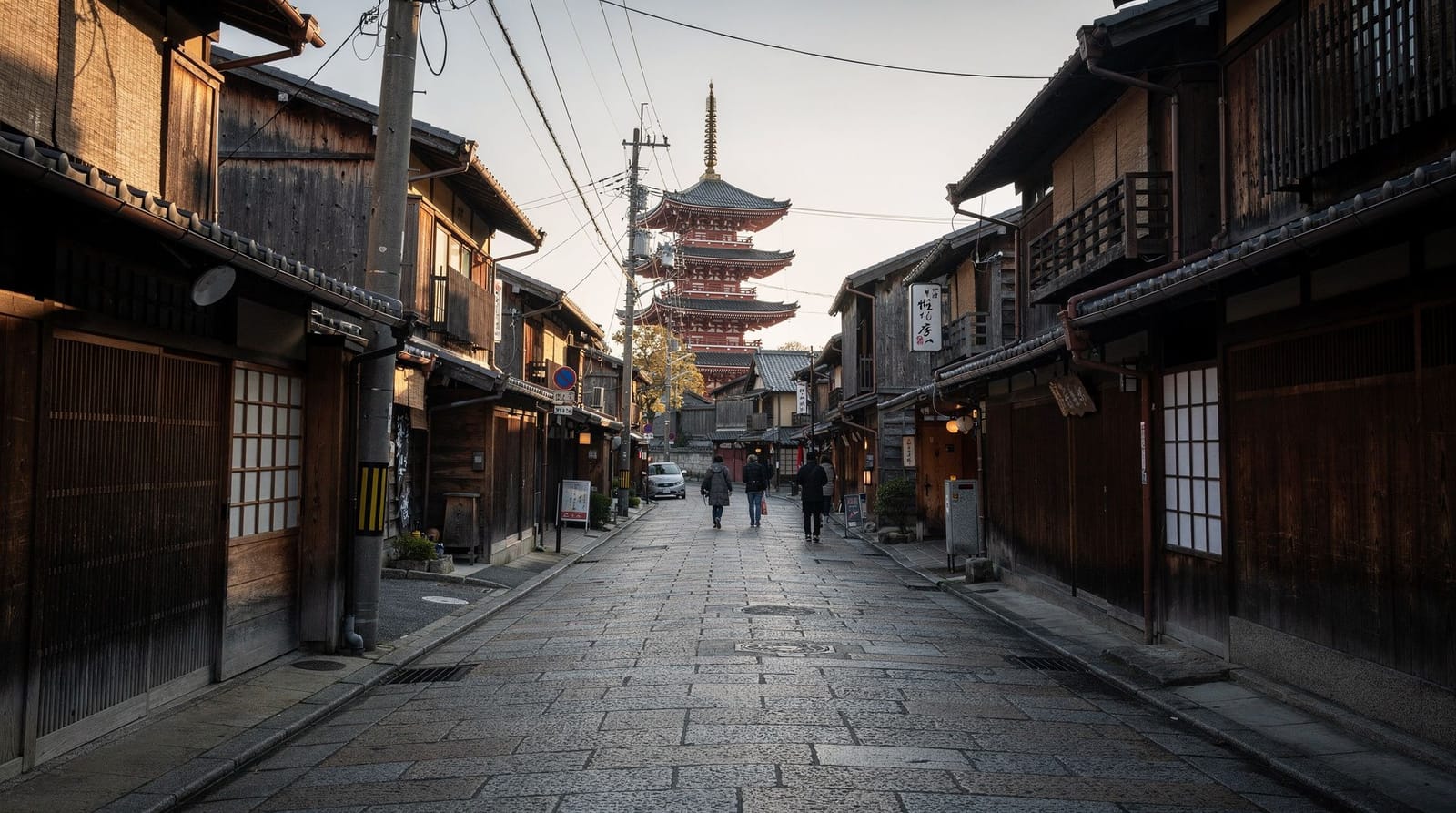
On the hillside just above Itsukushima Shrine sits a pairing most day-trippers walk past without noticing: Senjokaku (the “Pavilion of a Thousand Mats”) and a five-story pagoda dating to 1407. Senjokaku is a large, open wooden hall commissioned in 1587 by the warlord Toyotomi Hideyoshi as a Buddhist scripture hall, left unfinished at his death and never fully completed since — you can still see bare, unpainted wood in places where decoration was planned but never applied. It’s genuinely enormous inside, cooled by open sea breezes through its unwalled sides, and almost always far quieter than the shrine itself just below it.
Admission is a modest ¥100 (~$0.70), and it’s included on the same ticket as the adjacent pagoda grounds. The five-story pagoda beside it, built in a blend of Japanese and Chinese architectural styles, is one of the more photogenic structures on the island precisely because so few visitors make the short uphill walk to see it up close. If you have even fifteen spare minutes after the main shrine circuit, it’s worth the detour before heading toward Omotesando or the ropeway.
Mount Misen: the island’s sacred mountain
Beyond the shrine, Miyajima’s other major draw is Mount Misen, the island’s highest peak at 535 meters and considered sacred within Shingon Buddhism since the monk Kobo Daishi meditated here in the 9th century. Most visitors reach the upper station via the Miyajima Ropeway, a two-stage cable car system that costs around ¥2,000 (~$13.30) round trip and takes about 15 minutes total including the transfer between the two cable segments. From the ropeway’s upper station, it’s still a further 20-30 minute uphill walk to the actual summit — the ropeway gets you most of the way, not all the way, which surprises some visitors expecting a direct ride to the top.
For hikers who’d rather skip the ropeway entirely, several marked trails climb from near the shrine to the summit, taking roughly 2 hours one way at a moderate pace through forest that includes some genuinely old-growth sections, since Mount Misen’s primeval forest has never been logged. Either way you go up, the summit rewards you with a sweeping view over the Seto Inland Sea and its scattered islands — on a clear day, one of the better panoramic views in the Hiroshima-Kyoto travel corridor.
Budget at least half a day for Mount Misen on top of shrine time if you want to include it, which pushes a Miyajima visit toward a full day rather than a rushed few hours. This Miyajima excursion with ropeway from Hiroshima bundles the transit and ropeway ticket together if you’d rather not manage the logistics separately.
Daisho-in Temple: worth the extra time
A short walk beyond Itsukushima Shrine, at the base of Mount Misen, Daisho-in is a Shingon Buddhist temple with a history tied to the same monk, Kobo Daishi, associated with the mountain’s sacred status. Most day-trippers skip it entirely because it sits slightly off the main Omotesando-to-shrine route, which is exactly why it’s usually far quieter than anything closer to the ferry terminal.
The grounds include hundreds of small stone statues with individually distinct expressions lining the entrance stairway, a hall with a hand-spun mani prayer wheel corridor (spinning each wheel is said to equal reading the sutra inside), and a cave with 88 icons representing the pilgrimage temples of Shikoku, letting visitors complete a symbolic miniature version of that much longer pilgrimage in a few minutes. Admission is free, and the temple stays open later into the evening than the shrine, making it a reasonable stop even if you’re running short on daylight for everything else.
The Miyajima deer: not the same as Nara’s
Miyajima has its own population of wild sika deer wandering freely around the ferry terminal, the shrine approach, and the shopping street — visually similar to the famous deer of Nara, but the resemblance mostly ends there. Miyajima’s deer have not been trained to bow for crackers the way Nara’s have, and while they’re generally accustomed to people, they can be considerably more opportunistic about food — nosing into open bags, grabbing paper wrappers, or following anyone eating something on the street.
Unlike Nara, there’s no official feeding program or designated deer crackers sold specifically for feeding them, and island signage actively discourages feeding, partly because deer that associate humans with food have caused problems on the island in the past. Keep food out of reach, don’t offer them anything, and treat them as wild animals that happen to be relaxed around people rather than tame pets — a small mental adjustment that makes for a better encounter on both sides.
Momiji manju: buy it right, not at the first stall you see
Momiji manju — small maple-leaf-shaped cakes, traditionally filled with sweet red bean paste, though modern versions come with custard, chocolate, matcha, and cheese fillings — are Miyajima’s signature souvenir food and genuinely worth trying. The catch is where you buy them. The stalls immediately at the ferry terminal and the first stretch of the approach street cater to the fastest possible tourist turnover, and prices there run noticeably higher for a lower-quality product than what you’ll find a few minutes further in.
Walk a bit further onto Omotesando, the main shopping street running from the ferry terminal toward the shrine, and you’ll find long-established shops — several with decades of history making momiji manju fresh in molds you can watch in action — selling the same treat for less, often with better flavor and texture since they’re baked to order rather than mass-produced for the terminal crowd.
A single momiji manju typically runs ¥150-250 (~$1-1.70) depending on the shop and filling; buying a small assorted box to share is a common and reasonable way to sample several fillings at once. It’s a small thing, but it’s the kind of detail — walk five extra minutes, pay less, eat better — that separates a rushed tourist stop from an actually good visit.
Staying overnight on the island itself
Most visitors treat Miyajima as a day trip, but a small number of ryokan and hotels operate directly on the island, and staying even one night changes the experience meaningfully. Day-trippers clear out by early evening as the last ferries fill up, leaving the shrine grounds, Omotesando, and the waterfront genuinely quiet after dark — a version of Miyajima almost no day visitor sees.
An overnight stay also means catching the torii gate lit at night (illuminated after sunset until around 11pm) without racing the clock, and being on the island early enough the next morning to see the shrine before the first wave of day-trippers arrives around 9-10am. It’s a more expensive and less time-efficient choice than a Kyoto-based day trip, but for travelers who’ve already decided Miyajima deserves more than a rushed few hours, it’s worth pricing against the alternative of a long same-day round trip.
Planning your Miyajima visit: half day or full day
A tight half day, roughly 3 to 4 hours on the island, covers Itsukushima Shrine, the torii gate at whichever tide you catch, a walk down Omotesando for momiji manju, and maybe a quick deer encounter — doable if you’re combining Miyajima with a Hiroshima morning in a single long day trip from Kyoto. A full day adds Mount Misen, whether by ropeway or on foot, and lets you catch both tide states if timing allows, which is the ideal but not always realistic on a single day trip.
If you’d rather have the whole thing structured for you — transit, timing, and a guide who knows the tide schedule without you having to check it yourself — this Hiroshima, Itsukushima Shrine, and Miyajima summit tour covers the shrine and Mount Misen together in about 5.5 hours, at a pace set for your group rather than a fixed schedule you have to keep up with.
Because the trip out here is long, most travelers get the best value by pairing Miyajima with a full Hiroshima visit rather than trying to isolate it. See our Hiroshima destination page for Peace Memorial Park and city details, and the Hiroshima and Miyajima day trip guide for a combined single-day or overnight schedule.
For where a trip like this fits into a broader Kyoto stay, our best day trips from Kyoto guide and how many days do you need in Kyoto guide both help with the bigger-picture planning, and a Japan Rail Pass is worth pricing out if Miyajima is one of several longer rail trips on your itinerary, since it covers both the Hikari shinkansen leg and the JR ferry crossing. If a shorter, closer alternative appeals more on days you don’t want a 2.5-hour transit leg each way, the Kansai Thru Pass guide covers regional options closer to Kyoto itself.
Frequently asked questions about visiting Miyajima from Kyoto
Can I visit Miyajima directly from Kyoto without stopping in Hiroshima?
Not really — the route physically passes through Hiroshima Station on the way, since you take the shinkansen to Hiroshima, then a local train to Miyajimaguchi, then the ferry. Most visitors treat Hiroshima and Miyajima as a combined trip rather than trying to isolate one from the other.
How long does it take to get from Kyoto to Miyajima?
Roughly 2.5 to 3 hours door to door one way: about 1.5-2 hours by shinkansen to Hiroshima, 25-30 minutes by local JR train to Miyajimaguchi, and about 10 minutes by ferry to the island.
Should I visit at high tide or low tide?
Both are worth seeing, but they’re genuinely different experiences. High tide gives you the classic “floating” torii gate image; low tide lets you walk out across the sand to the gate’s base. Check a Miyajima tide table online before you go and plan around whichever effect you’d rather see, or aim to catch both if your schedule allows a longer visit.
Is the ferry to Miyajima included with the Japan Rail Pass?
Yes. The JR West Miyajima Ferry, one of two ferry operators running the roughly 10-minute crossing from Miyajimaguchi, is free with a valid Japan Rail Pass. The independent Matsudai Kisen ferry charges a small fare if you’re not using a pass.
Are the Miyajima deer safe to be around?
Generally yes, but they’re more feral and food-opportunistic than the deer in Nara, and there’s no official feeding program on Miyajima. Keep food out of reach and don’t try to feed them — treat them as wild animals accustomed to people rather than tame ones.
Do I need the ropeway to reach the top of Mount Misen?
The ropeway gets you to the upper station, but there’s still a 20-30 minute uphill walk from there to the actual summit. Hikers who skip the ropeway entirely can reach the summit on marked trails in about 2 hours from near the shrine.
Where should I buy momiji manju?
Walk a few minutes past the ferry terminal onto Omotesando, the main shopping street. Stalls right at the terminal charge more for a lower-quality product; shops further along the street, several with decades of history, sell fresher versions for less.
Is Miyajima worth it if I only have one day for Hiroshima and Miyajima combined?
Yes, but be realistic about pacing — a combined day trip from Kyoto covering both is long, often 12 or more hours round trip. If your schedule allows it, an overnight in Hiroshima makes the whole trip noticeably more comfortable and lets you see Miyajima without rushing.
Is there anything on Miyajima besides the shrine and Mount Misen?
Yes — Senjokaku, a huge 16th-century scripture hall on the hillside just above the shrine, and the adjacent five-story pagoda are both a short uphill walk away and considerably quieter than the main shrine circuit. Daisho-in Temple, a Shingon Buddhist temple a bit further along the base of Mount Misen, is another worthwhile stop with its own distinct halls and grounds if you have extra time.
Is Daisho-in Temple worth visiting alongside the shrine?
Yes, particularly if you want a quieter stop. It’s free to enter, includes hundreds of individually carved stone statues and a hand-spun prayer wheel corridor, and sits at the base of Mount Misen a short walk beyond the main shrine circuit, so most day-trippers skip it entirely.
Can I see Miyajima without visiting Hiroshima’s Peace Memorial Park?
Yes, they’re separate stops and you can choose to skip one, but most visitors on a long single day from Kyoto do both since the route to Miyajima passes directly through Hiroshima Station. See the Hiroshima destination page for how the park fits alongside a Miyajima half day.
Top experiences
Bookable activities with verified prices and instant confirmation on GetYourGuide.