Tofuku-ji — autumn maples and Shigemori's modern gardens
Kyoto: Tofuku-ji Temple and Komyo-in Guided Walking Tour
Is Tofuku-ji worth visiting outside of autumn foliage season?
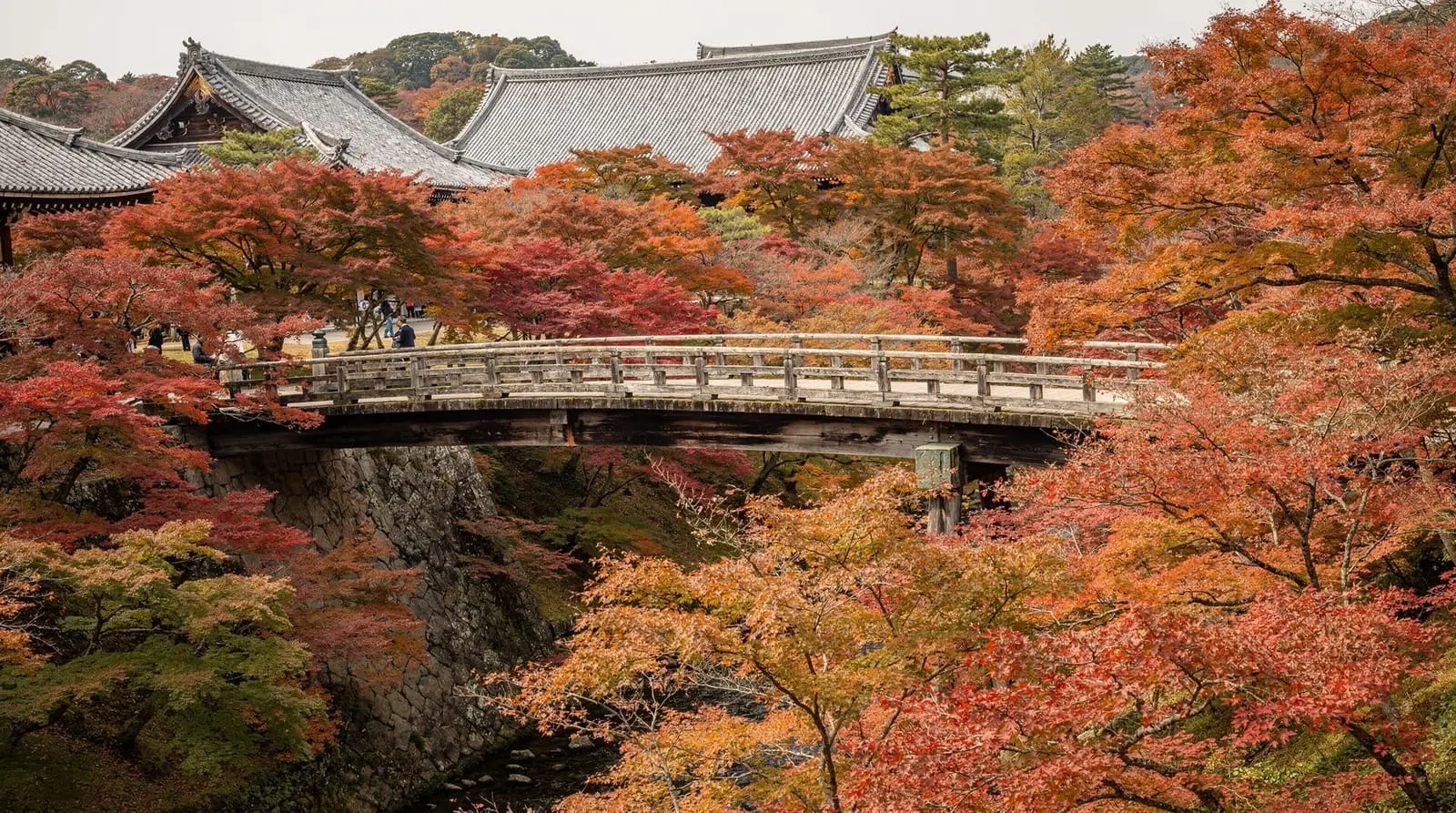
Yes. The Hojo garden — four Zen-inspired compositions designed by Shigemori Mirei in 1939, including a famous checkerboard moss-and-stone pattern — is a significant modern landscape design year-round and rarely crowded outside November. The Tsutenkyo bridge over the maple valley (¥600, opened separately) is the specific draw for autumn foliage and gets genuinely packed for about three weeks in mid-to-late November.
Tofuku-ji has a reputation problem in reverse: everyone who’s been knows it as one of Kyoto’s best autumn foliage spots, and almost nobody thinks of it the other eleven months of the year. That’s a mistake. The temple’s Hojo garden is one of the more important pieces of 20th-century Japanese landscape design in the city, and the grounds — a large working Zen monastery rather than a single postcard building — reward a visit regardless of season, even if late November is genuinely when the place looks its best.
| Where | Fushimi ward, one stop from Fushimi Inari |
| Cost | Around ¥500 Hojo garden; ¥600-1,000 valley/Tsutenkyo |
| Time needed | Around 60-90 minutes for the full grounds |
| Getting there | Own train station (JR Nara Line / Keihan Main Line) |
| Best time | Weekday 8-8:30am opening; avoid mid-morning in November |
The valley of maples and the bridge that crosses it
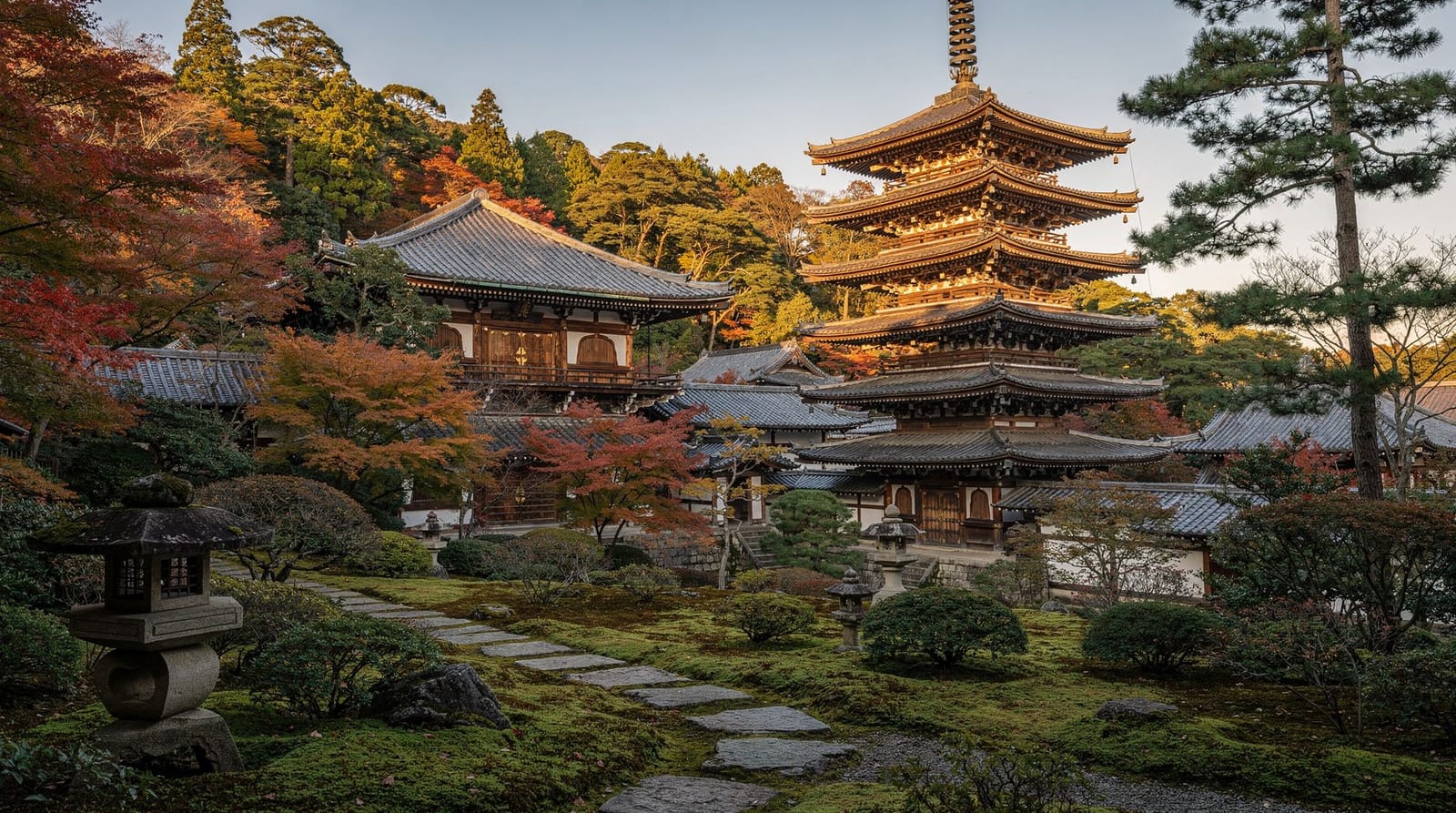
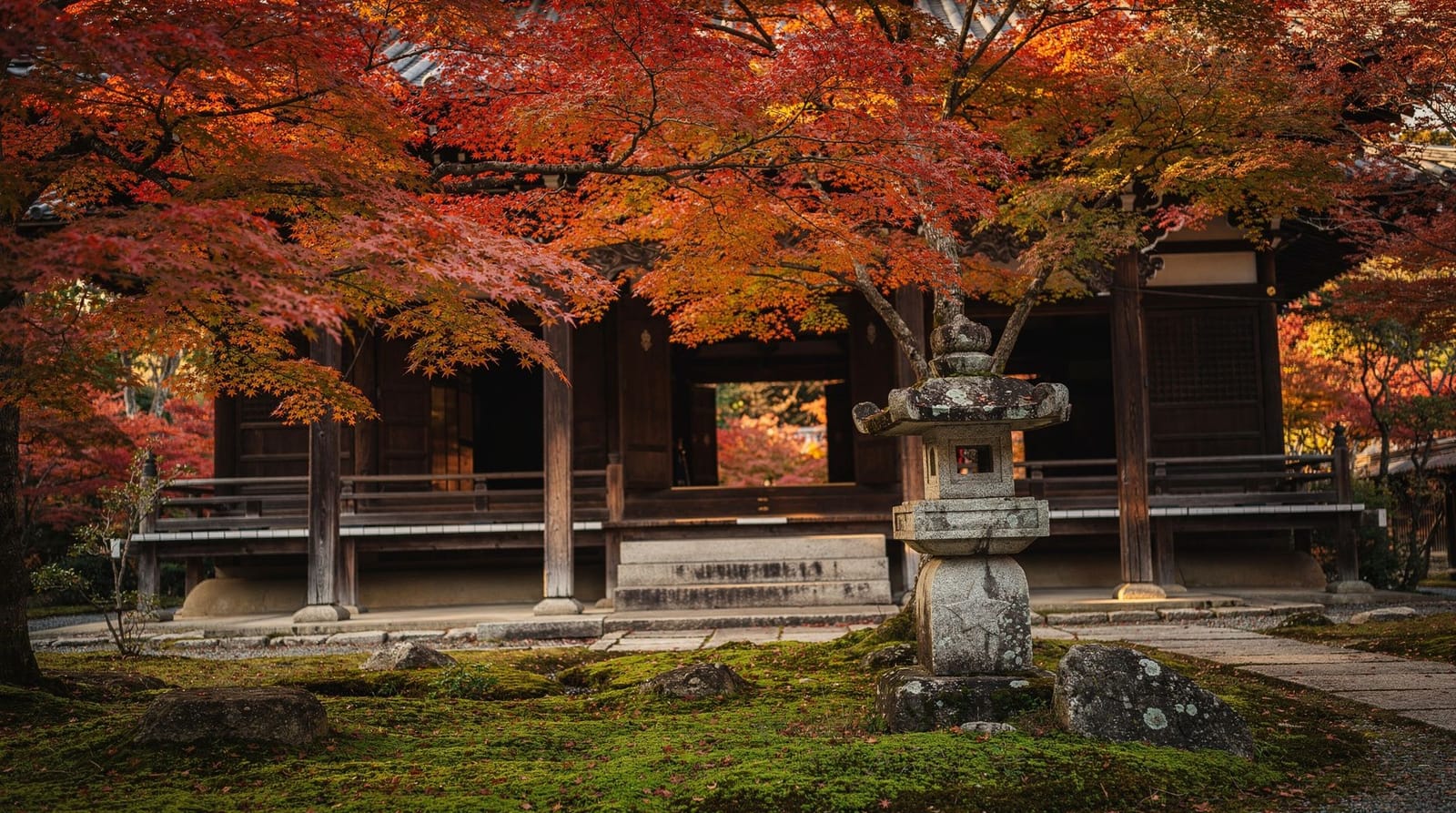
Tofuku-ji was founded in 1236 by the powerful Kujo clan and completed around 1255, with a name deliberately combining characters from Nara’s Todai-ji and Kofuku-ji temples to signal ambition on a similar scale. The temple sits above a wooded valley, the Sengyokukan, planted with roughly 2,000 maple trees, most reportedly descended from saplings brought from China centuries ago. Three covered wooden bridges cross the valley; the most famous, Tsutenkyo (“bridge to heaven”), gives an elevated view directly over the canopy, and it’s this specific vantage — a sea of red and orange seen from above rather than at eye level — that makes Tofuku-ji distinct from ground-level foliage spots elsewhere in the city.
Peak color typically falls in the last week of November into the first few days of December, though the exact timing shifts year to year with autumn temperatures — checking a current-year foliage forecast before planning a trip around it is worth the five minutes it takes. During that window, Tsutenkyo and the valley draw some of the densest crowds anywhere in Kyoto: queues to cross the bridge, one-way pedestrian flow enforced by staff, and a real risk of the whole experience feeling more like crowd management than a temple visit if you arrive mid-morning on a weekend.
Weekday mornings, ideally at the 8:30am opening (extended to as early as 8am during peak color), are the only realistic way to see it without a crowd. Entry to the valley and Tsutenkyo during the autumn season runs ¥1,000, roughly double the off-season Hojo garden admission, reflecting both demand and the temple’s crowd-management costs during the six-week peak window.
The Hojo garden: Shigemori Mirei’s checkerboard
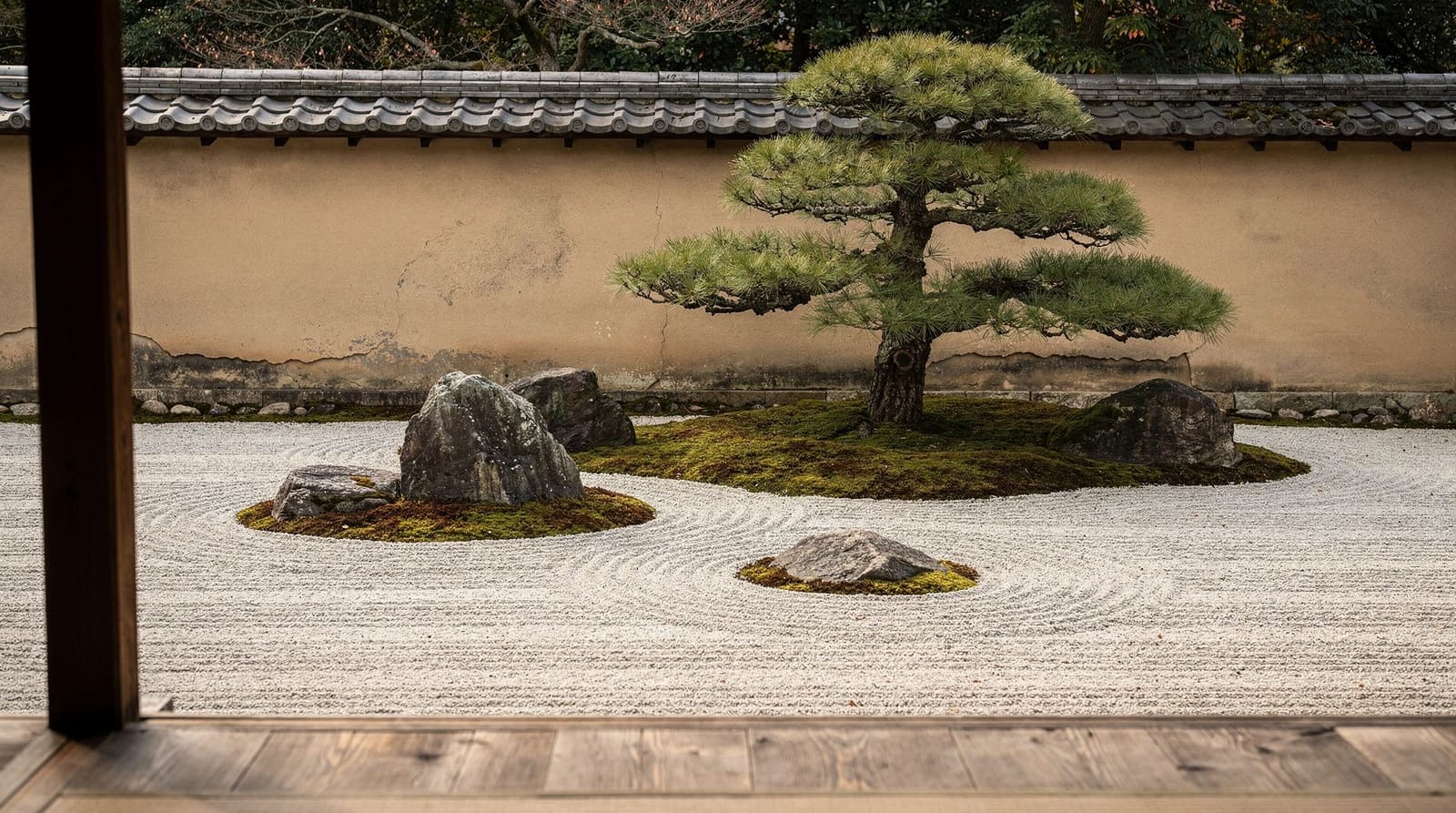
The abbot’s-quarters garden, redesigned in 1939 by the landscape architect and garden historian Shigemori Mirei, is the reason Tofuku-ji matters to anyone interested in Japanese garden design beyond the classical canon. Shigemori built four distinct gardens around the Hojo hall, one per compass direction, collectively themed around Buddhist cosmology (the design is often described using the Hasso, or “eight views,” concept). The south garden uses large upright stones set in raked gravel to represent the mythical islands of Buddhist cosmology, paired with a mounded “sacred mountain” composition of moss.
The west garden uses clipped azalea hedges in a checkerboard grid — the ichimatsu pattern — a design so geometrically modern it’s frequently mistaken by first-time visitors for a much later work. The north garden repeats the checkerboard idea in stone and moss at a smaller scale, using leftover foundation stones from the temple’s old buildings, and is the single most photographed corner of the garden. What makes the whole composition significant is timing: 1939 predates most of what’s now considered “modern” Japanese garden design, and Shigemori’s willingness to use abstract, grid-based patterns inside a centuries-old Zen temple was genuinely unconventional for its era.
Guided walking tour of Tofuku-ji and Komyo-inHojo garden admission is ¥500 separate from the valley/Tsutenkyo ticket outside peak autumn season (a combined ticket is sometimes offered during the November peak — check current signage at the entrance). Unlike Tsutenkyo, the Hojo garden rarely feels crowded even in November, since most visitors move straight through to the bridge without lingering here.
The other two bridges: Gaunkyo and Engetsukyo
Tsutenkyo gets all the attention, but two other covered bridges cross the same valley and are considerably less crowded. Gaunkyo, upstream from Tsutenkyo, is viewable but not walkable by general visitors and offers a quieter angle on the valley from a distance for anyone photographing rather than crossing.
Engetsukyo, the oldest of the three bridges, sits near the Kaisando hall in a section of the grounds that most tour-group visitors skip entirely, since it requires a short additional walk beyond the main Hojo garden and Tsutenkyo loop. Neither is a must-see on a first visit, but both are useful fallback options during the peak autumn weeks when Tsutenkyo itself is at capacity — the view from Gaunkyo’s vicinity, looking back toward Tsutenkyo with the crowd on it, is itself a fairly good photograph.
Shigemori Mirei: who he was and why the garden matters
Shigemori Mirei (1896–1975) trained originally in Japanese painting and ikebana (flower arranging) before turning to garden design and, significantly, to the systematic documentation of historic Japanese gardens — he spent years surveying and recording pre-existing gardens across Japan before designing his own, which gives his work an unusual grounding in classical precedent even as it breaks from it visually.
Tofuku-ji’s Hojo garden, completed in 1939, was his first major independent commission and the one that established his reputation; he went on to design gardens at dozens of other temples over the following three decades, but the Tofuku-ji garden remains the one most frequently cited in garden-history literature as the moment Japanese garden design visibly entered the 20th century. The checkerboard patterns in particular — a motif he returned to at other sites but originated here — are now referenced so often in later Japanese landscape and even graphic design that it’s worth knowing the source when you see the real thing.
Sanmon gate and Komyo-in
Tofuku-ji’s Sanmon gate, dating to 1425, is the oldest surviving Zen sanmon gate in Japan and a National Treasure, though it’s not open for climbing to the general public (occasional special openings occur; check current-year schedules).
A short walk from the main complex, the sub-temple Komyo-in holds a second Shigemori-designed garden, the Hashin-tei (“garden of the wave heart”), a rock garden using a raked-gravel wave motif that’s considerably quieter than the main Hojo garden even during peak foliage — a reasonable stop for anyone specifically drawn to Shigemori’s work who wants to see a second example without the crowds. Admission to Komyo-in is separate, typically ¥300, and it’s included on some guided walking-tour itineraries that combine it with the main Tofuku-ji grounds.
Spring greenery: the quieter alternative to autumn
Tofuku-ji’s valley isn’t only about red and orange leaves. In late April and May, the same 2,000 maple trees fill in with fresh green foliage (shinryoku), and the view from Tsutenkyo over a canopy of vivid green rather than autumn color is a genuinely different, and far less crowded, version of the same experience.
Serious garden photographers increasingly treat the spring green season as a deliberate alternative to the November crush — the light quality is different (softer, less orange-toned) and the crowds are a fraction of autumn’s, since most visitors still associate Tofuku-ji exclusively with momiji season. If autumn dates don’t work for a trip, or if avoiding the worst of the November crowds is a priority, spring greenery is a legitimate substitute rather than a consolation option.
Tofuku-ji as a working monastery
Unlike some of Kyoto’s more museum-like major temples, Tofuku-ji functions as an active training monastery for Rinzai Zen monks, and several of the sub-temples scattered around the main complex are closed to the public entirely, used exclusively for monastic training and practice. This is part of why the grounds feel larger and quieter in the sections away from the Hojo garden and Tsutenkyo — much of the complex simply isn’t part of the visitor route.
Occasional signage or roped-off areas reflect this; it’s not an oversight in wayfinding, but a working religious institution operating alongside its role as a visitor attraction, worth keeping in mind if the atmosphere feels more subdued or the paths less obviously marked than at more thoroughly tourist-oriented temples.
Kaisando Hall and the founder’s garden
Past the main Hojo garden and Tsutenkyo, the Kaisando (Founder’s Hall) sits in a quieter section of the grounds, dedicated to the temple’s founding priest, Enni Ben’en, who studied in China before establishing Tofuku-ji in the 13th century and is credited, among other things, with introducing certain noodle- and tea-related culinary techniques to Japan on his return.
The small garden in front of the Kaisando, sometimes called the founder’s garden, predates Shigemori’s 1939 Hojo composition by centuries and offers a useful point of comparison — a more traditional, less abstract approach to the same karesansui rock-and-gravel format that Shigemori later reinterpreted so distinctively a short walk away. Visitors specifically interested in tracing the evolution of Japanese garden design across eras, rather than just seeing the famous checkerboard, benefit from viewing both gardens on the same visit.
Practical visit tips
Tofuku-ji’s grounds are large enough that a map (available at the entrance, with English labeling) is worth picking up rather than navigating from memory — the complex spreads across a wooded valley with multiple sub-temples branching off the main path, and it’s easy to walk past the Komyo-in turnoff without realizing it. Coin lockers and restrooms are available near the main entrance.
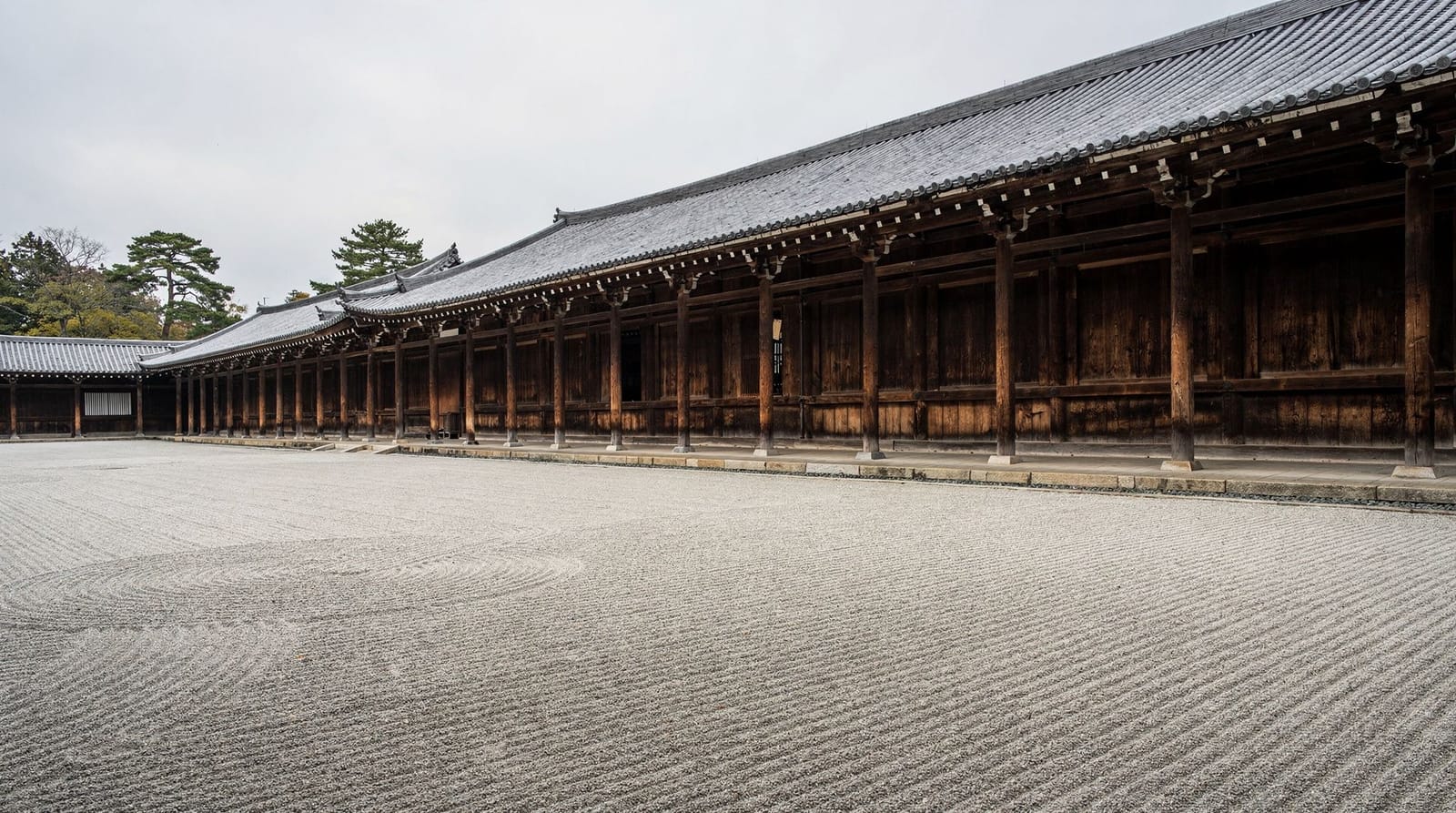
During the November foliage peak, expect one-way pedestrian flow enforced on the Tsutenkyo bridge itself, and be prepared for a genuine wait — 20–40 minutes is not unusual on a clear weekend in late November — to cross the busiest section. Comfortable shoes matter more here than at flatter temples, since the valley paths involve real elevation change, unlike the level corridors at Sanjusangendo or the small enclosed gardens at Ryoan-ji.
Getting there — and why it pairs naturally with Fushimi Inari
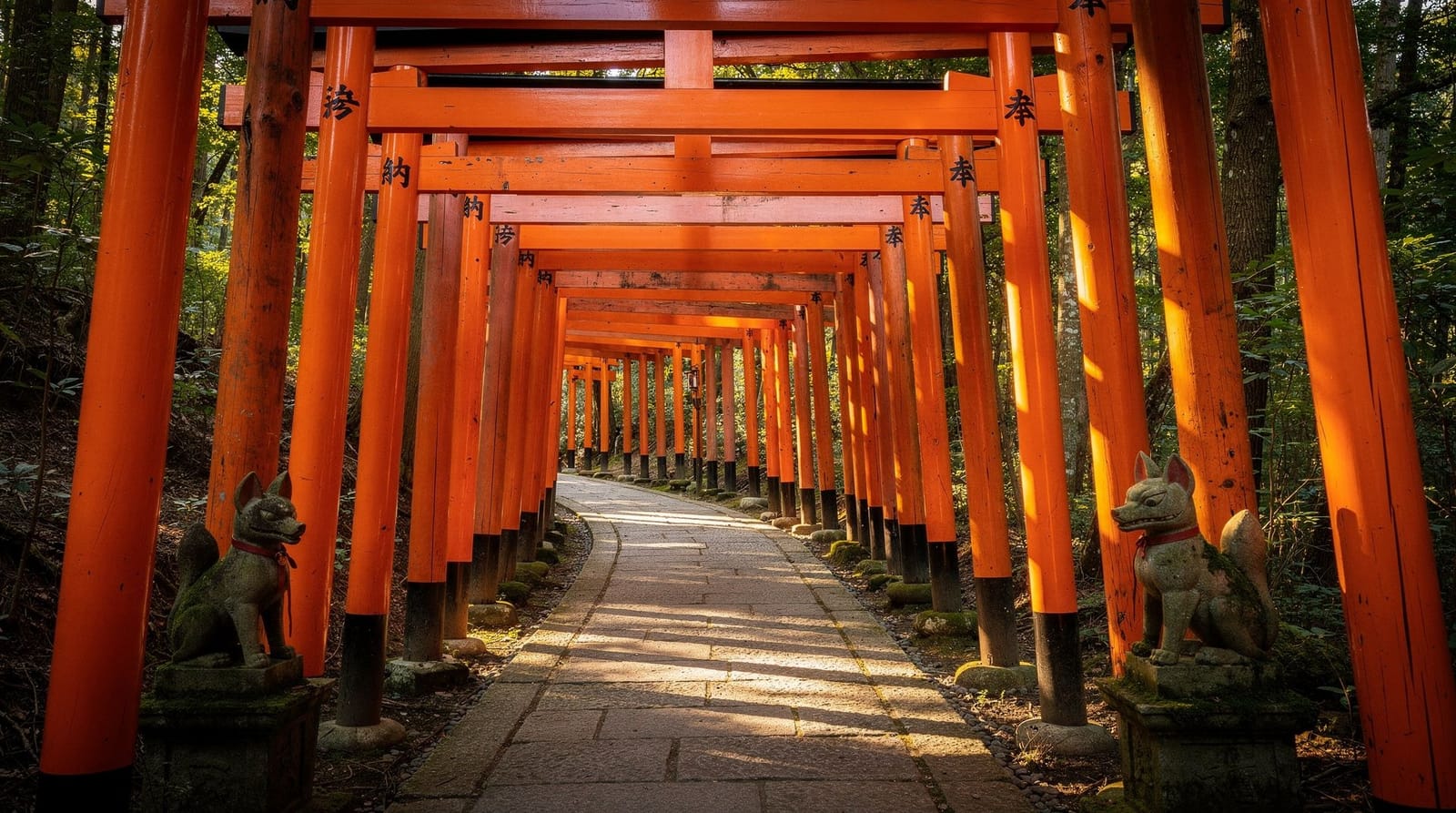
Tofuku-ji has its own train station, served by both the JR Nara Line and the Keihan Main Line, about two minutes’ walk from the temple’s main entrance. This is one of the more useful logistics facts in the whole southern Kyoto/Fushimi corridor: Tofuku-ji Station sits one stop from Inari Station (JR Nara Line) or a short ride from Fushimi Inari Station (Keihan Main Line), meaning Tofuku-ji and Fushimi Inari Taisha can be combined into a single half-day without backtracking through Kyoto Station.
Doing Tofuku-ji first thing in the morning, before the valley fills up, then continuing to Fushimi Inari by mid-morning is a reasonably efficient sequence — Fushimi Inari’s own crowds build through the day too, so neither stop benefits from arriving late.
Fushimi Inari Taisha guided walking tourFor the fuller Fushimi Inari picture beyond the pairing itself, see the Fushimi Inari guide and, for crowd timing specifically, how to avoid crowds at Fushimi Inari. If your interest is Kyoto’s other statue-filled halls rather than gardens, Sanjusangendo sits a short distance north and pairs into the same southern Higashiyama/Fushimi corridor.
From central Kyoto Station, the JR Nara Line reaches Tofuku-ji Station in about 3 minutes; from Gion or Higashiyama, the Keihan Main Line from Gion-Shijo takes roughly 10 minutes.
How Tofuku-ji compares to Kyoto’s other autumn foliage spots
Kyoto has several sites competing for the title of best autumn foliage, and it’s worth being specific about what separates them. Eikando, near the southern end of the Philosopher’s Path, offers a denser, more intimate ground-level foliage display with evening illuminations, while Tofuku-ji’s advantage is the elevated view from Tsutenkyo across an entire valley rather than a single garden. Arashiyama’s foliage, concentrated around the Togetsukyo bridge and the hillsides visible from Tenryu-ji, is more spread out across a whole district and correspondingly harder to photograph as one composition.
Kiyomizu-dera offers foliage viewed against its wooden stage and pagoda, combining architecture and color in a way none of the others quite replicate. For a visitor able to choose only one dedicated momiji stop, Tofuku-ji’s elevated valley view and Eikando’s concentrated, illuminated garden are generally considered the two strongest single-site options, with the choice mostly coming down to whether an elevated wide view (Tofuku-ji) or an intimate, lantern-lit garden (Eikando) is the priority.
Frequently asked questions about Tofuku-ji
When is the best time to see Tofuku-ji’s autumn foliage?
Peak color typically falls in the last week of November through the first few days of December, though it shifts year to year — check a current-year foliage forecast. Arrive at opening (8–8:30am) on a weekday to avoid the worst of the Tsutenkyo bridge queues.
How much does it cost to visit Tofuku-ji?
The Hojo garden is ¥500 outside peak season; the valley and Tsutenkyo bridge cost ¥600 in the off-season and rise to around ¥1,000 during the November foliage peak, sometimes as a combined ticket. Komyo-in sub-temple is a separate ¥300.
Is Tofuku-ji worth visiting if I can’t come in autumn?
Yes. The Shigemori Mirei-designed Hojo garden — four distinct compositions including the checkerboard moss-and-stone pattern — is a significant piece of 20th-century garden design year-round, and it’s considerably less crowded outside November.
Can Tofuku-ji be combined with Fushimi Inari in one trip?
Yes — Tofuku-ji Station sits one stop from Inari Station on the JR Nara Line, making it straightforward to visit Tofuku-ji in the morning and continue to Fushimi Inari Taisha by mid-morning without returning to Kyoto Station.
Does Tofuku-ji get crowded outside the autumn foliage season?
Rarely. Outside the roughly three-week November peak, Tofuku-ji is one of the calmer major temples in Kyoto, including the Hojo garden, which draws far fewer visitors than comparable gardens at Ryoan-ji or Kinkaku-ji even during high season for those sites.
How crowded does Tofuku-ji get during peak foliage?
Very crowded on the Tsutenkyo bridge and in the valley — one-way pedestrian flow is enforced by staff during the roughly three-week peak, and weekend mid-mornings can involve real queuing. The Hojo garden, by contrast, stays comparatively quiet even at the same time.
What’s the difference between the Hojo garden and the Tsutenkyo bridge experience?
The Hojo garden is a set of static rock-and-moss compositions viewed while seated on the veranda, designed by Shigemori Mirei in 1939. Tsutenkyo is a covered bridge that crosses the maple-filled valley, offering an elevated view over the canopy rather than a garden to sit and contemplate.
Does Tofuku-ji offer any English-language guided tours?
Guided walking tours covering Tofuku-ji and the nearby Komyo-in sub-temple are available and can be a good option for visitors who want the Shigemori garden’s design explained in context rather than reading it from a printed leaflet, particularly during the crowded November peak when a scheduled group entry can be more predictable than a solo walk-up visit.
Is there an English-language map or guide available on-site?
Yes — an English-language map is available at the entrance ticket counter, and it’s worth picking up given how spread out the grounds are; without it, it’s easy to miss the Komyo-in turnoff or the Kaisando garden entirely and see only the Hojo garden and Tsutenkyo before leaving.
Is Tofuku-ji suitable for a rainy-day visit?
Partially. The Hojo garden is viewed from a covered veranda, making it a reasonable rainy-day stop, but crossing Tsutenkyo and walking the valley paths is less pleasant in heavy rain, and the covered bridge itself can get slippery. Wet-weather visits are more workable outside the crowded November peak, when a quieter, damp valley has its own appeal without the queues.
Is Tofuku-ji’s Sanmon gate open to climb?
Not for general admission — it’s the oldest surviving Zen sanmon gate in Japan and a National Treasure, occasionally opened for special exhibitions. Check current-year schedules if a gate climb is a specific priority.
Top experiences
Bookable activities with verified prices and instant confirmation on GetYourGuide.