Kyoto's 17 UNESCO World Heritage sites, explained
Kyoto: Kinkaku-ji Guided Tour with Entry Ticket
How many UNESCO World Heritage sites are in Kyoto, and are they all in the city itself?
The “Historic Monuments of Ancient Kyoto” listing, inscribed in 1994, covers 17 individual sites — 13 in Kyoto city, two in neighboring Uji (Byodo-in and Ujigami Shrine), and one on Mount Hiei spanning the Kyoto-Shiga border (Enryaku-ji, accessed from Otsu). They're inscribed as one listing but function as 17 separately ticketed, separately located sites, not a single park or complex.
“Kyoto is a UNESCO World Heritage Site” is a slight oversimplification that trips up a lot of first-time visitors. There’s no single UNESCO zone covering the city the way there is, say, for a historic town center elsewhere in the world. Instead, Kyoto’s 1994 inscription — officially the “Historic Monuments of Ancient Kyoto (Kyoto, Uji and Otsu Cities)” — bundles 17 individual, geographically scattered sites under one listing, some of them well outside Kyoto’s city limits. Knowing which 17 they actually are, and where, changes how you plan around them.
| Total sites | 17, inscribed 1994 |
| In Kyoto city | 13 |
| In Uji | 2 (Byodo-in, Ujigami Shrine) |
| On Mount Hiei | 1 (Enryaku-ji, via Otsu) |
| Combined ticket | None — each site charges separately, typically ¥400-600 |
Why 17 separate sites, and why some aren’t in Kyoto
UNESCO’s inscription recognizes the sites collectively as representative of the architecture and garden design of the Heian period and its aftermath (794–1868), when Kyoto served as Japan’s imperial capital. Rather than designating a district or a single complex, the listing names 17 individual temples, shrines and one castle, chosen to represent that broader historical and architectural significance.
Two of the 17 — Byodo-in and Ujigami Shrine — are in Uji, a separate city roughly 30 minutes south of central Kyoto by train. One, Enryaku-ji, sits atop Mount Hiei on the Kyoto-Shiga border, most commonly accessed via cable car from the Otsu (Shiga) side of the mountain rather than from Kyoto directly. The remaining 13 are within Kyoto city itself, though spread across several distinct districts rather than clustered together.
The 13 sites in Kyoto city
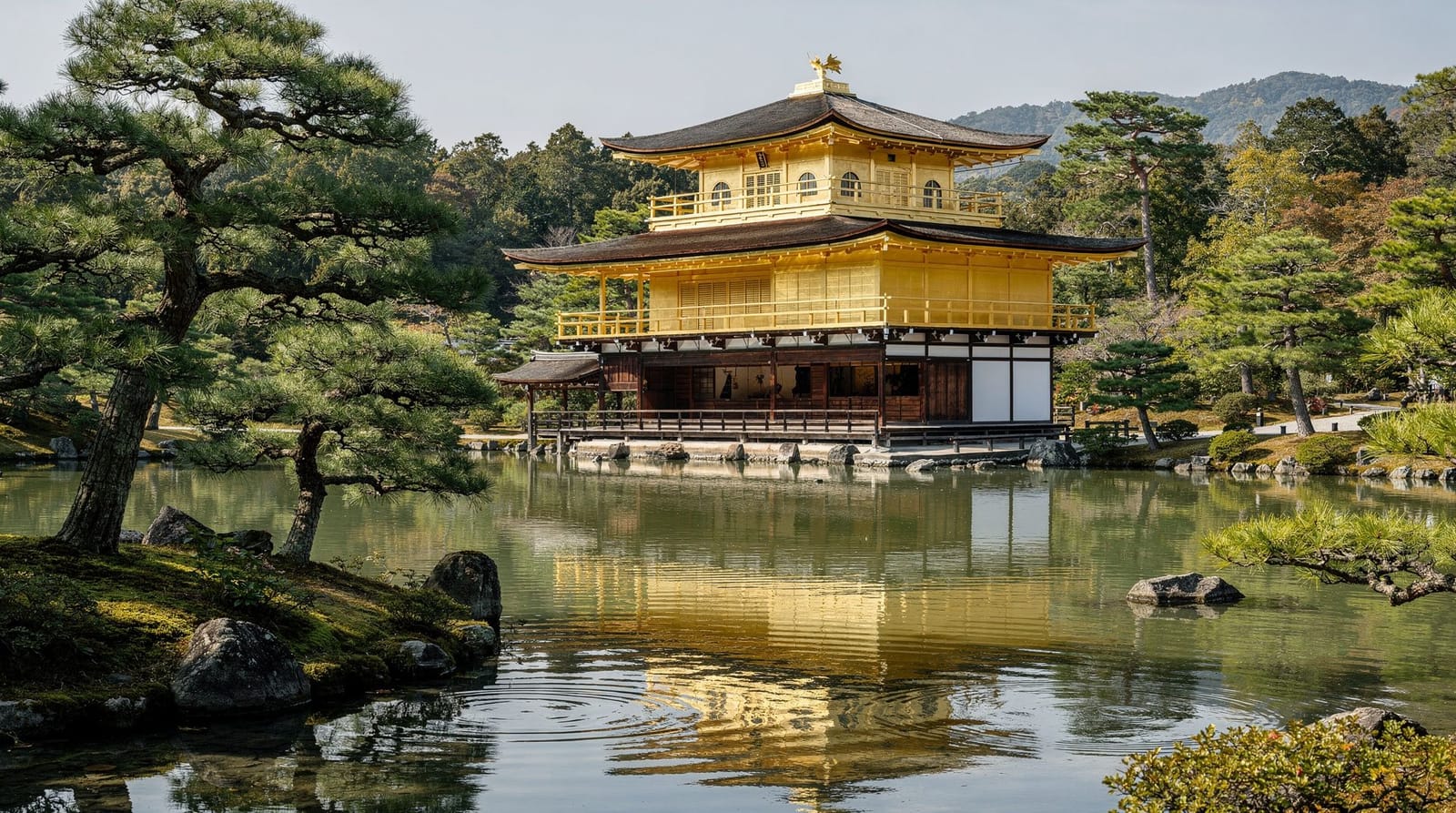
Kinkaku-ji (the Golden Pavilion) — arguably the single most recognizable of the 17, a gold-leaf-covered three-story pavilion reflected in a pond, in northern Kyoto. Read the full Kinkaku-ji guide.
Guided tour of Kinkaku-ji with entry ticketGinkaku-ji (the Silver Pavilion) — despite the name, never actually covered in silver; a more restrained, contemplative counterpart to Kinkaku-ji at the northern end of the Philosopher’s Path, with an unusual raked-sand garden (Ginshadan) shaped into a cone said to represent Mount Fuji.
Ryoan-ji — home to Kyoto’s most famous karesansui rock garden: 15 stones arranged so that at least one is always out of view from any single vantage point on the viewing veranda, widely reproduced and imitated but rarely equaled.
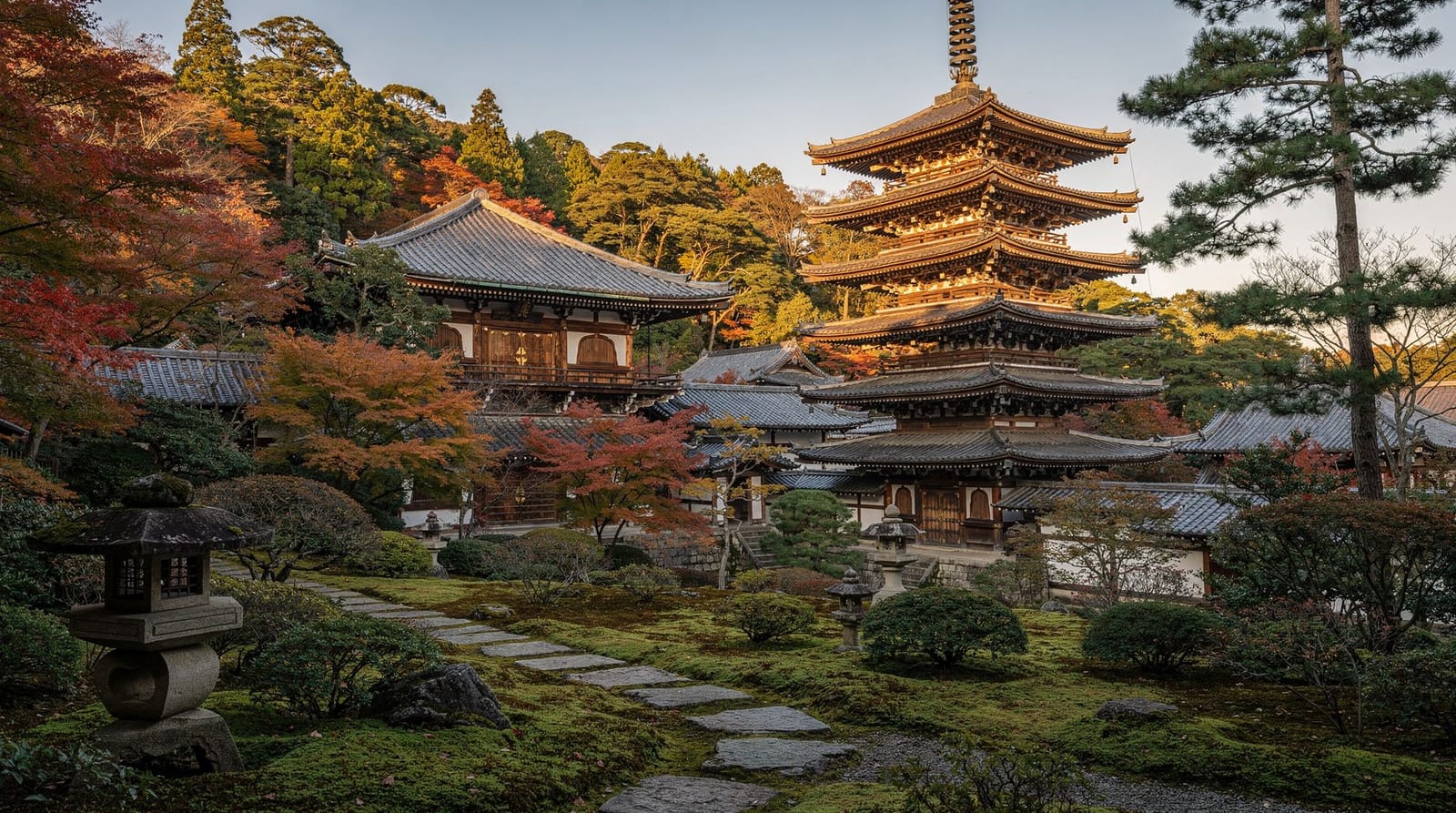
Ninna-ji — an imperial temple founded in 888, notable for its five-story pagoda and a grove of unusually low-growing Omuro cherry trees, among the last to bloom each spring, extending Kyoto’s cherry blossom season by roughly two weeks.
Tenryu-ji — the principal temple of Arashiyama, with a pond garden by the influential medieval designer Muso Soseki that borrows the wooded hillside behind it as part of the composition (a technique called shakkei, or “borrowed scenery”), and direct access to the Arashiyama bamboo grove from its northern gate.
Guided tour of Tenryu-ji Temple in ArashiyamaSaiho-ji (Kokedera, the “Moss Temple”) — famous for a garden covered in over 120 varieties of moss, but unusual among the 17 for requiring advance written or online reservation and a mandatory sutra-copying session before entry, which keeps visitor numbers deliberately low.
Kozan-ji — in the hills of Takao, northwest of central Kyoto, home to the Choju-giga scrolls (satirical animal caricature drawings sometimes called the origin of manga) and a genuinely quiet, forested setting well off the main tourist circuit.
Nijo Castle — the only non-religious site among the 17, a fortified palace built in 1603 as the Kyoto residence of the Tokugawa shogunate, known for its “nightingale floors,” designed to squeak underfoot as a defense against intruders.
Guided tour of Nijo Castle and Ninomaru PalaceNishi Hongan-ji — head temple of the Jodo Shinshu Hongan-ji sect, with some of the largest wooden structures in Kyoto and elaborate Momoyama-period interior decoration; less visited by international tourists than its scale and significance would suggest, since it sits away from the main Higashiyama and Arashiyama circuits.
To-ji — near Kyoto Station, home to Japan’s tallest wooden pagoda at roughly 55 meters, and the site of the Kobo-san flea market held on the 21st of each month, one of the city’s largest antique and craft markets.
Daigo-ji — a large temple complex spread across a mountainside southeast of the city, with a lower precinct (Sanboin, known for a garden commissioned by the warlord Toyotomi Hideyoshi for a famous 1598 cherry-blossom viewing party) and an upper precinct reached by a genuine hiking trail, making it one of the more physically involved sites on the list.
Kamigamo Shrine and Shimogamo Shrine — the two Kamo shrines, among the oldest Shinto shrines in Japan, covered in detail in our guide to Kyoto’s best shrines.
That’s 13 sites within Kyoto city limits (Kinkaku-ji, Ginkaku-ji, Ryoan-ji, Ninna-ji, Tenryu-ji, Saiho-ji, Kozan-ji, Nijo Castle, Nishi Hongan-ji, To-ji, Daigo-ji, Kamigamo Shrine, Shimogamo Shrine).
The two sites in Uji
Byodo-in — a Heian-period temple whose Phoenix Hall is depicted on the ¥10 coin, arguably the single most recognizable piece of Heian-era architecture still standing, set in a pond garden designed to represent the Buddhist Pure Land. Uji is also Japan’s most historically significant matcha-producing region, and a Byodo-in visit pairs naturally with a tea-focused stop nearby.
Uji tea and temple culture tour including Byodo-inUjigami Shrine — a short walk from Byodo-in, this small shrine holds the oldest surviving shrine building in Japan, dating to the late Heian period; unassuming compared to Byodo-in’s scale, but of considerable architectural-historical importance.
Uji is roughly 30 minutes from Kyoto Station by JR Nara Line rapid train or Keihan Uji Line, making both sites a straightforward half-day addition rather than a full day trip.
The one site on Mount Hiei
Enryaku-ji — the head temple of the Tendai school of Japanese Buddhism, founded in 788, spread across a large complex on the summit and slopes of Mount Hiei on the Kyoto-Shiga border. Historically one of the most powerful religious institutions in Japan (and militarily significant enough to be largely destroyed by the warlord Oda Nobunaga in 1571), it’s most commonly reached today by cable car or ropeway from the Otsu side, near Lake Biwa, rather than directly from central Kyoto, which makes it a logical pairing with a Lake Biwa day trip rather than a standalone Kyoto stop.
How the 1994 inscription actually works
UNESCO World Heritage listings can cover a single monument, a district, or — as with Kyoto — a themed group of geographically separate sites bundled under one nomination because they collectively illustrate a broader historical or cultural narrative. The Kyoto nomination’s stated criteria emphasize the sites’ representation of the development of Japanese garden design, wooden religious architecture and imperial court culture across roughly a thousand years, from Enryaku-ji’s 8th-century founding through Nijo Castle’s 17th-century construction.
This is a meaningfully different model from, say, Nara’s UNESCO listing (also called “Historic Monuments of Ancient Nara,” inscribed in 1998), which covers eight sites within a more geographically compact area and includes the Nara deer park’s sacred forest as one component — or Nikko’s shrines and temples, a single dense cluster north of Tokyo where all the inscribed sites sit within walking distance of each other. Kyoto’s sites are, by comparison, deliberately spread across a metropolitan region roughly the size of a small country’s capital area, which is precisely why a “see them all” itinerary is impractical in a way it wouldn’t be at Nikko.
Conservation and the practical effect of the listing
UNESCO inscription doesn’t come with international funding or direct management by the organization — responsibility for conservation and maintenance remains with each site’s own religious institution or, for Nijo Castle, Kyoto City itself, working within Japan’s national framework of Important Cultural Properties and National Treasures (a separate, older domestic designation system that predates and generally overlaps with UNESCO status).
In practical terms, visitors mostly notice the listing’s effect through elevated conservation standards — visible restoration work is common at any given time across the 17 sites on a rotating basis, and it’s not unusual to find a specific building or garden section closed for maintenance during a visit. It’s worth checking a site’s official page shortly before visiting if a specific building or feature is the main reason for the trip, since scaffolding-covered restoration work, while temporary, can span a year or more at any single site.
Which of the 17 are actually worth prioritizing
Not all 17 carry equal weight for a typical visit. Kinkaku-ji, Ryoan-ji, Tenryu-ji, Nijo Castle and Byodo-in are the five most visually striking and historically clear-cut “must-see” sites for a first-time visitor with limited time. Ginkaku-ji and Ninna-ji are strong seconds, particularly if combined with nearby non-UNESCO sites (the Philosopher’s Path for Ginkaku-ji, the northern Kyoto temple cluster for Ninna-ji).
Saiho-ji’s reservation requirement and Enryaku-ji’s distance make them better suited to a second or third Kyoto trip, or a specific interest (moss gardens, Tendai Buddhism) rather than a first-timer’s checklist. Kozan-ji, Daigo-ji and Nishi Hongan-ji reward visitors specifically looking to get away from the more crowded circuits — genuinely worthwhile, but not essential on a first visit.
A realistic 3-day framework hitting most of the accessible sites
For visitors who want to see as many of the 17 as reasonably fits into a single trip without turning the visit into a checklist exercise, a three-day structure works better than trying to force it into fewer days. Day one: northern Kyoto, covering Kinkaku-ji, Ryoan-ji and Ninna-ji as a single half-day loop (all reachable from each other by short bus rides), leaving the afternoon for Kozan-ji in the Takao hills if time and interest allow, or a rest afternoon if not.
Day two: central and eastern Kyoto, covering Nijo Castle in the morning, Nishi Hongan-ji and To-ji (both near Kyoto Station) around midday, and Kamigamo and Shimogamo shrines in the afternoon if energy holds — this is a geographically scattered day and requires more transit than day one.
Day three: Arashiyama in the morning for Tenryu-ji, followed by an afternoon trip to Uji for Byodo-in and Ujigami Shrine, which sit close enough together in Uji to see both in an hour or two. Saiho-ji (requiring advance reservation) and Enryaku-ji (requiring a separate trip toward Otsu) are best treated as optional additions on a fourth day or a future trip rather than squeezed into this framework, and Daigo-ji, given its own half-day scale with the upper mountain precinct, is better paired with a lighter day elsewhere than added onto an already full itinerary.
Logistics: don’t try to see all 17 in one trip
Given the geographic spread — 13 sites across several distinct Kyoto districts, two in a separate city, one across the prefectural border — treating “see all 17 UNESCO sites” as a single-trip goal is unrealistic for most visitors and not particularly rewarding even if it were achievable, since half the value of any one of these sites comes from unhurried time on-site rather than a checklist visit.
A more realistic framing: pick two or three per day, cluster by geography (northern Kyoto’s Kinkaku-ji/Ryoan-ji/Ninna-ji trio works especially well together), and treat Uji and Mount Hiei as separate half-day or full-day additions rather than something to squeeze into a Kyoto-city itinerary. See our guide to prioritizing Kyoto’s temples for a broader itinerary framework that includes non-UNESCO sites alongside these.
UNESCO status versus Japan’s own heritage designations
It’s worth understanding that UNESCO World Heritage status is layered on top of, not a replacement for, Japan’s own long-standing domestic heritage system. Japan designates individual buildings, structures and artworks as either Important Cultural Property or, for a smaller and more significant subset, National Treasure — a classification system administered by the national government’s Agency for Cultural Affairs that predates UNESCO involvement by decades and covers vastly more sites across the country than the 17 in the Kyoto UNESCO listing.
Several buildings within Kyoto’s 17 UNESCO sites — including Kinkaku-ji’s pavilion and Tofuku-ji’s Sanmon gate, which sits just outside the UNESCO listing despite being part of the same broader temple, illustrating how selective the inscription is — also separately hold National Treasure status.
In practice, National Treasure designation is often the more meaningful signal of a specific building’s historical and artistic significance, while UNESCO status functions more as an international recognition of the broader ensemble’s significance as a group; a site can be architecturally extraordinary and hold National Treasure status without being one of the 17 UNESCO-listed locations, which is exactly the case with Kiyomizu-dera and Sanjusangendo, both National Treasures or holders of significant cultural property status despite sitting outside this particular UNESCO inscription.
Frequently asked questions about Kyoto’s UNESCO sites
How many UNESCO World Heritage sites does Kyoto have?
The “Historic Monuments of Ancient Kyoto” listing, inscribed in 1994, covers 17 sites total: 13 within Kyoto city, two in Uji (Byodo-in and Ujigami Shrine), and one on Mount Hiei on the Kyoto-Shiga border (Enryaku-ji).
Is Kiyomizu-dera a UNESCO World Heritage Site?
No. Despite being one of Kyoto’s most-visited temples, Kiyomizu-dera is not part of the 17-site “Historic Monuments of Ancient Kyoto” listing — a fact that surprises many visitors given its fame.
Is Fushimi Inari a UNESCO World Heritage Site?
No. Fushimi Inari Taisha, despite being one of Kyoto’s most photographed and visited sites, is not included in the 1994 UNESCO listing.
Which UNESCO sites are outside Kyoto city?
Byodo-in and Ujigami Shrine are in Uji, about 30 minutes south of Kyoto Station by train. Enryaku-ji sits on Mount Hiei, on the Kyoto-Shiga border, most commonly accessed from the Otsu side near Lake Biwa.
Can I buy one ticket to see all of Kyoto’s UNESCO sites?
No. Each site has its own separate admission (typically ¥400–600), and there’s no combined UNESCO pass. Some sites, like Saiho-ji, additionally require an advance reservation.
Which is the most famous of Kyoto’s 17 UNESCO sites?
Kinkaku-ji, the gold-leaf Golden Pavilion, is the most internationally recognizable, followed closely by Ryoan-ji’s rock garden and Byodo-in’s Phoenix Hall in Uji, which appears on the Japanese ¥10 coin.
Do I need a reservation to visit any of the UNESCO sites?
Saiho-ji (the Moss Temple) requires advance reservation and a mandatory sutra-copying session before entry — the only site among the 17 with this requirement. The others accept walk-in visitors during normal opening hours.
Are any of Kyoto’s 17 UNESCO sites free to enter?
Most charge admission of ¥400–600 for the main hall or garden, though outer grounds are often free to walk. Check each site’s current admission directly, since fees are periodically revised — several sites raised prices in the years following 2023.
Is Nijo Castle a temple?
No — it’s the only non-religious site among the 17, a fortified shogunate palace built in 1603, included in the listing for its architectural and historical significance rather than religious function.
How many days should I budget to see the main UNESCO sites in Kyoto?
Three days covers most of the accessible sites at a reasonable pace, clustering by geography (northern Kyoto, central/eastern Kyoto, and Arashiyama plus Uji). Saiho-ji’s reservation requirement and Enryaku-ji’s distance from central Kyoto are best treated as separate additions rather than folded into a first three-day pass.
Is Nanzen-ji part of the 17 UNESCO sites?
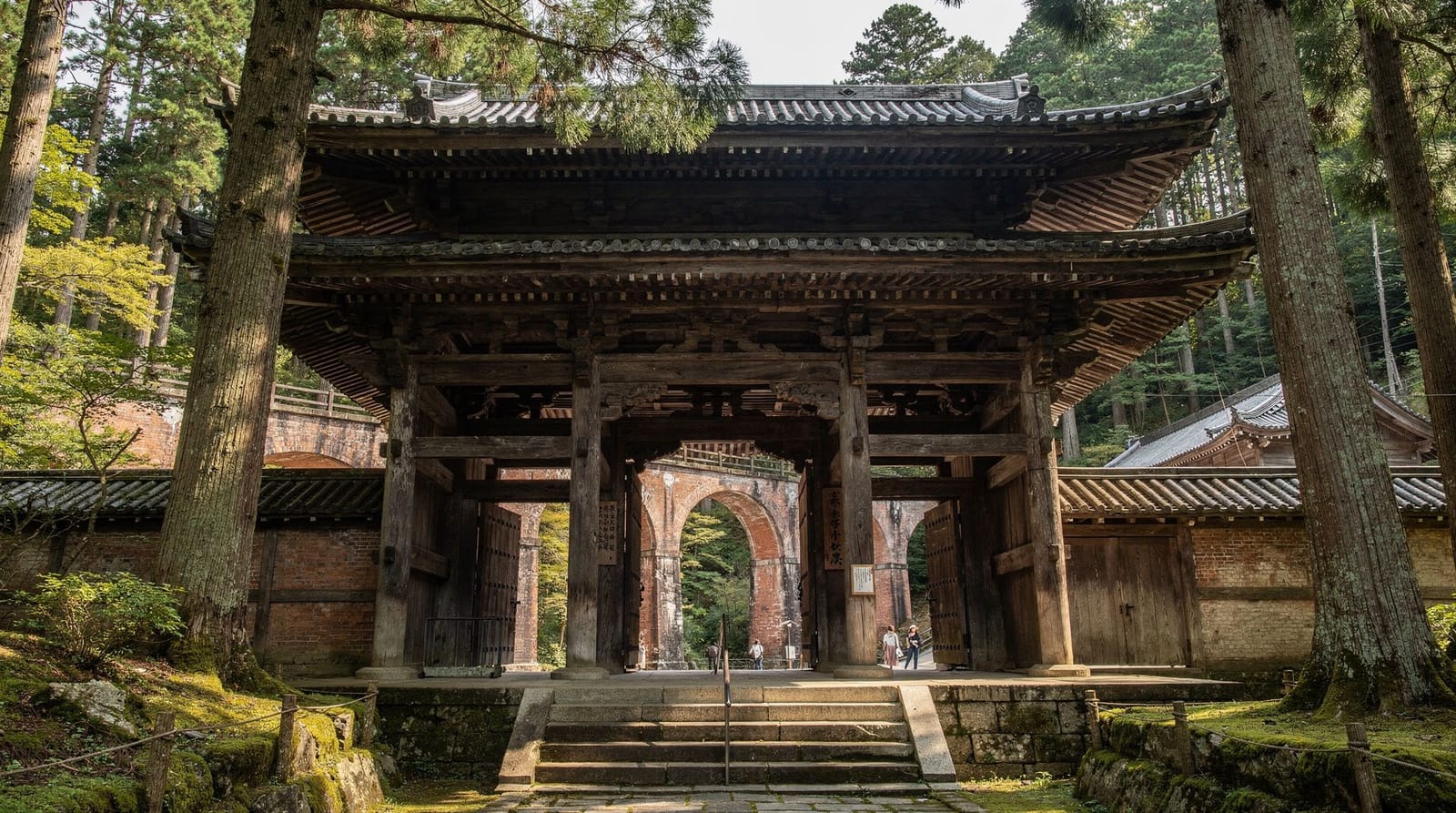
No — Nanzen-ji, despite its scale and its Meiji-era brick aqueduct, sits outside the formal 17-site listing, much like Kiyomizu-dera. It remains one of Kyoto’s most-visited temples regardless; see the Nanzen-ji guide for what makes it worth visiting even without UNESCO status attached.
Top experiences
Bookable activities with verified prices and instant confirmation on GetYourGuide.