Kyoto and Osaka in 3 days — temples, gardens, and a food-focused day trip
From Osaka: Kyoto & Nara day trip
Two days in Kyoto, one day in Osaka
This itinerary spends the first two days on Kyoto’s essential sights — eastern Kyoto’s temples and Gion on day one, western Kyoto’s bamboo grove and Kinkaku-ji on day two — then uses day three for a full day trip into Osaka, Japan’s food capital and a genuinely different city in tone from Kyoto’s temple-town pace. Osaka rewards a full day rather than a rushed half-day add-on: Dotonbori’s street food alone justifies an unhurried evening.
The train connection is the reason this works as a day trip rather than requiring a hotel change. From Kyoto Station, the JR Kyoto Line’s Special Rapid service reaches Osaka Station in about 28-30 minutes for ¥580 ($4), or continues to Shin-Osaka in a similar time. The Hankyu Kyoto Line, departing from Karasuma or Kawaramachi stations rather than Kyoto Station, is a cheaper alternative (around ¥400/$2.70) to Osaka’s Umeda district, taking 40-45 minutes. The Shinkansen between Kyoto and Shin-Osaka takes about 15 minutes but costs ¥1450 ($10) for a 15-minute hop — reasonable only if you’re already holding a JR Pass that covers it, otherwise overkill for this distance.
Stay in Kyoto for all three nights rather than switching hotels for the Osaka day — repacking and changing accommodation for a single night rarely saves enough time to be worth the hassle, and Kyoto’s base makes the two temple-heavy days easier to plan around.
| Where | Eastern & western Kyoto (days 1–2), Osaka day trip (day 3) |
| Cost | Around ¥12,000–18,000 ($82–125) per person per day |
| Time needed | 3 full days |
| Getting there | JR Kyoto Line Special Rapid, Kyoto Station to Osaka Station, ~28–30 min |
| Best time | Spring or autumn for scenery; the Osaka day works in any season |
Day-by-day at a glance
| Day | Focus | Pace | Don’t miss |
|---|---|---|---|
| 1 | Eastern Kyoto & Gion | Temple-heavy, moderate walking | Fushimi Inari before 8am |
| 2 | Arashiyama & Kinkaku-ji | Nature plus temple, mixed transit | Bamboo grove at dawn |
| 3 | Osaka day trip | Food-focused, mostly flat walking | Dotonbori after dark |
Where to base yourself matters more than which hotel chain you pick. Staying near Kyoto Station or in downtown Kyoto keeps both temple-heavy days and the Osaka train connection within a short walk or single bus ride, which adds up over three days of early starts. See the where to stay in Kyoto guide for neighborhood-by-neighborhood detail if you’re still deciding.
Day 1 — Eastern Kyoto and Gion
07:30 — Fushimi Inari Taisha (JR Nara Line, 2 stops, ~5 min, ¥150/$1)
Start at Fushimi Inari, free and open 24 hours. Early arrival — before 8am — means walking the Senbon Torii tunnel largely without the crowds that build from mid-morning. See the Fushimi Inari guide for how far to hike up Mount Inari; the Yotsutsuji viewpoint, about a third of the way up, is a reasonable turnaround for a one-day-in-three-that-covers-a-lot itinerary.
guided walking tour of Fushimi Inari10:00 — Kiyomizu-dera and Higashiyama (Keihan Main Line to Kiyomizu-Gojo, ~10 min)
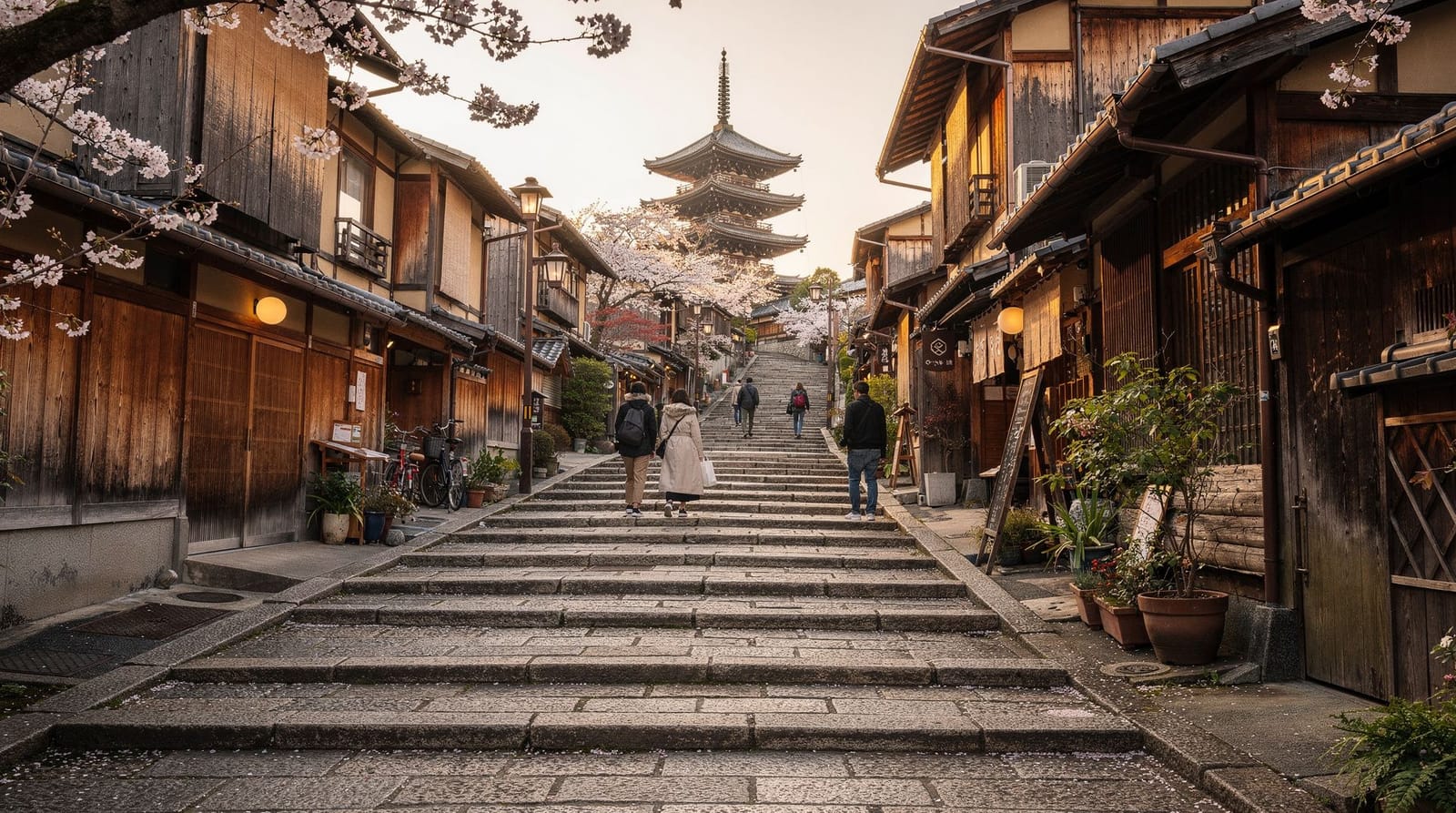
Ride the Keihan line to Kiyomizu-Gojo and walk uphill into Higashiyama. Kiyomizu-dera (¥400-500/$2.70-3.40) opens at 6am, so a mid-morning visit still avoids the worst of the afternoon crowds. The wooden stage, built without nails, extends 13 meters above the hillside and gives a clear view back over the city.
12:00 — Lunch and Ninenzaka/Sannenzaka
Walk down through the stone-paved lanes of Ninenzaka and Sannenzaka for lunch — expect ¥1200-2500 ($8-17) for a noodle or tofu-based set at one of the smaller restaurants tucked into the machiya buildings. Skip anywhere with a tout calling from the doorway; see the Kyoto food guide for specific recommendations.
14:00 — Sanjusangendo (bus 100/206 or 15 min walk, ¥230/$1.50)
Sanjusangendo’s hall of 1,001 life-size wooden Kannon statues, each individually carved, is one of Kyoto’s most striking interiors and gets a fraction of Kiyomizu-dera’s crowds. Entry is ¥600-700 ($4-4.80). Allow 45 minutes.
16:00 — Gion
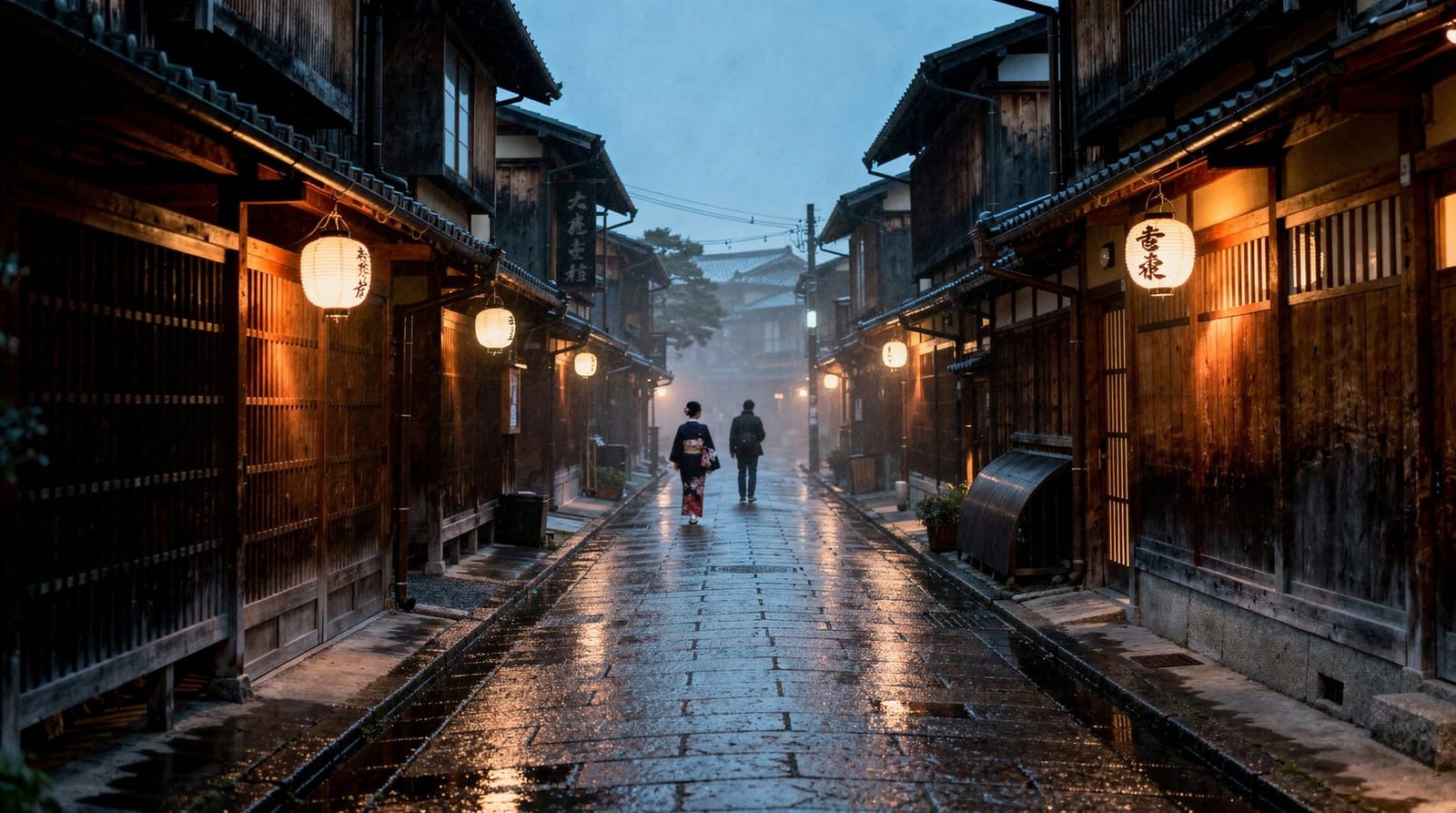
Walk or bus to Gion for the late afternoon. The best window for spotting a maiko or geiko en route to an evening engagement is roughly 5:30-6:30pm along Hanamikoji-dori. Etiquette is strictly enforced in parts of the district — no touching, blocking, or following for photos. See the Kyoto etiquette guide.
19:00 — Dinner in Pontocho
Pontocho’s narrow riverside lane has options across budgets — ¥1500 ($10) yakitori counters to ¥8000+ ($55+) kaiseki. Kawadoko riverside terrace seating runs May-September if you want it.
Day 2 — Arashiyama and Kinkaku-ji
07:30 — Arashiyama bamboo grove (JR Sagano Line, ~15-20 min, ¥240/$1.60)
Arashiyama’s bamboo grove is free and best experienced before 8am, when the grounds are close to empty and the light filters through the stalks at a low angle. Tenryu-ji, adjoining the grove, opens at 8:30am and charges ¥500 ($3.40) for its Zen garden.
Arashiyama bamboo forest morning bike tour10:30 — Sagano and the riverside
Walk toward the Togetsukyo Bridge and the Katsura River — free to wander, with rental boats available if you want to be on the water (¥1500-2000/$10-13.50 per boat, roughly 30 minutes). Sagano’s back lanes, quieter than the main tourist strip near the station, have several small craft shops and cafes.
12:30 — Lunch in Arashiyama
Yudofu (hot tofu) set meals are an Arashiyama specialty, running ¥2000-3500 ($13.50-24) at sit-down restaurants near Tenryu-ji, or grab something lighter from the food stalls along the main approach for under ¥1000 ($6.80).
14:00 — Kinkaku-ji (bus ~40 min from Arashiyama, ¥230-460/$1.50-3.10 depending on route)
Kinkaku-ji, the gold-leaf-covered Golden Pavilion, is a viewing-garden temple rather than a walk-through building — entry is ¥500 ($3.40) and the visit itself takes 30-45 minutes since you view the pavilion from a set path around the pond rather than entering it. Full guide here. Go later in the afternoon rather than midday if possible; tour buses cluster here from late morning through early afternoon.
16:00 — Ryoan-ji or Nishiki Market
If you have energy left, Ryoan-ji’s rock garden is a 15-minute bus ride from Kinkaku-ji and a genuinely different, quieter experience (¥600/$4). Otherwise, head back toward downtown and browse Nishiki Market for dinner ingredients or piece-by-piece street food (¥200-800/$1.35-5.40 per item).
Day 3 — Osaka day trip
08:30 — Depart for Osaka (JR Kyoto Line Special Rapid, ~28-30 min, ¥580/$4)
Head to Kyoto Station and board the JR Kyoto Line. The Special Rapid service is the fastest non-Shinkansen option and runs frequently. Arrive at Osaka Station (Umeda) or continue to Shin-Osaka depending on your first stop.
09:30 — Osaka Castle
Osaka Castle’s park is free; the reconstructed donjon interior (a 1931 rebuild with a modern museum inside, not the original 16th-century structure) costs ¥600 ($4.10). The castle grounds are large enough that even with the interior skipped, an hour of walking the moats and stone walls is worthwhile. The nearest station, Osakajokoen, is a short walk from the JR loop line.
Osaka, Kyoto, and Nara combined day trip tour11:30 — Kuromon Ichiba Market
Kuromon Ichiba is Osaka’s main food market — a covered arcade of seafood, produce, and street-food stalls where most items are sold and eaten on the spot. Prices run ¥300-1500 ($2-10) per item; grilled skewers, fresh oysters, and wagyu on a stick are the market’s signature draws. Some stalls near the main entrance charge tourist-inflated prices for the same items sold cheaper 50 meters further in — walk the full arcade before buying.
13:30 — Dotonbori
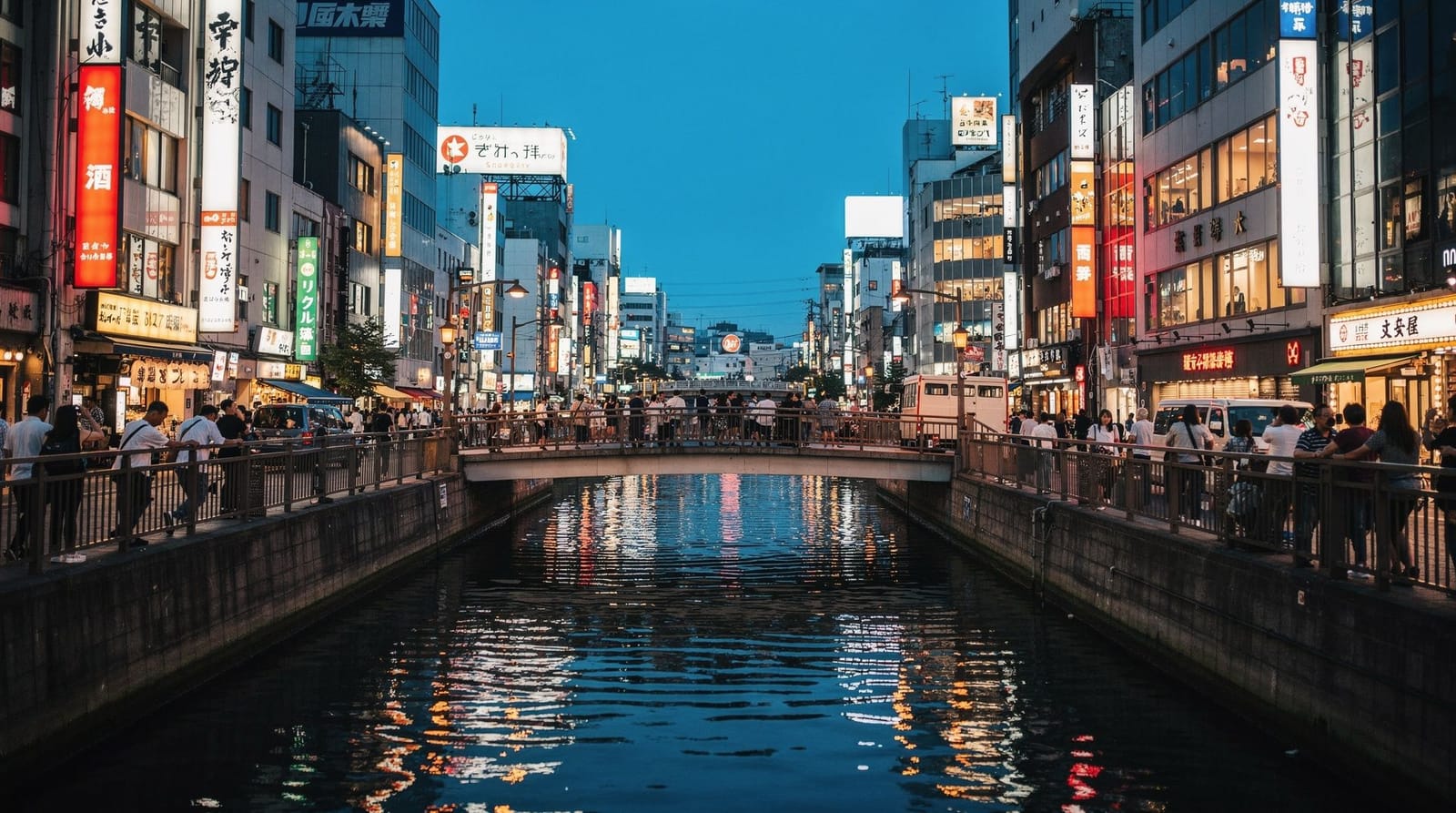
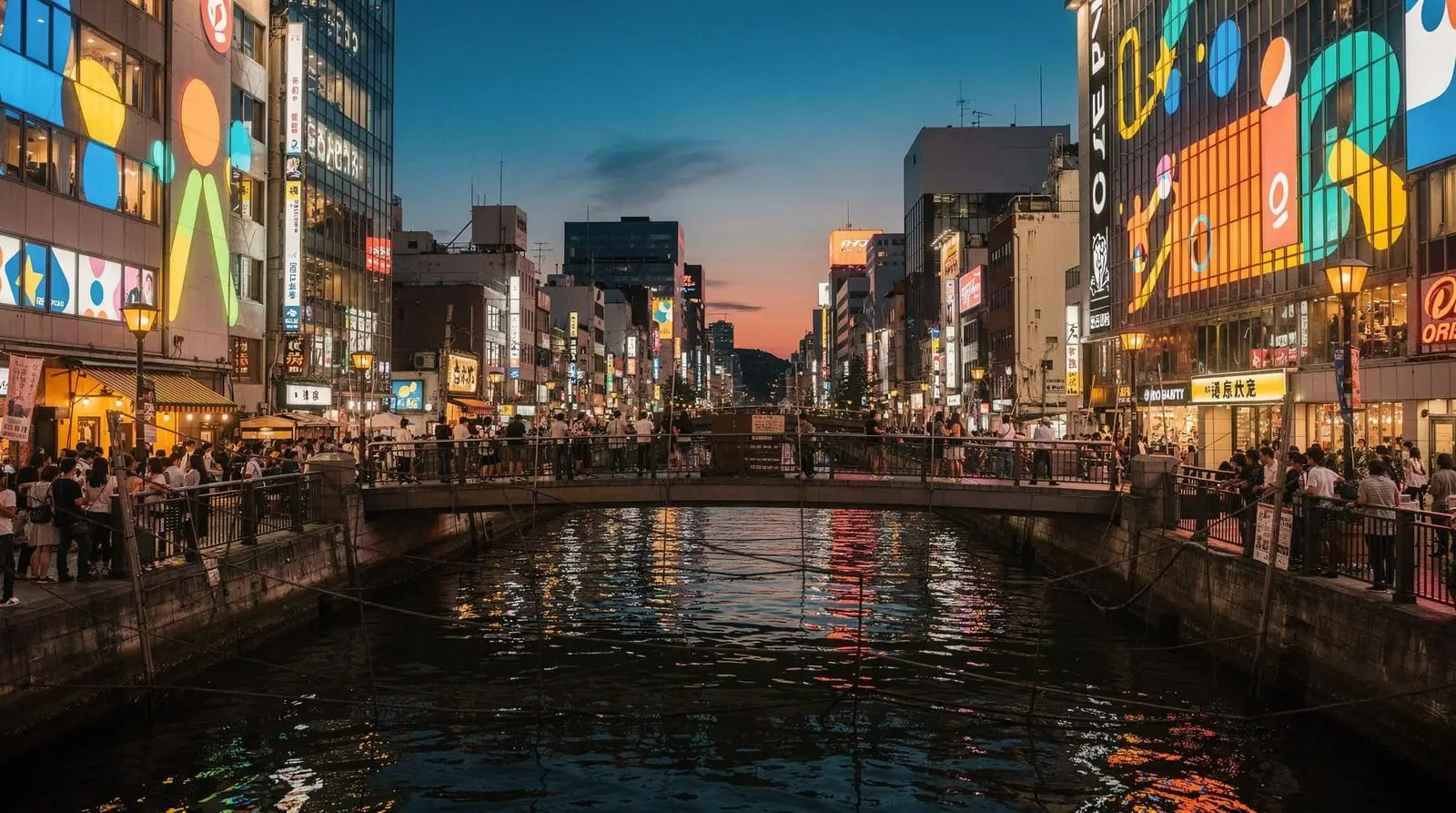
Dotonbori, Osaka’s neon-lit canal district, is free to walk and the city’s most concentrated stretch of street food. Takoyaki (octopus balls) runs ¥500-800 ($3.40-5.40) for a plate of six to eight; okonomiyaki (savory pancake) sets run ¥900-1500 ($6-10) at sit-down spots just off the main strip. The Glico Running Man sign and the crab signage outside Kani Doraku are the district’s visual landmarks, both free photo stops.
15:30 — Umeda Sky Building (optional, 20 min by train/subway back toward Osaka Station)
The Umeda Sky Building’s Floating Garden Observatory (¥1500-2000/$10-13.50) gives a panoramic view from an open-air rooftop connecting two towers — a genuinely different vantage than anything in Kyoto’s temple-focused skyline. Skip this if you’re short on time; it adds a round trip of about an hour including the observatory itself.
Osaka Aquarium Kaiyukan entry ticket18:00 — Dinner in Dotonbori or return to Kyoto
Stay for dinner in Dotonbori (the area gets more atmospheric after dark with the neon lit up) or head back to Kyoto for the evening — the JR Kyoto Line runs until close to midnight, so there’s no need to rush.
Practical notes
Best season: spring and autumn are the most rewarding visually but also the most crowded; Osaka’s food-focused itinerary works well in any season since most activities on day three are indoors or covered.
Transport: an IC card (ICOCA or Suica) covers every train in this itinerary. A national JR Pass is not worth it for three days confined to Kyoto and Osaka — the round-trip Kyoto-Osaka fare on the Special Rapid is a fraction of the pass cost. Reconsider if you’re adding Hiroshima or Himeji; see the week-long itinerary, which folds in more of the region.
Budget: ¥12,000-18,000 ($82-125) per person per day covers transport, entries, and meals at a mid-range pace, with day three trending higher due to Osaka’s street-food-as-main-meal structure.
Extending or adjusting: swap day three for Nara instead using the 2-day Kyoto and Nara itinerary’s day-two structure, or combine both Osaka and Nara by extending to the week-long Kyoto itinerary.
What to pack and how much cash to carry
Bring comfortable walking shoes that can handle both temple gravel paths and Dotonbori’s flat pavement — days one and two involve more incline than day three. An IC card loaded with at least ¥3,000 covers every train, subway, and most vending-machine purchases across all three days, but keep ¥5,000-10,000 in cash on hand regardless: Kuromon Ichiba’s stalls and many of the smaller Pontocho and Nishiki Market spots are cash-preferred, and small machiya restaurants in Higashiyama sometimes don’t take cards at all.
A compact umbrella is worth packing year-round rather than checking the forecast — Kyoto’s weather shifts quickly enough that an unplanned shower on day one or two is common. For a fuller breakdown of what a Kyoto trip actually costs day to day, see the Kyoto travel budget guide.
Kyoto vs. Osaka — what actually feels different
Travelers doing both cities back to back sometimes struggle to articulate why they feel so different despite being 30 minutes apart by train. Kyoto’s pace on days one and two is built around temple visiting hours, quiet approach paths, and etiquette that rewards moving slowly; Osaka on day three is built around eating, walking fast through crowds, and neon rather than wood and stone. Neither city is “better” — they’re doing different jobs on this itinerary, and the contrast is part of why three days split this way works better than three days spent entirely in one city. The Kyoto vs. Osaka guide goes deeper into the comparison if you’re deciding how to split a longer trip.
If you want more temple time and less Osaka
Food travelers aside, some visitors find one day in Osaka is plenty and would rather spend the freed-up time on a deeper look at Kyoto’s temples. In that case, swap day three’s Osaka trip for a slower version of days one and two — add Nanzen-ji and the Philosopher’s Path to day one’s route, or Ryoan-ji’s rock garden to day two — and treat Osaka as a half-day add-on limited to Dotonbori and Kuromon Ichiba rather than the full day described above. The best day trips from Kyoto guide has other one-day alternatives if Osaka isn’t the right fit for your group.
Frequently asked questions about a 3-day Kyoto and Osaka itinerary
How far is Osaka from Kyoto?
About 28-30 minutes by JR Kyoto Line Special Rapid train (¥580/$4) from Kyoto Station to Osaka Station. The Shinkansen to Shin-Osaka takes around 15 minutes but costs ¥1450 ($10), which is disproportionate for the distance unless you already hold a JR Pass.
Is Osaka worth a full day trip from Kyoto, or just a few hours?
A full day is worth it. Osaka’s character — food markets, Dotonbori’s street food culture, Osaka Castle — is different enough from Kyoto’s temple-focused pace that rushing it into an afternoon undersells the city. If time is tight, prioritize Dotonbori and Kuromon Ichiba Market over Osaka Castle.
Can I do Kyoto, Osaka, and Nara all in three days?
Not comfortably as full visits. This itinerary focuses two days on Kyoto and one on Osaka; adding Nara properly needs a fourth day. See the week-long itinerary if you want all three plus more.
What’s the cheapest way to get from Kyoto to Osaka?
The Hankyu Kyoto Line from Karasuma or Kawaramachi station to Osaka’s Umeda district costs around ¥400 ($2.70) and takes 40-45 minutes — cheaper than the JR Kyoto Line, though it departs from a different station than Kyoto Station.
Do I need to book Osaka Castle or Dotonbori in advance?
No. Osaka Castle’s donjon and Dotonbori’s street-food stalls operate on a walk-up basis. Advance booking matters more for specific restaurants during peak dinner hours (7-9pm) if you have a particular spot in mind.
Is Kinkaku-ji worth visiting given how crowded it gets?
Yes, but manage expectations: it’s a 30-45 minute viewing-garden visit, not a walk-through temple, and tour buses cluster there from late morning through early afternoon. A late-afternoon visit, as in this itinerary’s day two, avoids the worst of it.
Should I bring cash for Osaka’s food markets?
Yes. Kuromon Ichiba Market and most Dotonbori street-food stalls are cash-preferred or cash-only, even though larger restaurants and stores increasingly accept cards. An IC card also works for some konbini and vending-machine purchases along the way.
What should I skip if I only have two days instead of three?
Drop Osaka and use the 2-day Kyoto and Nara itinerary instead, or compress this plan’s two Kyoto days into one long day covering only Fushimi Inari, Higashiyama, and Gion, saving Arashiyama and Kinkaku-ji for a return trip.
Is it better to do Osaka as a day trip or stay overnight?
A day trip is enough for this itinerary’s scope. Osaka’s Special Rapid connection to Kyoto is fast enough that you lose little by returning each evening, and staying in Kyoto keeps your first two days’ temple visits and your Osaka day on the same base. An overnight in Osaka only pays off if you’re adding nightlife, Universal Studios Japan, or a second full day there — outside the scope of this three-day plan.
Can I visit Nara on the way to or from Osaka?
Not really as a practical add-on — Nara sits on a different rail line from the Kyoto-Osaka route, so bolting it onto day three would mean three separate train legs in one day. If Nara is a priority, either extend to a fourth day or swap it in for Osaka using the 2-day Kyoto and Nara itinerary’s structure.
Top experiences
Bookable activities with verified prices and instant confirmation on GetYourGuide.