Kyoto etiquette — temples, shrines, onsen, and geisha districts explained
Kyoto: 45-Minute Tea Ceremony Lesson Experience
Duration: 45 minutes
What's the most important etiquette rule for visiting Kyoto?
Respect quiet, contemplative spaces — speak softly inside temple halls, don't touch statues or offerings, and remove shoes wherever indicated (raised tatami floors, temple interiors). The second most important: never photograph geisha or maiko without clear consent, and never touch their kimono — several Gion backstreets now ban photography entirely, with posted fines for violations.
Kyoto etiquette questions come up constantly for visitors precisely because the city concentrates so much active religious and cultural life into a single, dense sightseeing itinerary — temples, shrines, traditional inns, and one of the last surviving geisha districts in Japan, all encountered within a normal day’s schedule rather than as occasional special stops. Getting the basics right isn’t about performing perfect Japanese custom; it’s about not disrupting spaces and communities that are, for the people living and working in them, an ordinary part of daily life rather than a backdrop for tourism.
| Biggest rule | No geisha photos without consent; several Gion streets ban it outright |
| Shoes off | Any tatami or wooden temple interior |
| Onsen | Wash first, no soap in the bath, most still restrict tattoos |
| Tipping | Never — not restaurants, taxis, or guides |
| When unsure | Watch what other visitors or staff are doing |
Etiquette in Kyoto is mostly about noticing, not memorizing
Kyoto holds the highest concentration of active religious sites and living traditional culture anywhere in Japan, which means etiquette questions come up constantly — more than in a typical modern city itinerary. The good news is that most of it isn’t a rigid rulebook to memorize before arrival; it’s a small number of consistent principles (quiet respect in sacred spaces, care around people’s work and privacy, cleanliness before shared facilities) applied across slightly different specific situations. This guide covers the specifics, but the underlying instinct — watch what local visitors are doing, and default to quieter and more careful rather than louder and more casual — covers most situations this guide doesn’t explicitly mention.
Shoes: when and where to remove them
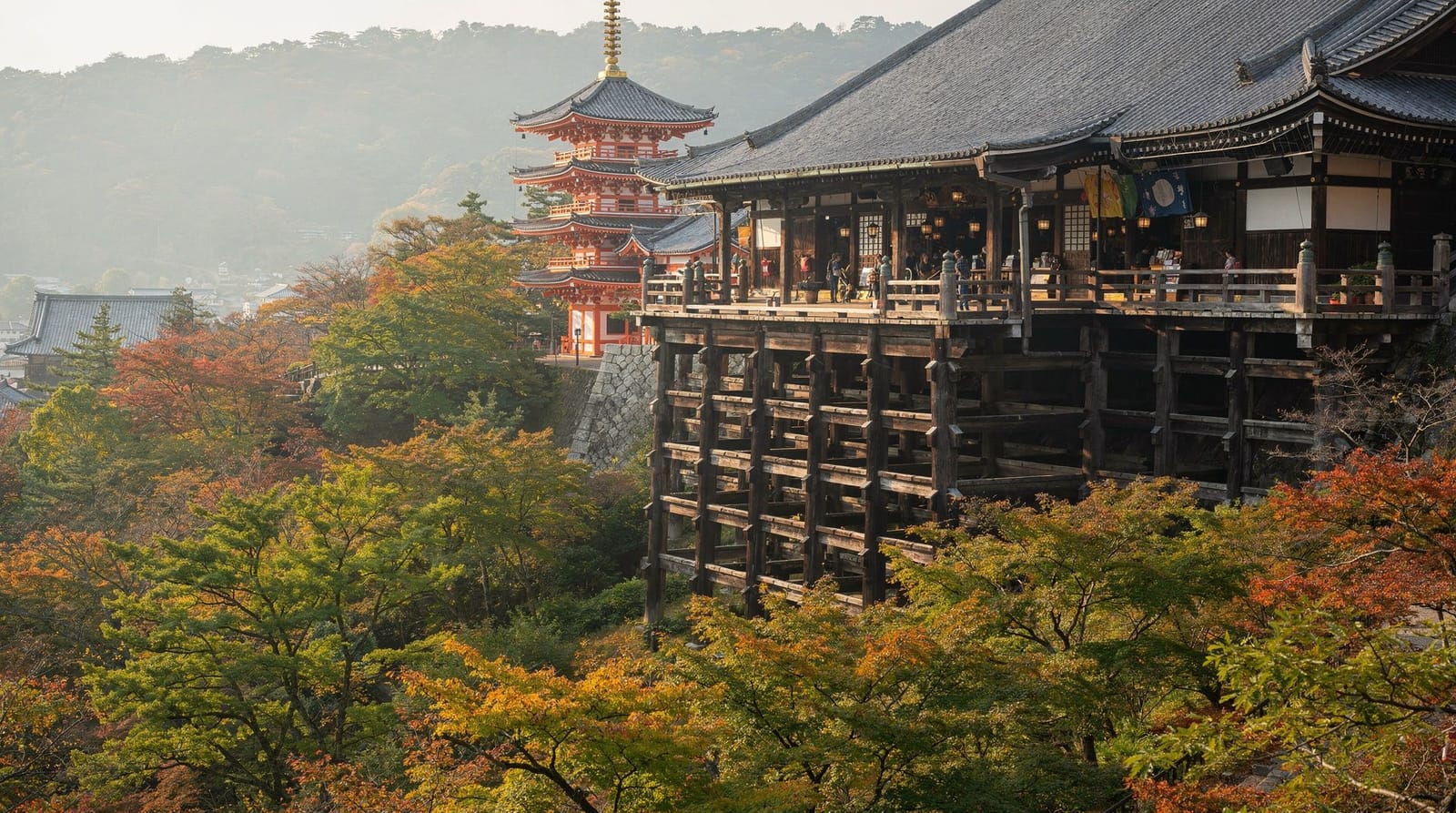
Any temple interior with a raised tatami-mat or polished wooden floor requires removing shoes — a shoe rack, shelf, or plastic bag station at the entrance makes this obvious, and staff will point it out if you miss the cue. This applies to interiors like Kiyomizu-dera’s main hall and Nijo Castle’s Ninomaru Palace, but not to outdoor temple grounds and gardens, which you walk in normal shoes. Slip-on shoes or shoes with easily undone laces are genuinely practical in Kyoto given how often this comes up across a single day’s itinerary — fumbling with double-knotted laces while a queue forms behind you is a minor but recurring annoyance for visitors in unfamiliar footwear.
Socks matter more than people expect: bare feet on tatami is considered less polite than socked feet, so carrying a spare pair of socks, particularly in summer sandal weather, is a small but genuinely useful packing addition.
Temple and shrine behavior: quiet respect, not silence
Neither temples nor shrines require complete silence, but a noticeably quieter volume than normal conversation is the expected norm inside halls and near active prayer areas — loud conversation, phone calls, and boisterous group photography inside a main hall stand out as disrespectful even without an explicit rule against them. Touching statues, offerings, or ritual objects is discouraged unless a sign or staff member explicitly invites participation (some temples do offer hands-on elements, like Kiyomizu-dera’s Otowa waterfall drinking cups, clearly set up for visitor use).
45-minute tea ceremony lesson — a structured, hands-on way to learn traditional manners directly rather than guessingPhotography is generally permitted at temple grounds and gardens but frequently prohibited inside specific halls or in front of certain treasured objects, marked with a no-photography sign; when in doubt, check for signage before photographing an interior rather than assuming it’s allowed everywhere the grounds are.
Shinto shrine prayer etiquette
At a Shinto shrine’s purification fountain (temizuya), the expected sequence is: take the provided ladle in your right hand and rinse your left hand, switch to your left hand and rinse your right hand, then pour a small amount of water into your cupped left hand to rinse your mouth (spitting discreetly to the side, not into the fountain, and never drinking directly from the ladle), and finally rinse the ladle’s handle by tilting it before returning it to its resting place.
At the main shrine building, the common prayer sequence is: toss a coin into the offering box (any denomination is acceptable — a ¥5 coin is traditionally considered lucky due to a pun with the word for “connection”), bow twice, clap twice, hold a brief silent wish or prayer, then bow once more. Getting a step slightly wrong is common even among Japanese visitors unfamiliar with the exact sequence and isn’t considered a serious lapse — making a sincere effort is what’s noticed, not textbook precision.
Geisha and maiko: the etiquette that matters most right now
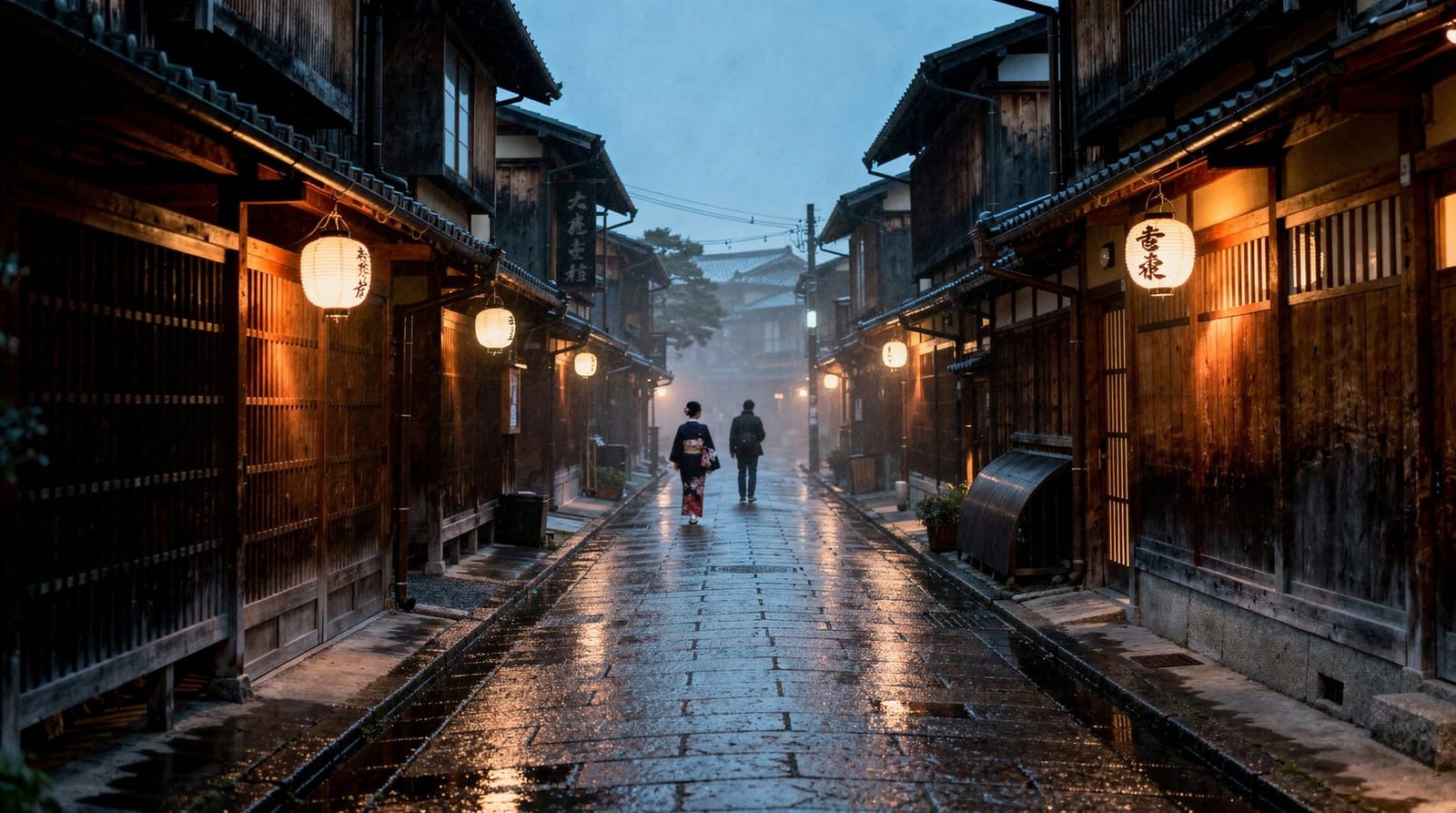
Gion’s geisha district has become a genuine friction point between the city and tourism in recent years, serious enough that the local council has designated several backstreets entirely off-limits to photography, with posted fines of up to ¥10,000 for violations. The core issue: geisha and maiko encountered walking to or from appointments are working professionals, not photo subjects or costumed performers, and being surrounded, chased, or grabbed on the way to work is a real and frequent problem they’ve had to deal with.
Gion history and geisha culture walking tour — learn the district’s context and etiquette from a local guide rather than guessing on the streetThe practical guidance: never photograph a geisha or maiko without clearly given consent, never block their path to get a photo or a better angle, and never touch their kimono, hair ornaments, or makeup, however tempting a closer look might be. If you want a genuine geisha experience rather than a street encounter, a structured show, dinner, or guided cultural walk (several of which include an actual meeting with a maiko in a controlled, consensual setting) delivers a far better experience for everyone involved than trying to catch a candid street photo.
Onsen and public bath etiquette
Traditional onsen (hot spring baths) and sento (public baths) follow a consistent set of rules across nearly all venues. Wash and rinse thoroughly at the shower stations before entering the shared bath water — soap and shampoo residue in the bath itself is considered a serious lapse. Long hair should be tied up so it doesn’t touch the water. The small modesty towel provided or brought along stays out of the bath water entirely, typically folded on top of your head or set aside at the bath’s edge.
Most onsen and sento still prohibit visible tattoos, a policy rooted in tattoos’ historical association with organized crime in Japan, though this is loosening gradually in tourist-heavy areas and some venues now offer tattoo-friendly hours, private baths, or cover-up stickers as workarounds. If you have visible tattoos, checking a specific venue’s policy before arriving saves an awkward turn-away at the entrance.
Eating and drinking in public
Eating while walking is generally discouraged in Kyoto, particularly in narrow historic lanes like Sannenzaka, Ninenzaka, and parts of Gion, where it’s increasingly discouraged by posted signage near food stalls as well as by custom. The expected practice at a market stall or street food vendor is to step to the side or a designated eating area and finish there before moving on, rather than eating while continuing to walk through a crowded lane. Drinking alcohol in public is more tolerated than in many countries — convenience store beer consumed at a riverside bench is common and unremarkable — but public drunkenness and rowdiness draw more social disapproval than the drinking itself.
Public transit etiquette
Kyoto’s buses and trains run on a few consistent norms worth knowing before your first ride. Queue in an orderly line at marked positions on train platforms and bus stops rather than clustering near the doors — floor markings usually indicate exactly where to stand. Phone calls on buses and trains are considered disruptive and are generally avoided in favor of texting or silent messaging; phones are typically kept on silent mode (manner mode) throughout a ride.
Priority seating near train and bus doors is reserved for elderly, pregnant, injured, or disabled passengers, and is expected to be given up even if it appears empty when a bus or train gets crowded. Eating on city buses and local trains is mildly discouraged, though it’s more tolerated on longer-distance trains like the shinkansen, where eating a boxed lunch (ekiben) is a normal part of the experience.
On Kyoto’s often-crowded city buses in particular, boarding from the rear door and paying (or tapping your IC card) as you exit from the front is the standard system — boarding from the front and trying to pay immediately, a common instinct for first-time visitors, causes confusion and holds up the line.
Basic greetings and small gestures that go a long way
A simple “sumimasen” (excuse me / sorry) covers a wide range of situations — getting someone’s attention, apologizing for a minor inconvenience, or thanking a shopkeeper. “Arigatou gozaimasu” (thank you, more formal) and a slight bow of the head are well received even from visitors who speak no other Japanese, and using them consistently at restaurants, shops, and temples goes further toward a warm reception than any other single habit. A full, deep bow isn’t expected or necessary from foreign visitors — a brief nod of the head when greeting staff, receiving change, or leaving a shop reads as polite without requiring precise bowing form.
Trash, recycling, and carrying your rubbish
Public trash cans are famously scarce in Japan, including in Kyoto’s tourist areas, a legacy partly of past safety concerns around public bins. The practical implication: carrying a small bag for your own rubbish through a day of sightseeing — food wrappers, empty bottles, tissues — is standard practice, since you’ll often walk considerable distances between the rare available bin, usually found near vending machines or convenience stores. Littering, including leaving trash near shrine offering areas or temple gardens, is treated as a serious lapse in a culture that places real weight on shared-space cleanliness; Kyoto’s famously immaculate streets and temple grounds reflect this norm being widely observed by residents and visitors alike.
Photography beyond geisha: general courtesy
The same consent-based principle covering geisha photography extends more loosely to photographing ordinary residents, especially inside residential streets in traditional neighborhoods like parts of Gion and Higashiyama, where locals still live behind the machiya facades tourists photograph.
Asking before photographing someone directly, and avoiding photographing into private homes or shopfronts where residents are clearly going about daily life rather than running a tourist-facing business, both go a long way toward being a considerate visitor in neighborhoods that are, ultimately, still someone’s home. Drone photography is restricted or outright banned above most temples, shrines, and central Kyoto generally under both national aviation law and local ordinances — flying a personal drone without checking specific permissions first risks a genuine legal problem, not just a faux pas.
No tipping, anywhere
Japan has no tipping culture, in restaurants, taxis, hotels, or for tour guides, and Kyoto is no exception. Attempting to leave extra cash on a table or hand money directly to staff is more likely to cause genuine confusion than gratitude — it’s common for staff to chase down a customer to return money they assume was accidentally left behind. The listed menu or service price is the full price; there’s no expectation to add anything on top of it, which is worth knowing simply so it doesn’t factor into budget planning the way it would elsewhere.
Kimono rental: respectful participation, not costume
Renting a kimono for a day of temple photos is a popular and generally welcomed activity in Kyoto, with dozens of rental shops around Kiyomizu-dera and Arashiyama offering everything from basic sets to full styling with hair and accessories. The etiquette consideration here is less about rules and more about care with the garment itself — walking carefully to avoid tripping on the hem, sitting properly to avoid crushing the fabric, and treating the experience with the same respect you’d want extended to your own culture’s traditional dress, rather than as a costume for exaggerated poses. Most reputable rental shops brief renters on basic movement and care when fitting the kimono, which covers the essentials.
Buddhist temples versus Shinto shrines: what actually differs
Kyoto mixes Buddhist temples (tera or -ji) and Shinto shrines (jinja or -jingu) throughout the city, and while the etiquette above largely applies to both, a few specifics differ. Shrines have the torii gate marking their entrance and the temizuya purification ritual described earlier; temples typically don’t have a torii gate and instead mark their entrance with a sanmon (main gate), and the prayer gesture at a temple’s main hall is generally a silent bow with hands pressed together (gassho) rather than the shrine’s clap-bow-clap-bow sequence, since clapping isn’t part of Buddhist practice.
Incense is common at temples, where visitors often purchase and light a stick at a designated burner near the entrance, wafting the smoke toward themselves for its purifying association, a practice not typically found at Shinto shrines. Getting the two traditions’ specific gestures swapped is a common and easily forgiven visitor mistake, but knowing the distinction helps make sense of why the same action (clapping, for instance) is expected in one setting and slightly out of place in the other.
Restaurant and ryokan-specific manners
At a traditional restaurant or ryokan dinner, a few small habits are worth knowing. Say “itadakimasu” (a brief expression of gratitude, roughly “I gratefully receive”) before eating and “gochisousama deshita” (roughly “thank you for the meal”) when finishing, both widely appreciated even from visitors who don’t otherwise speak Japanese.
Pouring your own drink is considered slightly less polite than pouring for others at the table and letting them reciprocate — a common small ritual at shared meals, particularly with sake or beer. At a ryokan, once your futon has been laid out for the evening, it’s customary not to fold it away yourself the next morning — staff handle this as part of the room service, and attempting to do it yourself can create more awkwardness than it saves.
Etiquette mistakes that are genuinely minor
It’s worth closing on some reassurance: most etiquette slip-ups made by visitors — an imperfect shrine prayer sequence, forgetting to remove shoes for a brief moment before noticing the shoe rack, accidentally eating a snack while walking through a quiet lane — are treated with visible patience by Kyoto residents and temple staff, who deal with unfamiliar foreign visitors constantly and generally extend goodwill to anyone making a sincere effort. The etiquette points that actually cause lasting friction, worth genuinely prioritizing over the smaller details in this guide, are the geisha photography issue and general noise or disruption inside quiet, sacred interiors — everything else is a minor correction, not a serious social error.
What to do if you’re genuinely unsure
Kyoto’s tourism infrastructure is generally forgiving of visitor mistakes made in good faith — staff at temples, shrines, and restaurants are accustomed to foreign visitors navigating unfamiliar customs, and a sincere, polite effort is consistently met with patience rather than judgment. When genuinely unsure whether an action is appropriate in a specific setting — photographing an interior, touching an object, whether to remove shoes — a brief pause to watch what other visitors or a staff member are doing, or a simple gestured question to staff, resolves nearly every situation this guide doesn’t specifically cover.
See the first-time Kyoto guide for how these etiquette basics fit into a broader first visit, and the avoiding crowds in Kyoto guide for how respectful, uncrowded timing at temples and in Gion overlaps with much of the etiquette covered here.
Etiquette for specific sights: Fushimi Inari, Kiyomizu-dera, Nijo Castle
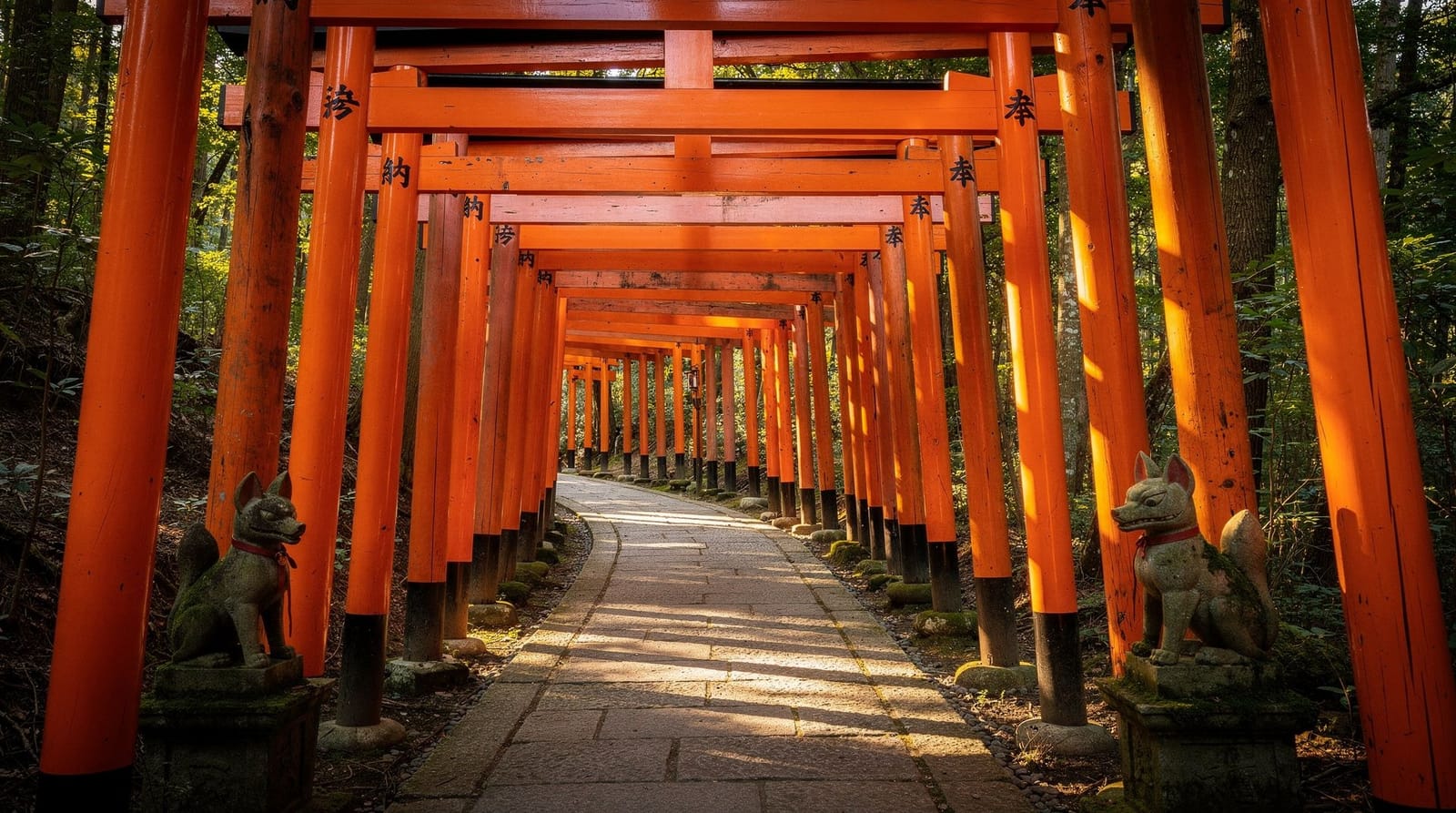
A few of Kyoto’s most-visited sights carry etiquette specifics worth knowing in advance. At Fushimi Inari, the torii gates are still an active place of worship, not a photo installation — stepping fully off the path to let others pass, and not blocking a gate for an extended solo shot during busy hours, matters more here than at almost any other sight given the volume of visitors moving through a narrow path.
At Kiyomizu-dera, the Otowa waterfall’s drinking cups are meant for a small sip from one of the three streams (said to represent longevity, success, or love — drinking from all three is considered greedy), not a full drink or a photo prop. Nijo Castle’s Ninomaru Palace, where shoes come off at the entrance, also has a “nightingale floor” designed to squeak as a security feature — walking normally rather than trying to tiptoe around it is both expected and, frankly, part of the experience.
Arashiyama day tour with train, boat, and onsen — a good structured way to experience proper onsen etiquette with guidance rather than guessing aloneLanguage and communication norms beyond greetings
Beyond the basic greetings covered above, a few communication habits smooth over daily interactions. Pointing at a menu item or writing down a number rather than relying on spoken English is common and not considered rude — many restaurant and shop staff understand more written or gestured English than spoken, and meeting them partway with simple, direct communication is appreciated.
Raising your voice to be understood doesn’t help and can come across as frustration rather than clarity; a translation app held up calmly resolves most genuine language gaps faster than repeating a phrase louder. See the Kyoto first-time guide for broader practical tips on navigating a first visit, including where English signage is strongest.
Frequently asked questions about Kyoto etiquette — temples, shrines, onsen, and geisha districts explained
Do you need to take off your shoes in Kyoto temples?
Is it OK to take photos of geisha in Kyoto?
What are the rules for visiting a Japanese onsen?
How do you properly pray or make an offering at a Shinto shrine?
Is it rude to eat while walking in Kyoto?
Should you tip in Kyoto restaurants or for tour guides?
Top experiences
Bookable activities with verified prices and instant confirmation on GetYourGuide.