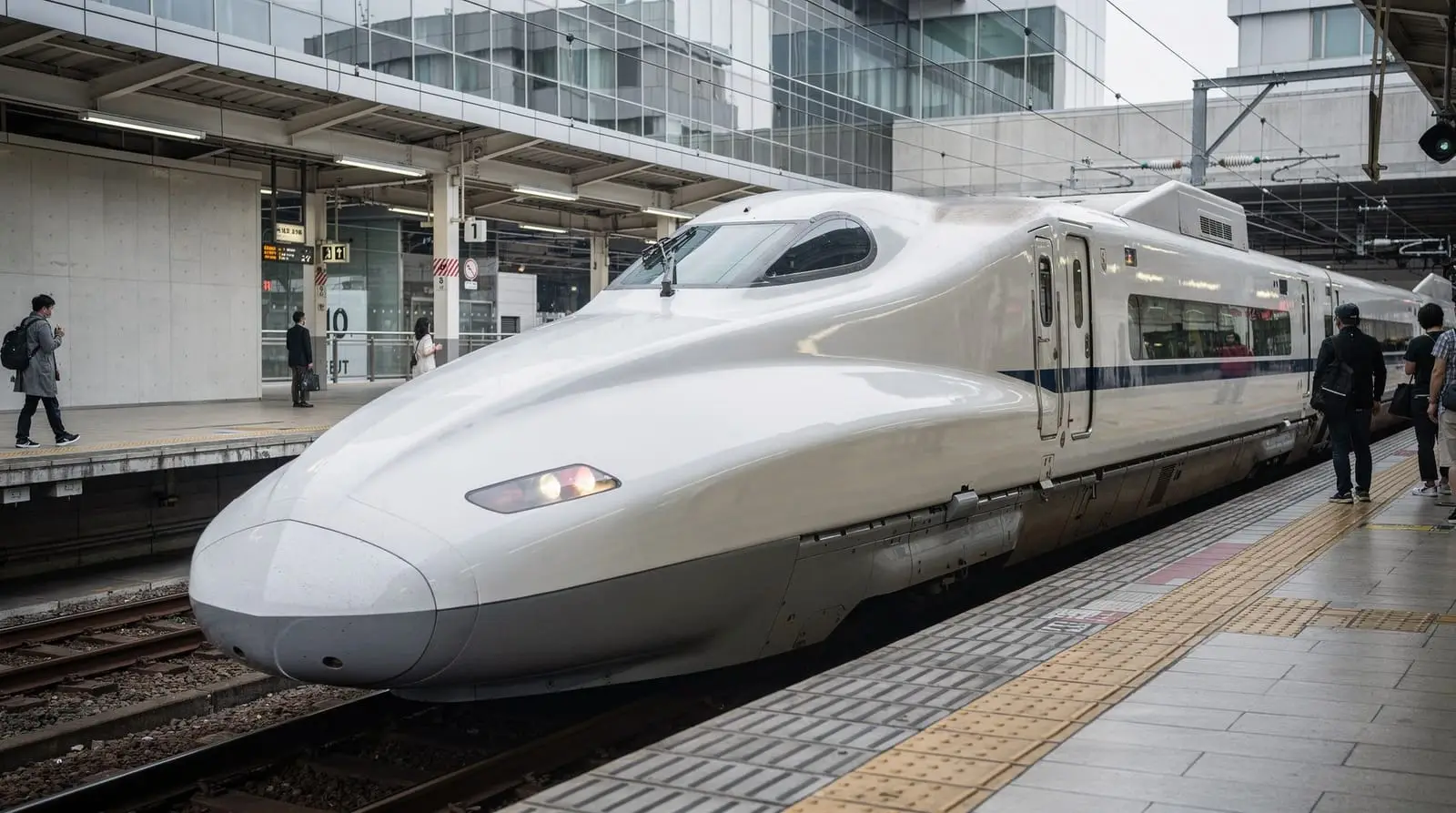
Kansai Airport to Kyoto — Haruka, limousine bus, or train transfer
Kansai: Wide Area Rail and Bus Pass
What's the best way from Kansai Airport to Kyoto?
The JR Haruka limited express is the fastest and most comfortable option, taking about 75-80 minutes to Kyoto Station for roughly ¥3,370-3,800 (US$22-25) unreserved to reserved. The limousine bus is cheaper at around ¥2,600 (US$17) and drops closer to some hotels but takes 90-110 minutes depending on traffic. A regular train transfer via Osaka is the cheapest at under ¥2,000 but takes about 2 hours with luggage-carrying transfers.
Kansai Airport (KIX) sits on a reclaimed island roughly 90 kilometers from central Kyoto, and unlike arriving in Tokyo where a single obvious express train dominates, Kyoto-bound travelers genuinely have three reasonable options with real trade-offs between them. This guide compares the Haruka train, the limousine bus, and a regular train transfer on price, time, and how each handles luggage, so the choice can be made before landing rather than worked out jet-lagged at an unfamiliar station.
The three real options, compared upfront
Haruka limited express: fastest (75-80 minutes), most expensive (¥3,370-3,800 / US$22-25), direct with no transfer. Limousine bus: mid-priced (¥2,600 / US$17), slower (90-110 minutes depending on traffic), best for heavy luggage. Regular train transfer via Osaka: cheapest (under ¥2,000), slowest (close to 2 hours), requires at least one platform change with bags. None of these is objectively “best” — the right choice depends on arrival time, luggage volume, and how much a traveler values 30-40 minutes of saved time against ¥1,000-1,800 of saved cost.
| Option | Cost | Time | Best for |
|---|---|---|---|
| JR Haruka | ¥3,370-3,800 | 75-80 min | Speed, comfort, no transfer |
| Limousine bus | around ¥2,600 | 90-110 min | Heavy luggage, families |
| Regular train | under ¥2,000 | around 2 hours | Budget, light luggage |
JR Haruka: the fast option
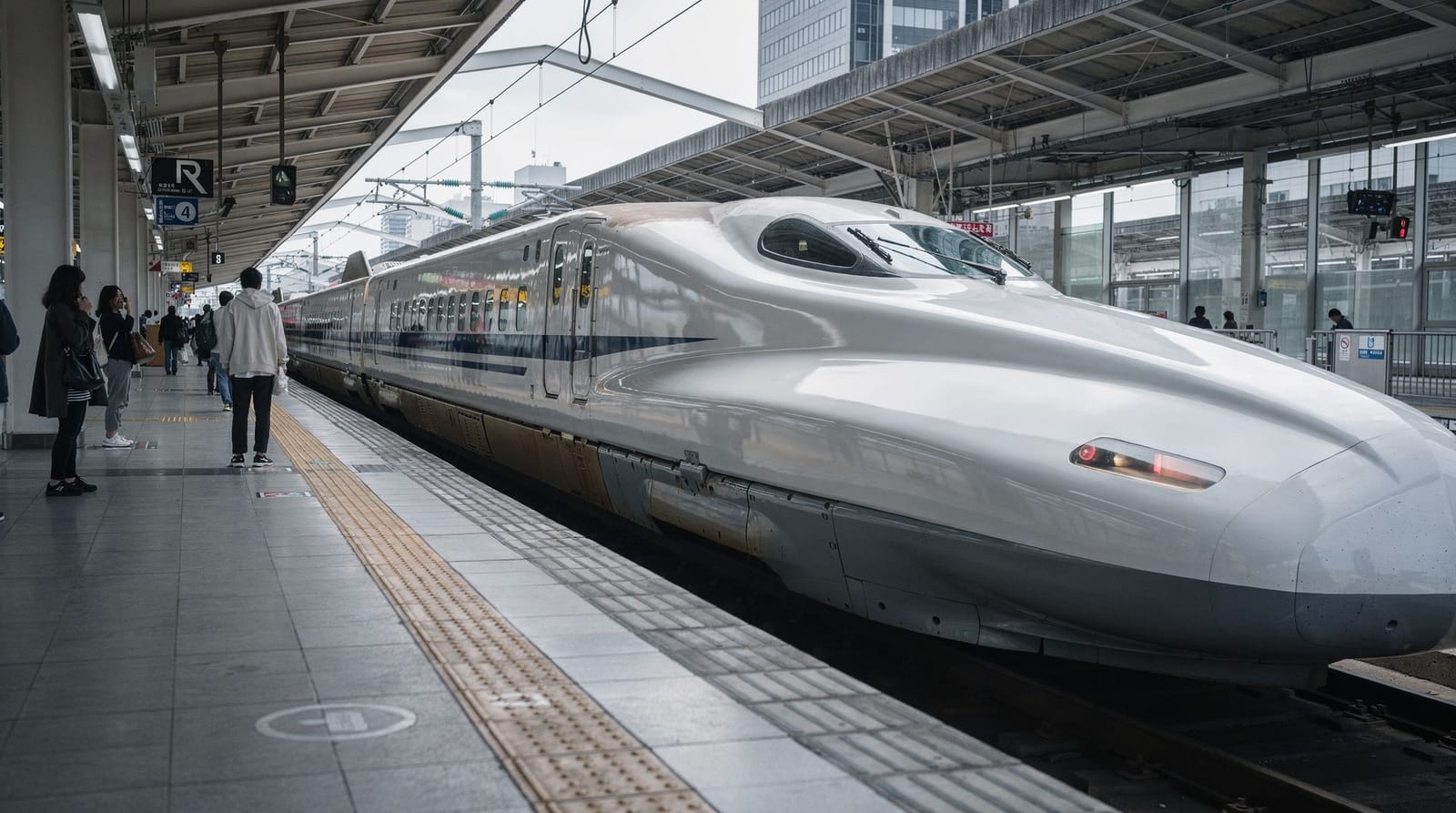
The Haruka limited express runs directly from Kansai Airport Station (located inside the airport complex, a short walk from arrivals) to Kyoto Station, with a stop at Shin-Osaka along the way, in roughly 75-80 minutes. Unreserved seats cost approximately ¥3,370 (US$22.50); reserved seats, which guarantee a spot during busy periods, cost approximately ¥3,800 (US$25). Trains run roughly every 30 minutes from early morning until around 11pm, making it usable for the large majority of international arrival times without extensive schedule planning.
The ICOCA and Haruka discount ticket
For first-time visitors, the combined ICOCA and Haruka ticket is usually the most sensible single purchase: it bundles a reserved Haruka seat with a preloaded Icoca IC card (typically including a small stored-value balance) for around ¥3,600 one-way, solving both the airport transfer and the local transport card need in a single transaction at the airport’s JR ticket counter or machine. A round-trip version exists for travelers who know they’ll be departing from Kansai Airport again at the end of their trip, at a modest discount versus buying two one-way tickets separately.
Kansai Wide Area Rail and Bus Pass — includes the Haruka airport transfer plus day trips to Nara, Himeji, and Kobe within its coverage windowLimousine bus: the luggage-friendly option
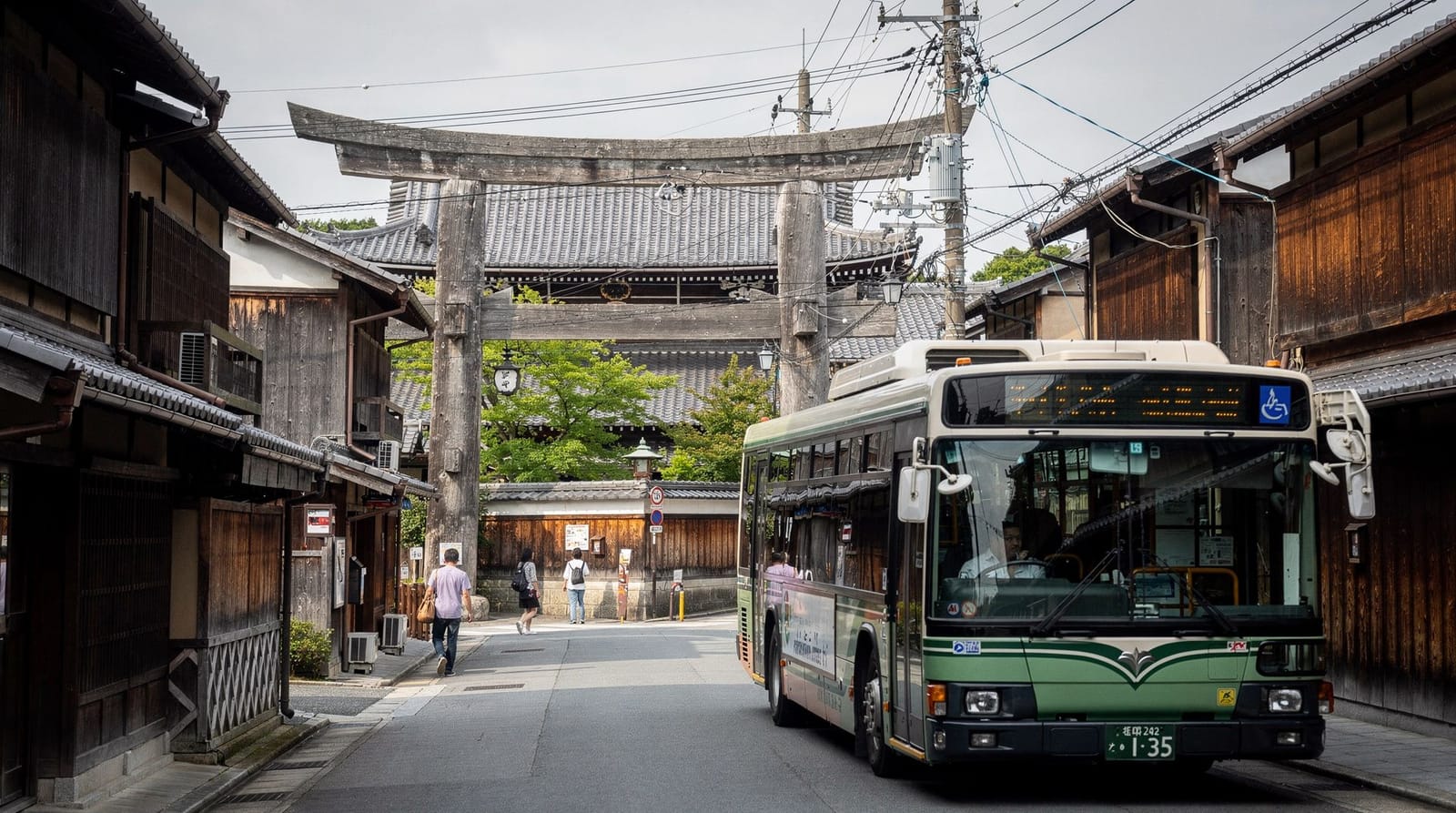
The Kansai Airport limousine bus runs directly from the airport’s arrivals level to Kyoto Station and several major hotels along a fixed route, at a fare of approximately ¥2,600 (US$17) one-way. Journey time runs 90-110 minutes depending on traffic on the Hanshin Expressway, meaningfully longer and less predictable than the Haruka train’s fixed rail schedule. Its real advantage is luggage handling: bags go directly into an under-bus storage compartment at boarding, with no carrying between platforms or up and down station stairs, which matters more than the price difference for travelers with multiple large suitcases or traveling with young children.
Regular train transfer: the budget option
Skipping Haruka and instead taking the regular Kansai Airport line train to Osaka or Shin-Imamiya, then transferring to a JR Kyoto line special rapid service, costs under ¥2,000 total — roughly half of Haruka’s fare — but takes close to 2 hours including the transfer, versus Haruka’s direct 75-80 minutes. This option makes most sense for budget-focused travelers without heavy luggage and without a tight same-day schedule, since the time cost is real: nearly an hour longer than Haruka for a saving of roughly ¥1,500-1,800.
Does the JR Pass cover this route?
A valid nationwide JR Pass covers the Haruka train at no additional cost, which changes the calculation for travelers who are activating a JR Pass on or near their arrival day — riding Haruka “for free” under an already-purchased pass beats separately budgeting for it. Travelers not otherwise planning to buy a nationwide JR Pass shouldn’t buy one solely for this route, since the pass costs far more than the Haruka fare alone; the JR Pass for Kyoto guide covers the full value calculation.
Taxis from Kansai Airport: rarely worth it
A taxi from Kansai Airport to central Kyoto runs roughly ¥20,000-25,000 (US$130-165) and takes 60-90 minutes depending on traffic — dramatically more expensive than any option above for a time saving that, versus Haruka specifically, is often negligible or nonexistent. It’s worth considering only for very early or very late arrivals when Haruka and the limousine bus aren’t running, or for a group of four or more splitting the cost, at which point it becomes roughly competitive with four individual Haruka fares.
Getting your bearings at Kansai Airport before you leave
Kansai Airport runs a straightforward single-complex layout: Terminal 1 (most full-service and legacy carriers) and Terminal 2 (a satellite building mainly serving low-cost carriers, connected to Terminal 1 by a free shuttle bus). Both the Haruka train platform and the limousine bus stop are accessible directly from Terminal 1’s arrivals level without leaving the building; Terminal 2 arrivals need to take the shuttle to Terminal 1 first to reach either. Signage throughout is in English as well as Japanese, and JR ticket counters and machines near the Haruka platform handle the combined ICOCA and Haruka ticket purchase directly.
Japan/Asia eSIM roaming data plan — worth activating in the arrivals hall so transit apps and maps work for the Kyoto transferBuying tickets in advance versus on arrival
Haruka tickets, including the combined ICOCA and Haruka option, can be purchased in advance online through JR West’s official ticketing site, or bought on arrival at the airport station counter or ticket machines without any real price difference or availability risk outside the very peak holiday periods (Golden Week, New Year, mid-August Obon). For most travelers, buying on arrival is simpler and avoids committing to a specific train time before knowing exactly how immigration and baggage claim will go.
Currency exchange and ATMs before you leave the airport
Kansai Airport has currency exchange counters and international ATMs (accepting foreign cards, including 7-Bank and Japan Post Bank machines) throughout the arrivals area, and it’s worth withdrawing or exchanging some cash here even for travelers planning to rely mostly on cards, since some smaller Kyoto restaurants, temple ticket counters, and vending machines remain cash-only. Exchange rates at the airport run slightly worse than at a city bank or dedicated exchange counter, so withdrawing a moderate amount (¥20,000-30,000) to cover the first day or two, rather than a full trip’s cash needs, is a reasonable middle ground.
If you have a stopover or are heading to Osaka first
Some itineraries route through Osaka before Kyoto, either as a planned stopover or because a hotel is booked there for the first night or two. The same Haruka train, limousine bus, and regular transfer options serve Osaka’s Namba, Shin-Osaka, and Tennoji areas directly from Kansai Airport, generally in 45-65 minutes and at a lower fare than the full run to Kyoto, since Osaka sits closer to the airport. Travelers doing this should still consider the JR Pass and Kansai Thru Pass guides before committing to individual tickets, since a multi-city Kansai itinerary often changes which pass, if any, makes financial sense.
Traveling with young children or strollers
Both Haruka and the limousine bus accommodate strollers, though the train requires either folding it for the ride or using the limited luggage rack space near the doors, which fills quickly on a busy service. The limousine bus’s under-vehicle luggage storage handles a stroller more easily than the train’s overhead or between-seat storage, which is one more reason the bus edges out Haruka specifically for families traveling with a lot of gear, even though it’s slower door to door.
Terminal 2 and low-cost carrier arrivals
Travelers arriving on a low-cost carrier into Kansai Airport’s Terminal 2 need to factor in an additional 15-20 minutes for the free inter-terminal shuttle bus to Terminal 1, where both the Haruka platform and the limousine bus stop are located. This isn’t a large addition, but it’s worth building into a tight connection plan, particularly for a late-evening arrival close to the last Haruka or bus departure time.
Peak season crowding at arrivals and on Haruka
During Japan’s peak inbound travel periods — cherry blossom season in late March and early April, and autumn foliage in November specifically — Kansai Airport’s arrivals process and the Haruka train itself both run busier than average, with reserved Haruka seats selling out on some afternoon and evening departures. Booking a reserved Haruka seat in advance during these windows, rather than assuming an unreserved seat will be available, avoids standing for the 75-80 minute ride after a long flight.
What if you’re connecting onward past Kyoto Station?
Kyoto Station is Haruka’s and the limousine bus’s terminus, and from there, local transport (covered in the getting around Kyoto guide) handles the final leg to a specific hotel or neighborhood — a bus, taxi, or, for central hotels, sometimes a short walk. Travelers heading to accommodation outside walking distance of Kyoto Station should factor in this additional local transfer time and cost (typically ¥230-1,500 depending on distance and mode) when comparing overall journey time between the three main airport options.
How Kansai Airport compares to flying into Tokyo first
Some travelers weigh flying into Tokyo (Narita or Haneda) and taking the Shinkansen down to Kyoto instead of flying directly into Kansai. As a pure Kyoto-focused trip, flying into Kansai Airport is almost always simpler and cheaper: the Haruka transfer described in this guide is shorter and less expensive than Narita or Haneda’s airport-to-Tokyo transfer combined with a subsequent Tokyo-to-Kyoto Shinkansen ride, which itself runs 2-2.5 hours and roughly ¥14,000-15,000 one-way, detailed in the Tokyo to Kyoto guide. Flying into Kansai only makes less sense than a Tokyo routing when Tokyo is also a firm part of the itinerary and flight pricing or schedules favor a Tokyo-first arrival regardless.
Booking a private transfer instead
A handful of private transfer services offer door-to-door car service from Kansai Airport directly to a Kyoto hotel, typically running ¥25,000-35,000 for up to three or four passengers with luggage — pricier than a taxi in most cases but bookable in advance with a fixed meeting point and driver, which some travelers value after a long flight over navigating a train transfer with jet lag. This is a reasonable choice for a group splitting the cost four ways, landing at an odd hour, or traveling with a stroller, mobility equipment, or an unusually large volume of luggage, but it’s rarely the most cost-effective option for a solo traveler or couple compared with Haruka.
Arriving late at night or very early morning
Both Haruka and the limousine bus wind down late in the evening, generally by around 11pm for the last services, and don’t resume until early morning. A flight arriving after this window leaves a taxi (roughly ¥20,000-25,000) as close to the only realistic option, aside from waiting at the airport for the first morning service, which some travelers with layover-length gaps genuinely choose rather than pay the late-night taxi premium. Checking exact last-departure times for the specific arrival date, since they shift slightly with seasonal timetable revisions, is worth doing before booking a flight that lands close to this cutoff.
SIM cards, pocket wifi, and connectivity counters at the airport
Kansai Airport’s arrivals hall has several counters selling physical SIM cards and renting pocket wifi devices, both usable as alternatives to an eSIM set up before departure. Physical SIM cards require a phone with an unlocked SIM slot and swapping out a home SIM, which briefly disconnects a phone number; pocket wifi devices need to be carried, charged, and returned at the airport at the end of the trip (either at a return counter or via a prepaid envelope at some hotels). For most travelers, an eSIM activated before landing remains the simplest option since it needs no counter visit and no device to manage, though the airport counters are a reasonable backup for travelers who didn’t arrange connectivity in advance.
Loading your IC card for the ride onward
Whether or not the combined ICOCA and Haruka ticket is purchased, an IC card is worth having loaded before leaving the airport, since it covers the Haruka or limousine bus fare directly (tap-and-go, no separate ticket needed once the card carries sufficient balance) and every local Kyoto trip afterward without further planning. IC card top-up machines are available at Kansai Airport Station alongside the regular ticket machines, accepting cash in ¥1,000 increments.
Frequently asked questions about Kansai Airport to Kyoto transport
How much does the Haruka train cost from Kansai Airport to Kyoto?
An unreserved seat runs approximately ¥3,370 (US$22.50) one-way; a reserved seat runs approximately ¥3,800 (US$25). The combined ICOCA and Haruka ticket runs around ¥3,600 and is usually the best-value first purchase for a first-time visitor.
How long does the Haruka train take?
Roughly 75-80 minutes from Kansai Airport Station to Kyoto Station, running directly with no transfer required.
Is the airport limousine bus a good option with heavy luggage?
Yes, generally the best option for heavy or multiple bags, since the bus stores luggage underneath and requires no carrying between platforms, unlike the train options.
Can I get from Kansai Airport to Kyoto without paying for Haruka or the bus?
Yes — a regular JR train transfer via Osaka costs under ¥2,000 total but takes close to 2 hours and involves at least one platform change with luggage.
Does the JR Pass cover the Haruka train?
Yes, a valid nationwide JR Pass covers Haruka at no extra cost, which can make activating the pass on arrival day worthwhile for some itineraries.
What time does the last Haruka or limousine bus run?
Both run roughly until around 11pm with services approximately every 30 minutes; a very late arrival after this window generally requires a taxi instead.
Is Kansai Airport itself easy to navigate?
Yes — a single-terminal-complex layout with clear English signage, and both the Haruka train station and limousine bus stop directly accessible from Terminal 1’s arrivals level.
Should I book Haruka tickets before I fly, or wait until I land?
Waiting until you land is fine for most of the year, since tickets and the combined ICOCA and Haruka option are readily available at airport counters and machines. Booking a reserved seat in advance is worth doing specifically during cherry blossom season, autumn foliage season, and other major Japanese holiday periods, when reserved Haruka seats can sell out on individual departures.
Is there a cheaper alternative to Haruka that’s still faster than the regular train transfer?
Not meaningfully — the regular JR Kansai Airport line train to Osaka or Shin-Imamiya followed by a Kyoto line rapid transfer is the only substantially cheaper option, and it comes with the nearly 2-hour journey time and transfer with luggage described above rather than a middle-ground option between Haruka’s price and speed.
Frequently asked questions about Kansai Airport to Kyoto — Haruka, limousine bus, or train transfer
How much does the Haruka train cost from Kansai Airport to Kyoto?
How long does the Haruka train take?
Is the airport limousine bus a good option with heavy luggage?
Can I get from Kansai Airport to Kyoto without paying for Haruka or the bus?
Does the JR Pass cover the Haruka train?
What time does the last Haruka or limousine bus run?
Is Kansai Airport itself easy to navigate?
Top experiences
Bookable activities with verified prices and instant confirmation on GetYourGuide.