Osaka day trip from Kyoto — trains, castle and street food, planned out
Osaka: 2-hour local street food tour, Dotonbori & Namba
Duration: 2 hours
Is Osaka worth a day trip from Kyoto?
Yes, and it's the easiest day trip Kyoto offers logistically — the JR Special Rapid train takes about 29 minutes each way and costs ¥580 (roughly $3.90) one-way, with several departures per hour, so there's no schedule to plan around. A full day covers Osaka Castle, Kuromon Market or Shinsekai for lunch, and Dotonbori's neon canal in the evening; a half-day is possible but rushed if you want more than the castle and one food stop.
Why Osaka is the easiest day trip from Kyoto
Is Osaka worth a day trip from Kyoto? Yes, and among Kyoto’s day trip options it’s the least demanding to plan. The JR Special Rapid train covers Kyoto Station to Osaka Station in about 29 minutes for ¥580 (roughly $3.90) one-way, and it runs several times an hour throughout the day — there’s no departure time to build your morning around, and no reservation to make. Compare that to a trip requiring a scenic train with limited daily departures, and Osaka is simply lower-friction: miss one train, catch the next one ten or fifteen minutes later.
| Where | Osaka, ~29 min east of Kyoto by JR Special Rapid |
| Cost | ¥580 one-way train; ¥600 castle entry |
| Time needed | Full day for castle + food + Dotonbori |
| Getting there | JR Special Rapid from Kyoto Station |
| Best time | Morning for the castle, evening for Dotonbori |
The trade-off is that Osaka isn’t a change of scenery in the way Nara’s deer park or a mountain day trip would be. It’s Japan’s second city, built on merchant wealth rather than imperial or religious history, and the day trip is really about contrast — trading Kyoto’s temples and quiet streets for a louder, food-obsessed, neon-lit downtown for a day. If that contrast doesn’t appeal, a day trip built around nature or a single major sight might suit your trip better; see the best day trips from Kyoto guide for how the main options compare.
Getting to Osaka: trains, prices and which one to pick
Three options cover this route, and for a Kyoto-Osaka round trip only one of them is usually worth using.
JR Special Rapid (Shin-Kaisoku) is the default choice. It departs from Kyoto Station, takes about 29 minutes to Osaka Station, and costs ¥580 (roughly $3.90) one-way. Trains run several times per hour on the JR Kyoto Line throughout the day, so there’s effectively no schedule to memorize — check departures on arrival at the station and you’ll rarely wait more than 10-15 minutes. It’s not covered by the Kyoto city bus pass, but it is a standard JR fare, payable with an IC card (Icoca or Suica) by simply tapping in and out.
Shinkansen (Kodama or Hikari) also runs this route, cutting the trip to roughly 15 minutes, but at a cost of ¥1,450 or more one-way — nearly three times the Special Rapid fare for saving about 14 minutes. For a standalone Kyoto-Osaka day trip, this doesn’t make sense. It becomes worth considering only if you’re continuing past Osaka on the Shinkansen the same day, for instance toward Himeji or Hiroshima, in which case the Osaka leg is effectively a stopover on a longer Shinkansen journey you’re already paying for. See the Himeji Castle day trip guide if that’s the itinerary you’re considering.
Private railways — Hankyu and Keihan are the third option, and they matter mainly if you’re not staying near Kyoto Station. If your hotel is closer to Kawaramachi, Gion, or elsewhere in downtown Kyoto, walking to Kyoto Station just to catch the JR line adds time you don’t need to spend. Hankyu trains from Kawaramachi Station reach Osaka’s Umeda district, and Keihan trains from Sanjo or Gion-Shijo reach Osaka’s Yodoyabashi and Kyobashi areas. Journey times run slightly longer than the JR Special Rapid, but fares are sometimes a little cheaper, and starting from a station near your hotel can save more time overall than the few minutes JR saves on the train itself.
Whichever line you take, note which Osaka station you’ll land at — JR puts you at Osaka Station/Umeda in the north of downtown, while Hankyu and Keihan arrive at different points, which changes your walking distance to the castle or Dotonbori later in the day.
A one-day Osaka itinerary that actually fits
This order works because it moves from quieter to busier as the day goes on, which matches both the crowds and the food:
Morning: Osaka Castle. Start here while the grounds are calmer and before tour groups build up, typically arriving by 9-10am. Budget 1.5-2 hours for the park and tower.
Midday: Kuromon Market. A 20-25 minute subway ride or a 30-40 minute walk south from the castle area gets you to Kuromon Market for a grazing lunch — fresh seafood, grilled scallops, and wagyu skewers rather than a sit-down meal.
Afternoon: Shinsekai. From Kuromon Market, Shinsekai is a short subway hop or a 20-minute walk. This retro 1920s neighborhood is a good afternoon stop for kushikatsu and a walk past Tsutenkaku Tower, with lighter crowds than Dotonbori during daylight hours.
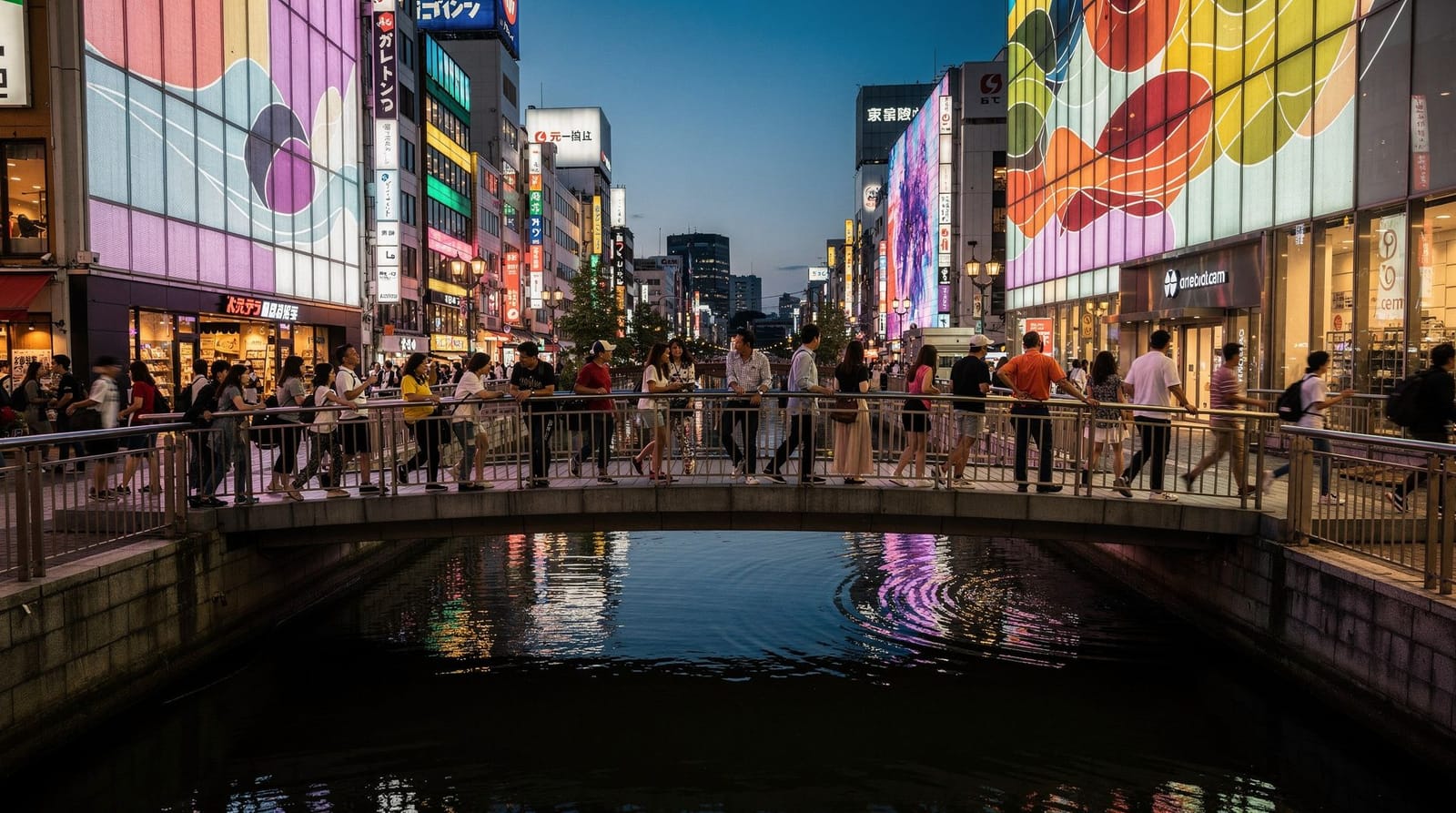
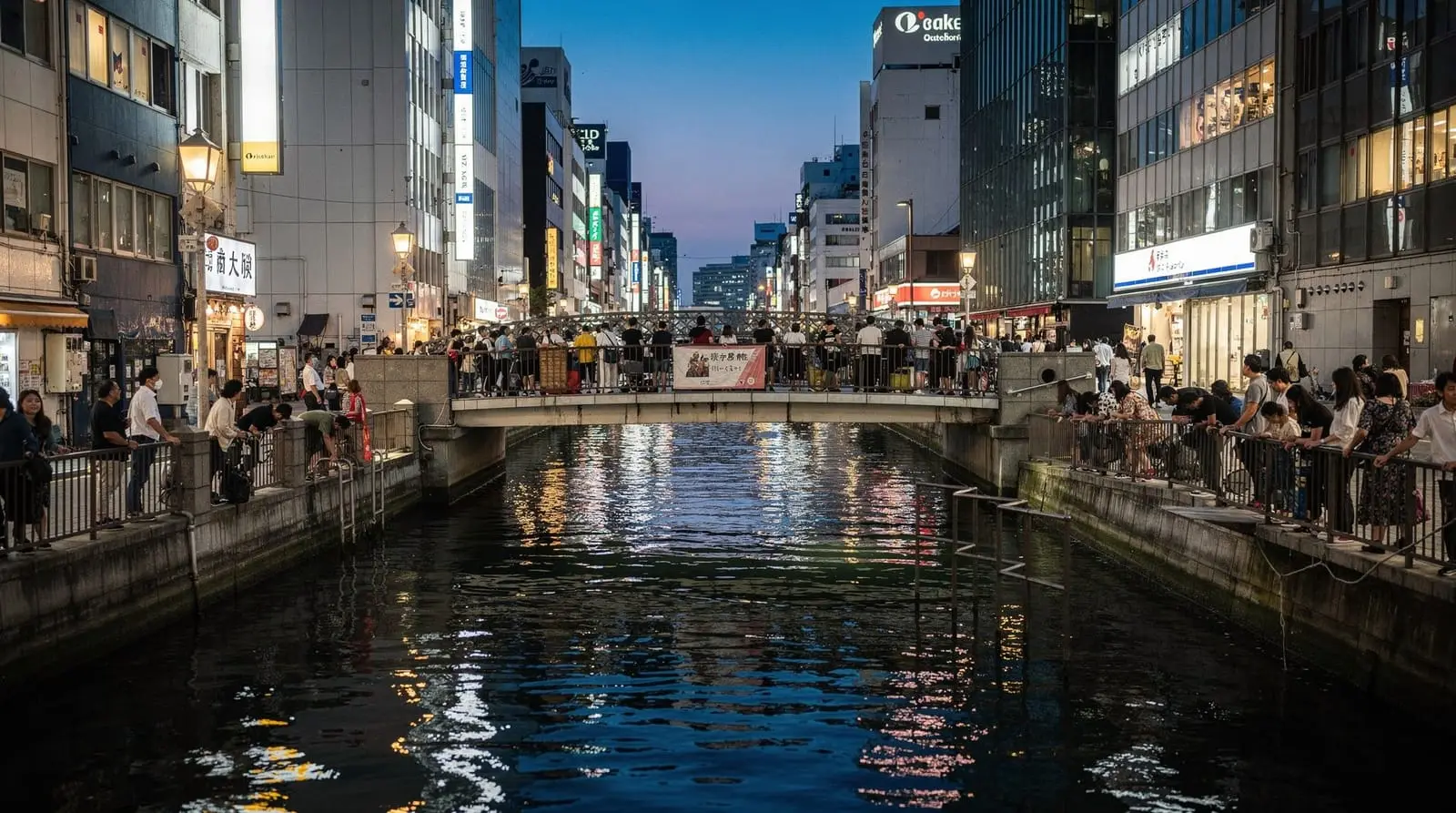
Evening: Dotonbori. Save this for last — the canal-side neon signs, including the Glico Running Man, are the reason to be here, and they only really land after dark. Plan to arrive by 5-6pm, eat dinner (takoyaki, okonomiyaki, or a proper restaurant meal), and walk the canal once it’s lit up.
This full loop is a realistic full day, roughly 9am to 8-9pm including train time both ways. A half-day version — castle in the morning, straight back to Kyoto by early afternoon — is possible if you only want the castle, but it skips the food neighborhoods entirely, which is arguably the bigger draw of an Osaka day trip.
Osaka Castle, honestly
Osaka Castle is the most visited single sight on this day trip, and it’s worth setting expectations correctly before going. The tower standing today is a 1931 concrete reconstruction, not the original — the castle first built in 1583 by Toyotomi Hideyoshi was destroyed and rebuilt multiple times over the following centuries, most significantly by fire in 1868, and the current structure dates from the early 20th century rather than the feudal era.
That matters for what you’ll find inside. The exterior — white walls, gold trim, the tower rising over stone ramparts and a moat — photographs well and is genuinely impressive from the park grounds. The interior is a different story: it’s set up as a modern museum, with an elevator to the upper floors, glass display cases, and multimedia exhibits covering the castle’s history and Toyotomi Hideyoshi’s life.
There are no original wooden interiors, tatami rooms, or the kind of layered, creaking authenticity you’d find at a preserved historic castle. Visitors who go in expecting something closer to Himeji Castle’s interior — Japan’s best-preserved original castle keep — sometimes come away disappointed; visitors who treat it as a history museum with an excellent rooftop view generally don’t.
Entry to the tower and museum costs ¥600 (roughly $4), and the surrounding park — moats, stone walls, and a plum and cherry blossom grove depending on season — is free to walk and worth the time even if you skip the tower itself.
Osaka Castle guided tour with museum covers the history in more depth than the exhibits alone, which is useful given how much of the story — Toyotomi Hideyoshi, the sieges, the reconstructions — isn’t obvious just from walking through.
Street food: where to eat and what to actually pay
Osaka’s food culture runs on a local phrase, kuidaore, roughly “eat until you drop” — a nod to the city’s reputation for spending on food over most other things. Three neighborhoods carry most of that reputation.
Dotonbori is the canal-side strip lined with restaurants under enormous illuminated signs, best experienced in the evening when the lights are on. Takoyaki, grilled octopus dumplings, is the dish most associated with the area — a set of 6-8 pieces runs ¥500-800 (roughly $3.30-5.30) at stalls along and near the canal. Okonomiyaki, a savory pancake mixing batter, cabbage, and a protein of choice, grilled and topped with sauce, mayonnaise, and bonito flakes, is the other Osaka staple worth ordering here, usually as a sit-down dish rather than a street snack.
Osaka street food tour through Dotonbori and Namba is a reasonable way to cut through the sheer number of options on a first visit, since Dotonbori’s density of restaurants makes picking blind a bit of a gamble.
Kuromon Market is a covered market a short walk from Namba and Dotonbori, worth visiting for fresh seafood, sashimi cups, grilled scallops, and wagyu beef skewers rather than fried snacks. It’s genuinely popular with Osaka locals doing their shopping, not purely a tourist stop, but pricing isn’t even across the market. Stalls immediately at the main entrance tend to charge more for the same items sold a few stalls further in, since that’s where tour groups and day-trippers arrive first and buy without comparing. Walking the length of the market before your first purchase, and checking prices at two or three stalls selling the same skewer or sashimi cup, is enough to avoid paying the entrance-adjacent markup.
Kuromon Market street food walk is useful here specifically because a guide knows which stalls are consistently good value, which matters more at Kuromon than almost anywhere else on this list given the pricing spread.
Shinsekai is a retro neighborhood built in the 1920s around Tsutenkaku Tower, with a slightly rougher, old-Osaka feel compared to the polish of Dotonbori. It’s the place to eat kushikatsu — breaded, deep-fried skewers of meat, seafood, and vegetables, dipped in a shared sauce container at the counter. The one rule every kushikatsu shop in Shinsekai enforces: no double-dipping. Dip once, eat the rest, and if you want more sauce, spoon a little onto your plate or ask for a fresh portion — dipping a bitten skewer back into the communal sauce is a fast way to get pointedly corrected by staff or nearby diners.
Osaka versus Kyoto: the contrast is the point
Part of what makes an Osaka day trip worthwhile is how different it feels from Kyoto within a single day. Kyoto is a former imperial capital built around temples, shrines, and a culture of restraint and formality; Osaka grew as a merchant city, and that history shows in how people behave in public — louder conversation, more direct interactions, street food eaten standing up rather than in a formal setting.
Neither is “better,” but the shift is real, and going from Kyoto’s quiet temple mornings to Dotonbori’s neon-lit food streets in the same day is a genuinely different register. For a fuller comparison of the two cities’ character, see the Kyoto vs Osaka guide, and if Tokyo is also on your list, Kyoto vs Tokyo covers how Osaka’s energy compares to Tokyo’s.
If you’re still deciding how Osaka fits into a broader Kyoto trip, the how many days in Kyoto guide addresses where a day trip like this one should sit relative to time spent in Kyoto itself, and Kyoto for first-time visitors covers the basics if this is an early stop in your planning.
Practical tips for planning the day
Best time to go: Any day works logistically given how frequent the trains are, but weekday visits mean thinner crowds at the castle and Kuromon Market. Weekend evenings in Dotonbori get genuinely dense with people, which is part of the atmosphere but worth knowing if you dislike crowds.
IC cards make this simple: An Icoca or Suica card, tapped at the gates, covers the JR Special Rapid, Hankyu, Keihan, and Osaka’s subway lines without buying individual tickets each time. There’s no need for a special ticket or pass just for a Kyoto-Osaka day trip.
Combining with another destination: Osaka pairs reasonably well with Kobe, since both are roughly 30 minutes from Kyoto and about 20-30 minutes from each other — a Kyoto-Osaka-Kobe-Kyoto loop is doable in a long day if you keep each stop tight. Pairing Osaka with Nara in the same day is less practical, since Nara sits in a different direction from Kyoto; most travelers who want both do them as separate day trips.
If food is the main draw for you rather than sights, it’s also worth comparing this trip against a broader look at Kyoto’s own street food scene and the Kyoto food guide, since some travelers find they’d rather spend a food-focused day in Kyoto itself and save Osaka for sightseeing.
What to skip if you’re short on time: Universal Studios Japan is a full day on its own and doesn’t fit into this itinerary — it’s a separate trip, not an add-on. The Umeda Sky Building and Osaka Aquarium are also worth cutting if you’re doing the castle-market-Shinsekai-Dotonbori route in one day; trying to add either turns a full day into a rushed one.
Budget for the day: Round-trip train fare (¥1,160 / roughly $7.80), castle entry (¥600 / roughly $4), and a day of street food grazing (roughly ¥2,500-4,000 / $17-27 across Kuromon, Shinsekai, and Dotonbori) puts a reasonably full day at somewhere around ¥4,500-6,000 (roughly $30-40) per person before any guided tours. For more on how this fits a broader Kyoto trip budget, see the Kyoto travel budget guide.
Osaka Aquarium and the Umeda Sky Building, if you have extra time
Two sights get mentioned often enough as add-ons that they deserve a quick honest note: Kaiyukan, Osaka’s large aquarium near the bay, is genuinely well-regarded but sits far enough from the castle-market-Dotonbori route that fitting it into the same day usually means cutting one of the other three stops, and its whale shark tank alone is worth a dedicated half day rather than a rushed hour.
The Umeda Sky Building’s rooftop observatory offers a strong evening skyline view and pairs more naturally with a Dotonbori-focused evening than with the castle-and-market route, since it’s close to Osaka Station where the JR Special Rapid arrives. Neither is a mistake to add if you genuinely have the time, but both work better as the anchor of a separate Osaka day than as an add-on squeezed into this one.
Osaka at night versus a return to Kyoto
Some visitors weigh staying in Osaka overnight rather than taking the last train back to Kyoto, particularly if Dotonbori’s evening energy makes 9 or 10pm feel too early to leave. The JR Special Rapid runs until roughly midnight, so a late dinner in Dotonbori followed by the return trip is realistic without an overnight stay, and it keeps you based in Kyoto for the rest of your trip rather than juggling two hotel bookings for one extra night. If nightlife specifically is the draw, Osaka’s bar scene in Namba and around Umeda runs later and louder than anything comparable in Kyoto, which is worth knowing if a late Osaka night is genuinely part of the appeal rather than an afterthought to the castle-and-food itinerary.
Frequently asked questions about visiting Osaka from Kyoto
How do I get from Kyoto to Osaka, and how much does it cost?
The JR Special Rapid train is the standard choice: about 29 minutes from Kyoto Station to Osaka Station, ¥580 (roughly $3.90) one-way, with several trains per hour all day, so there’s no need to reserve a seat or plan around a timetable. The Shinkansen (Kodama or Hikari) also runs this route in about 15 minutes, but it costs ¥1,450 or more one-way — overkill for a 29-minute trip unless you’re combining it with another Shinkansen leg the same day, like continuing on to Himeji or Hiroshima. If you’re staying near Kawaramachi or Gion rather than Kyoto Station, the private Hankyu or Keihan lines run from stations closer to those neighborhoods and are sometimes a few hundred yen cheaper, though a little slower than JR.
Is Osaka Castle worth visiting if the building isn’t original?
It’s worth visiting for the exterior and the park, with realistic expectations about the interior. The current tower is a 1931 concrete reconstruction — the 1583 original burned down over the centuries, most recently in 1868 — and the inside is set up as a modern museum with an elevator, glass display cases and multimedia exhibits rather than historic wooden interiors. Visitors expecting something like the inside of Himeji Castle are often disappointed; visitors who go in expecting a museum with a good view from the top floor generally aren’t.
What’s the best street food to try in Osaka?
Takoyaki (grilled octopus dumplings) is the essential one — Osaka invented it, and a set of 6-8 pieces runs ¥500-800 (roughly $3.30-5.30) at stalls around Dotonbori. Okonomiyaki, a savory grilled pancake, and kushikatsu, breaded and deep-fried skewers eaten in Shinsekai, are the other two dishes most associated with the city. Kuromon Market adds fresh seafood, grilled scallops and wagyu skewers to the mix if you want something beyond fried street snacks.
Is Kuromon Market a tourist trap?
Parts of it are. Stalls right at the main entrance tend to charge more for the same skewers and sashimi cups sold a few stalls further in, since that’s where the tour groups and cruise-ship crowds funnel through first. Walking the full length of the market before buying anything, and comparing two or three stalls selling the same item, is enough to avoid the worst of the markup — the market itself is genuine and popular with Osaka locals too, it’s just not evenly priced.
How many days should I spend in Osaka, or is a day trip enough?
A day trip covers Osaka’s core sights reasonably well — the castle, one food-focused neighborhood at lunch, and Dotonbori at night. If you also want Universal Studios Japan, the Umeda Sky Building, or a slower pace through Shinsekai and Namba without rushing, an overnight stay opens that up. Most Kyoto-based travelers treat Osaka as a day trip rather than a base, since Kyoto’s temples and Osaka’s city energy serve different parts of a trip.
Can I combine Osaka with another day trip, like Nara or Kobe, in one day?
It’s possible but tight, and it changes what you’ll actually see. Osaka and Kobe are both about 30 minutes from Kyoto by train and roughly 20-30 minutes from each other, so a Kyoto-Osaka-Kobe-Kyoto loop is doable in a long day if you keep each stop focused. Combining Osaka with Nara in one day works less well logistically since they’re in different directions from Kyoto — most people who want both do them on separate days. See the best day trips from Kyoto guide for how the main options compare.
What time of day is best to visit Dotonbori?
Evening, specifically after sunset, is when Dotonbori is worth the trip — the neon signs, including the Glico Running Man, are the point, and they don’t register the same way in daylight. Arriving by 5-6pm gives you time to eat before the area gets dense with people, since Dotonbori’s narrow canal-side streets get genuinely crowded on weekend evenings.
Do I need a JR Pass just for a Kyoto-Osaka day trip?
No. A 7-day JR Pass costs far more than a round-trip Special Rapid fare (¥580 each way, so about ¥1,160 round trip), so buying one purely for this trip doesn’t pay off. It only makes sense if you’re already using it for longer-distance Shinkansen travel elsewhere in your itinerary, in which case the Osaka leg is effectively free as part of that pass.
Frequently asked questions about Osaka day trip from Kyoto — trains, castle and street food, planned out
How do I get from Kyoto to Osaka, and how much does it cost?
Is Osaka Castle worth visiting if the building isn't original?
What's the best street food to try in Osaka?
Is Kuromon Market a tourist trap?
How many days should I spend in Osaka, or is a day trip enough?
Can I combine Osaka with another day trip, like Nara or Kobe, in one day?
What time of day is best to visit Dotonbori?
Do I need a JR Pass just for a Kyoto-Osaka day trip?
Top experiences
Bookable activities with verified prices and instant confirmation on GetYourGuide.