Tokyo to Kyoto — shinkansen, night bus, or flight compared
Kyoto: Japan/Asia eSIM Roaming Mobile Data Plan
What's the best way to get from Tokyo to Kyoto?
The Nozomi shinkansen is the fastest option at about 2 hours 15 minutes, with fares around ¥14,000-15,000 (US$93-100) one-way, but it's not covered by the standard nationwide JR Pass. The slightly slower Hikari (about 2 hours 40 minutes) runs a similar fare and is covered by the JR Pass. A night bus costs a fraction of the price but takes 7-8 hours; flying rarely beats the shinkansen once airport transfer time is counted.
| Fastest | Nozomi shinkansen, around 2h15 |
| Cost | Around ¥14,000-15,000 one-way (Nozomi/Hikari) |
| JR Pass | Covers Hikari/Kodama, NOT Nozomi |
| Cheapest | Night bus, around ¥3,000-8,000, 7-8 hours |
| Booking | Rarely needed except Golden Week/Obon/New Year |
Tokyo to Kyoto is one of the most heavily traveled intercity routes in Japan, served by a shinkansen departing every 10-15 minutes for most of the day, which makes it one of the more straightforward legs of a Japan itinerary to plan — but the choice between Nozomi, Hikari, a night bus, and flying still comes down to real trade-offs in price, time, and JR Pass coverage that are worth understanding before booking, since the fastest option isn’t always the one covered by a pass a traveler may already be planning to buy.
The shinkansen dominates this route, and for good reason
Nearly all travelers moving between Tokyo and Kyoto take the Tokaido Shinkansen, and the reasons are straightforward: it’s faster door-to-door than flying once airport transfers are counted, runs frequently enough that advance booking usually isn’t necessary, and departs from and arrives at central stations (Tokyo Station or Shinagawa on the Tokyo end, Kyoto Station on the Kyoto end) rather than an out-of-town airport. The remaining question is which of the three shinkansen tiers — Nozomi, Hikari, or Kodama — and whether a JR Pass changes that decision.
Nozomi: the fastest, and not covered by the JR Pass
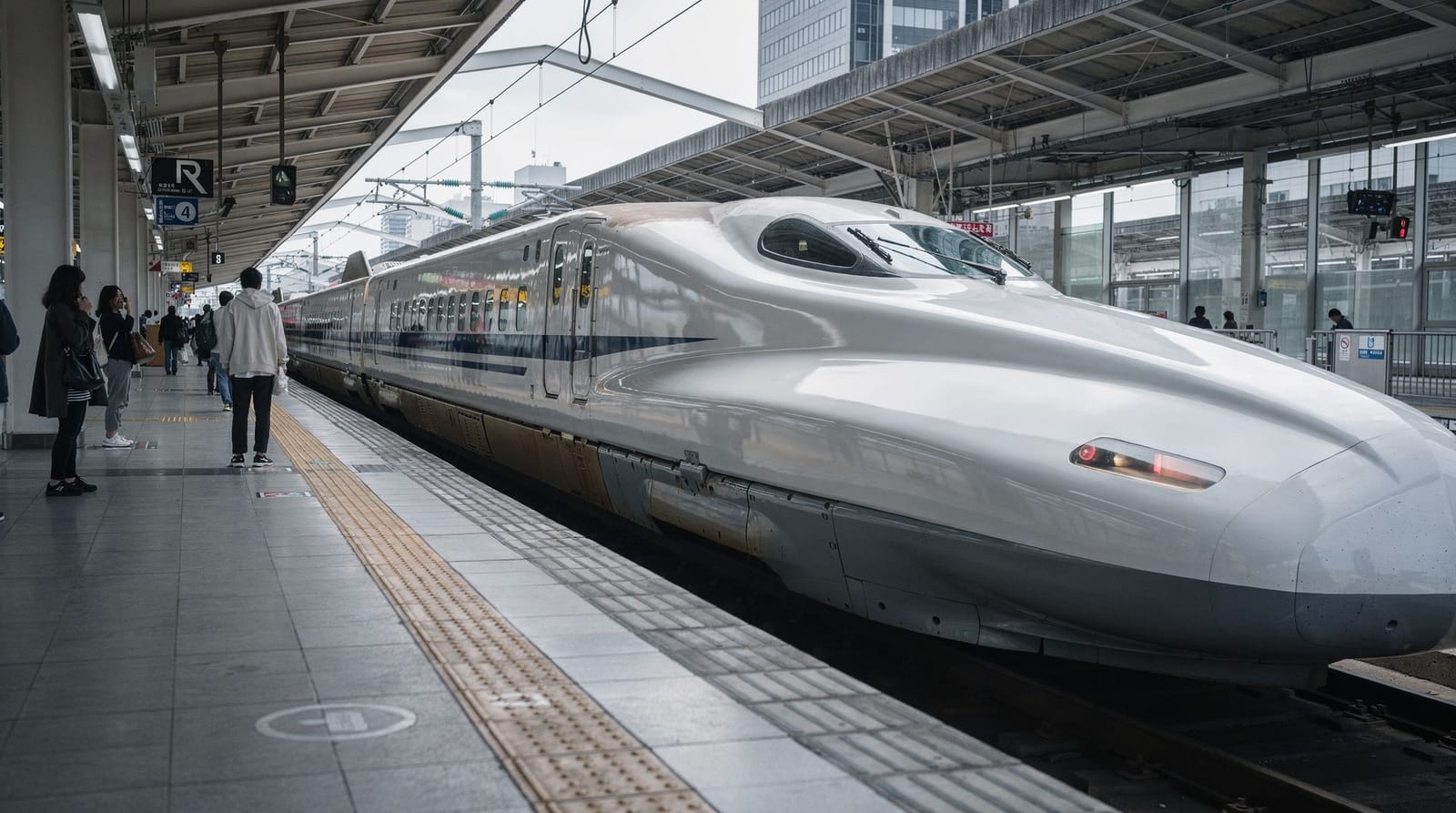
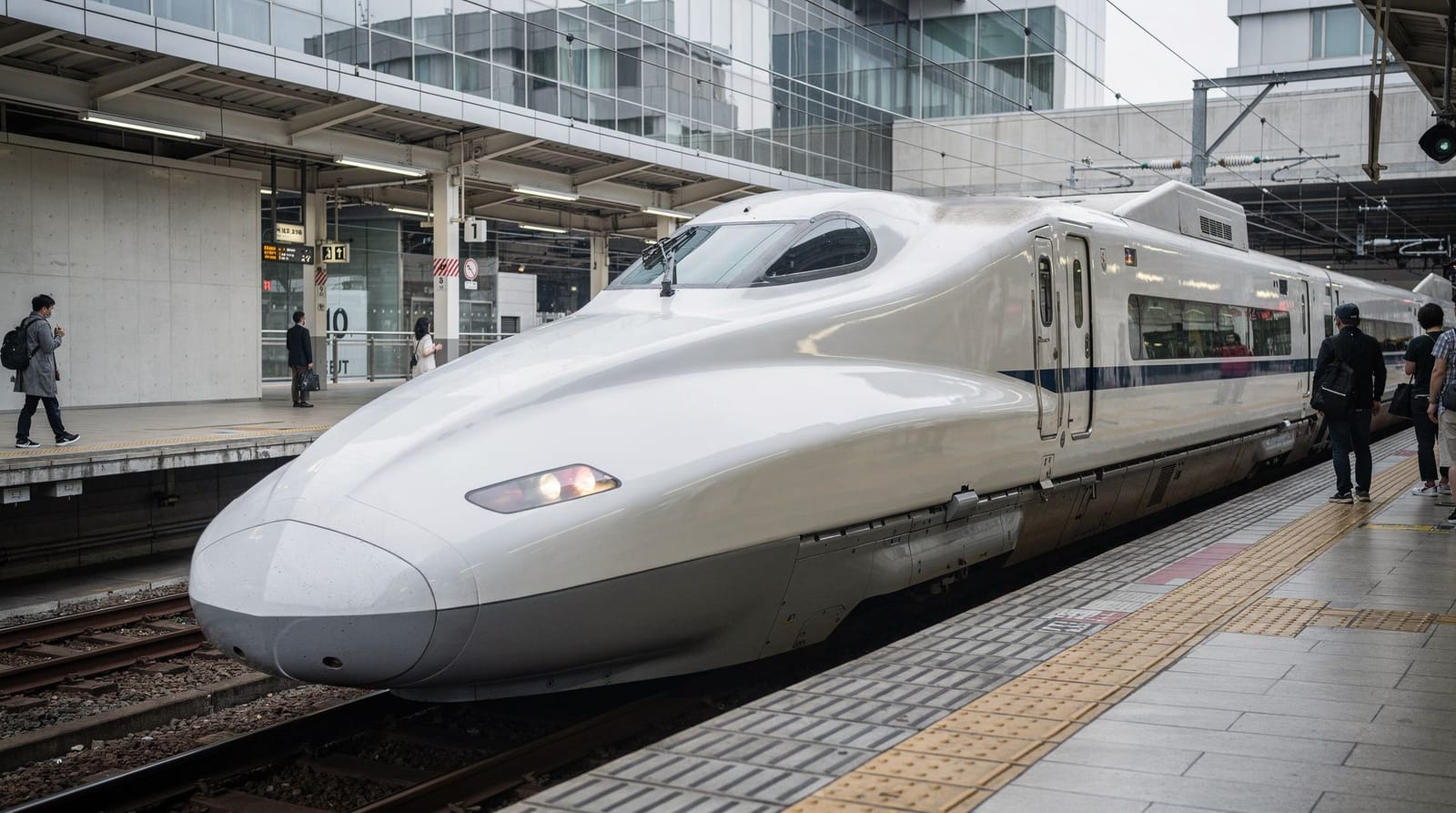
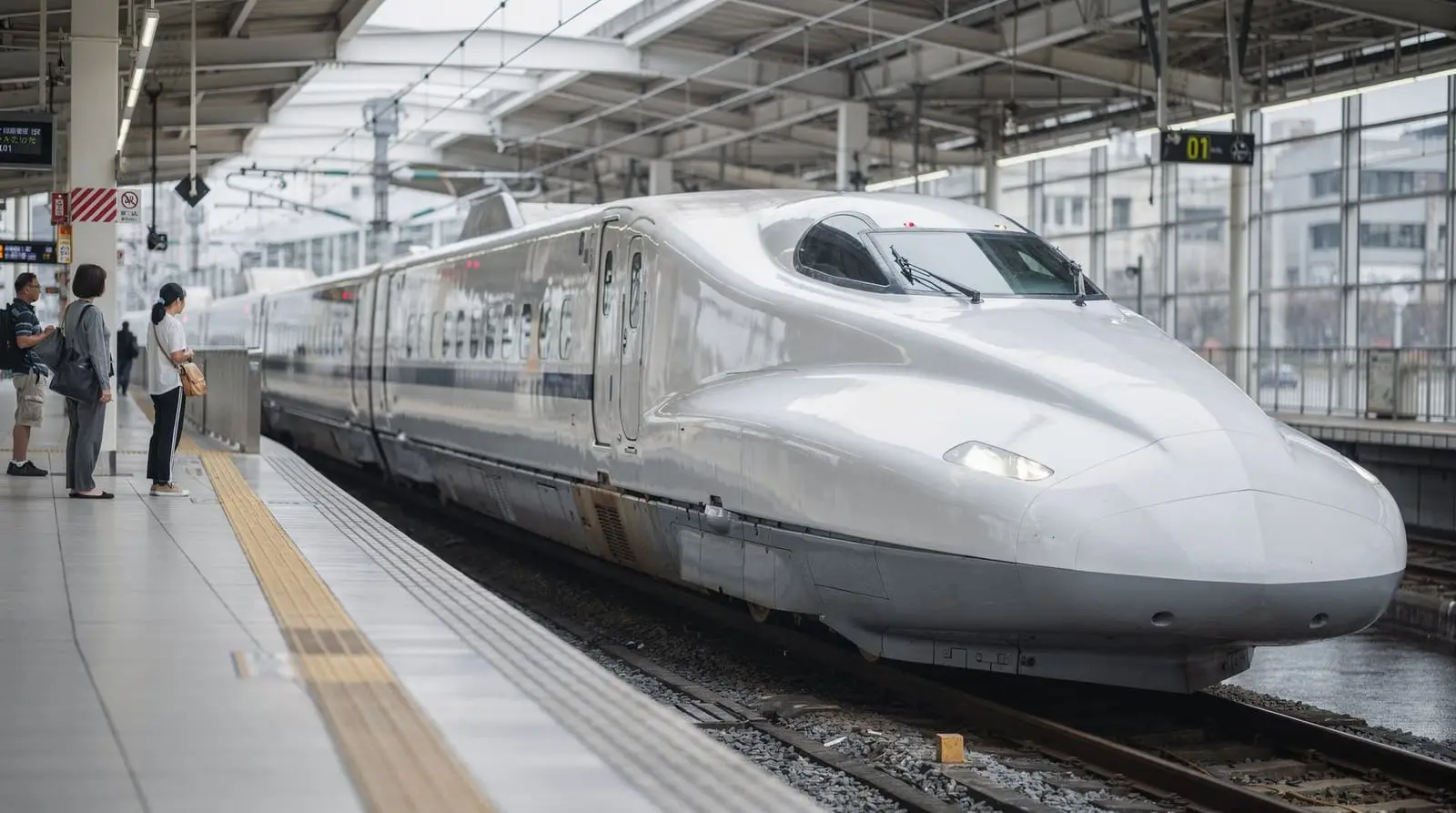
Nozomi is the fastest shinkansen service on this route, covering Tokyo to Kyoto in approximately 2 hours 15 minutes with a small number of intermediate stops. Fares run approximately ¥14,000-15,000 (US$93-100) one-way for a reserved seat. The important caveat: the standard nationwide JR Pass explicitly excludes Nozomi (and the related Mizuho service on the Sanyo Shinkansen further west), a restriction that catches some first-time JR Pass buyers off guard when they try to board and are turned away at the gate.
Hikari: slightly slower, and JR Pass-eligible
Hikari makes a few more intermediate stops than Nozomi and takes roughly 2 hours 40 minutes for the same Tokyo-Kyoto run — about 25-30 minutes longer. Fares run similarly to Nozomi, sometimes marginally lower, but the critical difference for pass holders is that Hikari is fully covered by the nationwide JR Pass, making it the default choice for anyone traveling on one. For travelers not using a pass, the price difference between Nozomi and Hikari is small enough that the 25-30 minute time saving usually makes Nozomi the better pick.
Kodama: the slow, all-stops option
Kodama stops at every station along the line and takes around 4 hours for Tokyo to Kyoto — close to double Nozomi’s time for a similar fare. It’s rarely the sensible choice for this specific route unless a stop along the way (Odawara, Shizuoka, Hamamatsu, Nagoya) is a deliberate part of the itinerary, in which case breaking the journey with a Kodama or a Hikari that makes the relevant stop is worth considering instead of a direct Nozomi run.
Reserved versus unreserved seats
Reserved seats guarantee a specific seat and cost a modest premium over unreserved seats, which are first-come-first-served in designated unreserved cars (usually cars 1-3 on a 16-car train). During normal weekday travel, unreserved seats are rarely an issue to find; during Golden Week (late April-early May), Obon (mid-August), and New Year, unreserved cars can fill entirely, leaving standing room only for the full journey — reserving a seat in advance during these specific windows is worth the small extra cost.
Does a JR Pass make sense for a Tokyo-Kyoto trip?
For a single round trip between Tokyo and Kyoto, a nationwide JR Pass (running roughly ¥50,000 for 7 days as of the October 2023 price revision) usually costs more than simply buying Nozomi tickets directly, since two one-way Nozomi fares total around ¥28,000-30,000 — well under the pass price. The pass starts making financial sense only when several additional long-distance JR trips (Hiroshima, Kanazawa, a Tokyo-Kyoto round trip plus a Kansai side trip) are stacked into the same window. The full calculation, including regional alternatives, is in the JR Pass for Kyoto guide.
Japan/Asia eSIM roaming data plan — worth setting up before the shinkansen ride so seat reservations and maps work throughout the tripNight bus: the budget option
Overnight highway buses (Willer Express and several other operators) connect Tokyo and Kyoto for roughly ¥3,000-8,000 depending on operator, seat class, and how far in advance it’s booked — a fraction of the shinkansen fare. The trade-off is time and comfort: journeys run 7-8 hours overnight, arriving in Kyoto early morning, and seat quality varies widely between a cramped standard seat and a curtained “premium” pod-style seat that costs closer to the higher end of that price range. For budget travelers with flexible schedules and the ability to sleep on a moving bus, it’s a genuine option; for anyone planning to sightsee the day of arrival, the sleep-quality trade-off is worth weighing carefully.
Flying: rarely faster once transfers are counted
Flights between Tokyo (Haneda, mostly; some Narita departures) and Osaka’s Itami or Kansai airports run about 1 hour 15 minutes in the air, but total door-to-door time adds Tokyo airport transfer (30-60 minutes from central Tokyo to Haneda, more to Narita), security and boarding buffer (60-90 minutes before departure), and the Osaka-to-Kyoto leg on arrival (45 minutes to 90 minutes depending on which Osaka airport and transport mode). Adding this up, flying typically takes 4-5 hours door-to-door — longer than Nozomi’s direct 2 hours 15 minutes — and costs a similar or higher fare in most booking windows. Flying only wins when fare sales make it dramatically cheaper than the shinkansen and the traveler has no time pressure.
Luggage and luggage forwarding
Shinkansen trains have limited oversized-luggage storage (a reservation is technically required for very large bags in some seat rows, enforced inconsistently), which makes Japan’s takkyubin luggage forwarding services worth considering for travelers with large suitcases: a courier picks up luggage from a Tokyo hotel and delivers it to a Kyoto hotel the next day for roughly ¥2,000-3,000 per bag, letting the shinkansen ride itself be taken with just a day bag. This is a genuinely popular strategy among domestic Japanese travelers and worth adopting rather than wrestling a full suitcase through Tokyo Station’s crowded concourses.
Where to sit for the view
On a clear day, Mount Fuji is visible from the right-hand side of the train (seats A/B in most car configurations) when traveling from Tokyo toward Kyoto, roughly 40-50 minutes into the journey near Shin-Fuji station. It’s a small detail, but worth requesting when reserving a seat if a window view of Fuji matters to the trip, since the mountain is cloud-covered more often than not outside the clearest winter mornings.
Platform numbers and finding your car
Shinkansen platforms display marked positions on the ground showing exactly where each numbered car will stop, color-coded for reserved versus unreserved cars, which means lining up in the right spot in advance avoids a last-second scramble down the platform once the train pulls in — trains stop at Tokyo and Kyoto stations for only about 1-2 minutes before departing again. Checking the car number printed on a reserved ticket against the platform markings while waiting is standard practice and worth doing a minute or two before the train arrives rather than after.
Buying tickets: station, machine, or app
Shinkansen tickets can be bought at station ticket counters (staffed, with English-speaking service at major stations), automated machines (English-language option available), or through JR’s official online booking apps and platforms, which increasingly allow smartphone-based ticketing without a physical paper ticket. For most trips, buying shortly before travel at a station machine works fine given the route’s frequency; booking ahead through an app is worth it mainly for guaranteed seat selection during peak periods or for travelers who prefer having everything set before departure.
Navigating Tokyo Station’s shinkansen platforms
Tokyo Station’s shinkansen section is large and can be disorienting on a first visit, with separate ticket gates for the Tokaido Shinkansen (the line serving Kyoto) distinct from other shinkansen lines departing the same station. Signage is in English throughout, and station staff at the gates can point toward the correct platform, but first-time riders should budget 20-30 minutes from entering the station to boarding, more during the morning and early-evening commuter rush when the station’s non-shinkansen concourses get genuinely crowded. Shinagawa Station, one stop before Tokyo Station on most Tokaido Shinkansen services, is a useful alternative departure point for travelers staying in southern Tokyo, with a simpler, less crowded layout.
Traveling as a pair or group: does the math change?
The per-person shinkansen fare doesn’t discount for group size the way some rental cars or private transfers do, so a couple or family pays the full per-seat fare each — two Nozomi tickets run roughly ¥28,000-30,000 total, still well under a nationwide JR Pass for two people (which would run roughly ¥100,000 combined) unless several other long-distance legs are planned. Night buses do scale down average cost more for groups since operators sometimes offer small multi-seat discounts, but the time cost applies per person regardless, making the shinkansen the more time-efficient group choice in nearly every case.
Stopping in Nagoya, Hamamatsu, or Shizuoka along the way
Because the Tokaido Shinkansen runs directly through Nagoya, Hamamatsu, and Shizuoka on its way to Kyoto, a deliberate stopover is straightforward to add without much extra planning — simply book (or ride unreserved) to the intermediate stop, spend a few hours or a night, and continue on a later train using a fresh ticket for the remaining leg. Nagoya in particular is a common stopover for its castle, food scene (hitsumabushi grilled eel, miso katsu), and position roughly halfway between Tokyo and Kyoto, splitting a long single travel day into two more manageable legs.
Weather delays and how the shinkansen handles them
The Tokaido Shinkansen has an excellent on-time record by international standards, but heavy snow (rare but not unheard of, particularly around Maibara near Lake Biwa, one of the snowiest sections of the route), typhoons in late summer and early autumn, and occasional earthquake-triggered safety stoppages can cause delays or brief suspensions. These are announced clearly at stations and on JR’s official channels, and delays of more than a few minutes typically come with an official delay certificate available on request, useful for any connecting travel arrangements affected. Building a buffer day, rather than a same-day onward connection immediately after arrival, is a reasonable precaution during typhoon season (roughly August-October).
A realistic Tokyo-to-Kyoto travel day
A typical transfer day: check out of a Tokyo hotel by mid-morning, arrive at Tokyo or Shinagawa Station with buffer time for finding the platform (30-45 minutes recommended for first-time shinkansen riders navigating an unfamiliar station), board a Nozomi around midday, arrive in Kyoto roughly 2 hours 15 minutes later, and check into a Kyoto hotel by early-to-mid afternoon with time left for a light first sightseeing stop. This leaves a genuinely useful half-day in Kyoto rather than losing the entire day to transit, one advantage the shinkansen holds clearly over both the night bus and flying.
Food on board and at the station
Ekiben (station bento boxes) are a genuine part of the shinkansen experience, sold at kiosks throughout Tokyo and Shinagawa stations before boarding, ranging from simple ¥800-1,200 rice-and-side-dish sets to elaborate regional specialties running ¥1,500-2,500. Eating on board is completely normal and expected — unlike some countries’ rail etiquette, bringing a meal onto a Japanese shinkansen carries no stigma, and the fold-down tray tables are sized for exactly this. A small selection of drinks and snacks is also sold from a trolley cart on most services, though selection is limited compared with a station kiosk, so buying an ekiben before boarding is the better strategy for a full meal.
Arriving in Kyoto: what happens after the shinkansen
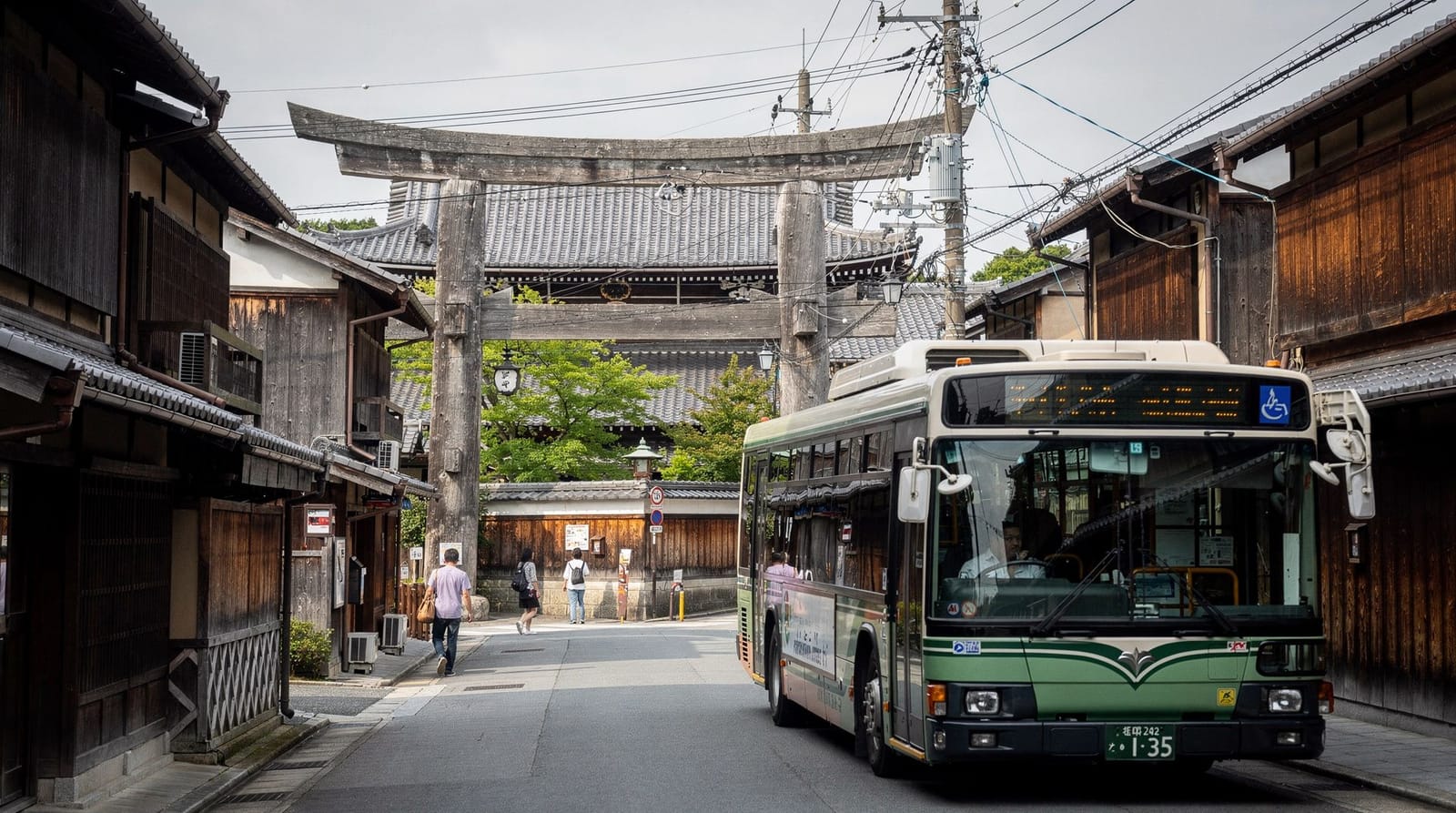
The Tokaido Shinkansen arrives at Kyoto Station’s dedicated shinkansen platforms, which connect to the regular JR concourse, the subway’s Karasuma line, and the city bus terminal via a short walk through the station building — no separate ticket or long transfer needed to continue on to a hotel or the first sightseeing stop. The getting around Kyoto guide covers the onward local transport options in full, and Kyoto Station itself sits within the Kyoto Station destination guide’s coverage area, including nearby first-stop sights like Toji and Higashi Honganji for anyone with a few spare hours before checking in.
How this route fits into a wider Japan itinerary
For travelers continuing beyond Kyoto — to Osaka, Hiroshima, or back to Tokyo at the end of a trip — the same shinkansen line extends further west (Tokyo-Kyoto-Osaka-Hiroshima all sit on the Tokaido-Sanyo Shinkansen corridor), which is one of the strongest arguments for a nationwide JR Pass on a multi-city itinerary even when it doesn’t pay off for the Tokyo-Kyoto leg in isolation.
The JR Pass for Kyoto guide walks through exactly where the break-even point sits once Hiroshima or a return Tokyo leg is added to the calculation. For regional travel once you’re settled in Kyoto rather than the Tokyo leg itself, see the Kansai area passes guide and Kansai Airport to Kyoto if you’re flying into the region instead of arriving by shinkansen.
Kansai Wide Area rail and bus pass — worth comparing against a single Nozomi fare if Osaka or Himeji day trips are also plannedOnce you’ve arrived and are planning how many days to spend before moving on, the how many days in Kyoto guide and Kyoto travel budget breakdown both build naturally on the transport costs covered here.
Frequently asked questions about Tokyo to Kyoto transport
How long does the shinkansen take from Tokyo to Kyoto?
The fastest Nozomi service takes about 2 hours 15 minutes; Hikari takes roughly 2 hours 40 minutes; Kodama, stopping at every station, takes around 4 hours.
Does the JR Pass cover the Nozomi shinkansen?
No. The standard nationwide JR Pass excludes Nozomi and Mizuho services. Pass holders use Hikari or Kodama instead, adding roughly 25-30 minutes for this route.
How much does a one-way shinkansen ticket from Tokyo to Kyoto cost?
A reserved seat on Nozomi runs approximately ¥14,000-15,000 (US$93-100); Hikari runs a similar or marginally lower fare.
Is a night bus from Tokyo to Kyoto worth it?
For a budget-focused trip with flexible time, yes — night buses run roughly ¥3,000-8,000, a fraction of the shinkansen fare, though the 7-8 hour overnight journey has a real sleep-quality cost.
Is flying from Tokyo to Kyoto faster than the shinkansen?
Rarely, once airport transfer time on both ends is counted — total door-to-door flying time typically exceeds the shinkansen’s direct 2 hours 15 minutes to 2 hours 40 minutes.
Should I buy shinkansen tickets in advance or at the station?
Buying at the station or via an app shortly before travel works fine most of the year, given the route’s high frequency. Booking ahead matters mainly around Golden Week, Obon, and New Year.
Can I bring large luggage on the shinkansen?
Yes, though space is limited and a reservation is technically required for oversized bags in some seat rows. Many travelers use a luggage forwarding (takkyubin) service instead, sending bags ahead for roughly ¥2,000-3,000 and riding with just a day bag.
Which station in Tokyo should I depart from — Tokyo Station or Shinagawa?
Either works equally well for reaching Kyoto, since all Tokaido Shinkansen services stop at both. Shinagawa is the simpler, less crowded option for travelers staying in southern Tokyo; Tokyo Station has more food and shopping options but a larger, busier concourse to navigate.
Can I stop in Nagoya or another city on the way to Kyoto?
Yes — the Tokaido Shinkansen runs directly through Nagoya, Hamamatsu, and Shizuoka, so adding a stopover is as simple as booking or riding to that station, spending time there, and continuing on a later train with a fresh ticket for the remaining leg.
Frequently asked questions about Tokyo to Kyoto — shinkansen, night bus, or flight compared
How long does the shinkansen take from Tokyo to Kyoto?
Does the JR Pass cover the Nozomi shinkansen?
How much does a one-way shinkansen ticket from Tokyo to Kyoto cost?
Is a night bus from Tokyo to Kyoto worth it?
Is flying from Tokyo to Kyoto faster than the shinkansen?
Should I buy shinkansen tickets in advance or at the station?
Top experiences
Bookable activities with verified prices and instant confirmation on GetYourGuide.