Best Instagram spots in Kyoto — and the quieter alternatives nearby
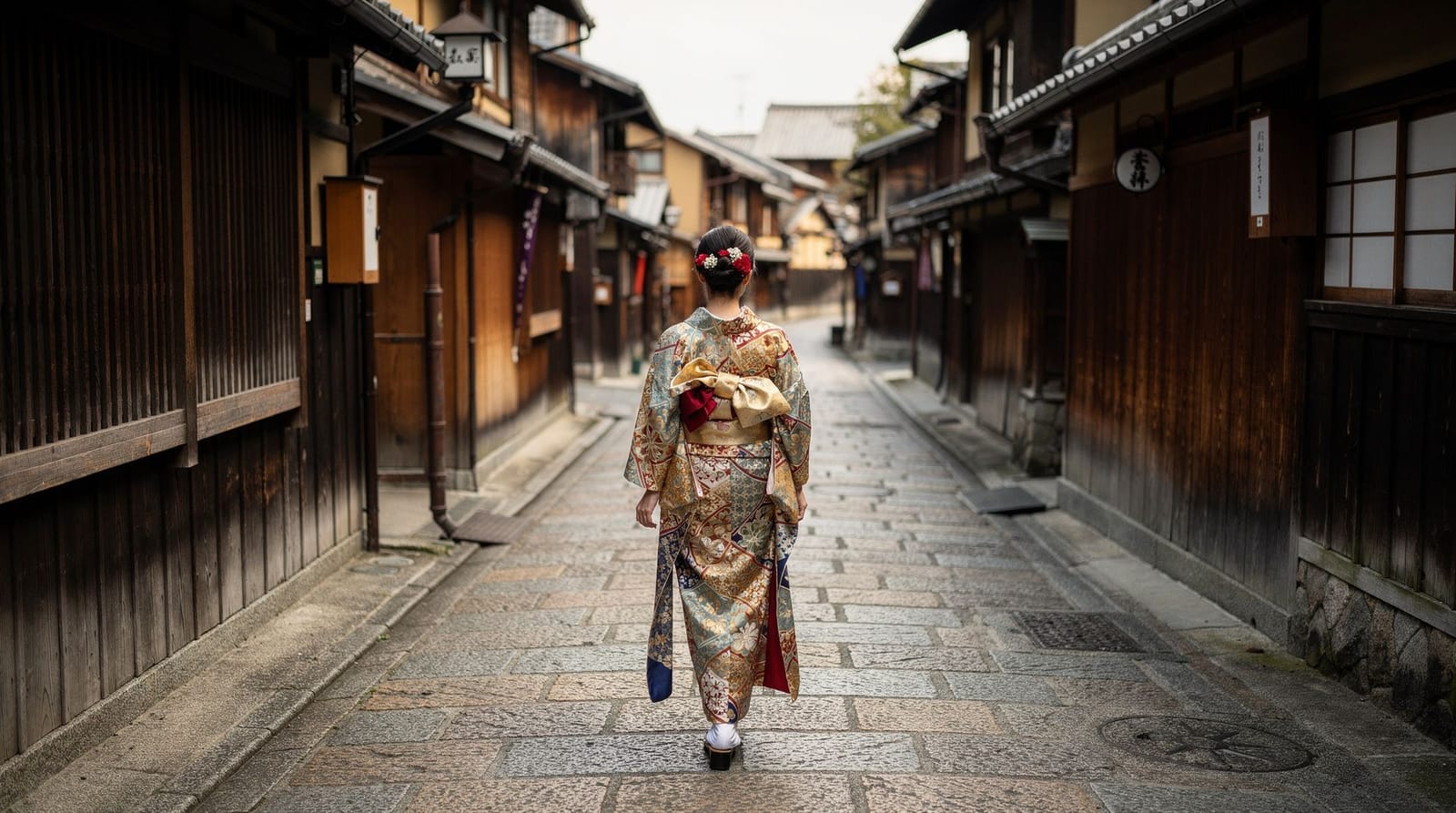
Kyoto Professional Photoshoot in traditional kimono
What's the most Instagrammed spot in Kyoto, and is it worth the crowd?
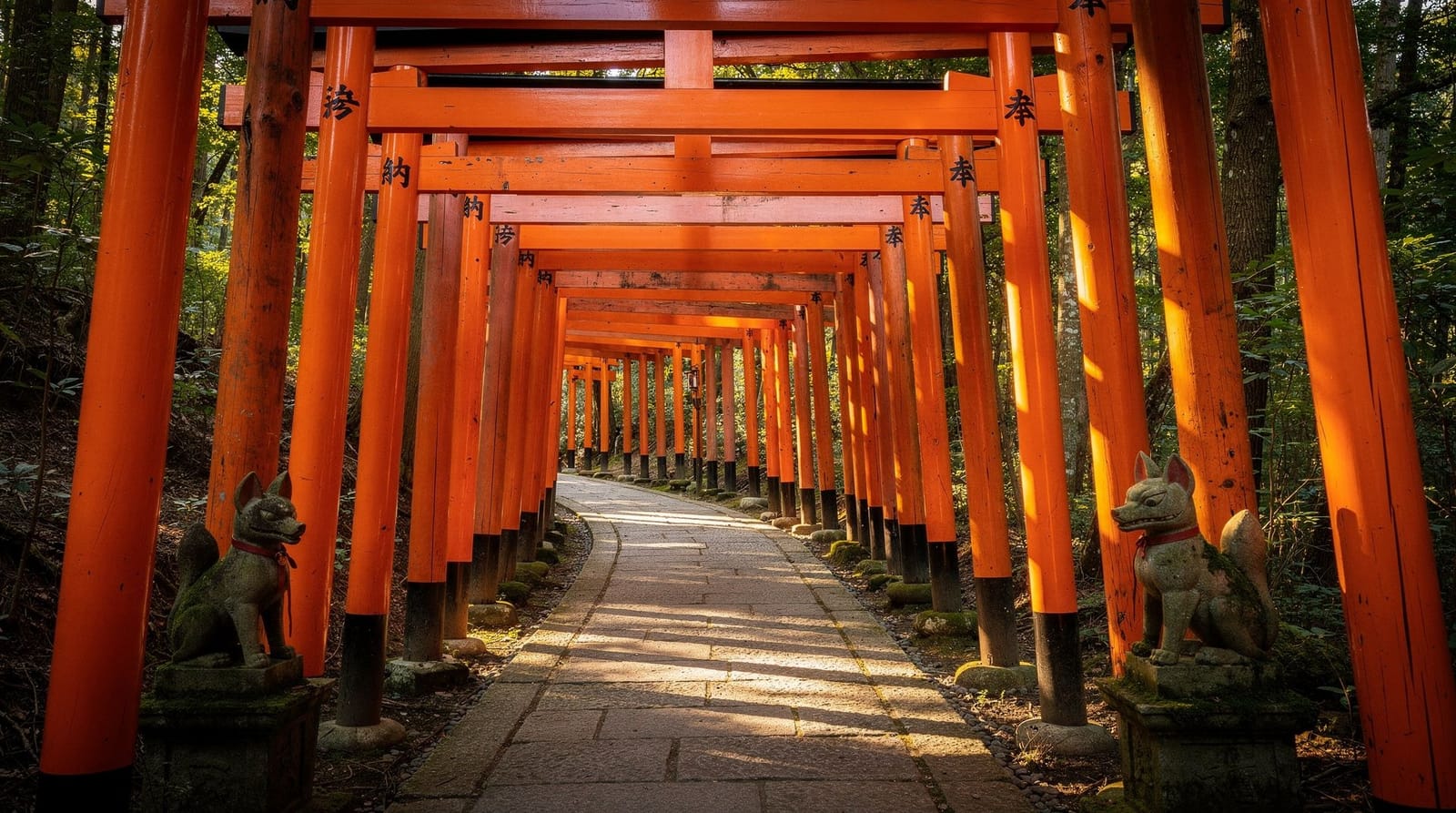
Fushimi Inari's Senbon Torii tunnel and Arashiyama's bamboo grove are the two most-photographed spots, and both are worth visiting, but the version circulating on social media — an empty tunnel of gates or a clear bamboo path — only exists before roughly 7:30-8am. Arriving mid-morning, when most visitors do, gets a real but visibly crowded shot, which is worth knowing before building an itinerary around getting that exact frame.
Most of Kyoto’s “Instagrammable” spots became Instagrammable because they’re genuinely striking, not because of a marketing push — but the version of each spot that circulates online is almost always the empty-of-people version, taken at a specific hour most visitors don’t plan around. This guide covers the handful of spots that dominate Kyoto’s social-media feeds, what actually separates the viral shot from the ordinary tourist one, and a set of quieter alternatives nearby that deliver a comparable frame without the wait, the crowd, or in some cases the same spot at all.
| Top spots | Fushimi Inari torii tunnel, Arashiyama bamboo grove, Sannenzaka/Yasaka Pagoda |
| Best time | Before 7:30-8am for the two crowd-sensitive spots |
| Cost | Free for landmarks; kimono photoshoots run separately |
| Quiet alternatives | Nonomiya Shrine, Shosei-en, upper Fushimi Inari path |
| Doesn’t respond to timing | Kinkaku-ji (single fixed viewpoint) |
Famous spots versus their quiet alternatives
| Famous spot | Why it’s crowded | Quiet alternative |
|---|---|---|
| Fushimi Inari (Senbon Torii) | 24-hour access, no cap on visitors | Upper mountain path past the main loop |
| Arashiyama bamboo grove | Free, short, no gate | Adashino Nenbutsu-ji’s smaller groves |
| Arashiyama torii shot | Same grove crowd | Nonomiya Shrine, moments away |
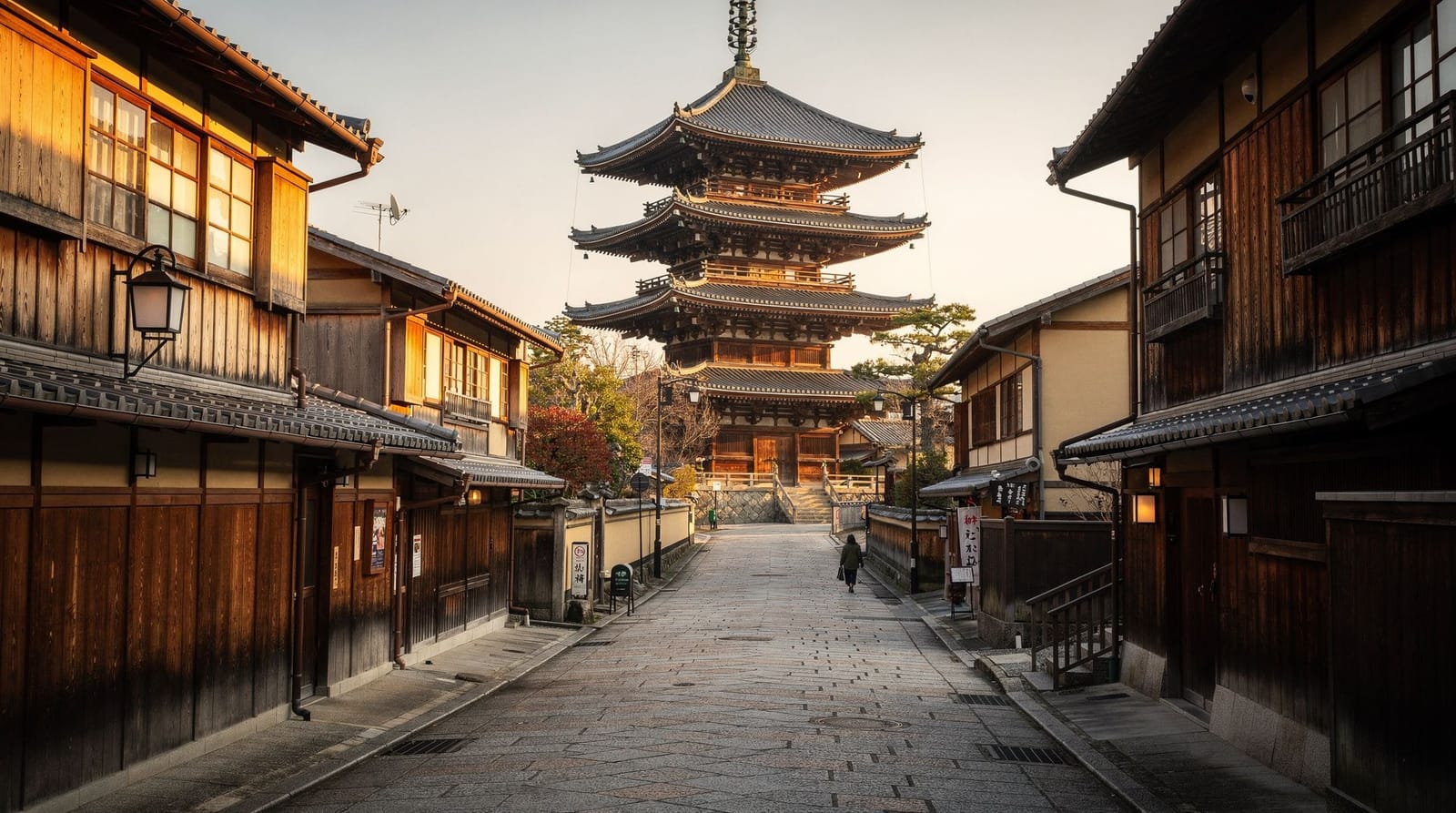
| Sannenzaka/Yasaka Pagoda | Single classic composition | Ninenzaka’s connecting side lanes |
| Kyoto’s headline gardens | Marketing momentum | Shosei-en, near Kyoto Station |
Fushimi Inari’s Senbon Torii: the shot everyone wants
The tunnel of vermillion torii gates near Fushimi Inari Taisha’s main entrance is Kyoto’s single most-shared image, and it’s genuinely photogenic — but the crowd-free version online is taken before roughly 7:30am, since the shrine never closes and its lower tunnels fill steadily from mid-morning through the tour-bus-heavy midday hours.
Beyond the early-morning strategy, the honest alternative is walking further: most visitors turn back at the lower loop, and the upper sections of the mountain path toward the summit thin out substantially, offering the same visual without needing to beat the sunrise. The full guide to the shrine, the hike, and its layout is at the Fushimi Inari guide; the deeper timing strategy for photography specifically, across this and other major sights, is in the Kyoto photo spots guide.
Arashiyama’s bamboo grove: short, famous, and crowd-dependent
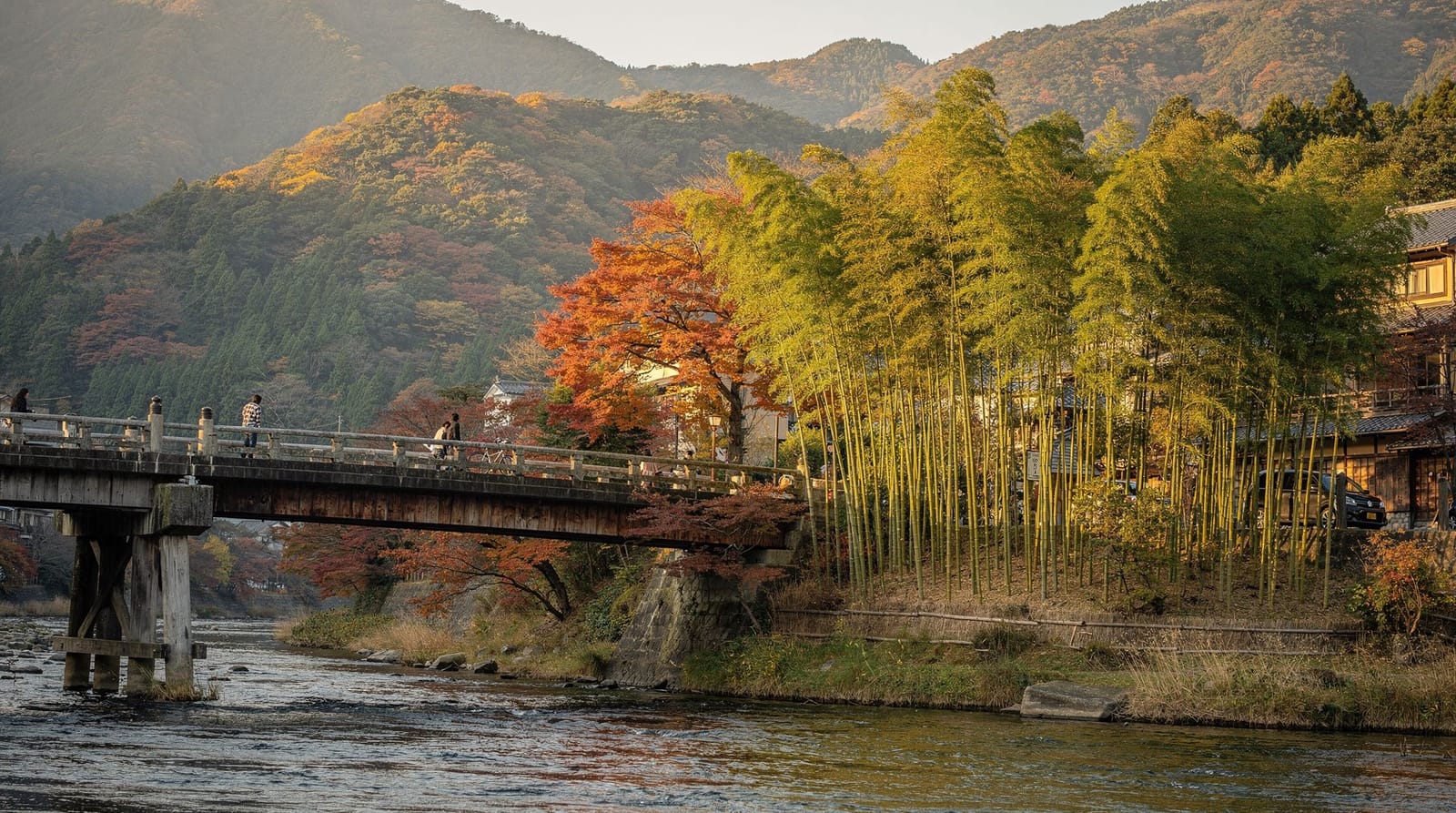
Arashiyama’s bamboo grove takes about 10-15 minutes to walk and is free and always open, which means — like Fushimi Inari — its apparent emptiness in any given photo is almost entirely a function of arrival time. By 8am the path is genuinely walkable with clean sightlines; by late morning it’s a slow-moving crowd of tour groups, rickshaws, and rental bikes. A quieter, less-photographed alternative sits a short walk away: the smaller bamboo groves lining the approach to Adashino Nenbutsu-ji temple, further north in Arashiyama, see a fraction of the main grove’s traffic and offer a similar canopy effect without the same viral-photo pressure.
A serene morning walk through the Arashiyama bamboo grove is built around exactly this timing strategy, starting early enough to catch the grove before its daily crowd builds, with a guide who can point out the quieter side paths most self-guided visitors miss entirely.
Nonomiya Shrine: Arashiyama’s quieter torii alternative
Just before the main bamboo grove entrance sits Nonomiya Shrine, a small, moss-lined shrine with its own black-timber torii gate and a considerably calmer atmosphere than the grove itself draws just meters away. It rarely appears in the same volume of social content as the main bamboo path, largely because it’s smaller and less immediately dramatic in a single wide shot, but its combination of black torii, moss, and quiet stone lanterns photographs well and almost never involves waiting for other visitors to clear a frame — a genuinely underused stop most visitors walk straight past on their way to the more famous grove.
Yasaka Pagoda and Higashiyama’s side streets
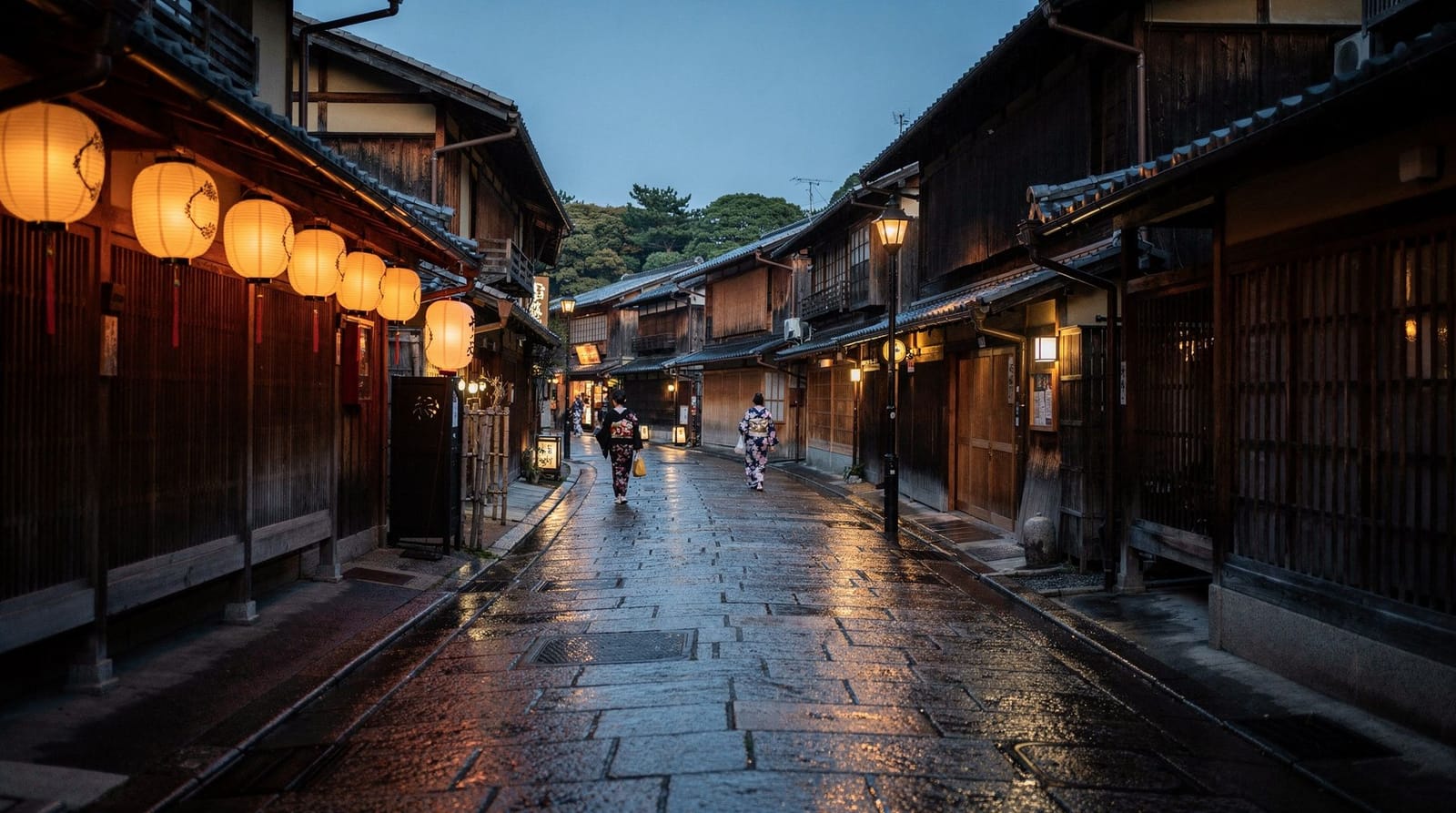
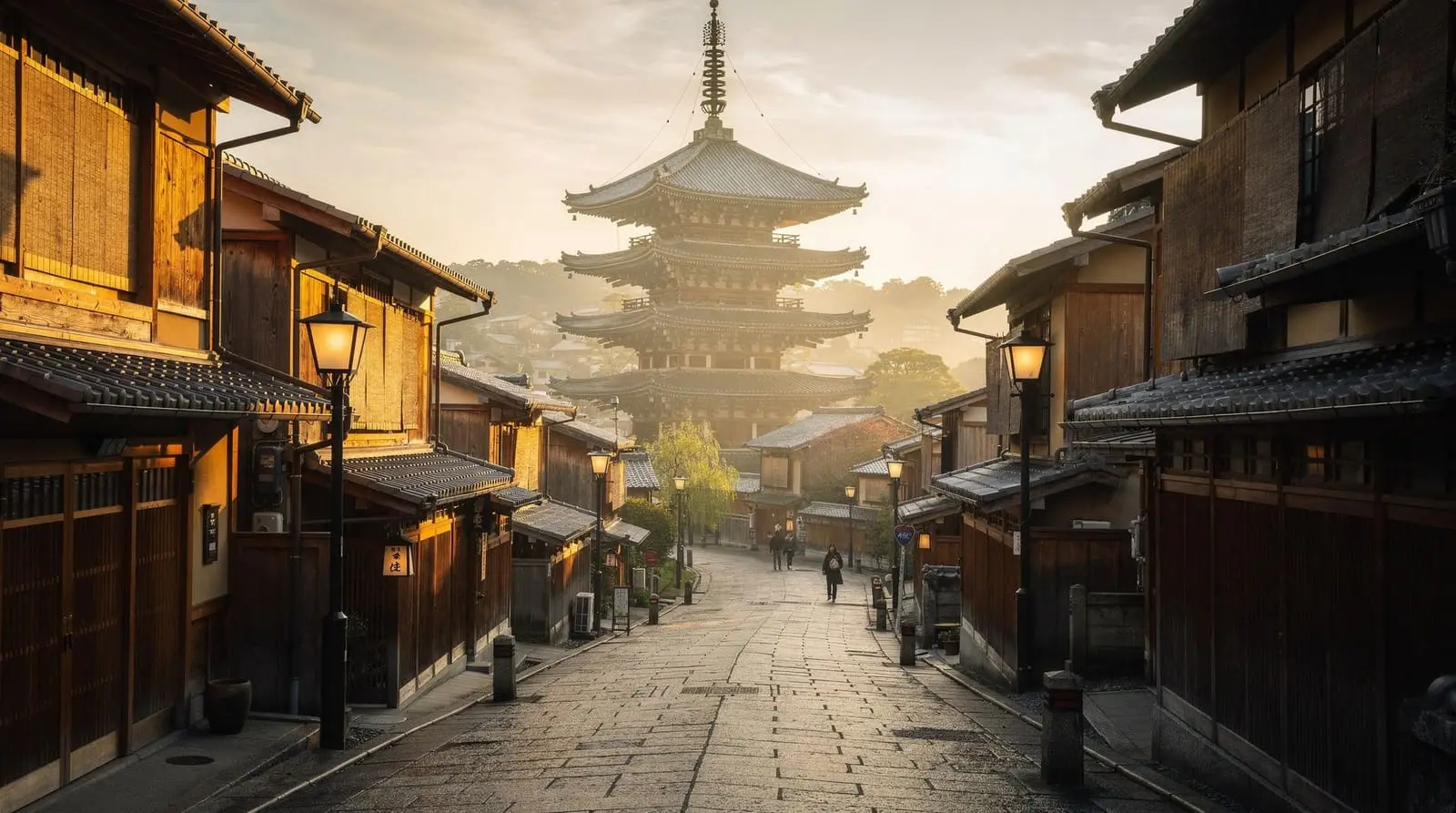
The classic view down Sannenzaka toward Yasaka Pagoda is Kyoto’s other essential social-media shot, and unlike the two spots above, it holds up reasonably well most of the day since its composition — a paved slope leading the eye toward the pagoda — doesn’t rely on an empty foreground. The genuinely underused alternative here isn’t a different landmark so much as the side streets: Ninenzaka’s smaller connecting lanes, and the quieter approach through Kodai-ji’s neighborhood a block or two off the main Sannenzaka route, offer the same traditional-streetscape aesthetic with meaningfully fewer people, since most visitors stick to the single most obvious path between Kiyomizu-dera and Gion.
Kimono photos: the format behind a huge share of Kyoto content
A large proportion of Kyoto’s most-shared Instagram content isn’t architecture at all — it’s a visitor in rented kimono against one of the backdrops above. Arashiyama’s bamboo, Gion’s Hanamikoji-dori, and the Kiyomizu-dera approach are the three most common combinations, and the actual photo quality often has less to do with the location than with lighting, posing, and a photographer who knows how to work with kimono’s structured silhouette.
A professional photoshoot in traditional kimono pairs the rental with a photographer who handles posing, composition, and usually a same-day or next-day digital delivery — producing a noticeably more polished result than a tourist attempting the same shot with a phone and a stranger asked to help.
A kimono makeover, photoshoot, and guided tour bundles the rental, hair and makeup styling, a photo session, and a short guided walk into one booking, useful for visitors who want the full “content day” handled as a single package rather than piecing together a rental shop, a photographer, and a route independently. The kimono rental guide covers standalone rental pricing and shops for anyone who wants to skip the photographer and shoot their own.
Shosei-en: a genuinely overlooked garden
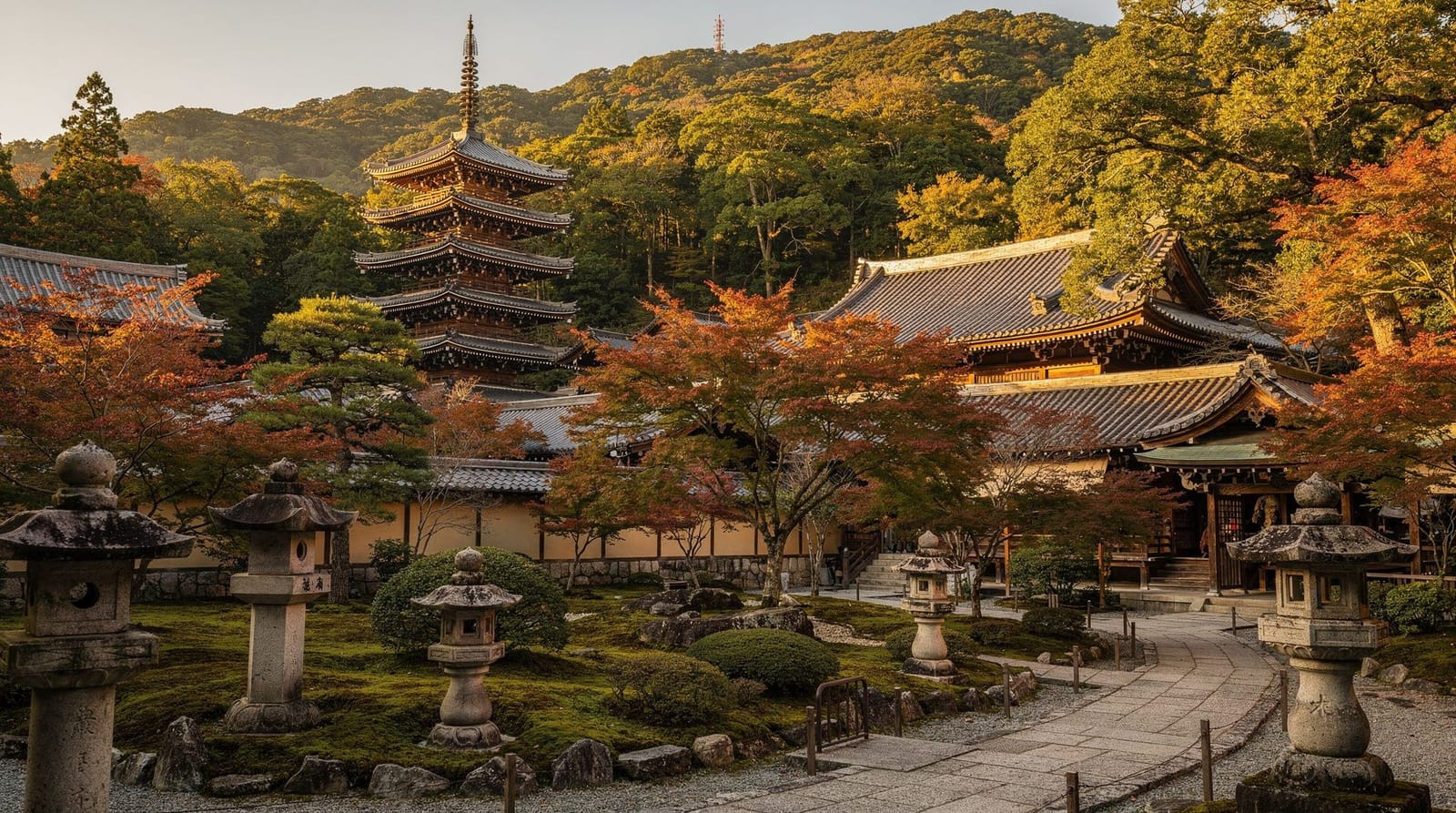
Shosei-en, a walled garden a short walk from Kyoto Station and technically part of Higashi Hongan-ji temple, sees a small fraction of the visitors that Kyoto’s headline gardens draw, despite a pond, seasonal foliage, and traditional architecture comparable to far more visited spots. Its proximity to Kyoto Station — most visitors heading straight from the station to Fushimi Inari or Higashiyama walk right past it — is exactly why it stays quiet, and it’s free to enter, making it a low-effort addition for anyone with an early arrival and some time before checking into accommodation.
Why “hidden gem” content ages fast
A caution worth including honestly: several spots that were genuinely quiet a few years ago have since become their own social-media trend and are considerably busier than older guides suggest, a pattern that will likely repeat with some of the alternatives listed here over time. Treat any “secret” or “hidden” recommendation, including this guide’s, as a starting point rather than a guarantee — checking recent reviews or photos for a sense of current crowd levels before building a whole morning around a specific spot is a reasonable habit, since Kyoto’s tourism landscape shifts faster than most static guides update.
The ethical side of content-driven visits
It’s worth naming directly that some of Kyoto’s crowding problems at spots like Fushimi Inari and the Arashiyama bamboo grove are, in part, downstream of exactly the kind of content this guide is about — a single viral shot can measurably increase foot traffic to a specific location within months.
That’s not a reason to avoid photography, but it’s a reasonable argument for the early-morning and lesser-known-alternative strategies covered throughout this guide: they produce a better photo and spread visitor impact more evenly across a site or across nearby quieter locations, rather than funneling everyone into the same narrow window and the same few square meters. The avoiding crowds in Kyoto guide covers this same tension at a citywide level, beyond just photography.
Kinkaku-ji: famous, but honestly not a “beat the crowd” spot
Kinkaku-ji, the Golden Pavilion, appears constantly across Kyoto content, and it’s worth being upfront that it doesn’t respond to the same early-arrival strategy as Fushimi Inari or the bamboo grove. Its signature reflection shot is taken from a single fixed viewing path every visitor walks in the same direction, funneling the entire day’s visitor volume through one vantage point regardless of arrival time — a weekday morning helps marginally, but a genuinely empty frame is rare here even for visitors who show up early.
It’s included in this guide not as a crowd-avoidance case study but as a useful contrast: some famous spots respond to timing strategy, and some, like Kinkaku-ji, mostly don’t, which is worth knowing before building an entire morning schedule around chasing an empty shot that structurally can’t happen there.
Nishiki Market: content that isn’t about landscapes
Not every Kyoto Instagram trend is a landscape or temple shot. Nishiki Market, the covered food market a short walk from downtown Kyoto, generates a steady stream of close-up food photography and street-scene content — skewers, mochi, pickled vegetables, tightly packed stalls — that works on a completely different visual logic than the wide, empty-space shots covered above. Crowding here follows a different pattern too: weekday mornings before 10am are meaningfully quieter than the narrow covered arcade gets by early afternoon, when both tourists and local shoppers overlap, but a market inherently involves people in frame, and part of Nishiki’s photographic appeal is exactly that density rather than an empty version of the space.
Practical gear for a spot-hopping photo day
Chasing several of these locations across a single morning — Fushimi Inari, Arashiyama, potentially a kimono session — tends to mean more walking and more waiting than a typical leisurely sightseeing day, and packing light matters more than usual. A phone camera with a spare battery pack covers the majority of shots on this list without needing a dedicated camera body; the exceptions are kimono photoshoots, where a booked photographer supplies their own equipment, and after-dark shots, where a small tripod helps considerably given how dim Fushimi Inari’s lamp lighting is compared to daylight.
Comfortable shoes matter as much as any camera gear, since several of these spots — the upper Fushimi Inari path, Arashiyama’s side routes toward Adashino Nenbutsu-ji, Higashiyama’s side streets — involve more uneven walking than the flat, paved main routes most visitors stick to.
Battery life is a genuine, underrated concern on a spot-hopping morning like this — cold-weather months drain phone batteries faster than expected, and a morning spent mostly outdoors, checking maps and shooting frequently, can drop a full charge to critical faster than a typical sightseeing day would. A compact portable charger, rather than relying on returning to a hotel mid-morning, keeps the day’s momentum from stalling over a dead battery right as the light or the crowd window is at its best.
A realistic content-focused morning
For a single morning built around getting a strong set of photos without an unreasonable amount of waiting: Fushimi Inari’s lower torii tunnels by 7am, continuing up the mountain path partway for a quieter second set of shots, then on to Arashiyama by around 9-9:30am for the bamboo grove and Nonomiya Shrine before the grove’s own crowd peaks, finishing with Shosei-en on the way back toward Kyoto Station if time and energy allow. This sequence deliberately treats the two most crowd-sensitive spots as the day’s priority, since they’re the ones where timing matters most, and leaves the more crowd-tolerant stops for whenever the morning’s momentum runs out.
Seasonal spots that trend hard for a short window
A handful of Kyoto locations only become genuinely Instagram-worthy for a narrow seasonal window, which is worth flagging since their popularity in a given month doesn’t reflect year-round crowd levels. The Philosopher’s Path, ordinarily a pleasant but unremarkable canal-side walk, turns into one of the most photographed cherry blossom corridors in the city for roughly two weeks each spring, drawing a volume of visitors and tripods that has little relationship to how quiet it is the rest of the year.
Similarly, Eikan-do and a handful of other maple-heavy temples see a comparable spike during the roughly three-week autumn foliage window. Visiting either location outside its peak season trades the viral-worthy color for a noticeably calmer, still-attractive visit — a reasonable trade for anyone whose travel dates don’t happen to align with the two-week windows in question, and a useful thing to know before assuming a spot’s online reputation for crowding applies to every month of the year.
When a quieter alternative is genuinely worth the detour
Not every substitute location is a straightforward win — some of the quieter alternatives above involve a real tradeoff in travel time or visual impact against the famous original. Nonomiya Shrine and Shosei-en are both essentially free additions, requiring no extra transport since they sit directly on the way to or from a spot already on most itineraries.
The upper Fushimi Inari path and Adashino Nenbutsu-ji’s smaller bamboo groves require more deliberate effort — an extra 20-30 minutes of uphill walking or a slightly longer detour within Arashiyama — and are worth it specifically for visitors who’ve already gotten their main shot at the famous spot and want a calmer second location, rather than as a wholesale replacement for seeing Fushimi Inari or the main bamboo grove at all.
How this guide relates to the broader photo spots guide
This guide overlaps deliberately with the Kyoto photo spots guide, but the two serve different planning purposes. That guide covers the classic, landmark-driven approach to Kyoto photography — the handful of iconic locations every visitor already knows about, and the specific timing that makes each one work.
This guide leans further into the social-media-specific angle: which locations actually trend and why, how their online reputation for either crowding or emptiness compares to reality, and a set of alternative spots that don’t yet carry the same viral momentum. Reading both before a trip gives a fuller picture than either alone — the landmark strategy for guaranteed classic shots, and the alternative-spot strategy for something with less competition for the same square meter of pavement.
Respecting locals while chasing a shot
A last point worth stating plainly: several of the spots covered here, particularly Higashiyama’s side streets and parts of Arashiyama, are residential or semi-residential areas where people actually live and work, not open-air photo studios. Standing in a doorway, blocking a narrow lane for a posed shot, or photographing a private home or shop without asking are all small frictions that add up across thousands of daily visitors, and they’re avoidable without sacrificing the photo itself — moving a few steps, waiting a moment for a resident to pass, or simply asking before pointing a camera at someone’s storefront costs nothing and keeps these quieter alternatives pleasant for both visitors and the people who live there.
Editing and honesty about what a photo actually shows
Beyond timing, a fair number of the most-shared Kyoto shots online involve genuine editing — cloning out a stray visitor, boosting color saturation on foliage or torii vermillion well past what the eye sees on site, or cropping tightly enough to hide a crowd standing just outside the frame. None of that is unusual for travel photography generally, but it’s worth naming so a first-time visitor doesn’t arrive expecting an unedited real-world match to a heavily processed reference image.
The early-morning timing strategy in this guide gets you a genuinely uncrowded frame without needing to edit anyone out; the color and contrast differences between a phone shot and a professionally edited one are a separate, honest gap worth expecting rather than being disappointed by on site.
A note on drones and specialty equipment
Drone photography is restricted or banned outright at most of Kyoto’s temples, shrines and central districts, including Fushimi Inari, Arashiyama, and Gion — this isn’t a minor technicality, and flying one without permission risks a genuine fine and confiscation, not just a polite warning. Anyone specifically wanting aerial shots of Kyoto’s rooftops or the bamboo grove’s canopy needs a permitted location or a licensed operator running an approved shoot, rather than assuming a quiet early morning makes an unauthorized flight low-risk. For nearly every spot covered in this guide, a phone or camera at ground level covers the shot that made the location famous in the first place, so the restriction rarely costs much in practice.
Frequently asked questions about Instagram spots in Kyoto
How do influencers get empty shots of crowded spots like Fushimi Inari?
Almost entirely through timing — genuinely empty shots are taken before 7:30am, when the lower torii tunnels see a fraction of midday traffic, or through brief gaps between tour groups.
What’s a good alternative to Fushimi Inari if I want a similar shot without the crowds?
The upper sections of Fushimi Inari’s own mountain path thin out considerably past the lower loop most visitors turn back from. Nonomiya Shrine in Arashiyama offers a similar torii aesthetic with far fewer people.
Are there lesser-known Kyoto spots that photograph as well as the famous ones?
Yes — Nonomiya Shrine, Fushimi Inari’s upper path, Shosei-en garden, and Higashiyama’s quieter side streets around Kodai-ji all deliver comparable results with meaningfully fewer visitors.
Is it okay to prioritize a photo over experiencing a temple properly?
There’s no real conflict — the same early-morning timing that avoids crowds also tends to produce a slower, more attentive visit, so prioritizing a good photo and a genuine experience usually align rather than compete.
Do temples mind visitors taking photos primarily for social media?
Most don’t object to photography in permitted areas regardless of motivation. Exceptions include no-photography zones around certain religious artifacts and restrictions on photographing geiko and maiko in parts of Gion.
What’s the etiquette for taking photos of people or shopkeepers for content?
Ask first, or don’t photograph identifiable individuals if you can’t — a baseline that applies everywhere, and carries an actual fine in Gion’s restricted lanes when it comes to geiko and maiko.
Frequently asked questions about Best Instagram spots in Kyoto — and the quieter alternatives nearby
How do influencers get empty shots of crowded spots like Fushimi Inari?
What's a good alternative to Fushimi Inari if I want a similar shot without the crowds?
Are there lesser-known Kyoto spots that photograph as well as the famous ones?
Is it okay to prioritize a photo over experiencing a temple properly?
Do temples mind visitors taking photos primarily for social media?
What's the etiquette for taking photos of people or shopkeepers for content?
Top experiences
Bookable activities with verified prices and instant confirmation on GetYourGuide.