Kyoto for first-time visitors — a 3-day plan with practical basics built in
Kyoto: Fushimi Inari Taisha Guided Walking Tour
Built for someone who has never been to Japan
This plan assumes nothing beyond wanting to see Kyoto’s genuine highlights without getting overwhelmed.
| Where | Fushimi Inari, Nishiki Market, Arashiyama, Kinkaku-ji, Gion, Higashiyama |
| Cost | Around ¥10,000-16,000 ($68-110) per person per day |
| Time needed | 3 days, deliberately loose pacing with built-in rest blocks |
| Getting there | ICOCA IC card covers everything; no JR Pass needed |
| Best time | Late April-May or October for a calmer, still-pleasant alternative to peak season |
Practical basics are woven into the days rather than dumped in a separate section, since jet lag and unfamiliarity make a wall of tips hard to absorb before you’ve landed. The short version: get an IC card on day one, carry more cash than you think you’ll need, and don’t assume you can walk into a popular restaurant at 7pm without a wait or a reservation.
Base yourself somewhere within walking distance of a train or subway station — central Kyoto (Karasuma, Shijo, or near Kyoto Station) is the easiest choice for a first visit, since it puts every day’s starting point within 10-15 minutes of your hotel. See the where to stay in Kyoto guide for area-by-area detail.
Before you start: four things worth knowing
Get an IC card immediately. ICOCA (Kyoto’s regional IC card, also works nationwide) is sold at ticket machines in JR and subway stations, including Kyoto Station on arrival. It costs a small deposit plus however much you load onto it, and you tap it on buses, subways, and trains without calculating individual fares — genuinely the single most useful thing to set up before day one begins.
Cash still matters. Japan has moved toward cards and IC-card payment faster than most first-time visitors expect, but small restaurants, temple entry booths, and market stalls are still frequently cash-only or cash-preferred. Konbini (7-Eleven, Lawson, FamilyMart) are everywhere and have reliable ATMs that accept foreign cards — withdraw there rather than hunting for a currency exchange counter.
Reservations matter more than you’d guess. Popular restaurants, some kaiseki dinners, and specific experiences (the Saiho-ji moss garden, for instance, requires a reservation submitted by postcard or online well in advance and isn’t included in this itinerary for that reason) fill up. If there’s one restaurant you’ve read about and want to try, book it before you land rather than hoping to walk in.
Basic etiquette avoids most friction. Remove shoes where indicated (a raised floor or a shoe rack at the entrance is the signal), don’t eat while walking through residential lanes, and keep voices down on trains. Gion in particular has stricter rules around photographing maiko and geiko — covered on day two below and in full in the Kyoto etiquette guide.
Day 1 — Fushimi Inari and downtown orientation
08:00 — ICOCA card and breakfast at Kyoto Station
Buy your ICOCA at a ticket machine inside Kyoto Station before doing anything else — it takes five minutes and removes a recurring friction point from the rest of the trip. Grab breakfast at one of the station’s many cafes or bakeries (¥400-800/$2.70-5.40) if you haven’t eaten yet.
09:00 — Fushimi Inari Taisha (JR Nara Line, 2 stops, ~5 min, ¥150/$1)
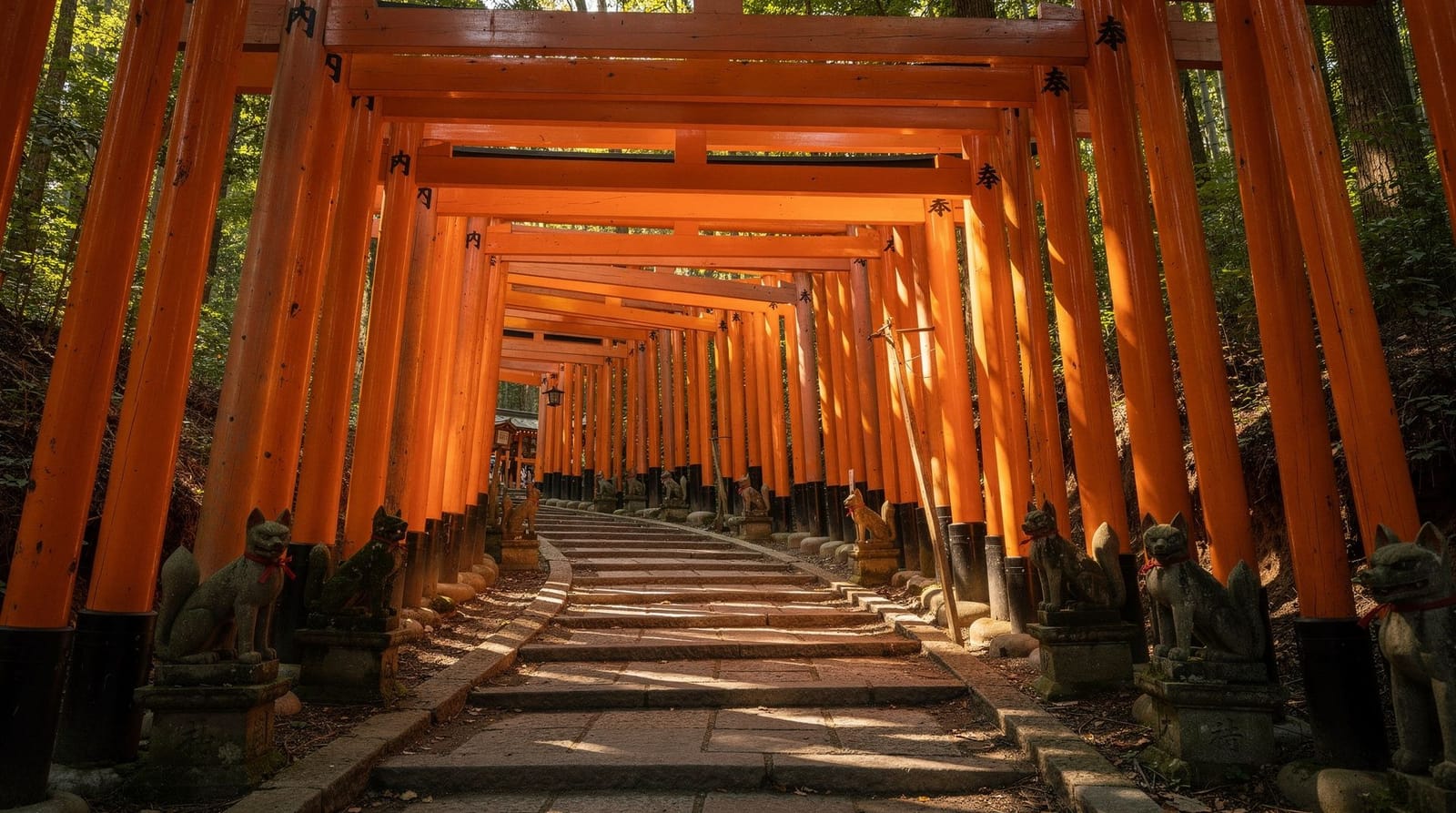
Fushimi Inari is free, open 24 hours, and the most reliably impressive first stop in the city — thousands of vermillion torii gates climbing a wooded hill. A 9am arrival is later than the crowd-avoidance ideal (before 8am) but still manageable on a first day when an earlier start may not be realistic. Walk the Senbon Torii tunnel and continue as far as feels comfortable; the Yotsutsuji viewpoint, about a third of the way up, is a good middle-ground goal. Full detail in the Fushimi Inari guide.
guided walking tour of Fushimi Inari, useful if you’d rather have context than navigate alone12:00 — Lunch near the station, then downtown
Head back toward central Kyoto for lunch — the area around Kyoto Station and downtown Shijo/Kawaramachi has abundant options from ¥900-2000 ($6-13.50) for a set lunch. This is a deliberately light afternoon: no second major sight, just orientation.
14:00 — Nishiki Market
Nishiki Market, a five-block covered shopping street known as “Kyoto’s kitchen,” is free to walk and a good introduction to Japanese food culture at a manageable pace — pickles, skewers, fresh seafood, and sweets sold piece by piece for ¥200-800 ($1.35-5.40). It gets crowded but rarely uncomfortably so before late afternoon.
Nishiki Market food tour with a local guide, a good option if trying unfamiliar food alone feels intimidating16:00 — Rest, then Nijo Castle if energy allows (optional)
If day one’s Fushimi Inari walk has been enough, stop here and rest before dinner — this itinerary does not require filling every hour. If you have energy left, Nijo Castle (¥800-1000/$5.40-6.80) is a short subway or bus ride from downtown and closes at 4pm (grounds) / 5pm, so check timing before heading over.
18:30 — Dinner downtown
Pontocho and the Kiyamachi-dori canal area, both a short walk from Shijo-Kawaramachi, have a wide range of restaurants. For a first dinner in Japan, an izakaya (small plates, casual, ¥2500-4000/$17-27 per person) is a low-pressure way to try several dishes without committing to one unfamiliar meal.
Day 2 — Arashiyama in the morning, Gion in the evening
07:30 — Arashiyama bamboo grove (JR Sagano Line, ~15-20 min, ¥240/$1.60)
Arashiyama’s bamboo grove is free and genuinely best before 8am — a rare case where the crowd-avoidance advice is worth the early alarm, since the grove looks and feels different without a moving crowd filling the path. Tenryu-ji next door opens at 8:30am (¥500/$3.40) and has one of Kyoto’s better Zen gardens if you want to sit for a while rather than keep moving.
Arashiyama bamboo forest morning bike tour10:30 — Togetsukyo Bridge and lunch
Walk to the Togetsukyo Bridge over the Katsura River — free, scenic, a natural place to pause. Yudofu (hot tofu) is the local lunch specialty; sit-down sets run ¥2000-3500 ($13.50-24), or eat more cheaply from the food stalls along the main approach street for under ¥1000 ($6.80).
13:00 — Kinkaku-ji (bus, ~40 min, ¥230-460/$1.50-3.10)
Kinkaku-ji, the gold-leaf Golden Pavilion, is a garden-viewing temple: you walk a set path around the pond rather than entering the building, and the full visit takes 30-45 minutes. Entry is ¥500 ($3.40). See the Kinkaku-ji guide for what to expect — first-time visitors sometimes assume they’ll go inside and are surprised by the exterior-only format.
15:30 — Rest at the hotel
Build in a real break here. Two consecutive mornings of early starts and walking add up, and Gion in the evening is worth arriving at without being exhausted.
17:00 — Gion
Gion in the late afternoon is the best chance to see a maiko or geiko walking to an evening engagement, roughly 5:30-6:30pm along Hanamikoji-dori. This is also where etiquette rules are strictest: do not touch, block, or follow a maiko for a photo, and some private alleys in the Gion Kobu area carry photography fines for violations of local rules introduced to curb overtourism. Walking respectfully and photographing from a distance is entirely fine.
19:00 — Dinner in Gion or Pontocho
Options range widely — casual yakitori counters from ¥1500 ($10) to multi-course kaiseki at ¥8000+ ($55+). For a first Japan trip, one moderately special dinner here (¥4000-6000/$27-41 per person) is a reasonable splurge if the budget allows.
Day 3 — Slow morning, tea ceremony, and departure prep
09:30 — Tea ceremony experience
A short tea ceremony class (45-60 minutes, ¥3000-5000/$20-34) is a gentle, low-effort way to spend a morning that also explains a piece of Japanese culture that’s otherwise easy to walk past without understanding. Several operate in the downtown and Higashiyama areas with English instruction.
45-minute tea ceremony lesson11:00 — Higashiyama, at a slower pace
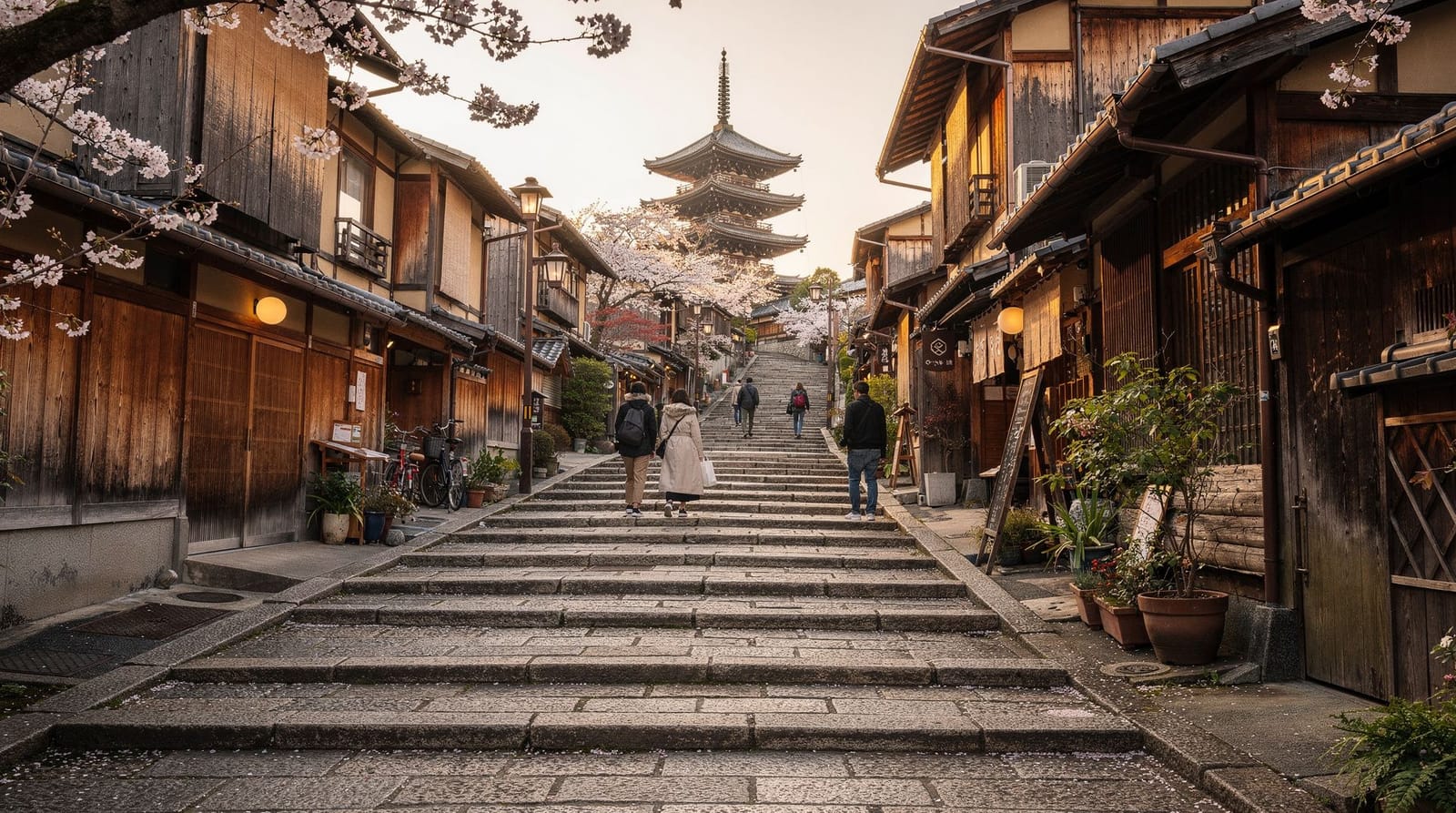
Walk through Higashiyama’s Ninenzaka and Sannenzaka lanes without a fixed sightseeing target — this is a browsing morning, not a checklist. Kiyomizu-dera (¥400-500/$2.70-3.40) is the one optional stop worth adding if you haven’t visited a major temple interior yet on the trip.
13:00 — Lunch and last-minute shopping
Lunch in Higashiyama or back downtown, then use the early afternoon for gifts and souvenirs — Nishiki Market (revisit if you liked it on day one), or the shops along Shijo-dori for less food-focused items. Budget ¥2000-5000 ($13.50-34) depending on what you’re buying.
15:00 — Buffer time
Keep this genuinely open. Flights, trains onward, or simply the fatigue of three days of walking make a fixed 3pm activity risky to plan. If everything has gone smoothly, revisit whichever sight from the previous two days you wished you’d had more time at — Fushimi Inari’s upper trail and Gion’s quieter northern lanes are the two most commonly under-visited on a first pass.
Practical notes
Best season for a first visit: spring (late March-early April, cherry blossoms) and autumn (mid-November, foliage) are the most photogenic but also the most crowded and most expensive for hotels. If flexibility allows, late April-May or October offer a calmer, still-pleasant alternative.
Transport: ICOCA covers everything in this itinerary. A JR Pass is unnecessary for a Kyoto-only first visit — save it for a future trip that includes Tokyo or multiple cities by Shinkansen.
Budget: ¥10,000-16,000 ($68-110) per person per day at a mid-range pace, covering transport, entries, and meals, excluding accommodation.
After this trip: if three days leaves you wanting more, the natural next steps are the Kyoto and Nara itinerary for a day trip south, or the week-long itinerary, which adds Osaka, Uji, and lesser-visited temples for a second visit.
The three days at a glance
| Day | Focus | Pace | Key stops |
|---|---|---|---|
| 1 | Fushimi Inari + orientation | Moderate start, light afternoon | Fushimi Inari, Nishiki Market |
| 2 | Arashiyama + Gion | Early start, built-in rest at 15:30 | Bamboo grove, Kinkaku-ji, Gion |
| 3 | Slow morning + departure prep | Loosest of the three | Tea ceremony, Higashiyama |
Landing in Kyoto: the first two hours
Before Day 1 even starts, it’s worth knowing what the arrival itself looks like. Most first-time visitors reach Kyoto via Kansai Airport (Haruka Express, ~75 minutes to Kyoto Station) or by Shinkansen from Tokyo or Osaka, both of which arrive directly into Kyoto Station’s sprawling, multi-level complex.
Don’t schedule anything for the first hour beyond finding your hotel and buying the ICOCA card described below — Kyoto Station alone can take 20-30 minutes to navigate on a first pass, between the JR side, the Kintetsu side, and the underground shopping arcade (Porta) connecting them. If your flight or train lands genuinely early in the morning, this itinerary’s Day 1 still works starting from Fushimi Inari; if it lands mid-afternoon, push Day 1 back a day and use the arrival afternoon for the ICOCA card, a nearby konbini run, and an early dinner instead.
What this itinerary deliberately leaves out
Nara, Osaka, Uji, and most of Kyoto’s roughly 1,600 other temples and shrines don’t appear here, and that’s intentional rather than an oversight. A first-time visitor trying to fit a Nara day trip into these same three days ends up cutting the built-in rest blocks that make this plan work for someone jet-lagged and unfamiliar with the city — the five sights here are chosen specifically because they’re the highest-value stops for a first pass, not because they’re the only good ones. Repeat visitors or anyone with a fourth or fifth day should look at the 4-day itinerary, which adds a full Nara day trip onto this exact structure.
a kimono rental with hairstyling for photos in Gion or HigashiyamaFrequently asked questions about a first Kyoto trip
Is three days enough for a first visit to Kyoto?
Three days covers the five most essential sights — Fushimi Inari, Kinkaku-ji, Arashiyama, Gion, and Nishiki Market — at a comfortable, non-rushed pace. It leaves out Nara, Osaka, and most secondary temples, which is intentional for a first visit rather than a gap to feel bad about.
Do I need to speak Japanese to get around Kyoto?
No. Train and bus signage, ticket machines, and most temple information include English, and major sights are used to international visitors. Learning a few basic phrases (arigato gozaimasu, sumimasen) is appreciated but not necessary.
Should I get a JR Pass for a Kyoto-only trip?
No. A JR Pass is designed for long-distance travel between cities and isn’t cost-effective for a trip confined to Kyoto, where an ICOCA IC card covers local trains and buses more cheaply. Consider a JR Pass only if you’re also visiting Tokyo or other cities by Shinkansen.
How much cash should I carry each day?
¥8,000-12,000 ($55-80) in cash per day is a reasonable buffer for temple entries, market food, and smaller restaurants that don’t take cards, on top of whatever you load onto your IC card for transport. Konbini ATMs make topping up easy if you run low.
What’s the biggest mistake first-time visitors make in Kyoto?
Overpacking the schedule. Kyoto rewards unhurried time at fewer sights over a checklist approach — this itinerary deliberately includes rest blocks and skips secondary temples for that reason. A second common mistake is not booking a specific restaurant in advance when there’s one they particularly want to try.
Is it rude to photograph maiko and geiko in Gion?
Photographing from a respectful distance in public areas is generally fine. Touching, blocking, chasing, or following a maiko or geiko for a photo is not acceptable, and some private alleys in the Gion Kobu district have local rules with fines for violations. See the Kyoto etiquette guide for the full picture.
Can I do this itinerary without a hotel reservation at each stop?
Yes — this itinerary is built around a single base for all three nights, ideally central Kyoto near a train or subway station, as covered in the where to stay in Kyoto guide. No accommodation changes are needed.
What should I do if I only have two days instead of three?
Drop day three’s slower morning and tea ceremony, and compress Higashiyama browsing into whichever of the first two days has spare time. The 2-day Kyoto and Nara itinerary is also a reasonable alternative if you’d rather trade a slow day for a Nara day trip.
Top experiences
Bookable activities with verified prices and instant confirmation on GetYourGuide.