Kyoto in 1 day — the essential route on foot, bus, and train
Kyoto: Early Morning Fushimi Inari Shrine - Beat the Crowds
Why this order and not another
One day in Kyoto is enough to see three of the city’s defining sights properly, but only if the order is right and the first stop happens before most visitors are awake. This plan starts at Fushimi Inari at opening light, works through the temples and lanes of Higashiyama at midday, and finishes in Gion at the one time of day the district actually looks like its photographs — early evening, when lanterns switch on and the day-trip crowds have thinned. Reverse this order — Gion in the morning, Fushimi Inari at 3pm — and the day is measurably worse: Fushimi Inari’s Senbon Torii tunnel is packed solid by mid-morning, and Gion at 10am is just a quiet shopping street with none of its early-evening character.
The whole route stays within Kyoto’s eastern side, so there’s no need to circle back to Kyoto Station until the day is over. If you’re staying near Kyoto Station or Gion, you can leave luggage at the hotel or a station locker (¥400-700/$3-5 depending on size) and move through the day without dragging bags between sights. Trains and buses are frequent enough on this route — JR Nara Line, Keihan Main Line, and city buses 100/206 — that missing one connection costs minutes, not hours, though weekday rush hour (8-9am) can slow the first bus leg slightly.
If you’re arriving from Osaka or Kansai Airport for a single day, see the best day trips from Kyoto guide for the reverse logistics — Kyoto Station has direct JR and Kintetsu/Hankyu connections that make a one-day visit from Osaka workable without an overnight stay.
| Where | Fushimi Inari → Higashiyama/Kiyomizu-dera → Gion, all on Kyoto’s east side |
| Cost | Around ¥6,000-9,000 ($40-60) per person, transport + food + entries |
| Time needed | One full day, 06:45 departure to around 20:00 |
| Getting there | JR Nara Line, city buses 100/206, on foot between Higashiyama sights |
| Best time | Year-round; start 15-20 min earlier during cherry blossom or autumn foliage |
Day 1 — Fushimi Inari, Higashiyama, and Gion
06:45 — Depart for Fushimi Inari (15 min from Kyoto Station)
Take the JR Nara Line from Kyoto Station to Inari Station — two stops, about 5 minutes, ¥150 ($1). The first useful trains run from around 5:30am, so a 6:45am departure gets you at the shrine entrance, directly across from the station exit, by roughly 7:00am. Alternatively, the Keihan Main Line runs to Fushimi-Inari Station, a few minutes’ walk from a different approach — useful if your hotel sits closer to a Keihan stop.
07:00-09:00 — Fushimi Inari Taisha (free, open 24 hours)
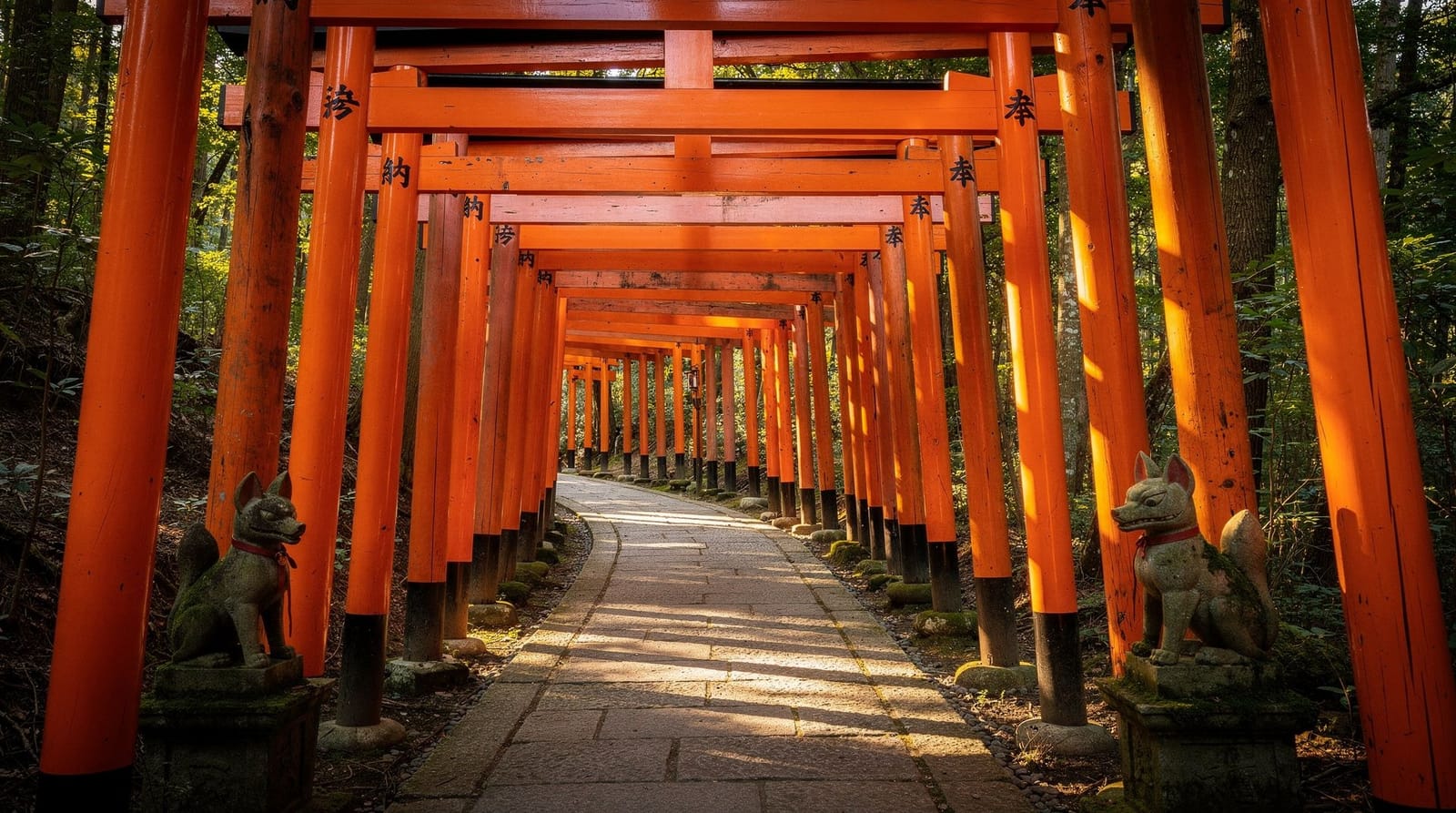
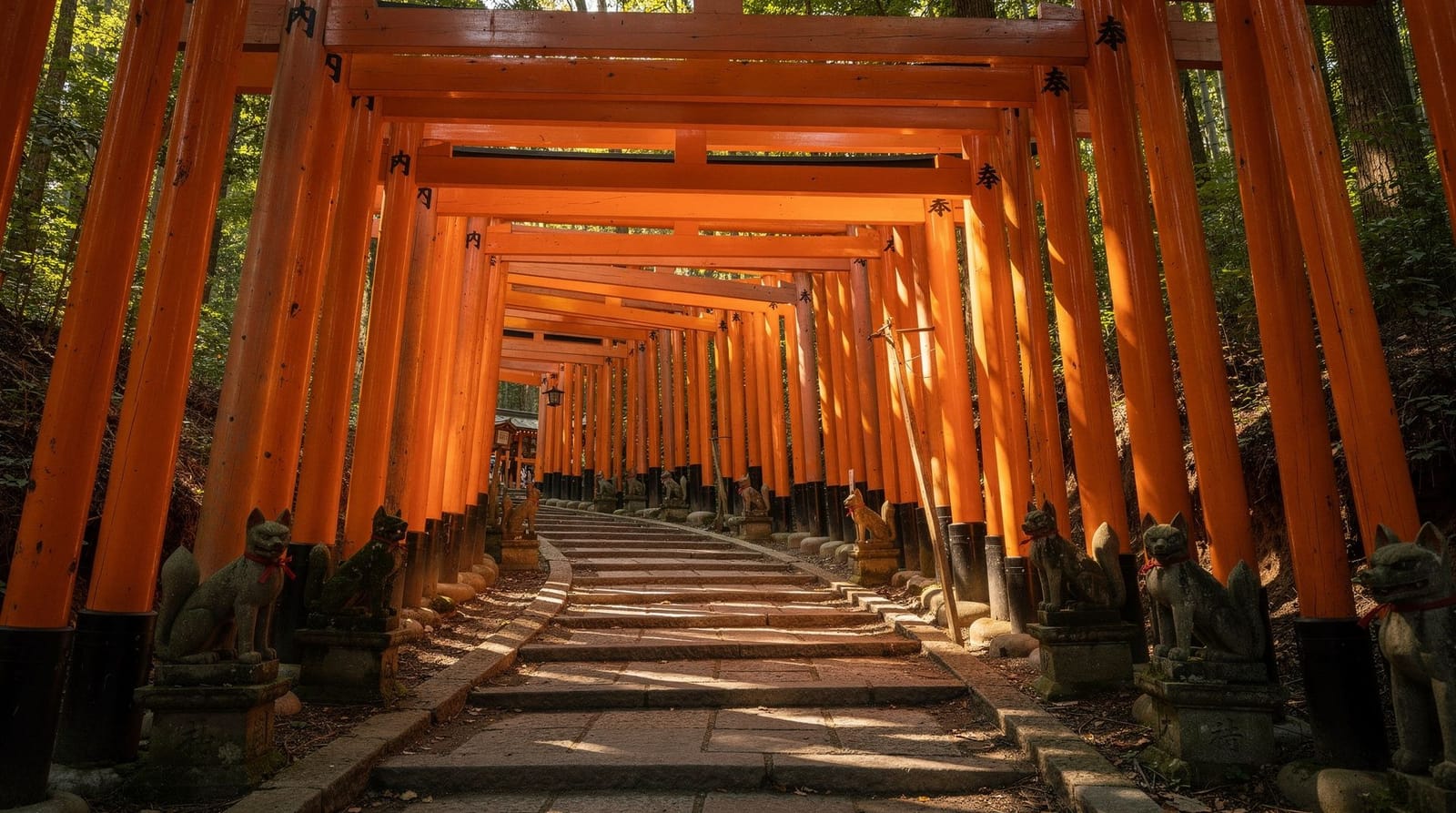
Fushimi Inari has no ticket booth and no closing time. Arriving before 8am means walking through the Senbon Torii — the dense double-row tunnel of vermillion gates near the base — while it’s still close to empty, which is genuinely rare later in the day. Budget 15-20 minutes for Senbon Torii itself, then continue up toward Yotsutsuji, an intersection roughly a third of the way up Mount Inari with a real view over southern Kyoto. Round trip from the base to Yotsutsuji and back is about 45-60 minutes on stone steps with a moderate, sustained incline. Full details, including the 2-3 hour full-summit hike option, are in the Fushimi Inari guide.
If you’d rather not navigate alone, a guided visit covers the shrine’s history and the best photo angles without slowing you down.
Early-morning Fushimi Inari shrine tour, beat the crowdsBy 9am the tunnel is noticeably busier — this is the natural point to head back toward the station regardless of how far up the mountain you went.
09:15-09:45 — Fushimi Inari to Higashiyama
From Inari Station, take the JR Nara Line back one stop to Kyoto Station (5 min, ¥150), then transfer to city bus 100 or 206 toward Gion/Kiyomizu-michi (roughly 15-20 minutes, ¥230/$1.60, IC card accepted). Get off at Gojo-zaka or Kiyomizu-michi stop and walk uphill roughly 10 minutes through Chawan-zaka, a lane lined with pottery shops, to reach Kiyomizu-dera’s gate.
09:45-11:15 — Kiyomizu-dera and Higashiyama’s preserved streets
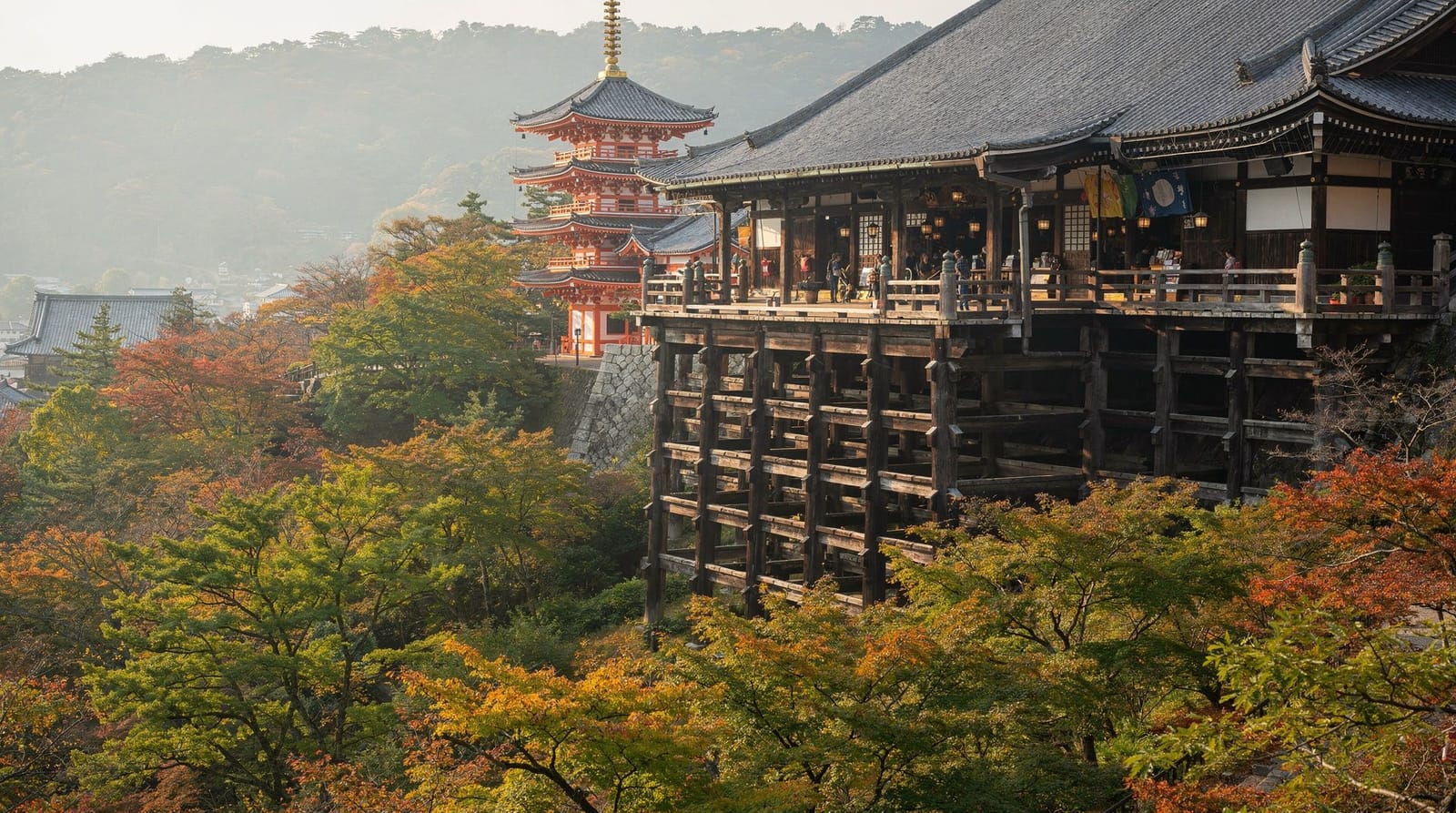
Kiyomizu-dera opens at 6am and charges ¥400-500 ($3-3.50) for the main hall and wooden veranda, which juts out over the hillside without a single nail holding the structure together. Mid-morning is busy but manageable; it gets considerably more crowded by early afternoon, especially on weekends. Full practical detail — entrance points, the veranda view, seasonal illuminations — is in the Kiyomizu-dera guide.
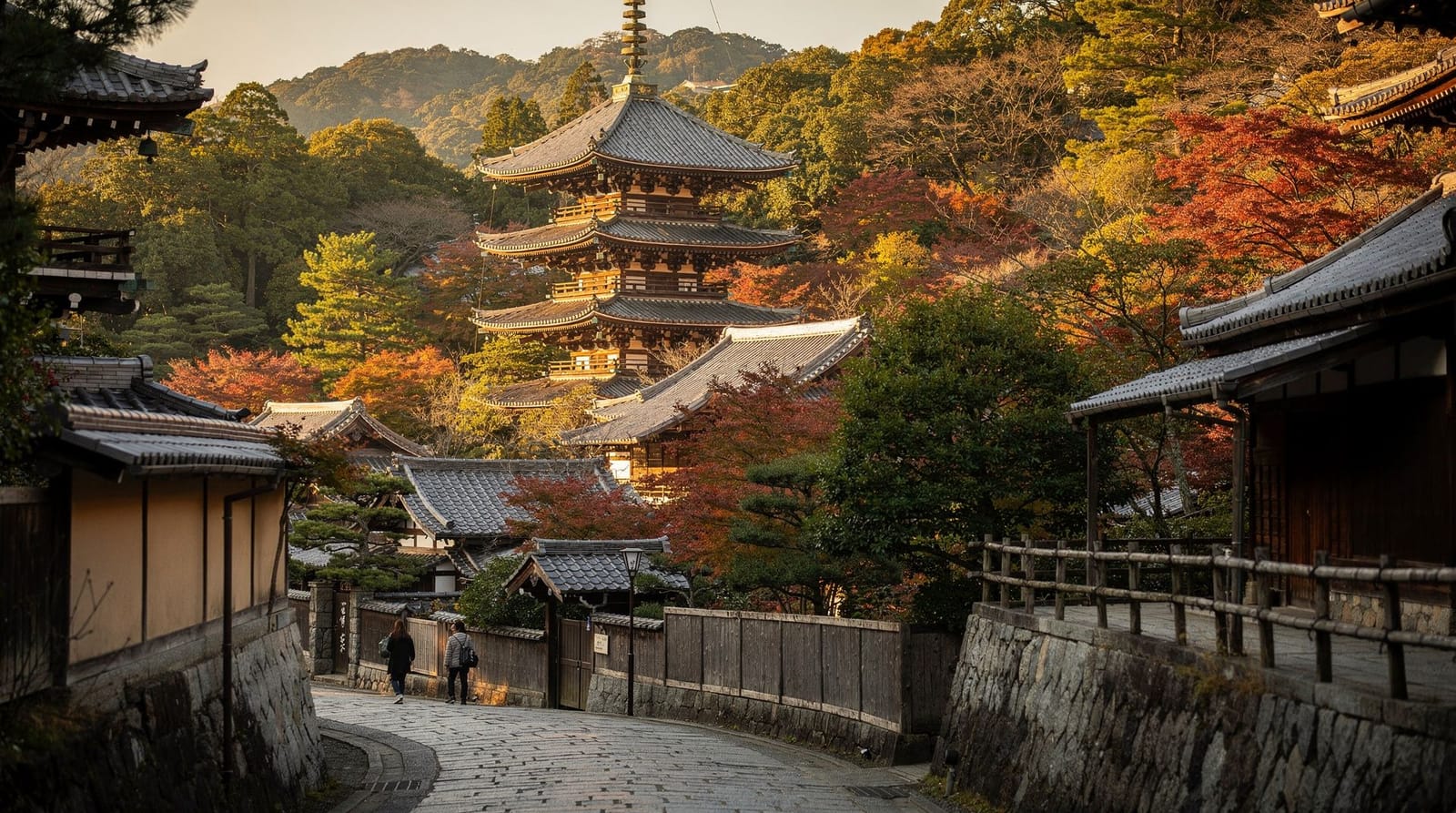
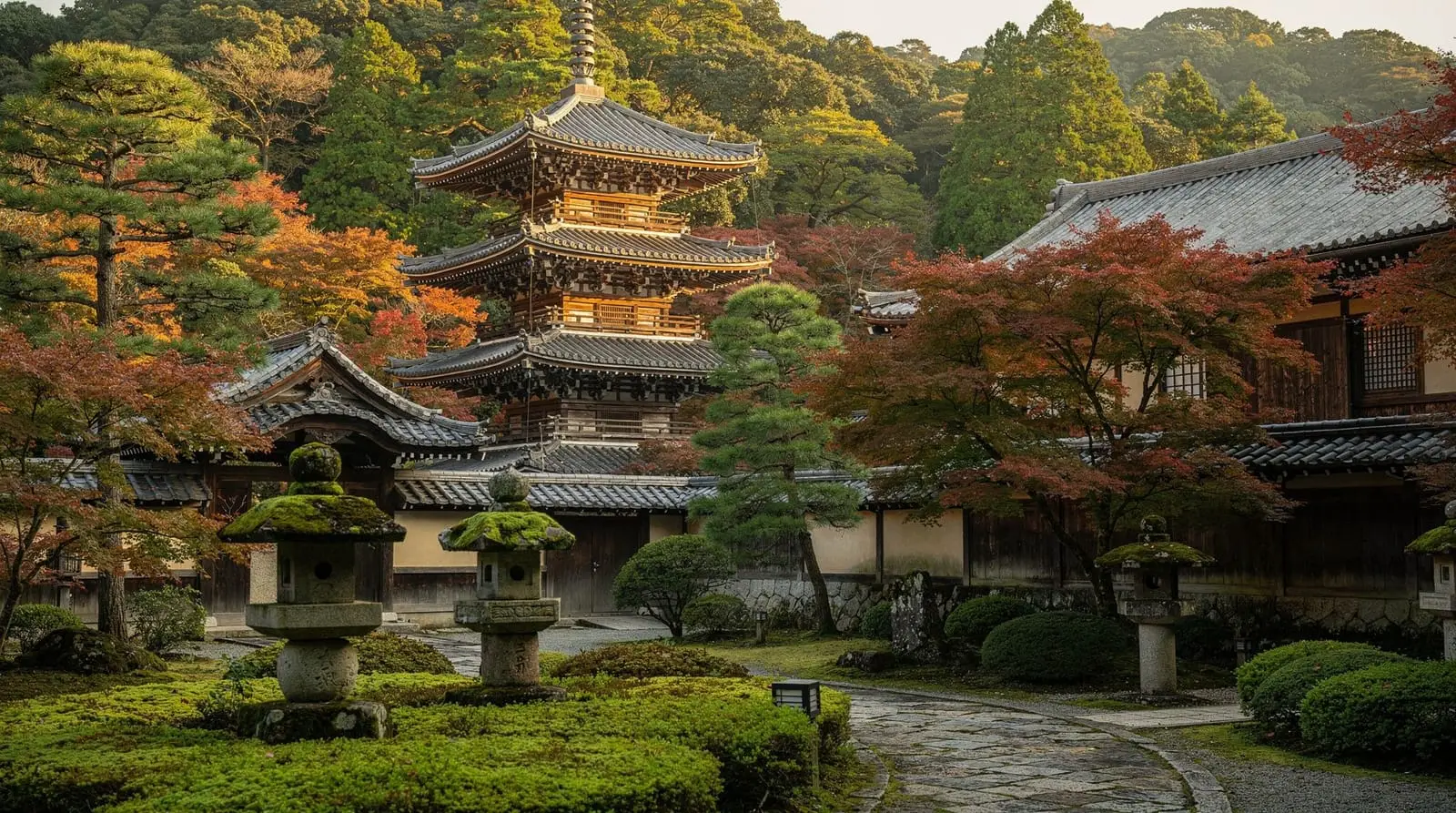
From the temple, walk downhill through Sannen-zaka and Ninen-zaka, two connected stone-paved lanes lined with wooden machiya buildings, tea shops, and craft stores — genuinely one of the best-preserved streetscapes in the city, not a reconstruction. This walk alone takes 20-30 minutes at a browsing pace and covers most of what makes Higashiyama worth visiting on foot.
Kiyomizu-dera, Fushimi Inari, and Gion half-day tour11:15-12:30 — Lunch in Higashiyama or Gion
Higashiyama and neighboring Gion have far more restaurants than Kiyomizu-dera’s immediate approach, where prices run high for what’s often mediocre tourist-focused food. Walking 10-15 minutes further toward Yasaka Shrine and Gion proper opens up better options — casual soba and udon shops in the ¥900-1,500 ($6-10) range, or a more substantial kaiseki-style lunch set (often the best-value way to try kaiseki, at roughly a third of dinner prices) starting around ¥3,000-5,000 ($20-35). See the kaiseki in Kyoto guide for specific recommendations.
12:30-16:00 — Flexible block: shrines, a museum, or rest
This window is intentionally unstructured. Options include Yasaka Shrine (free, always open, a short walk from Gion), a slower loop back through Higashiyama’s smaller temples, or simply a coffee break — Kyoto’s midday heat in summer and the morning’s early start both argue for building in slack rather than over-scheduling. If you have energy left, Kennin-ji, Kyoto’s oldest Zen temple (¥600/$4), sits right at the edge of Gion and rarely draws the crowds Kiyomizu-dera does.
16:00-17:30 — Walk to Gion, arrive before the evening lull ends
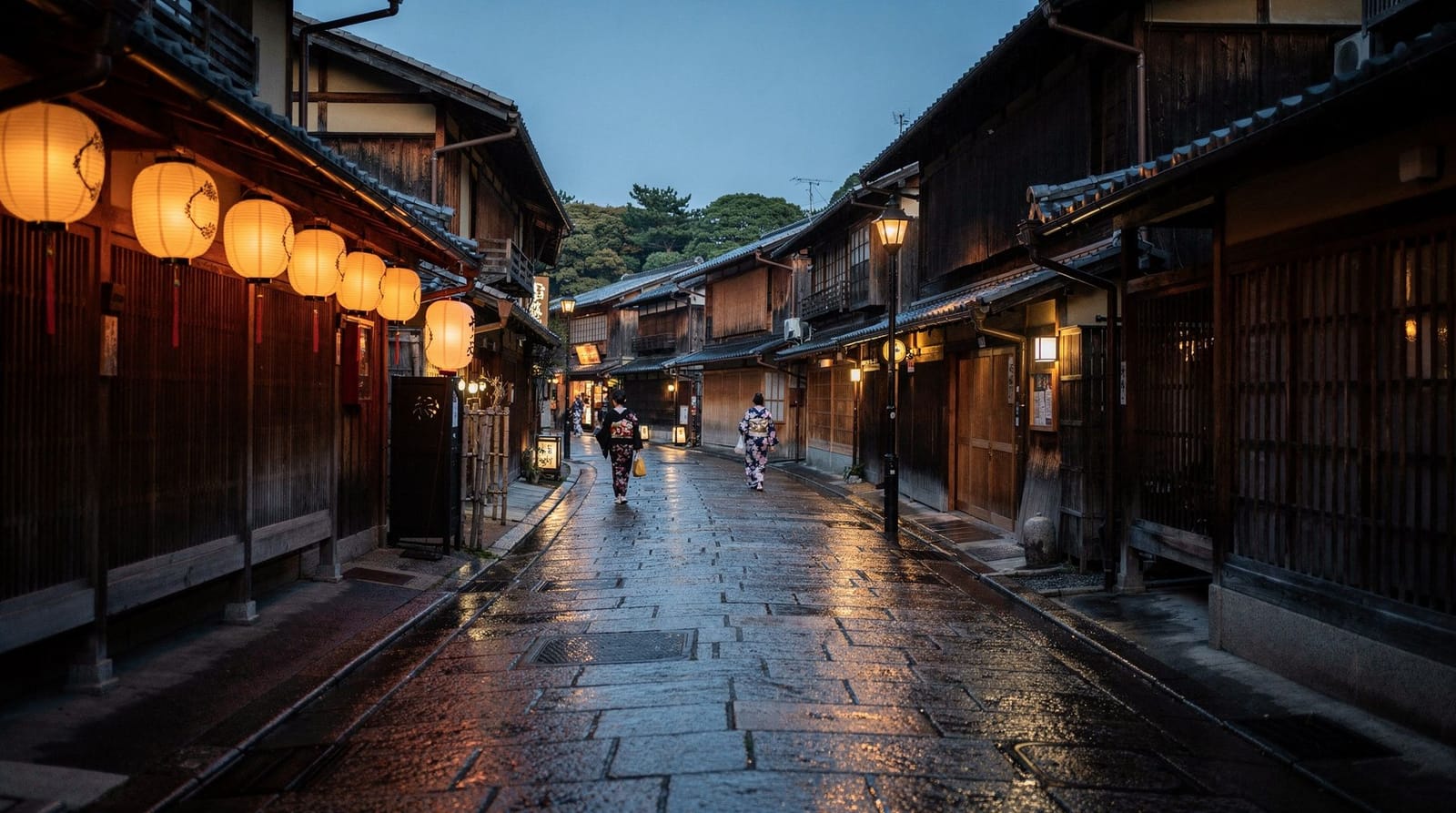
Gion is a 10-20 minute walk from most of Higashiyama depending on your exact position, centered on Hanamikoji-dori. Late afternoon into early evening — roughly 17:00-18:30 — is the window with the best chance of seeing a maiko or geiko walking to an appointment, since this is when engagements at teahouses typically begin.
It’s also worth noting explicitly: don’t block their path, don’t touch or grab at their kimono for a photo, and avoid photographing them in the narrower private lanes off the main street — some sections of Gion now carry posted fines for exactly this behavior, a response to years of tourist harassment complaints from residents and geiko alike. Full etiquette detail is in the Gion geisha guide and the Kyoto etiquette guide.
Night walk through Gion, the geisha district18:00-20:00 — Dinner in Gion or Pontocho
Pontocho, a narrow lane running parallel to the Kamo River a few minutes from Gion, has a denser concentration of restaurants across a wide price range, including riverside terrace seating (kawadoko) open roughly May through September. A guided food-focused evening is a reasonable way to sample several small dishes rather than committing to one restaurant blind.
Kyoto evening Gion food tourBy around 20:00 most restaurants are in full swing and the day’s route is complete — from Gion, it’s a short taxi ride (¥1,000-1,500/$7-10) or a 15-20 minute walk back toward Kyoto Station or Higashiyama-area accommodation.
Practical notes for a single Kyoto day
Transport cost for the day: roughly ¥800-1,000 ($5.50-7) in individual JR and bus fares using an IC card (ICOCA or Suica), tapped in and out at each ride. A one-day bus pass exists but rarely pays off on a route this train-heavy — it mainly benefits itineraries that stay on buses all day. See getting around Kyoto for a full transport cost comparison.
Season: this route works year-round, but cherry blossom season (late March-early April) and peak autumn foliage (mid-to-late November) add meaningful crowds at every stop, particularly Kiyomizu-dera and the Higashiyama lanes. Starting even earlier — 6:15-6:30am at Fushimi Inari — is worth it during these windows.
If you only have half this day: cut Higashiyama’s flexible afternoon block and go straight from Kiyomizu-dera to Gion by early afternoon, or skip Fushimi Inari’s full climb and turn around at the base of Senbon Torii after 15-20 minutes.
Budget: with a mid-range lunch and dinner, entrance fees, and transport, a realistic total is ¥6,000-9,000 ($40-60) per person, excluding accommodation. Budget travelers eating at convenience stores or standing noodle counters can bring this closer to ¥4,000 ($27).
Extending the day: if one day turns out to feel rushed, the 2-day Kyoto itinerary keeps this exact eastern-side day as Day 1 and adds Arashiyama and Kinkaku-ji as a second day on the western side of the city.
If it rains
None of the three main stops close for weather — Fushimi Inari is outdoors and open regardless, Kiyomizu-dera’s veranda and the Sannen-zaka/Ninen-zaka lanes are walkable in light rain, and Gion’s covered arcades near Shijo-dori offer some shelter for a break. A steady downpour does make the Fushimi Inari climb past Yotsutsuji genuinely unpleasant on wet stone steps, so on a heavy-rain morning it’s reasonable to swap the order and start with Kiyomizu-dera instead, saving Fushimi Inari for a lighter-rain or dry window later in the day. See the Kyoto on a rainy day post for indoor backup options if the whole day turns out wet.
What this route skips, and whether that’s a problem
A single day on Kyoto’s east side means Arashiyama’s bamboo grove, Kinkaku-ji’s golden pavilion, and Nijo Castle simply don’t fit — they sit on the opposite side of the city, and cramming them in would mean cutting the slack that makes this itinerary work in the first place. If any of those three is a must-see, the honest move is to extend rather than compress: the 2-day itinerary adds exactly those west-side sights as a second day, keeping this east-side plan intact as Day 1. Trying to squeeze all six sights into one day generally means rushing Fushimi Inari’s climb, skipping Sannen-zaka and Ninen-zaka, and arriving in Gion exhausted rather than at the golden hour this plan is built around.
Where this itinerary fits if you’re coming from Osaka
Day-trippers based in Osaka can run this exact route and be back by late evening — Kyoto Station connects to Osaka in roughly 30 minutes by JR Special Rapid, so a 6:00am departure from an Osaka hotel still lands you at Fushimi Inari close to opening light. The trade-off is a longer overall day and no buffer if a train connection runs late; travelers who’d rather not compress two cities’ worth of travel into one day should consider staying a night in Kyoto instead. For the reverse direction, or for splitting Kansai between both cities properly, the Kyoto-Osaka 3-day itinerary gives Osaka its own dedicated time rather than treating it as a base only.
Frequently asked questions about one day in Kyoto
Is one day enough to see Kyoto?
One day is enough to see three major sights properly — Fushimi Inari, Kiyomizu-dera and Higashiyama, and Gion — but not enough to add Arashiyama, Kinkaku-ji, or Nijo-jo without cutting time elsewhere. Kyoto has over 1,600 temples and shrines; a single day covers a genuine sample of the east side of the city, not the whole city. For a fuller first visit, see how many days you need in Kyoto.
What if I arrive in Kyoto later than 6:45am?
The plan still works starting as late as 8-8:30am, but Fushimi Inari’s Senbon Torii will already have real crowds — expect a photo with other visitors in frame rather than an empty tunnel. If you’re starting later, consider swapping the order: do Higashiyama and Kiyomizu-dera first, then Fushimi Inari in the evening or after dark, since the shrine never closes.
Can I do Fushimi Inari at night instead of dawn?
Yes — the shrine is open 24 hours, and an evening or night visit is a genuinely different, quieter experience, though the upper trail past Senbon Torii has minimal lighting. A phone flashlight or headlamp is worth carrying past the well-lit lower gates if you’re going after dark.
How much walking is involved in this itinerary?
Realistically 8-12km over the day, including the Fushimi Inari climb to Yotsutsuji, the uphill approach to Kiyomizu-dera, the Sannen-zaka/Ninen-zaka lanes, and the Gion walk. Comfortable closed-toe shoes matter more here than on flatter city itineraries.
Do I need a JR Pass for this one-day route?
No. A 7-day JR Pass costs around ¥50,000 ($340) and only pays off with long-distance shinkansen travel — this route uses two short JR Nara Line hops (¥150 each) and city buses, which an IC card covers for a fraction of the cost. See the Kyoto travel budget guide for a full cost breakdown.
Is Gion worth visiting if I won’t see a geisha or maiko?
Yes — Hanamikoji-dori’s preserved wooden teahouse architecture, Yasaka Shrine at its eastern edge, and Shirakawa canal’s willow-lined lane are worth the walk regardless of whether a maiko happens to pass by. Seeing one is a matter of timing and some luck, not something to plan the whole visit around.
Should I book Kiyomizu-dera tickets in advance?
No advance booking is needed or available for general admission — you pay at the gate. The only reason to book ahead is a guided tour that bundles entrance with a guide’s context, which can be worth it on a first, time-limited visit.
What’s the biggest mistake people make on a one-day Kyoto visit?
Starting the day at a normal hour (9-10am) rather than at dawn. Fushimi Inari, Kiyomizu-dera, and Gion are all at their best — least crowded or most atmospheric — at the edges of the day, and a 9am start pushes the entire schedule into the busiest hours at every stop.
Can this itinerary be done in reverse, starting in Gion?
It’s possible but not recommended. Fushimi Inari’s main appeal at this pace is the early-morning quiet, which is lost if it’s visited mid-afternoon after Gion and Higashiyama. If your hotel is much closer to Gion than Fushimi Inari, it’s still worth the extra 20-30 minutes of transit to keep Fushimi Inari first.
Top experiences
Bookable activities with verified prices and instant confirmation on GetYourGuide.