Higashiyama district guide — walking Sannenzaka and Ninenzaka right
Kyoto: Kiyomizudera, Higashiyama and Yasaka Discovery Tour
What's the best walking route through Higashiyama's Sannenzaka and Ninenzaka?
Start at Kiyomizu-dera before 8am, then walk downhill through Sannenzaka and Ninenzaka toward Kodai-ji and Yasaka Shrine, finishing in Gion. This direction front-loads the single most crowd-sensitive stop (Kiyomizu-dera) at the quietest hour and lets the rest of the walk unfold at a more relaxed pace as the morning goes on, rather than climbing uphill into worsening crowds later in the day.
The walk everyone plans to do, and how to actually do it well
Higashiyama’s descent from Kiyomizu-dera through Sannenzaka and Ninenzaka toward Yasaka Shrine and Gion is on nearly every Kyoto itinerary, and for good reason — it’s one of the most consistently preserved historic streetscapes in the city, walkable end to end in well under an hour. It’s also, precisely because of that popularity, one of the most crowded single stretches in Kyoto by mid-morning. This guide covers the route itself, what’s actually worth stopping for along the way, and the specific timing that makes the difference between a crowded shuffle and an unhurried walk through preserved 19th-century Kyoto.
| Where | Kiyomizu-dera to Yasaka Shrine, eastern Kyoto |
| Distance/time | Around 30–40 min walking, 3–4 hrs with stops |
| Best start | Before 8am at Kiyomizu-dera |
| Cost | Free lanes; Kiyomizu-dera admission around ¥400–500 |
| Footwear | Sturdy shoes — stone paving is uneven and sloped |
Starting point: Kiyomizu-dera, and why direction matters
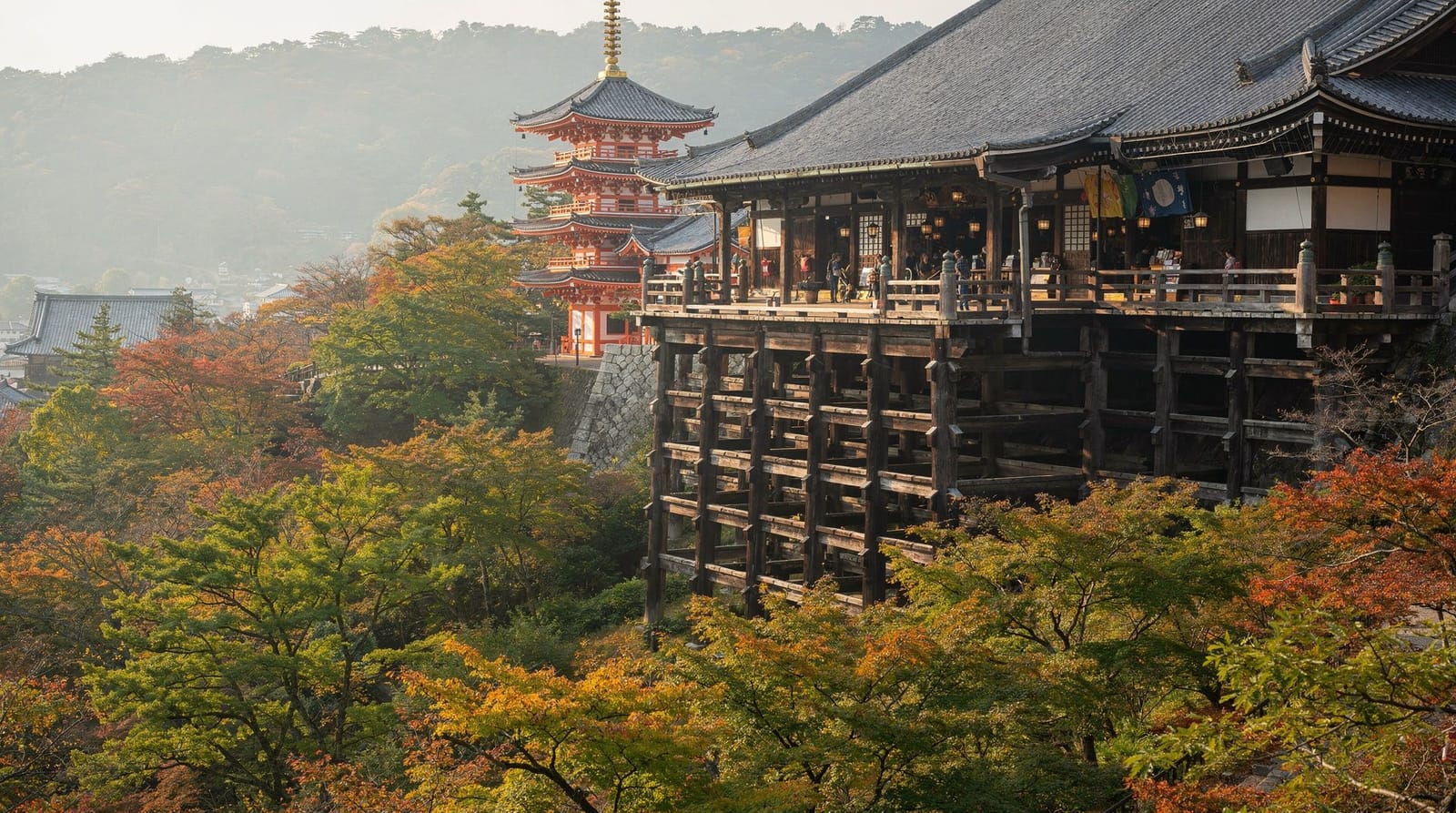
The standard route starts at Kiyomizu-dera, whose wooden stage and hillside setting make it Higashiyama’s anchor sight and, not coincidentally, its most crowd-sensitive one. Starting here at opening — as early as 6am, well before most visitors are moving — and walking downhill through Sannenzaka and Ninenzaka afterward is a deliberate sequencing choice: it front-loads the single stop most affected by crowding at the quietest possible hour, then lets the rest of the walk unfold more calmly as the morning builds.
Attempting the route in reverse, arriving at Kiyomizu-dera later after working uphill through the lanes, generally means hitting the temple at its busiest. Full admission prices, hours, and temple history are in the Kiyomizu-dera guide.
Early morning Kiyomizu-dera to Gion historical tourSannenzaka: the slope, the legend, and the shops
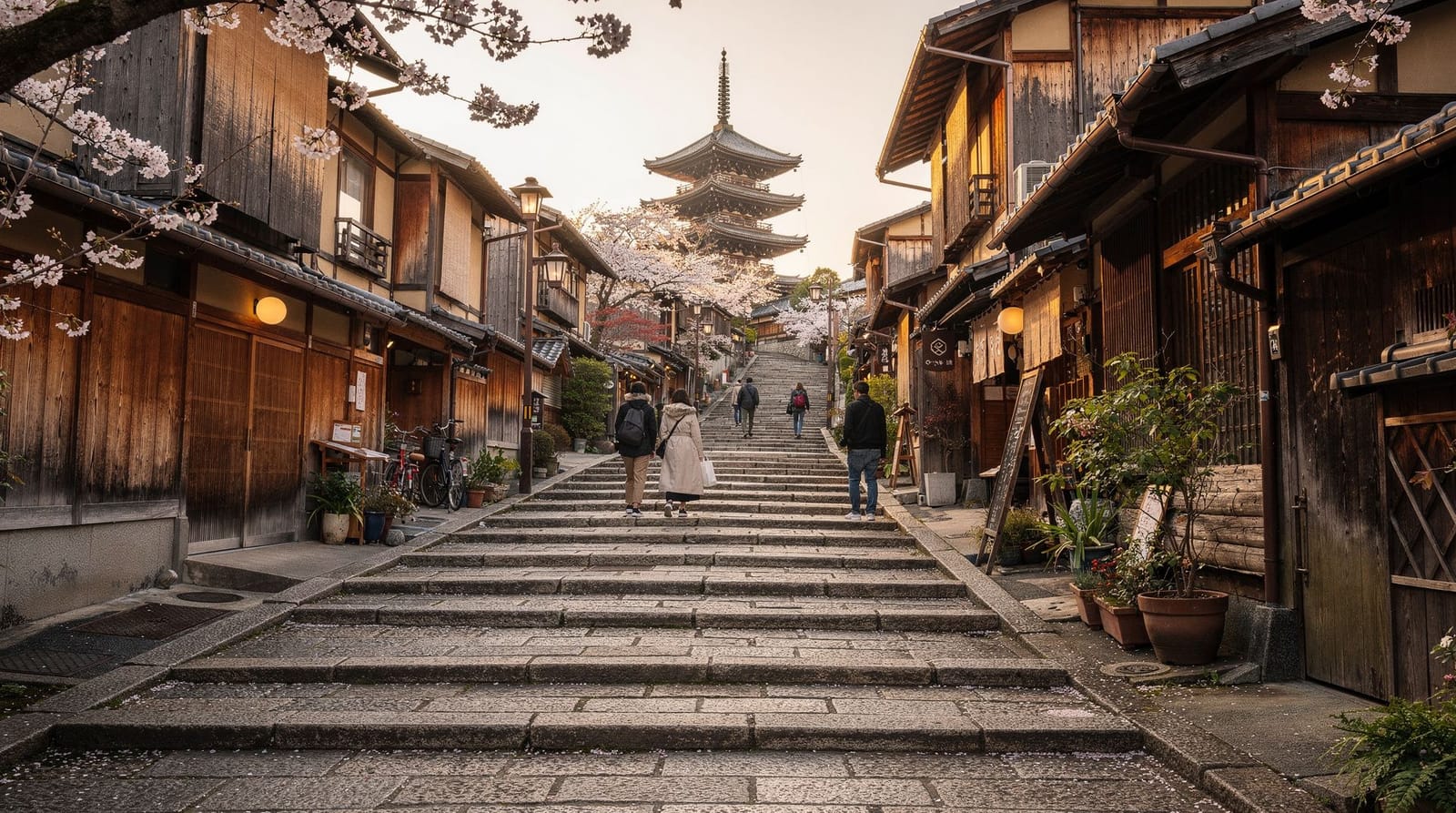
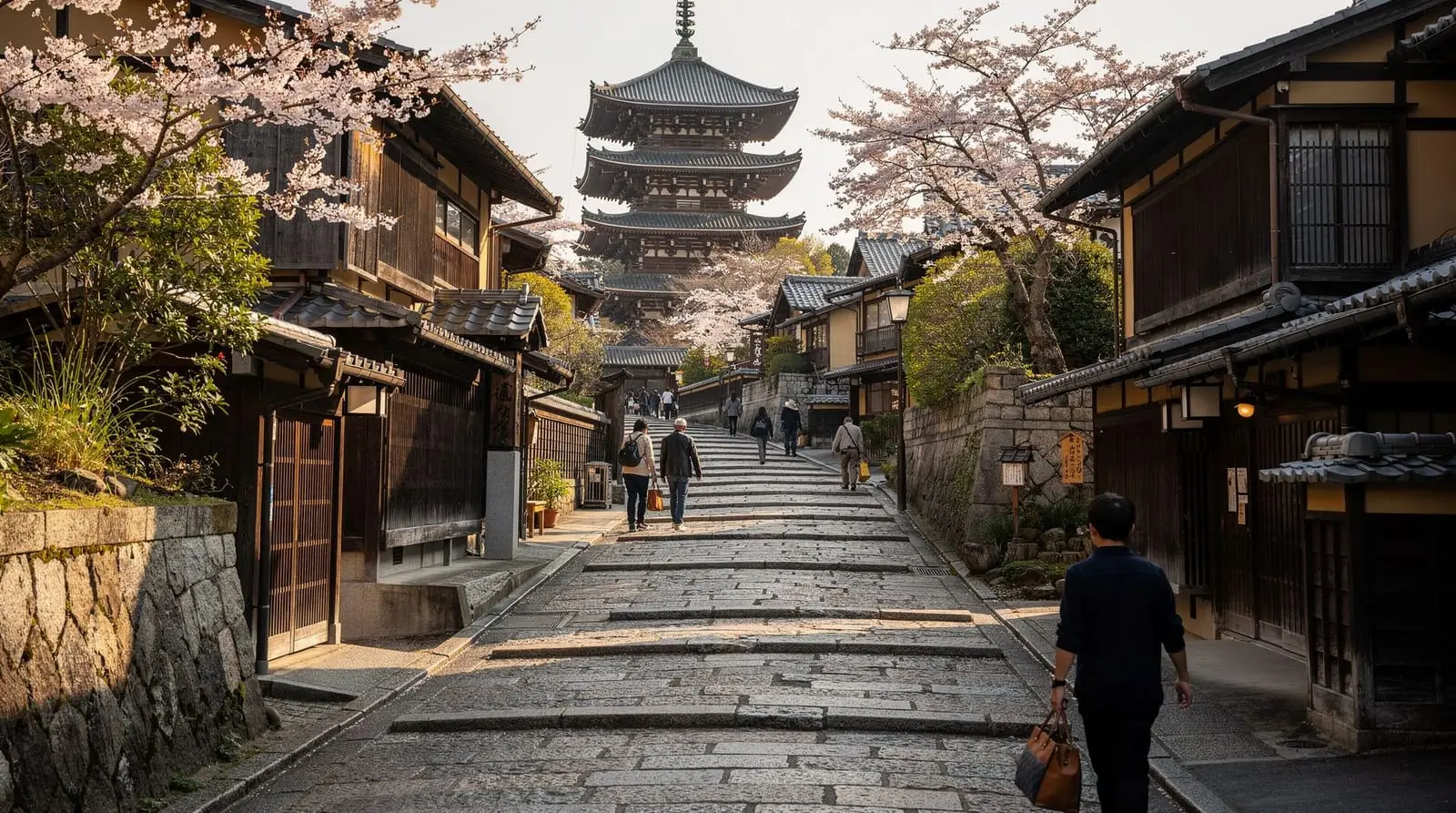
Sannenzaka (“three-year slope”) is the upper of the two connected lanes, a stone-paved, gently curving stretch lined with wooden shopfronts largely dating to the district’s Edo and Meiji-era development as a pilgrim approach to Kiyomizu-dera. A long-standing local superstition holds that tripping here brings bad luck, traditionally said to shorten your life by two or three years — treated today more as a bit of local color repeated by every tour guide than a genuine concern, though the uneven stone paving is real enough to warrant reasonably careful footing regardless, especially after rain.
The lane’s shopfronts include a meaningful concentration of Kiyomizu-yaki pottery shops, reflecting the area’s centuries-old ceramics tradition, alongside the more recently arrived matcha soft-serve stands and photo-friendly cafes that now share the same stretch.
Ninenzaka: the continuation, slightly wider and calmer
Ninenzaka (“two-year slope”) continues directly from Sannenzaka’s base, generally a touch wider and marginally less steep, with a similar mix of preserved wooden architecture and shopfronts. The two lanes are functionally one continuous walk rather than separate destinations — almost nobody walks one without the other — and together they take roughly 15-20 minutes to cover without stopping, considerably longer once shop browsing and photo stops factor in. A well-known five-story pagoda, Yasaka-no-to (Hokan-ji), rises just off Ninenzaka’s route and is one of the most photographed rooftop views in the district, worth a short detour even though the pagoda’s interior has limited public access.
Traditional Higashiyama and Gion walking tourKodai-ji: the detour most rushed itineraries skip
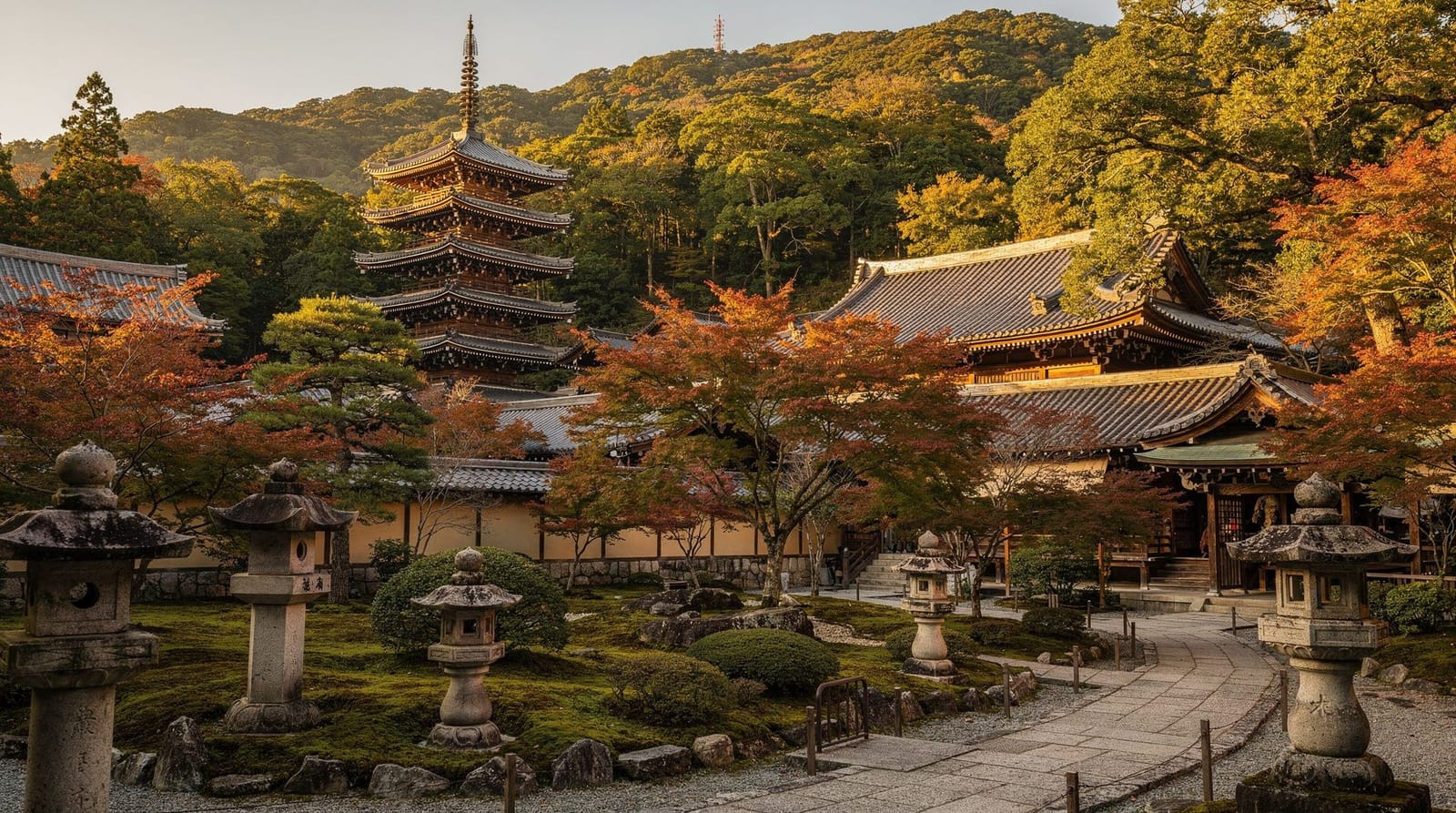
A short walk off the main lanes, Kodai-ji is a Zen temple built in the early 17th century to commemorate the widow of Toyotomi Hideyoshi, a major unifying feudal lord of the Sengoku era, and it includes a notable garden along with a small bamboo grove considerably quieter than Arashiyama’s far more famous version. Despite sitting almost directly along the standard Sannenzaka-Ninenzaka route, it’s frequently skipped by visitors focused solely on reaching Kiyomizu-dera or Gion, which makes it one of the more worthwhile 30-45 minute additions for anyone not working under a tight schedule.
Yasaka Shrine: the bridge into Gion
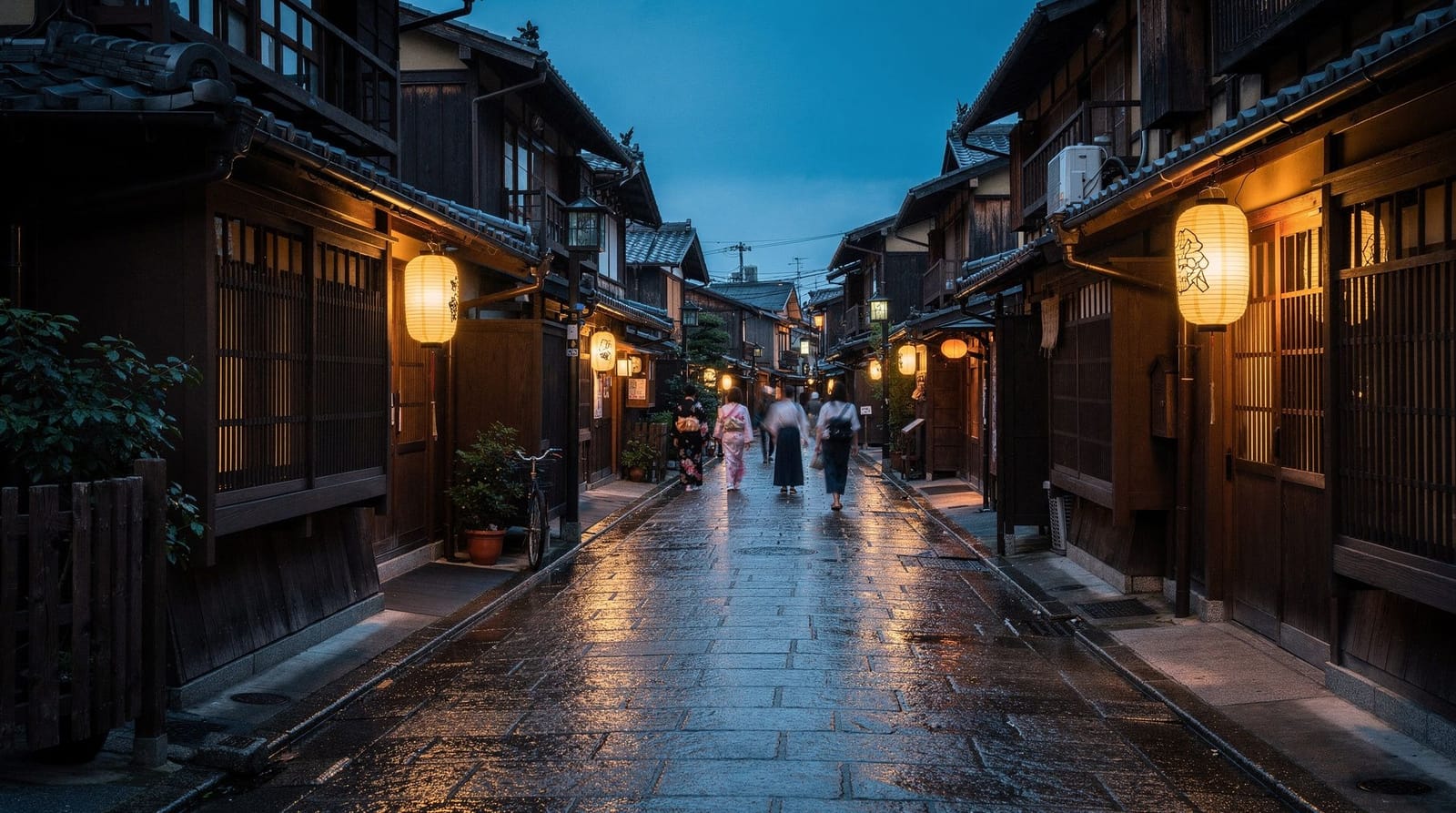
The route’s natural endpoint is Yasaka Shrine, a large, free-to-enter Shinto shrine with a striking vermillion gate facing Higashiyama and a second gate opening directly toward Gion’s Hanamikoji-dori, functioning as the physical and symbolic bridge between the two districts. The shrine grounds are open around the clock with no admission fee, making it an easy stop regardless of what time your walk through Sannenzaka and Ninenzaka finishes, and a natural pivot point if you’re continuing straight into a Gion evening.
Eastern Kyoto walking tour with a local guideRealistic timing for the full walk
Kiyomizu-dera itself takes 45-60 minutes for a thorough visit including the main hall and grounds. Sannenzaka and Ninenzaka together run 15-20 minutes without stops, 45-90 minutes with typical shop browsing and photo breaks. Adding Kodai-ji brings another 30-45 minutes, and the final stretch to Yasaka Shrine and into Gion adds 15-20 more. A realistic, unhurried half-day covering the full route — Kiyomizu-dera through to Gion — runs roughly 3-4 hours including stops, longer if kaiseki lunch or an extended shopping browse factors in.
Crowds: the specific hours to plan around
Kiyomizu-dera and the upper stretch of Sannenzaka see the heaviest crowding of anywhere in Higashiyama, typically building from around 9am and staying dense through mid-afternoon, particularly on weekends and during cherry blossom or autumn foliage season. The lower stretch toward Ninenzaka, Kodai-ji, and Yasaka Shrine tends to feel somewhat less congested even at peak hours, since a portion of visitors turn back after Kiyomizu-dera rather than continuing the full route. See the crowd-avoidance guide for exact opening-time strategies that apply citywide, not just in Higashiyama.
Food and shopping along the route
Beyond the pottery shops and matcha stands already mentioned, the lanes include several long-established shops selling yatsuhashi (Kyoto’s signature cinnamon-and-red-bean sweet), pickled vegetables, and traditional textiles, alongside an increasing share of general souvenir stores as the district’s tourist volume has grown. Casual food stalls along Sannenzaka and Ninenzaka are convenient for a quick bite mid-walk, while sit-down restaurants with more substantial menus cluster more heavily around the Kodai-ji and Yasaka Shrine end of the route, useful to know if you’re saving a proper meal for the walk’s second half.
Extending the day: Sanjusangendo and beyond
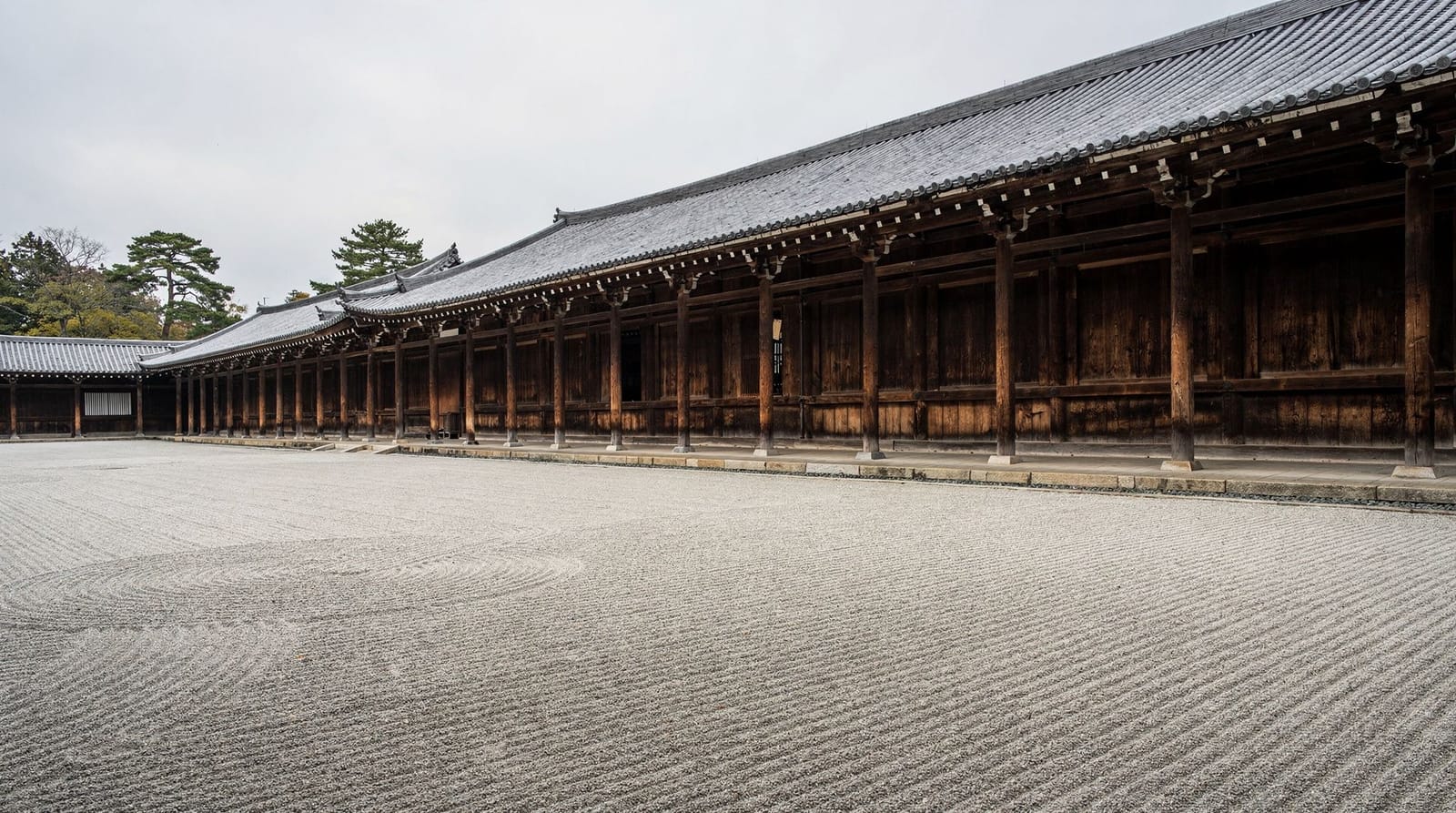
For visitors with a full day rather than a half day, Higashiyama connects reasonably well southward to Sanjusangendo and its 1,001 Kannon statues, though it requires a separate short bus or taxi trip rather than a direct walking continuation from Yasaka Shrine. Treating Higashiyama-to-Gion as one connected half-day and Sanjusangendo as a separate stop earlier or later the same day is the more realistic way to combine them than trying to walk the entire stretch in one continuous route.
What to wear and practical notes
Sannenzaka and Ninenzaka’s stone paving is uneven in places and genuinely slippery when wet, making sturdy, comfortable footwear more important here than on flatter parts of the city. Neither lane is realistically wheelchair accessible given the slope and paving, and there’s no practical alternate route covering the same historic stretch — visitors with significant mobility limitations are better served focusing on Yasaka Shrine’s flatter grounds and a taxi connection into Gion rather than attempting the full slope on foot.
A brief history of the district’s development
Higashiyama’s identity as a temple district predates Kyoto’s founding as the imperial capital in 794, with the area’s wooded foothills long considered auspicious ground for religious sites given their position sheltering the city from the northeast, a direction traditionally associated with misfortune in Japanese geomancy. Kiyomizu-dera itself was founded in 778, predating even the current street layout that visitors walk today. The Sannenzaka and Ninenzaka lanes in their current preserved form largely reflect Edo-period (1603-1868) development, when the route became formalized as the primary pilgrim approach to Kiyomizu-dera, with teahouses and shops establishing themselves along the way to serve travelers making the climb.
Much of the wooden architecture visible today was rebuilt following fires common throughout Kyoto’s history, meaning the buildings are generally 19th and early 20th century in construction even where the street layout and function trace back centuries further. Formal preservation ordinances protecting the district’s traditional streetscape from demolition and incompatible new construction were introduced in the latter half of the 20th century, a direct response to redevelopment pressure that had already reshaped large parts of central Kyoto by that point.
Rainy day and off-season considerations
Higashiyama’s stone-paved lanes handle rain considerably worse than flatter parts of the city, with the already-uneven paving becoming genuinely slippery underfoot — worth factoring into footwear choices and pace regardless of season. On the upside, rain reliably thins crowds throughout the district, and a wet-weather visit to Kiyomizu-dera’s wooden stage, with mist settling over the surrounding hillside, is considered by many repeat visitors one of the more atmospheric versions of a sight usually associated with clear-sky photographs.
Winter, running roughly December through February, is Higashiyama’s quietest season overall, and while it lacks cherry blossoms or maple color, the combination of thinner crowds and (occasionally) a light dusting of snow across the temple’s tiled roofs makes it worth genuine consideration rather than automatically defaulting to spring or autumn.
A note on the area’s other, less-visited temples
Beyond Kiyomizu-dera and Kodai-ji, Higashiyama holds a number of smaller temples that see a fraction of the main route’s foot traffic despite sitting close by — Kosho-ji and Choraku-ji among them, both within a short walk of the main Sannenzaka-Ninenzaka corridor but rarely appearing on standard itineraries. None individually justify restructuring a first-time visit around, but for repeat visitors who’ve already covered the headline sights and want a genuinely quiet corner of a district otherwise known for its crowds, a slower exploration a block or two off the main route consistently turns up smaller gates and quieter grounds that the standard walking route bypasses entirely.
Practical tips for photographers
Sannenzaka and Ninenzaka’s mix of wooden architecture, narrow sightlines, and the Yasaka-no-to pagoda backdrop make the route one of Kyoto’s most rewarding for street-level photography, but the same narrowness that creates good compositions also means other visitors are almost impossible to fully exclude from a frame during busier hours.
Early morning, before roughly 8:30am, offers the most realistic window for genuinely uncluttered shots of the lanes themselves; once the shops open and foot traffic builds, patience or a willingness to include some passersby becomes part of the deal. The pagoda view from the small side street just off Ninenzaka is one of the most consistently photographed single compositions in the district, and it’s worth visiting at more than one time of day if photography is a priority, since the angle of light against the wooden buildings changes meaningfully between morning and late afternoon.
Why this walk holds up despite the crowds
Higashiyama’s Sannenzaka-Ninenzaka stretch earns its place on nearly every Kyoto itinerary because the architecture is genuinely, consistently well preserved for the full length of the walk, not just at a single photogenic corner — a rarer thing in a modern city than it sounds. The crowding is real and worth planning around with an early start, but it doesn’t change the fact that this remains one of the most complete surviving historic streetscapes in Japan, walkable in under an hour by anyone willing to get moving before the rest of Kyoto wakes up.
Pairing the walk with a guided option
For visitors who’d rather not plan the sequencing and timing themselves, a guided version of this same route removes the guesswork around opening hours, the best photo angles, and which shops are worth a stop versus which are generic souvenir stores.
Kiyomizu-dera, Higashiyama and Yasaka discovery tour covers the full route with a guide explaining the district’s history as you walk it, useful if the 8th-century founding dates and Edo-period development covered above are more interesting heard on-site than read beforehand.
Where this fits with the rest of eastern Kyoto
Higashiyama doesn’t exist in isolation — it’s the natural first half of an eastern Kyoto day that continues into Gion for the evening, or extends toward Sanjusangendo for visitors with a full day. Anyone building a first-time Kyoto itinerary from scratch should treat Higashiyama-through-Gion as a single connected half-day block rather than two separate errands, since the walking distance between them is short and the transition from temple lanes to lantern-lit streets happens almost without a deliberate decision to switch modes.
Frequently asked questions about Higashiyama district guide — walking Sannenzaka and Ninenzaka right
What are Sannenzaka and Ninenzaka, and why are they walked together?
Is there really a superstition about tripping on Sannenzaka?
What time should you start a Higashiyama walk to avoid crowds?
What kind of shops line Sannenzaka and Ninenzaka?
How does Higashiyama connect to Gion on foot?
Is Kodai-ji worth adding to a Sannenzaka/Ninenzaka walk?
What's the best time of year to walk Higashiyama?
Are Sannenzaka and Ninenzaka accessible for visitors with mobility limitations?
How much does Kiyomizu-dera admission cost?
Can I do the Higashiyama walk in the evening instead of the morning?
Top experiences
Bookable activities with verified prices and instant confirmation on GetYourGuide.