Kyoto vs Tokyo — how to split your time between them
Kyoto: Full-Day Guided Highlights Tour by Bus with Tickets
Should you visit Kyoto or Tokyo on a Japan trip?
Both, if your schedule allows it — they aren't substitutes for each other. Tokyo is Japan's ultra-modern capital: scale, neon districts, world-class food, nightlife. Kyoto is the old imperial capital: roughly 2,000 temples and shrines, geisha districts, zen gardens, a far slower pace. Most first-time Japan trips of 10-14 days split roughly 4-5 nights in Tokyo and 3-4 in Kyoto; a tighter 7-day trip can work as 3 nights each plus a transition day.
Kyoto or Tokyo — which should you prioritize? Framed as a “versus,” the question is a little misleading: for most Japan itineraries, the honest answer is both, because the two cities aren’t competing for the same role in your trip. Tokyo is a sprawling, ultra-modern megacity built around scale, neon, and constant reinvention. Kyoto is the old imperial capital, home to roughly 2,000 temples and shrines, geisha districts, and a pace that’s deliberately slower. Most first-time visitors to Japan end up splitting their trip between the two rather than choosing one over the other, and this guide is about how to divide the days well rather than which city “wins.”
| Train link | Shinkansen, ~2h15 (Nozomi) to 3h (Hikari) |
| Standard split (10-14 days) | 4-5 nights Tokyo, 3-4 nights Kyoto |
| Compressed split (7 days) | 3 nights each, plus a transition day |
| Day trip Kyoto from Tokyo? | Not recommended — 4.5hrs round-trip alone |
| JR Pass worth it for just this leg? | Usually not — buy individual tickets instead |
Why “Kyoto vs Tokyo” is the wrong frame
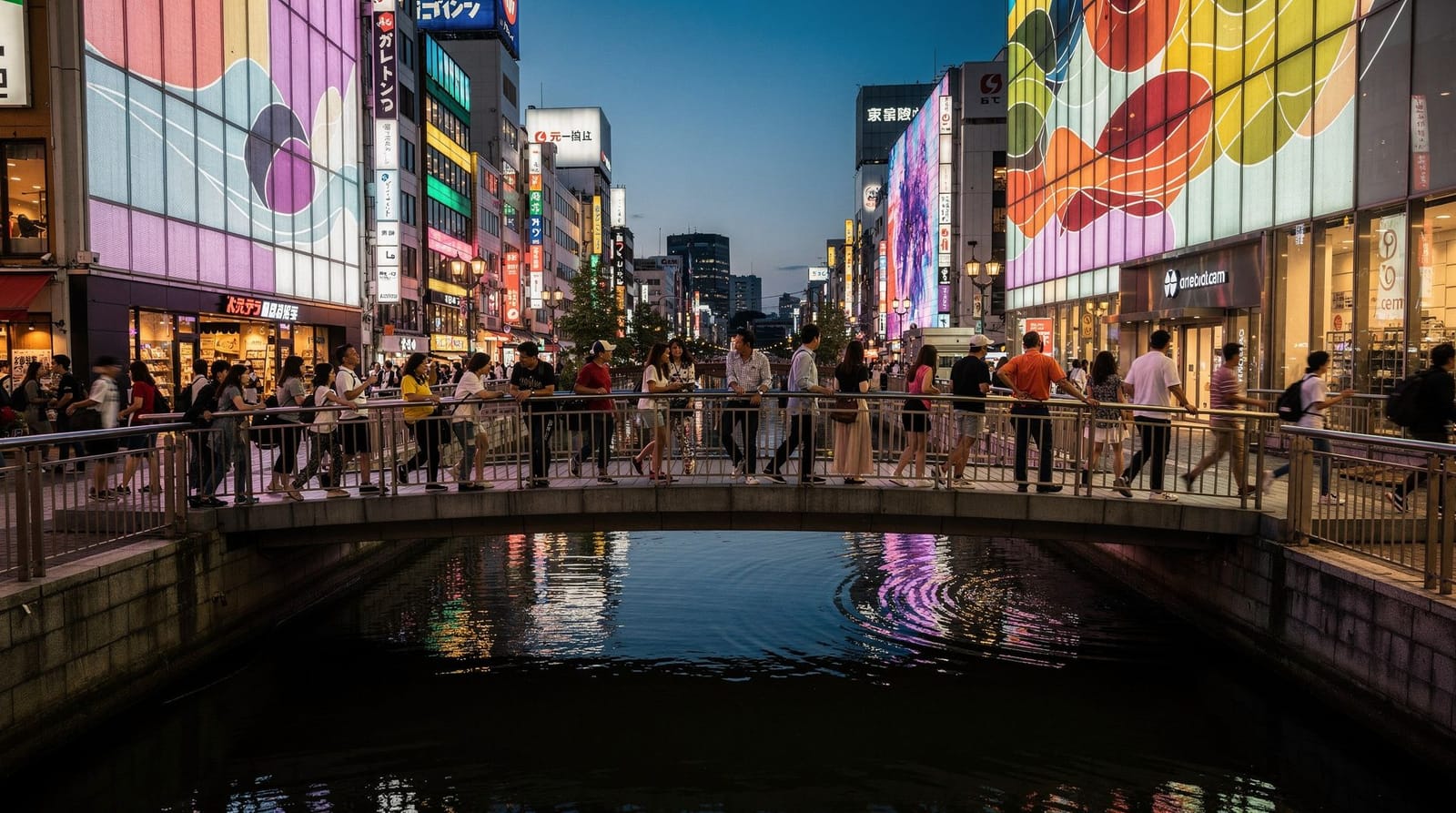
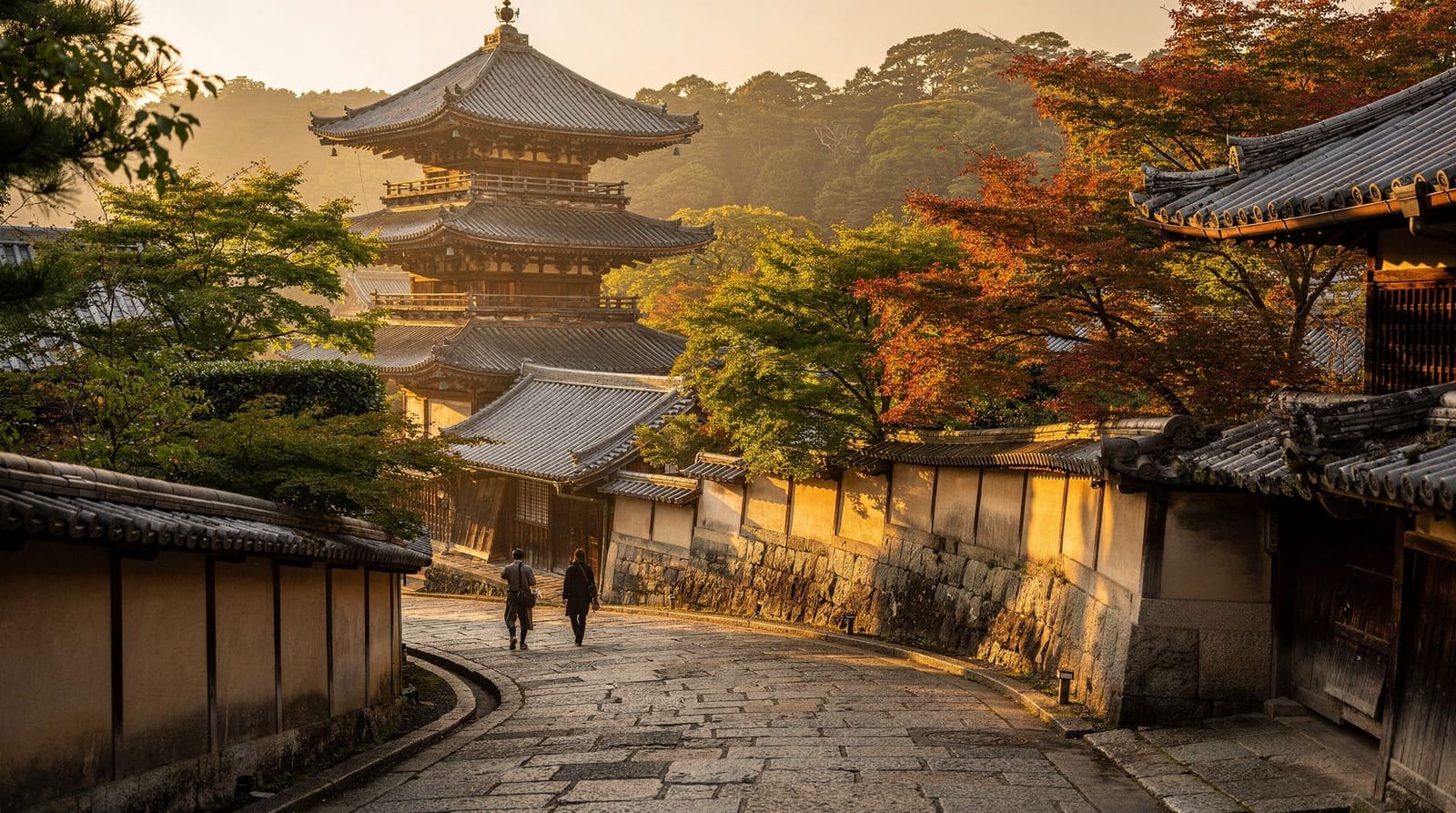
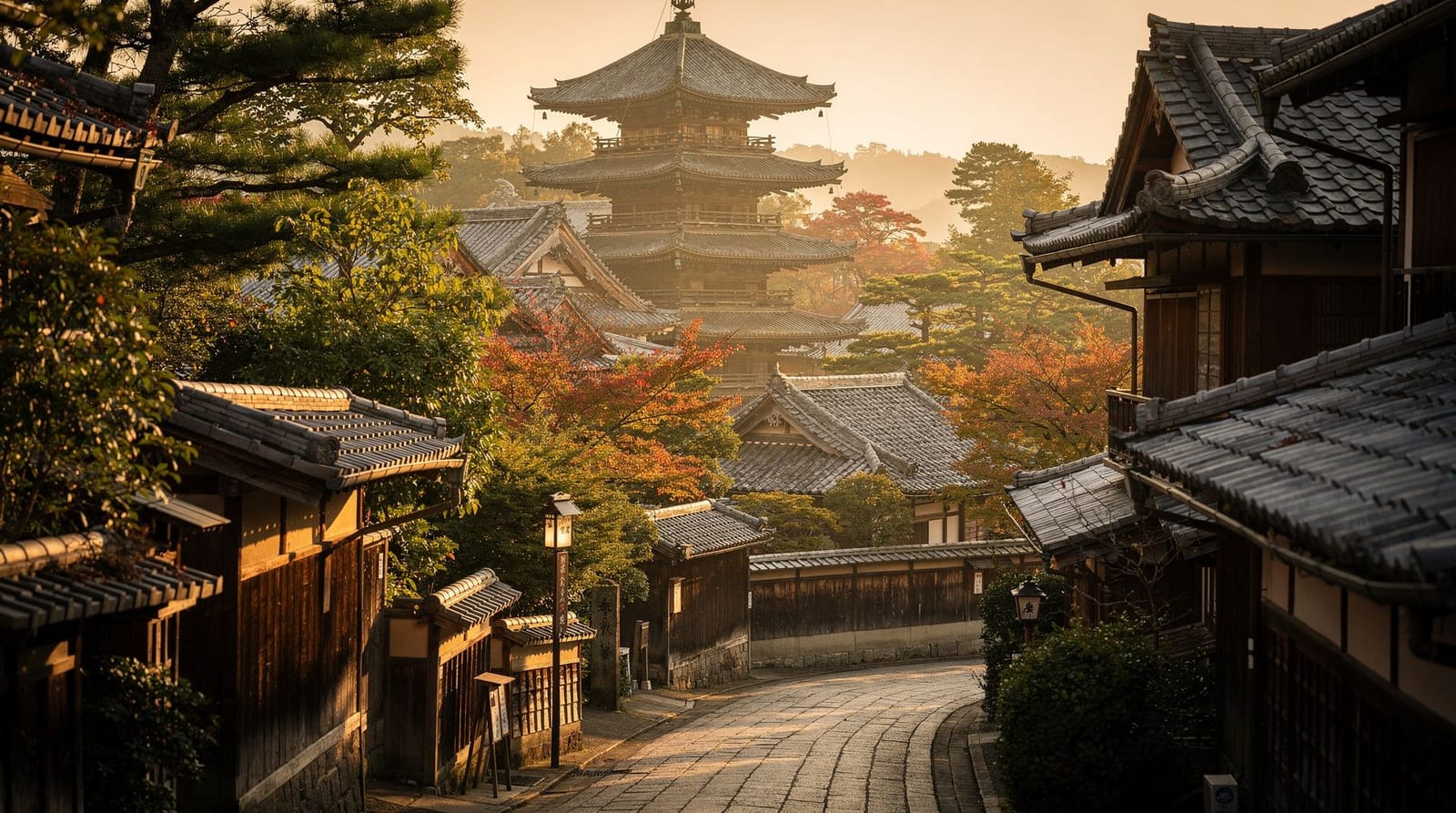
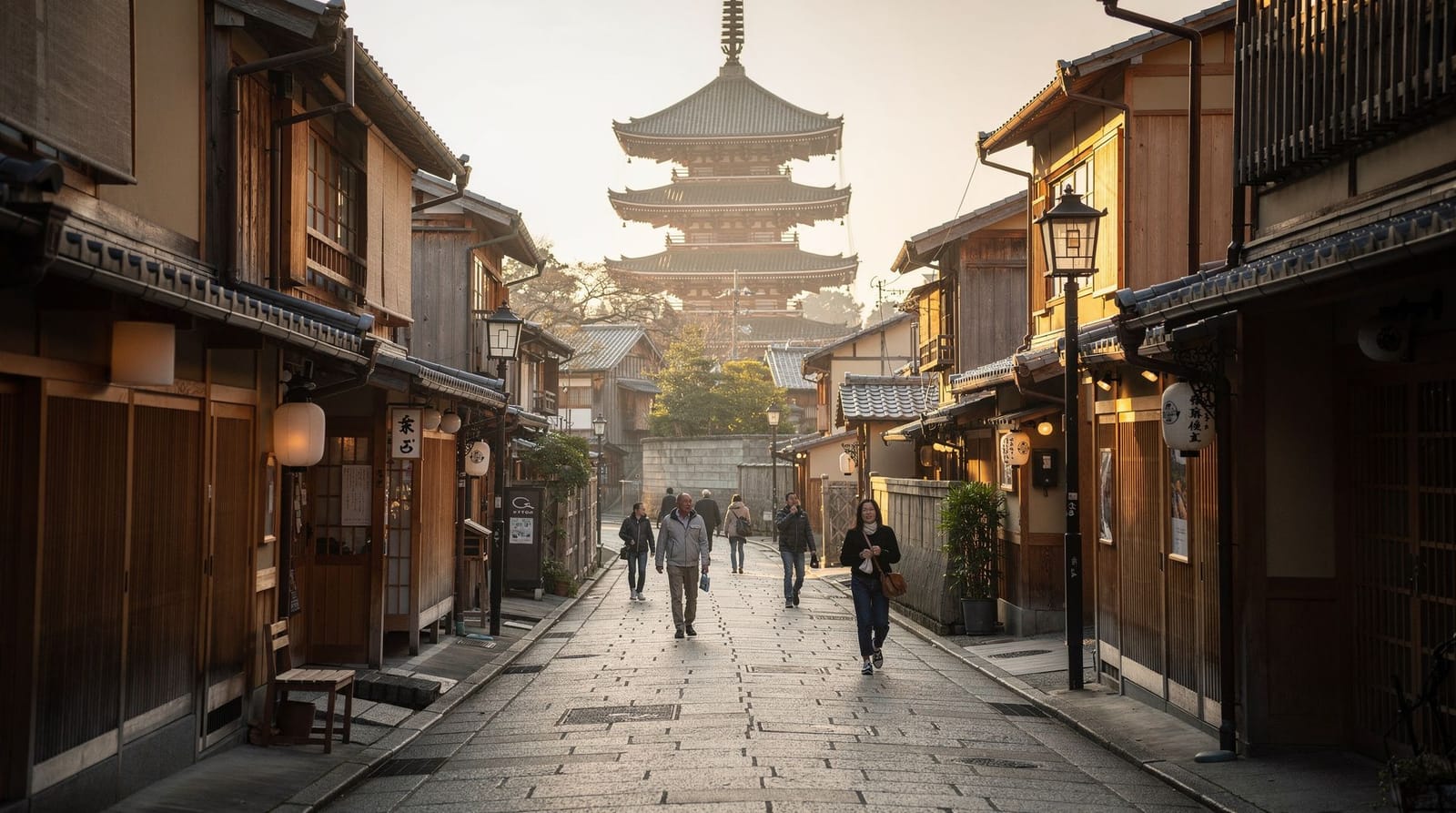
Comparison guides often set cities up as rivals, but Tokyo and Kyoto don’t really compete for the same traveler moment. If you’re standing in Shibuya at night, surrounded by scale and light and crowds moving in every direction, there’s no equivalent scene in Kyoto — and the reverse is just as true. Walking the stone-paved lanes of Higashiyama at dawn, past wooden machiya storefronts toward a quiet temple gate, isn’t something Tokyo offers either, because Tokyo was rebuilt so extensively through the 20th century that its pre-modern streetscape survives only in fragments.
What each city is actually good at is different enough that visiting one doesn’t reduce the value of visiting the other. Tokyo delivers on things Kyoto simply doesn’t have room for: Shibuya and Shinjuku’s density and nightlife, Akihabara’s electronics and pop-culture stores, a restaurant scene with more Michelin stars than any other city in the world, and shopping that ranges from flagship department stores to tiny specialist boutiques.
Kyoto delivers what Tokyo can’t replicate at any scale: temple and shrine density built up over more than a thousand years as the imperial capital, the geisha and maiko culture centered on Gion, zen gardens designed for stillness rather than spectacle, and traditional crafts — textiles, ceramics, lacquerware — still made by hand in small workshops. Treating the choice as either/or means giving up one of these two genuinely different experiences for no real gain, unless your total trip length simply doesn’t allow for both.
The Tokyo-Kyoto train link
The two cities are connected by the Tokaido Shinkansen, one of the busiest and most reliable high-speed rail lines in the world, with departures running several times an hour in each direction — there’s rarely a meaningful wait for the next train. Two service types matter for planning:
- Nozomi: the fastest option, roughly 2 hours 15 minutes, but not covered by the Japan Rail Pass.
- Hikari: covered by the JR Pass, roughly 2 hours 40 minutes to 3 hours depending on the specific stops it makes along the way.
A one-way non-reserved seat in ordinary class on either service runs approximately ¥13,910-14,720 (roughly US$93-98), so budget around that figure per person per direction if you’re buying individual tickets rather than a rail pass.
On the JR Pass specifically: a 7-day pass costs around ¥50,000 since the 2023 price increase, and it only makes financial sense if you’re stacking multiple long-distance shinkansen legs into the same window. Two one-way Tokyo-Kyoto trips (there and back) total roughly ¥28,000-29,000 bought individually — cheaper than the pass on its own. The pass starts to pay for itself once you add another long trip on top, such as a side trip from Kyoto to Hiroshima, or if your itinerary includes several shinkansen legs across different cities rather than a single back-and-forth. Worth running the numbers against your specific route before assuming the pass saves money by default.
How much time for each city
There’s no single correct split, but a few patterns show up consistently across first-time Japan itineraries, based on total trip length.
10-14 day trip (the standard first-timer route): roughly 4-5 nights in Tokyo, 3-4 nights in Kyoto, and 2-3 nights spent in the wider Kansai region — Osaka as a base, with Nara or Hiroshima as day trips or short add-ons. Hakone or Nikko often get slotted in as an optional day or two, usually inserted around the Tokyo portion since both are close to the capital.
7 day trip (compressed): 3 nights in Tokyo, 3 nights in Kyoto, and a single transition day that can double as a day trip — Nara or Uji from the Kyoto side, or Hakone/Nikko from the Tokyo side — depending on which appeals more. This is tight but workable if you accept that neither city gets its full multi-day treatment.
One pattern worth flagging: Kyoto is the city most first-time itineraries underestimate. It’s easy to look at a map and assume two days covers “the temples,” but Kyoto’s sights cluster into distinct areas — Higashiyama’s temple walk, Arashiyama’s bamboo grove, Fushimi Inari’s torii gates, the northwest cluster around Kinkaku-ji — that don’t overlap on foot and each deserve their own half day to full day. Three to four full days is what it actually takes to cover Kyoto without feeling rushed or repeating the same kind of temple experience twice in one afternoon. The how many days in Kyoto guide breaks this down area by area if you want the detail behind that number.
Practical logistics moving between the two cities
A few practical details make the Tokyo-Kyoto leg smoother once you’re actually booking it. Shinkansen tickets can be bought same-day at any JR ticket counter or machine, but during peak travel periods — cherry blossom season in late March and early April, autumn foliage in November, and the Obon holiday in mid-August — reserved seats sell out on popular departure times, so booking a day or two ahead is worth it even though the trains run frequently. Non-reserved cars exist on every Nozomi and Hikari departure and are usually fine outside those peak windows, but standing for part of a 2-hour-plus journey during a packed holiday period is a real possibility if you’re relying on unreserved seating.
Luggage is the other detail that trips people up. Standard shinkansen cars have limited overhead and between-seat space, and oversized suitcases technically require a reserved seat with built-in luggage space (the “oversized baggage” seats near the back of certain cars), which needs to be requested when booking. An easier option many travelers use instead is a same-day or next-day luggage forwarding service (takkyubin), which picks up bags from your Tokyo hotel and delivers them to your Kyoto hotel, typically arriving the following day — worth arranging a day ahead if you’d rather travel with just a daypack on the shinkansen itself.
Both Tokyo Station and Kyoto Station are large, multi-level hubs where the shinkansen platforms sit apart from the regular JR and subway lines, so budget 15-20 minutes for transfers within either station if you’re connecting from a subway or local train rather than assuming it’s a quick walk between platforms.
Why Kyoto shouldn’t be a day trip from Tokyo
Some itineraries try to squeeze Kyoto in as a single-day excursion from a Tokyo base — take the early Nozomi, sightsee for a few hours, take an evening train back. It’s technically possible, but the math works against it. A round trip alone eats 4.5 hours in transit (2 hours 15 minutes each way on the Nozomi), and that’s before factoring in the walk from Kyoto Station to whichever area you’re visiting and back. What’s left is a genuinely short window on the ground, enough for one area at a modest pace — not enough to get any real sense of what makes Kyoto worth visiting in the first place.
Kyoto rewards unhurried mornings more than almost any other Japanese city: Fushimi Inari and the Higashiyama temple walk are both dramatically quieter before 8am, and that early-morning advantage is the first thing a day-trip schedule sacrifices, since you’d be arriving on a mid-morning train at the earliest. If Kyoto is genuinely part of your plans, at least 2-3 nights based there is a better use of the same total trip time than a rushed single day squeezed between two Tokyo stays.
A combined Tokyo-Kyoto itinerary
A structure that works well for most first-time visitors, and avoids doubling back on the same shinkansen route:
- Fly into Tokyo (Narita or Haneda have more international connections than Kansai International). Spend the first 4-5 nights exploring Tokyo’s neighborhoods at a reasonable pace, with a possible day trip to Hakone or Nikko worked in.
- Take the shinkansen to Kyoto (Hikari if you’re on a JR Pass, Nozomi if you’re buying individual tickets and want the fastest option). Spend 3-4 nights based in central Kyoto or near Kyoto Station.
- Optionally extend into the Kansai region — Osaka, Nara, or a Hiroshima side trip — for another 2-3 nights, using Kyoto or Osaka as your base for those legs.
- Fly home from Kansai International Airport (KIX) rather than doubling back to Tokyo, closing the loop without retracing the same train journey twice.
This loop logic — arrive one end, depart the other — tends to produce a smoother trip than an out-and-back structure, since it avoids paying for the same shinkansen leg twice and matches the natural west-to-east geography of Honshu. It also means the JR Pass math shifts if you’re adding Hiroshima or other stops to this loop, since the number of long-distance legs increases the odds that a pass pays for itself.
Within the Kyoto portion of that itinerary, a guided option can help cover the widest-spread sights efficiently on a limited number of days — a full-day tour that links Kyoto’s major highlights by bus with entry tickets included covers ground that would otherwise mean multiple separate train and bus connections, which matters more when Kyoto only has 3-4 days rather than a full week.
For travelers who want to avoid the crowds that build at the best-known temples by mid-morning, a crowd-free tour of Kiyomizu-dera and Ginkaku-ji is a way to protect at least part of a short Kyoto stay from the queues that eat into a tight schedule.
What this site covers well, and where to look for Tokyo
kyoto-spirit.com’s editorial scope is Kyoto and the wider Kansai region — downtown Kyoto, Gion, Kyoto Station, Higashiyama, and day trips like Nara and Uji. That’s deliberate: going deep on one region means being honest about where this site’s expertise stops.
For the Kyoto side of a combined trip, the first-time Kyoto guide, the Kyoto travel budget guide, the where to stay in Kyoto guide, and the Kyoto UNESCO sites guide all go into the level of neighborhood-by-neighborhood, temple-by-temple detail that a general comparison guide like this one can’t.
For Tokyo, this guide has intentionally stayed at a planning level — train times, cost, how to split your days — rather than trying to recommend specific Tokyo neighborhoods, restaurants, or itineraries in depth. That’s not a gap we’re trying to hide: a Tokyo-focused resource will do a better job on Tokyo specifics than a Kansai-scoped site can responsibly claim to. If you’re deciding between Shibuya and Shinjuku as a base, or which Tokyo neighborhoods to prioritize, look to a Tokyo-dedicated guide for that layer of detail, and come back here once you’re planning the Kyoto half of the trip.
If Osaka is also part of your route — common, since it sits 15 minutes from Kyoto by shinkansen — the Kyoto vs Osaka guide covers that shorter, more frequently asked comparison in the same spirit as this one: not a rivalry, but two cities that fit different roles in the same Kansai leg of a trip. And for the day-trip options that round out a longer Kyoto stay, the best day trips from Kyoto guide covers Nara, Uji, Osaka, and Himeji in more depth than fits here.
Cost differences worth planning around
Tokyo and Kyoto aren’t dramatically different in daily cost for most travelers, but a few line items shift enough to matter for a combined trip’s budget. Tokyo’s mid-range hotel rates tend to run slightly higher than Kyoto’s outside of Kyoto’s own peak seasons, particularly in central districts like Shinjuku or Shibuya, though both cities have a wide enough range of accommodation types that this isn’t a fixed rule.
Food costs skew differently rather than simply higher or lower — Tokyo’s sheer density of restaurants means it’s easier to eat very well on a modest budget at izakayas and ramen shops, while Kyoto’s kaiseki tradition (multi-course seasonal cuisine) pulls average spend up if that’s part of your plans, though everyday meals in Kyoto are comparably priced to Tokyo’s.
Transit within each city also differs in structure: Tokyo’s subway and JR network is extensive enough that a prepaid IC card (Suica or Pasmo) covers nearly everything, while Kyoto leans more on buses for reaching temple areas that aren’t on a train line, and bus fares add up faster than they might first appear over a multi-day stay. The Kyoto travel budget guide breaks down daily costs for the Kyoto portion of a trip in more detail, including how bus passes and IC cards compare for a typical 3-4 day stay.
Frequently asked questions about visiting Kyoto and Tokyo
Is Kyoto worth visiting if you’re already going to Tokyo?
Yes — they cover almost entirely different ground. Tokyo doesn’t have anything resembling Kyoto’s temple density, geisha districts, or Edo-period streetscapes, and Kyoto has nothing like Tokyo’s scale, nightlife, or modern shopping districts. Skipping Kyoto on a first Japan trip means skipping the side of the country most visitors specifically come for alongside Tokyo’s modern energy, not instead of it.
Can you do Kyoto as a day trip from Tokyo?
It’s possible but not recommended. The Nozomi shinkansen takes about 2 hours 15 minutes each way, so a same-day round trip eats 4.5 hours in transit alone, leaving a genuinely short window on the ground once you account for getting from Kyoto Station to the actual sights and back. Kyoto’s major areas — Higashiyama, Arashiyama, Fushimi Inari — each deserve a half day to a full day on their own, so a single rushed afternoon barely scratches one of them. At least 2-3 nights in Kyoto is worth the trade-off over a day trip.
How long does the train from Tokyo to Kyoto take?
The Nozomi, the fastest Tokaido Shinkansen service, takes about 2 hours 15 minutes but isn’t covered by the Japan Rail Pass. The Hikari, which is covered by the JR Pass, takes about 2 hours 40 minutes to 3 hours with an extra stop or two. Both run several times an hour in each direction, so there’s rarely a meaningful wait for the next departure.
Is the JR Pass worth it just for Tokyo to Kyoto?
Usually not for a single round trip. A one-way non-reserved Nozomi or Hikari ticket runs roughly ¥13,910-14,720 (about US$93-98), so two one-way trips (Tokyo to Kyoto, then back) cost around ¥28,000-29,000 total. A 7-day JR Pass runs about ¥50,000 since the 2023 price increase, which only pencils out if you’re adding other long-distance shinkansen legs to the same week — a side trip to Hiroshima from Kyoto, for instance. For a simple there-and-back, buying individual tickets is cheaper.
Should you visit Tokyo or Kyoto first?
Most travelers fly into Tokyo first, since it has more international routes through Narita and Haneda, then head to Kyoto and the Kansai region toward the end of the trip, flying home out of Kansai International Airport (KIX). This loop avoids backtracking the same shinkansen route twice and lines up naturally with a Tokyo-then-Kyoto order, though flying into Kansai first and finishing in Tokyo works just as well if your flights are structured that way.
How many days should a first-time Japan trip spend in Kyoto versus Tokyo?
For a 10-14 day trip, a common split is 4-5 nights in Tokyo, 3-4 nights in Kyoto, and 2-3 nights elsewhere in the Kansai region (Osaka, Nara, or Hiroshima), with Hakone or Nikko as optional add-ons. For a shorter 7-day trip, 3 nights in Tokyo and 3 in Kyoto with a single transition or day-trip day in between is a workable compressed version.
Does kyoto-spirit.com cover Tokyo in detail?
No — this site’s editorial scope is Kyoto and the wider Kansai region (Osaka, Nara, Uji, Arashiyama), so anything here about Tokyo stays at a general, planning-level view rather than neighborhood-by-neighborhood detail. For in-depth Tokyo planning, a Tokyo-focused resource will serve you better; for everything Kyoto, this site’s guides go considerably deeper.
Frequently asked questions about Kyoto vs Tokyo — how to split your time between them
Is Kyoto worth visiting if you're already going to Tokyo?
Can you do Kyoto as a day trip from Tokyo?
How long does the train from Tokyo to Kyoto take?
Is the JR Pass worth it just for Tokyo to Kyoto?
Should you visit Tokyo or Kyoto first?
How many days should a first-time Japan trip spend in Kyoto versus Tokyo?
Does kyoto-spirit.com cover Tokyo in detail?
Top experiences
Bookable activities with verified prices and instant confirmation on GetYourGuide.