Staying in a ryokan in Kyoto — what to expect, etiquette, and real names
What should you expect from a ryokan stay in Kyoto?
A tatami-floored room with futon bedding laid out by staff, a multi-course kaiseki dinner and traditional breakfast usually included in the rate, and often a shared or private onsen bath. Expect an early dinner (typically 6-7pm), a slower pace than a hotel, and check-in procedures — slippers, yukata, tea service — that differ meaningfully from Western hotel norms. Rates including dinner commonly run ¥25,000-80,000+ per person per night.
A ryokan stay is the single most distinctive lodging experience available in Kyoto, and also the one most likely to catch first-time visitors off guard on logistics — early dinner seatings, tatami etiquette, communal bathing, and per-person rather than per-room pricing all differ from a standard hotel stay. This guide covers what actually happens during a ryokan night, the etiquette that keeps you from an awkward moment, and real property names across the budget range so you’re not guessing at what “a ryokan” actually means at each price point.
| Check-in | Mid-afternoon, 2-3pm |
| Dinner | Fixed, early — typically 6-6:30pm, often kaiseki |
| Cost | Around ¥25,000-80,000+ per person per night |
| Onsen | Shared usually included; private carries a fee |
| Best for | 1-2 nights within a longer trip, not the whole stay |
What a ryokan stay actually looks like, hour by hour
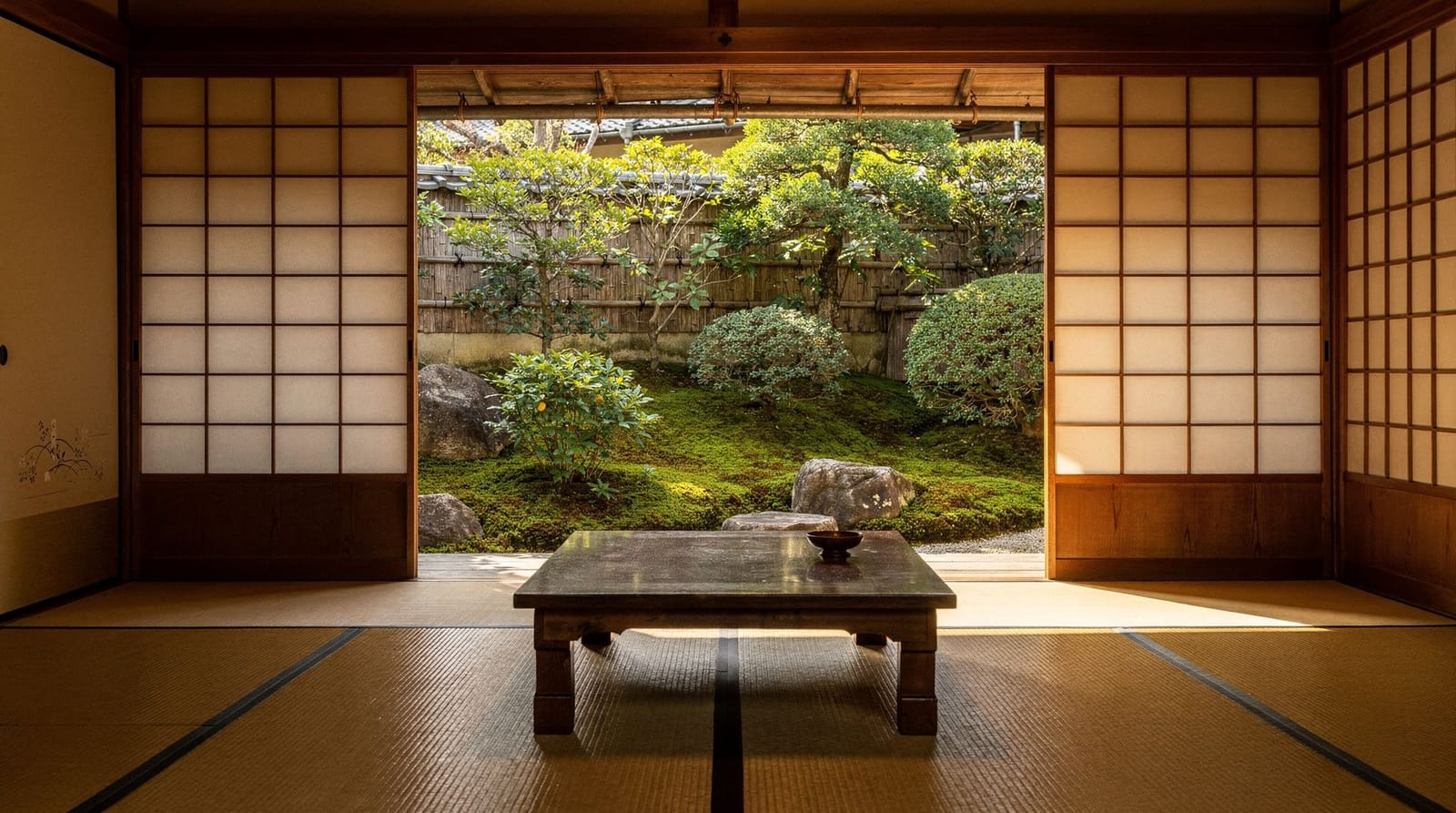
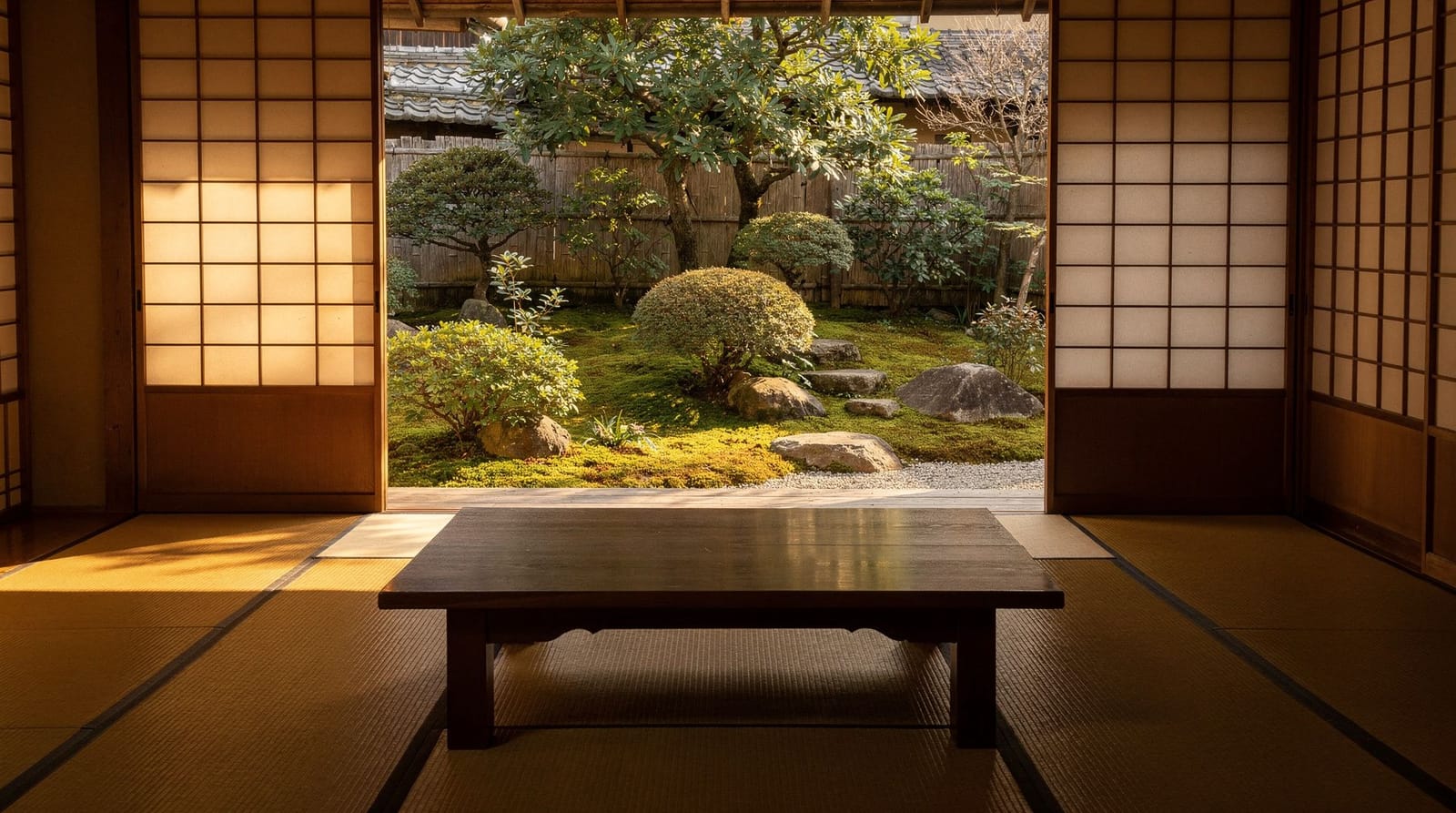
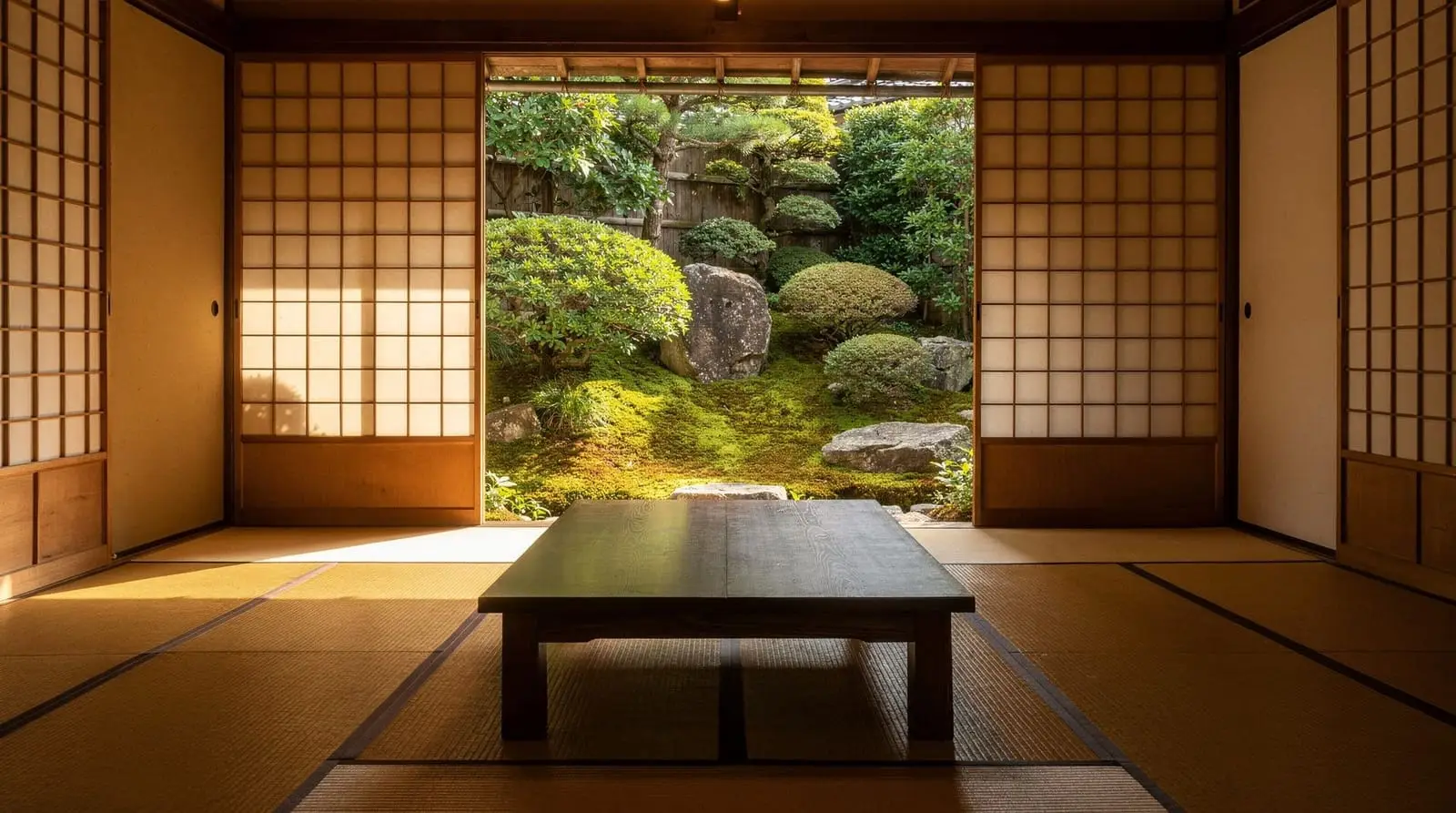
Check-in typically starts mid-afternoon (2-3pm), earlier than most hotels, and often includes a welcome tea and a short walk-through of the room by staff, who explain the yukata, the futon setup, and dinner timing. Rooms are tatami-floored with a low table and cushions rather than Western furniture; futon bedding is stored away during the day and laid out by staff, usually while you’re at dinner, which is a genuinely different experience than a made-up hotel bed waiting on arrival.
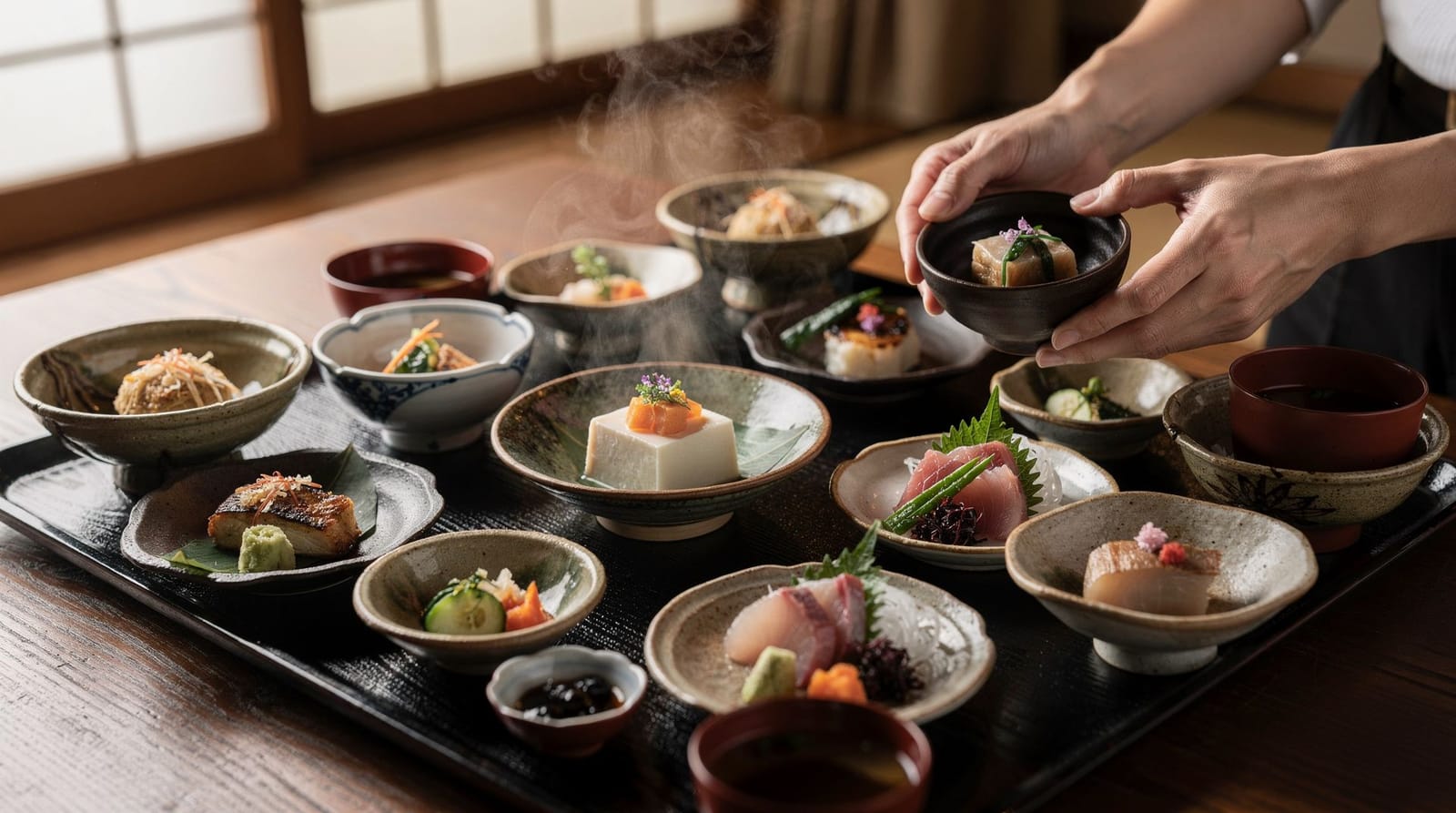
Dinner — usually a multi-course kaiseki meal — is served at a fixed, early time, commonly 6pm or 6:30pm, either in-room or in a private dining space depending on the property tier. After dinner, most guests use the onsen or bath facilities before the room settles into its futon configuration for the night. Breakfast the next morning is typically also traditional — grilled fish, rice, miso soup, pickles — served on a similarly fixed schedule before checkout.
Ryokan etiquette that actually matters
Shoes come off at the genkan entrance and switch to slippers; slippers then come off before stepping onto any tatami-covered floor, including in the room itself. The provided yukata is meant to be worn around the ryokan, and at many mid-range properties, to dinner as well — higher-end traditional ryokan like Tawaraya sometimes expect regular dress for the dining room, so it’s worth asking at check-in rather than assuming.
If there’s a shared onsen, the norm is a full wash and rinse at the individual washing stall before entering the communal bath — the bath itself is for soaking, not washing. Tattoos remain a real consideration at many traditional shared baths, which still restrict visible tattoos due to historical associations; properties with private or reservable onsen sidestep this entirely, which is worth checking before booking if it applies to you. Tipping isn’t customary or expected anywhere in the process.
Real ryokan names across the budget range
Kyoto’s ryokan market spans from family-run guesthouses to some of the most storied traditional inns in Japan, and knowing where a specific property sits on that range matters more than any star rating.
At the top tier, Tawaraya, operating in Kyoto for over 300 years, is widely regarded as one of the finest ryokan in the country — reservations are difficult to secure and rates run well above ¥100,000 per person, but the level of craft in the rooms, service, and kaiseki is genuinely exceptional rather than merely expensive. Hiiragiya, similarly historic and located near the Kyoto Imperial Palace grounds, sits in a comparable tier with rates typically ¥60,000-120,000 per person, and has hosted a long list of notable guests over its history.
For a strong mid-to-upper tier experience without Tawaraya-level pricing, Gion Hatanaka in the Higashiyama area runs roughly ¥30,000-55,000 per person and includes a well-regarded kaiseki dinner along with occasional geisha entertainment add-ons — a practical way to combine a ryokan stay with Gion’s atmosphere without booking the district’s most expensive properties. Yoshi-ima, also in the Higashiyama-Gion area, sits in a similar mid-range tier with a more understated, traditional feel.
For a genuinely budget-friendly ryokan experience, family-run inns like Matsubaya Ryokan or Ryokan Uemura (both smaller, longer-standing properties near central Kyoto) run ¥12,000-20,000 per person, often without dinner included — a realistic way to experience the tatami-and-futon format and, in some cases, a shared bath, without the full kaiseki-inclusive rate.
Ryokan tiers at a glance
| Tier | Examples | Roughly per person/night |
|---|---|---|
| Budget | Matsubaya Ryokan, Ryokan Uemura | ¥12,000-20,000 |
| Mid-range | Gion Hatanaka, Yoshi-ima | ¥30,000-55,000 |
| High-end | Hiiragiya | ¥60,000-120,000 |
| Top-tier historic | Tawaraya | ¥100,000-150,000+ |
Modern versus traditional ryokan
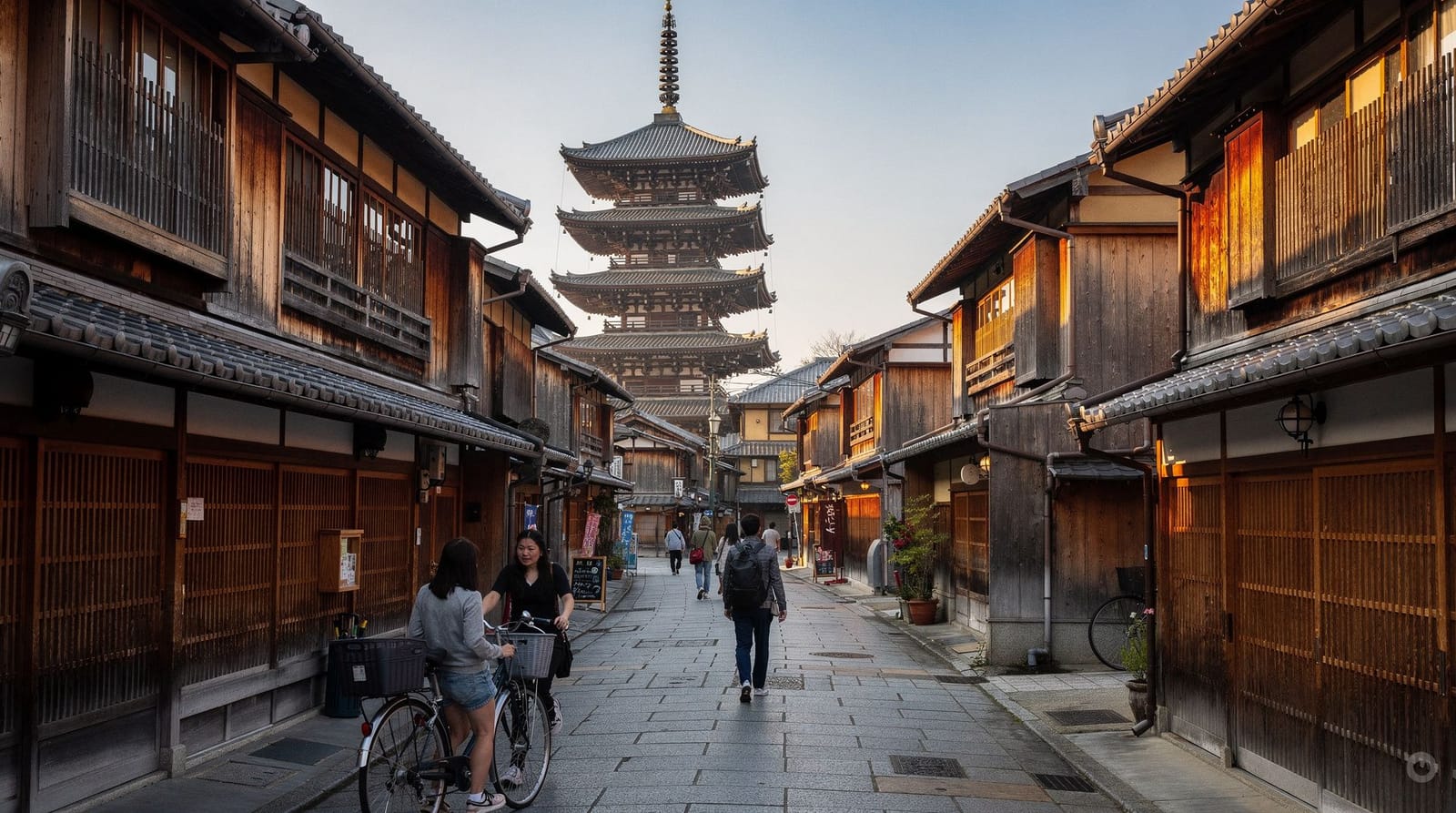
Kyoto’s ryokan market splits roughly into two categories that get marketed under the same word. Traditional ryokan — Tawaraya, Hiiragiya, Gion Hatanaka among them — occupy genuinely old buildings, often centuries-old in the case of the top tier, with tatami throughout, minimal Western furniture, and a strong emphasis on seasonal detail in both the room and the kaiseki menu.
Modern or “designer” ryokan, a newer category that’s grown substantially over the past decade, take the tatami-futon-kaiseki format and pair it with contemporary architecture, better insulation and climate control, and sometimes en-suite bathrooms rather than shared facilities — properties like this trade some of the historic atmosphere for meaningfully more comfort, particularly in summer heat or winter cold, and often run ¥20,000-40,000 per person, undercutting the most storied traditional names while still delivering the core ryokan format. Neither category is more “authentic” than the other in any meaningful sense; the choice comes down to whether historic atmosphere or modern comfort matters more for a given trip.
What’s typically not included in the rate
Most ryokan rates quoted per person include dinner and breakfast, but rarely include drinks beyond a starter tea or sake — alcohol with dinner is usually charged separately and can add meaningfully to the bill at properties with a strong sake or wine list. Onsen use is typically included if the bath is shared, but a private reservable bath (kashikiri-buro) often carries a separate charge, commonly ¥2,000-5,000 for a 45-60 minute private session, even at properties where a shared bath is free to use.
Transport to and from the property isn’t included, and some more remote or hillside ryokan are a genuine taxi ride rather than a walk from the nearest station — worth checking before booking if you’re relying on public transit. A consumption tax and, at some properties, a service charge are typically added to the quoted rate, so the final bill can run 10-15% above the headline number.
Ryokan for solo travelers
Many traditional ryokan, especially smaller family-run properties, are historically built around per-person double-occupancy pricing and sometimes decline solo bookings outright or charge a single-occupancy surcharge that can run 30-50% above the per-person rate for two sharing a room. This isn’t universal — modern ryokan and larger properties are generally more accommodating of solo travelers — but it’s worth confirming directly, particularly for smaller, older establishments, rather than assuming every ryokan welcomes single bookings on the same terms as a hotel.
Language and the language barrier, honestly
Larger and higher-end ryokan used to international guests, including all the properties named above, generally manage English well enough for check-in, dinner service, and basic requests. Smaller, more traditional family-run inns — often the ones offering the most genuinely local, unpolished experience — sometimes have limited English, which can make navigating the yukata, dinner timing, and onsen etiquette more of a guessing game without a translation app on hand.
This isn’t a reason to avoid smaller ryokan, since staff are typically patient and used to non-Japanese-speaking guests regardless of fluency, but it’s worth setting expectations that a genuinely local, less internationally polished ryokan may involve more gesture-and-app communication than a five-star hotel.
Ryokan versus hotel: when each makes sense
A ryokan is worth building into any Kyoto stay of three nights or more, ideally as one or two nights rather than the whole trip — the early dinner, slower pace, and communal bath etiquette suit an unhurried evening better than a schedule packed with sightseeing on both sides. A standard hotel makes more practical sense for the rest of a multi-night stay, since hotel check-in and checkout flexibility, later dining options, and Western bedding suit the logistics of an active sightseeing itinerary better.
See the where to stay in Kyoto guide for how ryokan neighborhoods compare to hotel-heavy areas like Kyoto Station and downtown, and the machiya stays guide for a self-catered alternative that keeps the traditional architecture without the fixed ryokan schedule.
Meal timing and how it shapes your sightseeing day
Because dinner is fixed and early — typically 6pm or 6:30pm — a ryokan night genuinely changes how you should plan the day around it, in a way worth factoring in before booking rather than discovering on arrival. Check-in from 2-3pm effectively caps your sightseeing day earlier than a hotel stay would, since arriving late or rushing the welcome tea and room walk-through undercuts part of what you’re paying for.
The practical approach most repeat visitors settle on: plan a ryokan night for a day with lighter sightseeing on the front half — perhaps a morning temple visit and an early afternoon return — rather than trying to cram a full day of temple-hopping in before a 2-3pm check-in and 6pm dinner. Breakfast the next morning is similarly fixed and unhurried, which works well paired with a slower-paced day following the ryokan night rather than an early train departure.
Regional context: how Kyoto’s ryokan compare to the rest of Japan
Kyoto has one of the highest concentrations of historic, high-end ryokan anywhere in Japan, rivaled mainly by hot spring resort towns like Hakone, Kinosaki, or Kusatsu, which built their ryokan traditions specifically around onsen tourism rather than urban cultural tourism.
The distinction matters for expectations: a Kyoto ryokan’s onsen, where present, is more often a supplementary feature than the main draw the way it is at a dedicated hot spring town — Kyoto’s ryokan tradition centers more on the building, the kaiseki dining, and proximity to the city’s temples and gardens than on natural hot spring water, which not every Kyoto ryokan even has access to (some use heated tap water rather than a natural onsen source, worth checking specifically if a genuine onsen experience matters to you).
Ryokan for a special occasion
Because a ryokan stay is already a slower, more deliberate format than a hotel night, it’s a natural fit for an anniversary, honeymoon, or milestone birthday within a longer Kyoto trip — several properties, particularly at the mid-to-upper tier, offer a small seasonal upgrade (a nicer room, an extra course at dinner, or a small celebratory touch) if you mention the occasion when booking.
It’s worth asking directly rather than assuming a property will guess; most ryokan, used to hosting Japanese guests marking similar occasions, are genuinely accommodating if asked in advance rather than on arrival. This isn’t a substitute for booking early during peak season, since a special-occasion request doesn’t override limited room availability during cherry blossom or autumn foliage weeks.
Booking timing
Ryokan, especially well-regarded ones like Tawaraya, Hiiragiya, and Gion Hatanaka, book out months ahead for cherry blossom season (late March-early April) and autumn foliage weeks (mid-November), and a genuine two-to-three-month lead time is realistic for those windows. Outside peak season, three to six weeks ahead is usually enough for mid-range properties, though the most storied names stay tightly booked year-round given limited room counts — most traditional ryokan run under 20 rooms total.
For dinner and kaiseki context beyond the ryokan setting, see the kaiseki dining guide, and for a full daily cost picture including a ryokan night, the Kyoto travel costs guide breaks down how one factors into a realistic budget.