Kyoto in 2 days — east side then west side
Kyoto: Arashiyama Bamboo Forest Morning Tour by Bike
Splitting Kyoto by geography, not by theme
Two days is the point where splitting Kyoto by east and west side stops being optional and starts being the only sensible approach. The city’s major sights cluster into two zones separated by roughly 8-10km — Fushimi Inari, Higashiyama, and Gion on the east side; Arashiyama and Kinkaku-ji on the northwest side — and crossing between them more than once a day wastes 30-45 minutes each way on buses that are already some of the most crowded in the city during peak season. This plan keeps Day 1 entirely east, Day 2 entirely west, and treats the two days as near-independent outings.
| Where | Day 1 east (Fushimi Inari, Higashiyama, Gion); Day 2 west (Arashiyama, Kinkaku-ji) |
| Cost | Around ¥14,000-18,000 ($95-125) per person for both days |
| Time needed | 2 full days, early starts both mornings (07:00-07:30) |
| Getting there | JR Nara Line, JR Sagano Line, city buses, walking within each zone |
| Best time | Year-round; early starts matter most in cherry blossom and autumn foliage windows |
Where you stay matters more for a 2-day trip than a longer one. Kyoto Station is the safest base — it sits on the JR Nara Line (toward Fushimi Inari and Nara), the JR Sagano/San-in Line (toward Arashiyama), and has bus connections to everywhere else, so neither day requires backtracking through the city center. Staying in Gion or Higashiyama instead trims Day 1’s transit but adds 15-20 minutes to the start of Day 2.
Both days assume no car — walking, JR trains, and city buses cover the entire route, and that’s genuinely the more practical choice inside Kyoto, where parking near major sights is limited and traffic around Arashiyama on weekends can be worse than the bus.
Day 1 — East Kyoto: Fushimi Inari, Higashiyama, Gion
07:00 — Fushimi Inari Taisha (JR Nara Line, ~5 min, ¥150)
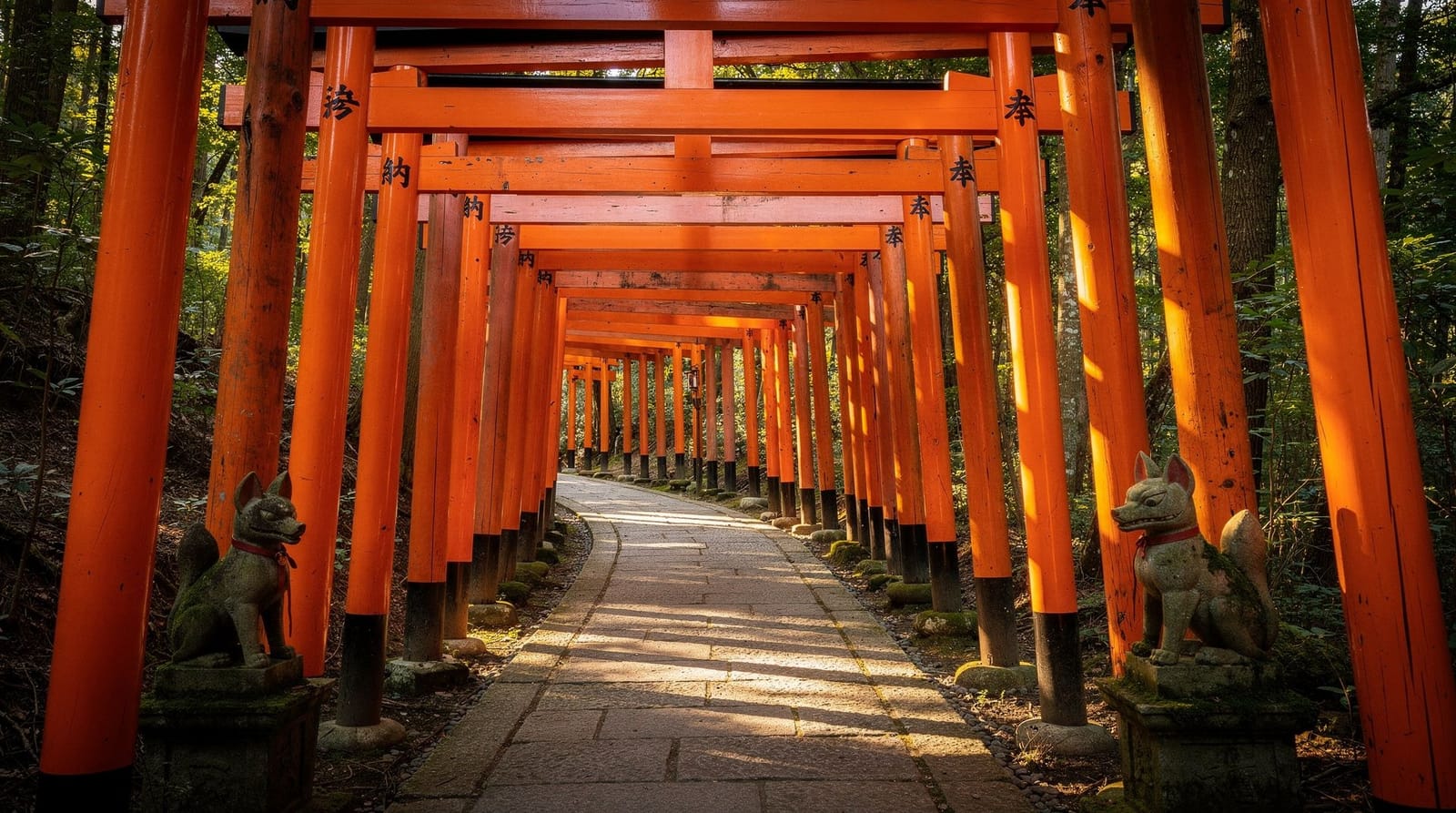
Take the JR Nara Line from Kyoto Station to Inari Station, two stops, about 5 minutes, ¥150 ($1). Fushimi Inari is free and open 24 hours, but the value of an early start is entirely about crowd timing: before 8am, the Senbon Torii tunnel — the dense double-row gate sequence near the base — is close to empty. Walk to Yotsutsuji, roughly a third of the way up Mount Inari, for a genuine viewpoint over southern Kyoto; round trip from the base is 45-60 minutes. Full detail on the complete summit hike (2-3 hours, 4km) is in the Fushimi Inari guide.
Early-morning Fushimi Inari shrine tour09:30 — Kiyomizu-dera and the Higashiyama lanes
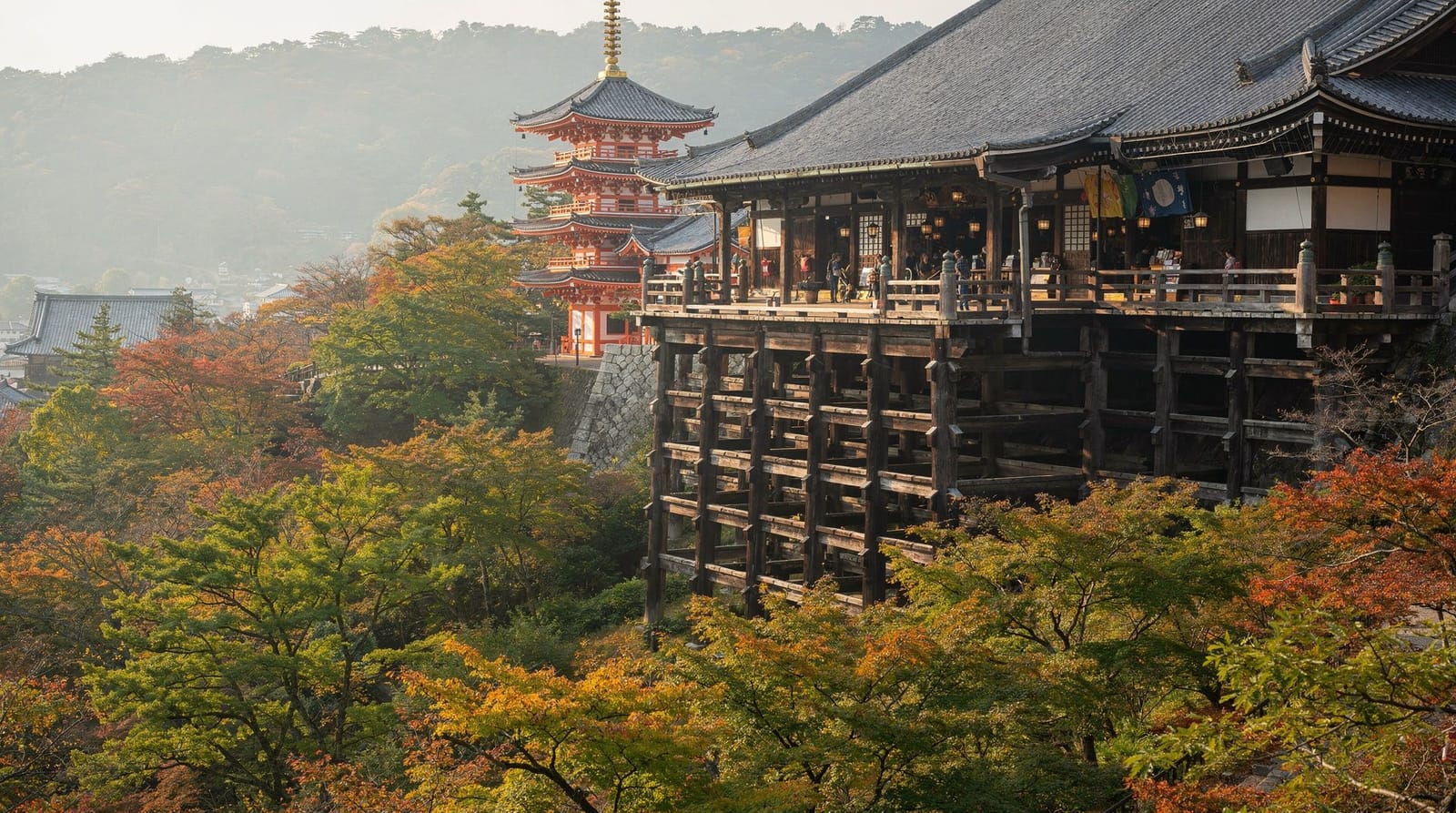
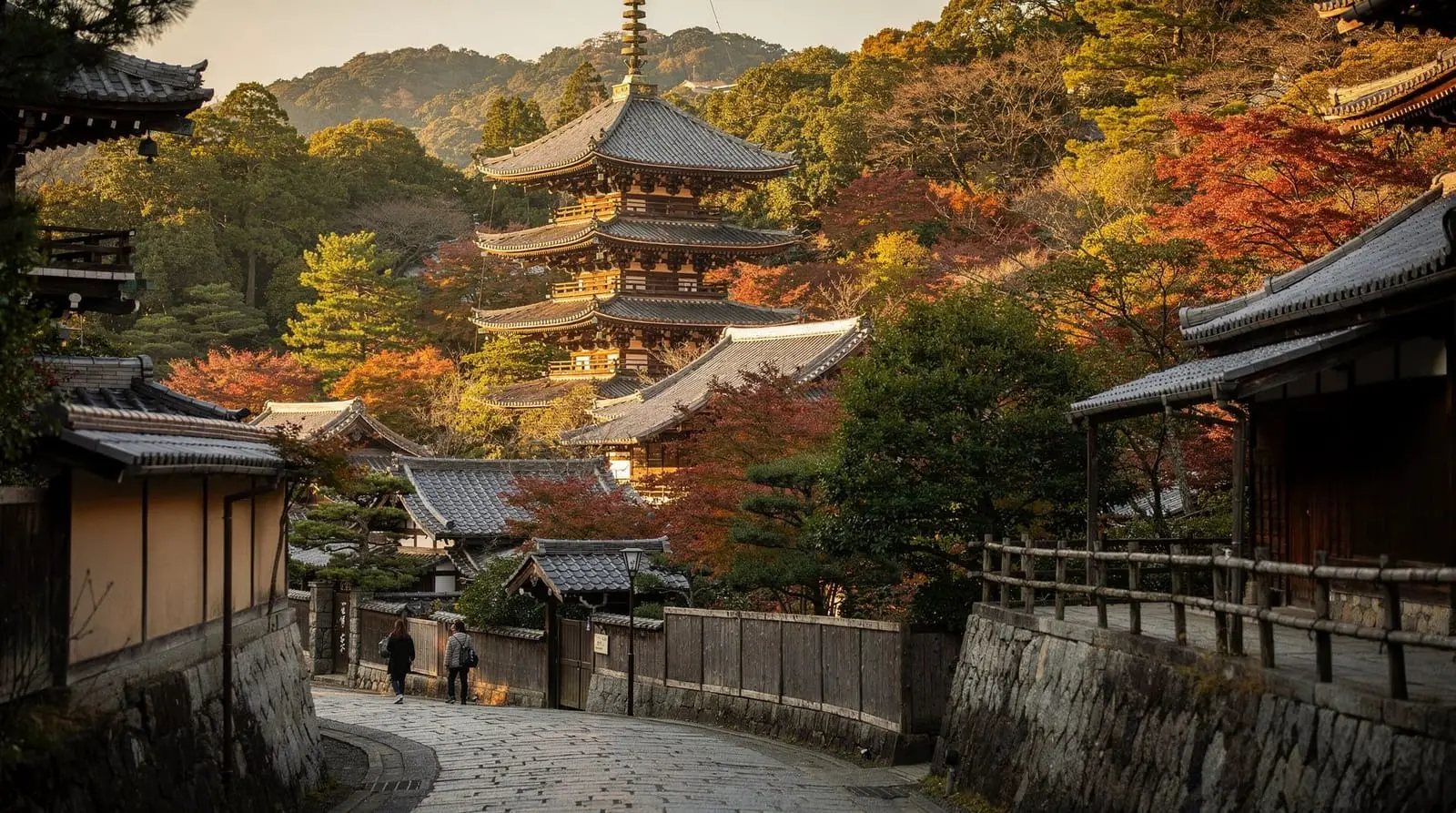
Return to Kyoto Station via JR Nara Line (5 min), then take city bus 100 or 206 toward Gojo-zaka or Kiyomizu-michi (15-20 min, ¥230/$1.60). Walk uphill through Chawan-zaka to Kiyomizu-dera, open from 6am, entrance ¥400-500 ($3-3.50). The wooden veranda, built without nails, is the main draw; see the Kiyomizu-dera guide for entry points and seasonal illuminations. From the temple, descend through Sannen-zaka and Ninen-zaka — two connected, well-preserved stone-paved lanes lined with machiya buildings and craft shops — toward Higashiyama proper.
12:00 — Lunch in Higashiyama or Gion
Prices immediately around Kiyomizu-dera run high for average food. Walk 10-15 minutes further toward Yasaka Shrine for better options — casual noodle shops from ¥900-1,500 ($6-10), or a kaiseki-style lunch set from ¥3,000-5,000 ($20-35), a genuinely more affordable way to try kaiseki than dinner service. See the kaiseki in Kyoto guide.
13:30 — Sannen-zaka, Ninen-zaka, and a slower Higashiyama loop
With a full afternoon rather than a squeezed midday block, this is the point to slow down — Kodai-ji’s gardens (¥600/$4) or Kennin-ji, Kyoto’s oldest Zen temple (¥600/$4), both sit within a 10-minute walk and rarely see Kiyomizu-dera’s crowd levels.
16:30 — Gion
Walk to Hanamikoji-dori, Gion’s main preserved street. Late afternoon into early evening (roughly 17:00-18:30) is the best window for spotting a maiko or geiko en route to an appointment — and the point to be explicit about etiquette: don’t block their path, don’t touch their kimono for a photo, and avoid the private side-lanes, some of which now carry posted fines for exactly this kind of tourist harassment. Full detail in the Gion geisha guide.
18:30 — Dinner in Gion or Pontocho
Pontocho, parallel to the Kamo River, has a wider restaurant range than Gion’s main street, including riverside terrace seating (kawadoko) roughly May-September. Return to your hotel by taxi (¥1,000-1,500/$7-10) or a 15-20 minute walk.
Day 2 — West Kyoto: Arashiyama, Tenryu-ji, Kinkaku-ji
07:30 — Arashiyama bamboo grove (JR Sagano Line, ~15-20 min, ¥240)
Take the JR Sagano Line from Kyoto Station to Saga-Arashiyama Station, about 15-20 minutes, ¥240 ($1.65). The bamboo grove itself is free and unticketed — the value of arriving before 8am is, again, purely about crowds, which build fast after 9am as tour groups arrive. The grove walk itself is short, 10-15 minutes end to end, so pair it with the surrounding area rather than treating it as a standalone stop.
Serene morning walk in the Arashiyama bamboo grove08:30 — Tenryu-ji
Tenryu-ji sits at the bamboo grove’s entrance, a UNESCO World Heritage site with a Sogen-chi garden that predates most of the current temple buildings — it survived fires that destroyed the rest of the complex multiple times over eight centuries. Entrance to the garden is ¥500 ($3.50); the temple’s interior halls cost an extra ¥300 ($2). Full context is in the Tenryu-ji guide.
Arashiyama and Tenryu-ji temple guided tour10:00 — Sagano’s smaller sights or the Togetsukyo Bridge
Depending on pace, add Okochi Sanso Villa gardens (¥1,000/$7, includes matcha and a sweet) or simply walk down to Togetsukyo Bridge over the Katsura River, a scenic, free landmark and a reasonable lunch-hunting area. The wider Sagano district covers additional temples if the morning is running ahead of schedule.
12:00 — Lunch in Arashiyama
Arashiyama has a genuine concentration of yudofu (hot tofu) restaurants, a local specialty tied to the district’s Zen temples — expect ¥1,500-2,500 ($10-17) for a set meal. Tourist-facing stalls right at the station charge more for less; walking a few minutes further into the district usually improves both price and quality.
13:30 — Transit to Kinkaku-ji (bus, ~40 min)
Kinkaku-ji doesn’t have a direct train connection from Arashiyama — the practical route is city bus, roughly 40 minutes, or a taxi (~20-25 minutes, ¥2,500-3,500/$17-24) if the group is splitting the cost. Check current bus routing before departing, since services between the two districts have changed numbering in recent years.
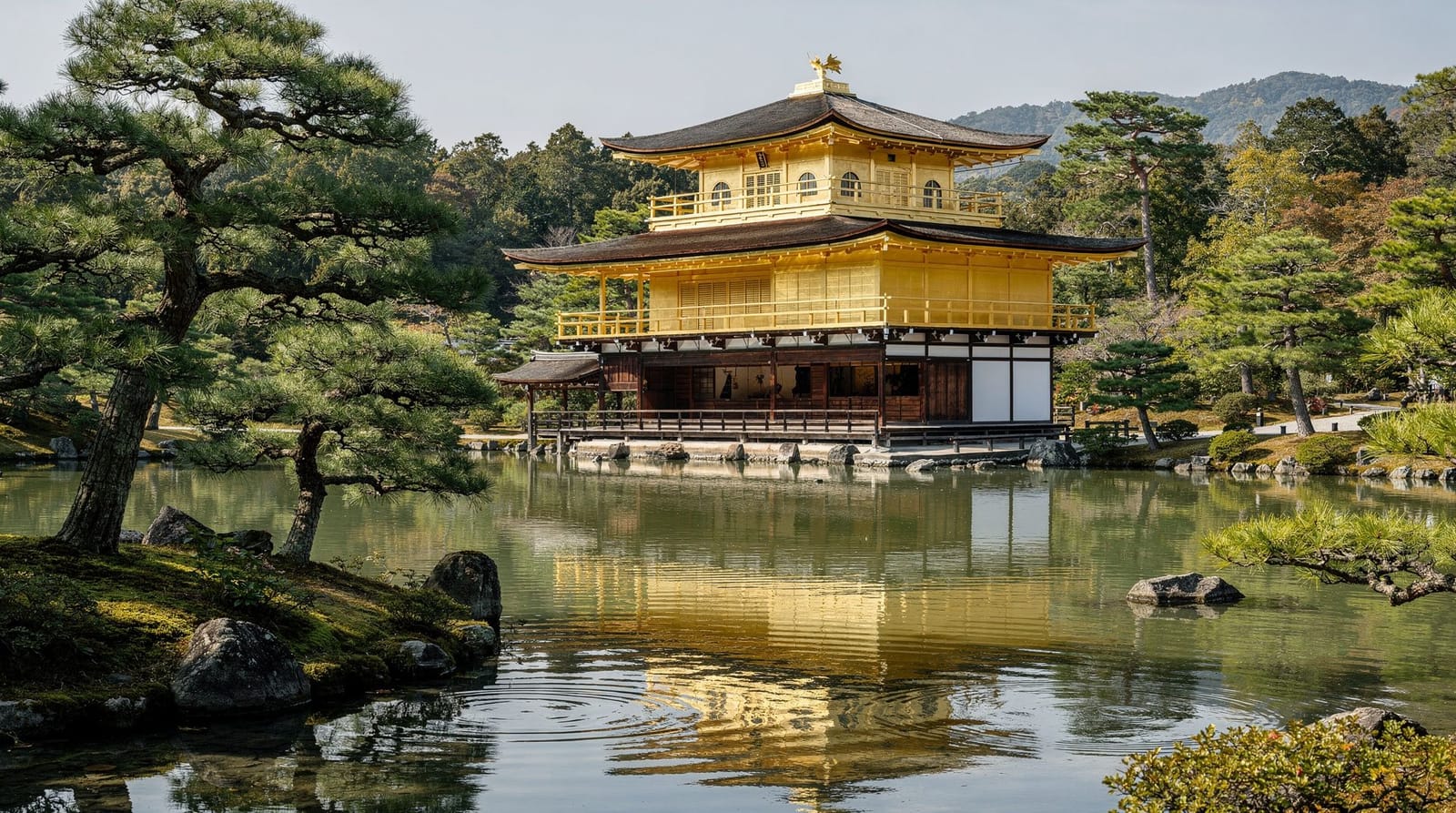
14:30 — Kinkaku-ji (the Golden Pavilion)
Entrance is ¥500 ($3.50). This is a viewing-only visit — there’s no access inside the building itself, just a walking loop around the pond with fixed photo points. 30-45 minutes covers it thoroughly; there’s little reason to linger longer given the single-direction path and no interior access.
Kinkaku-ji Golden Pavilion private tour15:30 — Return to central Kyoto, evening free
Bus back to Kyoto Station or Karasuma-area accommodation takes 30-45 minutes depending on traffic. With Day 2 finishing earlier than Day 1, this is a reasonable point to add Nishiki Market for an early dinner browse — see the downtown Kyoto destination guide — or simply rest before departure the next day.
Practical notes for 2 days in Kyoto
Transport cost: roughly ¥1,500-2,000 ($10-14) total across both days in JR and bus fares with an IC card (ICOCA or Suica). The Day 2 Arashiyama-to-Kinkaku-ji bus leg is the least efficient part of the route; budget extra time for it during peak season weekends.
JR Pass: not worth it for 2 days confined to Kyoto — the two JR legs used here (Nara Line, Sagano Line) cost under ¥400 ($2.75) combined, a fraction of a multi-day pass. The Kyoto travel budget guide breaks down when a rail pass does pay off.
Season: cherry blossom season (late March-early April) adds real crowds to Arashiyama and Higashiyama simultaneously; the bamboo grove and Kiyomizu-dera both benefit disproportionately from the early starts built into this plan. Autumn foliage (mid-to-late November) does the same for Tenryu-ji’s garden and the Higashiyama lanes.
Budget: with mid-range meals, entrance fees, and transport, a realistic total for 2 days is ¥14,000-18,000 ($95-125) per person, excluding accommodation.
Extending the trip: if 2 days feels rushed — a common outcome, since this plan has almost no slack — the 3-day Kyoto itinerary adds a third day for Nijo-jo, Nishiki Market, and the Philosopher’s Path without touching this east/west structure.
Day-by-day at a glance
| Day | Zone | Anchor sights | Distance on foot |
|---|---|---|---|
| 1 | East | Fushimi Inari, Kiyomizu-dera, Higashiyama lanes, Gion | ~8-10km |
| 2 | West | Bamboo grove, Tenryu-ji, Sagano, Kinkaku-ji | ~5-6km |
Where to stay for this exact split
Kyoto Station earns its reputation as the default base for a reason specific to this itinerary: it sits directly on both the JR Nara Line (Day 1’s first leg) and the JR Sagano Line (Day 2’s first leg), so neither morning requires a transfer before the day even starts. Staying in Gion shortens Day 1’s evening commute but adds a bus or taxi ride to Kyoto Station before Day 2’s 7:30am Arashiyama departure — a real trade-off on a plan built around beating the crowds twice in two days. Travelers prioritizing atmosphere over pure convenience sometimes split the difference by booking near Karasuma or Shijo, a middle point with reasonable access to both rail lines.
If the pace feels too tight
This itinerary is built with almost no slack — both mornings start before 8am and both days run into the evening. If that pace doesn’t suit your travel style, two adjustments help without abandoning the east/west structure: push both start times back by an hour and accept busier photos at Fushimi Inari and the bamboo grove, or drop one lower-priority stop per day (Kodai-ji on Day 1, Okochi Sanso Villa on Day 2) to build in a genuine rest window. The 3-day itinerary is the more durable fix if a relaxed pace matters more than seeing everything on this list.
a combined Kinkaku-ji and Ryoan-ji walking tourFrequently asked questions about a 2-day Kyoto trip
Is 2 days enough for Kyoto?
Two days covers five major sights — Fushimi Inari, Kiyomizu-dera/Higashiyama, Gion, Arashiyama’s bamboo grove and Tenryu-ji, and Kinkaku-ji — but leaves out Nijo-jo, Nishiki Market, and most of the city’s roughly 1,600 other temples and shrines. It’s a workable minimum for a first visit, not a comprehensive one. See how many days you need in Kyoto.
Should I do Arashiyama or Higashiyama first if I only have 2 days?
Keep them on separate days as structured here rather than mixing — both areas reward an early-morning start (Fushimi Inari and the bamboo grove are both dramatically less crowded before 8am), and doing both crowd-sensitive sights back to back on the same morning isn’t physically possible given the transit time between them.
Can I fit Nara into a 2-day Kyoto trip?
Not without cutting something significant — Nara alone needs 4-6 hours round trip including transit. If Nara matters to you, the Kyoto and Nara 2-day itinerary restructures this same timeframe around a Nara day instead of the western Kyoto sights.
What’s the best way to get between Arashiyama and Kinkaku-ji?
City bus (~40 minutes) is the standard option; a taxi (~20-25 minutes, ¥2,500-3,500/$17-24) is faster and worth splitting three or four ways. There’s no direct train route between the two, since they sit on different rail lines with no convenient transfer point.
Do I need to book Kinkaku-ji or Tenryu-ji tickets in advance?
No — both charge at the gate with no advance booking required for general admission. Kinkaku-ji in particular moves visitors through a single-direction loop path, so queuing happens at the entrance gate rather than for a scheduled time slot.
Is the Arashiyama bamboo grove worth it if I can’t go early?
It’s still worth a stop, but the experience changes considerably — by mid-morning, the narrow path fills with enough visitors that quiet photos become difficult. If a 7:30am start isn’t realistic, consider visiting late afternoon instead, when crowds thin again before sunset.
How much walking does this 2-day plan involve?
Day 1 is roughly 8-10km including the Fushimi Inari climb and Higashiyama’s lanes; Day 2 is lighter, around 5-6km, since Arashiyama’s core sights sit close together and Kinkaku-ji is a short fixed loop.
Can this itinerary work without an IC card?
It’s considerably more friction — paper tickets for JR and cash-only fare boxes on city buses slow every transfer. An ICOCA or Suica IC card, available at any JR ticket machine at Kyoto Station, is worth getting on arrival regardless of trip length.
Top experiences
Bookable activities with verified prices and instant confirmation on GetYourGuide.