Machiya stays in Kyoto — renovated townhouses, and where to book them
What is a machiya stay in Kyoto?
A machiya is a traditional wooden Kyoto townhouse, typically 80-150 years old, narrow-fronted with a deep layout, often renovated into a self-catered vacation rental with modern plumbing and kitchens behind original wooden facades, tatami rooms, and an interior garden (tsuboniwa). They're booked mainly through platforms like Airbnb, Machiya Stay, and Kyoto Machiya, and suit travelers who want privacy, space, and a self-catered kitchen over hotel service.
Renting a machiya — one of Kyoto’s traditional wooden townhouses, converted into a self-catered stay — has become one of the most distinctive lodging choices in the city over the past decade, offering a different kind of traditional-architecture experience than a ryokan without the staffed, dinner-included format. This guide covers what these buildings are actually like to stay in, which neighborhoods have the most of them, where to book a legitimate one, and the honest trade-offs against a hotel or ryokan.
| What it is | Renovated 80-150 year old townhouse, self-catered rental |
| Where | Higashiyama, Gion, Nishijin have the most listings |
| Cost | Around ¥15,000-25,000/night small; ¥30,000-60,000+ larger |
| Book via | Airbnb (widest choice), Machiya Stay, Kyoto Machiya |
| Minimum stay | Usually 2-3 nights |
| Best for | Groups of 3+, families, remote work, longer stays |
What a machiya actually is
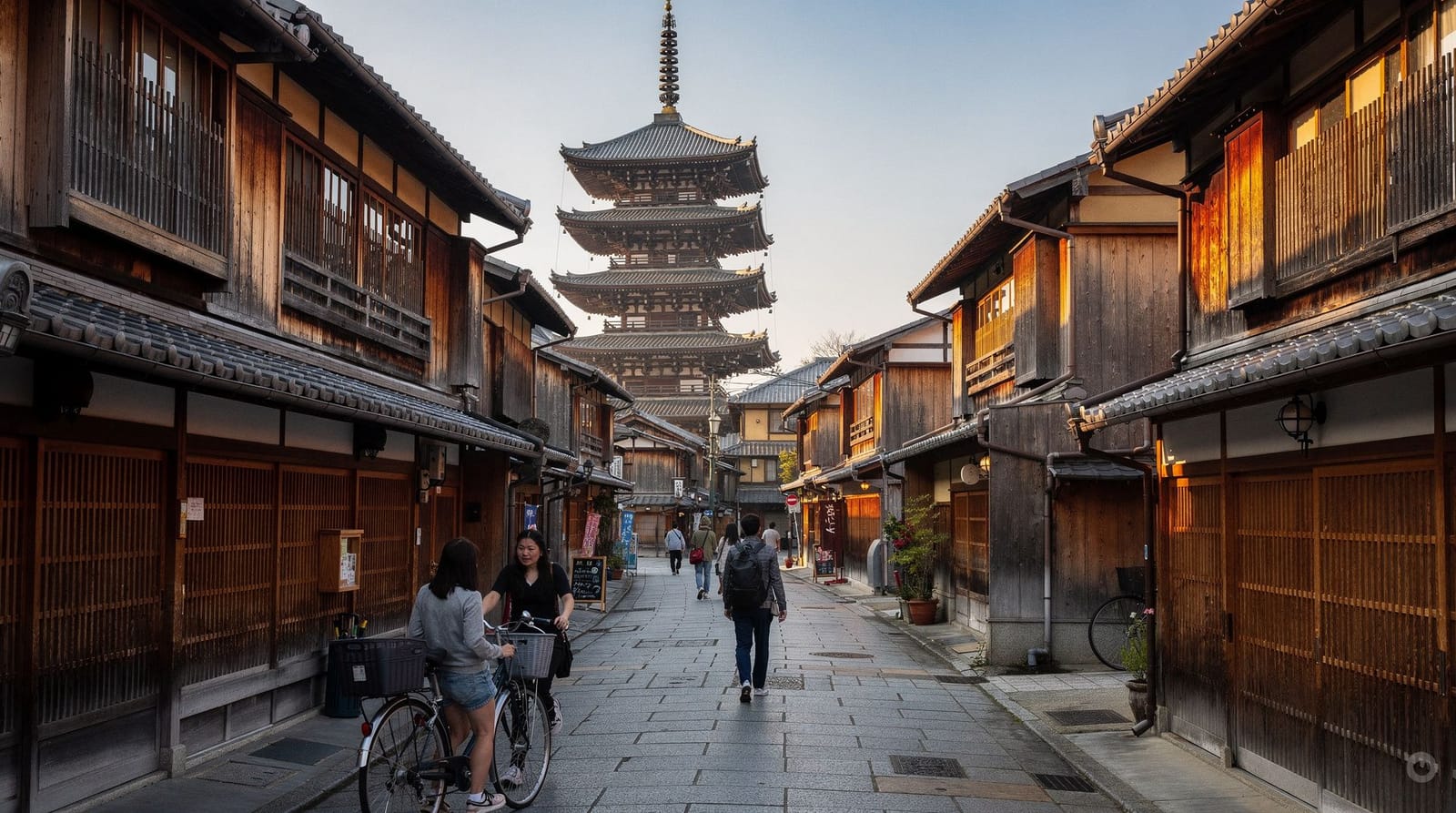
Kyoto machiya are traditional merchant townhouses, most built between the late 1800s and early 1900s, characterized by a narrow street-facing frontage (historically taxed by width, which is why they run deep rather than wide), a long internal corridor called a tori-niwa running from front to back, and typically a small interior garden (tsuboniwa) providing light and air partway through the layout.
Original construction used wood, earthen walls, and lattice-work facades (koshi) that are protected or encouraged features in Kyoto’s historic preservation zoning. A renovated machiya rental keeps this shell and layout while adding modern plumbing, a real kitchen, air conditioning and heating, and updated electrical systems — the goal of a good renovation is invisible modern infrastructure behind an authentic exterior and interior wood, rather than a stripped-down or overly modernized interior that loses the character.
Where machiya rentals are concentrated
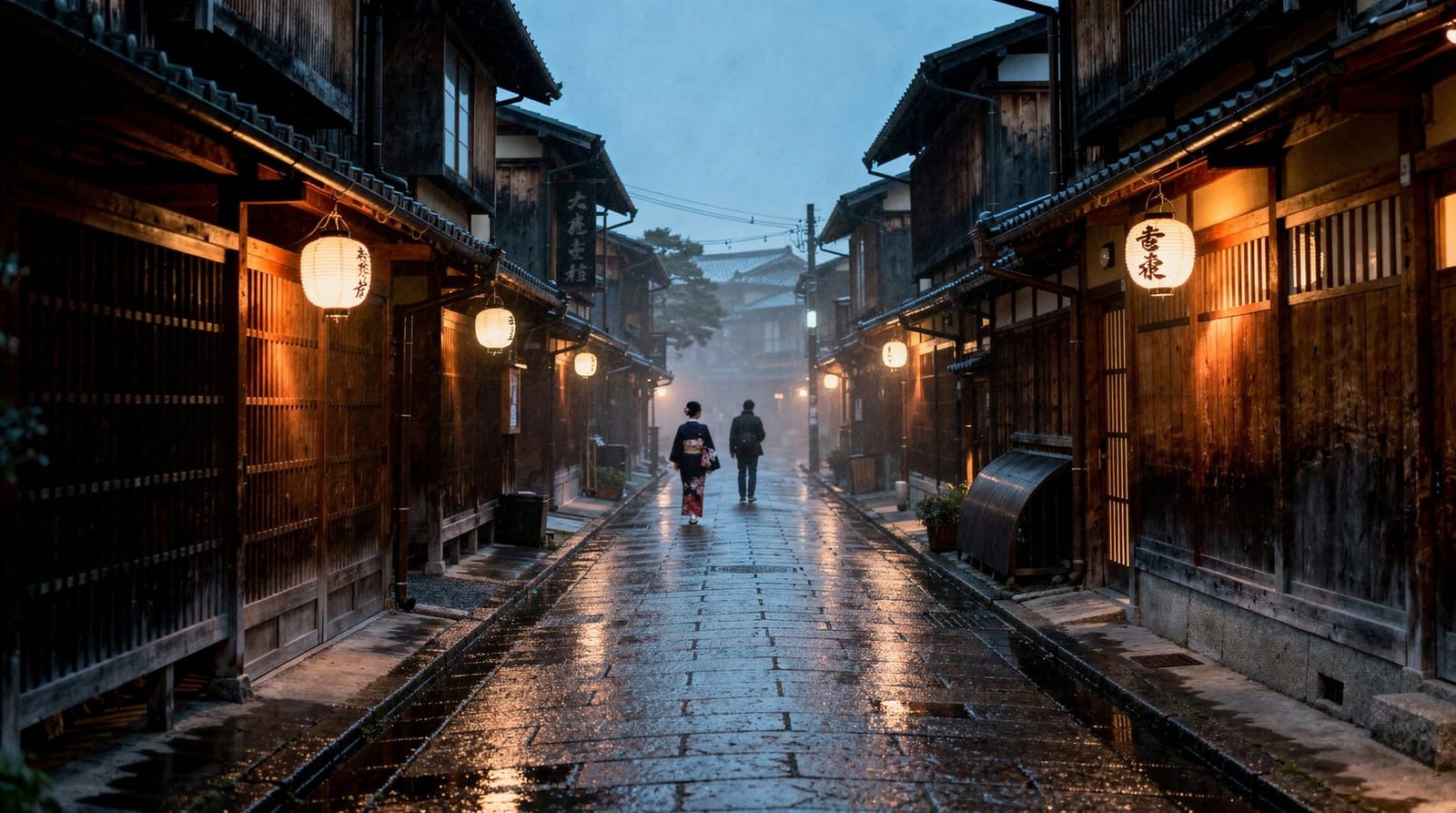
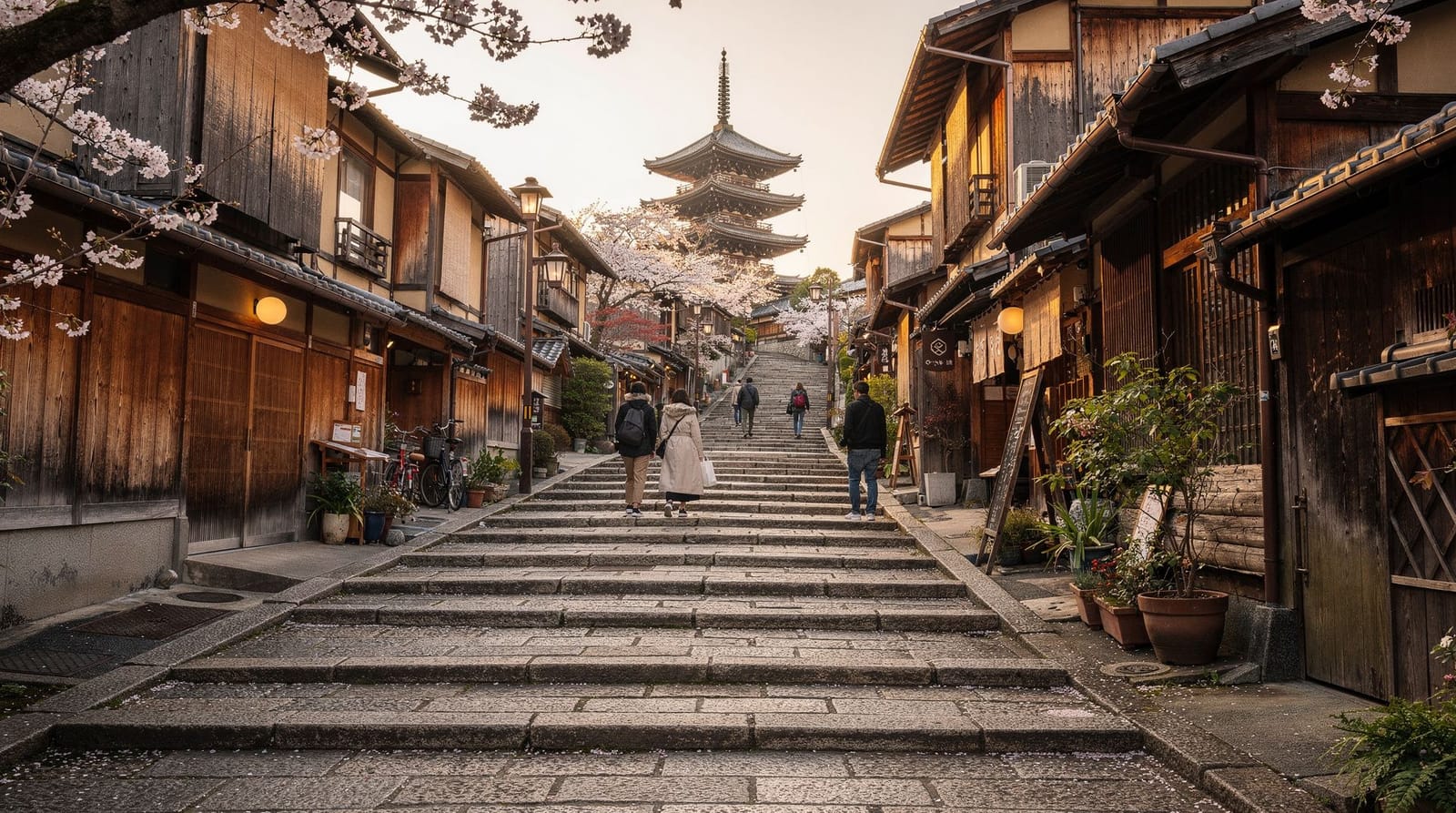
Higashiyama and the streets around Gion have the densest concentration of surviving and renovated machiya, since this area largely avoided the wide-scale postwar rebuilding that replaced older wooden housing stock in much of central Kyoto — walking these streets, you’ll see working machiya alongside rental listings, not a preserved museum district.
Nishijin, the historic textile-weaving neighborhood northwest of the Imperial Palace, has a similarly high concentration, generally at somewhat lower rates than Higashiyama or Gion given its less central tourist positioning, while still being a 15-20 minute bus or bike ride from most major sights. Downtown Kyoto and areas nearer Kyoto Station have fewer surviving machiya overall, but the ones that do come up as rentals often undercut Higashiyama pricing while keeping strong transit access.
Booking: real platforms, not marketplace guessing
Airbnb carries by far the widest inventory — searching “entire home” listings in central Kyoto neighborhoods and filtering by “machiya” or “kyomachiya” in the listing description surfaces most of what’s available, though quality and renovation standards vary property to property since anyone can list.
Machiya Stay and Kyoto Machiya are dedicated platforms specializing specifically in professionally managed, vetted machiya rentals, generally with more reliable renovation quality, more accurate historical detail about the specific building, and consistent management (check-in support, cleaning between stays) than the broader Airbnb pool — typically at a modest price premium over comparable Airbnb listings for that consistency. Reading recent reviews specifically for climate control performance (heating and cooling in genuinely old wooden buildings) and any noted maintenance issues is worth the extra few minutes regardless of platform, since individual property condition varies more here than at a standardized hotel chain.
Why so few original machiya survive
Kyoto is estimated to have lost roughly half its pre-war machiya stock since the 1950s, torn down for modern apartment blocks, parking lots, and commercial buildings as inheritance taxes, aging owners, and the cost of maintaining old wooden construction made demolition the economically simpler choice for many families.
This decline has slowed over the past 15-20 years as the city introduced preservation incentives and as rising tourism and remote-work demand made machiya renovation for rental income a viable alternative to demolition — which is directly why the machiya rental market as it exists today (largely absent a decade and a half ago) has grown so quickly. Staying in one, beyond the aesthetic appeal, supports a building type that’s genuinely at risk of disappearing rather than merely old-fashioned.
How a machiya renovation actually works
A good machiya renovation is a specialized and often expensive undertaking, not a simple interior refresh. Original wooden structural frames are typically retained and reinforced, since replacing them would defeat the purpose, but foundations are often seismically reinforced to meet modern building codes, particularly after post-2011 earthquake-awareness updates to standards. Plumbing and electrical systems are run through the building with minimal disruption to visible wood and plaster, which is a genuinely difficult retrofitting problem in a structure not designed for either.
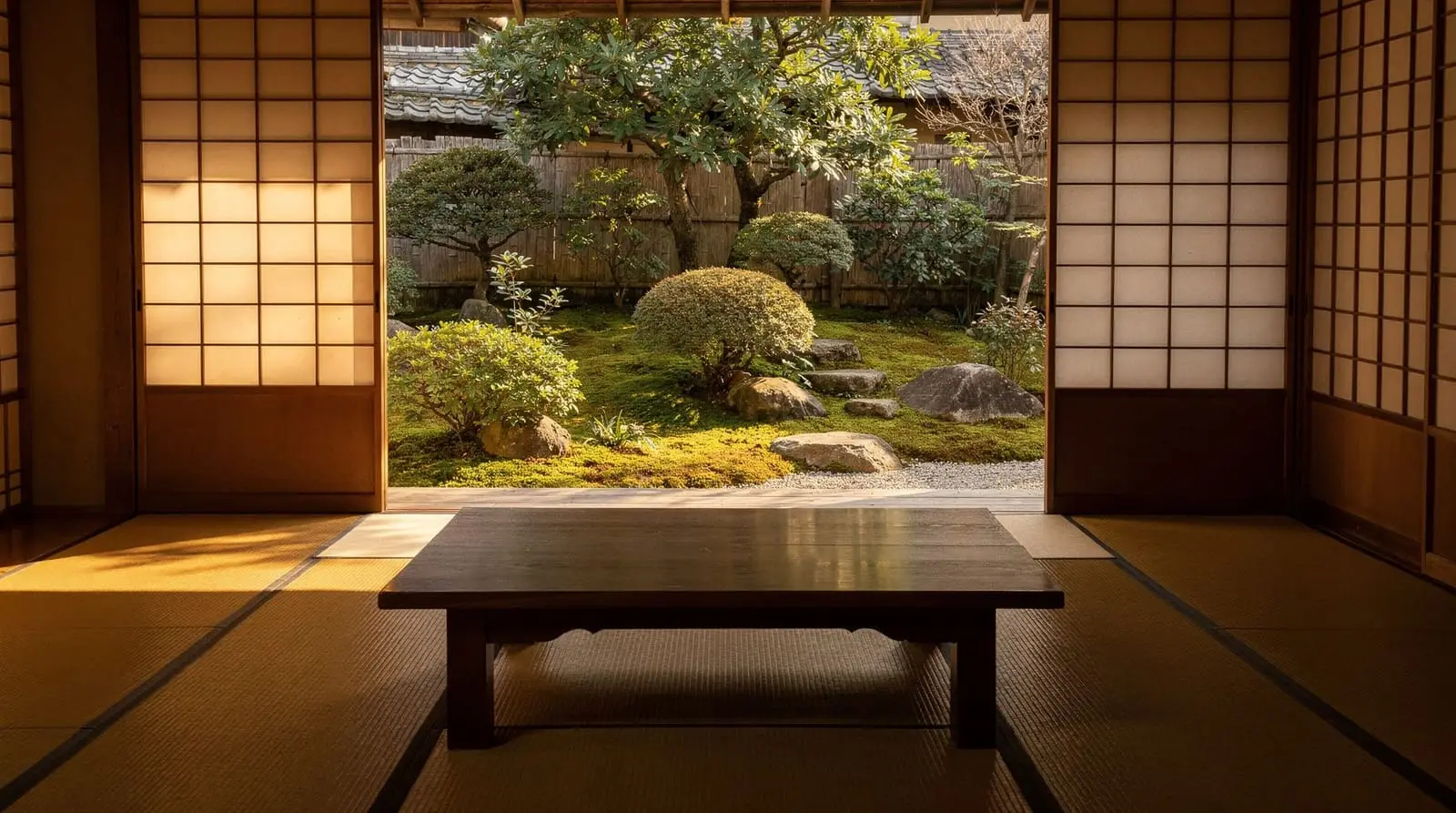
The interior garden (tsuboniwa), where present, is usually preserved as a design centerpiece rather than removed for extra floor space, since it provides both light and a visual anchor to the layout. This is worth knowing because it explains the price gap between a well-renovated machiya and a merely old building with a “machiya” label slapped on a listing — genuine renovation quality varies enormously, and it’s a fair thing to weigh reviews and photos for specifically.
Machiya for remote work or longer stays
The kitchen, space, and privacy that make a machiya appealing for families also make it a strong option for remote workers or any traveler staying a week or more, where the cost of eating out for every meal and the lack of a dedicated workspace in a hotel room both become real friction points. Wi-Fi quality varies by property (worth checking reviews specifically for this if work depends on it), but a private living room or the tori-niwa corridor space often doubles as a workable desk setup in a way a standard hotel room doesn’t. Weekly and monthly rate discounts are common on both Airbnb and dedicated machiya platforms for stays beyond 7 nights, meaningfully reducing the per-night cost against the headline nightly rate.
Check-in, keys, and day-to-day logistics
Unlike a staffed hotel, most machiya rentals use self-check-in with a lockbox or smart lock, with a manager or host reachable by phone or messaging app rather than present on-site — worth confirming the check-in process and contact method before arrival, particularly for late-evening arrivals after a long flight. Trash sorting in Japan is more involved than in many countries, with separate collection for burnable, non-burnable, recyclables, and specific collection days per category; most machiya hosts leave written instructions, and following them matters more than it might elsewhere since Kyoto’s neighborhood associations take sorting rules seriously.
Noise is a genuine consideration in older wooden construction with close-set neighboring buildings — machiya don’t have hotel-grade soundproofing, so quiet hours (typically after 9-10pm) matter more here than in a modern hotel, both out of courtesy to neighbors and because you’ll likely hear more of the street and adjacent buildings than in a concrete structure.
Machiya for special occasions and photography
Some machiya rentals, particularly the larger, more elaborately restored properties, double as venues for small private events — a family gathering, a kimono photo session, or a tea ceremony held in an authentic setting rather than a rental studio. A handful of Kyoto’s machiya specifically market themselves for this use, sometimes offering an optional add-on tea ceremony or kimono dressing service run by a local practitioner within the machiya itself, which produces a more genuinely atmospheric result than an equivalent tourist-district photo studio.
This is a niche use case rather than a typical booking reason, but worth knowing about if a special-occasion trip (an anniversary, a proposal, a family milestone) is part of the plan, since it’s a distinctly Kyoto option not available in most other cities’ rental markets.
Reading listings critically before booking
Because “machiya” isn’t a protected or regulated term the way some traditional-lodging categories are, listing quality varies from meticulously restored century-old buildings to newer constructions built in a machiya-inspired style without the actual history — both can be legitimate, comfortable stays, but they’re different products worth distinguishing if authenticity specifically matters to your trip.
Listings that specify a build or renovation year, show exterior photos of the original wooden facade and lattice-work, and mention a specific historic neighborhood are generally more reliably genuine than listings using “machiya” as a general marketing term without such detail. Reviews mentioning the age of the building, any structural quirks (low doorways, steep stairs, thin walls), and host responsiveness tend to be more useful for setting expectations than the professional listing photos alone, which — as with any rental platform — are shot to flatter the space rather than represent every practical detail of staying there.
Machiya versus hotel versus ryokan
A machiya suits travelers prioritizing space, privacy, and a self-catered kitchen — groups of three or more, families, or longer stays where cooking even a few meals saves real money against Kyoto’s restaurant prices. A hotel suits travelers who want daily housekeeping, flexible check-in and checkout, and no responsibility for property upkeep.
A ryokan suits travelers seeking the fully staffed traditional experience — included kaiseki dinner, onsen, futon service — for a night or two within a longer trip; see the Kyoto ryokan guide for what that format involves in detail. None of the three is objectively better — the choice comes down to group size, appetite for self-sufficiency, and how much of the trip budget you’d rather put toward space versus service.
| Machiya | Hotel | Ryokan | |
|---|---|---|---|
| Meals | Self-catered, own kitchen | None included | Kaiseki dinner + breakfast usual |
| Housekeeping | None during stay | Daily | Daily, futon laid nightly |
| Best group size | 3+ or families | Any, esp. 1-2 | 1-2, occasional night |
| Price logic | Per house/night | Per room/night | Per person/night |
| Feel | Private vacation home | Standard hotel | Fully staffed tradition |
What a typical machiya interior actually looks like
Walking through the front entrance (usually a sliding wooden door rather than a Western-style door with a handle) leads into the tori-niwa, a long, narrow earthen-floored corridor that historically ran the full depth of the building, connecting the street-facing shop or entrance room to the living quarters and kitchen at the back. In a converted rental, this corridor typically houses the modern kitchen along one side, keeping the traditional proportions visible while adding contemporary appliances.
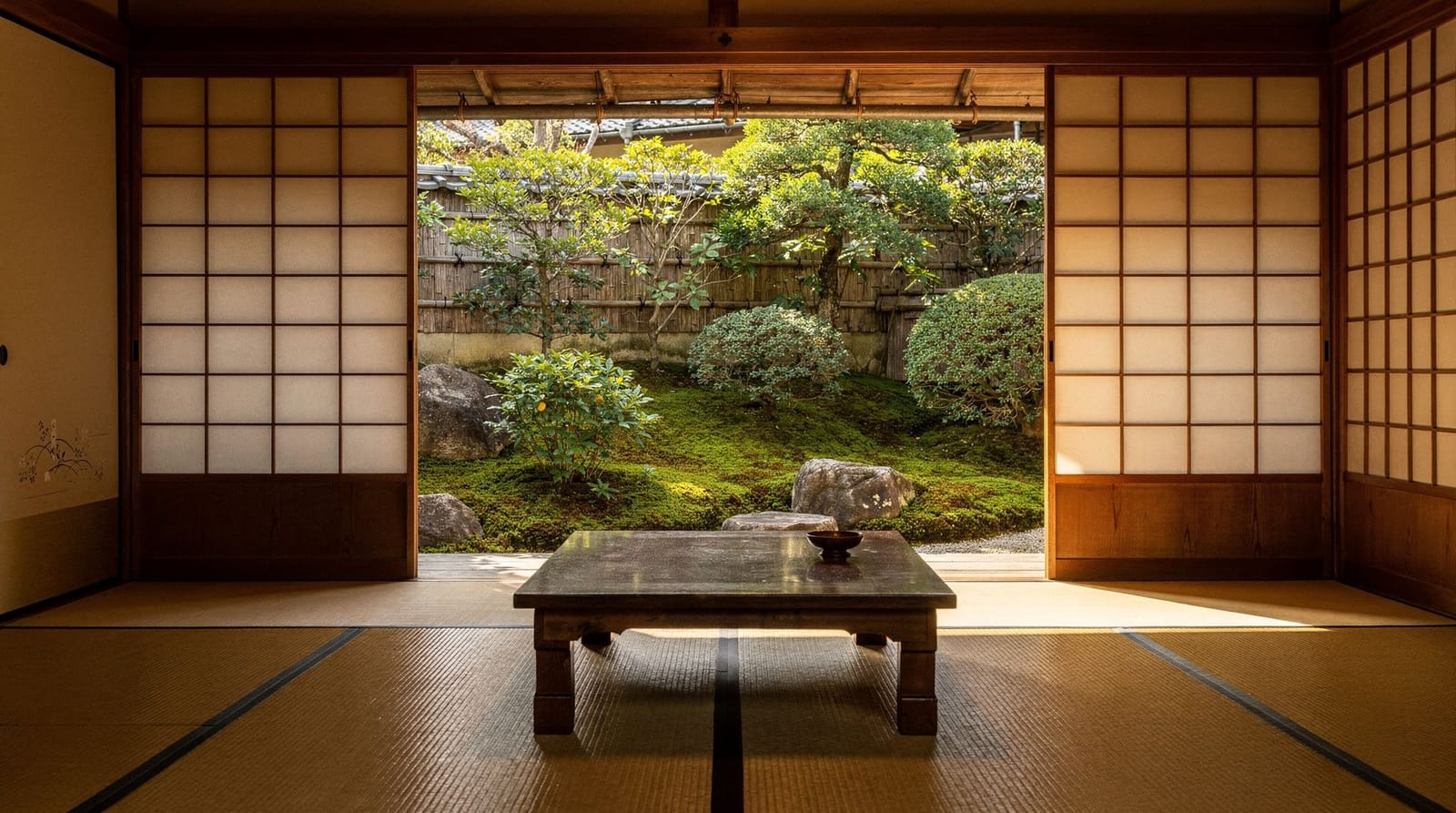
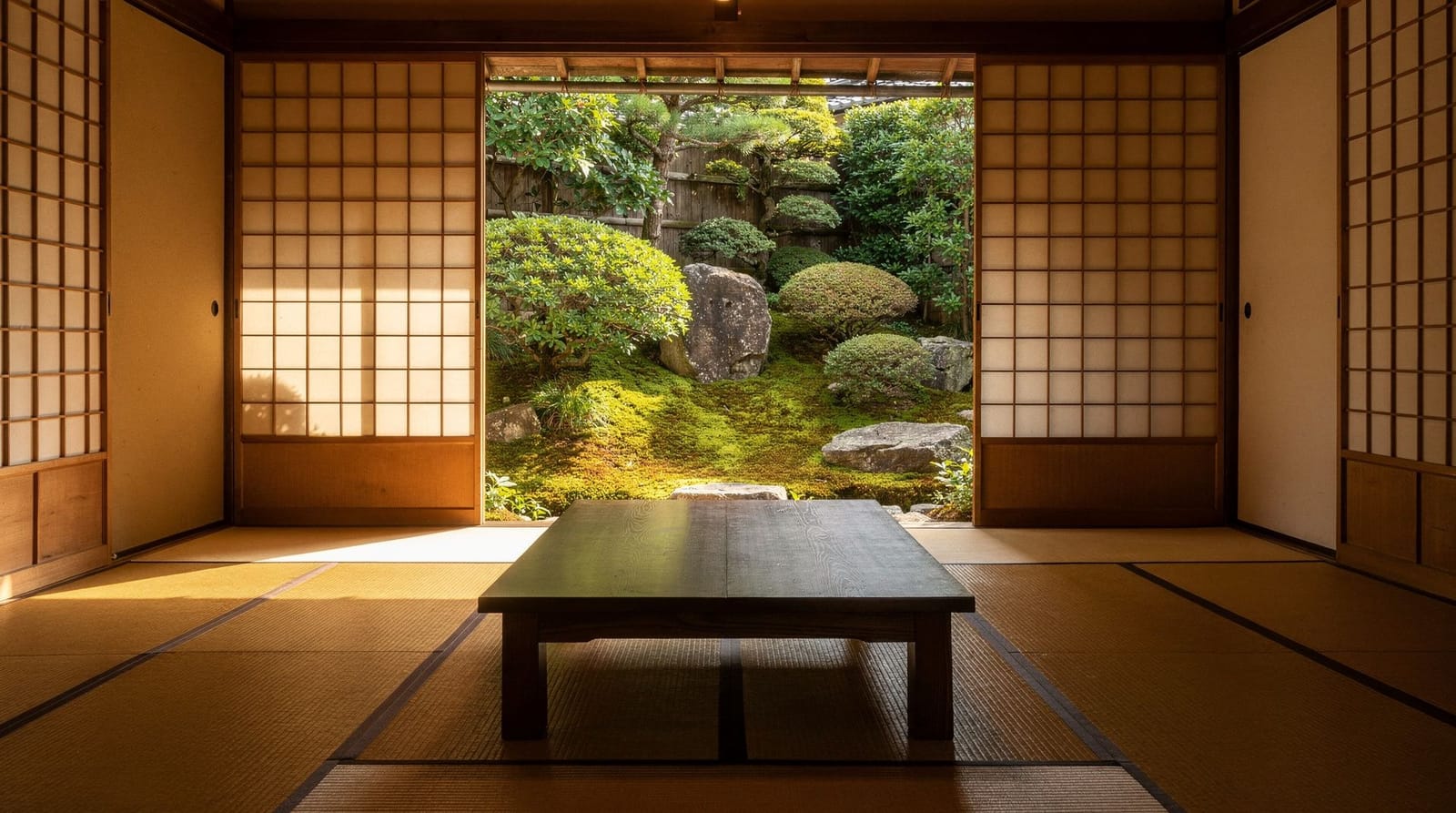
Tatami-floored rooms open off this corridor, divided by sliding fusuma (paper-and-wood panel doors) rather than fixed walls, which means room configuration is often more flexible than a Western floor plan — a family group can open up two rooms into one larger shared space for the evening, then close them back to separate sleeping areas at night. The tsuboniwa interior garden, where present, sits roughly midway through the layout, visible from the corridor and sometimes from an adjoining room, providing both natural light and a quiet visual break in an otherwise enclosed, narrow building.
Practical considerations before booking
Confirm the specific machiya’s staircase and doorway dimensions if traveling with anyone who has mobility limitations — many original machiya retain steep, narrow traditional staircases that a renovation doesn’t always widen, and low doorframes in older sections are common. Ask about air conditioning and heating coverage if traveling in peak summer (July-August) or winter (January-February), since older wooden construction insulates less effectively than modern buildings even after a good renovation. Most machiya listings require a minimum stay of two or three nights rather than single-night bookings, reflecting both the cleaning turnaround for a full private house and the type of traveler the format suits.
For a broader comparison of Kyoto’s lodging neighborhoods including both machiya-dense and hotel-dense areas, see the where to stay in Kyoto guide, and for how a machiya night factors into a trip budget, the Kyoto travel costs guide breaks down accommodation costs by style. The Higashiyama destination page and Gion destination page cover the two neighborhoods with the strongest machiya concentration in more geographic detail.
Cancellation policies and deposits
Machiya bookings, being closer to a full private-home rental than a hotel room, tend to carry stricter cancellation terms than a standard hotel reservation — many platforms charge a partial or full cancellation fee inside 14-30 days of arrival, reflecting the fact that a host can’t easily resell a specific multi-night house booking on short notice the way a hotel can resell one room out of a hundred.
A refundable damage deposit, typically ¥10,000-30,000 depending on property size, is common on both Airbnb and dedicated machiya platforms, held against breakage of the tatami, fusuma panels, or antique fittings that a modern hotel room simply doesn’t have to worry about. Reading the specific cancellation window before booking matters more here than for a hotel, particularly if travel plans are still flexible when you reserve — some machiya platforms offer a more lenient tier at a slightly higher nightly rate, worth weighing against the savings of a stricter non-refundable rate if your dates aren’t fully locked in yet.
A typical evening in a machiya, for first-time renters
Arriving after check-in, most guests spend the first 20-30 minutes simply working out the house — where the kitchen switches are, how the air conditioning unit’s remote works, which sliding fusuma panel leads to which room — since even a well-documented listing rarely covers every quirk of a genuinely old building.
Evenings tend to settle into the tori-niwa kitchen corridor or the main tatami room, often with the tsuboniwa garden lit if the property has exterior lighting for it; cooking even a simple meal from a nearby supermarket or the Nishiki Market (covered in the Nishiki Market guide) is a genuinely different evening than eating out every night of a Kyoto trip, and one of the clearer practical arguments for choosing a machiya over a hotel for a longer stay. Noise carries more than in a modern building, so a quiet, early-ish evening tends to suit the format better than a late one, and neighbors on both sides will generally extend the same courtesy back.