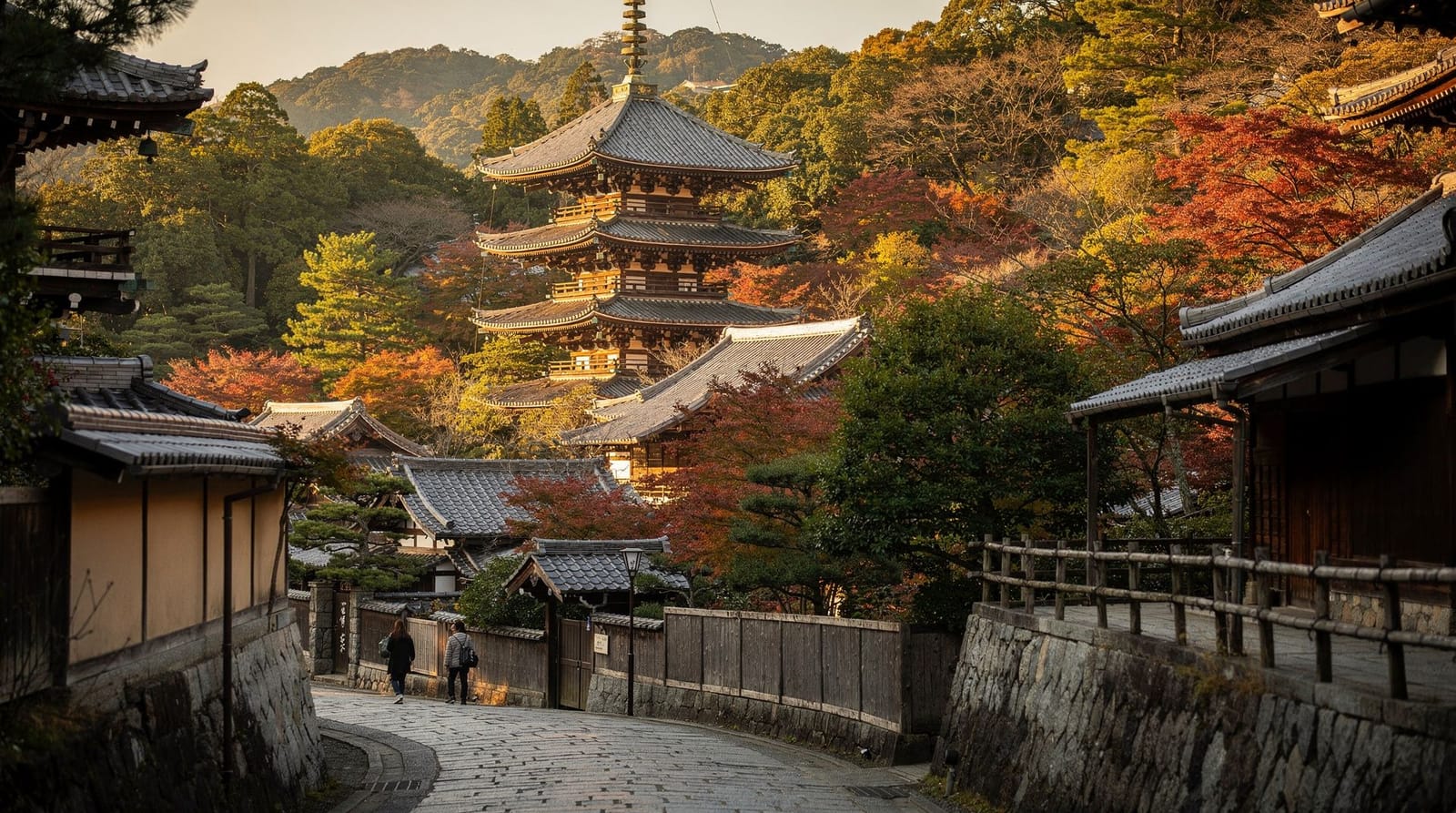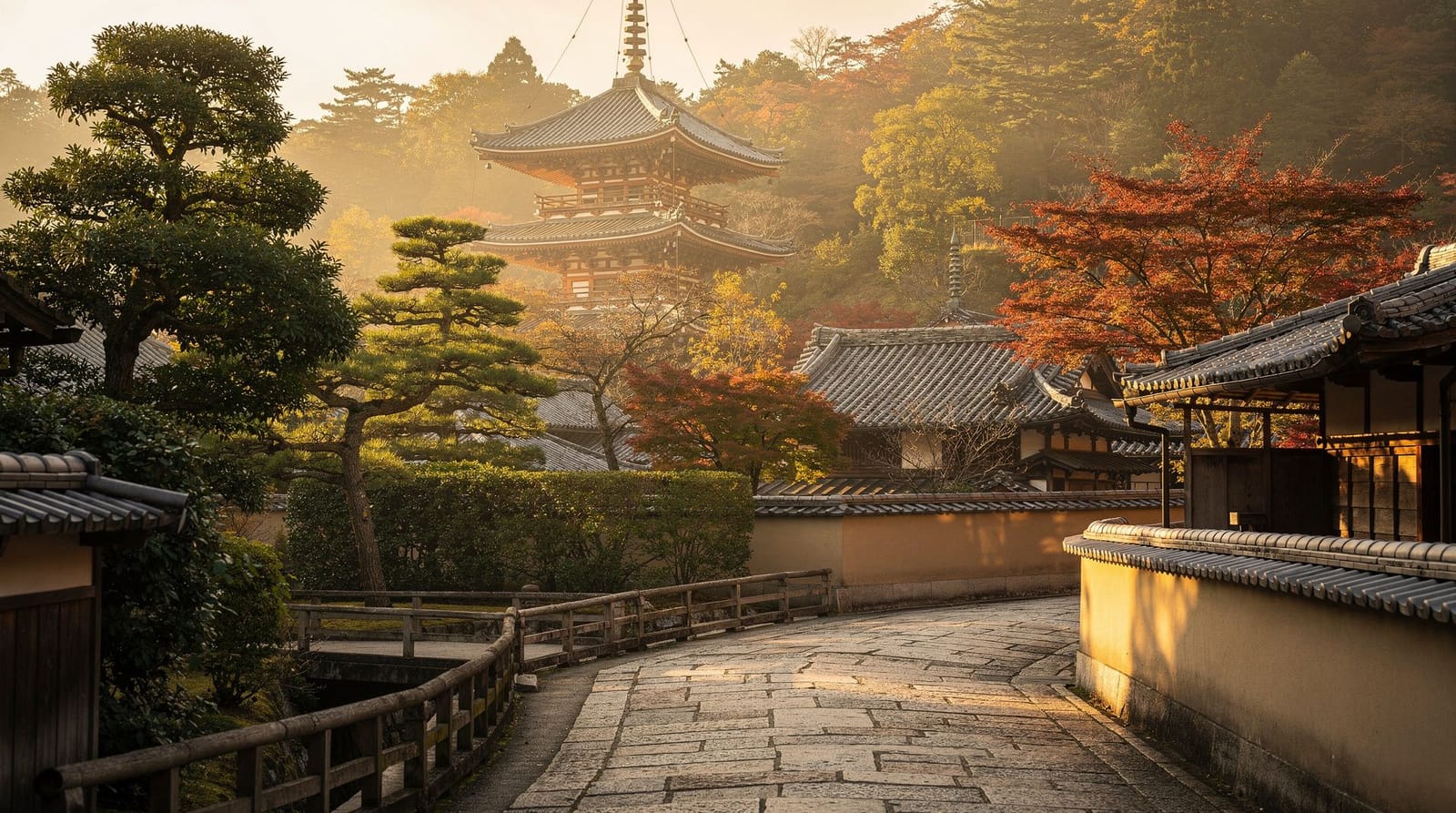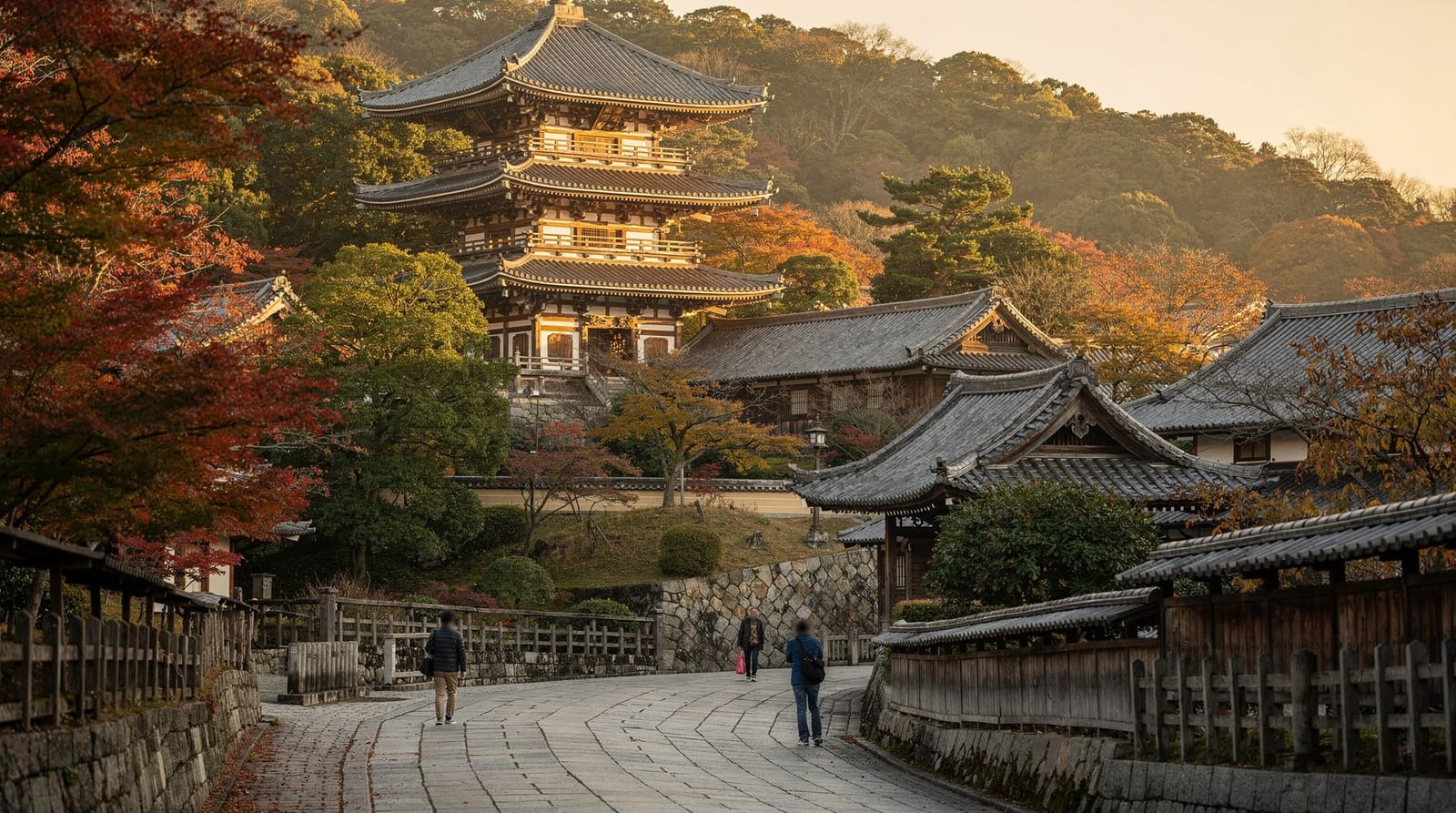
Kyoto in 3 days — the complete first-time itinerary
Kyoto: Nijo-jo Castle Samurai & Shogun Private In-Depth Tour
The plan most first-time visitors should actually follow
Three days is the point where a Kyoto itinerary stops feeling rushed. It’s enough time to cover the east side, the west side, and the downtown core without skipping meals or compressing every sight into a half-hour visit — and it’s the length we’d recommend to almost any first-time visitor with the flexibility to choose their own trip duration. Two days works but leaves no slack for weather, fatigue, or a temple that turns out to deserve more time than planned; four or five days start adding day trips outside the city rather than deepening Kyoto itself.
| Where | Day 1 east, Day 2 west, Day 3 downtown (Nijo-jo, Nishiki Market, Philosopher’s Path) |
| Cost | Around ¥21,000-27,000 ($145-185) per person for all 3 days |
| Time needed | 3 full days, two early (07:00-07:30) starts, one moderate (08:45) |
| Getting there | JR Nara/Sagano Lines, Tozai subway, city buses, walking |
| Best time | Year-round; cherry blossom and autumn foliage add crowds at nearly every stop |
The structure here follows the same east/west geographic logic as the 2-day itinerary for Days 1 and 2, then adds a third day in the downtown core — Nijo-jo, Nishiki Market, and the Philosopher’s Path — which sits geographically between the other two zones and works better as its own day than being wedged into either. Kyoto Station remains the most practical base: it sits on the JR Nara Line (Fushimi Inari), the JR Sagano Line (Arashiyama), and has direct bus access to Nijo-jo and downtown, so no day requires backtracking through the city center more than once.
No car is needed or recommended — walking, JR trains, city buses, and the Karasuma subway line cover this entire route. Parking near Arashiyama and downtown Kyoto is limited and expensive, and weekend traffic around both districts routinely moves slower than the bus.
Day 1 — East Kyoto: Fushimi Inari, Higashiyama, Gion
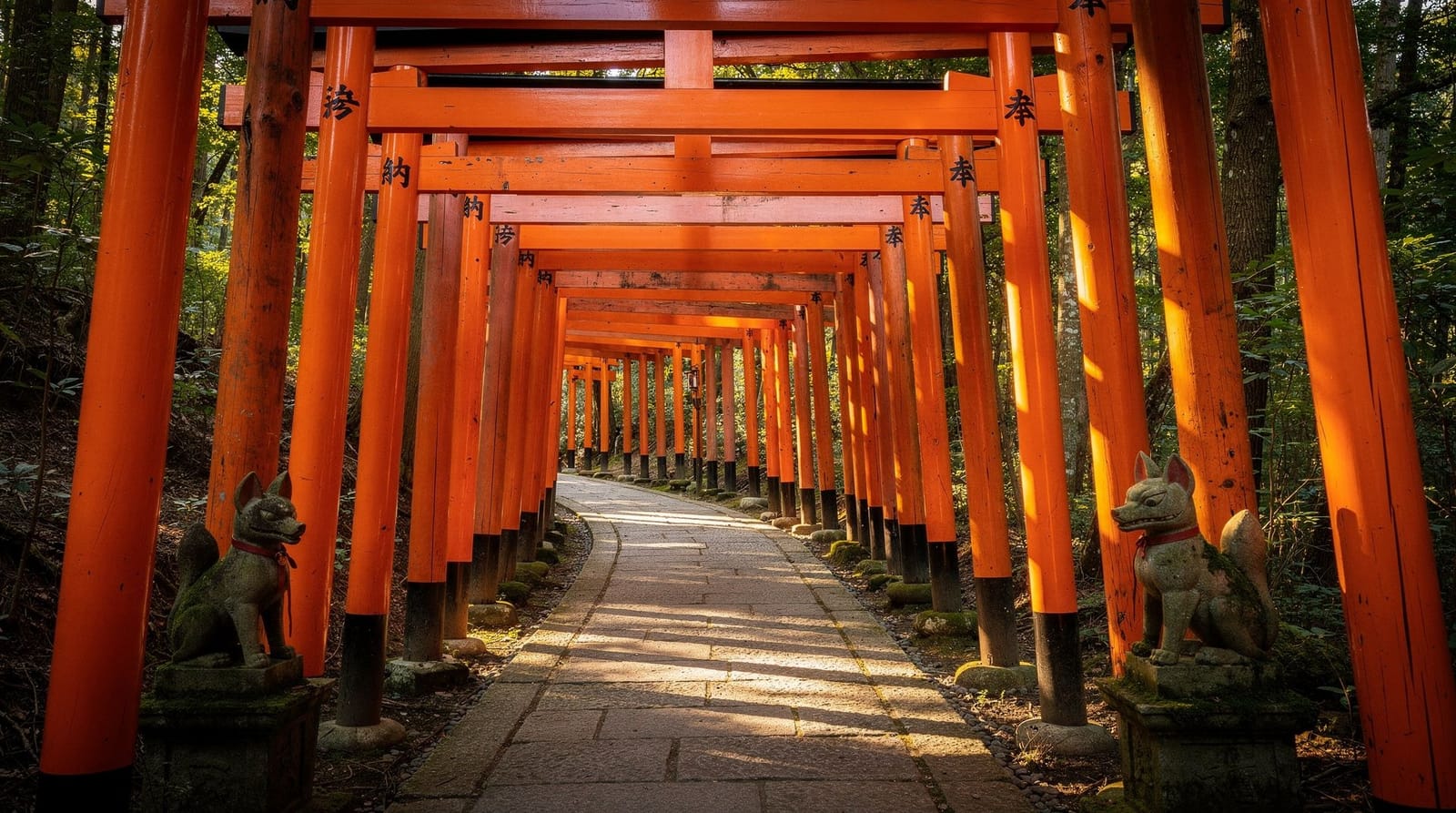
07:00 — Fushimi Inari Taisha
JR Nara Line from Kyoto Station to Inari Station, two stops, ~5 minutes, ¥150 ($1). Free, open 24 hours. Arriving before 8am means the Senbon Torii gate tunnel is close to empty; by mid-morning it’s genuinely crowded. Walk to Yotsutsuji, a third of the way up Mount Inari, for a real viewpoint — round trip from the base is 45-60 minutes on stone steps. Full detail, including the 2-3 hour full-summit hike, is in the Fushimi Inari guide.
Early-morning Fushimi Inari shrine tour09:30 — Kiyomizu-dera and Higashiyama’s lanes
Return via JR Nara Line to Kyoto Station (5 min), then bus 100 or 206 to Gojo-zaka or Kiyomizu-michi (15-20 min, ¥230/$1.60). Walk uphill through Chawan-zaka to Kiyomizu-dera, open from 6am, ¥400-500 ($3-3.50). See the Kiyomizu-dera guide for the veranda’s nail-free construction and seasonal illuminations. Descend through Sannen-zaka and Ninen-zaka, two well-preserved stone-paved lanes, into Higashiyama.
12:00 — Lunch, then a slower Higashiyama afternoon
Walk past the higher-priced restaurants directly at Kiyomizu-dera’s approach toward Yasaka Shrine, where prices and quality both improve — casual noodle shops from ¥900-1,500 ($6-10), kaiseki-style lunch sets from ¥3,000-5,000 ($20-35). With a full three-day trip, there’s no need to rush this block; Kodai-ji’s gardens (¥600/$4) or Kennin-ji, Kyoto’s oldest Zen temple (¥600/$4), are both worth the extra time.
16:30 — Gion
Hanamikoji-dori, Gion’s preserved main street. The 17:00-18:30 window is the best chance to see a maiko or geiko heading to an evening appointment. Etiquette matters here specifically: don’t block their path, don’t touch their kimono for photos, and stay out of the private side-lanes, some of which carry posted fines for exactly this. Full context in the Gion geisha guide and Kyoto etiquette guide.
18:30 — Dinner in Gion or Pontocho
Pontocho, parallel to the Kamo River, has broader restaurant range including riverside kawadoko terrace seating (roughly May-September).
Day 2 — West Kyoto: Arashiyama, Tenryu-ji, Kinkaku-ji
07:30 — Arashiyama bamboo grove
JR Sagano Line from Kyoto Station to Saga-Arashiyama, ~15-20 min, ¥240 ($1.65). Free, unticketed, but crowds build fast after 9am. The grove walk itself is short — 10-15 minutes — so it’s worth combining with Tenryu-ji rather than treating it as standalone.
08:30 — Tenryu-ji
UNESCO World Heritage garden at the bamboo grove’s entrance; the Sogen-chi garden predates the current temple buildings, which have burned and been rebuilt multiple times over eight centuries. Garden entrance ¥500 ($3.50), interior halls an extra ¥300 ($2). See the Tenryu-ji guide.
Arashiyama and Tenryu-ji temple guided tour10:00 — Sagano’s smaller sights or Togetsukyo Bridge
Okochi Sanso Villa gardens (¥1,000/$7, includes matcha and a sweet) or a walk to Togetsukyo Bridge over the Katsura River, a free, scenic landmark. The Sagano district guide covers further options if the morning runs ahead.
12:00 — Lunch: yudofu in Arashiyama
Arashiyama’s genuine local specialty is yudofu (hot tofu), tied to the district’s Zen temples — a set meal runs ¥1,500-2,500 ($10-17). Walking a few minutes past the station stalls into the district itself usually gets better food for less money.
13:30 — Bus to Kinkaku-ji (~40 min)
No direct train connects Arashiyama to Kinkaku-ji; city bus (~40 min) or taxi (~20-25 min, ¥2,500-3,500/$17-24 split among a group) both work.
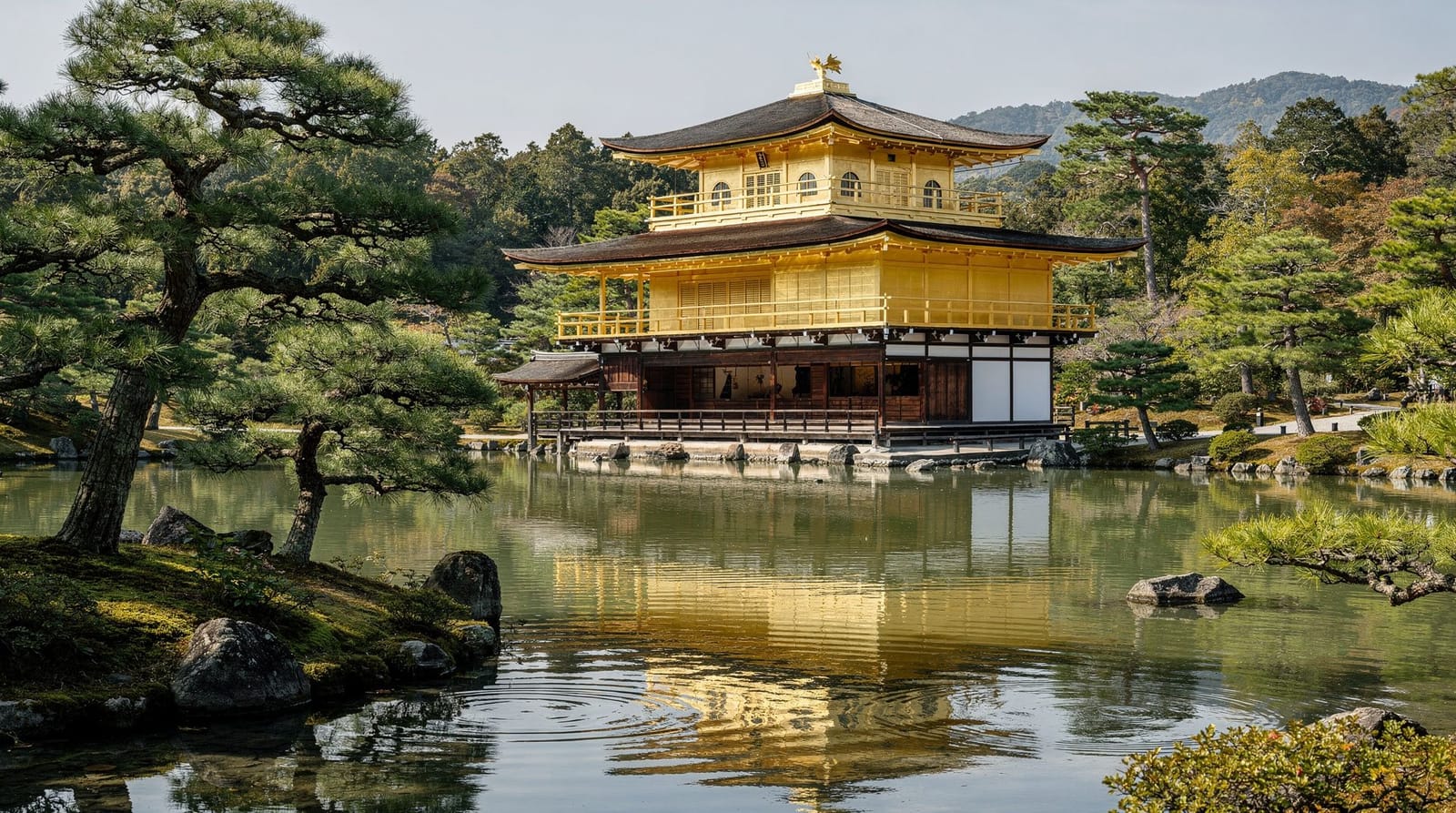
14:30 — Kinkaku-ji (Golden Pavilion)
Entrance ¥500 ($3.50). A single-direction walking loop around the pond with no interior access — 30-45 minutes covers it fully.
16:00 — Return, evening free
Bus back to Kyoto Station or Karasuma-area accommodation, 30-45 minutes depending on traffic. Rest or an easy dinner near the hotel — Day 3 starts with another moderately early morning.
Day 3 — Downtown: Nijo-jo, Nishiki Market, Philosopher’s Path
08:45 — Nijo-jo Castle
Take the Tozai subway line to Nijojo-mae Station, or bus, roughly 15-20 minutes from Kyoto Station. Entrance ¥800-1,000 ($5.50-7) for the grounds and Ninomaru Palace. The palace’s floors are built with a deliberate “nightingale” mechanism — metal fittings under the boards that chirp underfoot, an Edo-period security measure against silent intruders, not a natural creak. Budget 1.5-2 hours; the castle opens at 8:45am and last entry to the palace is 4pm.
Nijo-jo Castle samurai and shogun private tour11:00 — Nishiki Market
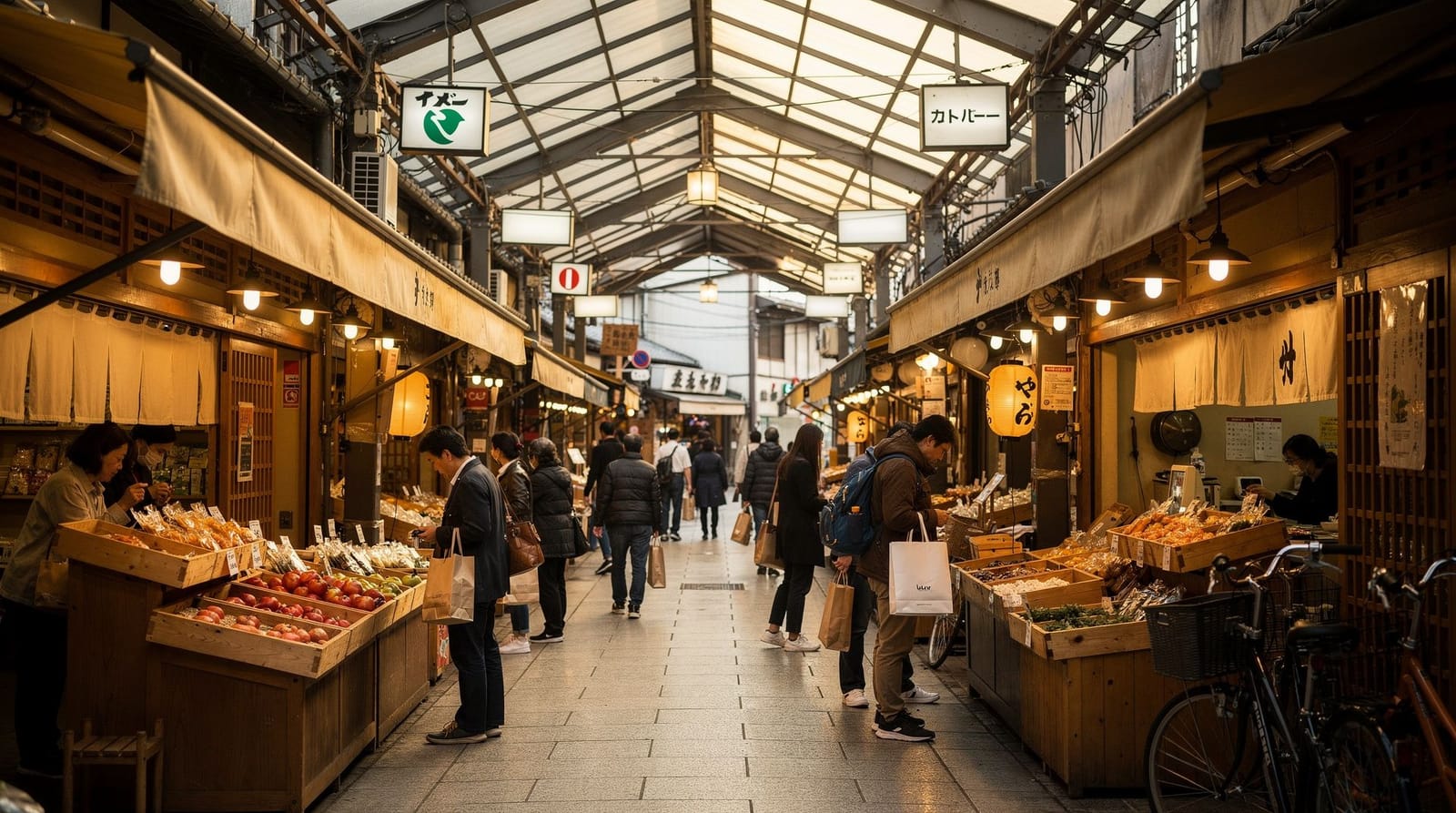
A 15-20 minute walk or short bus/subway ride south into downtown Kyoto. Nishiki Market — “Kyoto’s kitchen” — is a five-block covered arcade of small stalls selling pickles, skewered seafood, wagashi sweets, and knife shops, with most items priced per piece at ¥200-800 ($1.50-5.50). It’s free to walk through; the cost is entirely in what you eat along the way. See the Nishiki Market guide for stall-by-stall detail and which stands are tourist-priced versus genuinely local.
Nishiki Market walking food tour with a local guide13:00 — Lunch near downtown
Either continue grazing through Nishiki Market itself for a working lunch, or step into one of the sit-down restaurants on Teramachi or Shijo-dori just outside the arcade for a more conventional set meal (¥1,200-2,000/$8-14).
14:30 — Philosopher’s Path
Bus or a 20-25 minute taxi ride northeast to Ginkaku-ji-mae, the northern end of the Philosopher’s Path, a roughly 2km canal-side walking path connecting to Nanzen-ji at the southern end. Free to walk, at its best during cherry blossom season (late March-early April) or autumn foliage (mid-to-late November), though pleasant in any season. Ginkaku-ji itself (the Silver Pavilion, despite the name never actually covered in silver) costs ¥500 ($3.50) and sits right at the path’s start — see the Ginkaku-ji guide.
16:30 — Nanzen-ji and the walk south
At the path’s southern end, Nanzen-ji’s main gate area is free to enter, with the Sanmon gate itself (¥600/$4 to climb) offering a wide view over the temple grounds. See the Nanzen-ji guide. This is a natural point to end the sightseeing day and head back toward accommodation by bus or taxi.
18:30 — Final dinner
With three full days covered, a slightly more relaxed final dinner — downtown Kyoto around Kiyamachi-dori has a dense concentration of restaurants across every price range, from standing yakitori counters to reservation-only kaiseki.
Practical notes for 3 days in Kyoto
Transport cost: roughly ¥2,000-2,500 ($14-17) across all three days in JR, bus, and subway fares with an IC card (ICOCA or Suica).
JR Pass: still not worth it for a Kyoto-only 3 days — total JR usage here is under ¥400 ($2.75). A 7-day national JR Pass (~¥50,000/$340) only makes sense with shinkansen travel to other cities. See the Kyoto travel budget guide.
Season: cherry blossom season and peak autumn foliage both intensify crowds at nearly every stop on this itinerary — Fushimi Inari and Arashiyama are the two most crowd-sensitive and benefit most from the early starts built in here. See best time to visit Kyoto.
Budget: with mid-range meals, entrance fees, and transport, a realistic total for 3 days is ¥21,000-27,000 ($145-185) per person, excluding accommodation.
Extending the trip: the 4-day Kyoto itinerary keeps these exact three days and adds a Nara day trip; the 5-day itinerary adds Nara plus a deeper Arashiyama return and a quieter mountain day (Ohara or Kurama-Kibune).
Three days at a glance
| Day | Zone | Anchor sights | Toughest logistics |
|---|---|---|---|
| 1 | East | Fushimi Inari, Kiyomizu-dera, Higashiyama, Gion | Early 7am start |
| 2 | West | Bamboo grove, Tenryu-ji, Sagano, Kinkaku-ji | ~40-min bus between zones |
| 3 | Downtown | Nijo-jo, Nishiki Market, Philosopher’s Path | Subway/bus transfers |
Choosing what to trim if one day runs long
Even with three full days built in, one stop tends to run over — usually Day 1’s Higashiyama block or Day 3’s Nishiki Market, both of which are easy to linger in longer than planned. If Day 1 spills past schedule, Kodai-ji and Kennin-ji are the two stops to drop first; they’re genuinely worthwhile but the least essential of the afternoon’s options. If Day 3 runs long, Nanzen-ji at the Philosopher’s Path’s southern end is the natural cut — its free main gate area is worth a quick look but not essential if the walk itself already delivered the experience. This kind of small trimming keeps dinner reservations and hotel check-ins on schedule without cutting a whole sight entirely.
Combining sightseeing with shopping downtown
Day 3’s downtown block sits close to Kyoto’s main shopping district around Shijo-Kawaramachi, which most visitors don’t build formal time for but end up walking through anyway between Nishiki Market and Nijo-jo. If souvenirs or department-store shopping matter to your trip, add 30-45 minutes after Nishiki Market rather than trying to fit a separate shopping stop into an already full Day 3 — the geography works in your favor here, since Nishiki Market’s southern end feeds almost directly into the shopping streets. See the downtown Kyoto destination guide for the specific streets worth walking.
Nishiki Market and depachika food hall tourFrequently asked questions about a 3-day Kyoto trip
Is 3 days the ideal length for a first Kyoto visit?
For most first-time visitors, yes. Three days covers the east side, west side, and downtown core without skipping meals or rushing any single sight, while stopping short of the diminishing returns that can set in around day 5-6 inside one city. See how many days you need in Kyoto for a longer breakdown by traveler type.
Should Nijo-jo, Nishiki Market, and Philosopher’s Path really be on the same day?
Yes — geographically they form a loose north-south line through central and northeastern Kyoto that’s more efficient to cover in one day than splitting across two, and none of the three requires an early-morning start the way Fushimi Inari or Arashiyama’s bamboo grove do.
What if it rains on one of the three days?
Nijo-jo’s palace interior and Nishiki Market’s covered arcade both work well as a rainy-day Day 3. Fushimi Inari and Arashiyama’s bamboo grove are outdoor, uncovered sights — if rain is forecast, consider swapping Day 3’s schedule to a rain day and pushing the outdoor days to clearer weather where your itinerary has flexibility.
Can I skip Nijo-jo to add more time at Nishiki Market or the Philosopher’s Path?
Yes, reasonably — Nijo-jo is worthwhile but the least essential of Day 3’s three stops for visitors specifically prioritizing food (extend Nishiki Market) or nature and photography (extend Philosopher’s Path, especially in cherry blossom or foliage season).
How much does a 3-day Kyoto trip cost excluding flights and hotels?
Roughly ¥21,000-27,000 ($145-185) per person for a mid-range pace — entrance fees, transport, and three days of restaurant meals. Budget travelers using convenience stores and standing noodle counters for some meals can bring this down to around ¥15,000 ($100). Full breakdown in the Kyoto travel budget guide.
Is this itinerary suitable for visitors with limited mobility?
Partially. Nijo-jo, Nishiki Market, and the lower parts of Philosopher’s Path are flat and manageable. Fushimi Inari past Senbon Torii, the approach to Kiyomizu-dera, and Sannen-zaka/Ninen-zaka all involve stone steps, inclines, or uneven paving with no elevator alternative.
What’s the single most crowded stop on this itinerary and how do I avoid the worst of it?
Fushimi Inari’s Senbon Torii tunnel and Kiyomizu-dera’s main approach are both consistently the busiest — the early starts built into Day 1 (before 8am for Fushimi Inari, mid-morning rather than midday for Kiyomizu-dera) are specifically designed around this. See the avoiding crowds in Kyoto guide for more general timing strategy.
Do I need to book restaurants in advance for 3 days in Kyoto?
Casual restaurants, noodle shops, and Nishiki Market stalls don’t need reservations. Kaiseki dinners and some higher-end restaurants, especially in Gion and Pontocho, often require booking days or weeks ahead, particularly during cherry blossom and autumn foliage season.
Can I do this itinerary without any guided tours?
Yes, entirely — every stop on this route has walk-up entry with no booking required. The guided tours linked throughout this page are optional additions for visitors who want context from a local guide or don’t want to navigate independently, not a requirement for following the plan.
Top experiences
Bookable activities with verified prices and instant confirmation on GetYourGuide.