Hozugawa river boat ride — Kameoka to Arashiyama by traditional boat
Kyoto Hozugawa River Boat Sagano Romantic Train Tour
What is the Hozugawa river boat ride?
A roughly 2-hour, 16km traditional wooden boat trip down the Hozu river from Kameoka to Arashiyama, poled and paddled by boatmen rather than motorized, running through a forested gorge with mild rapids. Tickets cost roughly ¥5,000-6,000 (US$33-40) for adults, and the ride operates most of the year except a winter closure window and days with unsafe water levels.
| Where | Kameoka to Arashiyama, along the Hozu river |
| Length | About 16km, roughly 2 hours |
| Cost | Around ¥5,000–6,000 (~$33–40) adult, ~half for children |
| Season | Runs most of the year; winter closure window |
| Booking | Advance recommended in cherry blossom & autumn foliage weeks |
A slower, river-level way to see the Arashiyama gorge
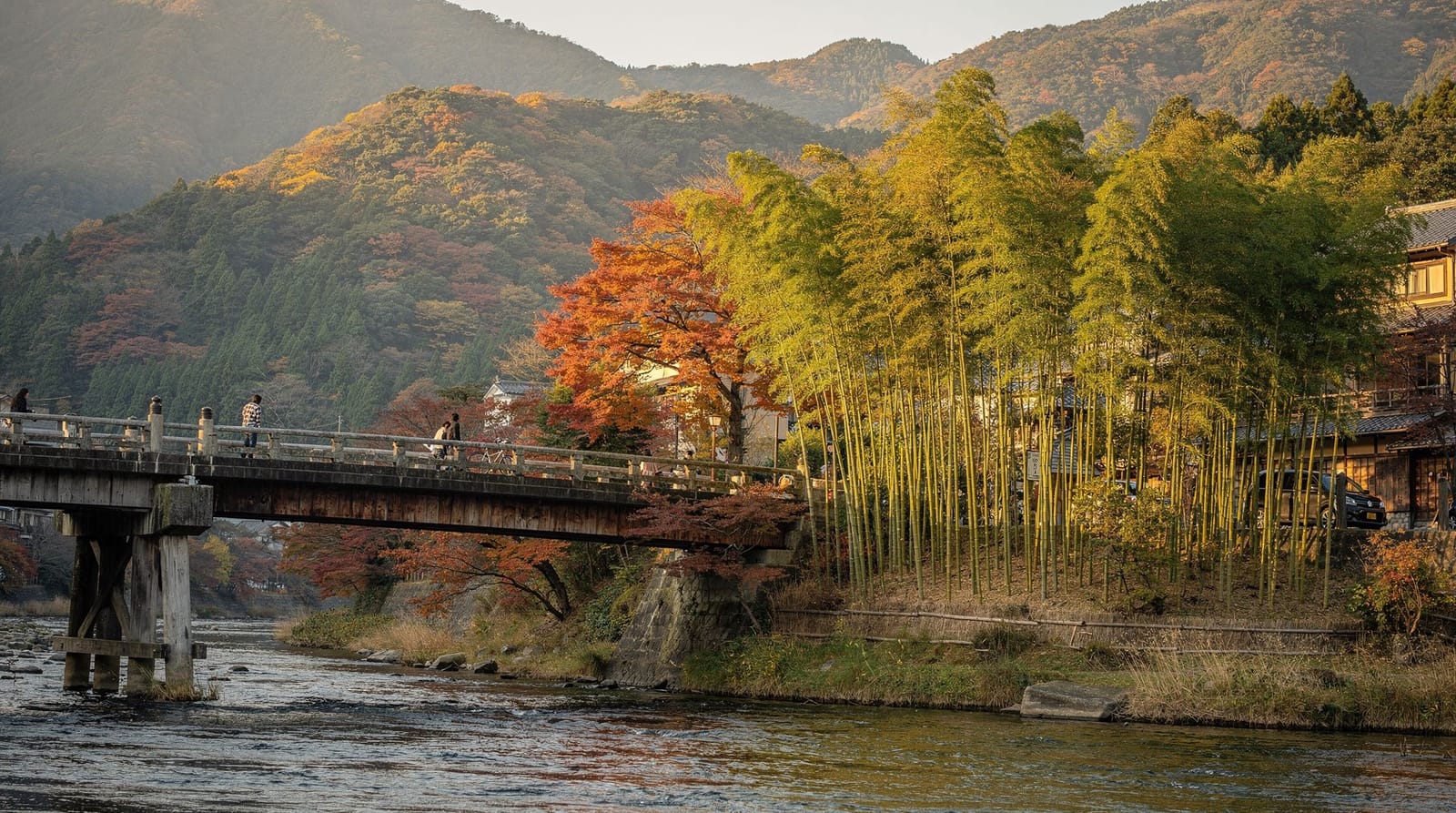
Most Arashiyama visitors see the district on foot — the bamboo grove, Tenryu-ji, the Togetsukyo bridge — without realizing the same gorge that frames those sights also has a genuinely distinct way to experience it: a 16km traditional boat ride down the Hozu river from Kameoka, upstream of Arashiyama, ending right back at the district’s main bridge. It’s slower, quieter in its own way despite the mild rapids, and shows a stretch of forested gorge that’s simply invisible from the standard walking routes.
This guide covers the ride itself — logistics, pricing, seasons — and how to combine it with the Sagano scenic train, its natural companion activity covering the same gorge from a different angle.
How the ride works
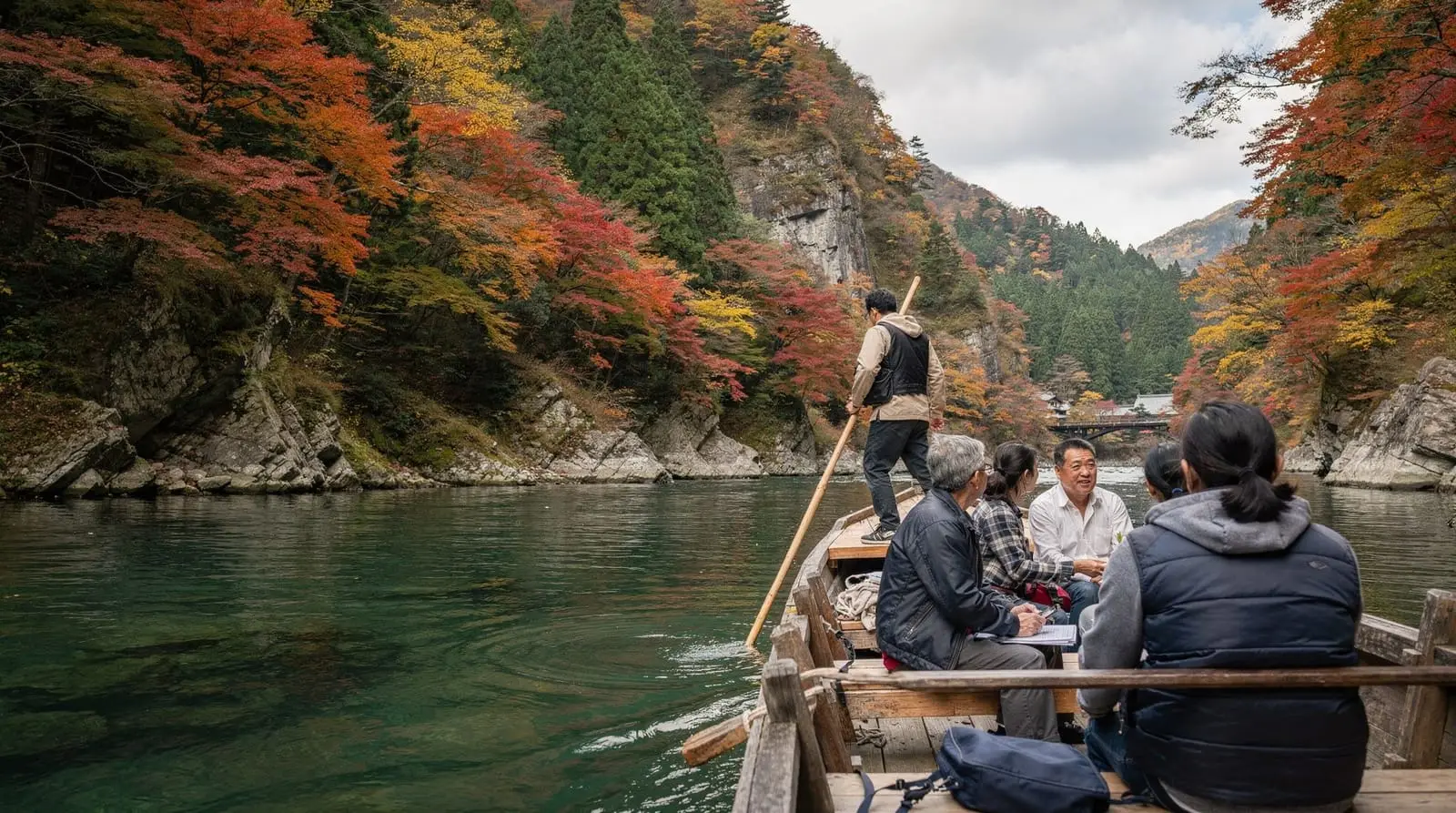
Traditional wooden boats, each carrying a small group of passengers, are guided by a crew of boatmen using poles, oars, and, on faster sections, a rudder — no motor. The route runs roughly 16km from Kameoka, a town west of central Kyoto, down to Arashiyama’s Togetsukyo bridge, taking approximately 2 hours depending on current water flow. The gorge itself is forested and steep-sided for much of the route, with mild rapids that add movement and occasional spray without approaching anything resembling serious white water — genuinely calm enough for a family outing, not an adrenaline activity.
Hozugawa river boat and Sagano Romantic Train tourBoatmen narrate points of interest along the way in Japanese, with English signage and, on some operators, basic English commentary — this isn’t a fully guided English-language tour in the way a walking tour would be, so setting expectations accordingly matters. The experience leans more toward scenery and the novelty of traditional river navigation than detailed historical narration.
Prices and what’s included
Adult tickets run roughly ¥5,000-6,000 (US$33-40); child tickets are discounted to approximately half that. This is set directly by the boat operator and doesn’t fluctuate the way bundled tour prices sometimes do — booking through a tour package that bundles the boat with transport or the Sagano train adds a premium over the standalone boat ticket, but also removes the logistics of getting to Kameoka yourself and coordinating timing between the two activities.
Life jackets are provided and required throughout the ride — a genuine safety measure rather than a formality, given the open-boat design and the mild but real rapids along the route. Umbrellas or covers are sometimes provided for light rain, though the ride generally doesn’t run at all in genuinely poor conditions (see the safety section below).
Combining with the Sagano scenic train
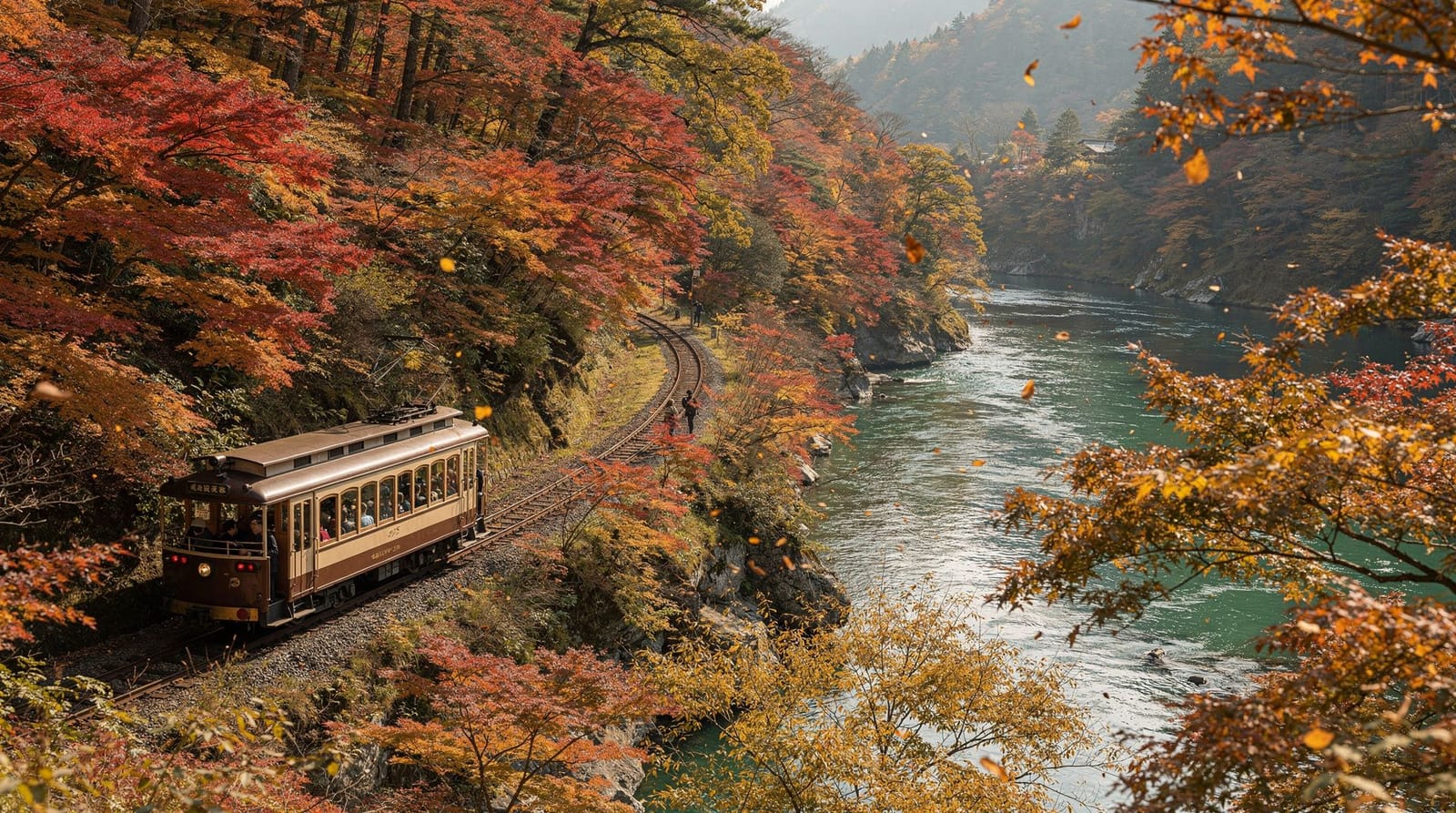
The classic pairing, and honestly the version most worth doing if you have the time: ride the Sagano Romantic Train (Torokko Ressha), a slow open-air scenic train, from Arashiyama’s Torokko station to Kameoka first, taking in the gorge from an elevated rail perspective, then board the Hozugawa boat at Kameoka for the return trip down the same gorge at river level back to Arashiyama.
Arashiyama day tour with train, boat and onsenSeeing the same stretch of gorge from both an elevated, forward-moving train and a slower, river-level boat genuinely changes the impression of the landscape — the train covers the distance faster and gives a wider view over the tree canopy, while the boat sits low in the gorge and moves at a pace that makes individual rock formations and riverside details far more noticeable. Combined tours sometimes add an onsen (hot spring) stop, a reasonable way to unwind after a half-day outdoors, particularly appealing in cooler months.
Seasons and closures
The boat ride operates most of the year, with a winter closure window (typically through the coldest weeks of the year) when water conditions and cold make the open-boat ride less appealing and less commercially viable — check current dates directly when planning a winter visit, since exact closure timing varies year to year. Outside the closure window, the ride can still be suspended day-to-day if water levels run unsafely high after heavy rain, a genuine operational safety call rather than overcaution.
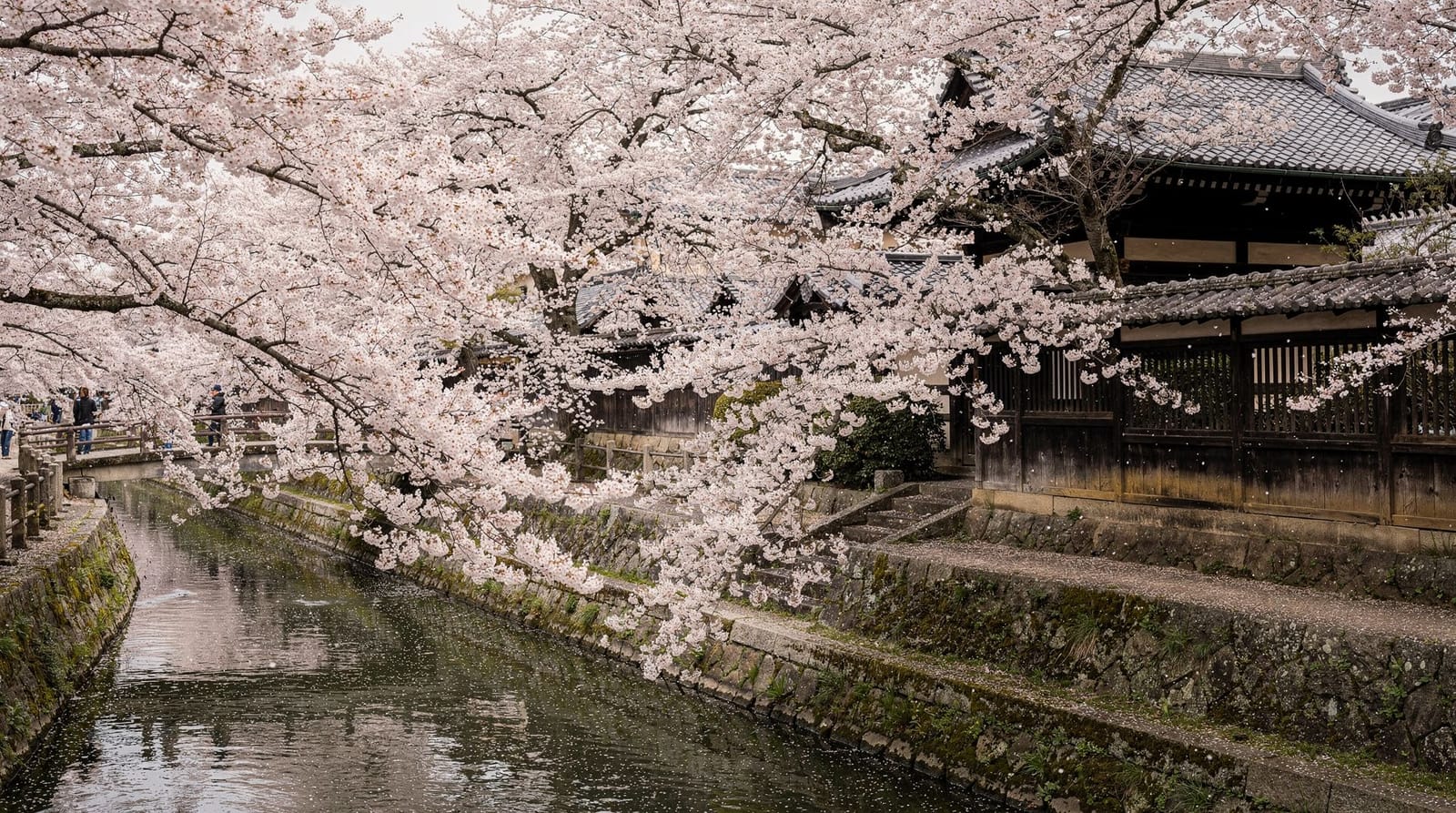
Cherry blossom season (late March-early April) and autumn foliage (mid-to-late November) are the most visually rewarding times to ride, with the gorge’s forested banks in full color, and also the most crowded, with departures selling out on weekends and booking ahead strongly recommended. Summer offers lush greenery and the coolest experience of the day given the shaded gorge and water spray, a genuine relief from Kyoto’s summer heat elsewhere in the city.
See the cherry blossom guide and Kyoto in autumn guide for how the gorge’s seasonal color compares to Kyoto’s other spring and autumn highlights, and the Sagano destination guide for the wider area the boat route passes through.
A brief history of the route
The Hozugawa boat route has practical origins rather than purely scenic ones — boatmen began navigating this stretch of the Hozu river in the late 16th century to transport timber and goods from the mountains around Kameoka down to Kyoto, a working trade route long before it became a tourist activity.
The shift toward tourism dates to the late 19th century, when the same navigational skill and knowledge of the gorge’s currents were repurposed for passenger rides rather than cargo. That working history is part of what distinguishes the experience from a purely manufactured tourist attraction — the boatmen’s poling and steering techniques descend from genuine river trade skills refined over centuries, not a modern activity designed for visitors from the outset.
Group size and boat capacity
Boats on the Hozugawa route typically carry around 20-25 passengers per boat, seated on wooden benches along an open, low-sided vessel, with 3-4 boatmen managing navigation throughout the ride. This is a shared-boat experience by default — private or small-group charters aren’t the standard booking format, so expect to share the ride with other passengers regardless of how you book, whether directly or through a bundled tour package. Departures run at set intervals rather than continuously, so arriving with some buffer before your intended departure time is worth building into the day, particularly since the walk from Kameoka Station to the boarding dock, while short, adds a few minutes that matter if you’re cutting timing close.
Alternatives if the boat ride isn’t available or doesn’t suit your trip
If the boat ride is closed for the season or fully booked, the Sagano Romantic Train alone covers much of the same gorge scenery from an elevated rail perspective without the river-level element, and remains a strong standalone option — see the earlier section on combining the two for what each offers independently. For travelers specifically wanting a water-based activity in the Arashiyama area without committing to the full Kameoka round trip, smaller rowboat rentals are available directly on the calmer stretch of river near the Togetsukyo bridge itself, a shorter, more casual alternative without the gorge scenery or the boatmen’s guided navigation, but requiring no advance booking or travel to Kameoka.
Getting to the Kameoka boarding point
Kameoka is reachable from central Kyoto or Arashiyama by JR San-in Line train, roughly 20-25 minutes from Kyoto Station or a shorter hop if starting from Arashiyama’s Saga-Arashiyama Station. The boarding dock is a short walk from Kameoka Station, clearly signed. If combining with the Sagano scenic train as described above, you’ll travel from Arashiyama to Kameoka by train first, then return by boat, which means only a one-way train ticket and no return trip needed on the train side.
Family suitability and safety
This is a professionally operated activity with experienced boatmen, not a self-paddled or self-guided adventure — life jackets are mandatory and provided, and the mild rapids encountered are calibrated for a general audience rather than white-water enthusiasts. It’s a genuinely reasonable family activity, including for non-swimmers, given the life jacket requirement and the crew’s direct control of the boat throughout. Very young children should still be supervised closely given the open design of the boats and the general nature of moving water, but there’s no swimming or independent physical activity required of passengers.
Booking and cancellation
Advance booking matters most during cherry blossom and peak autumn foliage weeks, when weekend departures can sell out. Outside those windows, same-day tickets are commonly available directly at Kameoka, though booking ahead removes any uncertainty, particularly for travelers on a tight day-trip schedule who can’t afford to arrive and find departures full. Cancellations due to unsafe water levels are handled by the operator with rescheduling or refunds — check the specific policy at booking, since terms can vary between direct-booking and bundled tour packages.
What to bring
Layered clothing, since river-level temperatures run noticeably cooler than the surrounding city, particularly in shaded gorge sections — this matters more than most visitors expect even in warmer months. A light rain layer or waterproof bag for phones and cameras is worth carrying given occasional spray from the mild rapids. Sun protection matters on clear days despite the cooler air, since there’s minimal shade for stretches of open river. Motion sensitivity is rarely an issue given the boat’s slow, controlled movement, but anyone particularly prone to it should sit toward the center rather than the front.
Is it worth doing alongside the rest of Arashiyama?
Yes, and it’s a genuinely different experience from the bamboo grove, Tenryu-ji, or the Togetsukyo bridge crowd — those are short, free, walkable sights within the immediate district, while the Hozugawa ride is a paid, roughly half-day commitment (accounting for travel to Kameoka) covering an entirely different stretch of landscape upstream.
Most visitors treat it as a complement to, not a substitute for, the standard Arashiyama walking circuit, arriving back at the Togetsukyo bridge with easy access to continue into the bamboo grove or Tenryu-ji afterward. See the Tenryu-ji guide and the Arashiyama destination guide for the rest of the district, and the Kyoto bike tours guide if you’d rather cover Arashiyama’s other sights by bike after the boat ride than on foot.
Comparing the Hozugawa boat to other river activities in Japan
Travelers who’ve done similar river activities elsewhere in Japan sometimes compare the Hozugawa ride to whitewater rafting trips available in other regions, but the comparison undersells what makes this specific ride distinctive — it’s closer to a scenic, guided river passage than an adventure-sport rafting trip, with the boatmen doing all the active navigation rather than passengers paddling.
Anyone specifically seeking a more physically active whitewater experience should look elsewhere; anyone wanting a scenic, low-effort way to see a genuinely beautiful gorge from river level, with just enough movement from the rapids to keep it from feeling passive, will find the Hozugawa ride hits a distinctive middle ground that’s fairly unique to this specific stretch of river near Kyoto.
Practical timing for a half-day outing
Budgeting a realistic half-day for this activity matters for trip planning: roughly 25-30 minutes of train travel to Kameoka, some buffer time for finding the dock and checking in before departure, the 2-hour ride itself, and then whatever time you spend in Arashiyama afterward, since you’ll arrive back at the Togetsukyo bridge in the heart of the district. Total time from leaving central Kyoto to arriving back at Arashiyama’s main area runs approximately 3-3.5 hours if going by boat both ways is not planned (i.e., taking the train to Kameoka and only the boat back), making it realistic to combine with a full Arashiyama sightseeing day rather than requiring its own separate day trip.
A note on what makes this different from a typical boat tour
It’s worth being explicit about what sets the Hozugawa ride apart from generic river-cruise activities offered in many tourist destinations: this isn’t a motorized pontoon boat following a fixed narrated route, but a genuinely skill-dependent traditional navigation, with boatmen actively reading the current and adjusting course through the rapids in real time rather than following a GPS-guided path.
That distinction matters for setting expectations correctly — the experience rewards patience and attention to the boatmen’s work as much as the scenery itself, and travelers expecting a purely passive, motorized cruise experience should adjust expectations toward something closer to a quietly skillful demonstration of traditional river navigation, layered on top of genuinely attractive gorge scenery.
Frequently asked questions about the Hozugawa river boat ride
How long is the Hozugawa river boat ride and how much does it cost?
The ride covers about 16km from Kameoka to Arashiyama and takes roughly 2 hours, depending on water flow. Adult tickets cost approximately ¥5,000-6,000 (US$33-40); child tickets are discounted, roughly half the adult price. Prices are set by the boat operator directly and don’t fluctuate seasonally the way some tour prices do.
Do I need to book the Hozugawa boat ride in advance?
Advance booking is strongly recommended during cherry blossom season (late March-early April) and peak autumn foliage (mid-to-late November), when departures can sell out, particularly on weekends. Outside those windows, same-day tickets are often available at the Kameoka boarding point, but booking ahead removes the risk of arriving to a sold-out departure.
Is the Hozugawa river boat ride safe for children and non-swimmers?
Yes — this is a guided, professionally operated ride with experienced boatmen, not a self-paddled activity, and life jackets are provided and worn throughout. The rapids encountered are mild by white-water standards, more about gentle bumps and spray than serious turbulence. It’s a genuinely family-friendly activity, though very young children should be supervised closely given the open boat design.
Can I combine the Hozugawa boat ride with the Sagano scenic train?
Yes, and this is the classic pairing — many visitors take the Sagano Romantic Train (Torokko Ressha) from Arashiyama to Kameoka first, enjoying the same river gorge scenery from a slow-moving open-air train, then return via the Hozugawa boat ride back to Arashiyama, seeing the gorge from both a train’s and a boat’s perspective in one round trip.
What happens if it rains or the river is too high to run the boat?
The operator suspends departures if water levels are unsafe, which happens most commonly after heavy rain. This is a genuine safety measure, not overcaution — the Hozu river’s flow is meaningfully affected by upstream rainfall, and boatmen make the call based on current conditions rather than a fixed forecast rule. Refunds or rescheduling are typically offered for canceled departures; check the specific policy when booking.
Is the Hozugawa boat ride worth it compared to just visiting Arashiyama’s bamboo grove?
They’re different experiences entirely, not competing options — the bamboo grove is a 10-15 minute walk, free, and purely visual, while the boat ride is a 2-hour, paid activity centered on the river gorge between Kameoka and Arashiyama, well outside the bamboo grove area. Most visitors do both on the same day, since the boat’s Arashiyama arrival point is a short walk from the grove and Tenryu-ji.
Is there a winter closure for the Hozugawa boat ride?
Yes, typically during the coldest weeks of the year, though exact dates vary year to year based on the operator’s schedule — check current dates directly when planning a winter visit. Outside the closure window, the ride runs regularly, subject to day-to-day suspension only if water levels run unsafely high after heavy rain.
Best season to ride, at a glance
| Season | Scenery | Crowds | Notes |
|---|---|---|---|
| Spring (late Mar–early Apr) | Cherry blossoms along the gorge | Heaviest — book ahead | Most visually rewarding, sells out weekends |
| Summer | Lush green, cool river spray | Moderate | Coolest experience of the day |
| Autumn (mid–late Nov) | Peak foliage color | Heaviest — book ahead | Rivals spring for visual reward |
| Winter | Bare trees, quiet gorge | Lightest | Closure window applies — check dates |
Frequently asked questions about Hozugawa river boat ride — Kameoka to Arashiyama by traditional boat
How long is the Hozugawa river boat ride and how much does it cost?
Do I need to book the Hozugawa boat ride in advance?
Is the Hozugawa river boat ride safe for children and non-swimmers?
Can I combine the Hozugawa boat ride with the Sagano scenic train?
What happens if it rains or the river is too high to run the boat?
Is the Hozugawa boat ride worth it compared to just visiting Arashiyama's bamboo grove?
Top experiences
Bookable activities with verified prices and instant confirmation on GetYourGuide.